Alluding to both border politics and the American avant-garde of the 1960s and 70s, Margarita Cabrera’s witty objects are as much eye candy as they are linguistic games. Cabrera, who is currently based in El Paso, Texas, previously exhibited in New York in the 2002 S-Files exhibition at El Museo del Barrio, as well as in a group show at Brooklyn’s Rotunda Gallery. Her current exhibition at Sara Meltzer Gallery, Appliance: all tools must be kept ready for instant use, is her first solo exhibition in New York City. In seeing her beautiful, playful, and flippant objects, one is reminded of George Kubler’s rumination about a work of art is as useless as a tool is useful. This proposition is borne out in Cabrera’s work, which proposes to reconstruct utilitarian objects in the guise of art thereby depriving them of any functional possibilities.
In her works from 2002, Cabrera used the actual appliances themselves as the main portion and infrastructure of the sculpture and added vinyl edges, cords, and plugs. The exception is a food processor whose only “real” part is a slicing wheel. The dysfunction afforded these “appliances” by the artist underscores the political motivations behind them. As representations of the kind of object frequently made in sweatshop factories along the U.S.–Mexican border, they carry with them political intimations about use, value, labor, and the global economy. In Cabrera’s hands instruments first mass-marketed during the mid-twentieth century to assist the privileged modern homemaker with her household duties are translated into works that frame the existence of the laborers that build them. The physical aspects of the objects simultaneously reference the pop sensibility of the sculptures of Claes Oldenburg. The repetition of imagery in her work, particularly in the new quilt pieces, also quotes the serial works of Andy Warhol.
The quilts are a significant development in Cabrera’s sculptures. As an important part of the history of American art and material culture, both folk traditions and notions of the authentic are woven into their narratives. By placing her iconic appliances into the patchwork patterns of a traditional American vehicle, the artist also reifies the history and role of these objects in American cultural and political life. Adding to the textile sensibility of the pieces Cabrera continues her practice of leaving the long ends of thread dangling from the seams of her objects. These threads hanging from the perpendicular quilts animate the works and add a three-dimensional effect.
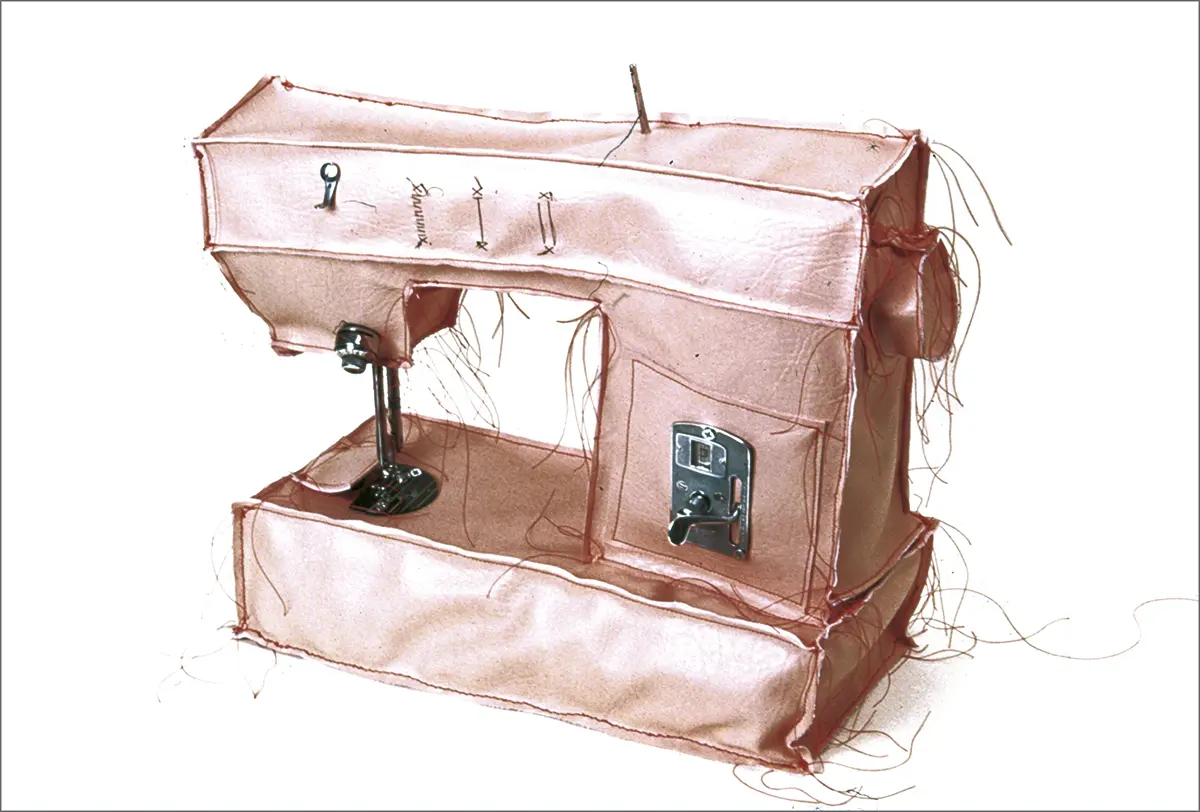
Apart from their reference to appliance factories, these objects also allude to the notorious sweatshops of the fashion industry. The bright stitching contrasts sharply with the vinyl that it holds together suggesting the endless piecework produced in clothing factories. Her Sewing Machine, 2003 underscores this reference, as well as the post-feminist intention that is heightened in her Cleaning Supplies, 2003. The vinyl sponge, Ajax cleanser can, Windex bottle, and toilet scrubber, all placed inside a vinyl carrying case suggest both the interminable labor associated with these objects, as well as the futility involved in attempting to use them as she proposes. The exhibition’s title also suggests the pressures of contemporary life, in which the social and commercial are often disturbingly blended to form an existence in which life and products, appliances, and sensibilities are all inextricably linked.
Cabrera’s careful attention to the form, design, and color of the works ultimately makes them very appealing. Toy-like, their presentation also suggests the display shelves of the small appliance section of a department store. Blurring the distinction between the real object and her remakes, the artist plays a language game in which the actual artifact and its representation are scrambled together, so that real prongs jut from vinyl plugs, the perfect geometric forms of beaters protrude from the mixer, and the channels and patterned cooking plates of the waffle iron are traced by vinyl piping and accompanied by a vinyl cord.
Cabrera’s discourse, served up with dry humor, a keen sense of design, and smart-aleck political commentary is well-served by her objects, which appeal as much to the desires of the eye and the hand as they do to the sensibilities of the mind.
ROCÍO ARANDA