
In October 2003, the São Paulo Museum of Modern Art opened its twenty-eighth Panorama. This edition was curated by Gerardo Mosquera and focused on the current work of a group of twenty-one artists.
Panorama has been held at the Museum since 1969. It was precise with Panorama that the São Paulo MAM reopened its doors and inaugurated the second period in its history as Latin America’s oldest modern art museum. In 1963, the MAM and the São Paulo Biennial became separate entities; the Biennial was set up as an independent foundation and distanced itself from the museum’s large international event. At the same time, its holdings were transferred to the University of São Paulo, resulting in the creation of the MAC, the Museum of Contemporary Art. The Panorama exhibitions were originally intended not only to heighten the country’s artistic presence but also to organize a new collection for the MAM through acquisition prizes defined by the Art Council under the auspices of important private sector companies.
This is the first time a foreign curator has been in charge of Panorama. Cuban critic Gerardo Mosquera has researched Brazilian art for many years. He is also the first curator to organize an exhibition around a concept that highlights an aesthetic attitude: the idea of disarranging structures. The notion of disarrangement presupposes a “disorder,” a frequent gesture in contemporary art according to Mosquera, and particularly in Brazil. For Mosquera, “some Brazilian artists create their works through the formal and conceptual resource of disarranging a structure. Such disarrangement can be exerted on the work’s own structure, its content, its projection, or all of the above. It is a deconstructive practice both in reference to constructive aesthetics and in a Derridean sense: "a contra-constructivism, a negation of the structure within the structure itself, a critique that is at the same time a self-critique. In this action, the operation of de-structuring builds the very meaning of the works in its multiple implications". The curator adds, however, that he is not implying there is a “design” procedure, but a variety of aesthetic-discursive strategies.
Mosquera explains that the concept for the exhibition developed as he traveled through Brazil while organizing Panorama for the MAM. As a curator, he visited the cities of São Paulo, Rio de Janeiro, Curitiba, Porto Alegre, Brasilia, Fortaleza, Salvador, Belém, Manaus, and Belo Horizonte.1
For the exhibition, Mosquera mixed Brazilian artists who are well known nationally and internationally, such as Cildo Meireles, Vik Muniz, Adriana Varejão, and Ernesto Neto, among others, with artists who work outside those circuits, and even artists no longer alive, as in the case of José Leonilson (who died in 1993), an artist whose work, for the curator, is still vital in the current context. In addition to the artists already mentioned, the show includes Adriano and Fernando Guimarães (Brasilia); Alex Villar (Brazil/US); José Guedes (Ceará); José Patricia (Pernambuco); Levitan and Jailton Moreira (Río Grande do Sul); Marcone Moreira (Pará); Paulo Climachauska (São Paulo); Sara Ramos (Minas Gerais); and Humberto Costa Barros (Río de Janeiro).
In order to break away from the exhibition’s traditional profile —a survey of Brazilian artistic production— Mosquera, who lives between Panama, Cuba, and New York City (where he is a curator at the New Museum), included a number of foreign artists in whose work he finds the same set of issues as in the Brazilian contingent: Jorge Macchi from Argentina, Kan Xuan from China, and Wim Delvoye from Belgium. Mosquera explains that he didn’t intend to offer an overview of what is happening in Brazil’s cultural scene in the visual arts field, but to focus on the way in which art produced in Brazil is inscribed in contemporaneity. With the idea of disarranging implicit in the title, 19 Desarreglos,2 he also wanted to point out the disorder brought into play by the national definition of the show and the regionalist sense it implies.
Architect Paulo Mendes da Rocha was responsible for the show’s installation design. The show occupies the entire Museum building and even spills into the street that separates it from the biennial building, a kind of urban intervention in the form of a pedestrian zebra crossing, the work of José Guedes, who disarranges the conventional design by adding extra stripes to it. It will be useful to discuss several specific works presented at the show and illustrated here.
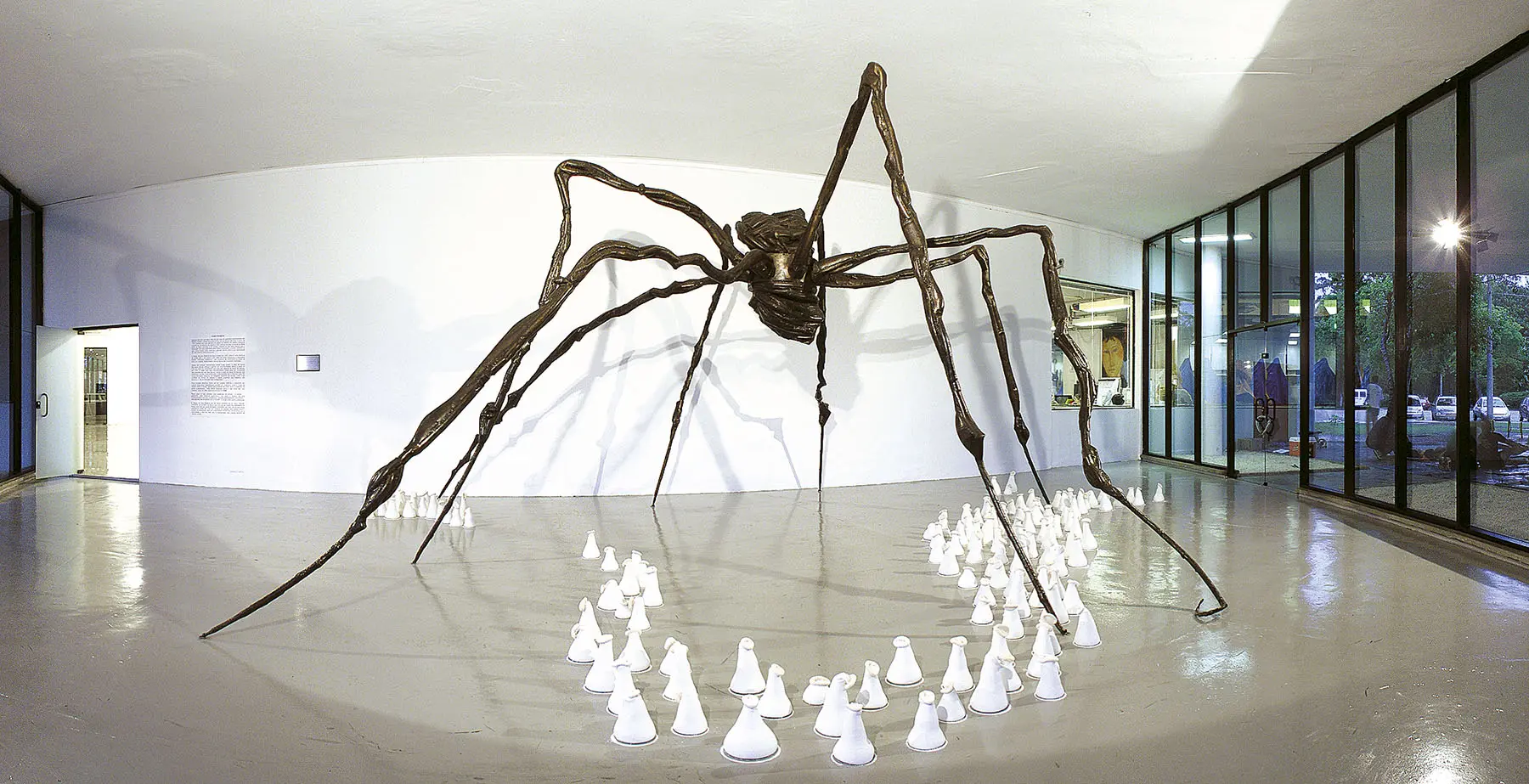
Ernesto Neto’s intervention was in the space of the São Paulo Museum of Modern Art where Louise Bourgeois’ Araña is installed. This work is a large sculpture located in a room specially built for it and which allows it to be seen both from outside the museum and from inside. It is an important icon of the São Paulo MAM. Ernesto Neto establishes a dialogue with the sculpture by creating “cocoons” in white weaving and arranging them on the spider’s long legs, thus giving the piece a new meaning.
In one of the museum’s hallways frequently used by contemporary artists for installations (Project Wall), Adriana Varejão built a “wall” of tiles with blue ink inscriptions. The drawings are of plants that are used as drugs, contemporary reality’s “damned” plants according to the artist. In this work, disarrangement is to be found in the critical content given to the social meanings that are implicit in the images, which are taken from colonial discourse. On the one hand, they allude to the Portuguese tile tradition and on the other to the botanical drawings made by traveling observers. In this way, the piece also creates a “deconstructive” play on the idea of painting.
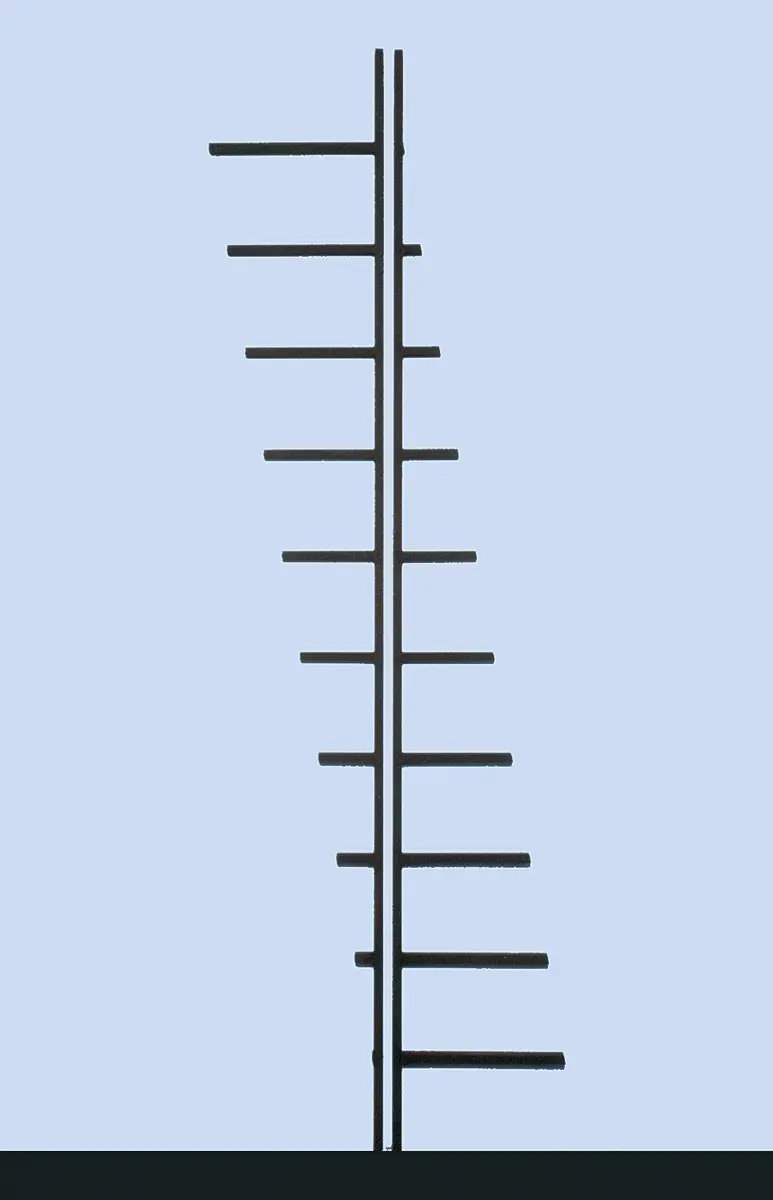
Cildo Meireles presented Descala. This work comprises sixteen structures arranged as “ladders,” each three meters high. Built using vertical and horizontal lines of equal dimensions, all but one of these ladders are unusable. The artist works on the semantic relationship between an everyday object and its meaning. What is the meaning of the sole usable ladder? Is it a passageway, a possible exit? the notion of growth, of ascent? utopia? Meireles works with human spaces and times that can be ontologically appropriated in different ways. His ladders are “de-laddered.”
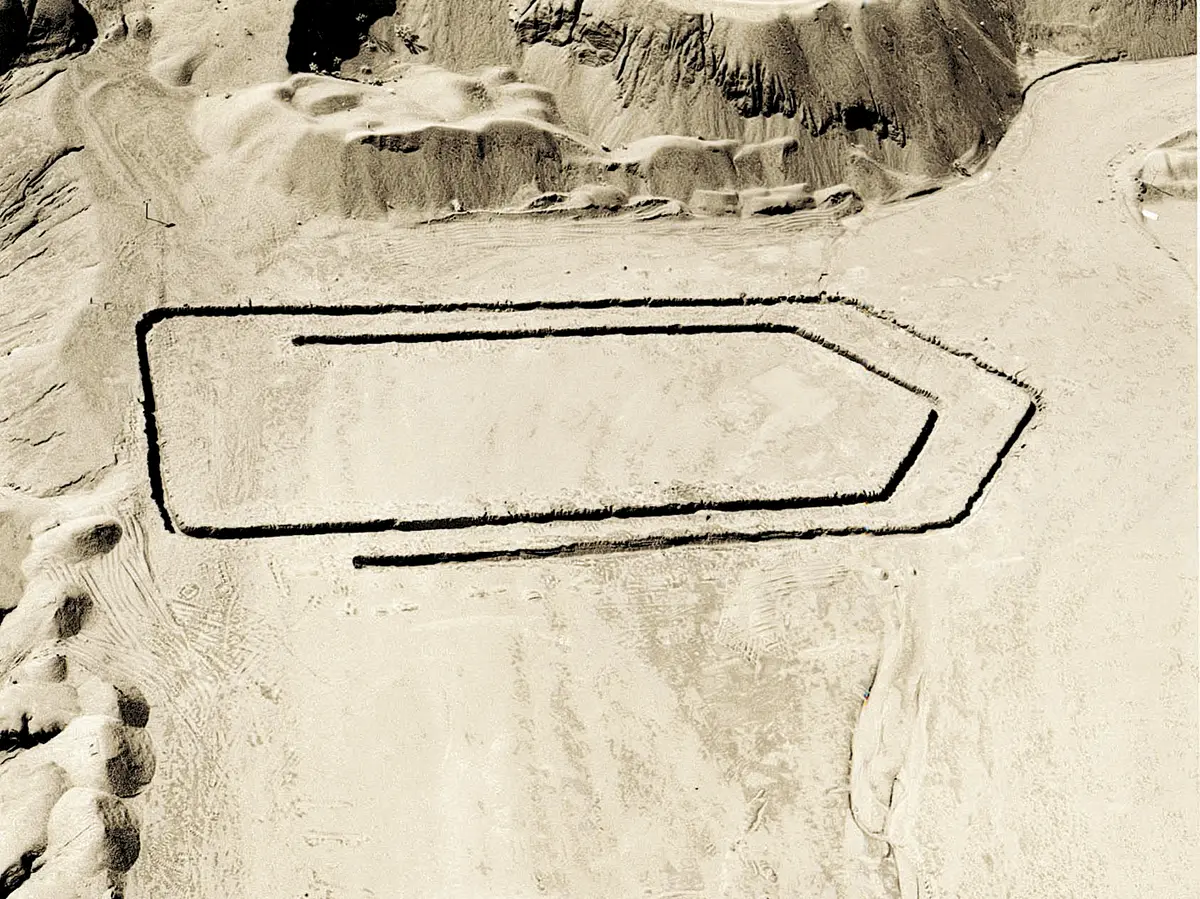
Vik Muniz refers to the issue of equivocation as a polysemous strategy, exploring different levels of semantics in his work. He brings together drawing and photography in order to question the boundaries between reality and fiction. Muniz attempts to confound the viewer through the perception of two successive simulacra. These pieces, titled The Sarzedo Drawings, were conceived during a journey through northeastern Brazil, and they refer to the ritual drawings of ancient civilizations found etched on rocks. On the earth itself, in the Sarzedo region, Muniz inscribed large drawings of such everyday objects as a sock, a key, and a pipe, which he later photographed from a helicopter. In his studio, he created new drawings and photographed them, intermingling those photographs with the earlier ones and confusing the viewer as to the means used to create the images.
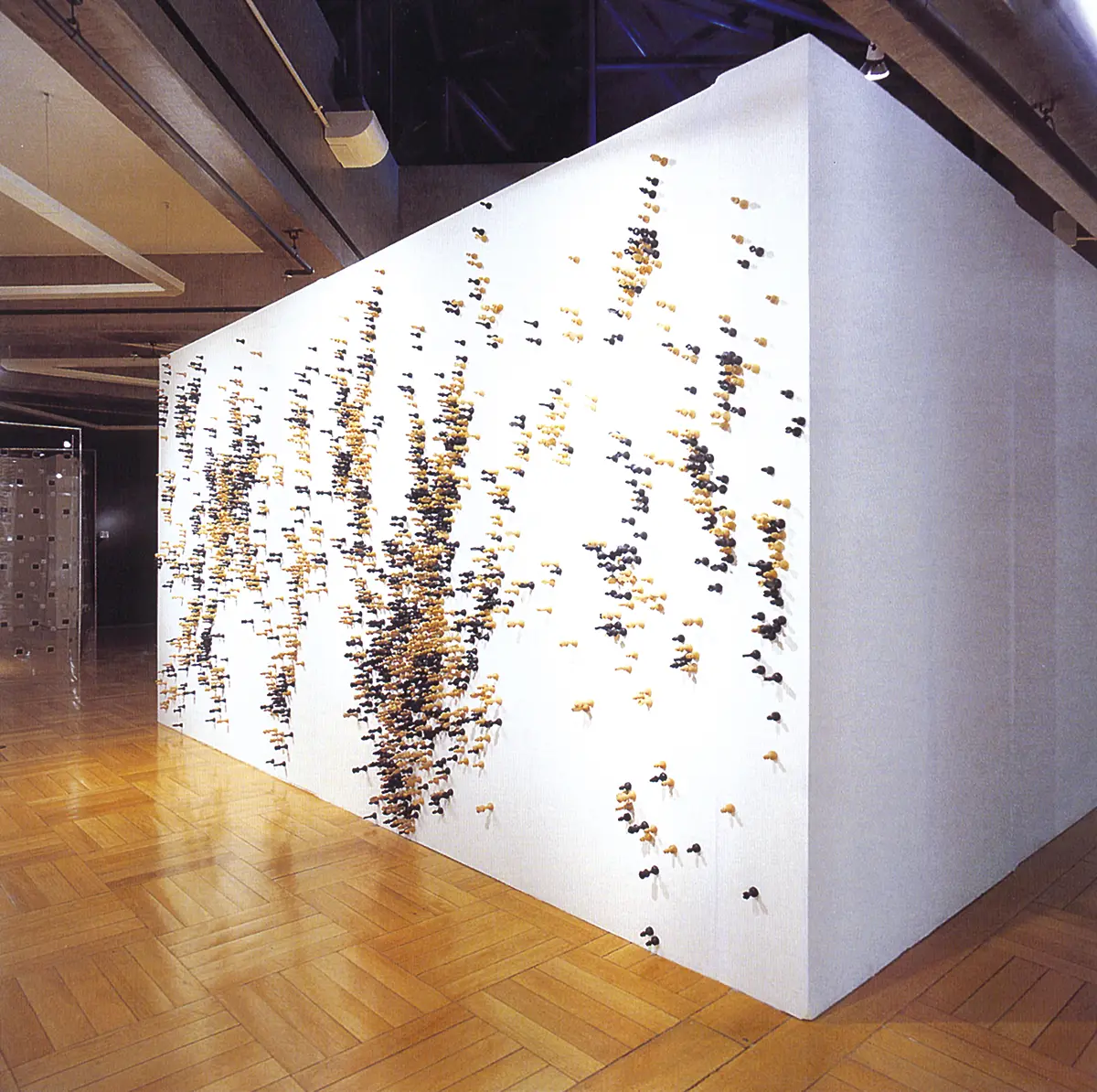
For curator Gerardo Mosquera, artist José Damasceno inhabits “degree zero of the constructive will, giving order and giving disorder, thus surprising us with acts of magic and philosophy.” For his installation Mutiny, presented at the MAM show, Damasceno arranged chess pieces on a wall as characters clustered in groups. The groups suggest collections of people and refer to masses that come together in times of upheaval when the social order becomes disarranged. The pieces, like people, can free themselves.
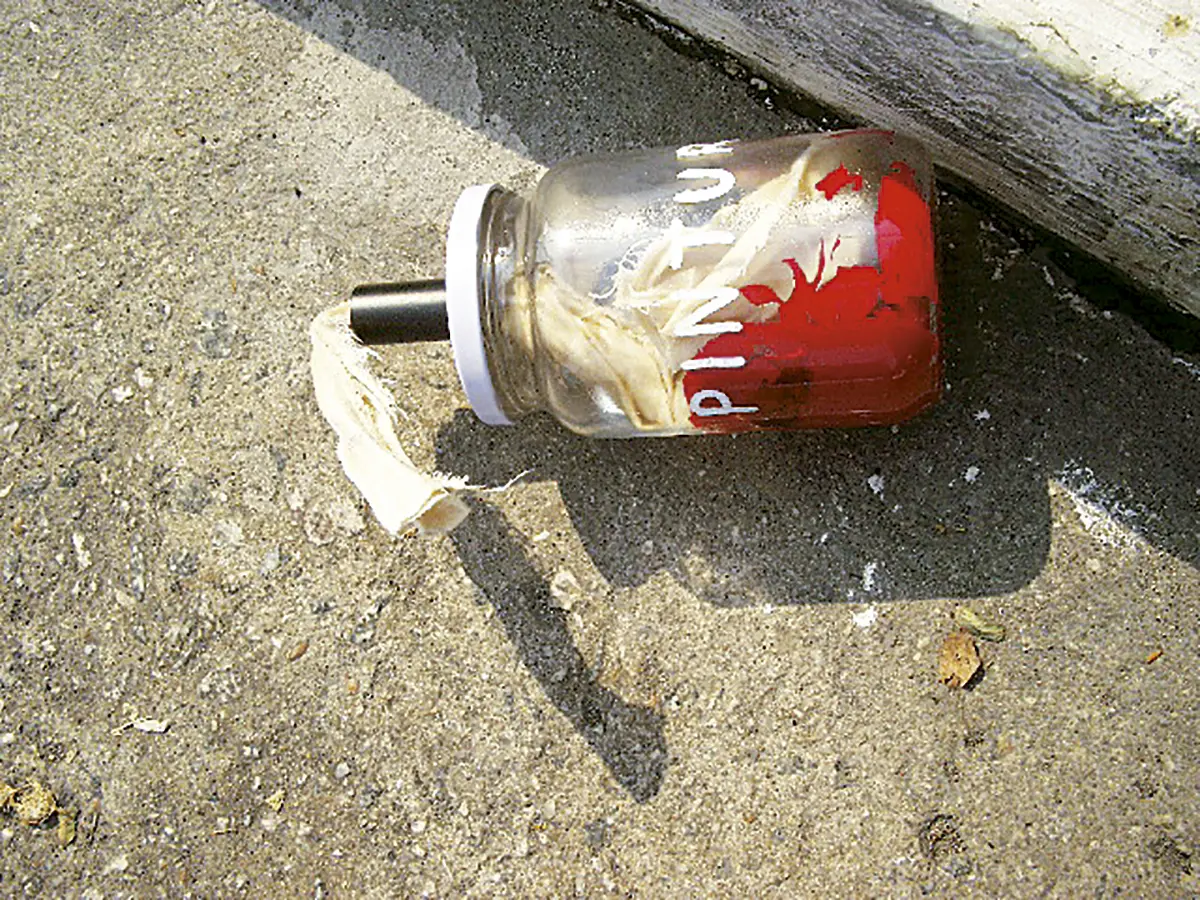
In Paulo Climachauska’s Molotov Cocktail/Painting, paint, canvases, and turpentine are re-signified in the proposition of a transformative art/action. By referring to homemade explosives in the title of his piece, the artist highlights the idea of break or rupture. The objects of his art/action not only occupy different spaces in the museum, but are also to be found in other museums throughout the city of São Paulo, such as the State Museum (which holds an important collection of nineteenth-century art) and the Paulista Museum (a history-oriented museum), thus imprinting the notion of a break with the institutional, or the lack of a project for modernity. At the State Museum, his “Molotov cocktail” object is located in a space devoted to works that deal with the question of national identity; at the Paulista Museum, it is next to a canvas that alludes to Brazil’s independence.
Panorama 2003 brought to Brazil’s cultural scene a critical gaze that highlights contemporary art issues such as language along with a perspective for reading contemporary art produced in Latin America. In terms of art produced in Brazil, Gerardo Mosquera’s critical reading points out that “Brazilian art possesses a unique sensibility for materials, and its foundation lies in the object. This orientation dominates in general terms, though it coexists with other practices. It gives Brazilian art a distinctive feel, clearly identifiable in relation to dominant trends in other Latin American countries.” The curator’s work also proposes a revision of the concept behind Panorama itself, as an exhibition of the São Paulo Modern Art Museum.
NOTES
1. Panamanian critic Adrienne Samos assisted Mosquera in the organization of Panorama.
2. The exhibition included nineteen works by twenty-one artists. Some of the pieces were created by a two-artist team.
LISBETH REBOLLO GONÇALVES
Professor at the University of São Paulo and is President of the Art Critics Association (AICA/Brazil Section).