
Art Basel/Miami Beach, now in its second year, has become a critical venue for the viewing and sale of twentieth-and twenty-first-century art. Expectations were high after last year’s successful inauguration, and fair organizers were under pressure to prove the staying power of this new event. What became immediately apparent was that the quality of the artwork was maintained and even surpassed that of the preceding year. Although the level of excitement from 2002’s giddy introduction could not be matched, the sense that AB/MB will become an annual pilgrimage has begun to take hold.
The success of the fair can be attributed to a number of Miami-based elements including geographic desirability; the participation of local curators, museum boards, and dealers; and, most importantly, the crucial role of Miami’s own art collectors. The city is home to some of the leading private art collections in the United States, and the participation of those collectors, who open their doors and generously entertain guests, adds a personal element to the more commercial nature of the fair. Collections such as the Rubells, Margulies, and Rosa and Carlos de la Cruz among numerous others were on display and offered the viewing public insight into the private and idiosyncratic world of art collecting.
The fair itself was host to 175 galleries that drew a crowd of nearly 30,000 visitors over a five-day period. Fair organizer Samuel Keller put together an extensive program of receptions, panel discussions, and related events and established a new “yellow-dot” campaign to indicate artworks priced under $5,000 —presumably a reaction to the success of the Affordable Art Fair which has demonstrated the enormous market for reasonably priced art.
The “Art Statements” section of the fair was particularly strong, and devoted sixteen one-person shows to emerging talents such as Yoshua Okón (Galería Francesca Kaufmann), Gabriel Kuri (Sara Meltzer Gallery), Pedro Reyes (Galería Enrique Guerrero), Carlos Garaicoa (Lombard Freid Gallery), Santiago Cucullu (Barbara Davis Gallery), and Laura Vinci (Galeria Nara Roesler). These juried spaces were primarily reserved for multimedia installations, a good number of which focused on social themes.
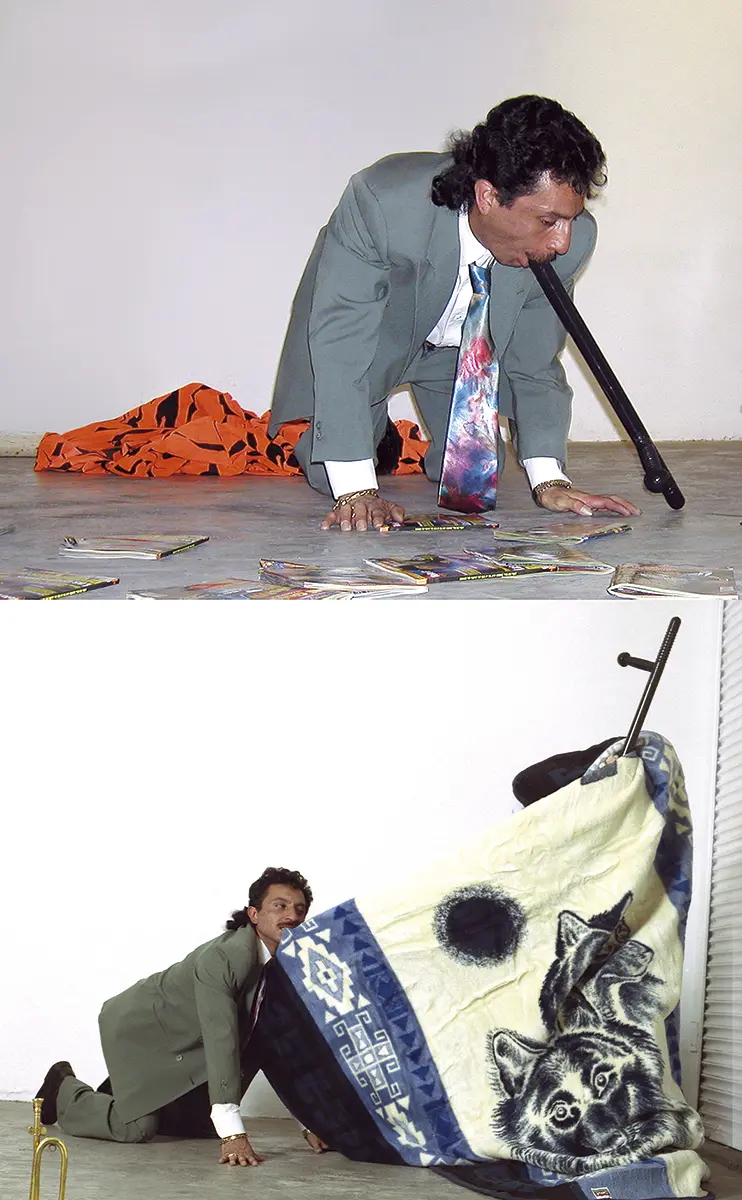
Okón’s performance, Coyotería, 2003, which later turned into a video after the first day of the fair, is a clever take on Joseph Beuys’ piece, I like America and America likes me. In Beuys’s 1974 art-action, the canine functioned as a symbol of intuition, spirituality, and transformation in the face of Western materialism and positivist thinking. Okón’s piece skillfully uses the idea of the coyote —a term linked to exploitation and greed within Mexico, both in reference to colonial texts that refer to Europeans as coyotes, as well as to the more contemporary meaning that identifies the coyote with the middleman who smuggles humans across the Mexican —U.S. border— to produce an alternative reading linked to corrupt economic and political values. Okón’s performance underscores the failure of Beuys’s project for social transformation while calling attention to the widespread absence of a spiritually or socially-responsive element in our money-driven culture.
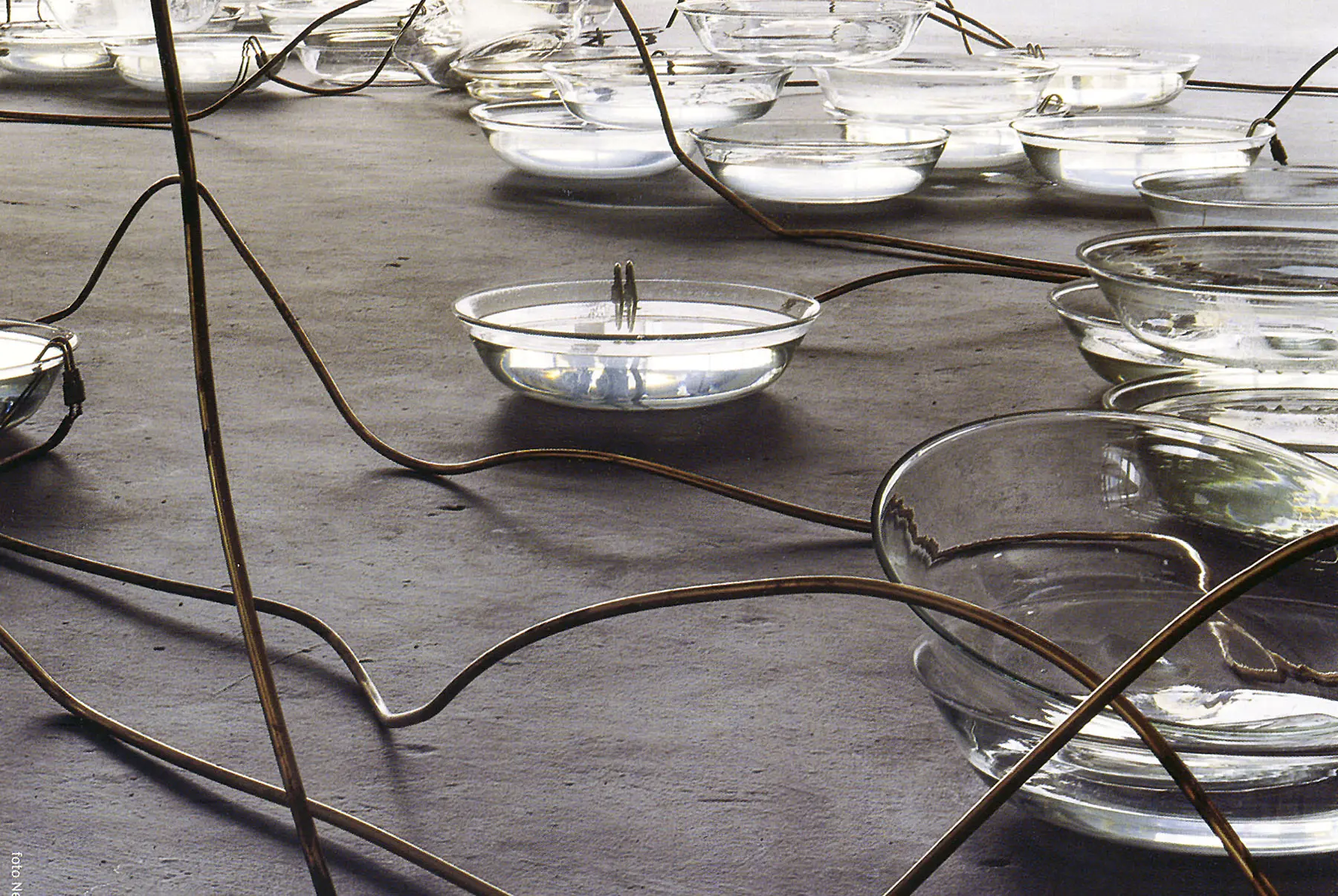
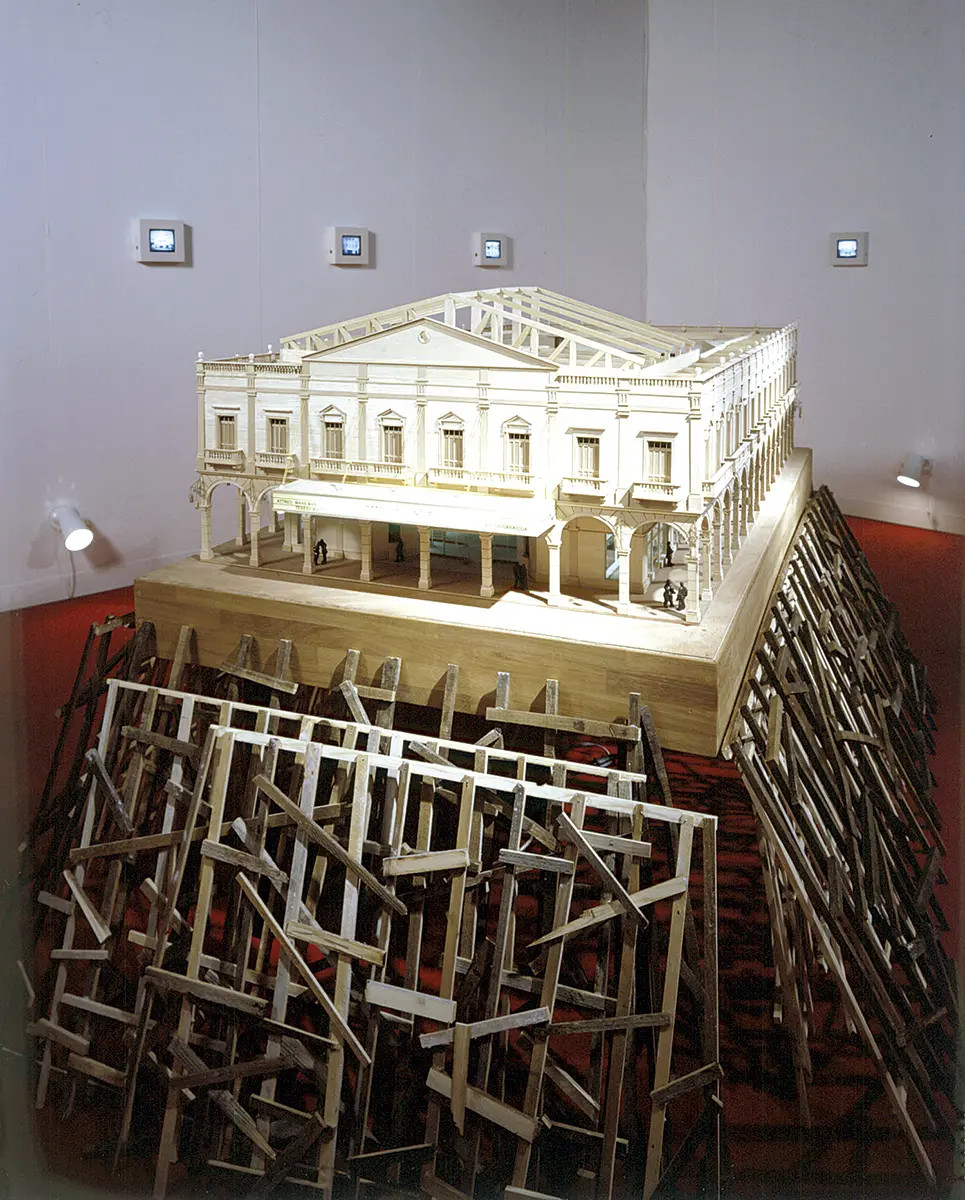
Equally interesting was Carlos Garaicoa’s installation, which dealt with the topic of censorship, and Santiago Cucullu’s graphic mural based on the history of Argentinean anarcho-syndicalism in the 1920s. In Garaicoa’s piece, Letter to the Censors, 2003, the artist built a detailed architectural model of a theater supported by fragile scaffolding, with red velvet chairs and a video screen presenting the opening credits of censored films—both from Cuba and abroad. The absence of film imagery together with the black and white photographs of decayed and abandoned movie houses on the surrounding walls provided a nostalgic look at pre-revolutionary Cuba, as well as a controlled yet unambiguous call for civil liberty. Also noteworthy was Santiago Cucullu’s project examining the life of Italian immigrant Severino Di Giovanni —a radical anarchist who advocated violence and expropriation of wealth until his capture by the authorities in 1931. On a more esoteric level, Laura Vinci’s installation, Mona Lisa, 2002 used copper wire, glass, water, vapor, and light to explore the material transformation of matter, while simultaneously examining Neoplatonic theories regarding harmonic balance and the order of nature.
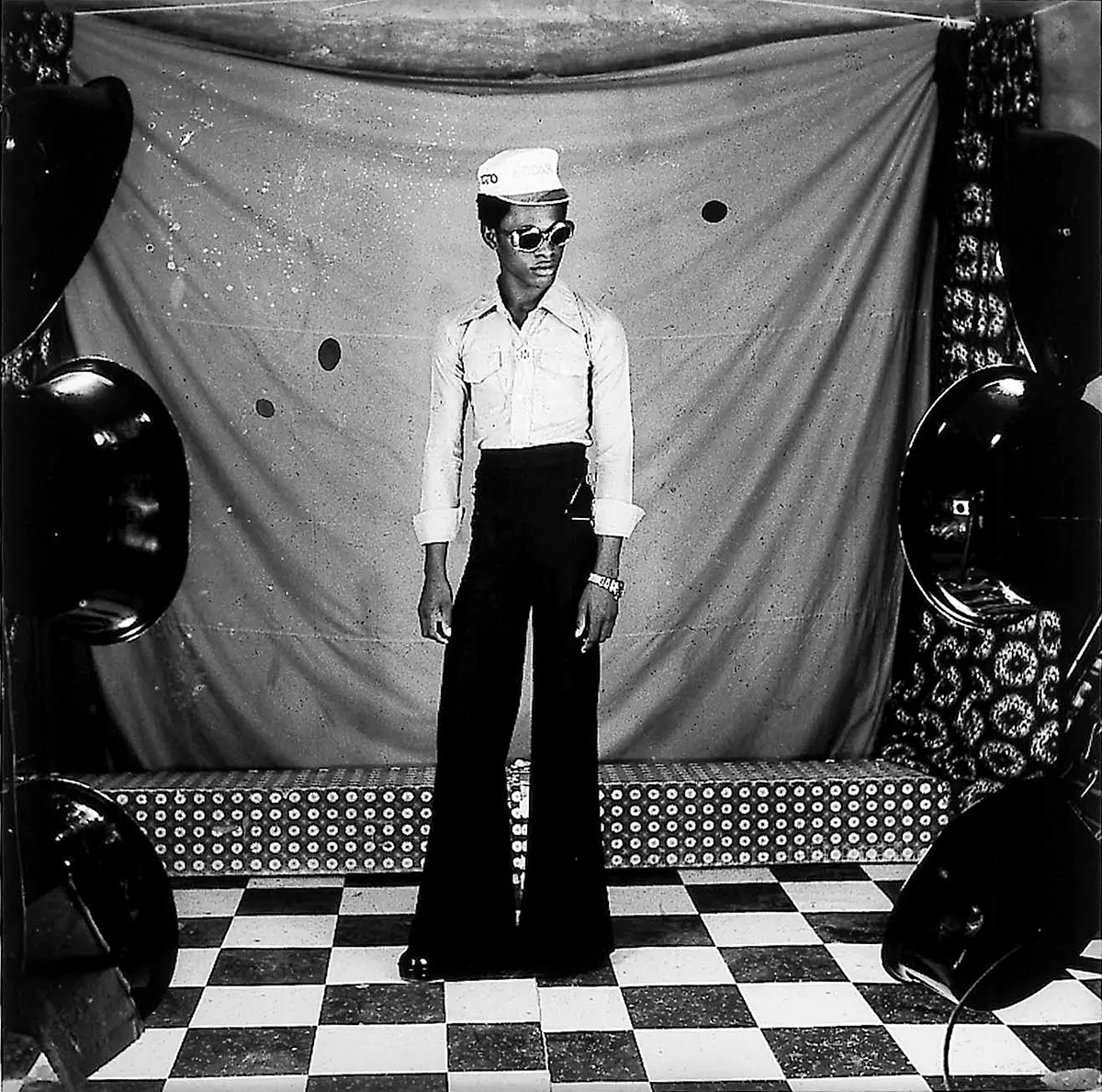
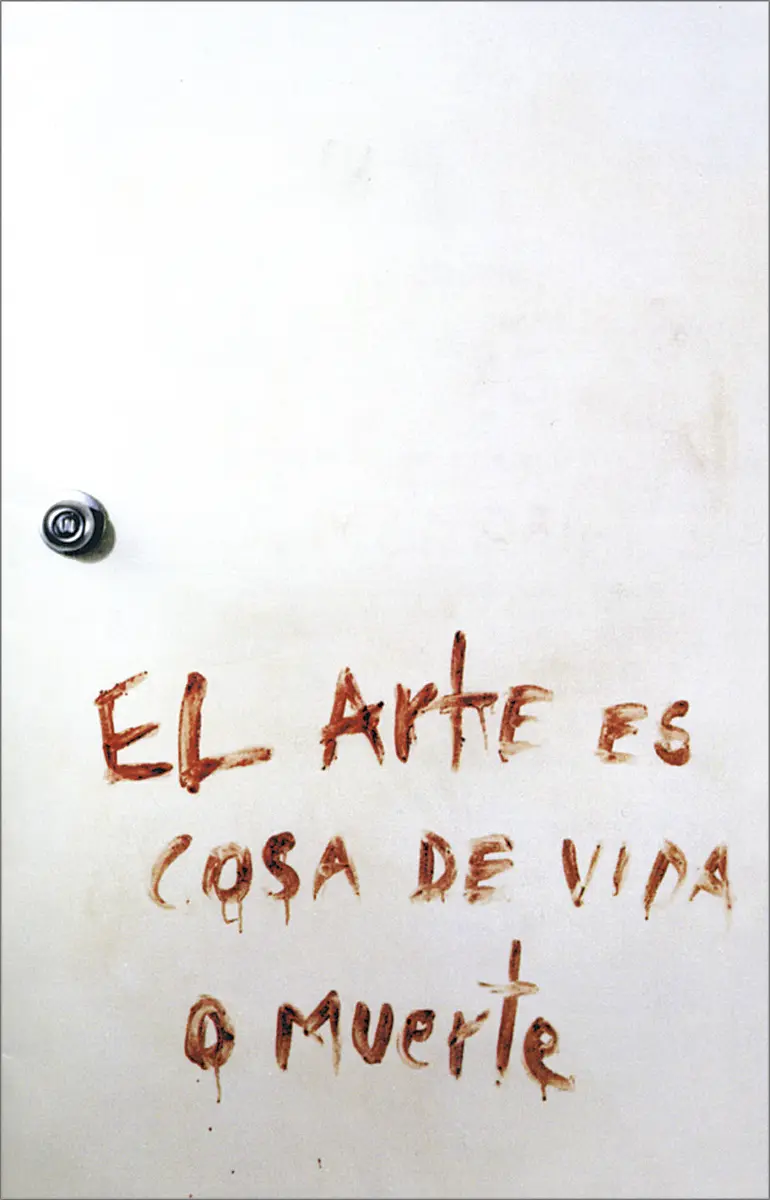
Photographic self-portraits by Samuel Fosso were on view at Jack Shainman Gallery. Fosso began to photograph himself at the age of fourteen as documentation for his family after fleeing his homeland during the Biafran war in the 1960s; these staged photographs share much with Cindy Sherman’s conceptual imagery, yet unlike Sherman, Fosso is not subverting cultural stereotypes but instead is exploring personal history and private fantasy. Priscilla Monge’s series, Enumeración de la sangre, 2003 was an important addition to the fair and made reference to Eduardo García Delgado’s gesture during the 1961 Bay of Pigs invasion when the wounded soldier scrawled Castro’s name in blood as he lay dying. In this controversial work —for which Monge withdrew her participation in this year’s Havana Biennial rather than be subjected to censorship— the artist destabilized the national referent to explore the concept of liberty and the seduction of aesthetic acts (Galería Juana de Aizpuru). Other notable images include Cinthya Soto’s psychological portraits concerning human perspective and desire at Jacob Karpio; Ángel Marcos’s enigmatic and lush landscapes at Diana Lowenstein Fine Art; and Tunga’s Threatened Witness series where the concepts of beauty and attraction were examined through images of cosmetic-laden forms at the Christopher Grimes Gallery.
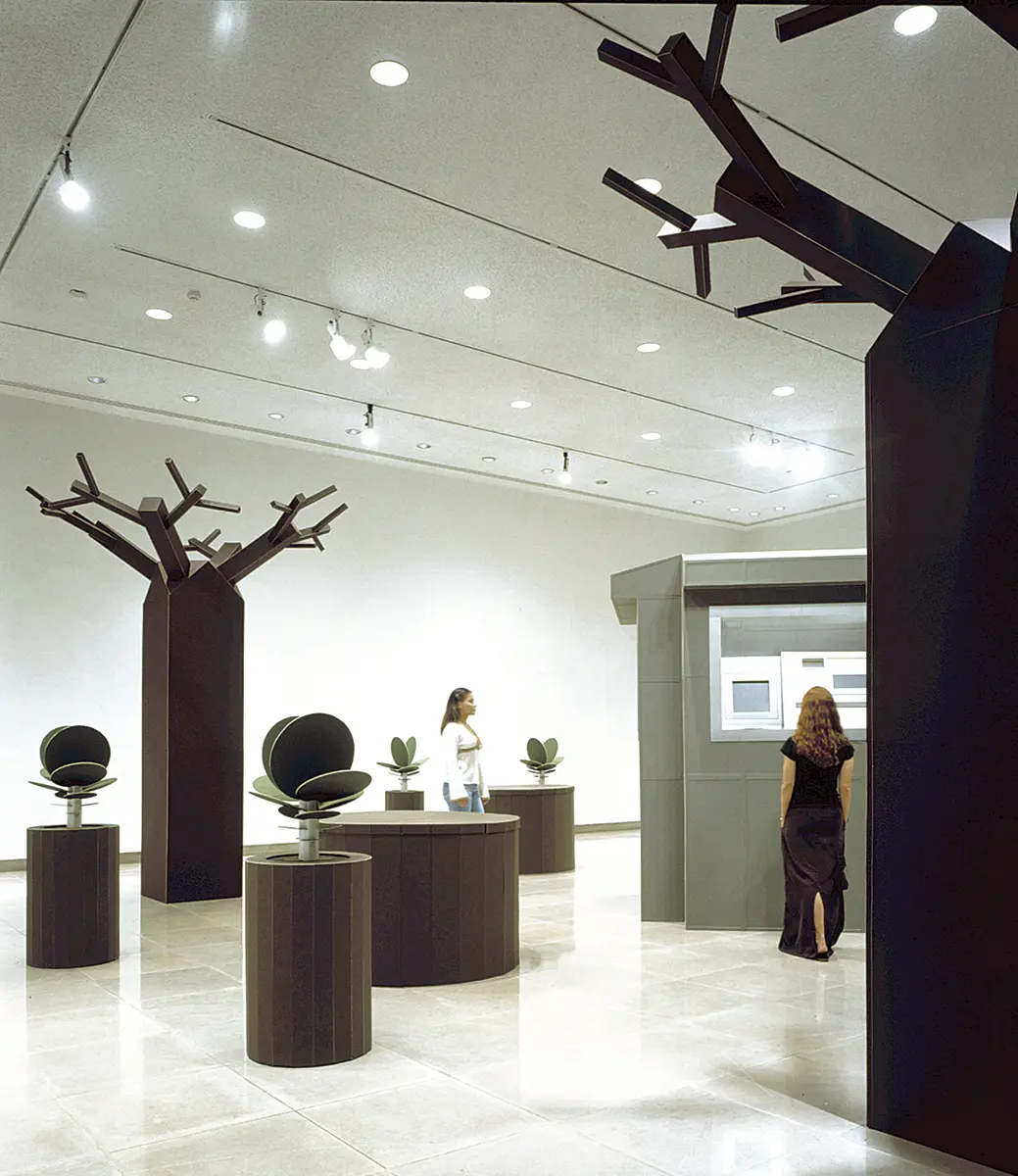
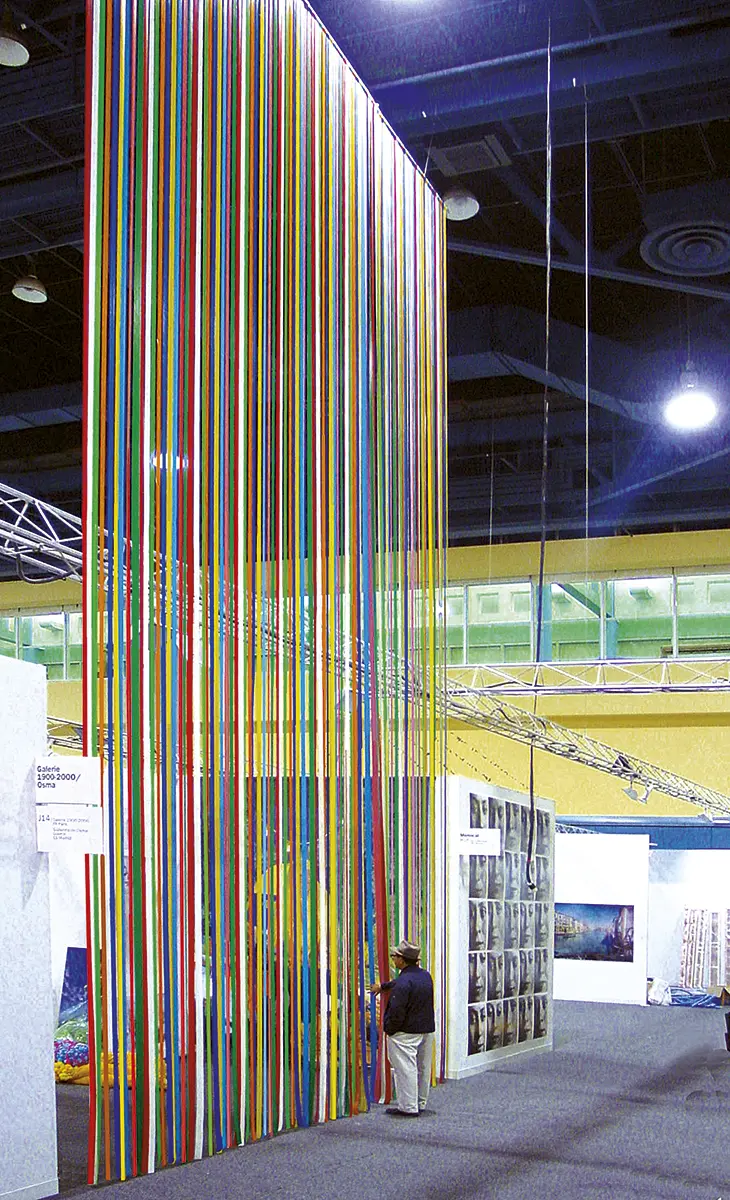
Roberto Behar and Rosario Marquardt’s large-scale installation transformed the Nina Menocal Gallery with a ten-meter-high curtain of brightly-colored plastic bands hung from the architectural supports. The Miami-based artists/architects transform everyday space, exploring the relationship between visual art, architecture, and the human body. A different type of phenomenological experience was presented by Spanish artist Ester Partegàs, in her installation Samesation, 2002, at the Helga de Alvear Gallery. Partegàs’s work looks at the corporatization of public space —in this case, bank lobbies— and uses exaggerated scale and artificial materials to underscore both the impersonal quality of these spaces as well as the powerful reach of multinational companies in a global economy. At the Galeria Brito Cimino the focus on globalization and its effects was also cleverly dealt with by Nelson Leirner whose, Right you are... if you think you are, 2003 represents cultural colonialism by means of maps filled with stickers depicting popular characters such as Mickey Mouse, Santa Claus, and the Powerpuff Girls.
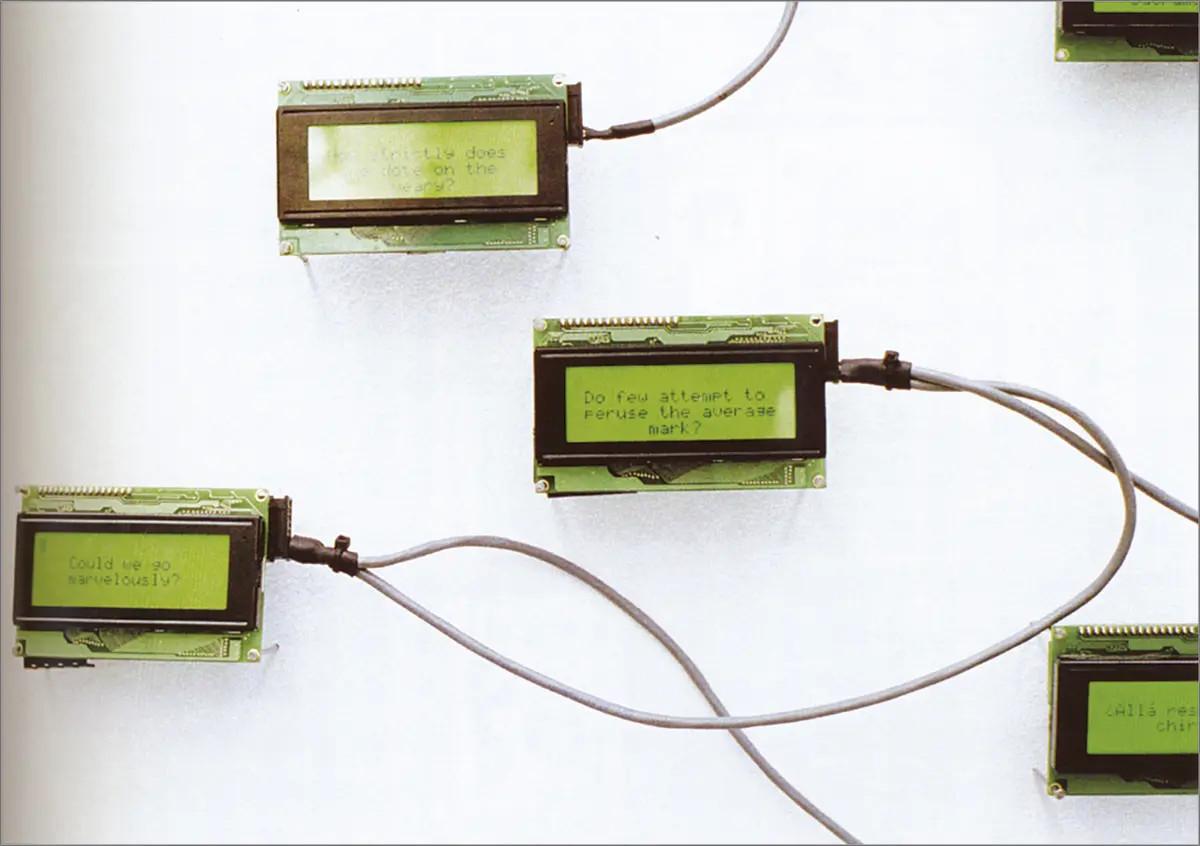
Technologically oriented artworks, although in the minority, were well-represented by Rafael Lozano-Hemmer (Galería OMR), and Leo Villareal (Sandra Gering Gallery). Lozano-Hemmer’s, 33 Questions per minute, 2000-2001, is powered by custom-made software that can generate up to 55 billion random questions without repetition. The title of the piece refers to the threshold of readability per minute, and according to the artist, this type of inundation simulates our current media culture where the viewer is left with little time for critical reflection. Similarly, Villareal’s light sculpture uses LED technology with the potential for creating 16 million different light sequences of temporal-based abstractions to explore the concept of randomness. William Kentridge’s animated film projected within a bathroom medicine cabinet was considerably more low-tech, creating the illusion of movement with charcoal drawings photographed frame by frame in a fictional narrative based on the everyday realities of post-apartheid South Africa (Goodman Gallery).
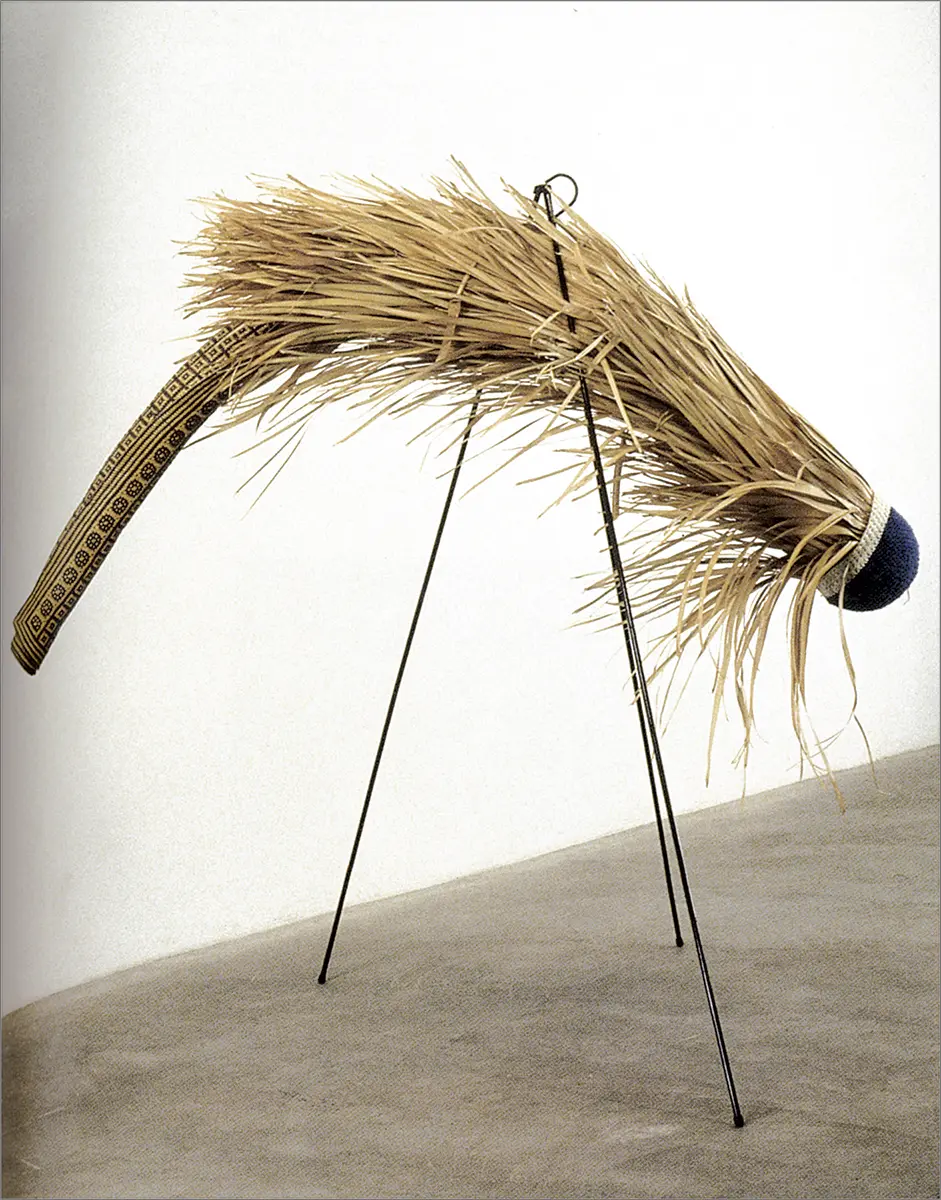
The elegant and formally compelling sculpture was represented by Abraham Cruzvillegas’ El Cometa (Tilton/Kustera Gallery); Lygia Pape’s Spheres (Andre Milan Gallery); Hilal Sami Hilal’s Untitled, and Edith Derdyk’s fiber installation (both at Marília Razuk Galeria de Arte). Cruzvillegas’s work combines natural and found materials in sculptures that are graceful in their simplicity, while Sami Hilal’s “books” contain pages of filigreed text made from acid-dipped copper sheets that create refined and meditative forms.
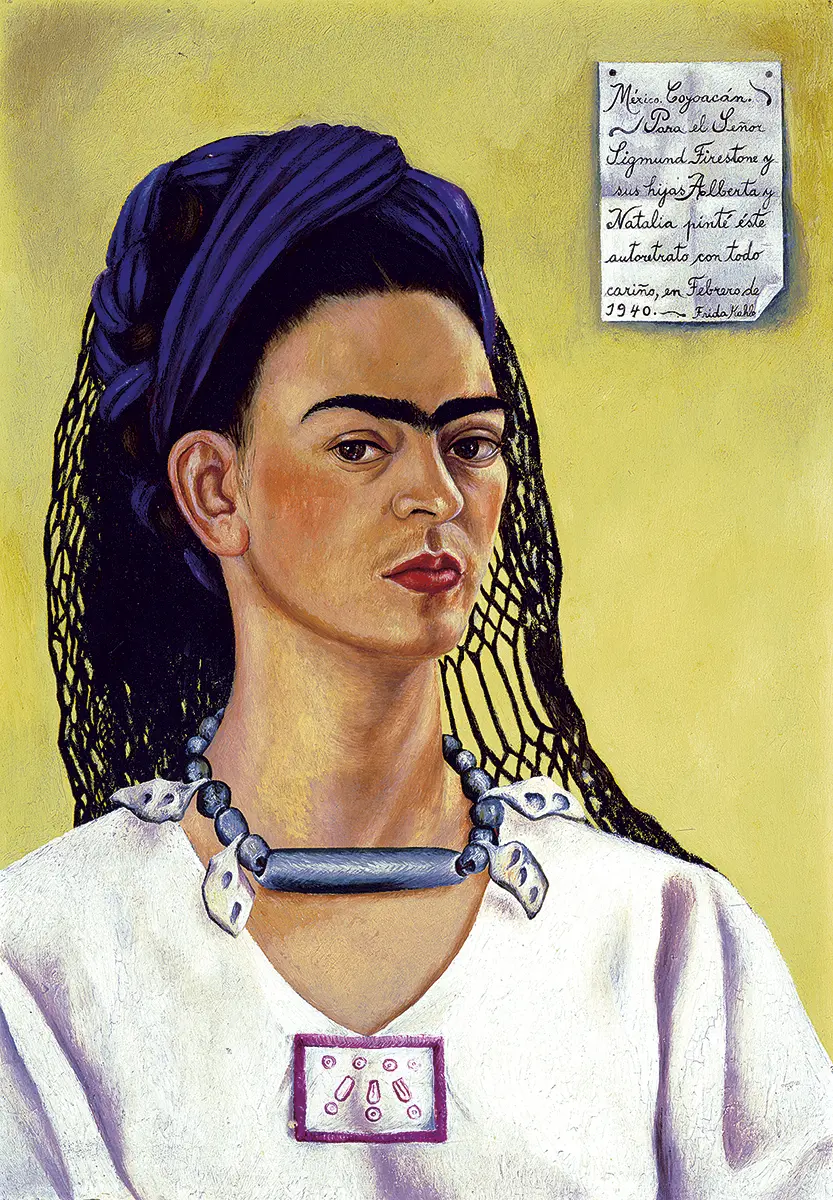
One of the main crowd pleasers this year was found at Mary-Anne Martin/ Fine Art, where self-portraits of Diego Rivera and Frida Kahlo were on view. This pair of portraits was originally commissioned by Sigmund Firestone in 1939 during a turbulent time in the couple’s marriage; the paintings were being sold together for an estimated $15 million making them two of the most valuable works at the fair. Also of interest were three roughly hewn deities painted by Torres-García (at Krugier/Krugier Ditesheim), and an exquisite oil by Russian avant-garde artist Nikolai Suetin (at Leonard Hutton Gallery). Contemporary paintings by Julie Mehretu at the Project, Inka Essenhigh at Victoria Miro Gallery, and Pablo Vargas Lugo at Galería OMR demonstrate the continued strength of painting even as the allure of new technologies increasingly seduces young artists.
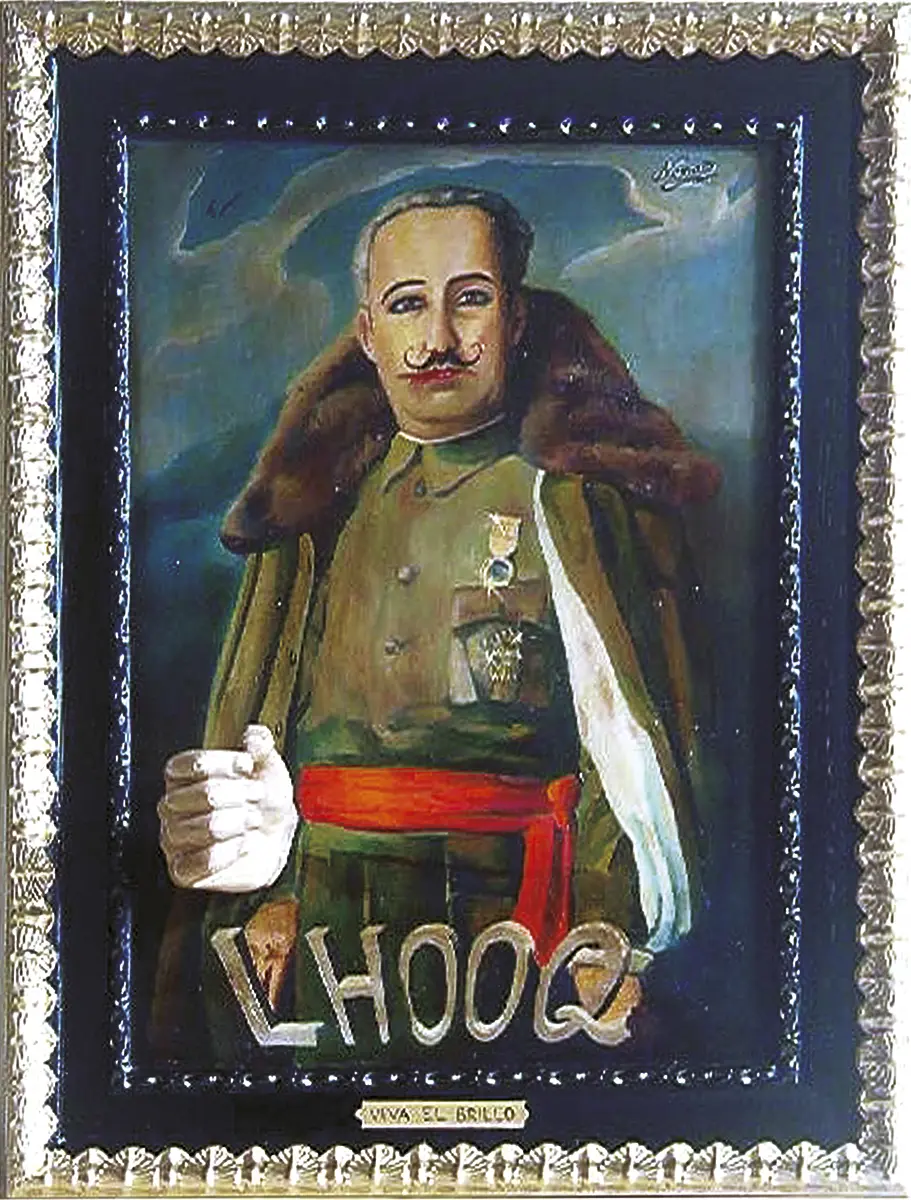
A perfect place to head during the early evening hours was the "Art Statements" portion of the fair where twenty galleries were showing artwork in shipping containers directly located on the beach. The Macarrone Gallery was transformed into a karaoke nightclub by German video artist Christian Jankowski. At Henry Urbach Gallery, Stephen Hendee’s light installation of modular sculptures made from foam core, electrical tape, and dim-colored lights beautifully articulated the interior space. Meanwhile at Galería Espacio Mínimo, artist Nono Bandera’s installation, España es el país preferido de Dios (Spain is God’s Favourite Country), integrated found pictures from the Franco era into a trompe l’oeil mural that irreverently confronts national mythology. At Annet Gelink Gallery, Chemi Rosado Seijo’s El Cerro, 2002–2003, documented his intervention in the crime-ridden neighborhood of Naranjito, Puerto Rico, where the artist convinced residents to paint their houses in hues of green like the surrounding mountains. This simple act helped transform the neighborhood through a community-based action that promoted a previously non-existent pride of place and simultaneously altered the landscape into a cubist-inspired work of art.
Taking advantage of the numerous collectors and art patrons visiting Miami Beach, the Scope fair was held at the Townhouse Hotel and a new organization called NADA —New Art Dealers Alliance— held its show in a vacant building located just three blocks from AB/MB. Both fairs attracted international galleries showing cutting-edge art, yet of the two the NADA fair seemed much better organized and provided more space for viewing, while the Scope fair showed work by up-and-coming artists that generally was more affordable.
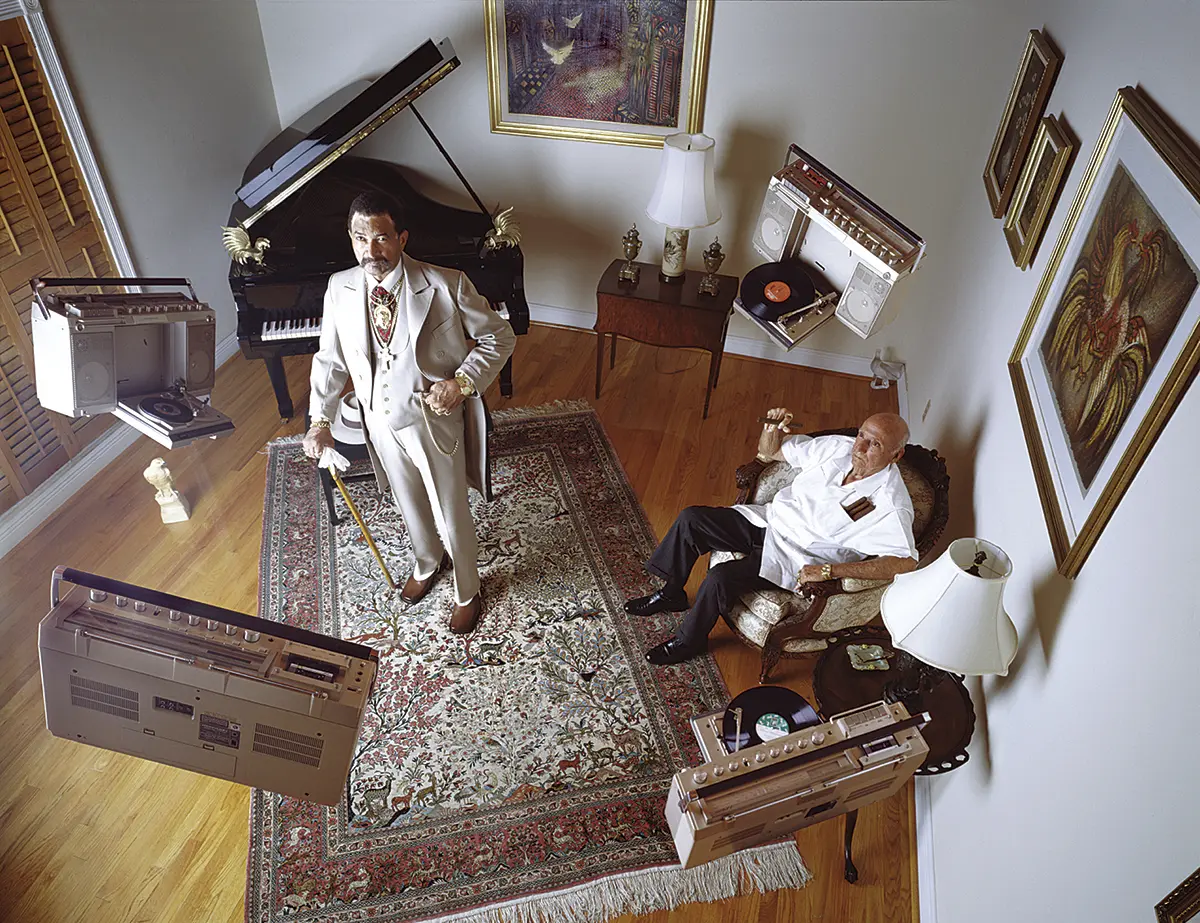
Forty-one contemporary galleries participated in the successful NADA fair, where humorous works from Luis Gispert’s Flying Turntables series were on view at Massimo Audiello Gallery; a psychedelic installation by Assume Vivid Astro Focus took over the Peres Projects space; and photographs by Paul Ramírez Jonas from his Album: 50 State Summits series were exhibited at LFL Gallery. At Scope, Gabriel de la Mora presented new pixeled photographs in a series initially begun after a copyright infringement suit was filed against him (Ricardo Reyes Arte), while found objects and paper-based works by Luis Romero could be found at the Karen Lenox Gallery, and humorous Afro-Asiatic works on paper by Iona Rozeal Brown were exhibited at Caren Golden Fine Art.
Overall there was no specific theme or medium that took precedence over all others, making it difficult, to sum up such an enormous diversity of artwork and related programming. But what does make the Miami-based fair unique is the infrastructure and the enthusiasm of the local art community, which is not yet jaded or cynical from all the attention, but is interested in developing a cosmopolitan image in which the arts are central to Miami’s cultural identity. This attitude, along with the organizational skills of the Basel-based group has made the fair an undeniable success.
CHARMAINE PICARD
Art critic and candidate for the Ph. D in Art History at the University of Chicago.