Among the issues more frequently dealt with by visual artists in recent years is the issue of everyday life. The topic of reality, of routine, of the surrounding environment in its plainest and most direct form is treated as an exploratory method in the attempt to show a new way of understanding the world. The 9th Bancomer Art Salon presents 32 artists, mostly born after 1970, who work by entering into a new reality and offering viewers a fertile terrain for questioning, entertainment, and learning.
At a time when televised images enjoy greater credibility than any event in exterior reality, and when a photograph is not a credible witness to real objects, reality itself becomes something distant, inaccessible, strange, and as such matter for the visual arts. For example, Galia Eibenschutz presents photographs of the dangerous work carried out by window cleaners in urban skyscrapers; Plinio Ávila sets up a circle using the kind of chairs that can be rented for public events; Diego Teo puts together a pig with radiolites placed on the floor; Naomi Uman and Richard Mosca show photographs from studio Estévez of a female tourist of innocent appearance pictured in different Mexico City locations with her legs, chest, and arms almost entirely covered in tattoos.
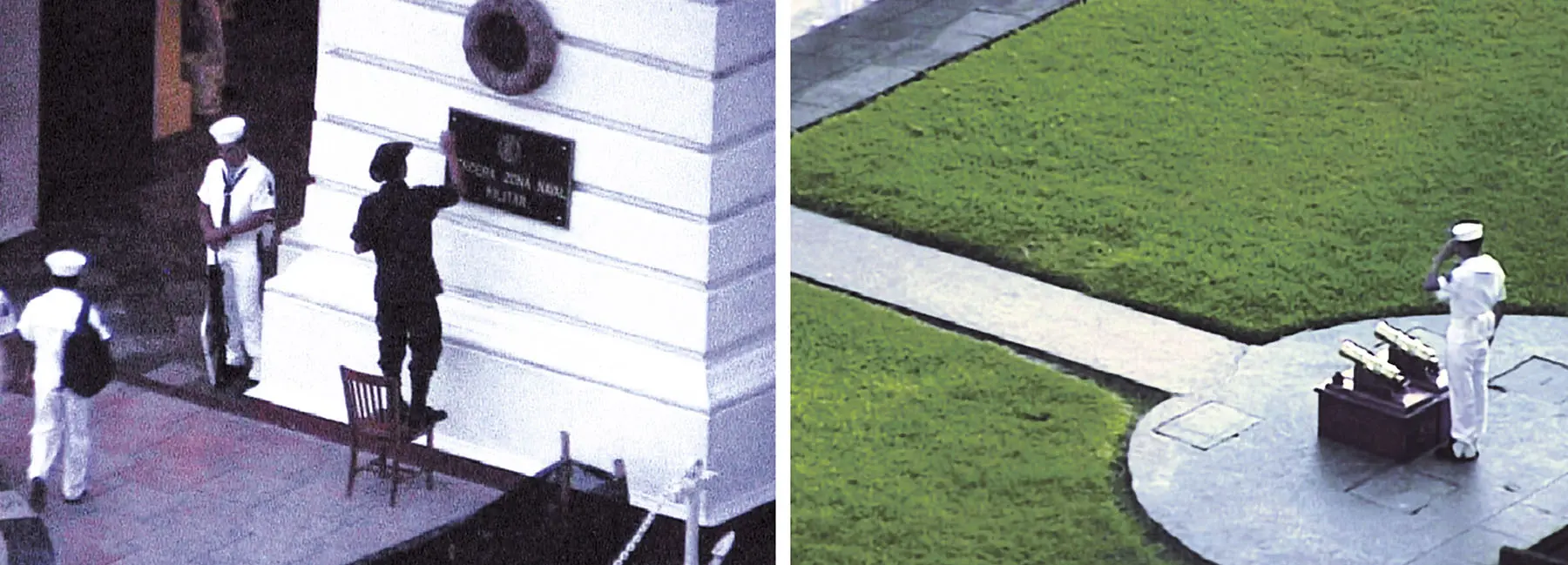
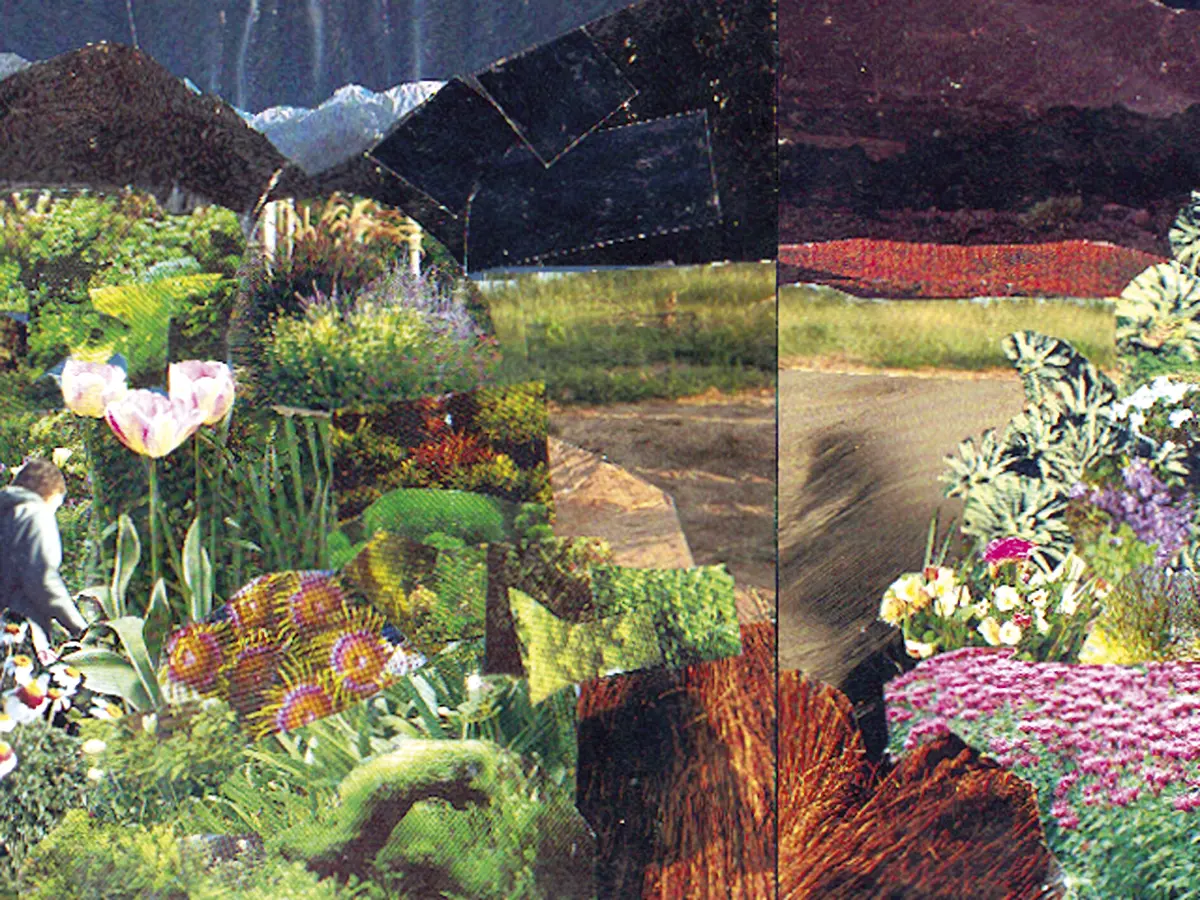
The digital work of art has become a versatile and complex product, both in its formal and theoretical construction. The artist’s control over the many elements offered by technology affords an unprecedented opportunity for the development of representations both figurative and abstract, which approach from different points of view a narrative that will always provoke queries and invite to the adventure of a new sensorial experience. Images can be transformed, manipulated, or fragmented. In a collage, Pilar Villela arranges her photographs in such a way that the landscape’s horizon lines resemble an abstract painting. In another piece, a seemingly beautiful floral arrangement hides underneath its roses fragments of discombobulated faces. Verena Grimm presents a three-part video projected by different monitors located at different points in the exhibition spaces. In the first video, a group of marines march in what seems like a circle. There is a monotony and a certain dizziness that is broken only when one of the marines (accidentally?) lets slip a handkerchief, which the others try to avoid. In the second monitor, we again encounter a formation of marines, with another one in front of some cannons; the scene is practically frozen, and it is interrupted only when a bird flies surreptitiously across the screen. The third monitor exhibits yet another marine’s tedious task of guarding the door to the Secretariat, while an employee polishes the building’s plaque.
Deep-set in reality, and maintaining a close relationship with the banality of the every day and the digital manipulation of images, are those artists who take on their work from the point of view of fantasy or utopianism. Mauricio Rocha alters the building’s architecture by setting up a wooden bridge traversing the circular room’s window, extending several meters over the museum’s outside gardens. Heráclito López builds, on the floor and the walls, organic forms, half-spheres, covered by minute eyes that watch everything around them. Richard Moszka exhibits two serigraphs depicting the Teléfonos de México antenna, which in the image sends electric shocks throughout the neighborhood. The antenna looks beautiful on paper, although in reality it was built on the site of an old colonial building that was demolished to make room for a far-from-beautiful structure. Across from Moszka’s pieces, a wall by Diego Teo, made with phone books, imposes its solid, invincible presence. However, on the other side of the “multifamily” with white and yellow segments, the cut-out of a man, who seems to be carrying a coffin on his shoulders, walks up the stairs (also a cut-out) to the wall’s uppermost point.
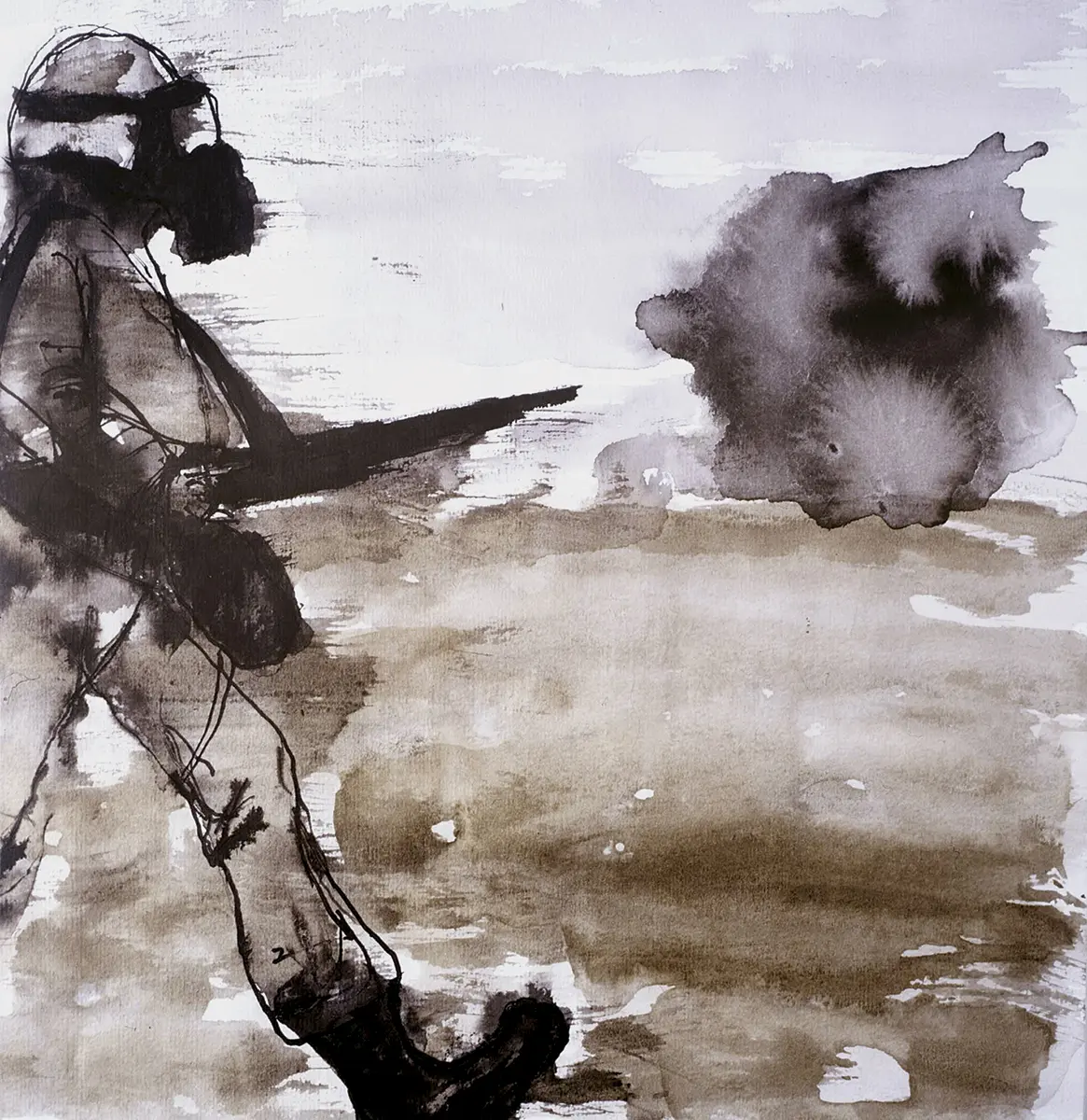
The show’s most accomplished fantasy/utopia, and in my opinion the strongest piece in the exhibit, was Apoohcalypse Now, a video by Artemio. For scenes from the Vietnam War-themed film the artist superimposes music from Winnie the Pooh cartoons, alternating with sounds of the little bear launching an apology for the horror, the terror of death, and the inevitability of tears while running through the hills and gulping down jars of honey. The monitor has been placed inside a military-style camouflage tent, which contrasts with the works of three artists situated around it: Patricia Henríquez’s excellent China ink works, dealing with scenes of war, guns, cities on fire, and large areas devoid of survivors. Manuel Cerda’s painting, which at first sight is a tapestry decorated with red and pink flowers but when seen through bifocals reveals the image of a prisoner fleeing a guard’s whip. And Juan Pablo Macías’ videos, projected on a wall, portray an idyllic landscape through which a woman walks surrounded by pastures, waterfalls, and giant flowers. This piece, alongside Macías’ family portraits around a birthday cake, involuntarily highlights the strength of Apoohcalypse Now.
Everyday life is a central theme; banality is a constant; but, what would we do if there weren’t something to show us that it is through fantasy —i.e., through art— that we are able to better apprehend reality? It seems to me the title is very accurate: Art, like modern life, is seemingly sublime.
LUZ MARÍA SEPÚLVEDA