The 5th Caribbean Biennial opened its doors last November 7 at the Modern Art Museum in the Dominican Republic and at several other spaces in the city of Santo Domingo. Unlike other events in the same genre, this one is distinguished by not including the name of the host city in its name but alluding instead to the entire field it attempts to illustrate. The notion of the Caribbean, so often cited by theorists from Cuba and Puerto Rico, among others, wants to mark the boundaries of a geographically discontinuous region and to establish a common cultural terrain for a rather diverse set of social and cultural practices. The working of an ideological construction such as our understanding of “the Caribbean” implies the consolidation of a basis for resistance to the post-colonial features of the contemporary cultural and political fields. Along these lines of thinking, we find in the Biennial nations from Central and South America alongside island countries from the Caribbean proper. This coming together signals an attempt to articulate the differences or dissonances that result from the kind of experiences that characterize life in our countries. Additionally, it guarantees a varied dialogue between the issues posed by the different notions of representation expressed in each work.
The Biennial included 105 participants —individual artists or artist collectives— from twenty-eight countries in the region, who were invited by twenty-seven curators. As might be expected, the works of art exhibited involved a wide range of positions and a certain thematic diversity. As a group, however, these works seemed to suggest common ground for debate, and many of them shared communicative features. It may sound “tired” to note, as in many other similar events, a certain absence of notions of representation derived from Eurocentric cultural codes, such as conventional painting or sculpture, in favor of practices that are critical of such codes, such as sound art, photography, video, installation, and performance, which seem to come from a different type of tradition. Nevertheless, if the reference is opportune, as I hope will become clear in the following notes, it is because of its ideological and political implications rather than its aesthetic or formal reach.
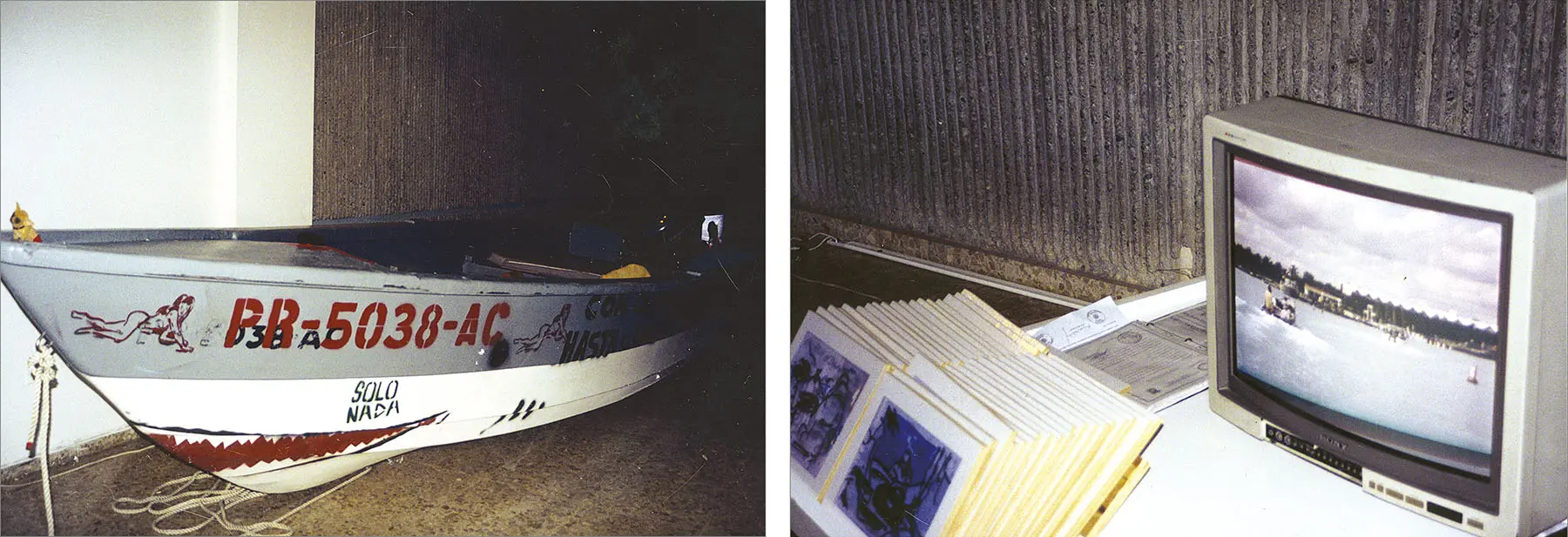
As an example of this, we could cite La flexible, a collaborative project that involved artists of different nationalities: Charlie Casallas, Olga Casellas, Carolina Caycedo, Raymond Chaves, Jesús Bubu Negrón, and Chemi Rosado Seijo. In the manner of a private performance, this work had the artists traveling in a yola (a light boat) from Puerto Rico to Santo Domingo. This piece was based on the usual migration routes (legal or illegal) in Latin America, which imply movement from south to north, or from the “Third” to the “First” world. By reversing the direction in their journey through La Mona channel, they also produced an ideological inversion of the problem and deconstructed the aggregate values of the “original” trajectory. In fact, the particular yola used by the artists was chosen because it had already served to move people from Santo Domingo to Puerto Rico. Works like this attempt to bring directly into the artistic field issues that come from the sphere of “the real.” The installation at the Dominican Republic’s Modern Art Museum involved the direct display of the boat as well as a video recording of the journey in all its detail, emphasizing the fact that the work as such operated more in the sociopolitical context than in the aesthetic field.
This piece seems paradigmatic of an attitude adopted by many contemporary artists in Latin America, who have understood the practice of art as a “real” possibility of exploring and confronting structural issues in the social, cultural, and political realms.
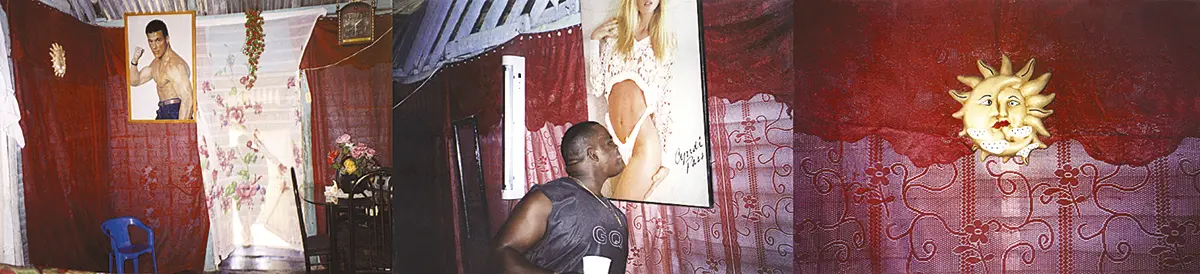
Melo Records, a project of Puerto Rico’s Edmee Feijoo, can be interpreted along similar lines. It is a post-feminist appropriation of the reggeaton, a well-known dance-music genre that usually possesses an erotic character and often is openly sexist. Halfway between simulation and appropriation, this performance by DJs Potranka & Jail-A, “Las Yeguis,” mimicked the conventions of the musical genre in question, but dismantled its implications and its meaning by introducing facts and principles of a different nature in its lyrics. Again, it was through video, photography, and installation that the project connected to the museum space.
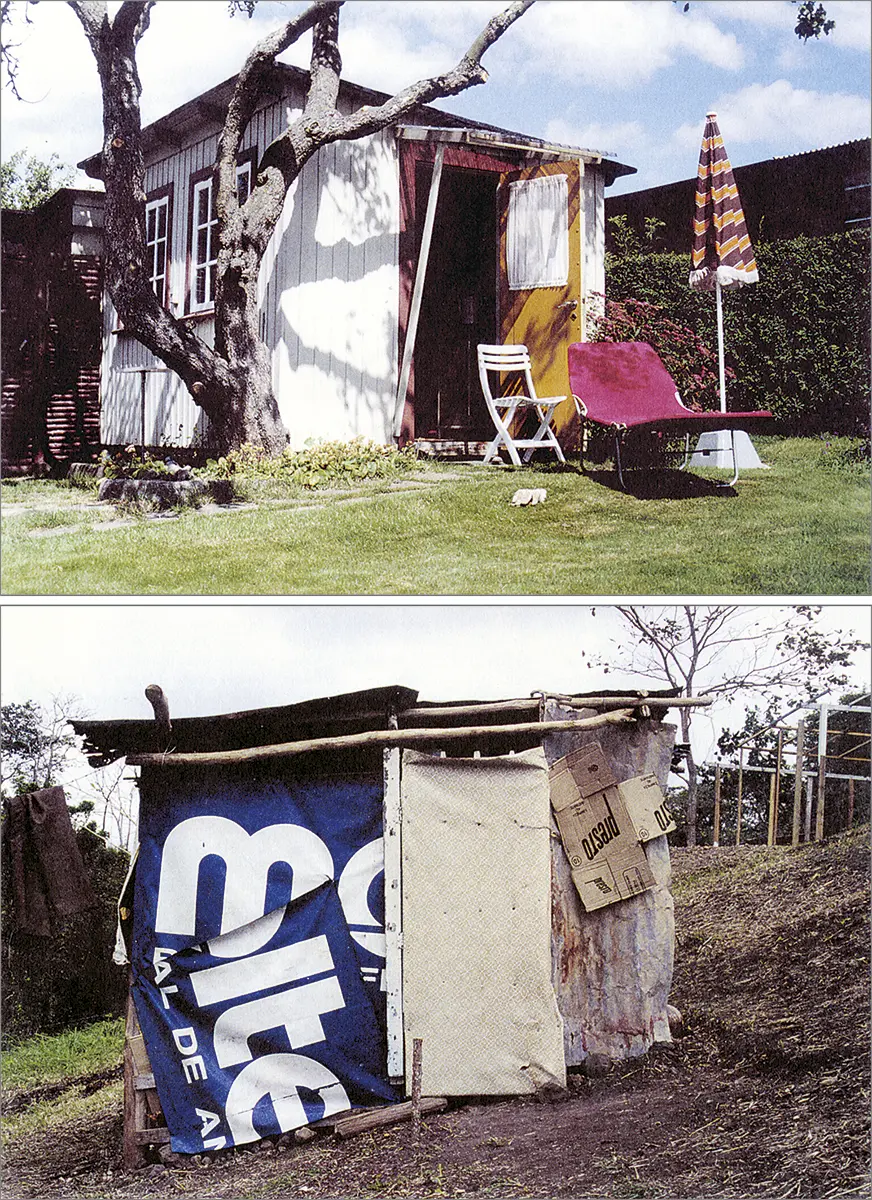
Several works focused on photography in order to pose confrontations with, or critical revisions of domestic, everyday cultural situations through the manipulation, by different channels, of the images’ true referents. Such was the case of Retratos de familia, by Guatemalan artist Alejandro Paz, or El mundo verdadero convertido en fábula, by Miriam Hsu and Oscar Ruiz-Schmidt, from Costa Rica. They both started by reviewing immediate experiences that occur within the nuclear family or in the private sphere, in order to reveal the conventions or discourses that give them structure.
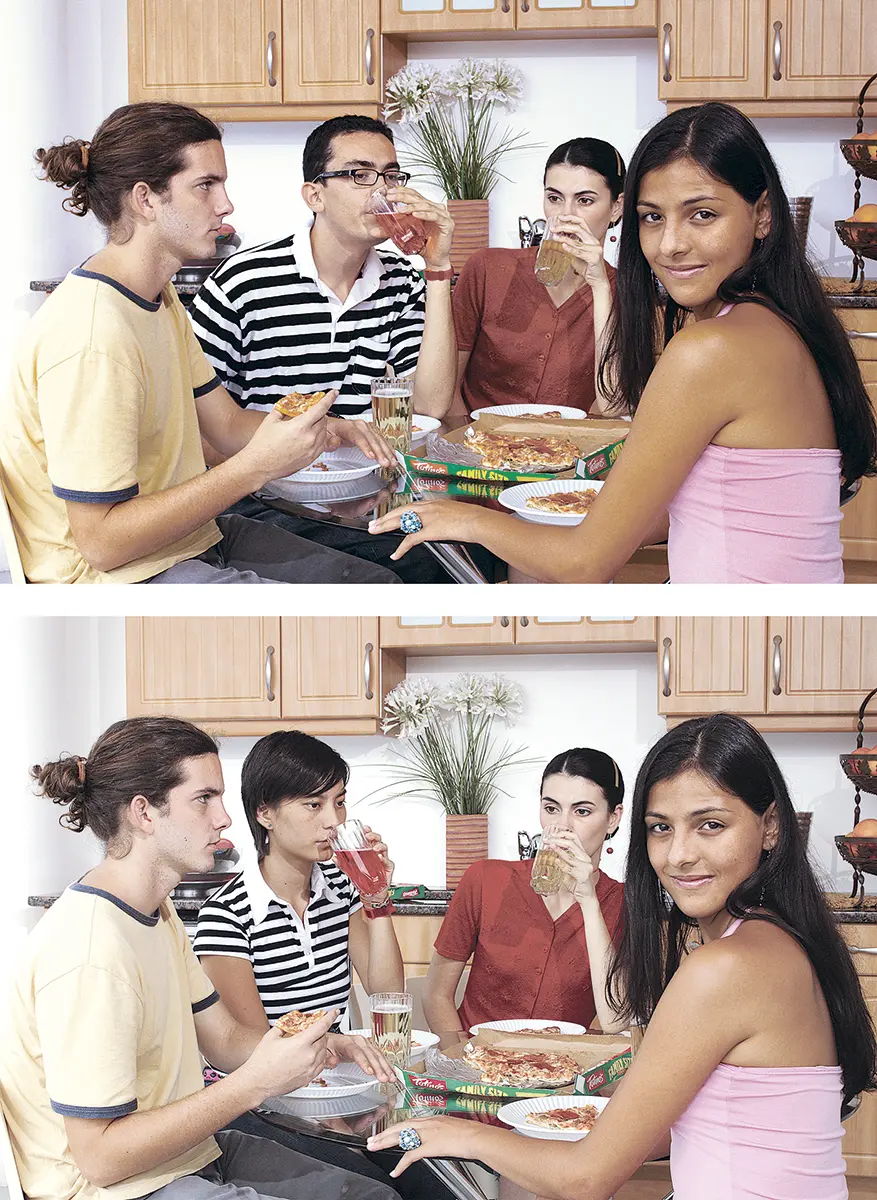
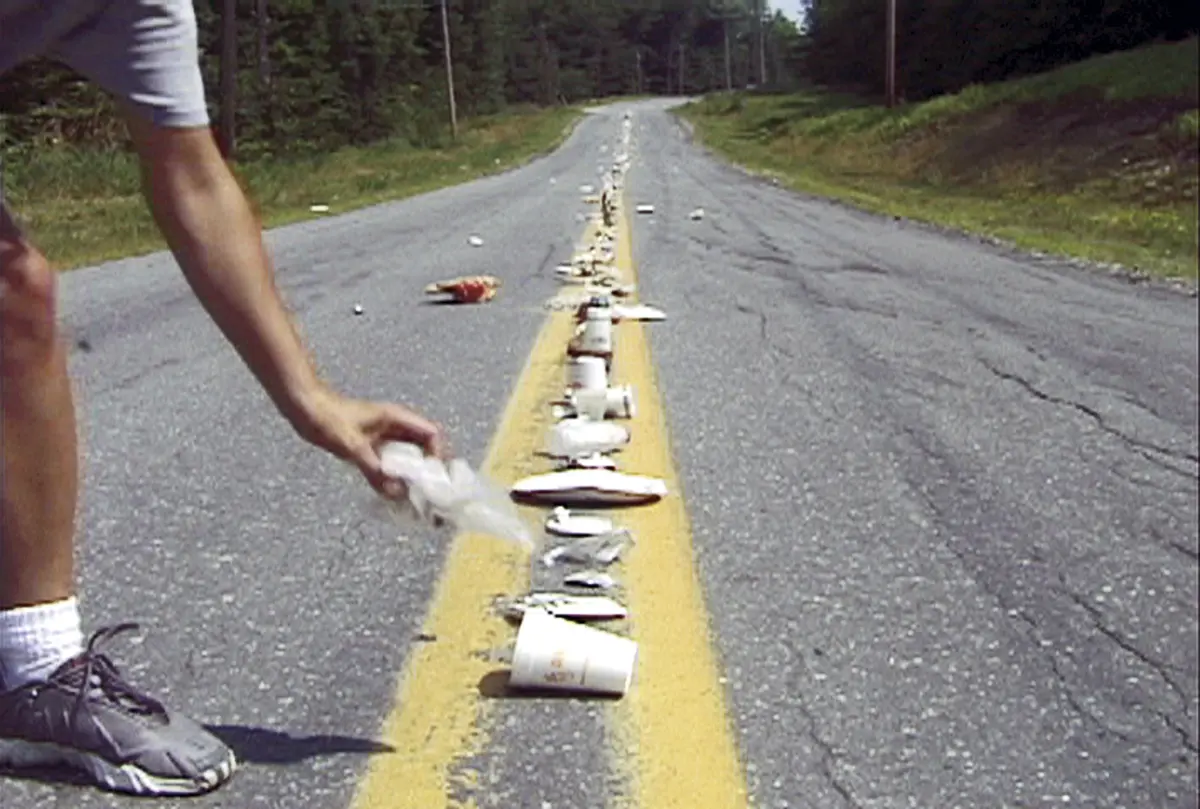
As Joan Foncuberta has pointed out repeatedly, photography is prone to point out the gaze that organizes the image structurally from the perspective of both its “author” and the conventions that regulate the medium, rather than to reveal the nature of the objects or events captured by the lens. Even in those cases where the photographic image has not been altered or intervened, Foncuberta perceives an evident cultural construction underlying the photograph that determines, consciously or unconsciously, its framing, focus, and composition. Artists, often aware of the situation, have tended to appropriate various narratives of documentation or truthfulness that belong to “artistic photography,” in order to create images that are fully contrary to that very category. Works like Dulce hogar by Panama’s Eric Fajardo, or We by Richard Holder ironically incorporate formal conventions of “artistic photography” to provoke a moral and political questioning of the referred events.
Dominican artist Polibio Díaz’s installation Interiores shares the perspective I have just mentioned. It comprises a series of photographic images whose dimensions are close to architecture and is accompanied by a radio blasting AM station for the pleasure of the viewer. In this project, audio and visual elements seem to reinforce each other’s meanings, since both present a universe of cultural representations that circulate away from conventional artistic practices.
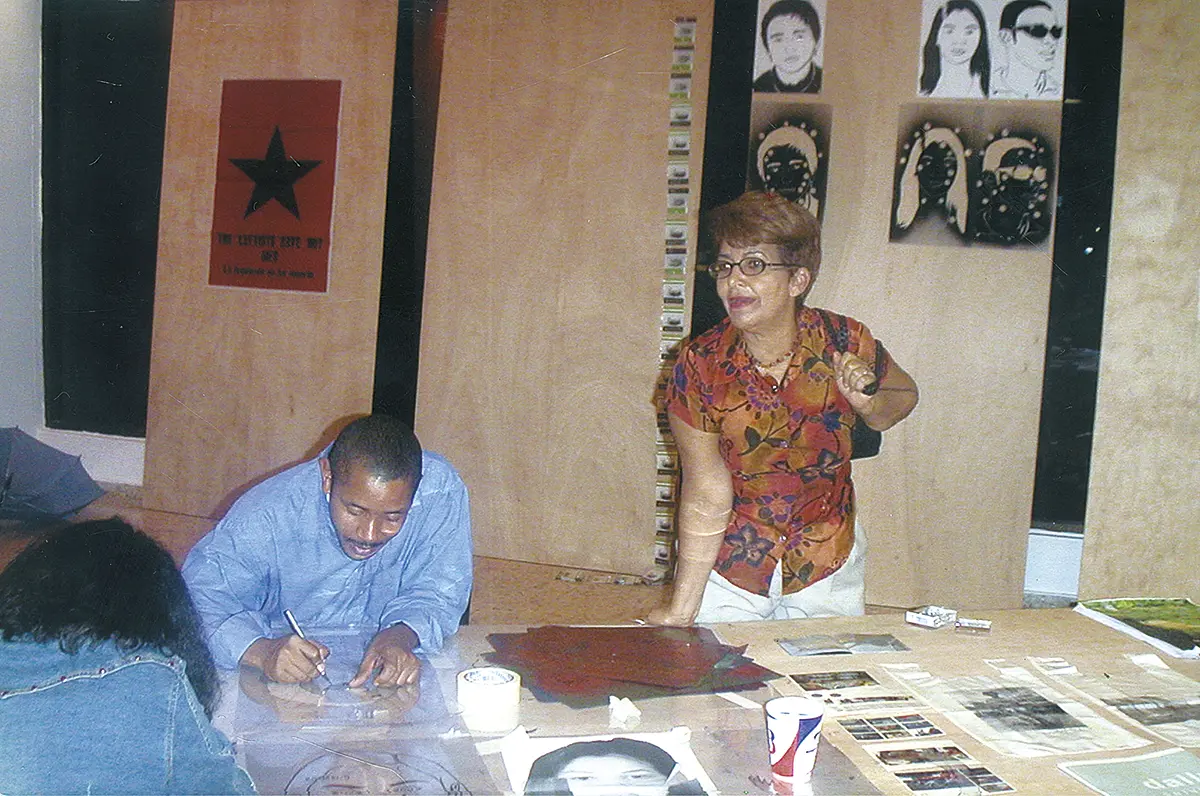
The Colombian selection was made by María Inés Rodríguez and consisted of a collaborative project by a large number of artists, titled Las ilusiones perdidas. The project’s pieces were arranged in three sections: a table with printed materials and by different authors; two actions taking place inside and outside the museum; and a final video section including works by Carolina Caycedo and two collectives, El Vicio Producciones and Helena Producciones. This selection was interesting for its decidedly non-object-oriented character and its open informality. It pointed, instead, to the processes and fields of action proper to each activity, project, or object. This proposal seemed to seek out a connection between the multiple, the collective, and the public, driving artistic practice towards an encounter with issues and propositions that are external to it.
The tendency to link media and issues, as was the case in the works described so far, has been highlighted for more than two decades by many art theorists. Even so, we should again note their preeminence in the redefinition of models and tasks that characterizes the field of art in contemporary Latin America. If it is worth insisting on the correlation between signs of presence (close to photography, or derived from it) and a political understanding of the function of art, it is because their relationship signals a will to separate artistic practice from a hegemonic tradition, and the insistent process of its conversion into a form of cultural resistance.
Looking at the Biennial from a different perspective —that of its conception, organization, and realization— it is laudable for such an event to be held in a country like the Dominican Republic, given that funding for cultural activities, be it through private or public channels, has not been the norm in our countries. It is important, then, to acknowledge the tireless efforts of Sara Herman, director of the Dominican Republic’s Modern Art Museum, who took on every task imaginable with great decisiveness in order to achieve this Biennial.
Finally, the Biennial had an award jury formed by Alfredo Cruz, of the Cultural Institute of Yucatán; Henry Meyric Hughes, of the International Art Critics Association; Gerardo Mosquera, independent curator, and critic, and Ricardo Ramón Jarne, of the Spanish Cultural Center in Lima. They awarded the three available prizes to Donna Conlon from Panama, Vladimir Cybil from Haiti, and Polibio Díaz from the Dominican Republic. The jury also gave honorable mentions to the selections from Belize and Puerto Rico, the former curated by Joan Duran and the latter by Michy Marxuach. Also awarded honorable mentions were Jamaica’s Nathalie Butler, El Salvador’s José David Herrera, and Miriam Hsu and Óscar Ruiz-Schmidt from Costa Rica.
There have been many critical approaches to the large biennial events that happen across the globe. Many would concur in calling our attention to two inherent dangers: an approach to the selection of artists according to socioeconomic practices related to phenomena in the art market, and the assimilation of curatorial principles characteristic of the administrative spaces of cultural diplomacy. I will not introduce this line of analysis for the 5th Caribbean Biennial, since they do not seem to be the dominant note here. However, it is to be hoped that in future editions the Biennial reconsiders its logic of configuration and its curatorial principles so that it becomes more difficult for participating countries to coincide with official representations, and so that the ties and complicities that course through the region’s artistic practice are illuminated, as happened with some of the selections and projects presented in the 5th Biennial.
JAIME CERÓN
Curator and art critic. Visual Arts Manager at the Instituto Distrital de Cultura y Turismo, Bogotá, Colombia.