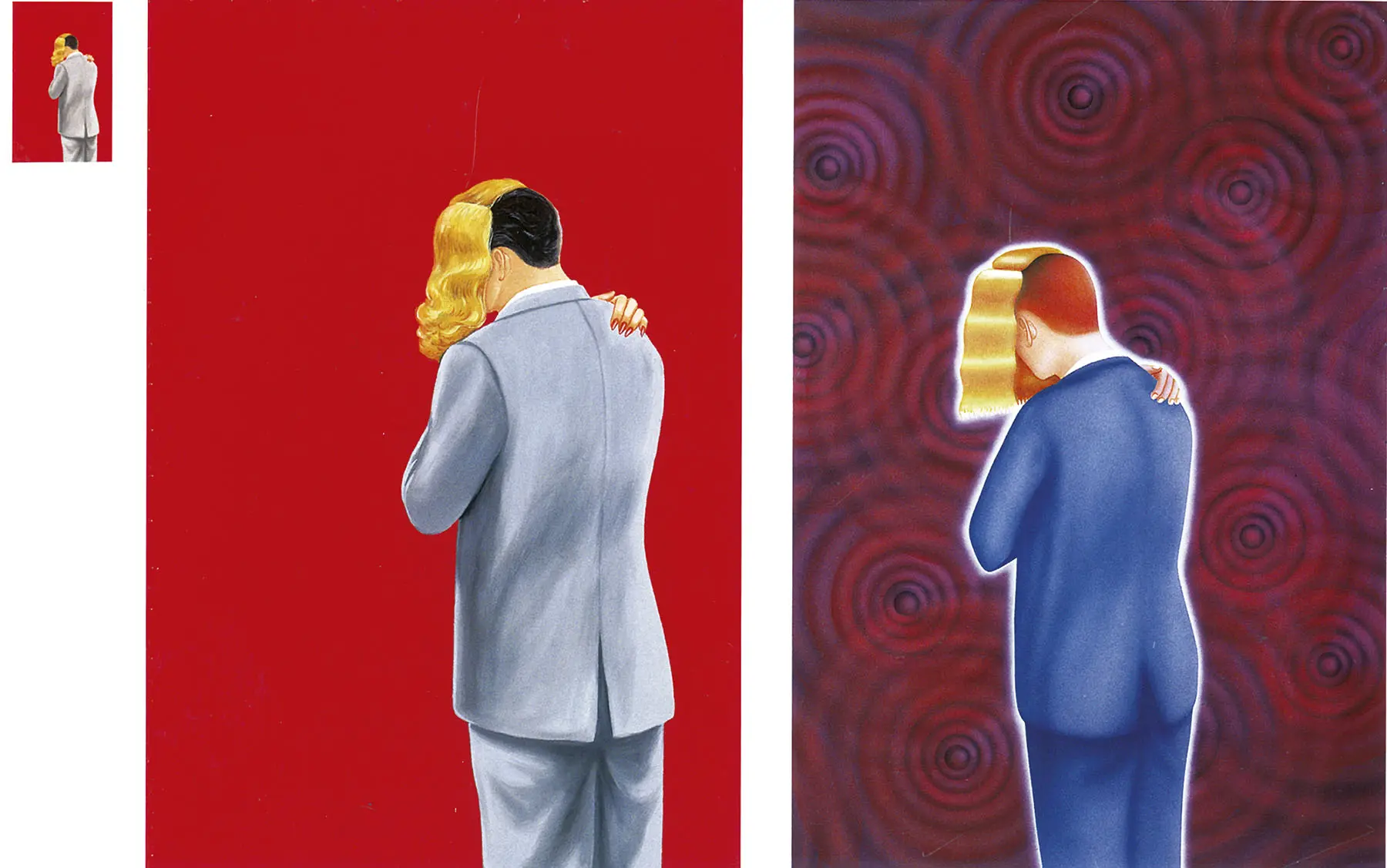
The latest exhibition at the Monterrey Museum of Contemporary Art (MARCO) is a historical overview of painting in the last quarter of the twentieth century. The show, titled Prodigios de Fin de Siglo, starts with works by Enrique Guzmán (1952–1986) and ends with works by Francisco Larios (1960) and Francis Alÿs (1959). Within this two-decade framework, five lines for the interpretation of paintings in Mexico in the late twentieth century are established, presenting the public with a view that no other museum has attempted.
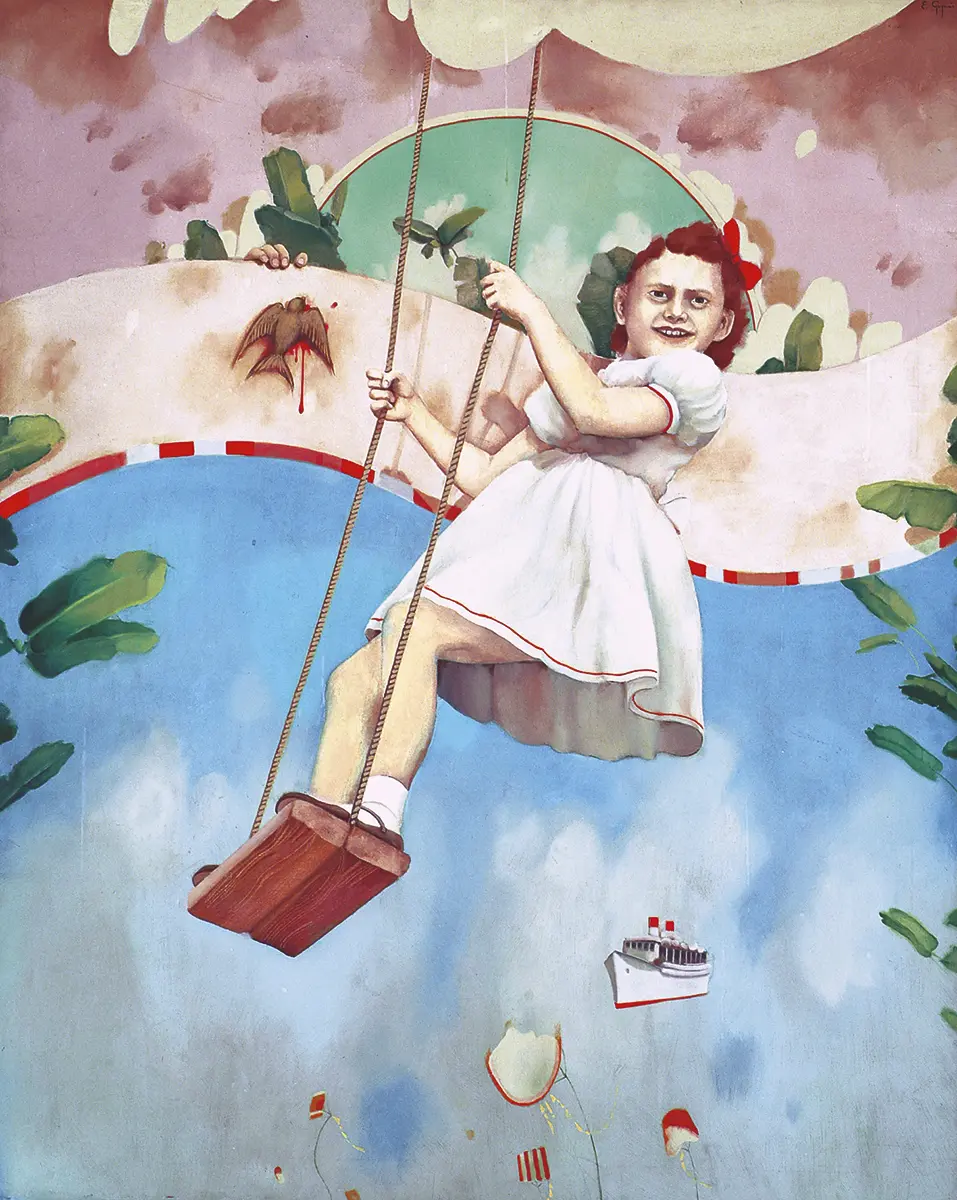
This exhibition is the last stage in a four-show cycle. Under the general title of Siglo XX: Grandes Maestros Mexicanos, the cycle presented a retrospective of the country’s visual production focused on a single medium: painting. Curator and museographer Guillermo Sepúlveda, also a collector, gallerist, and promoter of artists like Julio Galán, carried out an obsessive review of the painted image in the twentieth century. With both their achievements and their gaps, these exhibitions turned MARCO into the site of Mexican twentieth-century art historiography.
Given the rampant sclerotic circumstances in Mexico’s art museums, MARCO has been the sole institution willing to take on the task of establishing long-range lines of art-historical vision. Although the organization of the exhibition, focused as it is only on one medium, does not take many risks, it does offer an approach to painting that has been sketched in several exhibitions in recent years, and it reflects the interests of Monterrey collectors.
The Filo Tempore of a Pictorial Present
The fourth and last exhibition in the Siglo XX, Grandes Maestros Mexicanos project, titled Prodigios de fin de siglo, marks a return to themes and ideas of the century’s first anti-academic avant-garde, such as the Escuelas del Aire Libre (1927–32), where, with some variations, personal elements; the feminine/masculine dichotomy; popular magic; and every day/eccentric were and continue to be topics for development.
In visual terms, the eclecticism of the 1980s displayed an array of hybrid forms and techniques such as painted photography (Carla Rippey) and three-dimensional collage (Adolfo Patiño, not included in the show), which coexist with a primitive figurative with ritual roots (Roberto Turnbull), organic abstraction (Alfonso Mena Pacheco), and “bad painting” (Boris Viskin).
The fifty-two artists selected are well known and representative of certain moments of contemporary Mexican art; there are nevertheless some others whose presence is necessary: painters of interior city landscapes such as Agustín Castro (some of whose works are in the MARCO collection), and three reformers of landscape with different interests: Luis Argudín, Gustavo Monroy, and Luciano Spano.
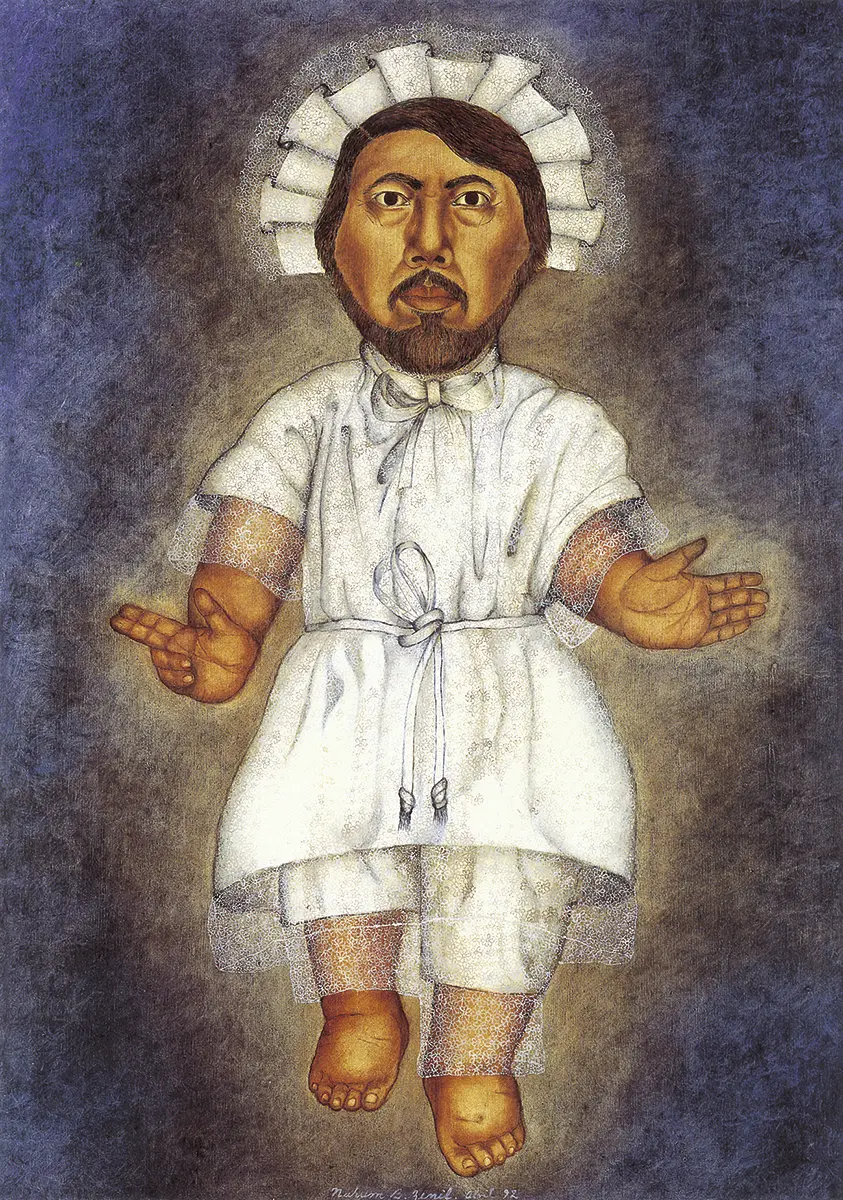
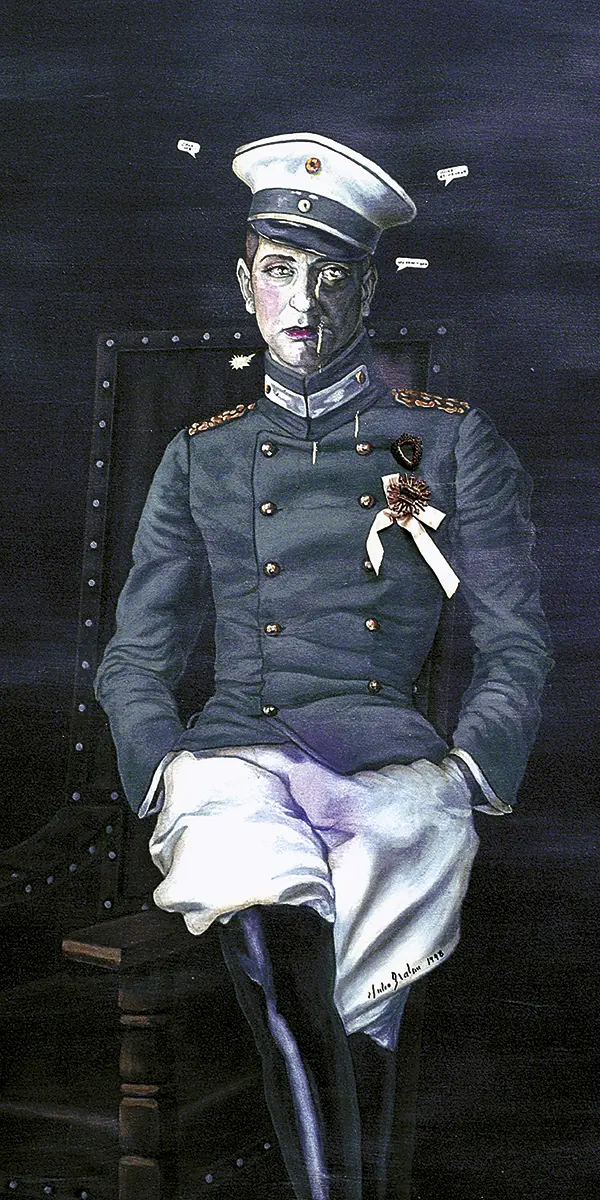
The construction of categories in the exhibition begins with the three most idiosyncratic artists of the 1980s, who found in painting a means to express their desire and their own personality: Enrique Guzmán, Julio Galán, and Nahum B. Zenil. Enrique Guzmán, whose works open the exhibition, marks the onset of an ironic attitude with pieces that admit a sense of disillusionment symbolized through artificial paradises; a rejection of nationalistic values; and the claustrophobic atmospheres that characterize a conservative society.
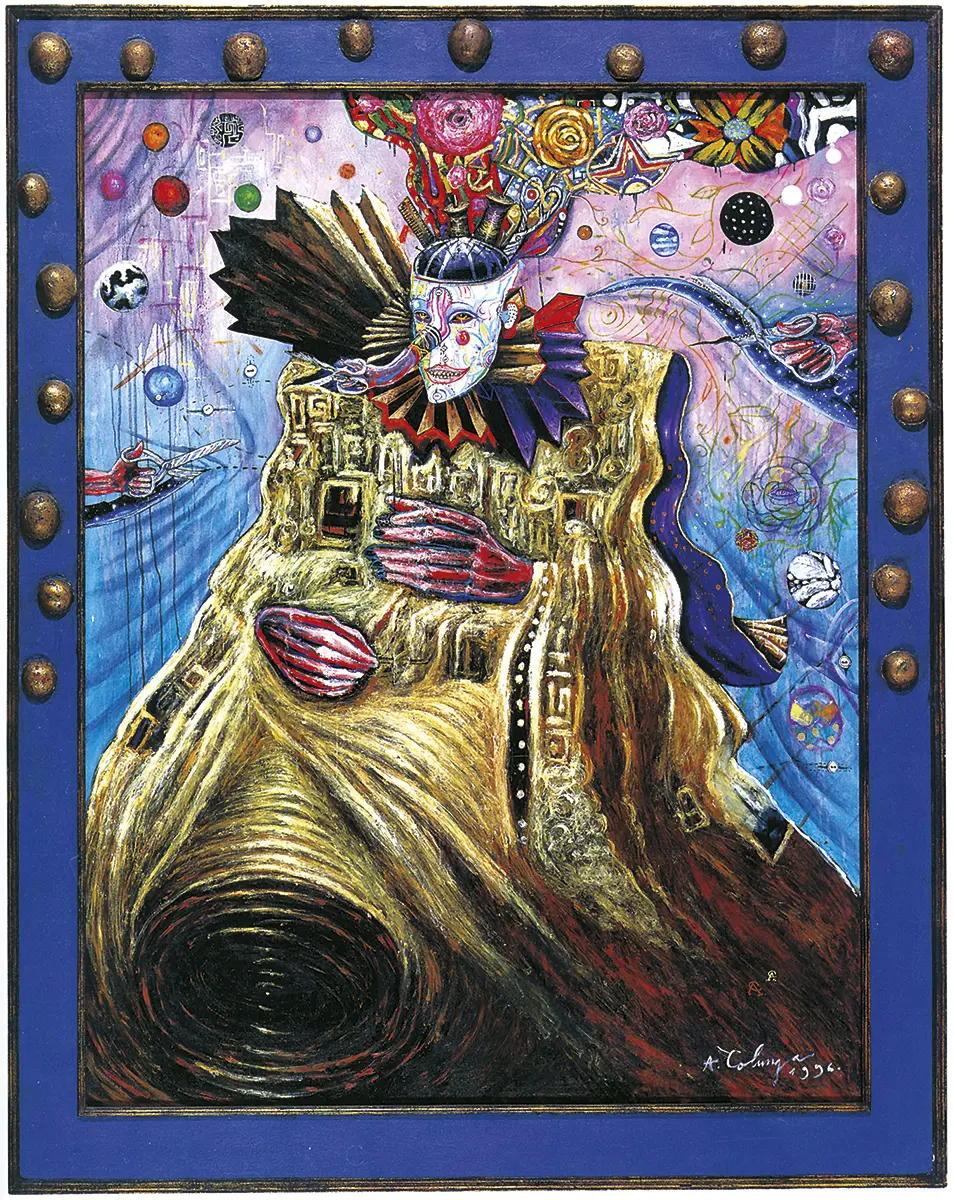
The formal experiments and openly gay content in the works of Julio Galán and Nahum B. Zenil support an attitude of contestation in the face of atavisms, which in turn promote a psychoanalytic reading of history deriving from what has been called neo-Mexicanism, a subjective reinterpretation of traditional values (patriarchy and nationalism.) The version in Monterrey is more metaphoric, with an interest in mythology and science fiction. Three artists that exemplify this tendency are Alejandro Colunga, Arturo Rivera, and Arturo Marty, whose enigmatic paintings in encaustic are among the best in the exhibition.
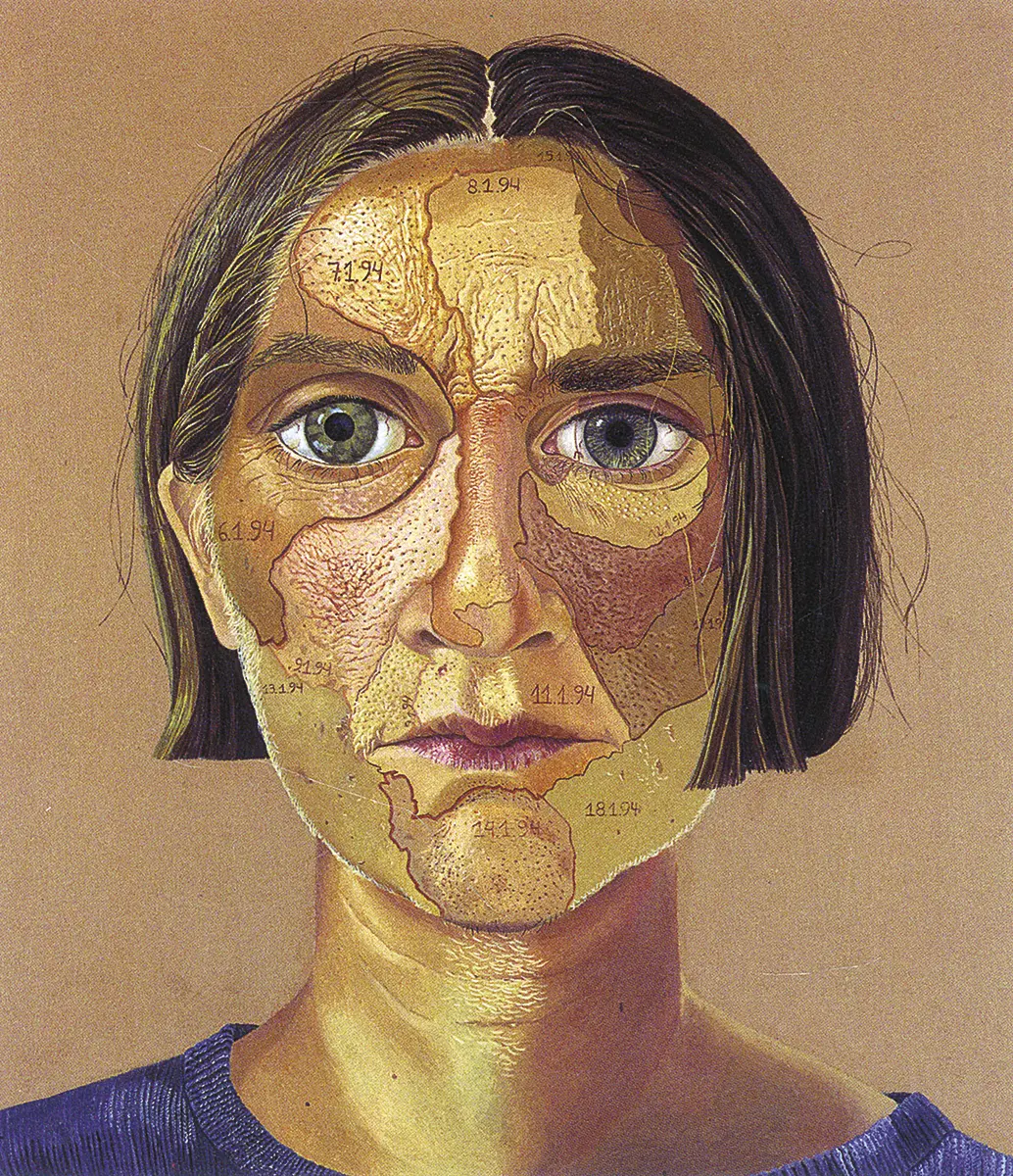
The topic in the show’s second room is “Liberation,” and it comprises exclusively work done by women who did not embrace the pervasive feminism of the 1980s but preferred to remain faithful to painting and to the graphic arts. The show’s organization in this section has an air of 1920s and 1930s nostalgia; the work of María Izquierdo (or fantastic worlds), Carmen Mondragón (a certain naïf element), and Tina Modotti (aestheticist photography) found their counterpart in the paintings of Dulce María Núñez, Georgina Quintana, Patricia Soriano, and Carla Rippey. Comparisons are more difficult in the case of Mónica Castillo since her work deals with a view of painting as a means of representation of self.
The exhibition’s design also includes the categories of Postmodernism/Eclecticism, Humor, and The Alluded Body. A reconstruction of the first of these periods is represented in the works of Roberto Cortázar (with nude drawings in a classical vein) and Rafael Cauduro’s photorealistic paintings. Both introduced an interest in quotations and glosses art and design into the visual arts.
Evolutions and Fictions
Ten years after Enrique Guzmán’s short career (he died at the age of 34) isolated iconographic city elements, such as humble buildings, domestic environments, and furniture reappear in the work of Francis Alÿs. Their works share the nostalgic imprint of a colorist palette, from the Belgian artist Gustav de Smet’s modern paintings or, in the case of Guzmán, from Abraham Ángel. The presence of images taken from popular iconography and presented against flat backgrounds, which interested the Mexican painter, showed up again in some of Alÿs’s series. There is in both cases a sense of anecdote that can be contained in a painting.
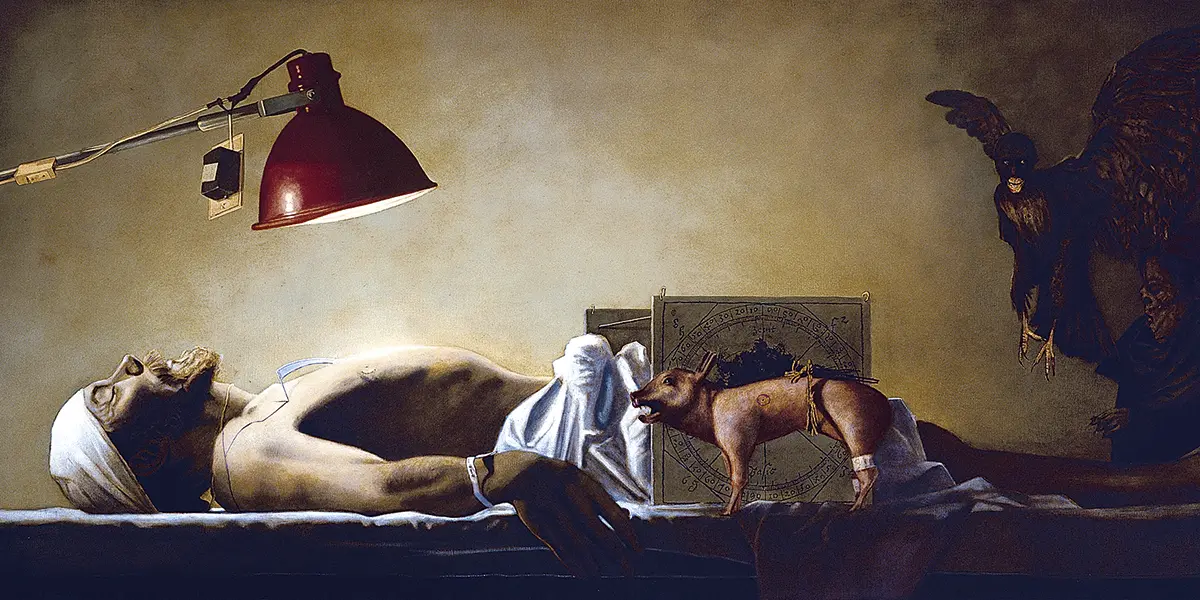
The exhibition’s fourth and last room is divided between two topics: “The Apparition of the Invisible.” This phrase is taken from the works of critic Juan García Ponce, who promoted the 1980s generation through the work of the four Castro Leñero brothers, Alberto, Francisco, José, and Miguel. These artists practiced different genres and branches of painting, from Alberto’s abstract/figurative works to Francisco’s minimalist paintings, José’s photography-based paintings, and Miguel’s free figuration. The second space covers end-of-the-century paradigms, with the curatorial organization dissolving into four themes: photo painting; simulacra and fiction; irony and ambiguity; and virtual reality.
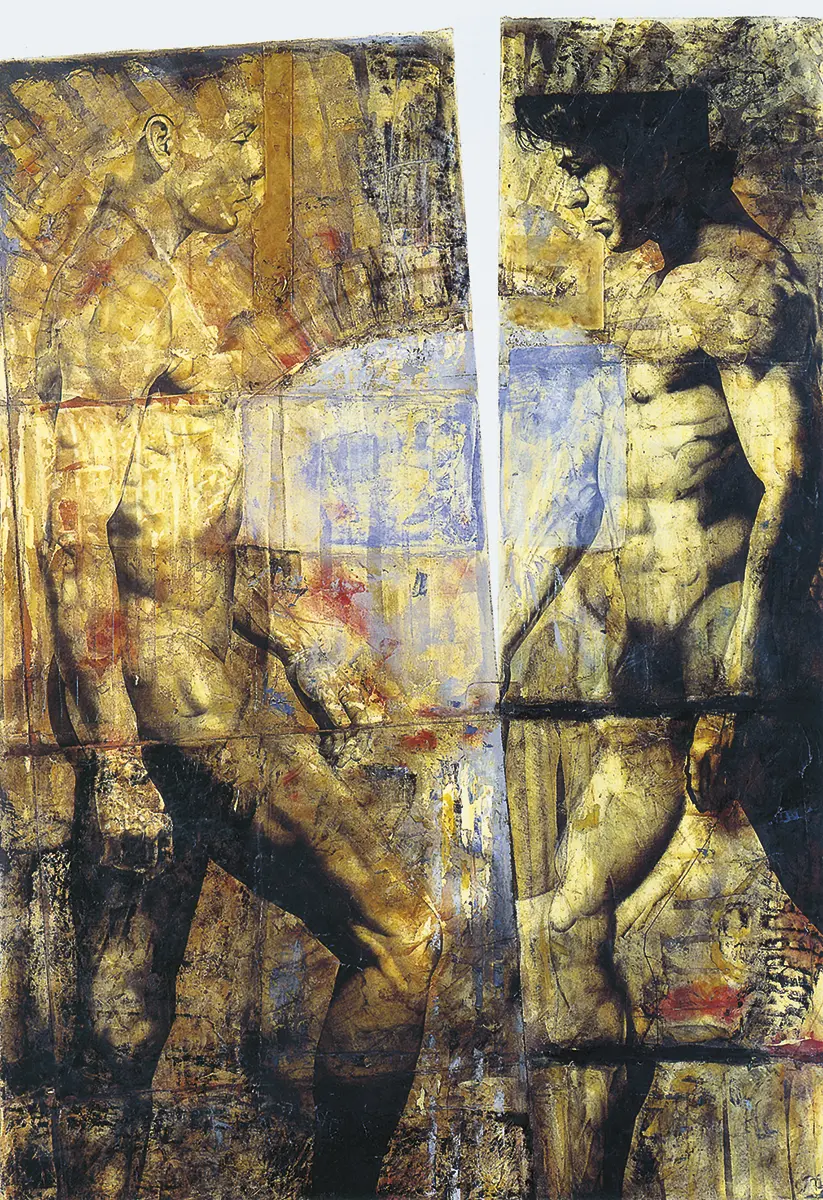
This section tries to cover too large a territory with relatively few works and names, a consequence of the focus of painting having been so eclectic in the last ten years. The tradition of abstraction fuses with lyricism and reductionism in the work of artists like Roberto Turnbull and Boris Viskin. The 1990s invasion of photography into the pictorial medium determined that artists used and explored two paths, extreme plasticity (Jassamoart, Roberto Parodi, and Gabriel Macotela) or the use of photographic images as an aesthetic sign in painting, for example, Marco Arce, Víctor Rodríguez, and Trini (Katrien M. Vanghoulowe), or a conceptual sign, as in the case of Yishai Jusidman.
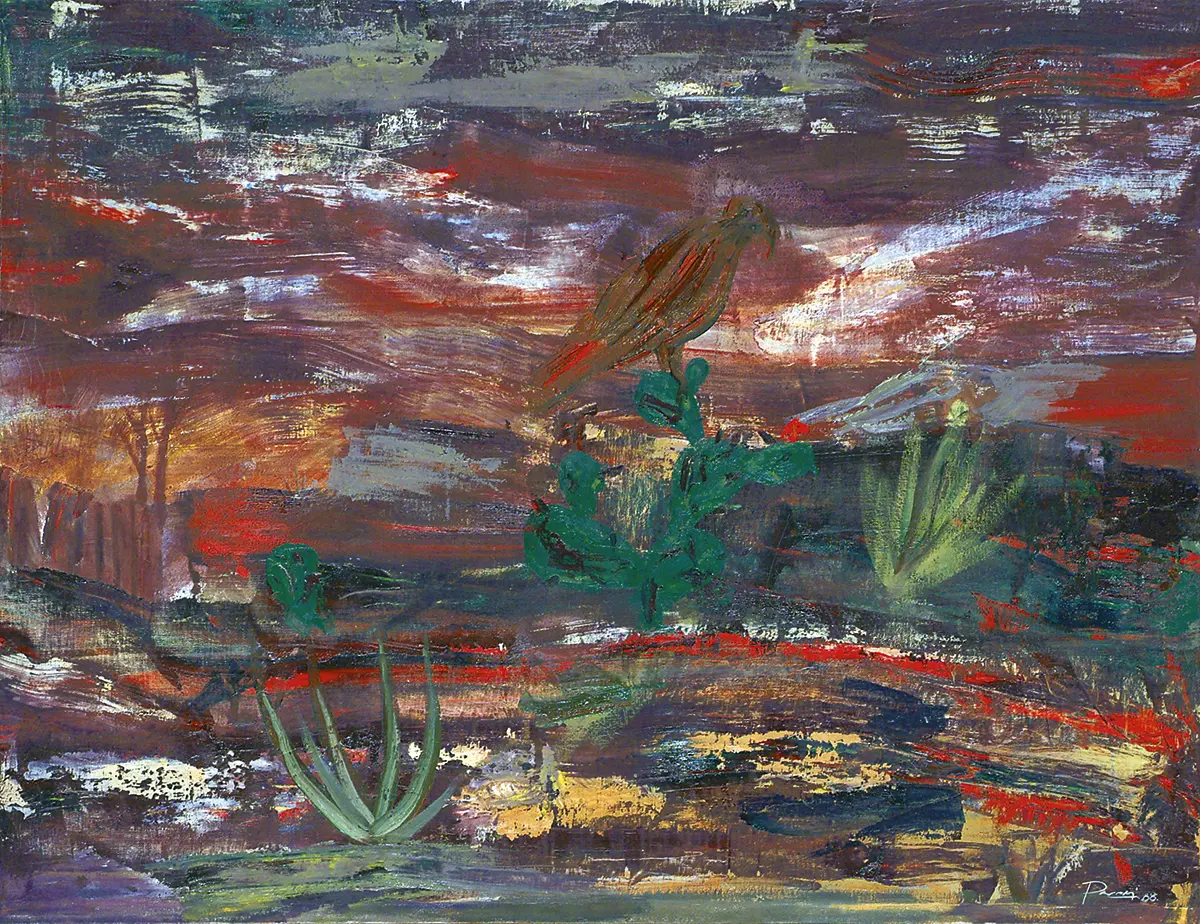
On the other side of things we find a kind of painting linked to 1970s abstraction that evolved towards an organic version of non-representation, in which we can place Alfonso Mena Pacheco’s atmospheres, Roberto Rébora’s chromatic and formal subtleties, and Irma Palacios’s proto-figures.
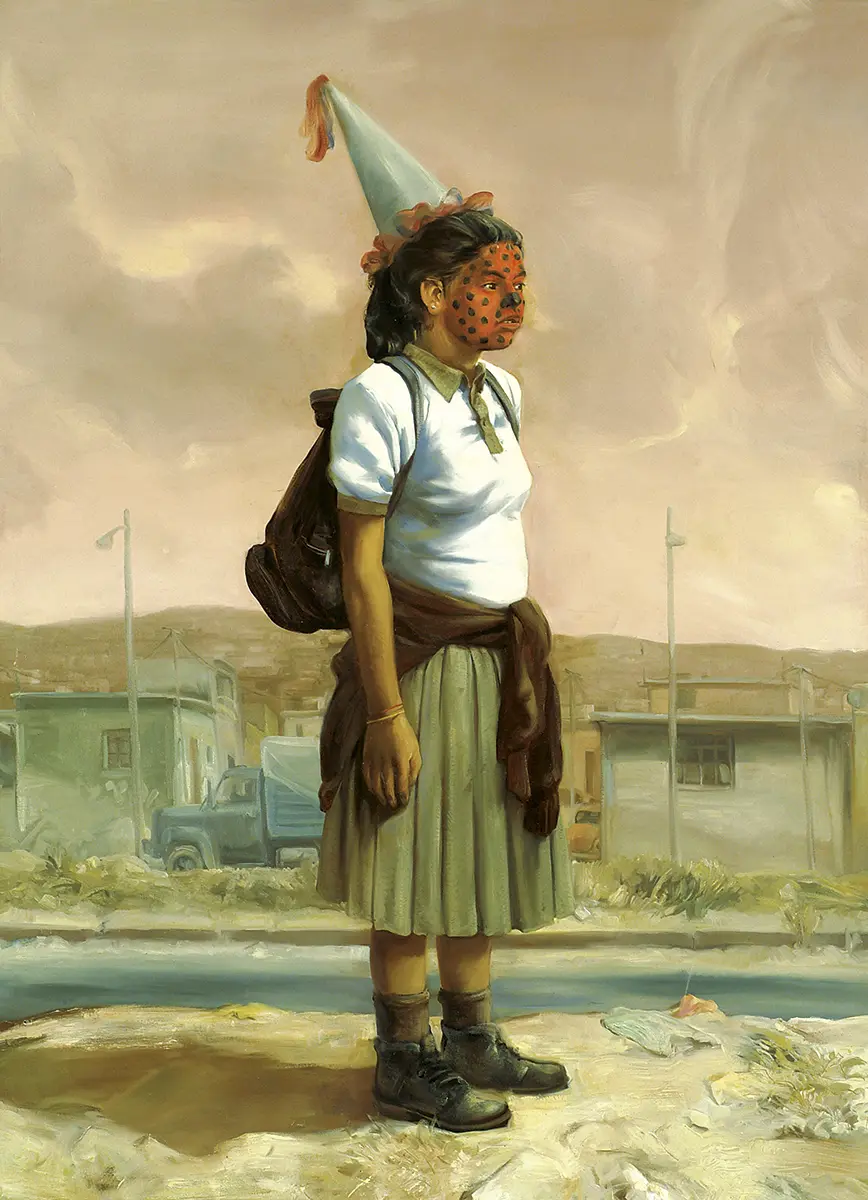
The show ends with a purely pictorial narrative version, embodied in the work of Daniel Lezama, Carlos Vargas Pons, and Martha Pacheco. The realism in the work of these artists is impressive and serves to amplify the content of their pieces. The contents of these works explore situations that previously could be seen in performance art or even in crime reporting and reflect the painting’s great adaptability.
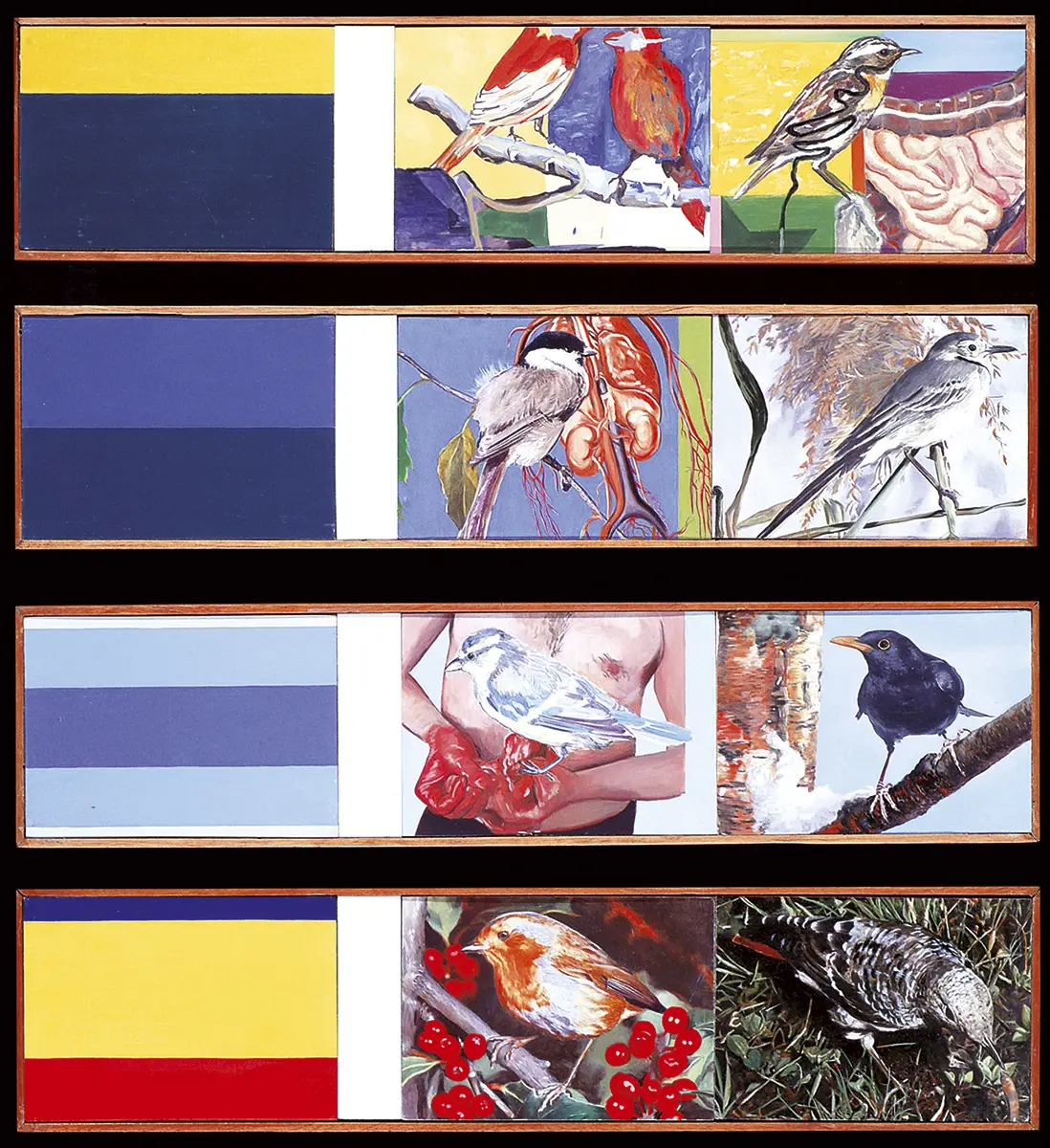
The last decade covered by the exhibition was especially prolific and problematic since there is no single collection capable of fully representing the complexity and variety of painting that was produced without interruption in Mexico. The Modern Art Museum in Mexico City barely has ten works by the last three generations in its permanent exhibition room. Lack of space and the absence of a coherent policy of public collecting have resulted in a flawed representation of the years 1990–2000, and the dispersal of two generations of artworks.
JOSÉ MANUEL SPRINGER
Editor, essayist, and professor of art history and art theory.