
Carlos Ranc (Mexico City 1967) presents his most recent works in Objetos para decorar, an exhibition at the Nina Menocal Gallery. The show’s five installations reflect the artist’s strong interest in establishing relationships and contrast between images from the domestic sphere and images from the outside world.
Designed specifically for one of the gallery’s exhibition spaces, all of these pieces have been realized using materials that allude to the context of urban dwelling. They have been conceived for, incorporated, and arranged in the gallery space as elements of interior decoration, design, and integral architecture. For some of his pieces, Ranc recovers and utilizes photomuralism, a decorative element that was frequently used in and is characteristic of domestic spaces during the 1970s.
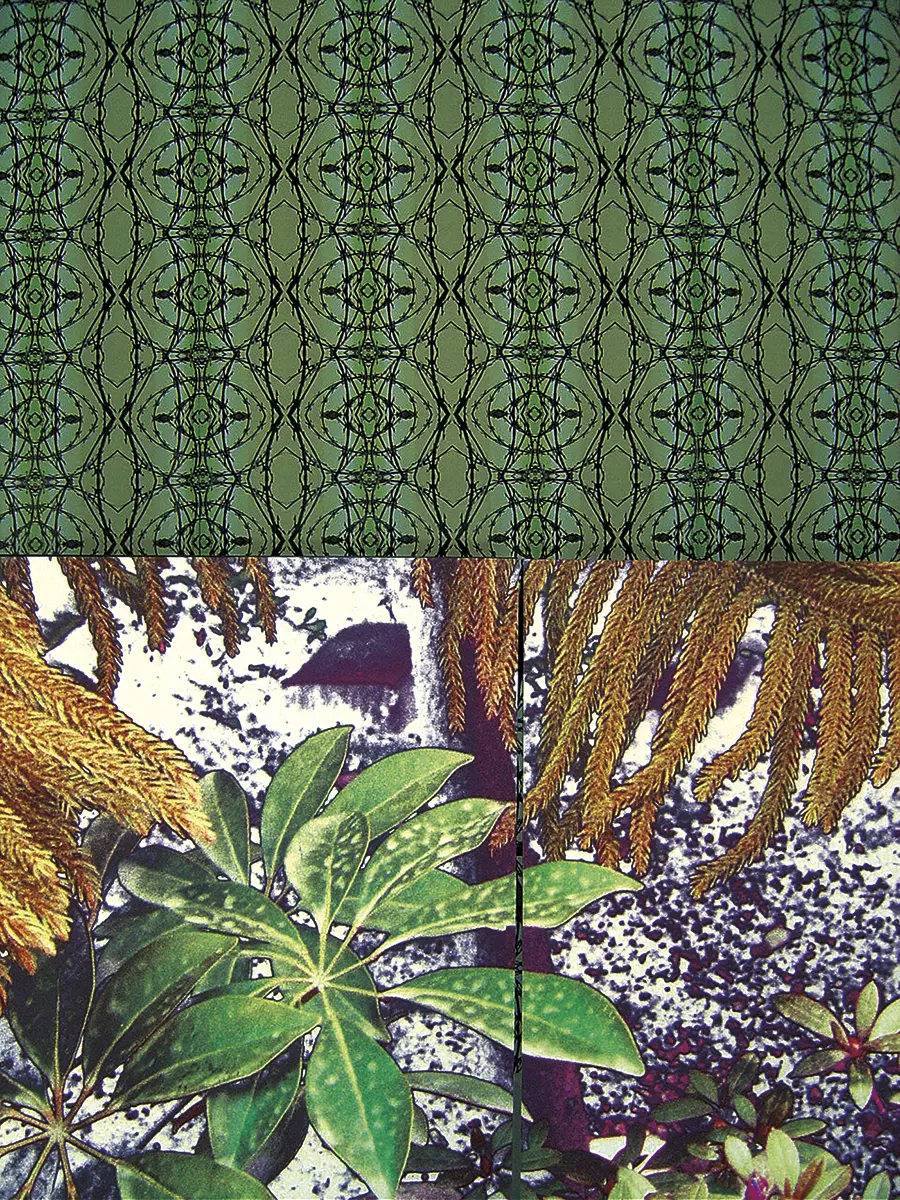
Ranc uses large-format images related to advertising billboards and plays with the idea of recreating elements that are specific to the outside world, placing them inside a room and vice versa. In works like Fotomural and Papel de seguridad, Ranc manipulates and alters the support with images that allude to the violent security systems now in vogue.
Papel de seguridad, a reference to the systems used to secure urban dwellings, is a large photomural that has been photographically manipulated and reveals a sequence of barbed wires. Fotomural depicts a mountain landscape that the artist has abruptly fitted with a base covered in jagged glass shards.
Alluding to those billboards located in public places, Espectacular, realized in extreme close-up, presents a photograph of a slice of nature fixed on a large metallic structure. The fine detail in the photographic image, as well as the careful handling of forms and colors, almost turn this piece into a hyper-realist painting.
Similarly, works like Módulos and Losetas approximate some of the effects and plastic qualities of painting —a genre in which the artist has been long interested— such as the simulation of elements related to domestic architecture. In Módulos, Ranc uses imitation-tile wallpaper to articulate and recreate an image that closely resembles a geometric pictorial composition. In Losetas, a series of vinyl squares are distributed on the gallery floor; the artist adds artificial turf to them to configure undefined, abstract shapes that seem to refer to traces or marks created by a molding device, and he invites the slow destruction of the piece by allowing viewers to step on the tiles and dislodge the grass.
Carlos Ranc’s current explorations move between the elements of inside and outside spaces; the works in this show essentially propose a game whose main objective and function revolves around the act of decoration. Ranc has said, “The contrasts I present here between interior and exterior, through a simulation in various scales, result in the creation of pieces with real or imitation materials that, despite my intervention, do not lose their original function: decorating.”
MARTA LIAÑO