
A city that promotes encounters with art is key for culture. Streets, buildings such as chapels, convents, the Museo de los Metales, the Museo de la Medicina, or the Museo de Arte Moderno —constructions from the Eighteenth century or the early Twentieth Century— that insist on surviving, receive the contradictory but generous influx of contemporary works of art, of conversations, and of polemics. They are monuments that come to life. They become spaces that invite us anew to myth, spaces that come and go like a narrative, and artists add new elements to them in order to interpret life according to the passage of time. A Biennial in a city like Cuenca, help us remember that myths are a collective matter. What life scripts do we follow? How do we assimilate influences? In the end, a work of art explores the possibilities of narrating ourselves.
One hopes this local situation where debates happen in the street will generate polemic and confrontation, thus helping set thought in movement. I heard somewhere that the Church was terrified of a work by Honduran artist Leonardo González, a series of condom packages with the image of Christ’s heart. Let the complaint be welcome! because a work of art speaks of that which is not spoken of. And the most frequent: The biennial is no longer about painting: this is a debate that retains its currency. Has the painting ended? There are arguments in favor and against and when the discussion heats up in excess, it is opportune to refer to “¿Es posible la enseñanza del arte?”, an article Luis Camnitzer wrote for Arte en Colombia no.25 —and this is not an ad for the magazine, but for the article— in 1984.
“The artist is asked: what do you do? And the artist replies: ‘I paint in oil.’ A scientist, on his part, would never answer ‘I look through an electronic telescope.”
To the question of what, Camnitzer writes, the answer comes in the form of a how. Following him, a journalist would not answer the question “What do you do?” with anything like “I write on a computer,” nor would a biennial director answer “I talk on the phone.” After 20 years, Master Camnitzer, you have no idea how useful your article has been, at least in Colombia’s universities, to think about what art is, in this world of seductive advertising images. What would art be, made by men and women, in painting, drawing, computer, or video; the question is not what technique is used, because this is not a technique or handcraft fair, but what images emerge from them. The question is to learn to see and to say what it is that we are talking about when we talk about art because the works themselves help us understand what happens in our context and what happened to our thoughts as they were kidnapped by a ferocious globalization.
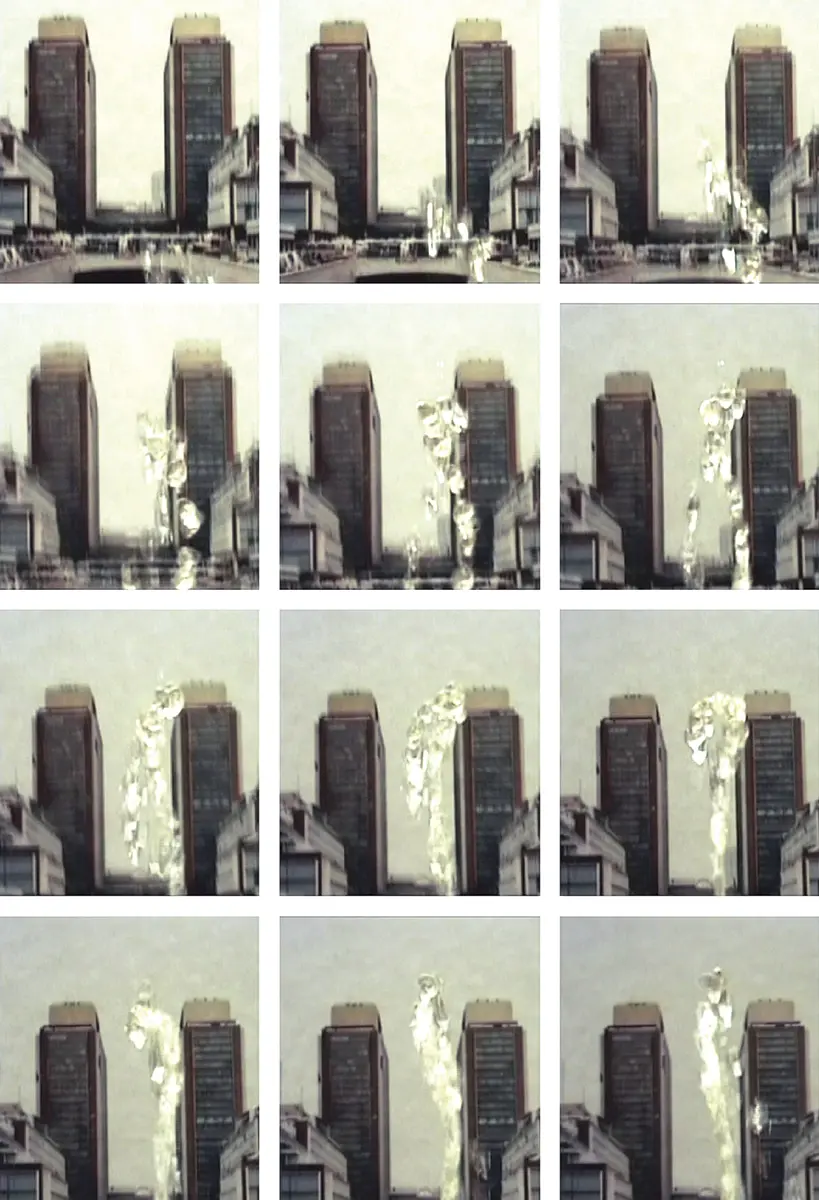
That was indeed the issue approached by the winners in the Biennial. Venezuelan artist Alexander Apóstol's video installation was titled: Residente Pulido. Ranchos. From the series Caracas Suite. The piece comprised video images of modern Venezuelan architecture, moving to the tune of the Guillermo Tell's suite. Small trickles of water accompanied them in that happy and unworried vertigo but ended up erasing the image. The silent viewer assisted with the excess and the “madness” of Latin American modernity.
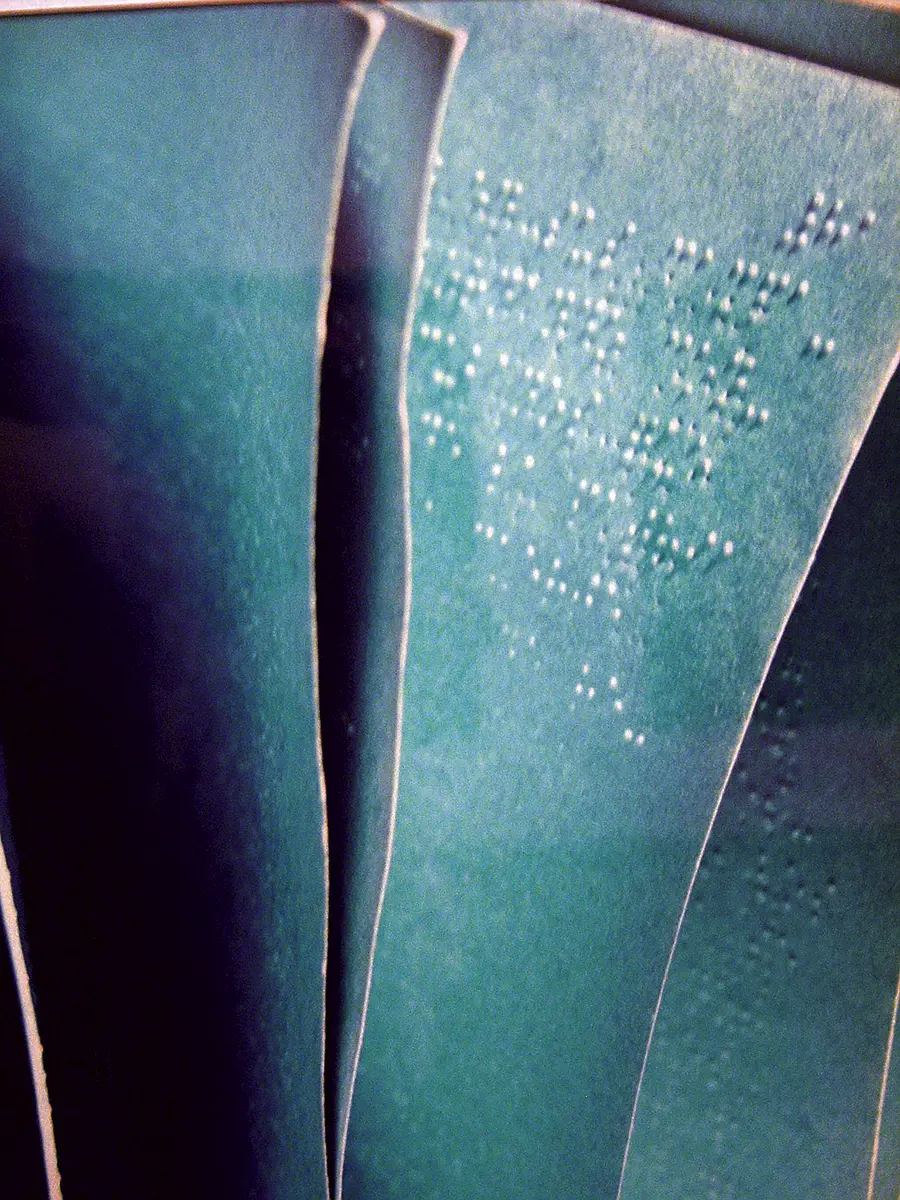
Ricardo González de la Cuba showed a photograph repeated several times, of a half-open Braille book. In the end, a text: “History will acquit me,” is taken from a speech by Fidel Castro. An essay on blindness?
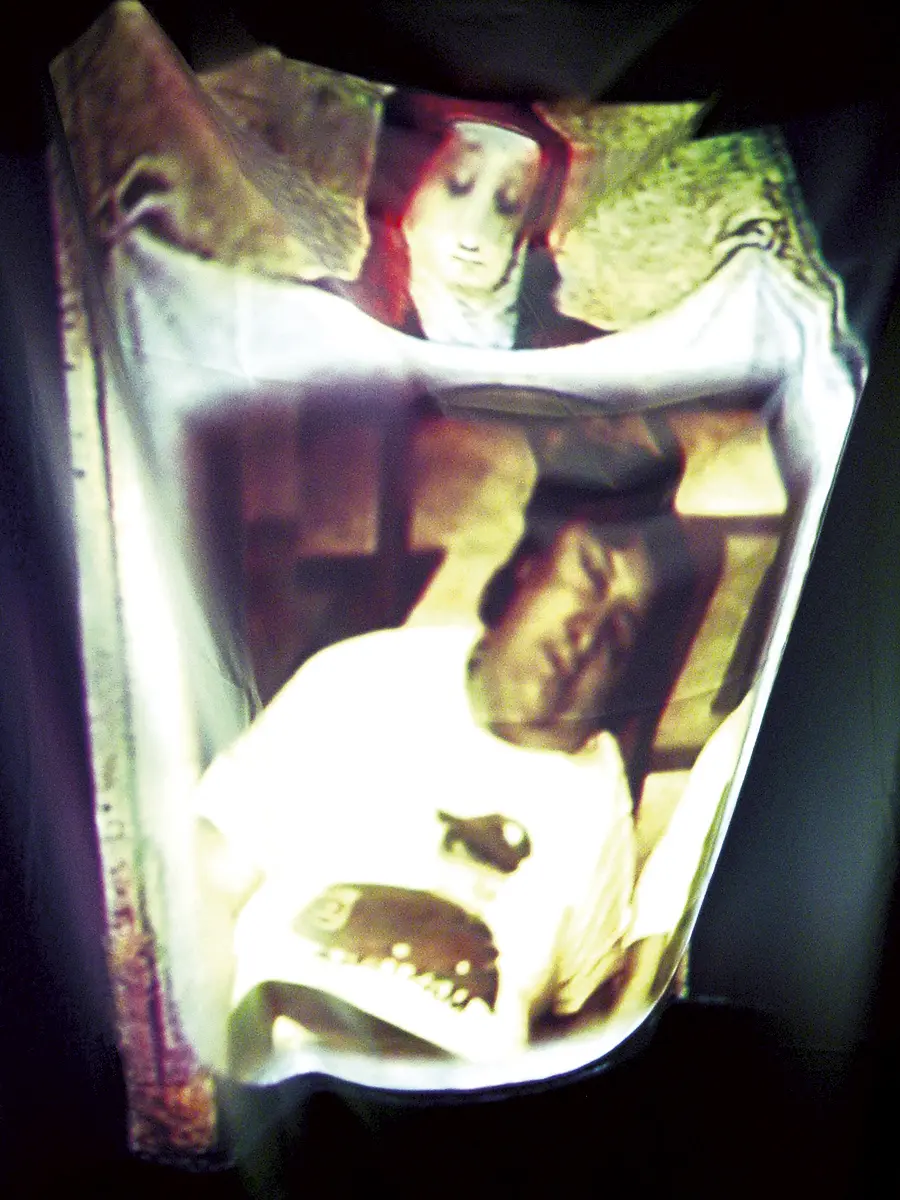
José Alejandro Restrepo, from Colombia, presented a piece titled Video-Verónica. The images of the Virgin Mary and of mothers showing photographs of their children were projected on a bed sheet. On the sheet with the Verónica, “the true image” according to the myth, what is reflected is the mother’s pain for their disappeared, killed, or kidnapped children.
These works did not want to simply express, but also to pose questions about the conditions of our imaginary. Yet they were not an unsophisticated denunciation; they also left room for freedom in handling their topic, so that the idea was amplified with other resonances. For instance, music, fun in one case, sacred and intervened in another, and the blue repetition in González’s photographs, plastic echoes of a repeated discourse. The work's technical intervention was precise, and it didn’t obscure the topic.
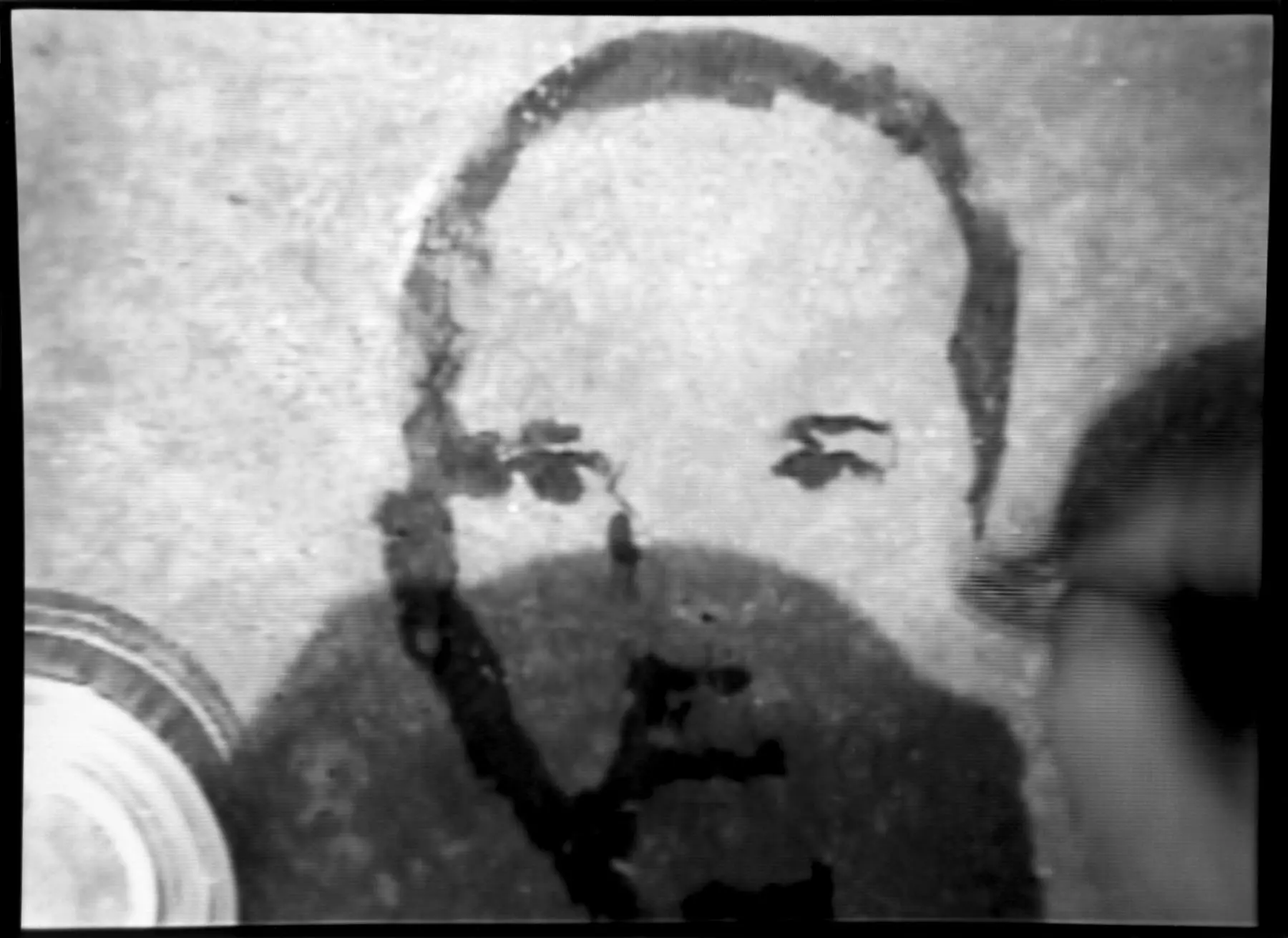
Participating in the Biennial this year were artists from Argentina, Paraguay, Uruguay, Brazil, Aruba, Costa Rica, Cuba, El Salvador, Guatemala, Haiti, Honduras, Jamaica, Martinique, Nicaragua, Panama, Puerto Rico, Dominican Republic, Chile, Colombia, Ecuador, Mexico, Peru, and Venezuela. The jury noted Re/trato, presented out of competition by Óscar Muñoz, from Colombia. It is a video where the artist draws his self-portrait continuously with water on the pavement, persisting despite the dissolution of the line. The “Paris Award” for young artists, sponsored by the French embassy, was given to Ecuador’s La Limpia collective, for an untitled piece. It was an ironic ecological comment in which a group of crickets, so abundant in Guayaquil, see their life end as they are crushed against the floor.
The participation of artists from each country was through curators, and this leaves me with a question. I was impressed, for example, by the Central American and Caribbean delegations, with the sharpness of their work; perhaps they would have required greater work and greater development, but they attempted a reflection on the context. And I tend to think that in Mexico, Brazil, Chile, Argentina, Ecuador, and the rest of the countries there are artists at the same level as Apóstol, González, or Restrepo. By this I mean, artists who more than expressing their personal worlds, negotiate between subjectivity and objectivity. Artists with proposals that are less inward-looking and fragmentary, blunter, because this is a continent that needs a search for meaning.
Besides, the Biennial’s theme was Iconophilia, a question that points precisely towards an exploration of what are the images we believe in and how influences build our thoughts. More than a subjective history or a desire to be fashionable by using video or computers, or “installing themselves” like so many years ago some university students did, the theme demanded that we asked ourselves about the conditions of our representation. Even more so when, as we were saying before, the place of encounter is a city that cannot be a spectacle of regional national salons, but of the debates required by the building of a line of thought. A city that organizes a Biennial must be a stage for transformative conversations, even in the streets, attending to the viewer’s questions or to more complex formulations, as merited by the theme.
Here it is equally important to refer to the honorary mentions. In my very personal opinion, the winners were works that contributed to a collective reflection, with excellent technique. In the face of this, the meaning of mentioning other works was to point out that there are visionary elements in some of them, but that they require more reflection in order to become triggers of meaning in those who see them.
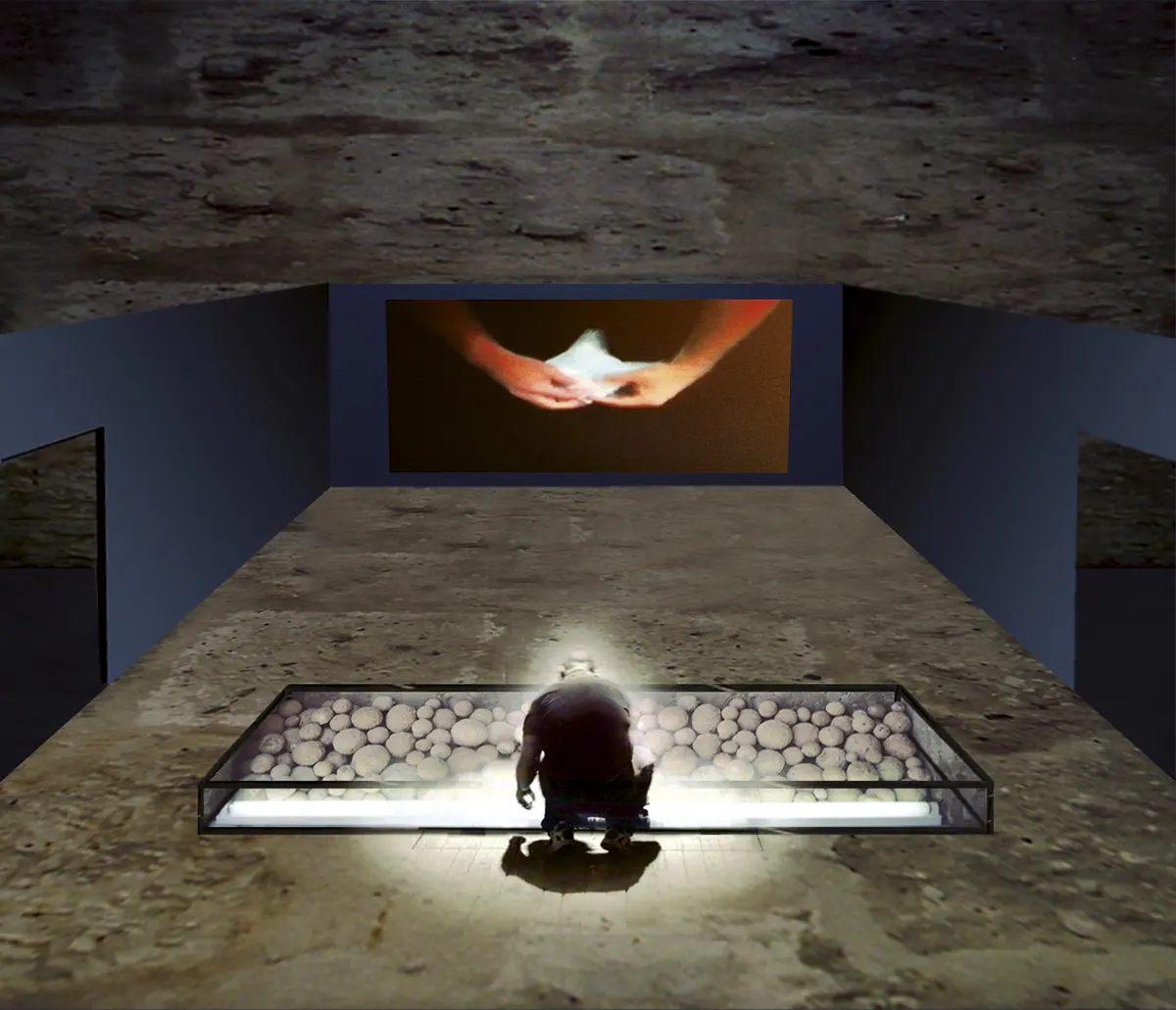
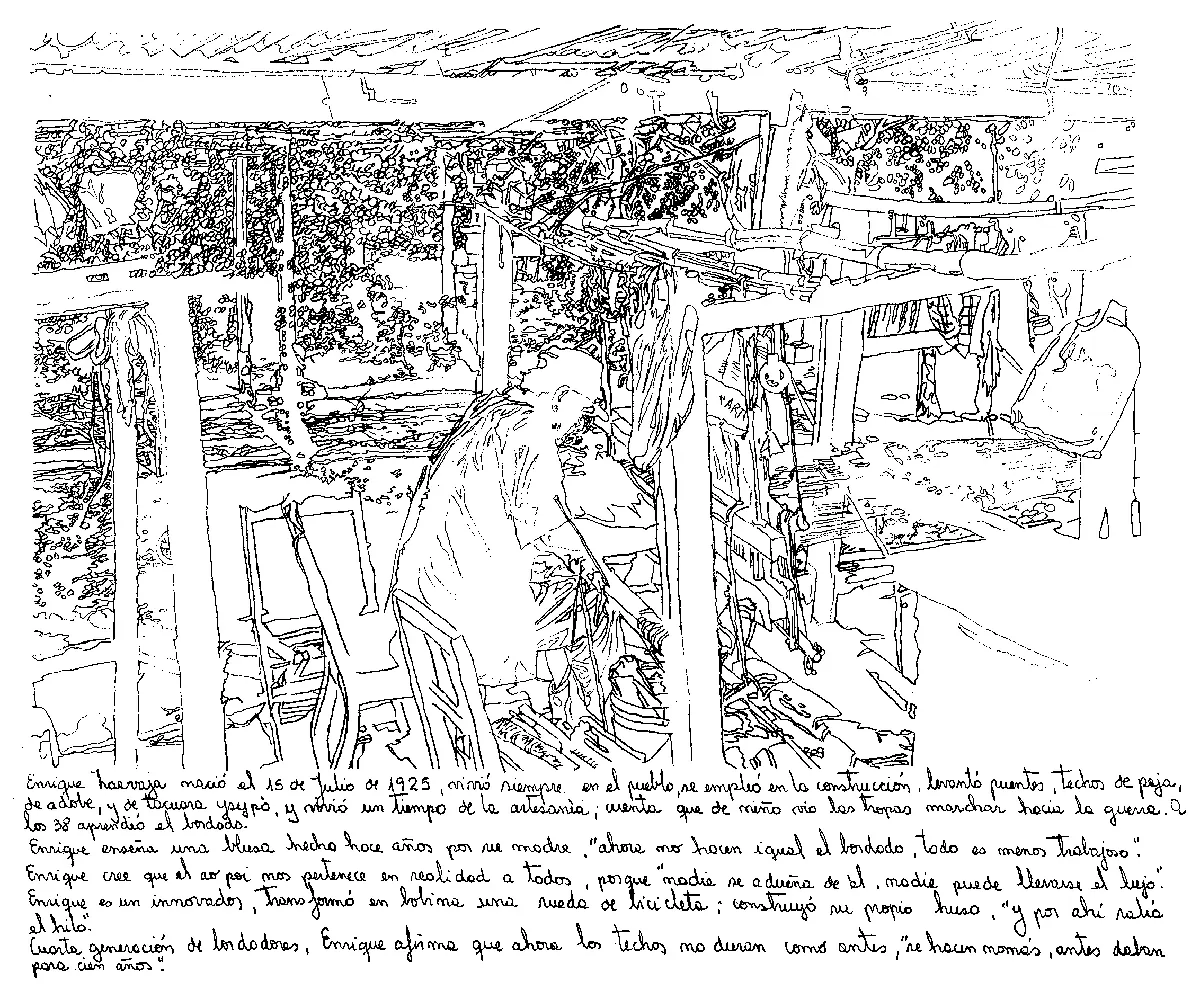
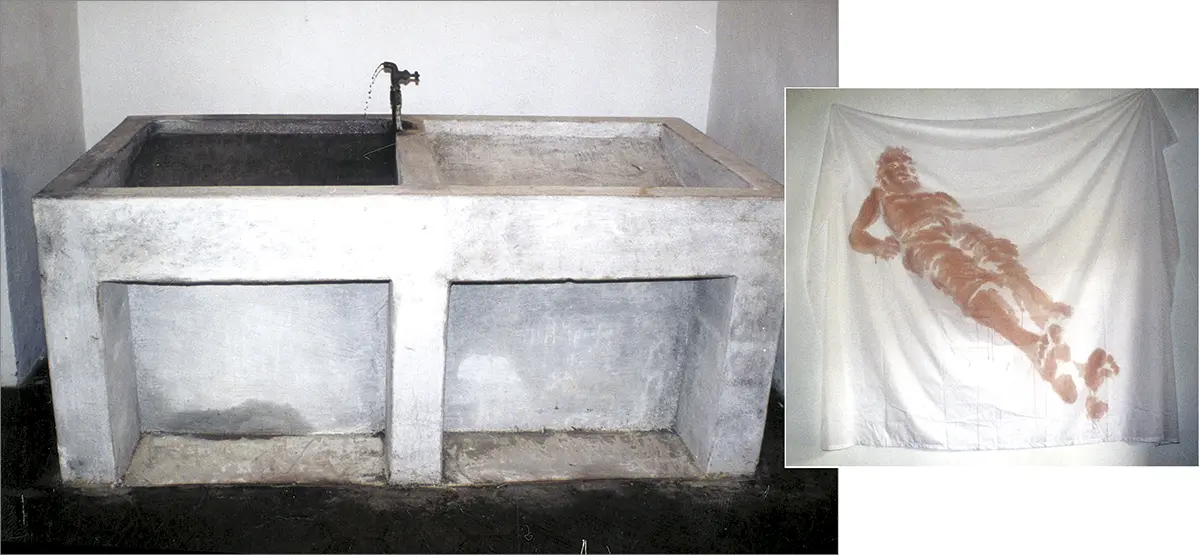
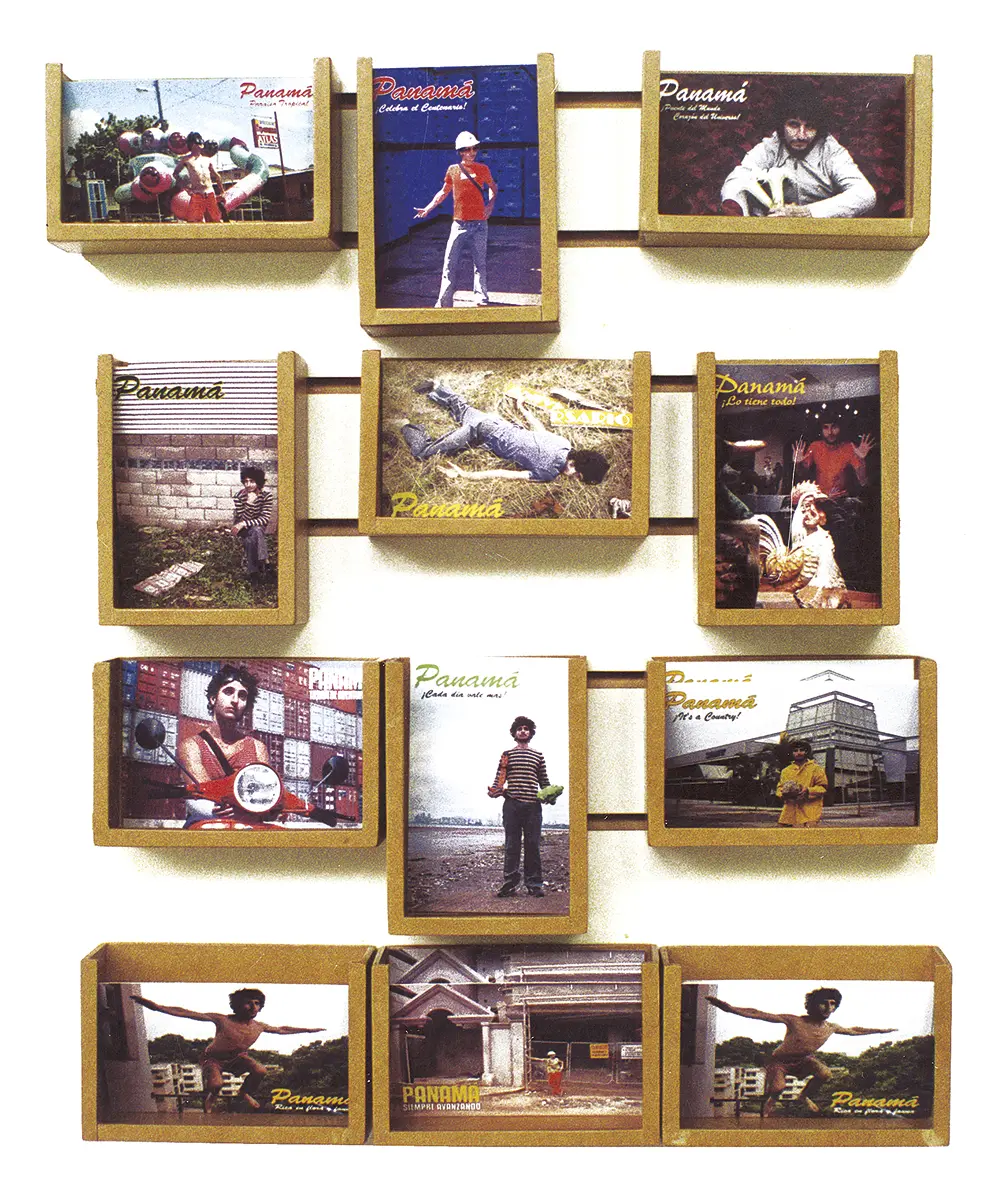
For example, El vértigo de lo lento, by Mónica Millán from Argentina, was able to translate the language of photography into drawing while still completing the photographs with the language of narrative. However, the idea of salvaging lost time by bringing into the museum weavings by women weavers was dispersed by the inclusion of termites and too much information to allow the viewer to fully contemplate it; on the contrary, the viewer was lost. The same is the case with José Ángel Toirac, from Cuba. La transubstanciación, his installation about the death of Ché Guevara, was rendered confused by the excessive use of resources, all of which had in themselves a tremendous visual weight. In this way, the washboard, the wine, and the sheet, each acquired a life of their own and diluted the potency of the idea. Dos, by Peruvian artist Runcie Tanaka, emphasized the contemporaneity of pottery, an important topic, but, again, his use of origami and video was excessive. In summary, the topics of these mentions are important and need to be emphasized again, but today art requires a clear opinion on the part of the artist, as we are subjected to the opinions of the mass media, and the fragmentation of these works some times contributes to an unnecessary “zapping.” Post-Post, Panama’s Jonathan Harker’s postcards, intervened in the complacent language of countries that “soften themselves up” in order to build a “correct touristic image.” With the bold presence of this young artist in the most prosaic of activities, that “correct image” was unmasked. Being a reflection about imposed languages, it was one of the best among the works receiving a mention. Why do I say this? Because I have left always with the need, when seeing art exhibitions and, even more, biennials that bring together almost a whole region, of finding more precise statements about the languages of power that surround us and which we use without being aware. And because it is generosity in terms of money and effort to mobilize a city and, perhaps, a whole continent.
NATALIA GUTIÉRREZ
Professor at Universidad Nacional de Colombia.