
In a space of exceptional volumetric breadth, the first retrospective show of work by Chinese artist Chen Zhen (Shanghai, 1955–Paris, 2000) imposes, through a series of monumental installations, the structured and fluid thought, not only aesthetic but also existential, of a creator interested in the fusion of art and a life that was permeated by the specter of death. Chen Zhen’s trajectory, from East to West, is peppered with determinant experiences and encounters (especially during the three months he spent in Tibet in 1983), marked by numerous travels throughout the world during the 1990s, and fully framed by the rare disease —and incurable form of anemia— that was to be the cause of his early death.
Having lived his adolescence and young manhood during the years of the Cultural Revolution (1966–1976) and having been confronted in his adult years with the reforms that were to transform Chinese society and the everyday life of its citizens, Chen Zhen grew up within an open and cultivated family of doctors, in Shanghai’s old French Quarter. There, he received a classical education— the only education available at the time —within a context dominated by Soviet-style Social Realism. Later, he studied at the Shanghai Theatre Institute, where he opened himself to the relationship between work and viewer. In Paris, he attended classes at the National Fine Arts School. It was in that context that, beginning in 1990, Chen Zhen abandoned painting and moved towards new means of expression, particularly installations.
Upon leaving Asia —he arrived in Paris in 1986 and settled there permanently— Chen Zhen experienced a violent break and faced a deep clash: the move from one social and political system into another; from a collective mode of relating to the world to an individualistic one; from one culture and language to many. The abundance of consumer products and the proliferation of objects would attract his interest. His adaptation to so many cultural changes, mixed with the omnipresence of his disease, drove him to develop a form of consciousness in a permanent state of evolution, a “transcultural way of thinking” that he would deem “trans-experience,” a concept crystallized in a method of reflection built around three fundamental ideas: “Residence, Resonance, Resistance.” In this regard, Chen Zhen explained:1 "Residence is to anchor oneself in the new context, to learn the culture of the place where one is; Resonance is to have a space to echo the culture in which one lives; Resistance is to question one’s own relationship to Western culture.” These three elements derive from a reflective, voluntary, and controlled form of intermixing where both cultures come to mingle in a harmonious and boundless way: on the one hand, Confucianism, Buddhist philosophy and spirituality, yin and yang, and on the other, Western culture and its contemporary materialistic parameters. At the center of the artist’s reflection existed an idea to which he clung fiercely, the idea of synergy, which gives priority to the need to develop a network of energies that was of vital importance to him, both medically and artistically. Disease and its possible cure were lived by Chen Zhen as an artistic project. His dream of becoming a traditional Chinese doctor continued to be a vital personal interest and was linked to his beliefs about man’s relationship with nature. In a society of frantic consumption where one must also wonder about the role of architecture and urbanism. “Medical activity becomes then a kind of artistic and philosophical inquiry."2
The expression “Loud Silence” brings us back to Chen Zhen’s last interview:3 “I have always preserved the same mentality. I haven’t changed. In China, two proverbs define two strategies regarding change and movement: 'Ten thousand changes will never modify the essence of things' and, 'to remain changeless in the face of ten thousand changes.' Perhaps I have an additional advantage since my disease wakes me up every morning in a loud silence...” The exhibition of that title presents different aspects of Chen Zhen’s creative process, “which situates the artist as his own therapist, or, more globally, as society’s therapist."4 This exhibition gathers nine monumental pieces and a series of drawings. Three large-scale proposals articulate the show, which is specifically centered on communication with the viewer. For Chen Zhen, viewer participation was essential for the work to acquire meaning and to move beyond Western-style installation, which was in his view excessively conceptual and too distant from sensible reality. For him, the work of art must respond to an open and generous idea: the idea of encounters, whether cultural, human, philosophical, spiritual, therapeutic, or of any other kind, induced by the phenomenon of synergy.
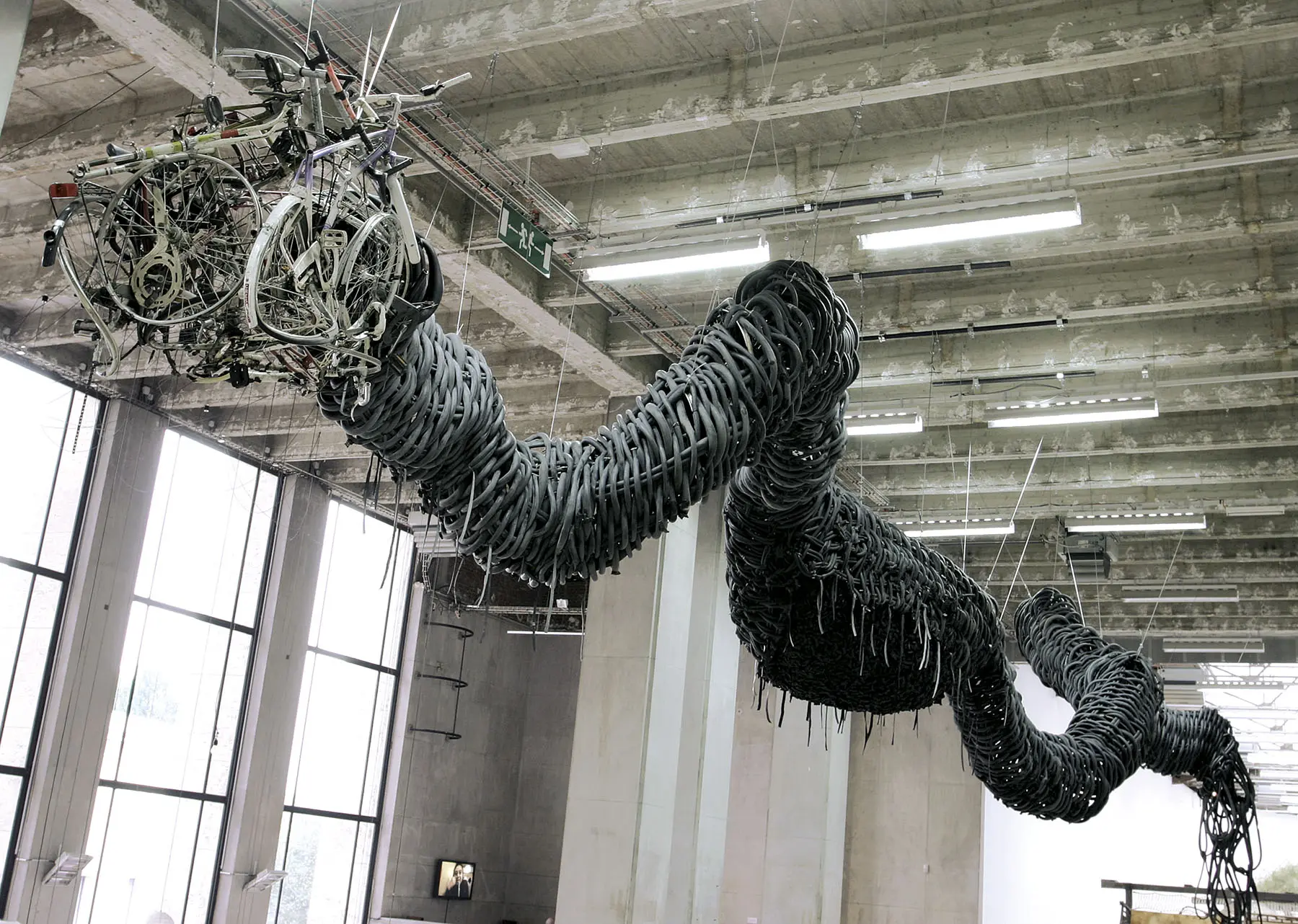
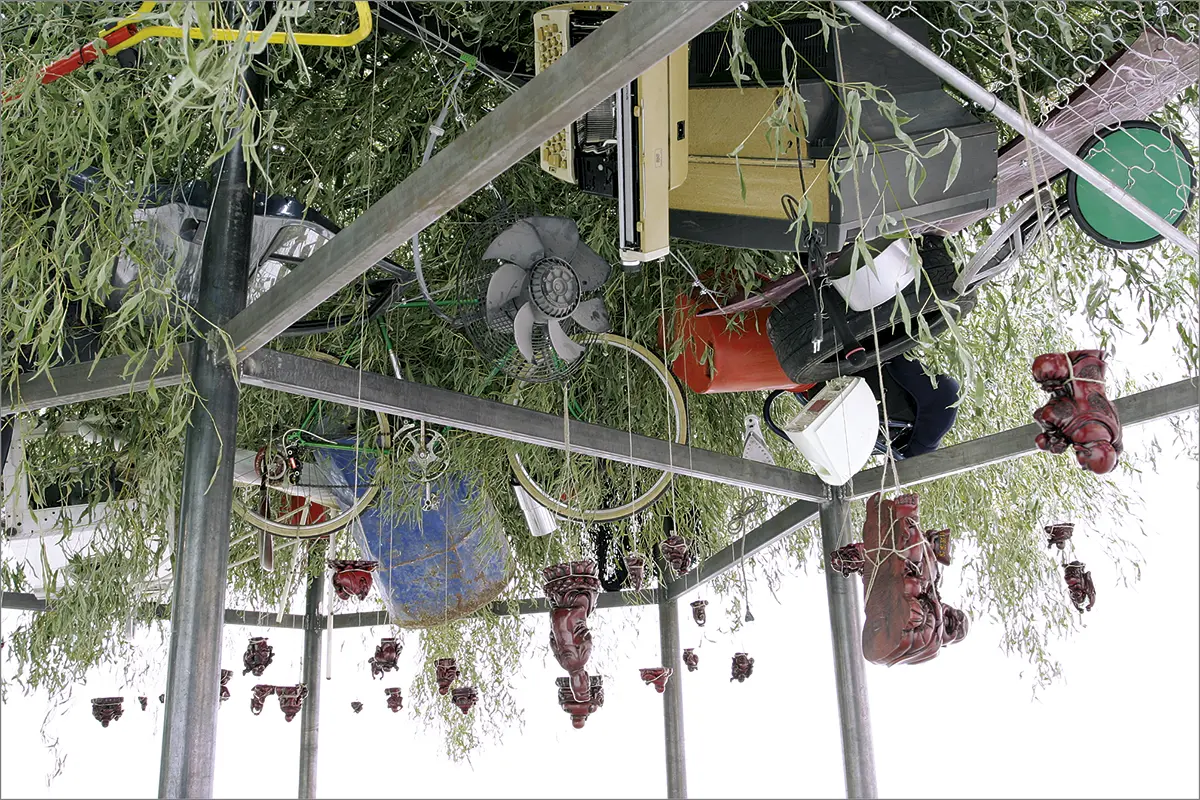
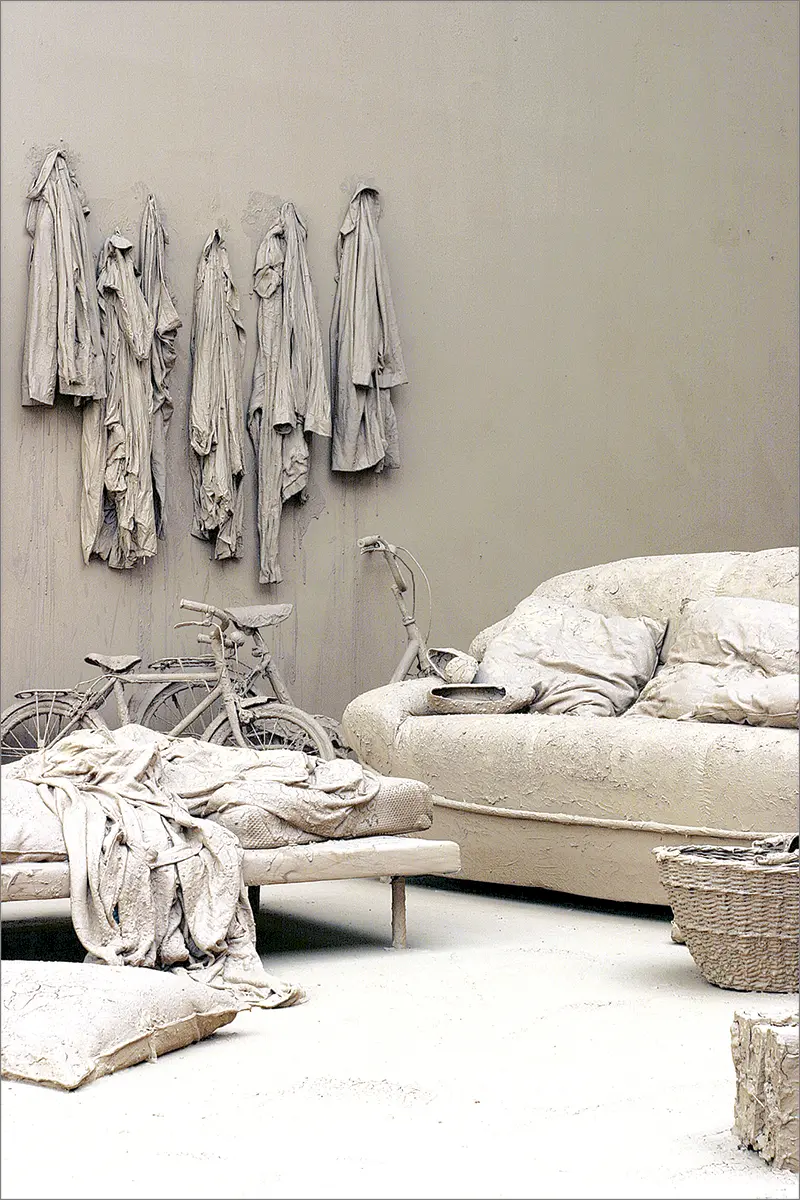
Regarding the Buddhist notion that “each day is a different day,” the works installed at the Palais de Tokyo invite the viewer to reflect and reconceptualize his or her relationship to the contemporary world: with nature, with meditative spirituality, with the body, and with disease; to become aware of the value and fragility of the instant. The show’s first axis, related to our relationship to objects and to the critique of consumer society, comprises several pieces, among them Precipitous Parturition (1999) in which a gigantic, twenty-five-meter dragon is hung from the ceiling. The dragon’s jaws are made of used bicycles, its abdomen is made of an assemblage of miniature automobiles painted in black, and the body is made of car tires. This evocation of Chinese tradition and of the West’s boundless consumerism, a consumerism that institutionalizes refuse and trash, is found in several of Chen Zhen’s works, where insignificant everyday objects are staged as icons of a forewarned disaster. Yet at the same time that it questions and critiques, Chen Zhen’s work proposes. He wanted to “revitalize the past and enrich the present."5 Fu Dao, Up-site-down Buddha/Arrival a Good Fortune (1997) is an installation in the shape of a Buddhist temple covered in bamboo. Suspended under this canopy we find various recovered objects (refrigerator, iron, ironing board, television set, etc.) and fifty small red Buddhas placed upside-down. Heavily influenced by experiences of meditation, here Chen Zhen explores the course of traditional religion in a society where nothing is made to last. In Purification Room (2003), an installation made by Chen Zhen’s wife based on a project by the artist, everyday objects are arranged on the floor over a wide area, close to two hundred square meters, and held together under a layer of dry clay. They appear as a “petrified” site and attest to that “archaeology of the future” Chen Zhen spoke of when he said that “instead of exhuming, we need to anticipate in relation to time."6
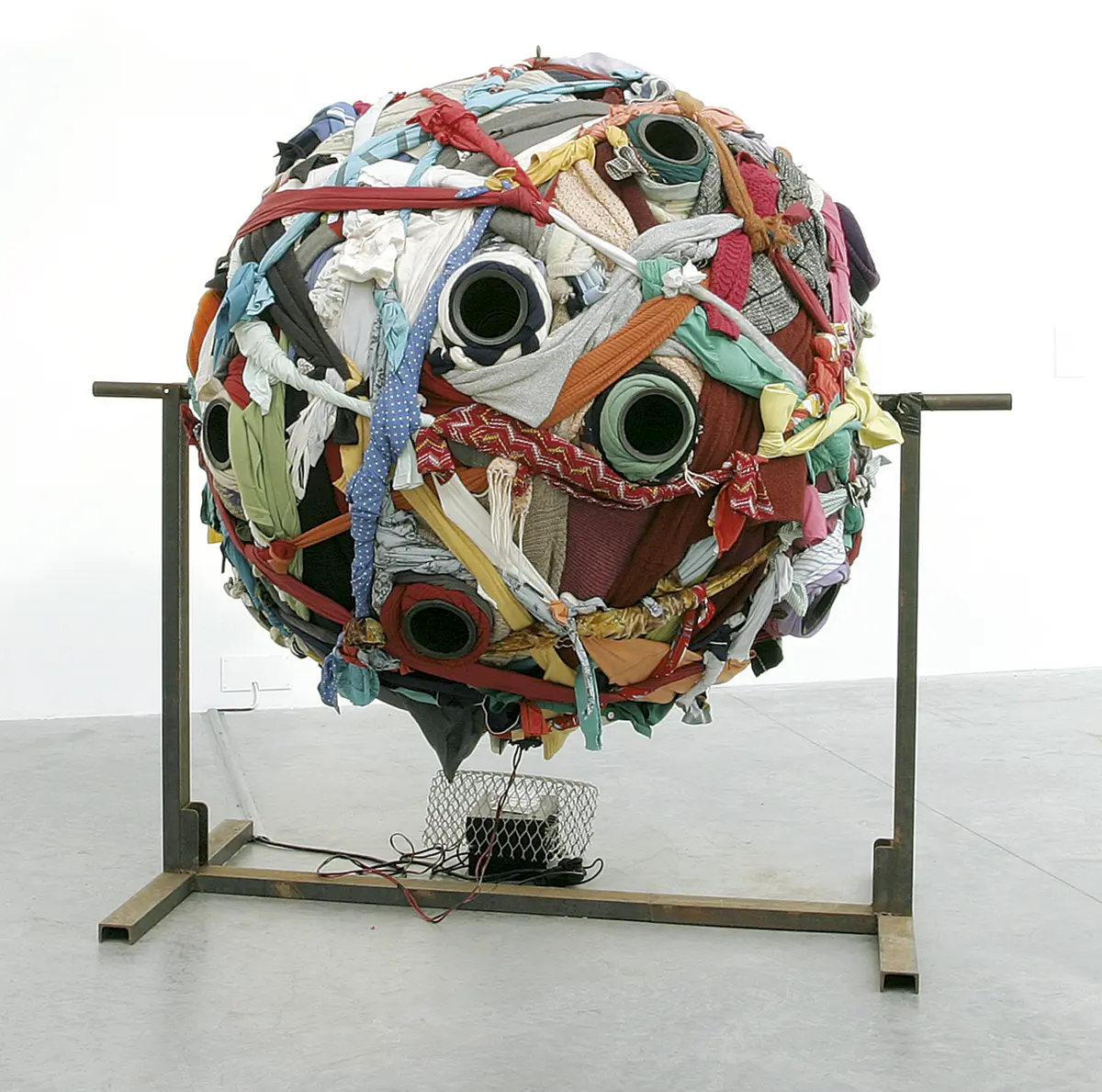
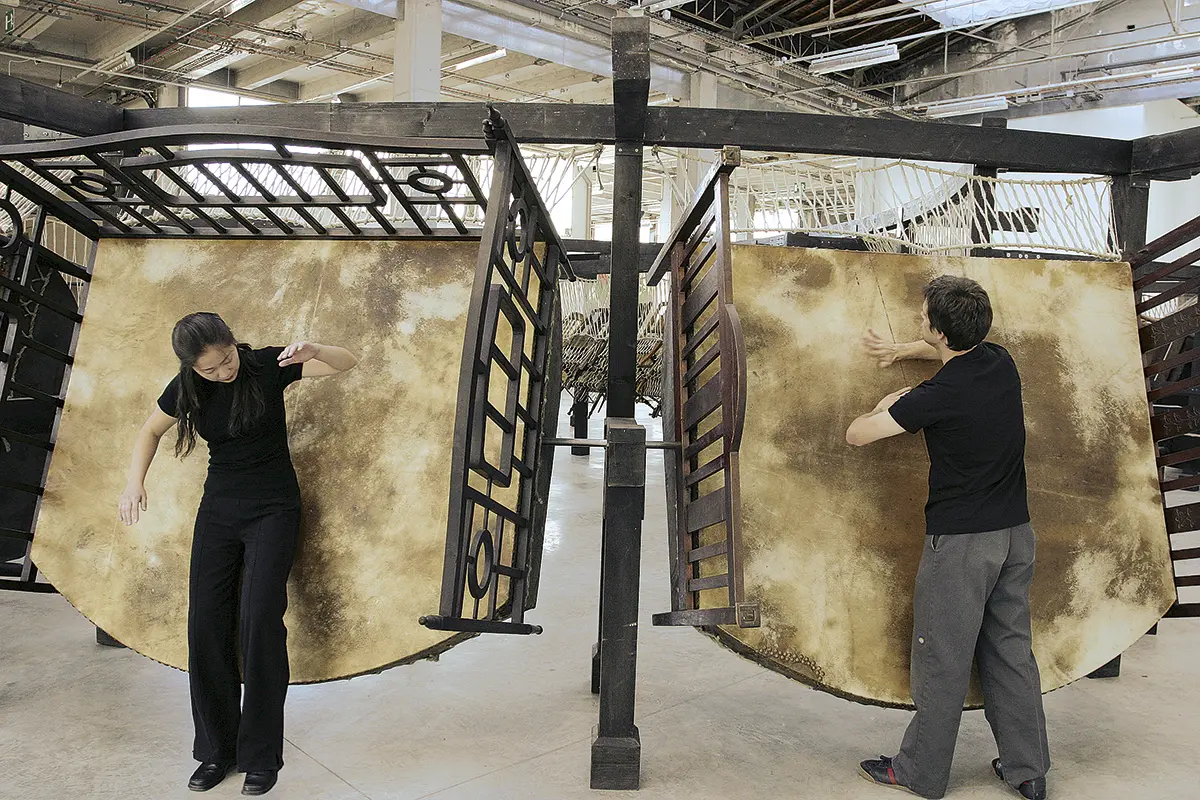
The second axis developed in this show deals with the issue of communication between people or the lack thereof, and with the issue of reconciliation. Such is the case of The Voice of the Emigrants (1995), a kind of utopian world map formed by intermixed garments on which some “mouths” appear, in reality, disguised speakers that broadcast overlapping voices. This contemporary Babel7 brings to mind globalization as experienced —and transcended— by Chen Zhen in his many travels. The extraordinary Jue Chang (the last song) Dancing Body/Drumming Mind, originally created for the Tel Aviv Museum in 1998 and presented the following year at the Venice Biennale, brings together chairs and beds made with tensed leathers that the viewer is invited to touch, hit, caress. The gesture, conceived by the artist as a political protest, here acquires a different meaning —as happened in Venice— and becomes an exposition of internal tensions or a kind of communicative energy that touches all those who carry out, in echo, the same movement. Chen Zhen highlighted the original curative dimension he wanted to give this piece: “To cure oneself by hitting drums. . . to massage and clean oneself, pushing stress away, and to recover physical and emotional equilibrium."8
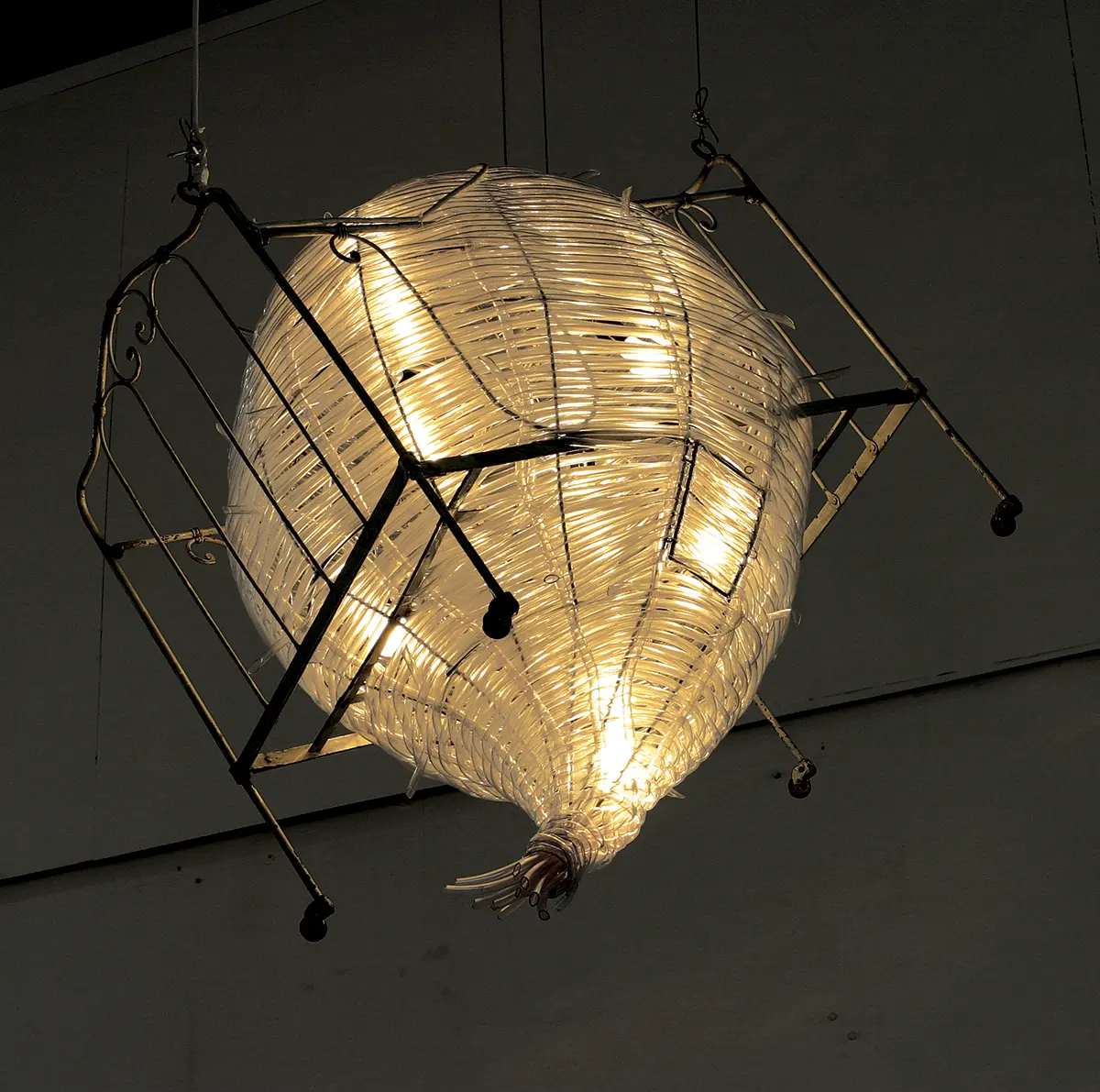
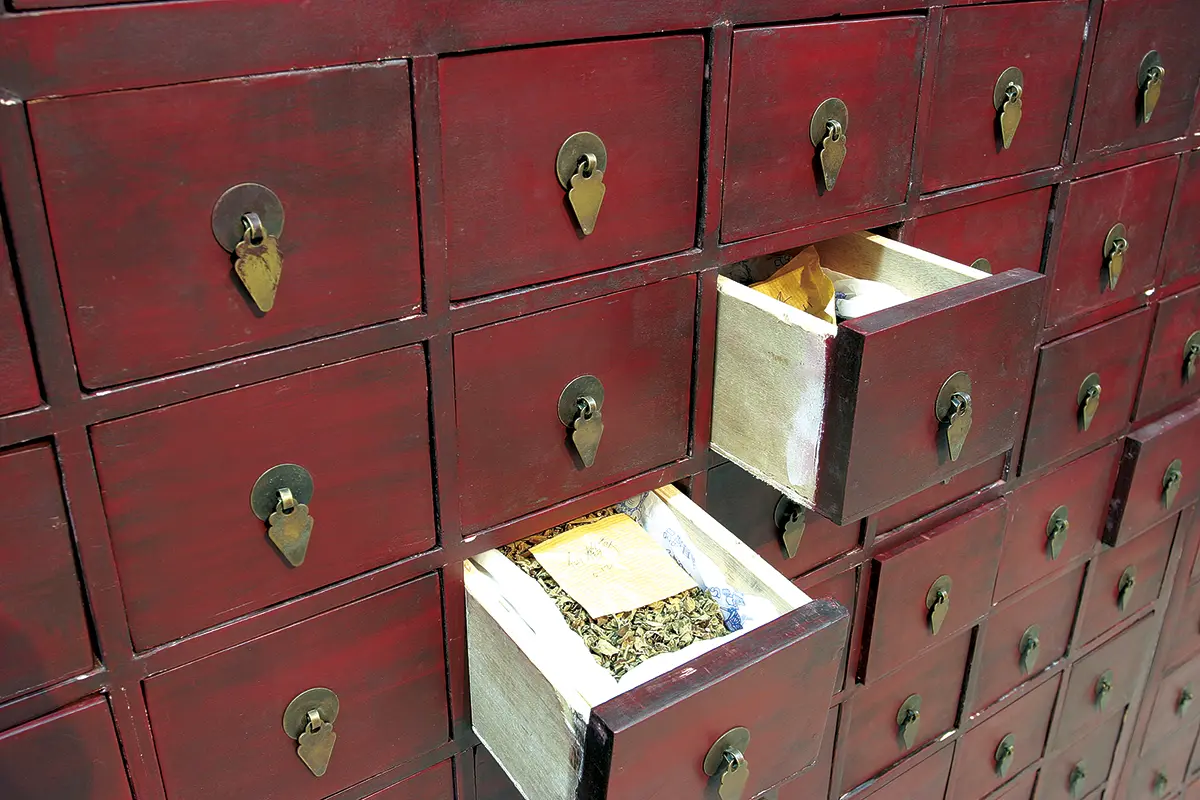
Lastly, disease, meditation, and therapy are present in several of the show's major works in the show, and these topics are in synergy with the others. Diagnostic Room (2000) presents a piece of furniture with 378 drawers holding many vegetables and minerals used in Chinese medicine, between a wall of ashes (purification) and a wall of straw (nature); six drawings show diseased organs and their diagnoses, with the plants used in their cure placed in traditional old wooden bowls. Disease and cure are also represented in Obsession of Longevity (1995), an installation comprising two small closed and open spaces where molded viruses, jars, calligraphic old-style medical formulas, etc. coexist with a bed of nails that reminds us of permanent suffering. Chen Zhen’s last installation, Innocent Light (2000) is a section of the piece presented at Galleria Continua in Italy, shortly before the artist’s death. On the ceiling, seven luminescent “buds” made with translucent tubes, which are in reality blood-transfusion tubes, are hooked to white, children’s beds. Birth, illness, and death are linked and in dialogue with the alabaster organic forms of the Zhen Garden found some meters below, which is accompanied in turn by a fence of surgical instruments from both Tibet and the West.
Along this journey of great intellectual and sensible coherence presented at Palais de Tokyo, there breathes the urgency to communicate and to live felt by an artist who inscribed his vital and fatal experience in reality, in metaphor, or in a dream. The installations there provide a continuous and interactive reading of his personal history and the viewer is called to be, alongside the artist, their main protagonist. Chen Zhen occupies a special place in the diaspora of Chinese artists in the West because he was able to confront, respond to, and bring forth an alternative methodical and constructive reflection to what for others would have been an obstacle and a deterrent: to face a different world and an incurable disease. Breaking free from the role of the exotic artist in which some would have liked to pigeonhole him, he also marked the boundaries of “an aesthetics of displacement” and of status as a “nomadic artist” —in his own words— by reflecting on the nature and the place of the exile that artists carry with them. Chen Zhen’s reflection includes the fusion of body and spirit, whose importance for humankind he highlights repeatedly, and he exhorts us to seek “the invisibility of materials, the internal or invisible context of the place in order to go beyond form.”
Chen Zhen’s work gives preference to being over appearance and hawks the spirit guide and the “airfield of vacuum,” and at the same time deplores the desertion of such values in our contemporary mentalities. His wisdom impregnates fields as diverse as the apprehension of nature; the meaning of art; disease; and our relation to others.9 He infects us and makes our certainties relative, proposing to mobilize our rational, descriptive, and classificatory critical sense toward a “conceptual-metaphoric method” that makes room for the freedom of movement and of doubt on which our very humanity is founded.
NOTES
1. Conversations with Hans-Ulrich Obrist, Osaka 2000.
2. Le Journal n˚ 5. Chen Zhen Special, "silence sonore", Palais de Tokyo, Paris.
3. Le silence sonore. Conversation between Chen Zhen and Jérôme Sens in the Chen Zhen catalog, 2000, Cimaise et Portique, Centre départemental d’art contemporain, albi, And Muzej suvremene umjetnosti, Zagreb, with the Chen Zhen show Jardins et Lavoirs.
4. Le Journal, op. cit.
5. Conversations, op. cit.
6. Le Journal, op. cit.
7. Le Journal, op. cit.
8. Show poster
9. The Conversations book cited in 1. was published on the occasion of the show at Palais de Tokyo. It is an indispensable intellectual and theoretical tool for entering Chen Zhen’s existential and artistic philosophy. It gathered numerous conversations held throughout the world during the 1990s and in early 2000.
CHRISTINE FRÉROT
Art historians are devoted to criticism, research, and teaching. Teaches at the School of Higher Studies in the Social Sciences, Paris.