Whoever stops and reflects on the title of this show, the order of its components, and even its typographic design, will notice the curatorial effort to specify intentions and differentiate protagonists. It is a selection of works from the Latin American and Caribbean collection at The Museum of Modern Art, New York, whose script and significance follow the history of the collection’s development.
Such a point of departure is crucial to understand the meaning of the proposal and to enjoy it, and at the same time to reflect on the complexity of the geopolitical and socio-cultural issues underlying the often paradoxical circumstances of the collection’s evolution.
Beyond whether the quality of the works justifies a good exhibition, the fact is that if we were to confuse a show of Latin American and Caribbean works from MoMA with a show fully representative of Latin American and Caribbean art (if such a thing is even imaginable), this event would be a failure.
However, as it has been structured —four sections that attempt to follow the narrative of the collection’s growth by distinguishing the dates of acquisition and the names of donors, and by formulating sub-discourses according to thematic and formal developments— this show is evidence of the friction of several factors that lie behind the MoMA collection.
Political and economic relations between the United States and Latin America and their intellectual resonance permeate the exhibition’s sense of contextual complexity. But it would be unfair not to acknowledge a genuine intellectual interest that goes beyond strategies of political manipulation in the development of this collection. To express the amalgam as such, and at the same time to safeguard the original meaning and artistic refinement of the works on exhibit is one of the show’s virtues.
The building of the collection, which is far from comprehensive, organic, or representative, and the place (or non-place) that MoMA gives Latin American art in the context of modern art, reveal, as Luis Enrique Pérez-Oramas1 points out, “a problem of the policies of The Museum of Modern Art, and of the Museum as a political entity."2
Evidently, the geopolitical interests that determined the collection’s profile as much as professional interests did are not too different from those that have kept it subject to geographical categorizations in a museum whose taxonomy of modernity responds to genres and forms. But, by the same token, we must admit that such classification/declassification has the potential to challenge MoMA’s own imagination regarding its understanding of modernity. Today it might even function as a platform for an agenda of vindication of Latin American and Caribbean art.
One of the reasons that many of these works have been shown seldom if at all, is precisely the fact that they have been situated in the kind of social and geographical framework that MoMA itself is not equipped to handle and cannot incorporate into its mission. It has been thirty-seven years since the museum organized a specific show for this collection.
This also explains at least partially why, as Fatima Bercht points out, “The works that are well known have been reproduced ad nauseam in many textbooks devoted to Latin American art, modern Mexican art, and to a lesser degree, Surrealism” and, consequently, “This handful of works —whether or not of historical importance— has come to symbolize the ‘essence’ of Latin American Art,"3 thus perpetuating a stereotype that this show is helping dismantle.

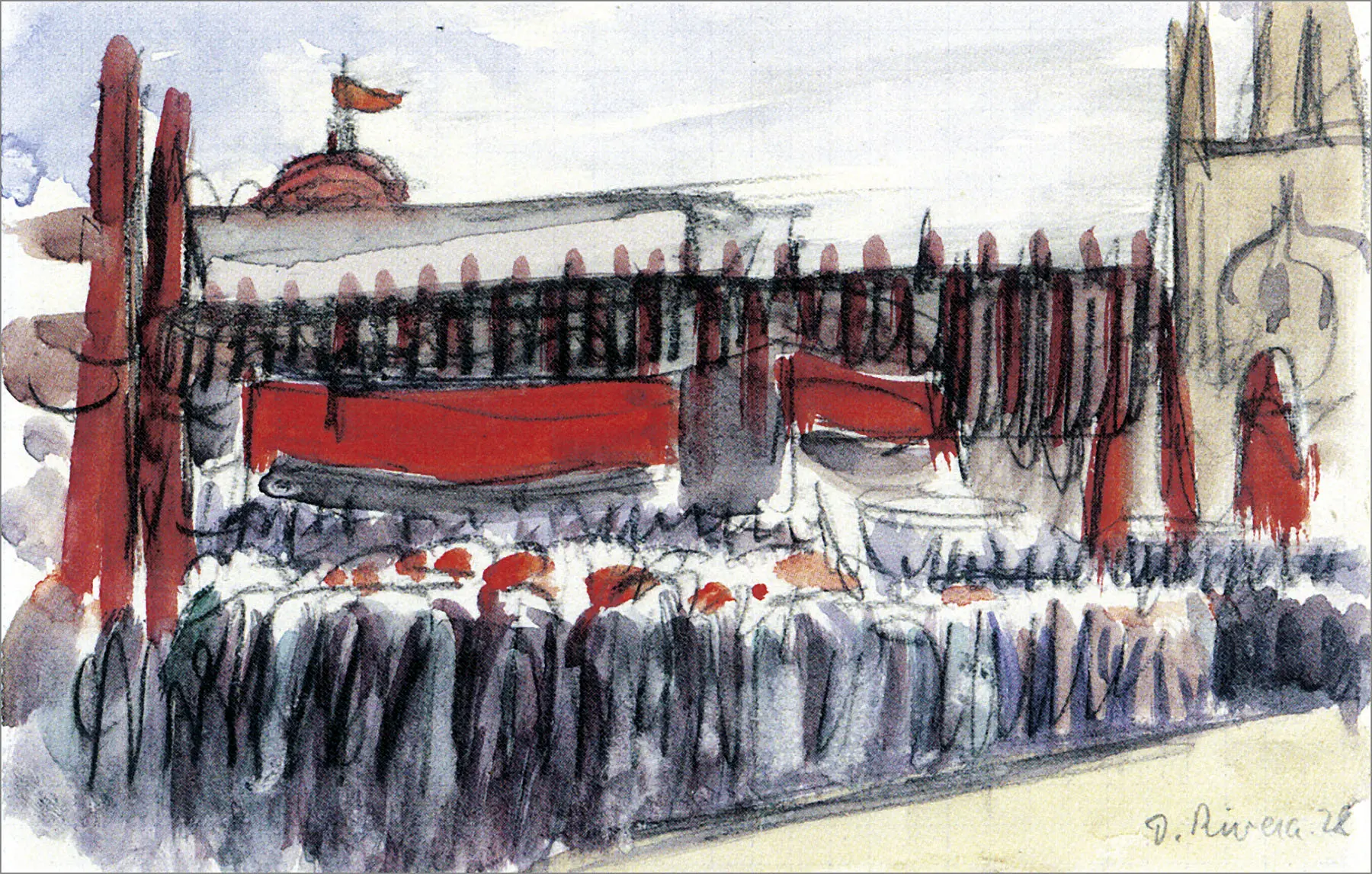
The show arranged chronologically, opens with some of those emblematic works by David Alfaro Siqueiros, Diego Rivera, and José Clemente Orozco, which have been true workhorses in MoMA’s usual exhibitions. But it also introduces works that are seen less often, such as a fantastic series of watercolor drawings by Diego Rivera, May Day Moscow (1928), in which rhythmic gestures of line and color build images of people at a May Day celebration with flowing red banners against the buildings that surround Kremlin Square. These drawings by themselves help provide a historical and ideological context for the artists that open the show.
The three leaders of the Muralist movement appear during the first significant period of acquisitions (the 1930s), which practically coincides with the foundation of MoMA in 1929. Most of these works were donated by Abby Aldrich Rockefeller4 and are inscribed in the profile that Alfred H. Barr —the museum’s first director— wanted for the institution, incorporating the American and Mexican avant-garde into the representation of modernity delineated by European art. It should be noted that in 1931 MoMA presented a Diego Rivera exhibition that was visited by 57,000 people.
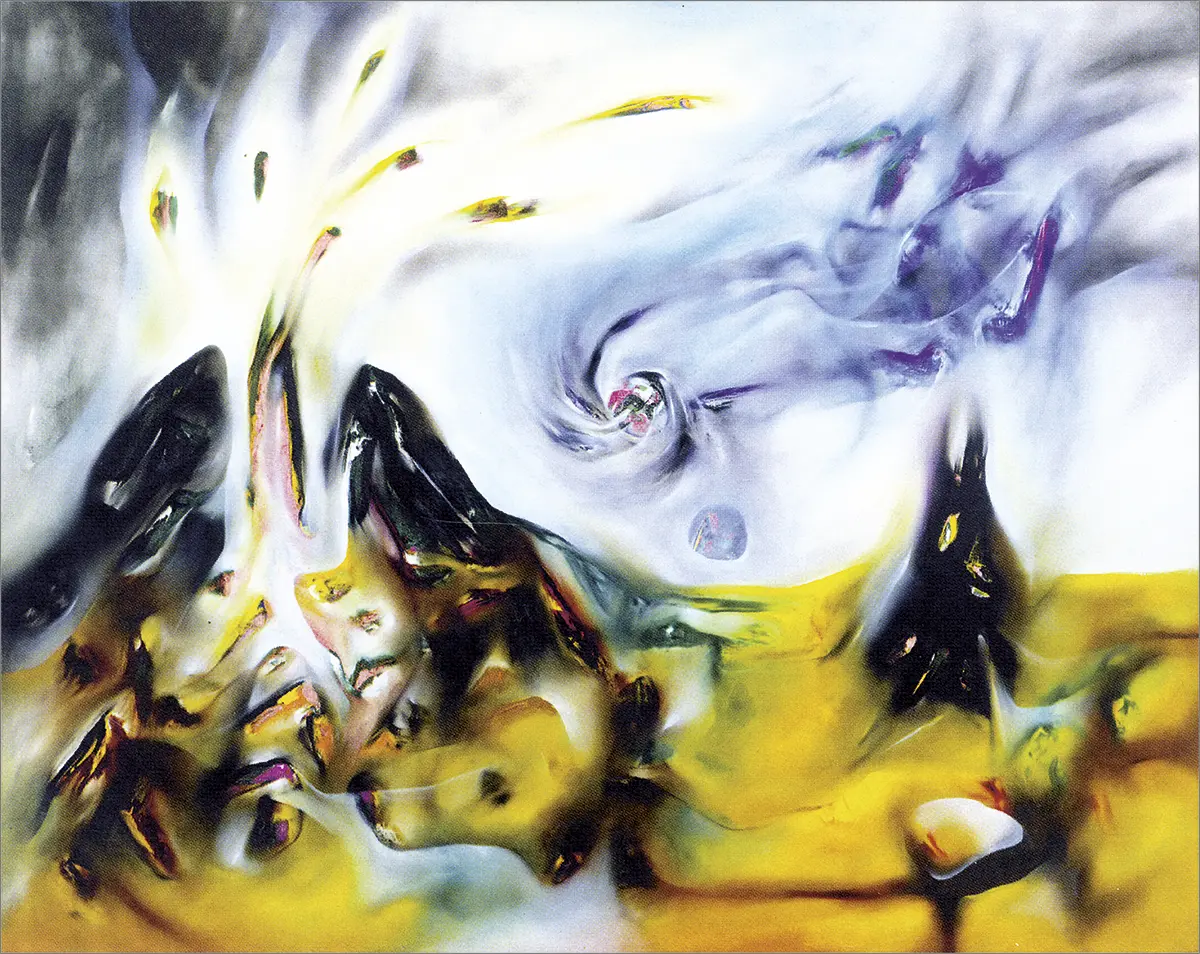
Brazil and Cuba enter the collection in the early 1940s with Cándido Portinari’s Hill and Wifredo Lam’s Satán and The Jungle.
A self-portrait by Frida Kahlo, Self Portrait with Cropped Hair; a painting by Peruvian artist Mario Urteaga, Burial of an Illustrious Man; and Creole Dance, by Pedro Figari from Uruguay, introduce the second and most active period of acquisitions. The war and the creation of the Inter-American Fund mark this period of new targets. Handling acquisitions that do not hide the parallel intention of gaining the political sympathy of Latin American intellectuals drives the museum to add numerous pieces of debatable value. We should remember that this show presents 155 works from a collection of nearly 3,000.
That fact notwithstanding, many important pieces are also added during this period, and the show’s curatorial script exhibits a revealing dialogue. Such is the case of the parallel established between Seated Boy by Argentinean artist Antonio Berni, and Angeline Belfo, a fine drawing by Diego Rivera, both placed in counterpoint to Carlos Mérida’s Tempo in red, of a marked abstract vocation and Card Game, a delicate piece with echoes from the muralist movement by Cuba’s Amelia Peláez.
Joaquín Torres-García, Rufino Tamayo, Roberto Matta, José Chávez, and Antonio Ruiz, among others, also entered the collection during this period.
The well-known President Johnson of LBJ, by Venezuelan artist Marisol Escobar, opens the section devoted to acquisitions from the 1960s that followed the temporary hiatus of the post-war period when purchases had become more sporadic and were restricted to graphic works (Antonio Frasconi, Lasar Segall, and Guadalupe Posada, among others).
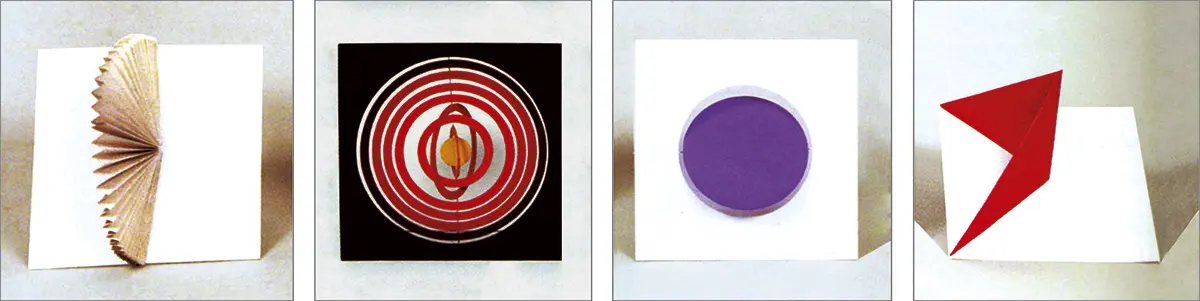
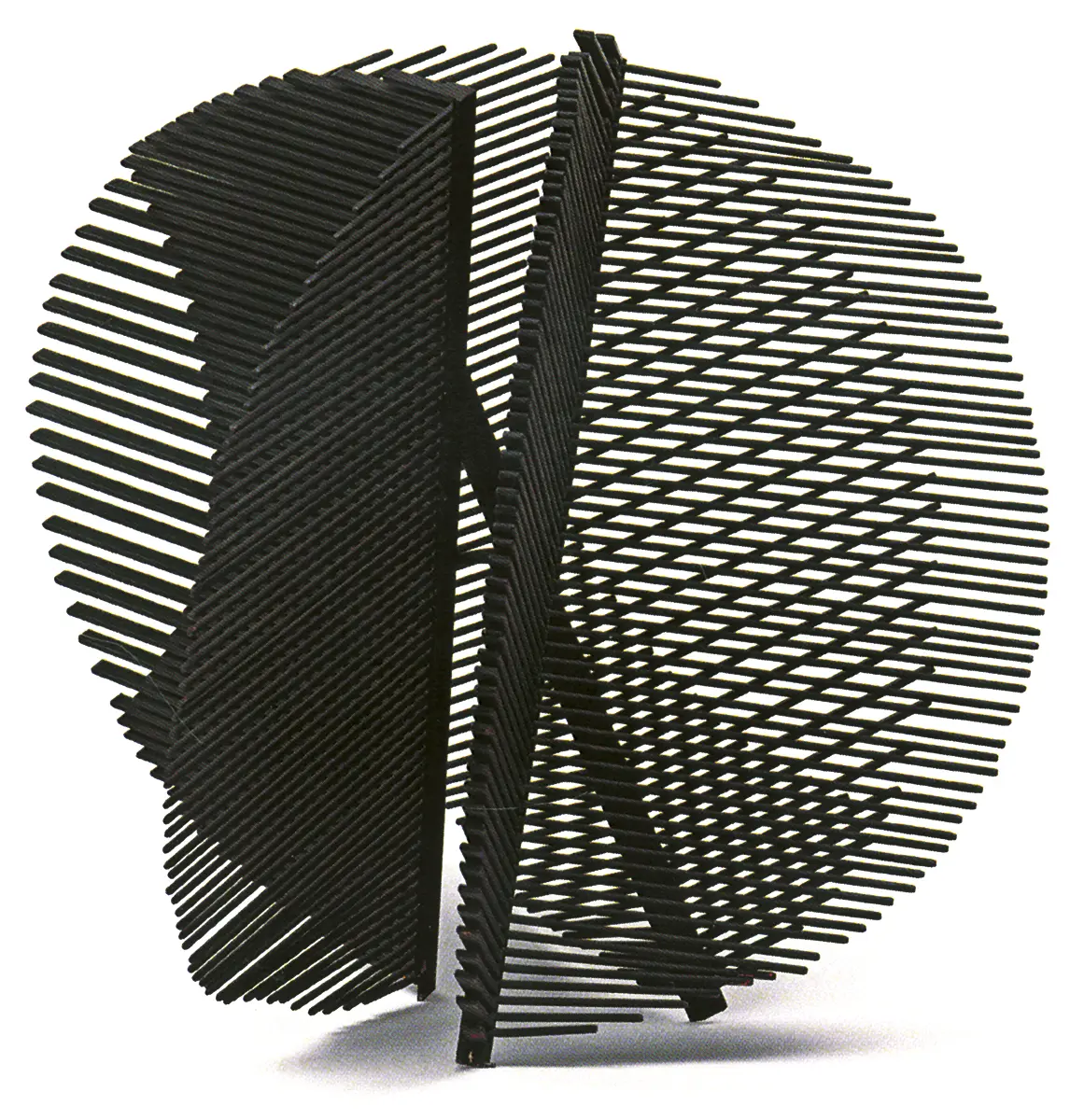
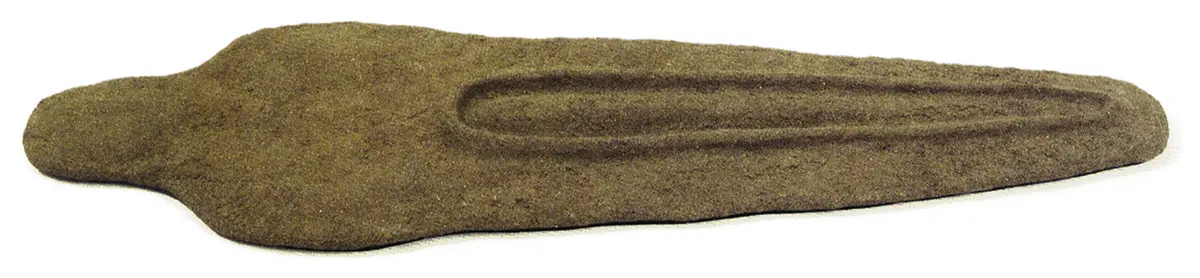
Marisol’s Pop-like piece is situated amidst a dialogue-synthesis between geometry, op-art, and informalism that brings together the refinement of a work by Venezuelan-German artist Gego (Gertrude Goldschmidt) and a beautiful piece by Mathias Goeritz (donated to the museum by architect Philip Johnson) and adds the expressionism of a burnt mattress by Puerto Rican-American Rafael Montañez to the precision of Jesús Rafael Soto’s art.
Carlos Cruz-Díez and Julio Le Parc (Venezuela and Argentina, respectively) are also in this section, which includes several prints and drawings by Argentinean artists Ernesto Deira and Jorge de la Vega, and Brazilian Antonio Dias, as well.
Nevertheless, it is clear that this period was marked by omissions. On the one hand, the intensified diversification in artistic production in the various regions of Latin America, and on the other the intellectual and ideological misunderstandings between the United States and the nations south of its border, generated large empty spaces in the MoMA collection. It will suffice to refer to the next gallery to understand that much of what entered the collection in the 1990s is an attempt to remedy those prior absences.
Many Latin American intellectuals, whose imagination was more committed to the principles of the Cuban Revolution than to American imperialism never saw the Alliance for Progress, established during the Kennedy administration, and the subsequent political initiatives of “economic, social, and cultural development in Latin America” with appreciative eyes. This adds to the reasons why important artists are not represented with significant works. But it is not only a question of how corrosive their images were, but also one of languages that often do not agree with the American canon, which at the time was consolidating its position as a source of legitimacy. Brazilian concrete geometry, fortunately well represented in this show with donations, made in the late years of the twentieth century, of Latin American conceptualism —still insufficiently studied— is a case in point.
But it is a merit of this show to articulate works by Lygia Pape, recently donated by Patricia Cisneros, with a piece by León Ferrari acquired in 2003, alongside Gego, Mira Schendel, Hércules Barsotti, and Hélio Oiticica, so that we can rejoice in a geometry that transcends its own norms, or a text that signals its condition of a drawing. At the same time, appealing to the viewer’s sensibility and intelligence to complete and penetrate their meaning, these works make evident their importance and help us understand the significance of both their initial absence from the collection and their presence there today.
The gallery that gathers Artur Barrio, Ana Mendieta, Liliana Porter, Juan Sánchez, Rafael Ferrer, Cildo Meireles, Vik Muniz, José Leonilson (and perhaps, problematically, Basquiat), is perhaps, along with the island of graphic arts in the exit hallway, the one that poses most difficulties to the establishment of a dialogue between the works that extends beyond a certain generational closeness between their authors. Each one of these artists merits a more elaborate context and demands a comprehensive representation, not only in terms of more of their works but also more of their fellow travelers. Perhaps Meireles is the best characterized among them.
The 1970s and part of the 1980s, the years of this production, are a time of military dictatorships in Latin America, often under the auspices of the United States foreign policy. This frame of reference can not be ignored in our appreciation of the period in which these artists are inscribed. But to approach their visual poetics and their points of contact, more than a tangential touch is required.
Finally, the show ends with the incorporation of end-of-century artists like Doris Salcedo, Gabriel Orozco, Fernando Bryce, Félix González-Torres, Enrique Chagoya, Beatriz Milhazes, Los Carpinteros, and Kcho, works more or less recent, several of which circulated in international biennials and were to a degree able to gain independence from the geographical label and to be exhibited at MoMA in a way more explicitly anchored in the course of modern art.
The 1990s saw not only a change in the course followed by the North/South relationship but also a shift in the world’s alignments. New spaces for debate and the appreciation of Latin American art opened. Stimulated by this context, a new market and a new way of collecting emerged. The impulse from several fronts generated a more inclusive representation of Latin America in the global context, with more serious studies and revisions and attempts to fill in inexcusable gaps.
At MoMA, the economic power and the decisiveness of some of its Latin American benefactors have helped enrich the collection and have sponsored (read financed) the incorporation of Latin American curators, fundamental to communicate knowledge not only of the material but of the historical context in dialogue with modern art’s other proposals.5
MoMA at El Museo is a welcome show because it places itself in the misunderstandings of the collection without attempting to solve them with simplifications. On the contrary, the curatorial premise is to problematize the gazes crossed between North and South and to inscribe them in a wide social context that allows room for contradiction. Many artists omitted from the show weigh heavily with their absence, and we think of them as under-represented in the MoMA collection.
Perhaps we cannot escape the contradictory fact that while proclaiming “the introduction of Latin American artists to a U.S. audience,” the show is held at El Museo del Barrio, an institution whose public is primarily Latin American. This reflection, however, will not carry us far. The show, initiated at MoMA and co-curated by both institutions, could very well be eroding many borders at the same time.
The exhibition opens with a series of social statements and closes with a drawing by Kcho, In the eyes of History, in which a coffee colander crowns Tatlin’s famous tower. The irony with which Kcho asks us to be cautious with history does not keep us from seeing that this show is, despite everything, a reason for hope.
NOTES
1. Luis Enrique Pérez-Oramas, Adjunct Curator at MoMA, is one of the show’s five curators, alongside Gary Garrels, Chief Curator at MoMA; Miriam Basilio, Curatorial Assistant at MoMA; Fatima Bercht, Chief Curator at El Museo del Barrio; and Deborah Cullen, Curator at El Museo del Barrio.
2. Luis E. Pérez-Oramas, “The Art of Babel in the Americas,” Latin American & Caribbean art: MoMA at El Museo, ed. Miriam Basilio, et. al., (New York: Museo del Barrio; The Museum of Modern Art, 2004), p. 35.
3. Fatima Bercht, “El Museo del Barrio: A Curator’s Notes" on MoMA at El Museo, p. 30.
4. Abby Aldrich Rockefeller was one of the founders of The Museum of Modern Art.
5. Paulo Herkenhoff was the first adjunct curator brought from Brazil to MoMA and was instrumental in initiating this exhibition.
ANA TISCORNIA
Artist and writer. Professor at the State University of New York, Old Westbury.