
The Kunsthalle in Kiel presented a retrospective of the work of Uruguayan artist Luis Camnitzer.1 The artist —who has lived in the United States since 1964— never abrogated his representation of Latin America and, oddly, claims that he still lives in Uruguay. Camnitzer, particularly for the readers of this publication, may be better known as a writer of art than as a maker of art, a fact that displeases him profoundly. Even today he is irritated when he remembers his introduction to renowned Peruvian art critic Juan Acha: instead of mentioning his artwork, Acha recalled reading his articles.2 By contrast, and perhaps understandably, the curators of the Kiel show decided not to reference Camnitzer’s writings. Instead, this retrospective spans his visual art production from 1966 to 2003 and provides a well-organized, comprehensive, if not exhaustive, view of his development. An informative catalog that sheds additional light on Camnitzer’s artwork, accompanies the exhibition.3
Not many Latin American artists have retrospective exhibitions in Germany and one may wonder what prompted the selection of this particular artist. The answer may be as simple as: his survival. Camnitzer was born in Germany in 1937 and was taken by his parents to Uruguay when he was one year old. Luebeck, his native town, is in Schleswig Holstein, of which Kiel is the capital. As a Jewish native of Schleswig-Holsteins who fled from Nazism and subsequently became a Latin American artist, and whose work was validated by Documenta XI in 2002, Camnitzer is a rare specimen who satisfies so many quotas he has become an easy and safe choice for curators.

In Camnitzer’s acerbic and often aggressive art reviews, he seems to relish attacking what he, often incorrectly, characterizes as flawed or imperfect. His visual art sometimes seems to be informed by the same animus and cannot be classified as “trendy.” While he likes to think this places him outside the so-called art establishment, the fact that he publishes regularly makes this an implausible conceit. Camnitzer has opportunities to disseminate his ideas that most artists lack, and in fact, has a better chance for brand name recognition and accumulation of influence than marginality would warrant. Like it or not, he fits into the hated category of “gatekeeper.” When asked if in that role he is keeping himself in or out, he seemed completely befuddled. In a later conversation, he evaded the question by expressing his intention of working on the design of a new gate.4 This writer in turn was befuddled by his response, which strongly suggests that Camnitzer is not considering abdication of the keeping, even if the gate changes.
Entering the Kunsthalle one encountered the vast wall of Camnitzer’s Leftovers (1970). Comprising eighty boxes wrapped in fake bloody gauze, the piece purports to be an homage to martyrs in the fight for Latin American independence from neo-colonialism and dictatorship. Without the artist’s commentary, however, the boxes might contain the body parts of any corpses, or martyrs to any cause. They could also be interpreted as a sort of Wailing Wall, completely missing Camnitzer’s point. Leftovers were flanked by Execution (1970), a mirror shattered by a bullet, and oozing fake blood (again). The viewer was reflected in it and became the target of the shot. Not exactly an auspicious beginning for an exhibition.
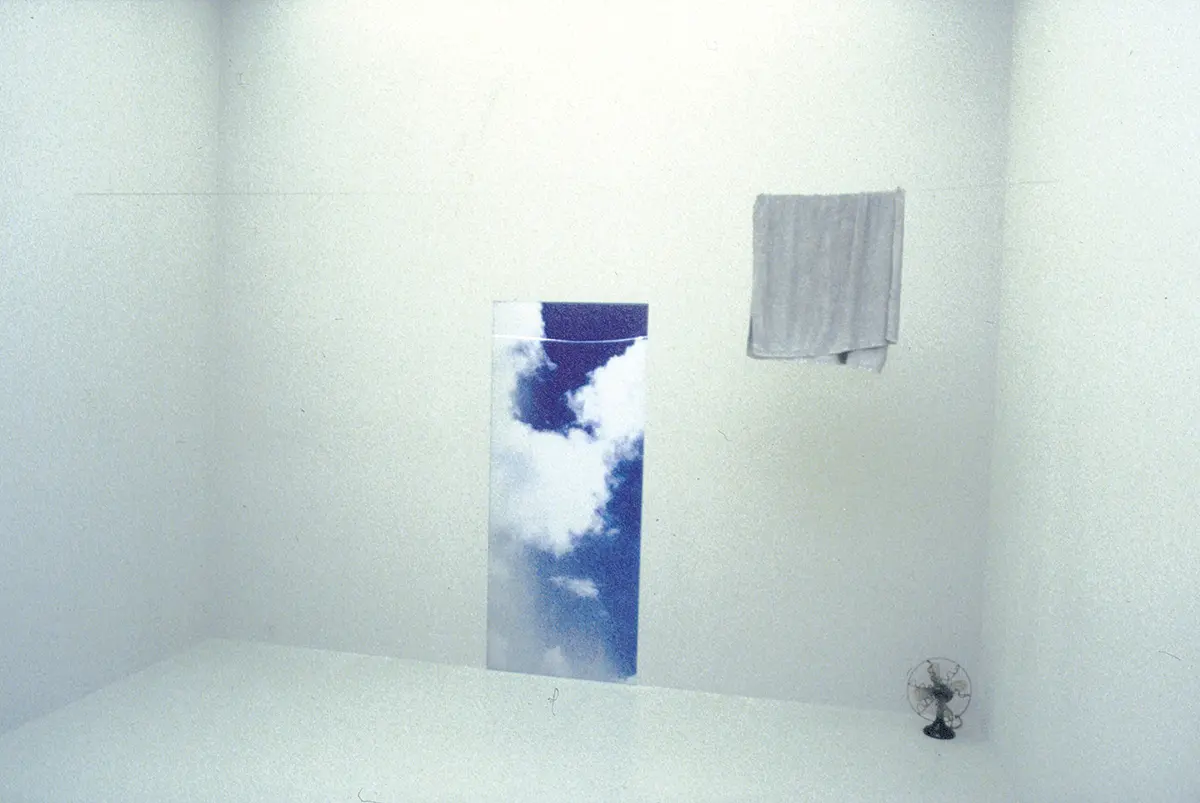
The room that follows contains most of the so-called retrospective material. It is both interesting and disappointing to see the artist’s early conceptualist work here. While a review of the dates may confirm the impression he was among the forerunners of Latin American Conceptualism, there are problems. Camnitzer’s Sentences (1966) were indeed early. In them he tried to describe a given visual situation as precisely as possible, thus carefully staying within the visual arts and avoiding poetry. However, Argentine artist León Ferrari had already done his Written Painting in 1964, preempting Camnitzer. An important difference is that Ferrari’s work has a sensorial quality in the way he describes the image and plays with the distortion of handwriting. Camnitzer, on the other hand, affects objective language and uses industrial typography in his pieces. This brought him more in line with the New York style of Minimalist aesthetics Camnitzer seems to think he was fighting against.
Another of Camnitzer’s claims to fame is his Signature by the Inch (1971), in which he signed his name over a printed ruler and estimated the sale price according to the measure. Other related pieces accompanied this work. He copied his own signature to raise the question of whether a copy made by the artist himself constitutes a fake or another original. But Max Aub anticipated Camnitzer by twenty-five years: in Jusep Torres-Campalans, the biography of a fictional painter, Aub described his dream of making a mural-sized painting of his own signature. Given the emphasis on ethics in Camnitzer’s work, it is unlikely that he was aware of these precedents when he produced his own work, which points out the danger of ignorance in art. One needs to know what one’s peers are doing or doing at any given time. Even Camnitzer’s problem here isn’t an original one, since pursuing a futile exploration of ideas that already have been outlined by others is quite common.
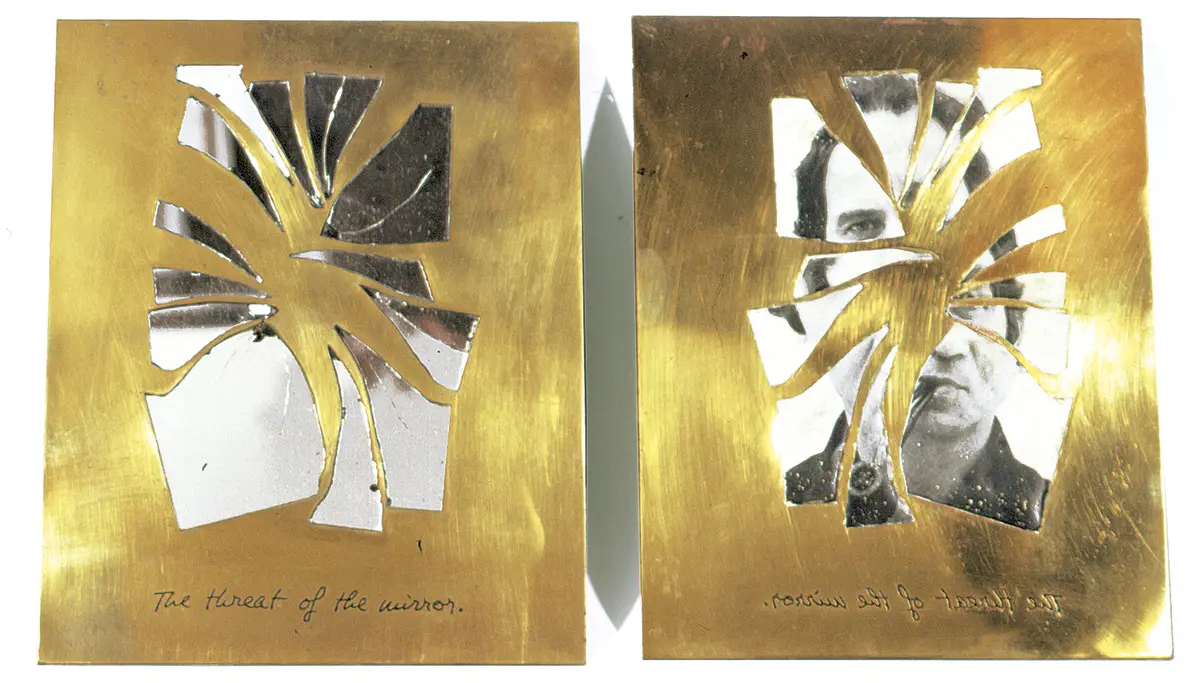
In the Kiel retrospective, Camnitzer is revealed as lacking persistence, one might even say self-confidence. Each of the problems he addresses generates only a handful of examples. It’s as if he expects the viewer to do the work for him, to somehow take it to its logical conclusion. One is left wondering where the boundary between incorporating the participation of the viewer and sheer laziness lies. This might be an interesting proposition for Camnitzer to pursue, and perhaps he intended that, but he doesn’t make it clear in the exhibition. When asked about this, Camnitzer attributed his attention deficit more to fear of boredom than to any strategic thinking.5
Emphasis on diverse propositions as opposed to a gradual, focused maturing through the application of skill is a problem typical of much conceptual work. During the 1960s, skills were sacrificed for the sake of ideas. The dominant aesthetics of the time, which were under attack, emphasized materiality and finish. Abstract Expressionism was about the emotional handling of paint; Pop Art and Minimalism were about an immaculate industrial finish. For some, Conceptualism was a rebellion against all this, an attempt to separate creation from craft. There is nothing intrinsically wrong with this and even today one should grant some validity to the conceptualist project since ideas can be more sublime than exercises in craft. But one should also recognize that this shift spared a lot of labor and certainly opened the doors of art to many clumsy people.

The Kiel exhibition included some pieces Camnitzer had in the Venice Biennale of 1988 when he represented Uruguay. The handful of Venice pieces, presented here out of context (the original was a large installation of more than twenty pieces), draw attention to minor imperfections that detract from their impact overall. Little blobs of brown glue and other flaws mar the intended impression of casual levity and mystery. The suspicion of clumsiness is thereby reinforced.
The Venice pieces also recall the polemics, at the time, about the wisdom of his being chosen for the Biennale. Camnitzer had been absent from Uruguay for more than two decades, and there were many worthy Uruguayan artists living in the country who could have been chosen in his place. It was rumored that his choice was a product of cronyism since he is an old friend of the director of the national art museum, but the accusation has never been proven substantiated.6
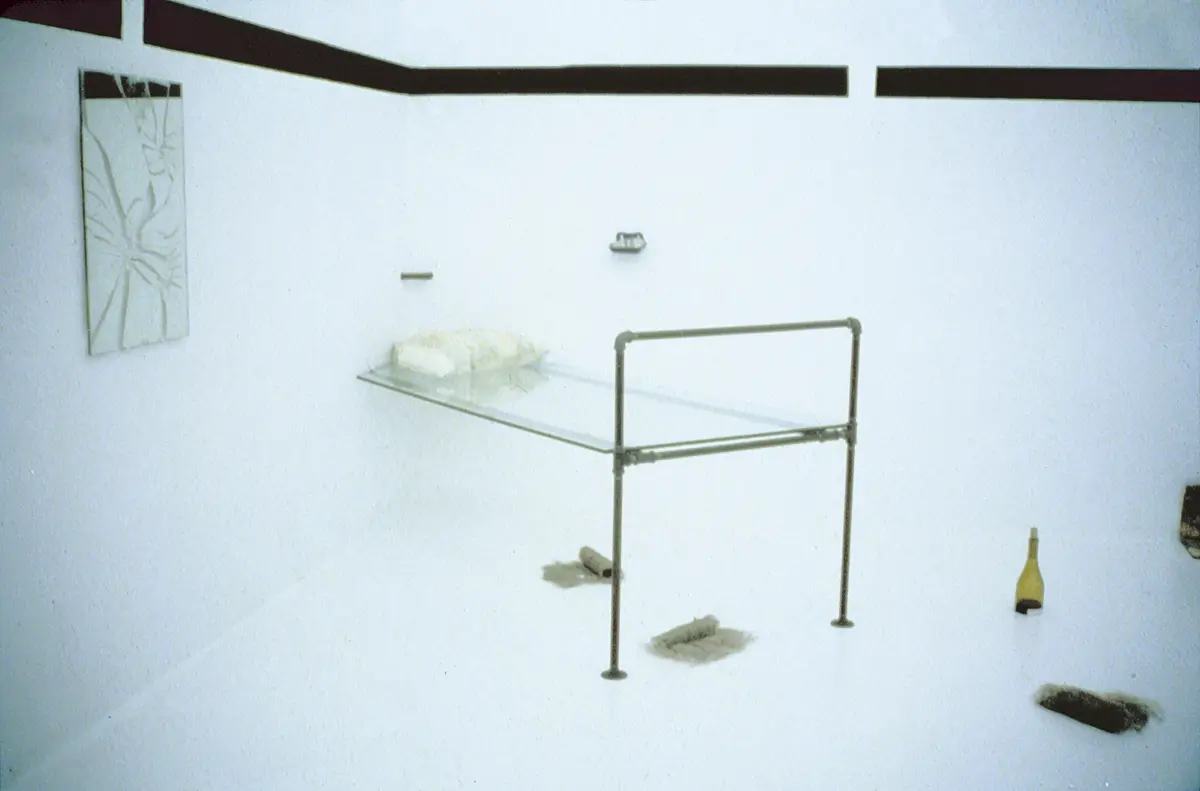
Four rather dour installations give weight to the exhibition. Three of them are dimly and exquisitely lit (since 1981 Camnitzer seems to have developed a fixation on bare, dimmed bulbs) and create a threatening, silent atmosphere. One wonders if the pieces could have achieved this effect on their own, without the installation staging. The dim lighting, of course, also obscures any technical imperfections. By contrast, although the fourth installation, El Mirador (1996), is over-lit, the viewer is prevented from entering the exhibition space. Initially shown in the Sao Paulo Bienal in 1996, El Mirador only allows the viewer to peek into the room through a narrow slit while standing in a darkened corridor. Since short people are unable to see into the room unless lifted by somebody else, this device proves to be discriminatory.7 But it is also a frustrating experience for those “lucky” enough to look into it. One cannot grasp the entire piece with one look, but in order to see it completely, the viewer must walk through the darkened corridors on all four sides of the room. In this installation distance from the objects achieves what the others accomplish by dim light: scrutiny is impossible.
In spite of these criticisms, one must acknowledge that the exhibit as a whole is indeed handsome. The credit for this probably should go to the rooms of the museum, which are conducive to dazzling displays; to the director of the museum, who thoughtfully curated the exhibition; and to an exceptional team of workers.8 Camnitzer, who has curatorial experience as well, also may have had some influence here. The question that arises, however, is about the effect that presentation has on the perceived quality of work. An exhibition display is a work of art in its own right and when strong enough, may save the skin of mediocre art. I’m not implying here that Camnitzer’s work is actually mediocre, but the question lingers.
Other questions come to mind as well. When we are dealing with the development of culture as a whole, at what precise point does individualization in the presentation of art become important? It would seem here that accidental pinpointing of the work of a single artist sidetrack rather than advances culture. The attention may promote the sale of the artist’s work by assigning him/her a particular status; that is commerce rather than culture.9 It may also temporarily secure his or her position in art history, but this may be more a matter of guiding perception than describing reality. In the eighteenth century, the German owner of the Villa Monastero in Varenna, Italy, had four enormous majolica murals that celebrated German cultural giants (as then perceived), installed in the stairwell. The heroes were Bach, Helmholtz, Kant, and Schlüter. Andreas Schlüter (1664–1714), the almost unknown name here, was not responsible for any cultural development the average citizen would care to remember. He was the court painter favored by Friedrich the Great, King of Prussia, after whose death the artist’s glory unfortunately faded.
It is fortunate that Camnitzer is aware of these problems (in fact, he is the one who pointed out the Schleuter example), but his flippancy is discouraging. Dismissing his own retrospective, Camnitzer says: “I have had retrospectives all my life. My first exhibition already was one."10 This, of course, is not a coherent response to the problems of retrospectives as a genre of exhibition. Camnitzer believes, however, that perseverance is an important factor in gaining recognition, and the mere length of his career —he is now 66— may offer the best justification for this event.11 On the problems of aging he seems to be quite clear. “Aging is contagious, an epidemic,” he has said, and, “Micturition replaces data retrieval."12 Still, there seems to be a contradiction. Camnitzer insists that “it wasn’t really the show that mattered, I wanted a monograph."13 In fact, he seems more preoccupied with the thickness of the book than with its content, and he certainly got what he wanted if a three-quarter-inch book in soft cover qualifies.
NOTES
1. The retrospective was presented at the Kiel Kunsthalle from November 21, 2003–January 11, 2004.
2. Luis Camnitzer in conversation with the author, November 30, 2003.
3. Luis Camnitzer, exhibition catalogue, (Kiel: Schleswig-Holsteinischer Kunstverein, 2003).
4. Conversation with the author, December 12, 2003.
5. Conversation with the author, December 11, 2003.
6. Over the course of many years, the two openly disagreed politically, but this could have been a carefully designed stratagem to derail any potential criticism.
7. After several complaints, the museum installed a step around the installation to make the opening more accessible.
8. Camnitzer also credits the curator and his gallerists for this.
9. Camnitzer emphatically denies that this kind of activity has ever had an impact on his sales and offered to show his tax returns to prove it. He claims that he knows “exactly how a non-profit organization feels.” Conversation with the author, December 15, 2003.
10. Conversation with the author, December 1, 2003. Camnitzer’s first exhibition was in 1961 and it is true the exhibition comprised his complete oeuvre to date.
11. Conversation with the author, December 1, 2003.
12. These quotes are older, but no date could be established.
13. Remarks made by Camnitzer to Dirk Luckow, Director of the Kunsthalle, during the installation of the exhibition on or about November 18, 2003.