The second edition of the Merrill Lynch arteaméricas art fair was organized by Leslie Pantín, President; Emilio Calleja, Vice President; Diego Costa Peuser, General Director; and Merrill Lynch as its sponsor. It is fair that, given its ambitions, remains framed in the local Miami context, attracting mostly collectors and visitors from the city. Structured in a conventional manner and curated by Milagros Bello, the fair chose to present installations by different artists under the title Tendencias II; these were placed from the entry to the Coconut Grove Convention Center to well inside the site. Works by Sylvia Riquezes and Guerra de la Paz mingled with the vegetation, achieving a harmonious combination of art and nature. Throughout hallways and common areas were pieces by Pedro Vizcaíno, Pablo Contrisciani, and Carolina Sardi, among others.
There were fifty-one galleries from seventeen countries at Merrill Lynch arteaméricas. Among the highlights were several excellent galleries from Latin America, such as Galería Thomas Cohn and Galería Brito Cimino from Brazil, Galería El Museo from Colombia, Galería Sur from Uruguay, Praxis Arte Internacional from Mexico, and Arte Consult from Panamá. From the United States, the fair boasted the important presence of galleries that are paradigmatic in terms of Latin American art, such as Mary-Anne Martin/Fine Art, Ramis Barquet, and Nohra Haime Gallery from New York; Walker Fine Art from California; and Diana Lowenstein, Cernuda Arte, and Americas Collection from Miami.
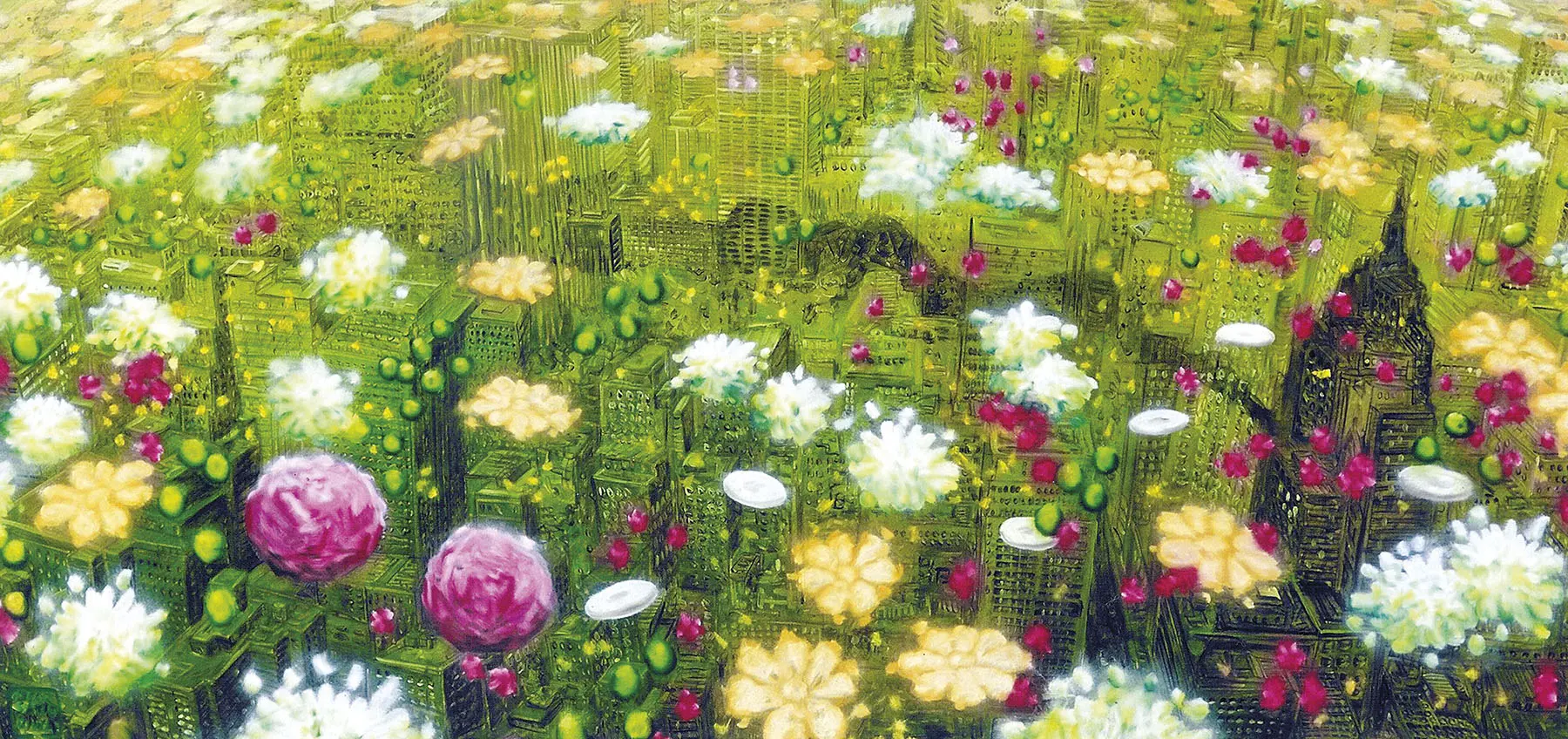
The galleries opted for traditional art expressions, and there was a noticeable absence of projects that included video or other technological media. A standout was Galería Thomas Cohn, which presented pieces by Cildo Meireles, Guillermo Kuitca, Oscar Oiwa, José Bedia, Walter Goldfarb, and Lygia Clark. Oscar Oiwa featured a huge work showing a partial view of a city. The young artist who studied architecture deals with space as a fundamental issue in his work highlighting the visual dimension of his paintings. The highlight by Lygia Clark was Abrigo poético (1964), a masterful exploration of form by means of a tin sculpture. Another important sculpture, thanks to its boldness, was Oggún, by Santiago Rodríguez Olazábal, presented by Canada’s Bourbon Lally Galerie. Executed in wood, this large piece alluded to the force of the Yoruba warrior god and is a work that evokes power.
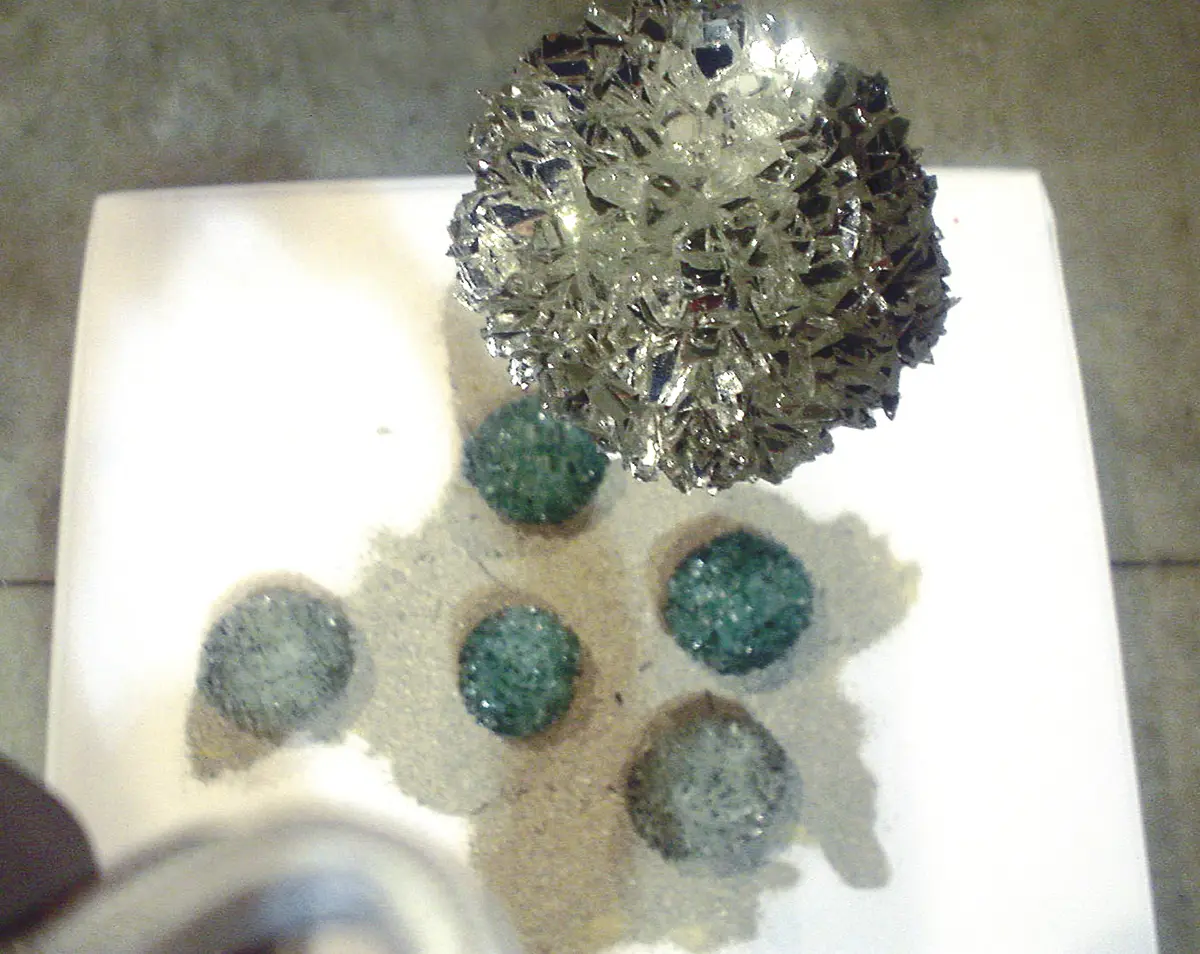
Another space that challenged the convention was Mexico’s Kunsthaus Santa Fe. Motivated by contemporary trends more than by the need to secure commercial success, Lothar Muller brought pieces by Óscar Aguirre, Ana Quiroz, and himself. Quiroz’s installation Fruta Bomba II deals with sociopolitical topics; it is a defiant piece comprising glass balls that are situated on a map of Colombia made with sand, over which hangs a sixth ball, as a sword of Damocles. The balls, created using small pieces of glass, are the most interesting element, thanks to their menacing shape. Equally rebellious were the works by Eleomar Puente at Lyle O. Reitzel Arte Contemporáneo. Blue Scape II and The Political Project comment on the medium and its circumstances. The first alludes to the topic of migration, so visceral for Cubans, and it recreates the story of the infamous truck in the middle of the sea; the second piece places a luxurious Mercedes Benz automobile against a background supported by ropes. In both pieces, the theme becomes the protagonist due to the immediacy of the social commentary.
Miguel Herrera’s Life at Galería Sur proposes a different approach to reality, based on a parody of LIFE magazine. Using pieces of wood, Herrera composes and creates a volumetric piece that perfectly mimics the fonts and composition of several magazine covers, establishing interplay with the perfection of the work, the scene it recreates, and the title.
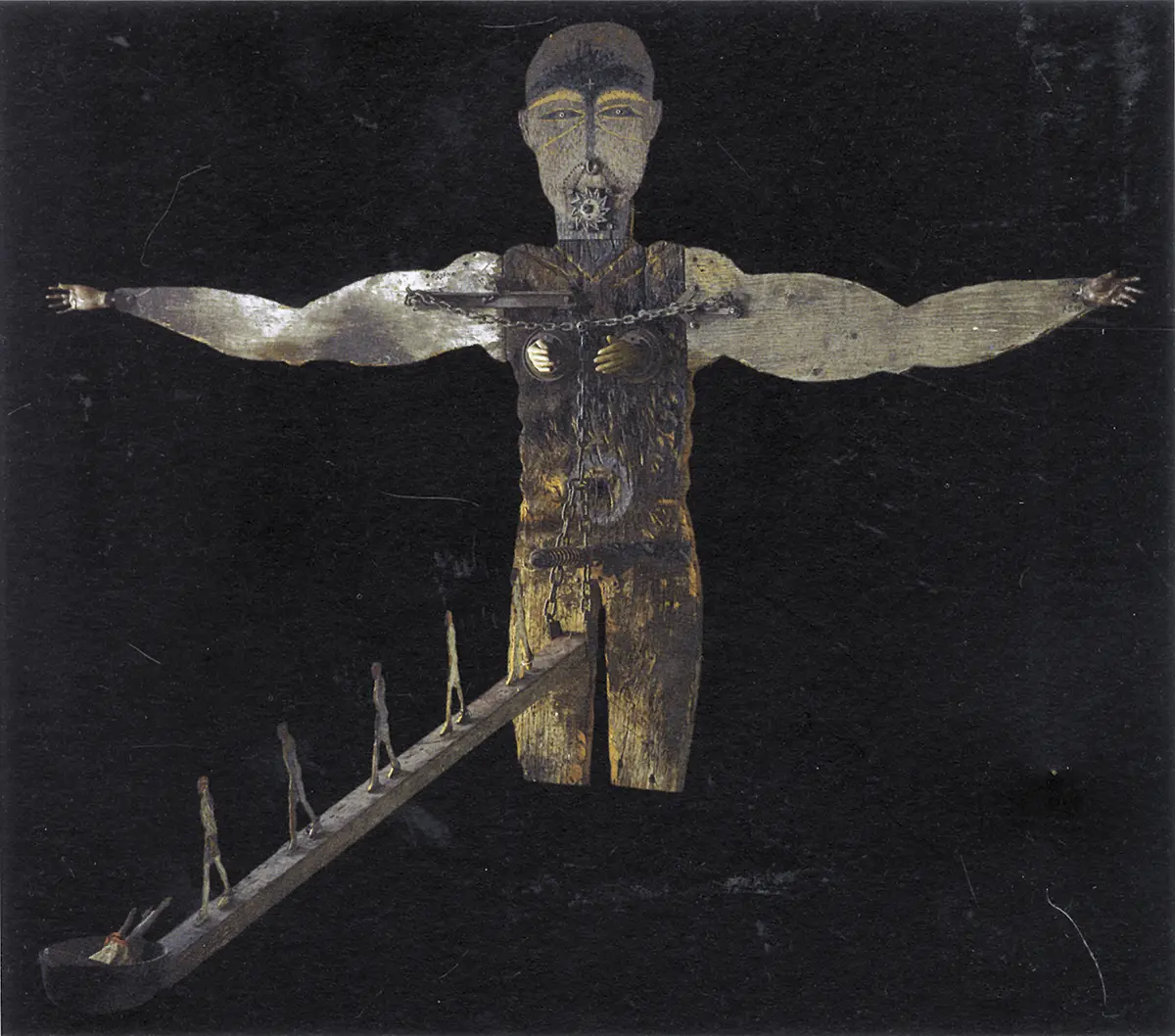
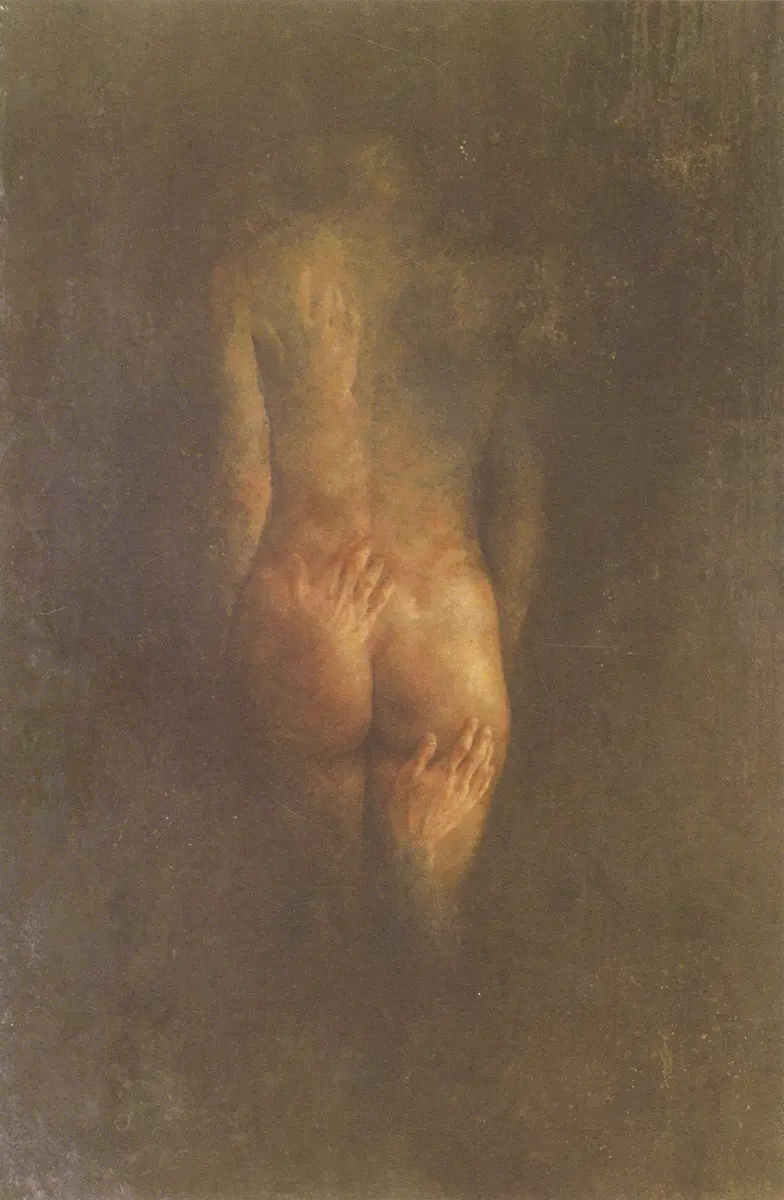
From Chile, Isabel Aninat presented works by Matías Movillo, a realist artist. One 1999 work, Autorretrato, was interesting, with its light surrealist sprinkles, while next to it several 2003 pieces announced a new path in the artist’s career. Compared to a scene so fully posited as that in Autorretrato, the new works left the room in the background only to draw male or female heads resting between sleep and death. Both groups of works revealed excellent technical skills and a mastery of drawing and painting.
Galería Brito Cimino presented an excellent selection of works, among them evocative pieces by Mira Schendel; excellent photographs by Geraldo de Barros; and a singular item by Liliana Porter, where the artist incorporates several toys on the white canvas background.
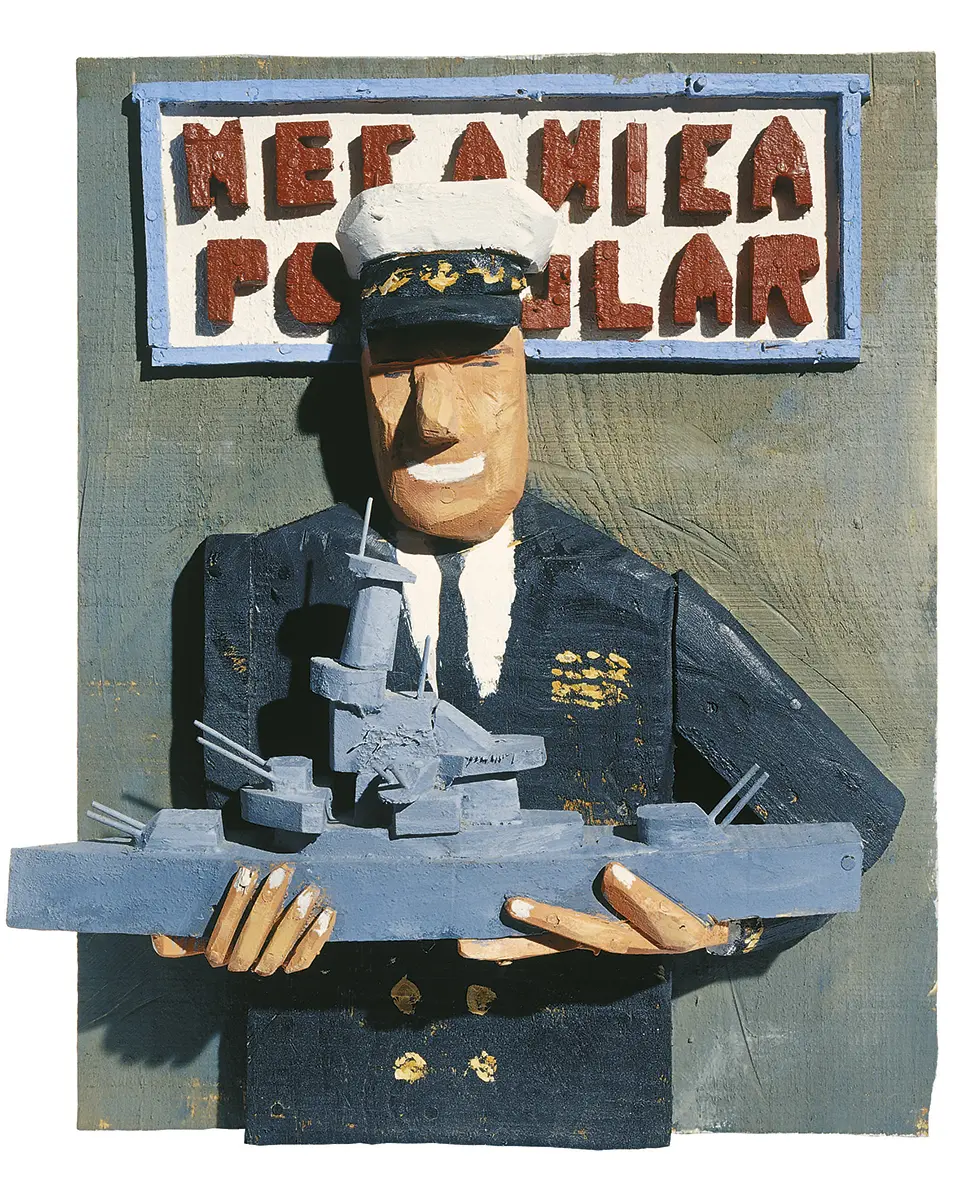
Two galleries came from Europe: Joan Guaita Art from Spain, which works primarily with Cuban artists within and outside Cuba; and Santa Giustina from Italy, which has Deredia, Larraz, Capelán, and Conte on its roster and presented two works by the young artist Diego Linares. Scream I and Scream II, based on the famous scream by Munch, overwhelmed us with the forcefulness of their expressions.
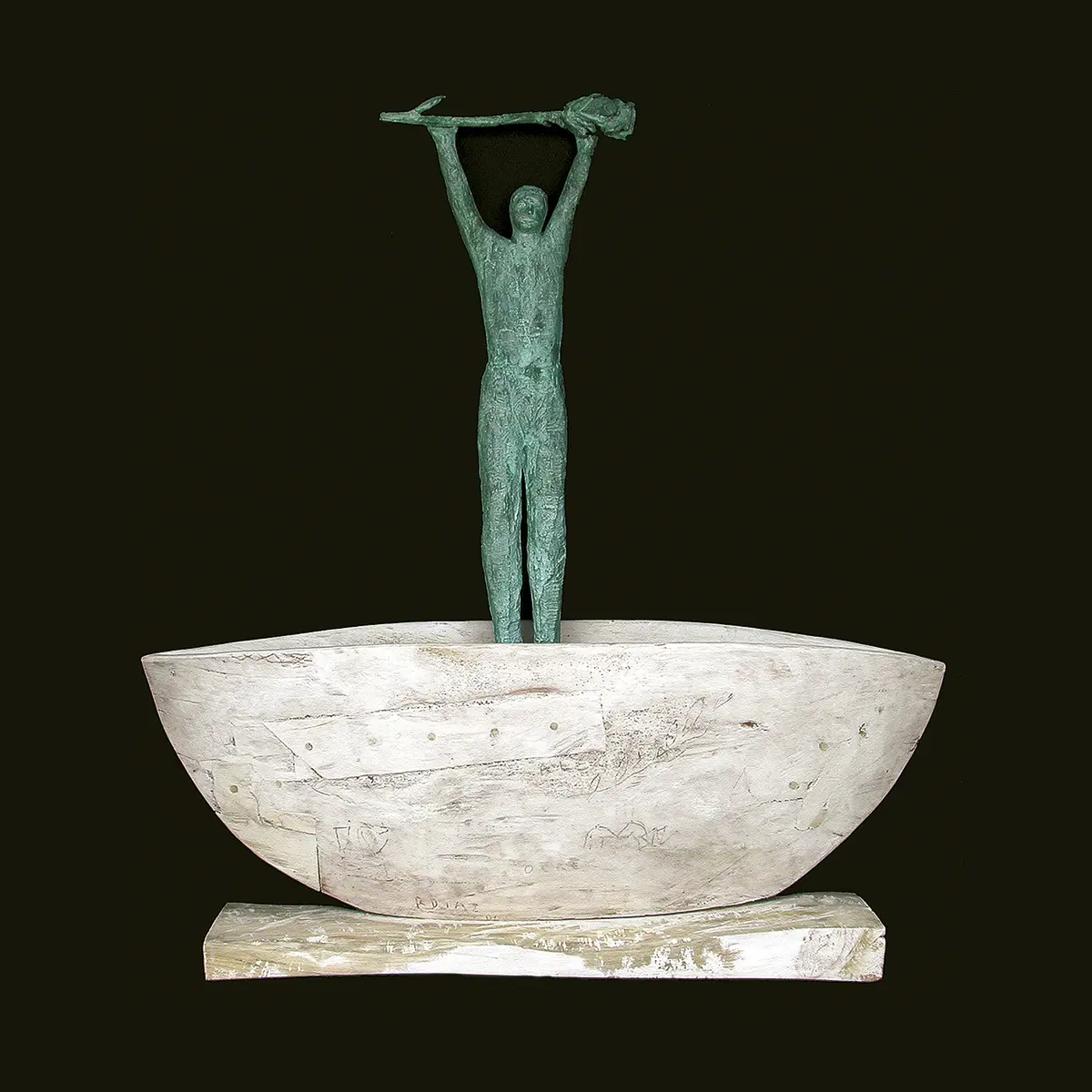
It is important to note the growing interest of U.S. galleries representing Latin American artists, as in the case of the Byron C. Cohen Gallery of Kansas City, which devoted most of its booth to the work of Cuban artist Rubén Torres Llorca. Torres Llorca’s work is characterized by its high conceptual level and sharp sense of humor. Almost always reinforced by texts that complement the idea in the image, the artist composes his works using background paper cutouts on which he draws figures, instruments, and all kinds of artifacts. Such is the case, for example, in his What matters most is how well you walk through the Fire. Another gallery dedicating its space to a Latin American artist was Jerald Melberg Gallery from Charlotte, North Carolina. For the second time, this gallery brought works by Argentinean artist Raúl Díaz. Díaz’s works reveal a sculptor who follows the genre’s traditional ways, such as wood carving, with a special sensibility in the creation of his own figures, even when it comes to giving them color, which, in the case of his Lunes con viento (Windy Monday), is shaded and polychromatic.
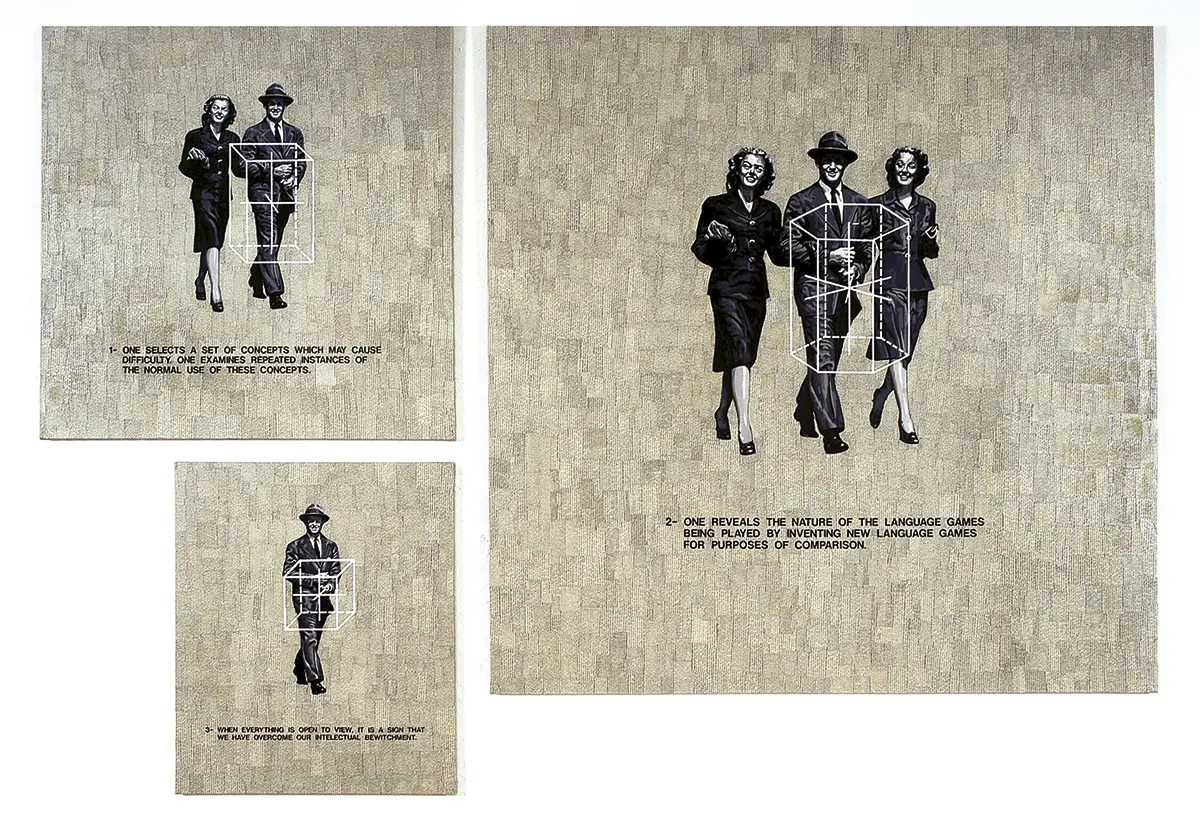
Similarly, George Billis Gallery from New York, Panamerican Art Gallery from Texas, and ArtSpace/Virginia Miller Galleries from Miami each decided to present a single artist. The first presented works by Alejandro Mazón, Panamerican offered several periods of Cuban painter Mariano Rodríguez, and Virginia Miller exhibited an important selection of early works by Mexico’s Gunther Gerszo.
Some of the most important Miami galleries, both for their trajectory and for the newness of their proposals in the contemporary scene, were also present. Karpio/Facchini surprised people with works by Pepe Franco that included not only the excellent pieces shown at the booth but also the sculptures on view throughout the fair. Another impressive piece was Darío Escobar’s enormous ball. Marina Kessler Gallery presented works by emerging artists Thais Zumblick, with allusions to sadomasochist imaginary; Álvaro Zinno’s intervened photographs; and Ramiro Ramírez’s excellent series of small portraits. Alejandra von Hartz Fine Art showed I feel so real, a silicone sculpture by Iratxe Larrea, an impeccable piece displaying a beautiful dress.
A very good idea was to incorporate the participation of the Cisneros Foundation from Venezuela, the Proa Foundation from Caracas, MAC Central, and the Rubell Family Collection from Miami as part of the fair. With their presence, these organizations contribute information about the artistic and literary development of institutions that are highly active in Latin American art. Similarly satisfactory was the presence of Miami museums—Miami Art Museum, Frost Art Museum, Museum of Contemporary Art, Lowe Art Museum, and Bass Museum of Art; New York’s El Museo del Barrio (which offered information about its important show in collaboration with MoMA); the California Museum of Latin American Art; the Houston Museum of Fine Arts, which promoted its next show, Inverted Utopias; and the Rio de Janeiro and Monterrey Museums of Contemporary Art.
Undoubtedly, Merrill Lynch arteaméricas 2004 took a step forward by gathering galleries and artists of significant trajectory; however, as an artistic project, it should try to be more ambitious, running greater risks in its proposals, and turning the fair into a more dynamic event. For this, it should involve many more Miami galleries and promote parallel events of a theoretical and cultural nature.
MARISOL MARTELL
Art critic and historian. Assistant to the Editor of ArtNexus.