

Amidst the noise to be expected in a fair as big as ARCO, it was possible to hear, passing by the entrance where this year the galleries included in the Futuribles exhibition were located, the cadenced, almost ordinate sounds of what seemed to be crystal cup being tapped on, coming from the Brazilian gallery Nara Roesler. In fact, it was a musical composition being played on a toy piano, created by the O Giro group to accompany Cao Guimarães’s masterful Nanofania video. In this piece, a 16 mm camera recorded the precise instant in which a fly takes off or the microseconds that a soap bubble takes to burst and dissolve. In a sublime and touching way, Guimarães captures the moment when things are just about to disappear, proposing in turn an extremely beautiful reflection about that which is fleeting, about fragility and the ephemeral.
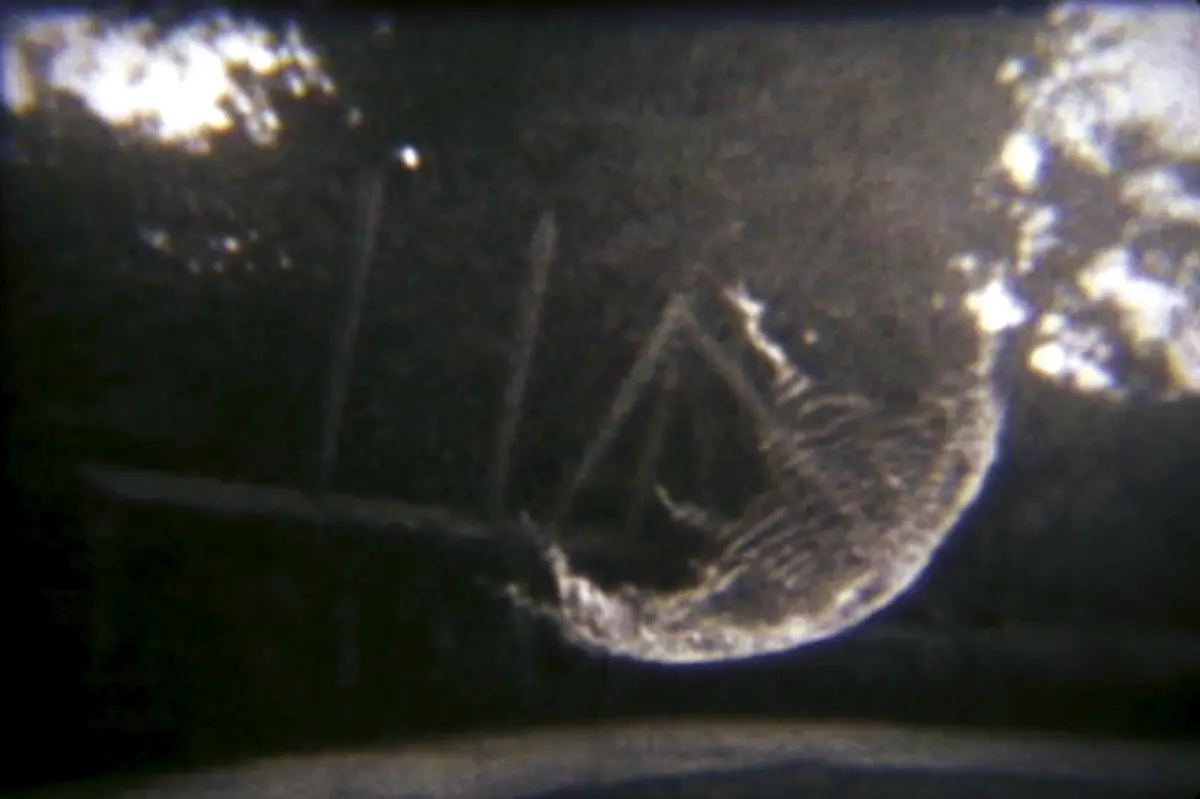
In a way, Guimarães’s video posits a parallel with that fleeting moment of attention to contemporary art that ARCO represents in the artistic life of Spain. Indeed, the fair has become a temporal landmark that allows us to verify, edition after edition, the directions taken by the artistic scene in Spain, and, if only in a biased way, what occurs abroad. And it does so by intensely concentrating on a vast array of institutions, practices, and actors who year after year meet in Madrid. These parentheses in the local art season have become all the more noticeable inasmuch as the exhibition proposals of Madrid’s main museums and art centers have decayed. Perhaps what needs to be analyzed is the vacuum that emerges when the bubble bursts.
All in all, and given the political and economic environment of the moment, ARCO was filled, as expected, with collectible objects, which gave it a rather conventional turn, albeit one of considerable quality. A contributing factor to this was, to be sure, the bald-faced appearance of a series of European galleries that, while they haven’t taken part in the fair this year, made the trip south in search of more enthusiastic collectors. And they did not leave empty-handed. Sales this year seem to have shot up considerably and the halls were filled with expressions of satisfaction. Of the works presented in the no less than thirty German galleries participating this year, the highlights were Hans Hemmert's animation and cartoon videos at Carlier | Gebauer gallery, which also offered a very interesting project room with The Enigmatic Visitor, a video installation by Roberto Arlt y Los Lanzallamas. Also from Northern Europe came the Dutch gallery Annet Gelink, with a rather confusing and busy project room titled Origami Bomb, by Mexico’s Carlos Amorales, who however, had several magnificent pieces from his series Turbulencias at the Mexican gallery Enrique Guerrero. Another excellent project room was the one at Belgium’s Koraalberg Art Gallery, by Pieter Vermeersch, who created an installation around an intervention in nature where a very long line of fluorescent-yellow paint cuts through a landscape.
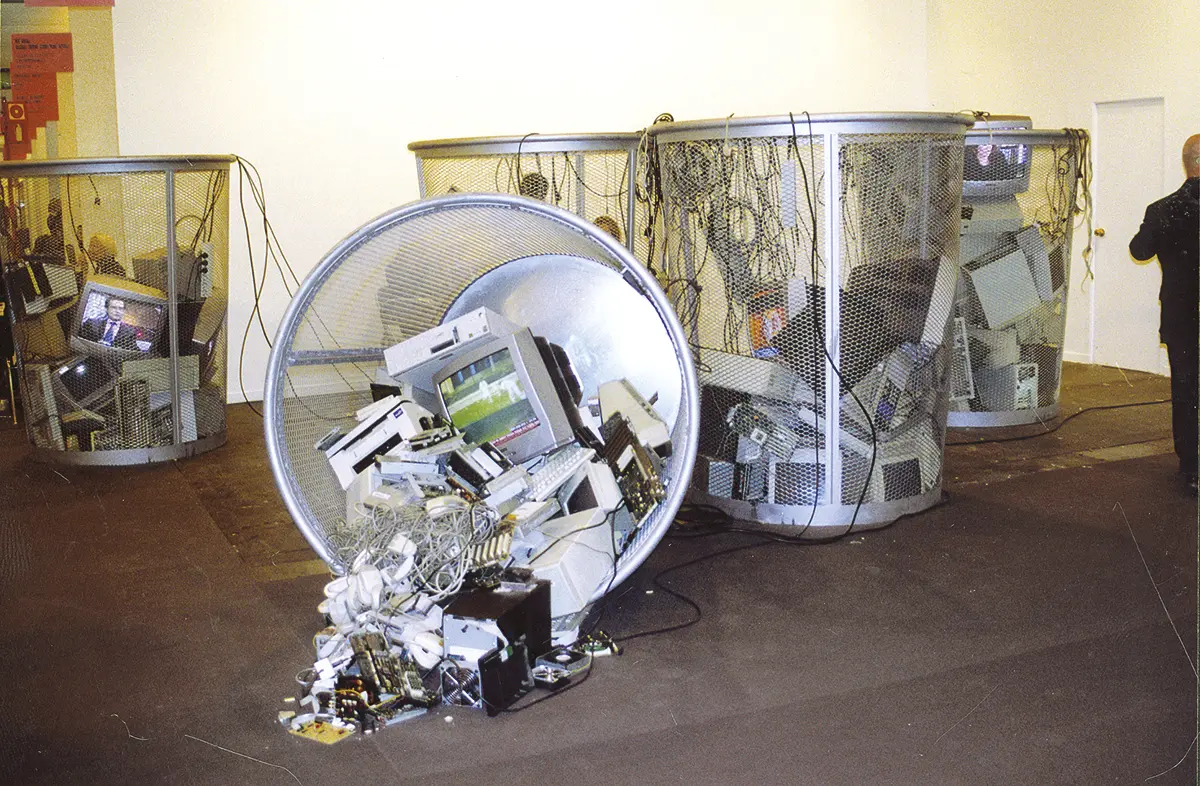
ARCO’s classic galleries were not to be missed, such as Lisson, whose stands, of unquestioned quality, are nonetheless somewhat repetitive. Among so much déjà vu, Ceal Floyer’s Ongoing Projection was a clear highlight. Also repeating at ARCO was Portugal’s Quadrado Azul, with an exceptional sculpture by José Pedro Croft and attractive abstract paintings by an artist as established as Angelo de Souza. The French gallery Valérie Cueto presented a project room with No Comment, an installation by Wang Du. It was a series of very large paper baskets filled with recycled paper in the form of monumental sculptures, among which we discerned images reproduced in newspapers and magazines. To this were added computers and television screens rebroadcasting the most important international news channels, in an ironic commentary on recycling and the obsolescence that is the fate of the flux of information. For yet another year Christopher Grimes presented a fragment of Allan Sekula’s work in progress, this time the Black Tide series that refers to the sinking of the Prestige on the Galician coast. Another first-class Portuguese gallery, Cristina Guerra, had Rui Toscano’s Whistle in the Dark: three sculptural blocks, each in a primary color, on which the artist had placed a stereo and speakers from which came to a whistled melody. Other interesting Portuguese proposals were to be found at Galeria Filomena Soares, with the cloth and wood constructions of Angela Ferreira, and Miguel Palma’s ambulance installation titled Accident Motion Pictures at the Graça Brandao Gallery.

Among the Spanish galleries at the fair, especially significant was the video piece by Sergio Prego at Galería Soledad Lozano, acquired by the Museo Nacional Centro de Arte Reina Sofía, and Juan Carlos Robles’ video, Chador, and his photographs titled Parlamento, at Galería Oliva Arauna. In both cases, the images of various people arguing are deformed into chromatic abstractions of unexpected beauty.

The Latin American presence at ARCO has undergone a transformation that is, to say the least, strange: more and more Spanish galleries are working with artists from the Americas. Although in principle this should be seen as good news, we should not ignore that, given the excessively local context of ARCO, what has occurred is that Latin American galleries have become suppliers of artists, to the detriment of the continued work and effort they have displayed for years in this fair. This year was not the exception, and the addition of proposals from galleries present at ARCO for the first time to those from repeating galleries had exemplary results. The highlights were the Jorge Mara-La Ruche gallery, with impeccable works by César Paternosto and Carlos Arnáiz, and Galería Dan, with excellent pieces such as Lygia Clark’s drawings and watercolors, or Marco Maggi’s excavations on piles of paper. The already mentioned Nara Roesler presented, besides Guimarães’s work, collections of benches used by workers and people in the street, put together by Marcos Chaves. Fortes Villaça once again had a hit with Rivane Neuenschwander’s quiet works and with Rosângela Rennó’s more dazzling Biblioteca, although at times it seems to fall into the same repetitiveness seen at Lisson Gallery. Ruth Benzacar Gallery continues to bet on Jorge Macchi, and with good reason; alongside his perforated maps, Macchi presented a recent editorial project where, with a wink to Duchamp, he transforms a broken glass into the indicator of a series of routes through Buenos Aires, which hide an interesting variety of images, texts, and evocations. Also, deserving mention here are Miguel Rotschild’s collages based on images taken from various comics, images that, gathered together, surprisingly evoke Abstract Expressionism. Galeria Luisa Strina had excellent pieces by Cildo Meireles, and by Marepe with his fine sense of humor.
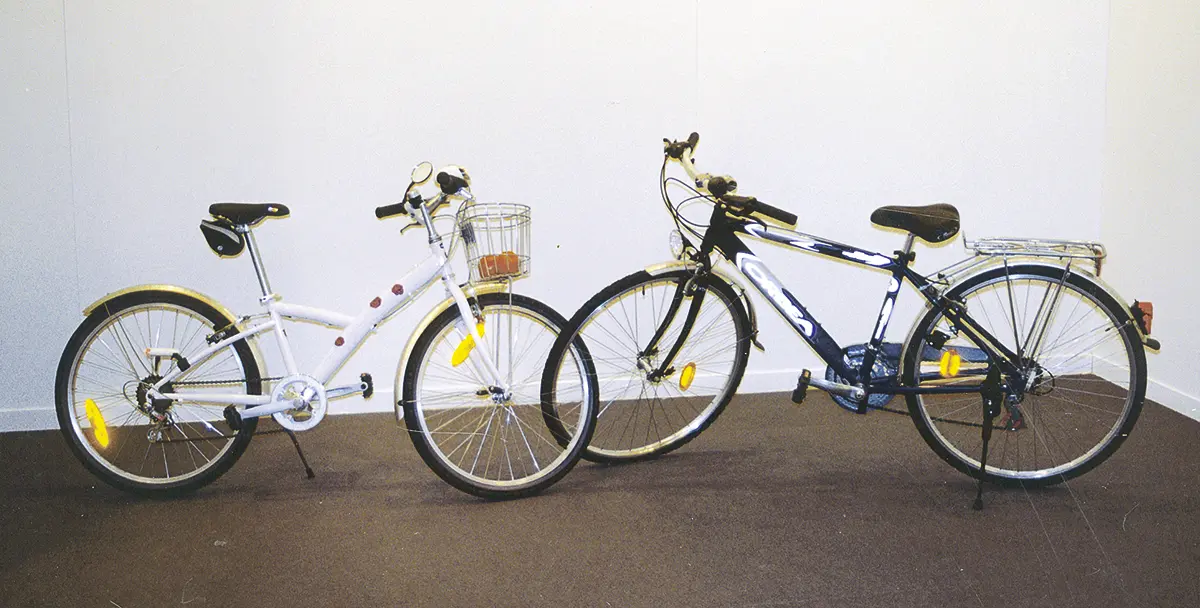
Among the large-format paintings presented at Ramis Barquet, Rubén Méndez’s small paintings emulating advertising images from the 1940s stood out. We missed Galería Brito Cimino, but, to compensate, ARCO saw the debut of the very interesting Colombian gallery Alcuadrado, with excellent works by Óscar Muñoz. Another space making its first appearance in ARCO despite its long and lauded trajectory was Venezuela’s Sala Mendoza, which was able to present a sample of the many interesting artists who have been close to the project, such as Alexander Apóstol and Javier Téllez. Up to four Cuban galleries were present at ARCO, and the highlight there was Magia, by Wilfredo Prieto, at Galería Habana, a piece comprising two bicycles joined by their front wheels. The Peruvian gallery Lucía de la Puente presented a series of autobiographical paintings by Sylvia Fernández, and M+M from Puerto Rico persisted with its very interesting low-cost, well-intended proposals —something badly needed in these latitudes— by presenting Concierto de subterráneos, a project by Jesús Cruz. It was, simply, an invitation extended to various musicians who perform in the Madrid subway to play at the fair in order to generate some revenue in this alternative context, an interesting idea in its implications and also a pleasing experience for all visitors. Mexico’s Nina Menocal gallery, finally back in ARCO, presented works from Atelier Morales (Teresa Ayuso and Juan Luis Morales Menocal) and by José Bedia. Kurimanzutto made an interesting display of works by Jonathan Hernández, and it also presented one of the fair’s best project rooms, by Fernando Ortega: with highly delicate irony, Ortega’s video La medida de la distancia shows us a spider stalking an ant, to an excellent musical accompaniment. At OMR we could see, among others, the works of Fernanda Brunet and Yishai Jusidman, and especially the technical proposals of Rafael Lozano-Hemmer.
Other interesting Latin American presences were those of Carlos Garaicoa at Elba Benítez, with his very beautiful utopian architectures in the gold thread as model projections; Tatiana Parcero’s photographs at Visor gallery; and Carmen Mariscal’s light boxes at Llucià Homs. Also outstanding were the marble clocks with stone incrustations by Pablo Vargas Lugo, at Massimo Audiello gallery.
The fair’s economic success seems beyond debate and it would normally work as the main indicator of success for a commercial event, however, ARCO’s emphasis on its touted “cultural” model raises the bar, and under that light, results are more mixed. For yet another year resting areas were cause for debate and discomfort since besides being visually awkward, they promote long visits by large numbers of non-professionals. ARCO’s educational function has been highly mythicized, but the truth is that a commercial fair is not the ideal place for pedagogy, and the exponential growth in the number of visitors has become a cause of discomfort for professionals, gallerists, and collectors.
Once again, ARCO’s panel discussions had a large number of speakers (more than one hundred!) and, as if that weren’t enough, the very attractive 1st International Visual Studies Congress was held concurrently, which made it impossible to follow if one also wanted to attend a discussion or at least to visit the fair. To these activities, events organized by the guest country —Greece— were added, although they were rather weak this year. The many commissaries programs —Futuribles, Project Rooms, Open Spaces, Fragments of Africa, New Asian Art— also lost definition and, above all, credibility, by duplicating the presence of some galleries instead of opening the range of supply. The general feeling is that ARCO is today an overwhelmed fair, one that needs to seriously reconsider its reason for being, its boundaries, and its field of influence. At OMR gallery we could see a piece by Guy Limone, made with tiny figures of the kind used in architectural models, the title of which seemed almost like a forecast: In 2003, sixteen out of every thousand human being are Mexican. With Mexico, as a guest country for ARCO 2005, we will find ourselves exposed, once again, to all kinds of excesses.
ISSA M. BENÍTEZ DUEÑAS
Art historian specializing in contemporary art and the theory of art. Candidate for the doctor’s degree at Universidad Carlos III in Madrid.