
For Alexis Leyva Machado (Kcho), the island is a concept in flux, one that is enriched by daily events. This idea is expressed in his work, which transforms various objects or implements of daily life into a map of Cuba, or into an icon that represents the nation. By diversification, Kcho enriches the meanings of “insularity” through art, and at the same time consolidates a transitory territory, of mandatory reference. Kcho seems to lay a kind of trap for the viewer, and his work suggests that, even if we move, we always need to return to the Island, be it through travel or through memory, because it is a place of encounter and convergence.
If Wifredo Lam was a Cuban artist whose prominent contributions in the 1940s focused on the Euro-centric gaze on Third World art, today Kcho is the singular figure who, by establishing a contemporary discourse based on the popular, is an integral part of the transgressive strategies that situate the “subaltern” in synchrony with the “center.” In his case, however, since he made his way to New York at only twenty years of age, we can completely write off a possible subtle manipulation of the marketplace “to make more sophisticated instruments of domination over the Other,"1 because at only 25 years of age, he built his way up in New York. A member of the style known as New Cuban Art, which emerged in the 1980s, and without a degree from the Instituto Superior de Arte (ISA), Kcho is a young artist who rapidly and very efficiently has gained access to international circuits of art through a poetics of precariousness. Kcho was born in Nueva Gerona, Juventud Island, in 1970. There, in his hometown, under the influence of the family’s artisan tradition (his father is a carpenter and his mother a potter, and they occasionally weave using vegetable fibers), he attended the Escuela Elemental de Arte. Those are the roots of his interest in working with the materials of poverty, learned in his own environment, where he grew up in harmony with nature. In 1984 Kcho was admitted to the Escuela Nacional de Arte (ENA) in Havana, and in 1986, in Nueva Gerona, he presented his first primarily pictorial individual show, Fabelas. He finished his studies with a thesis that used the nation’s symbols in relation to the Cuban landscape, the latter interpreted as a center of national values. In the same work he acknowledged Juan Francisco Elso as an “antecedent source,” and Robert Smithson, Renier Ruthenbeck, Mario Merz, Carl Andre, and Walter de Maria as artists who were close to his concept of unity with nature.
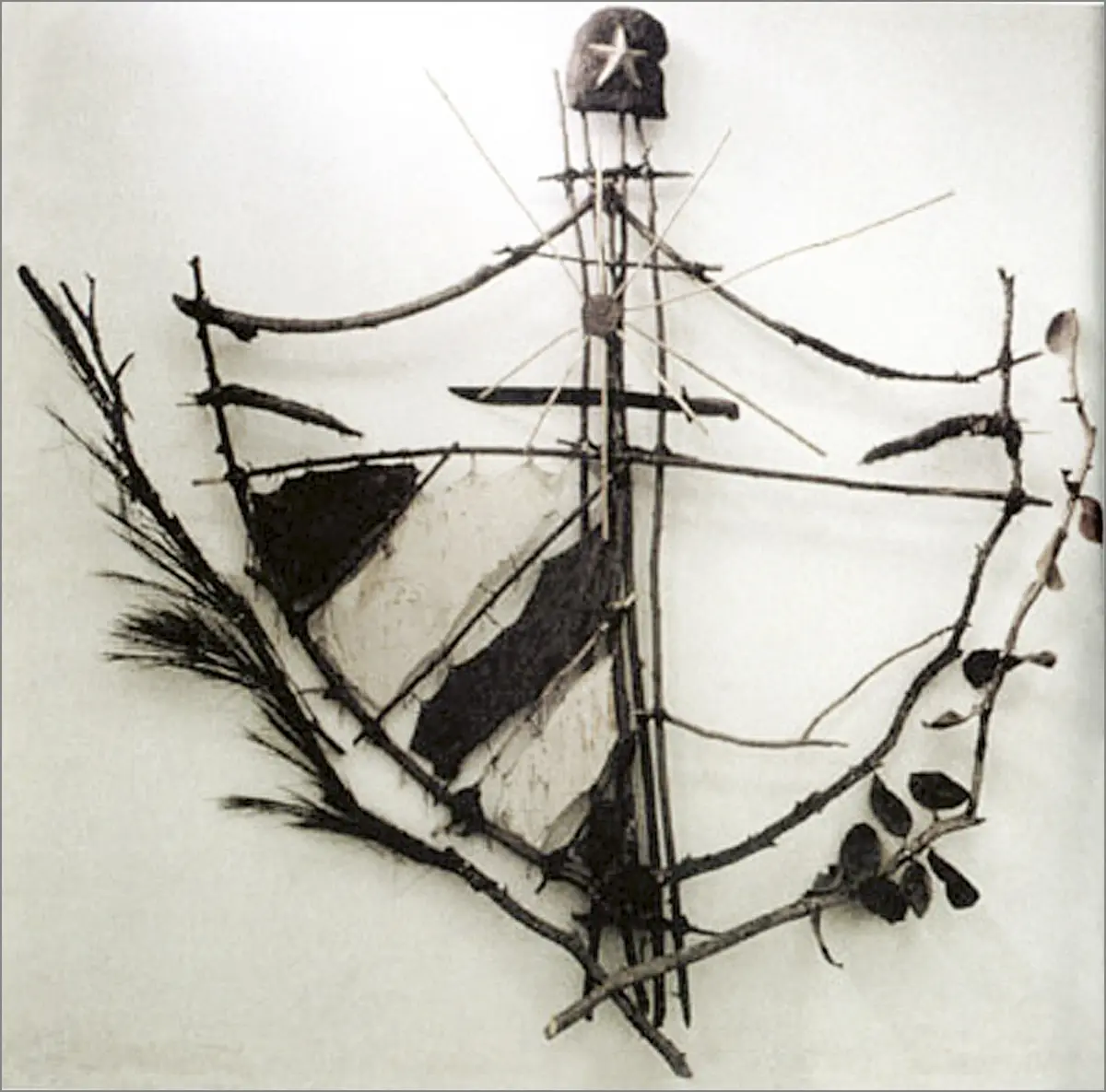
La bandera (The Flag) or Ésta es mi tierra (This is my Land 1990), and Escudo (Seal) or Paisaje cubano (Cuban Landscape, 1989)–1990, were included in that graduation show in 1990, and in effect, they anticipated Juan Francisco Elso’s influence on Kcho’s later works. The first piece was built with guásima wood, branches, dried herbs, palm, red and black earth, and white clay, in which the artist grew rosemary and other herbs. This process brings him close to contemporary actions that attempt to dissolve the borders between art and life, and it alluded to an identification with continued construction that changes with time. The second piece was made with flamboyant banyan tree branches, leaves, royal palm spokes, iron, thread, old pieces of cloth, and wax. Both works are a kind of “insignia of the poor,” but have been dignified by Kcho by paying attention to their autochthonous, nonindustrial quality. Kcho also “charged” his works à la Elso, so that his closeness to this artist, who died of cancer when he was at the peak of his career, went beyond the formal level.
Already in those days Kcho’s inclination for sculpture and three-dimensional works, based initially on drawing, was noticeable; and he was always attached to “impoverished” materials, materials that are discarded, organic, of a mutable and ephemeral nature. Since his debut, he also showed little interest in color and a rejection of formal stereotypes that could link him to an exotic view of his environment. Nevertheless, to a degree Kcho can be seen as a curious case: he is a mulatto from the interior, one who expresses himself in street slang and an almost indecipherable accent; he uses a nickname taken from the pet name his parents gave him as a child; and at the same time, he has a “cultured” sensibility and a clear awareness of how to “make” a difference without historical or cultural impositions. His trajectory coincides with that of many great artists: rejected early on, then acclaimed, and soon pampered. In the beginning, he was not understood, his works were not admitted to the landscape salons, and he was not admitted into the ISA. His pieces of that time, built with natural or discarded materials, spoke of the environment but not in a superficial way, and instead internalized our identity on the basis of the popular and vernacular, assuming precariousness of a different life perspective. His land art and earth art were close references to his concept of unity with nature.
In 1991, Kcho inaugurated his third individual show at Centro de Arte 23 y 12, under the title Paisaje popular cubano (Popular Cuban Landscape, coinciding with the Fourth Havana Biennial), and it was a success. The rough catalog of kraft paper, bound with strips of blue, red, and white cloth in allusion to the Cuban flag, already spoke of the singularity of his proposal. Gerardo Mosquera’s presentation christened Kcho as “the rustic of new Cuban art.” Nevertheless, Kcho has felt the reference to such epigonism excessive. That show revealed the artist’s potential, with its level of synthesis and its conceptual eloquence. In an indication of the artisanal, Kcho established various widely used tools to symbolize Cuban-ness on the basis of the materials, and by the fact that each of them formed a map of the island. Plan jaba (The Jaba Plan), Mi jaula (My Jail), and El papalote (The Kite) were three of the pieces on exhibit.
Cómo el garabato se parece a Cuba (How the Garabato Looks Like Cuba), shown in 1992 at the Museo Nacional de Bellas Artes, reproduced Cuba’s geographic image with particular simplicity: a tree branch, which in turn became a practical, useful object —a garabato, used to hold the underbrush to be cut by a machete. Also in this show was a tree-branch ladder, with machetes for steps and crowned by a crest made of palm (the national tree). It was one of Kcho’s most discussed works, thanks to its ambivalence and irony: a commentary on the nonsense of thinking of Cuba as a place easily accessible by its enemies (the machete was the weapon of choice during the wars of independence). The artist conceived each of the works exhibited with purely vegetable elements, strips of old cloth, ropes, and even mud, including the national Seal, which today belongs to the museum’s permanent collection.
With his show at Centro de Arte 23 y 12, the public and critics began to pay attention to Kcho. Following the show at the museum, his modus operandi acquired the particular seal that characterizes him to this day. He has become one of the first young artists to participate in group shows held abroad, despite not having a degree from ISA. His idea of sculpture, which disregards the expressive medium’s ontological condition, turned his pieces into a non-still life where the human hand barely intervenes. For him, materials are not “dominated,” but allowed to evoke meaning from their very physical-ness, whether natural or recycled. With them, Kcho offers a message of socio-cultural connotations, but his greatest merit is the fact that he speaks of Cuban-ness through traditional elements and symbols that have been transformed into stereotypes by indiscriminate use; he charges them with energy and organic life and gives them back their original value. On the other hand, his conception of space, for which he claims to have Lucio Fontana as a referent, has helped “un-stuff” the traditionally lethargic genre of sculpture in Cuba. His hanging sculptures, or those that can be entirely apprehended from a single angle, are unique in the history of Cuban art in their level of synthesis and, in some cases, of transparency.
Although Kcho has been “careful,” his style (in the sense of his personality) proved subtle in the face of contextual pressures. This was evident in his approach to the topics of migration and utopia in A los ojos de la historia, (To the Eyes of history, 1992) after his trips abroad, where he was able to consolidate the empathy he had established with the work of Duchamp, Picasso, Brancusi, and Tatlin, and later in La regata, shown at the 5th Havana Biennial in 1994. The former was inspired by Tatlin’s Model for the 3rd International Tower, and subverted the idea of the original work into an object of symbolic functionality. A spiral tower similar to that of the Russian avant-garde artist, but of firewood and sticks and crowned by a coffee strainer, constitutes a tribute to utopia from the so-called Third World. With this piece, the avant-garde’s humanistic and transgressive impulses find a favorable terrain for development (at the intellectual level) despite adversities. Kcho hoped to transform a setback into victory. In La regata, a heart-rending metaphor about the massive exodus of Cubans to Miami, he used all kinds of discarded or recycled materials to suggest a makeshift, vulnerable vessel: tires, shoes, old wood, etc. The piece commented on the state of emergency and the drama of events that caused —and continue to cause— such a great loss of human life. It was to be the preamble to a whole series of explorations of the phenomenon of migration. Having been born on an island which in turn is part of a larger island nation has acquainted the artist, since childhood, with the experience of traveling; his knowledge possesses a lived quality. When fame was not even a distant dream, traveling was not pleasurable for him, but something that provoked feelings of loss and nostalgia.
With La regata, Kcho left land art and earth art behind and began to move towards arte povera in his use of ephemeral or discarded materials as plastic resources to evoke the imminence, the drama, and the peremptory condition of the event. He preferred installation to hanging on walls. The tenacity and latency of his narratives prescribe a spatial dynamic in constant flux.
Also in 1994, the artist was invited to participate in Cocido y crudo (Cooked and Roar), at the Museo Nacional Centro de Arte Reina Sofía, in Madrid. For the occasion, he created Lo mejor del verano (The Best Thing About Summer), an installation that surprised viewers with the poetic way in which it dealt with the topic of migration. Visually, it is a beautiful piece, with its boats, oars, sticks, kayaks, baskets, and fishing nets suspended from the ceiling and reflected in the waxed, black floor. It was as if viewers found themselves submerged under the sea alongside these vessels and tools, and at the same time “carried” them on top of their heads, thus becoming both actors and spectators in a possible shipwreck.
The topic of migration, seen from the perspective of a debate between permanence and exile as a generator of personal and collective anxieties, was again presented in El camino de la nostalgia (The Road of Longing), which denoted a subject particularly touching for the artist. A makeshift pier, with tires hanging as symbols of travel, was a tribute to all those who, for one reason or another, seek the journey as a solution to their problems. The pier was also a mediating moment between loss and the possibility of return, because “... it is exiled that abound, those who live submerged in a productive no man's land."2
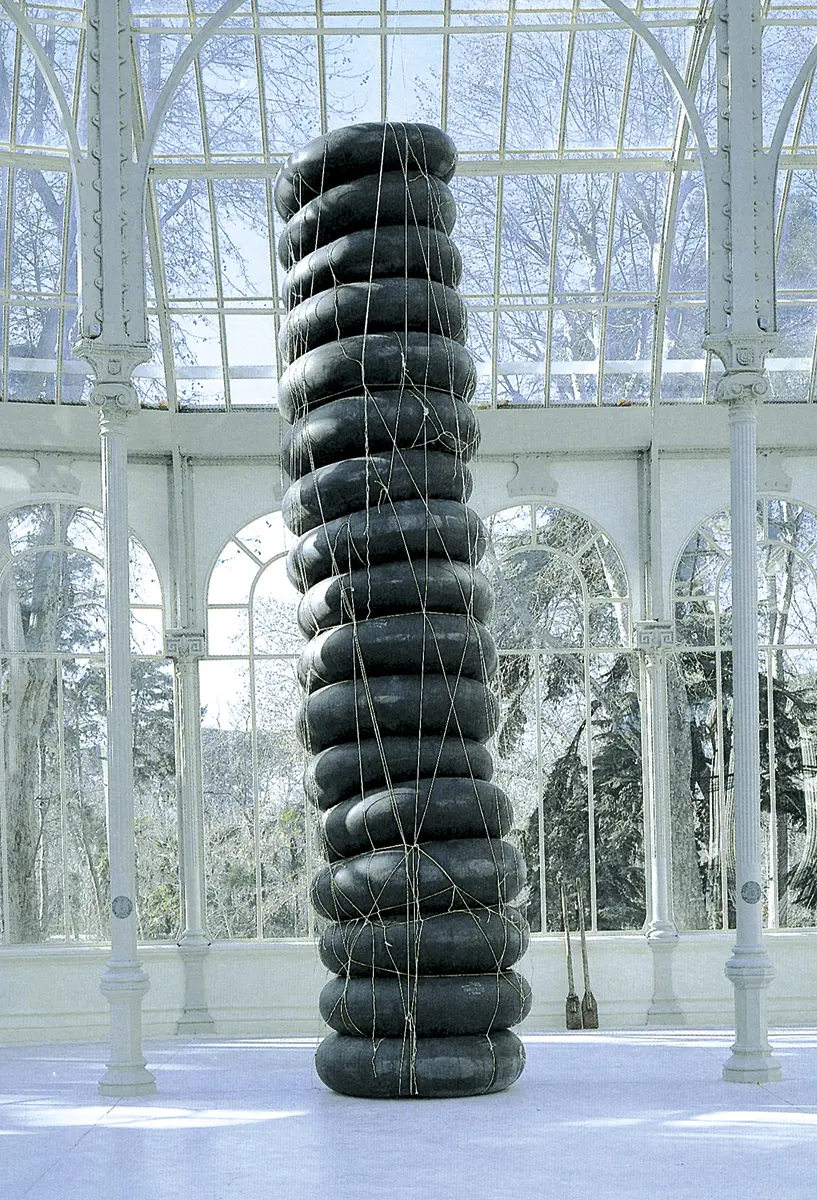
One of Kcho’s most salient characteristics is his intuition. The execution of his pieces is developed through drawing, and Kcho’s drawings reveal a natural talent and at the same time cunning thought, as indicated by his titles that contribute content to the work. The artist explains that the title of each piece is the first thing to emerge. His academic background has allowed him to pick and choose from the history of art the best-suited keys in his filiation to sculpture and volume, always with an emphasis on a search for the essence. This is for the case of La columna infinita (The Endless Column, 1995) shown at the Reina Sofía’s Crystal Palace in 2000, in which the artist deploys a column of tires supported by a rope on one occasion and later varies the elements while maintaining the ceiling-high vertical framework. This piece, which began a series of the same title, was based on Constantin Brancusi’s Endless Column —the Romanian artist created “Modernity’s most spiritual shapes"3— and seeks an archetype; thus its simplicity, purity, and sobriety.
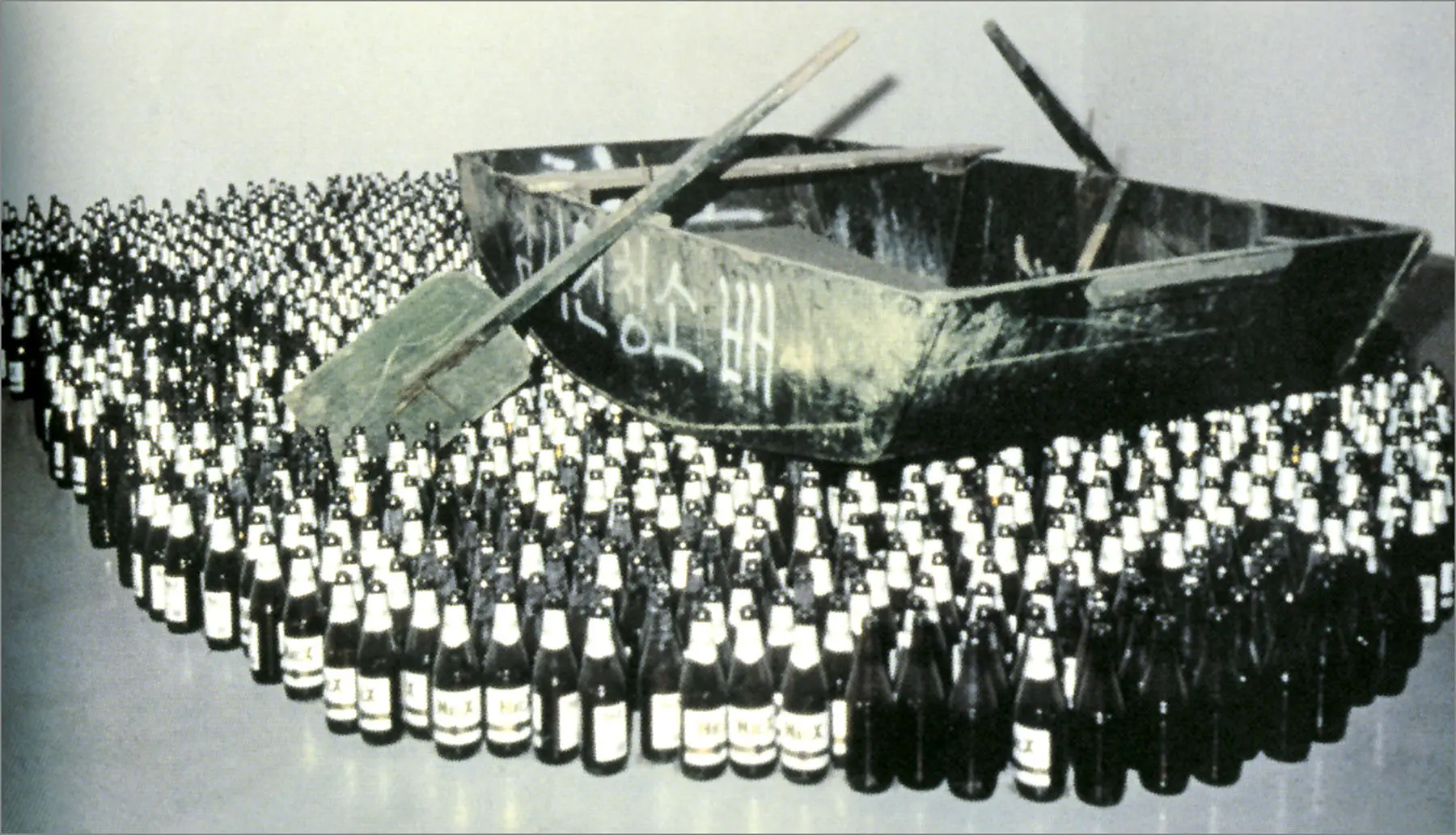
The recognition of Kcho’s art transcended national boundaries when, in February 1995, in Paris, he received the UNESCO award for the promotion of the arts for the whole body of his work. In September of that same year his Para olvidar (To Forget), was awarded First Prize at the Kwang-Ju Biennale, in South Korea. In that work, he placed a boat with oars atop a sea of empty and half-filled beer bottles, a commentary on the pain and anguish the journey causes those who risk it all only to find themselves living off memories and homesickness for what was left behind. In 1996 the Barbara Gladstone Gallery of New York exhibited Kcho’s work successfully for the first time in the United States. The next year his pieces were seen at the Los Angeles Museum of Contemporary Art (MOCA), in the show Todo cambia (Everything Changes) which comprised two installations. It was again Kcho commenting on social conditions in Cuba through the image of a boat that can be explored, this time structured with bookshelves of the kind used by street peddlers. Texts in Spanish, English, and French announced the climate of intellectual openness in the country at that time. Instead of migrating, artists were able to travel abroad, earning dollars to bring back and spend in Cuba whose economy was partially “dollarized” in order to survive.
The show’s second installation was a series of totemic sculptures in raw clay, a kayak with oars, wire structures carved in the shape of a boat, and a sailboat. These elements arranged in the form of a stage, are a metaphor for the permanent imminence of the journey for a certain type of people without access to the dollars they crave. What, then, is the artist trying to tell us with Todo cambia if its scenes repeat ad infinitum the concept of the journey? The paradox of his text illuminated the controversial topic of the Cuban diaspora, since while some do not feel the need to migrate, for others migration is the only solution.
Although it is true that the twice-Islander is interested in dealing with the phenomenon of migration to the island, it should be noted that this interest is equally motivated by a situation that exceeds the boundaries of the locals. Thus, the range of his proposal is not circumscribed to the Cuban context but is open to the world and is one of its most central contemporary problems. This added to the aura of his materials, which redeem an “aesthetics of poverty” that uses mainstream languages to place “high” and “low” on an equal plane, fine-tunes his discourse as part of the hottest cultural debates about the place of third world art in the global scene.
After 1997, Kcho didn’t exhibit again in Cuba until 2000, when he did so invited by Casa de las Américas. No me agradezcan el silencio (Don’t thank Me for the Silence) was the title of that show, a reference to his absence from the Cuban scene and at the same time to a probable forgetting of the conditions in his country. One of the show’s most interesting pieces was a boat built with pellet fencing that almost entirely covered the gallery. The prow pushed through a narrow door into another room and allowed the public to board the piece, an eloquent image of the massive character migration can acquire.
Kcho’s incursions in drawing and printmaking have made clear his versatility and his prolific imagination while maintaining the motifs of his prior work. The show 25 piedras, presented at the Taller Experimental de Gráfica on the occasion of the Encuentro de Grabado 2001, comprised lithographs and reveals the sobriety, synthesis, and impact of someone capable of creating art out of anything. Recurrent topics here are the sea, boats, waves, and oars, all executed with quick and unencumbered strokes that produce concise, limpid, and austere images of great visual efficacy.
Referring once again to Brancusi, Kcho introduced the notion of flight into his discourse, using bird wings, propellers, winglets, and satellites, to hark back to Brancusi’s Bird in Space, with which the Romanian artist “sought not so much to represent the image of a bird as to materialize the act of flying, concretizing a dynamic impression by giving it an essential shape."4 This series he titled Módulo libertad. The resource of flight in his most recent pieces signifies an alternative in the framework of his own stories, marked as they are by the drama of life: they incarnate the desire for ascent and transcendence, for overcoming the human condition, the equivalent of happiness. In one way or another, Kcho brings movement to his pieces, caring not as much for formal aesthetics as for the ability to evoke emotions and readings from the message’s intrinsic force, thus eluding materiality. In another series, titled No juego (I Won’t Play), comprising objects and drawings on paper and cloth, we also saw rocking chairs, columns, and stilts as signs of motion that do not necessarily imply spatial displacement.
The element of quotation has been a constant in Kcho’s poetics. The artist has recreated, in varying versions, paradigmatic works by Brancusi, Tatlin, and recently, Lam. Lam’s La jungla was an inspiration for Kcho’s most recent exhibition at the Museo Nacional de Bellas Artes in Havana, in November 2001, which combined the unidirectional nature of the rationalist ideal of progress as prefigured in the spiral of the Model for the 3rd International, with the diversified precariousness of the Caribbean context.
Kcho devoted one gallery to drawings, which have always made evident the genre’s expansive potential by rejecting conventions; they appear as sketches, projects, and works in progress that is uninterested in preliminaries. The recklessness, fluidity, and level of synthesis in Kcho’s drawings —executed in medium and large formats with graffiti in ink, liquid wax, and saliva on paper— make a utopia, through the repetition of an archetype (the spiral), a common element; he has repositioned it in a new context to liberate it from the impulse towards industrial development and assumes it as an incomplete project, one that is subject to changes even within its limitations.
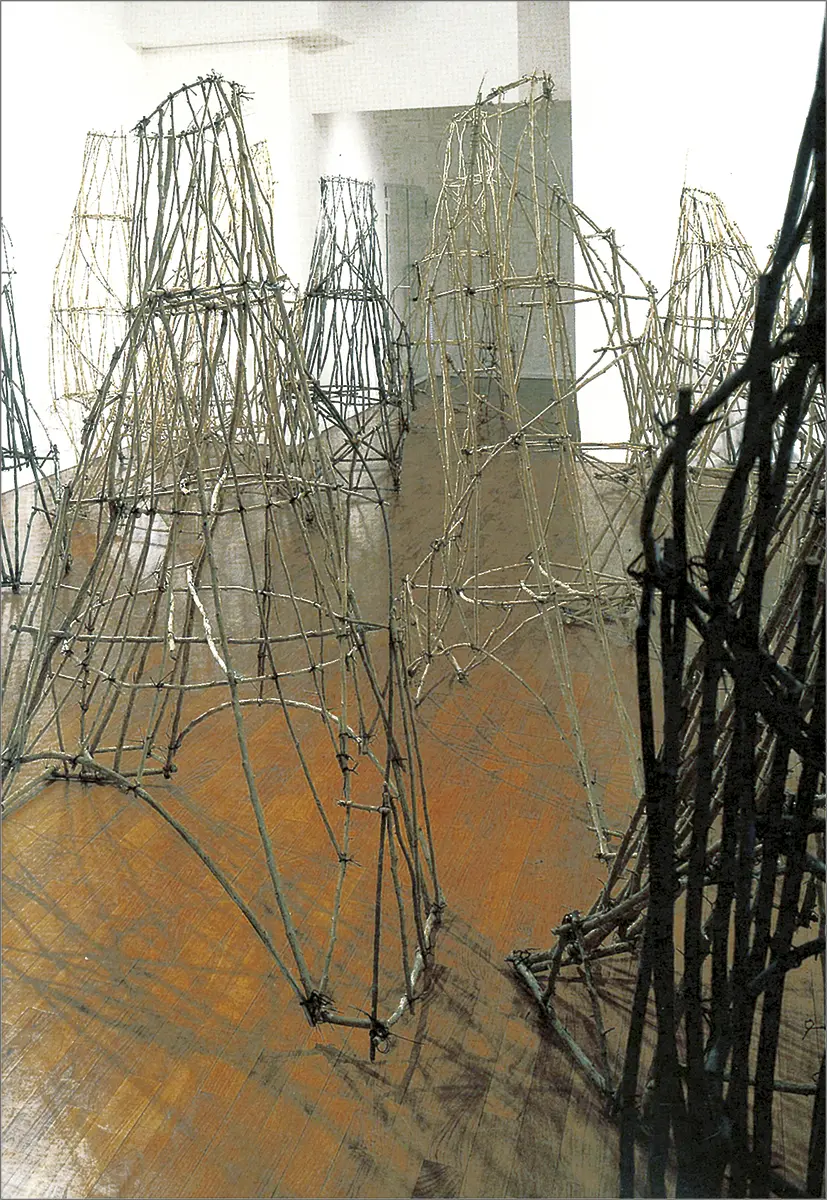
In another gallery, the artist arranged a jungle of towers, truncated spirals of various dimensions, some crowned by a coffee sifter, which leaves little room for the viewer and establishes analogies with Lam’s exuberant symbolic and structural plotting. This is a landscape in crescendo of fragile appearance but not easily accessed, given its “thorny” nature. On the other hand, the linearity of Modernist progress as posed by Tatlin’s vertical tower is subverted in this version and transformed into a horizontal profusion, thus facilitating alternatives and the possibility of choosing variants according to contemporary social conditions in the Cuban context.
Some have criticized Kcho’s art for being repetitive in recent years since for a long time he has been dealing with the same issues (migration, utopia, identity, etc.) from a similar questioning perspective. In his case, as in the case of other Cuban artists who have achieved a privileged personal and artistic status, this is worrisome since it reveals a change in the level of problematization of the statements. Kcho may be risking being absorbed by the market as an artist who comments on crucial Cuban problems, and for the way in which he projects such issues, from his discourse of “the ephemeral.”
In his recent interventions, Kcho’s objects have appeared transformed. Now they are not only precarious but also menacing. Still motivated by the urgency of migration in his context, he refuses to abandon the topic, and in 2000 he started the series Objetos peligrosos (Dangerous Objects), comprised of objects and drawings on paper and cloth. As a novel element, he uses here needlefish quills, “war trophies” taken by fishermen in their struggle against these animals. Kcho’s quills puncture boats, kayaks, and a plastic sheet imitating a rug, a comment on the dangers involved in the adventure of traveling. The protagonist's role assigned to these aggressive visual codes reveals the ascendency of the migratory tragedy. In conversation, the artist continually alludes to the fact that nowadays everybody migrates as if dismissing the importance of the Cuban phenomenon. The piece that gives the series its title was shown at the 8th Havana Biennial, where the artist currently lives.
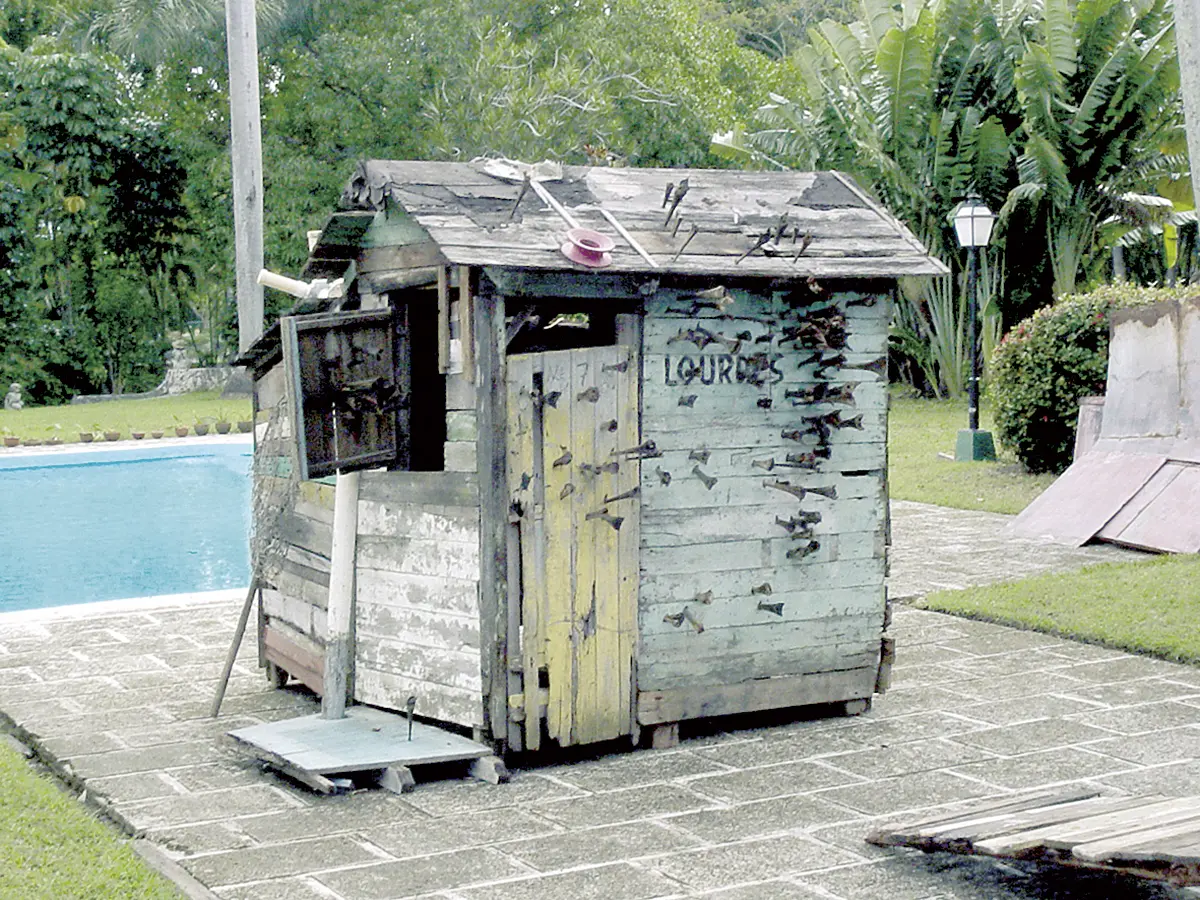
Kcho considers himself a fisherman. He often takes to the sea in this capacity and his hobby puts him in the position of finding a variety of discarded objects to be incorporated into his work. Once in Cojímar, he picked up two old sheds of the kind used by fishermen to keep their personal implements and the fruits of their labor or to even live, and he penetrated them with needlefish quills. Upon seeing this piece, many have made ecological associations, but in truth, it constitutes an allegory of the tensions that can arise in interpersonal relations. The disposition of the quills in the shed’s front and back responds to the nature of friction among people: some are open, and some are backhanded and treasonous. He tells me also that he’s felt aggression many times in his life, in the most varied of ways: his house, his professional life, and his desires have been spied upon, and that is why he wanted to stage conflicts without making them appear violent. For Kcho, friendship is a talisman, which gives La venganza del pez its poetic character.
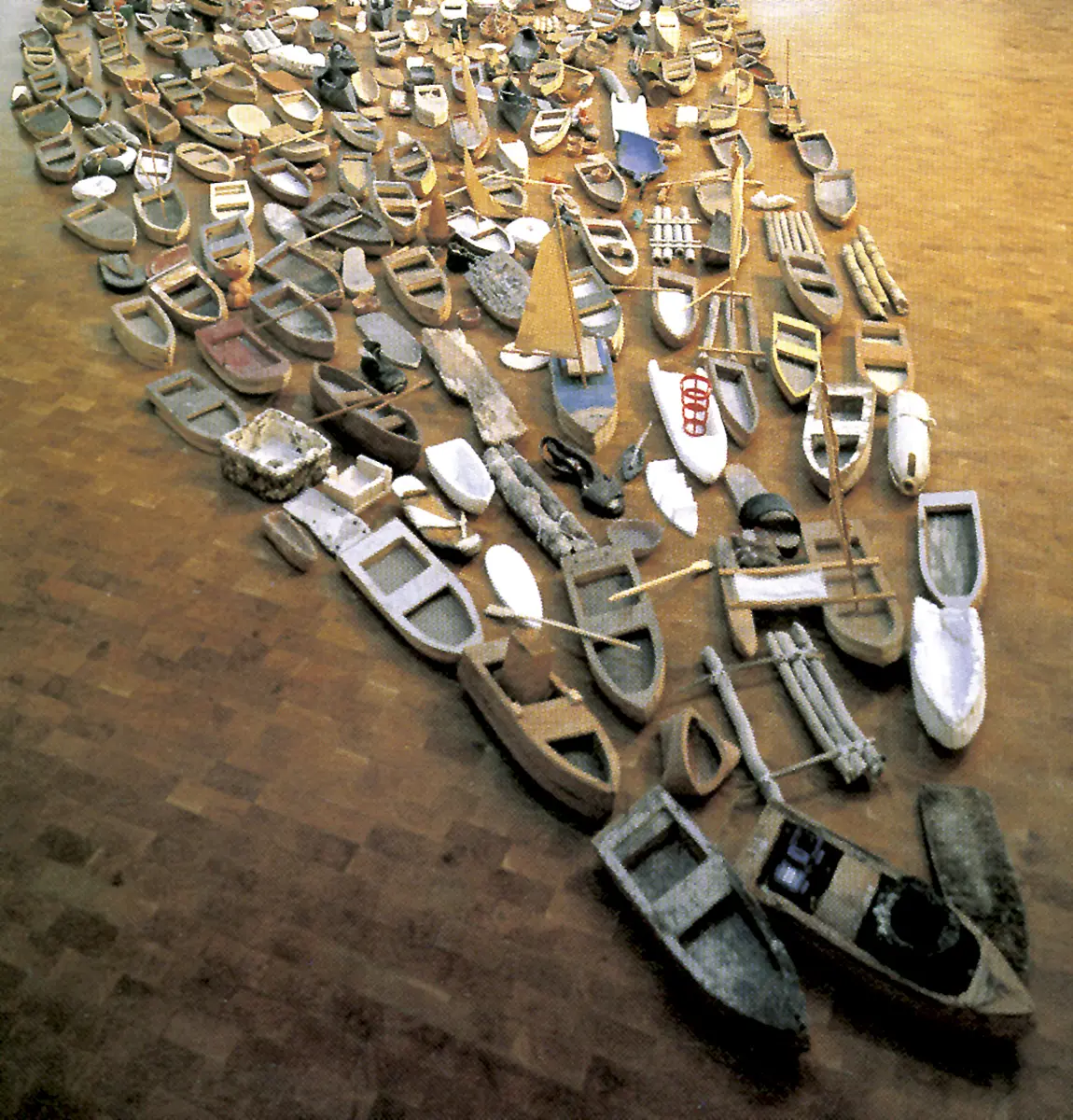
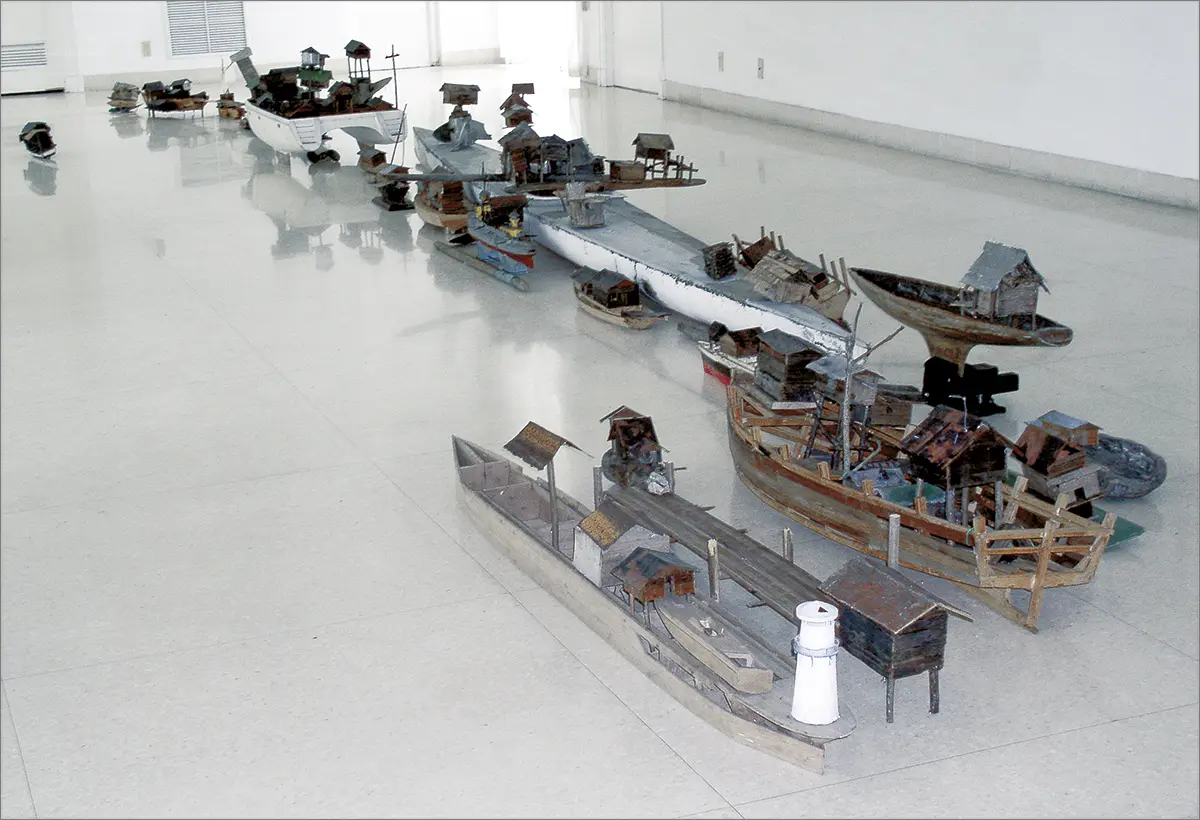
Traveling is something the artist does because he has no choice, but it doesn’t satisfy him. That is why there is always a counterpart —remaining at home— when he deals with the topic. Archipiélago, a series started in 2003, alludes to the inevitable journey. A map of Cuba consisting of a flotilla of small boats and three propellers defining Yucatán, Florida, and Hispaniola has been deployed on a large area. The boats, covered by constructions (houses, lighthouses, lampposts, etc.,) refer us to the contingency of navigation, to the constant flow of communications interconnecting the world and without which we would not survive. However, home is a constant in this story: without it, movement is inconceivable. This piece is a synthesis of two important moments in the artist’s career: the favelas and La regata, and Kcho has created several versions of it. A section of the series was exhibited in Maracaibo, Venezuela, earlier this year.
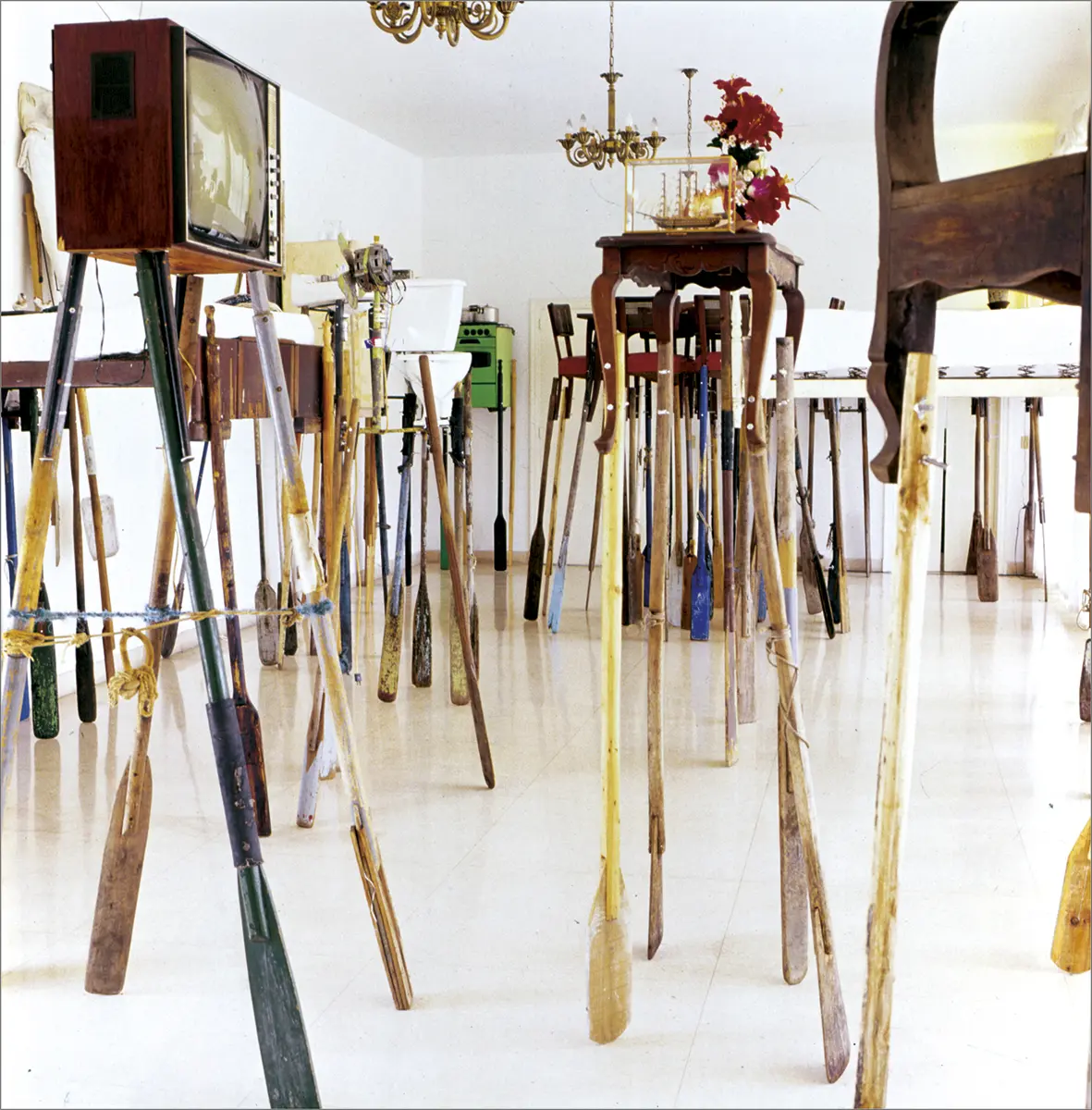
Kcho’s latest piece is an environment comprising an entire house arranged on top of oars. The house has been installed, primarily, with furniture and utensils brought from the artist’s own home in Juventud Island. Friends, relatives, and acquaintances contributed to the installation. The title is Núcleos del tiempo (Time Nuclei) and its rooms are all at the same level so that we can move underneath it without difficulty. Precariousness here continues to be a constant, and the fact that in Cuba it is common for several generations to live under the same roof, given the difficult economic conditions, is also emphasized. Although each of these spaces has a special affective charge for Kcho, the idea he is trying to communicate is not that this is his own home (it can be anybody’s), not that he is a homebody, but that these small sites give us safety, calm, and warmth; they are the places where we are most ourselves, but we nonetheless often have to abandon them against our will.
Kcho has not shown his work in a gallery since 2002, but he has used the time to explore his formal repertoire, and the gains are clear. Undoubtedly, his discourse has led the way in Cuban art, especially in terms of the renewal of concepts in sculpture and the use of materials. The fertile tropologization he has achieved on the basis of the island alerts us to our individual and collective responsibility in the face of challenges imposed by a world more and more fragile, thanks to the human condition itself.
NOTE
1. Gerardo Mosquera, “Robando del pastel global. Globalización, diferencia y apropiación cultural,” Horizontes del arte latinoamericano (Madrid: Ed. Tecnos, S. A., 1999), pp. 57-67.
2. Estrella de Diego, “Soy Ulises, hijo de Alertes,” La columna infinita, exhibition catalog Crystal Palace, Museo Nacional Centro de Arte Reina Sofía, February 8–May 7, 2000, (Madrid: Museo Nacional Centro de Arte Reina Sofía, 2000), pp. 37-52.
3. Constantin Brancusi, (Barcelona: Ediciones Polígrafa, S. A.), pp. 2.
4. Ibid., pp. 4.
AMALINA BOMNIN
Art historian and critic.