The New York art world was abuzz this year because the latest edition of The Armory Show coincided with the opening of the Whitney Biennial. To add even more excitement, the Scope New York art fair also took place concurrently. Art lovers spent the weekend shuttling around Manhattan, from the Whitney on Madison Avenue to The Armory Show at the piers on the Hudson River to the posh Hotel Gansevoort, which housed Scope, in the Chelsea meatpacking district, reveling in a dizzying array of new art. An unprecedented number of people visited the fairs, with 38,000 attending The Armory Show and 8,000 at Scope. The weather was fabulous, the crowds upbeat, and the gallerists surely overjoyed as the two fairs together collected a record $45,000,000.
189 galleries participated in The Armory Show this year, carefully selected from among 450 applicants. Two Latin American galleries exhibited for the first time: Galleria Brito Cimino from São Paulo and Galería OMR from Mexico City. Other newcomers included Doggerfisher from Edinburgh, ShanghART from Shanghai, Courtyard Gallery of Beijing, Gallery Hyundai from Seoul, three galleries from Hamburg (Jürgen Becker, Karin Guenther, and Sfeir-Semler), and five New York galleries, including Kravets/Wehby and Daniel Reich, who represents the Cuban-American performance artist Delia González.
Also, new this year was The ARCO Forum at The Armory Show, a collaboration that brought together collectors, curators, and the general public to address topics related to curating and collecting contemporary art. One such panel discussion “Starting a Collection” was moderated by Rhonda Lieberman and featured collectors Don and Mera Rubell from Miami and Cary Leibowitz from New York, as well as Anne Ellegood, curator of the Norton Collection. Another panel, “Curating for Today’s Museums,” was integrated by four museums directors, including Glenn Lowry of the Museum of Modern Art, New York. The partnership between The Armory Show and ARCO promises to be a long and fruitful one; the two fairs are planning joint sponsorship of an internationally curated exhibition space as well as additional programming in the future. Not one to be left behind, Scope also featured a panel discussion, “Art, Sex, and Religion,” with contributions by artists, curators, and collectors.
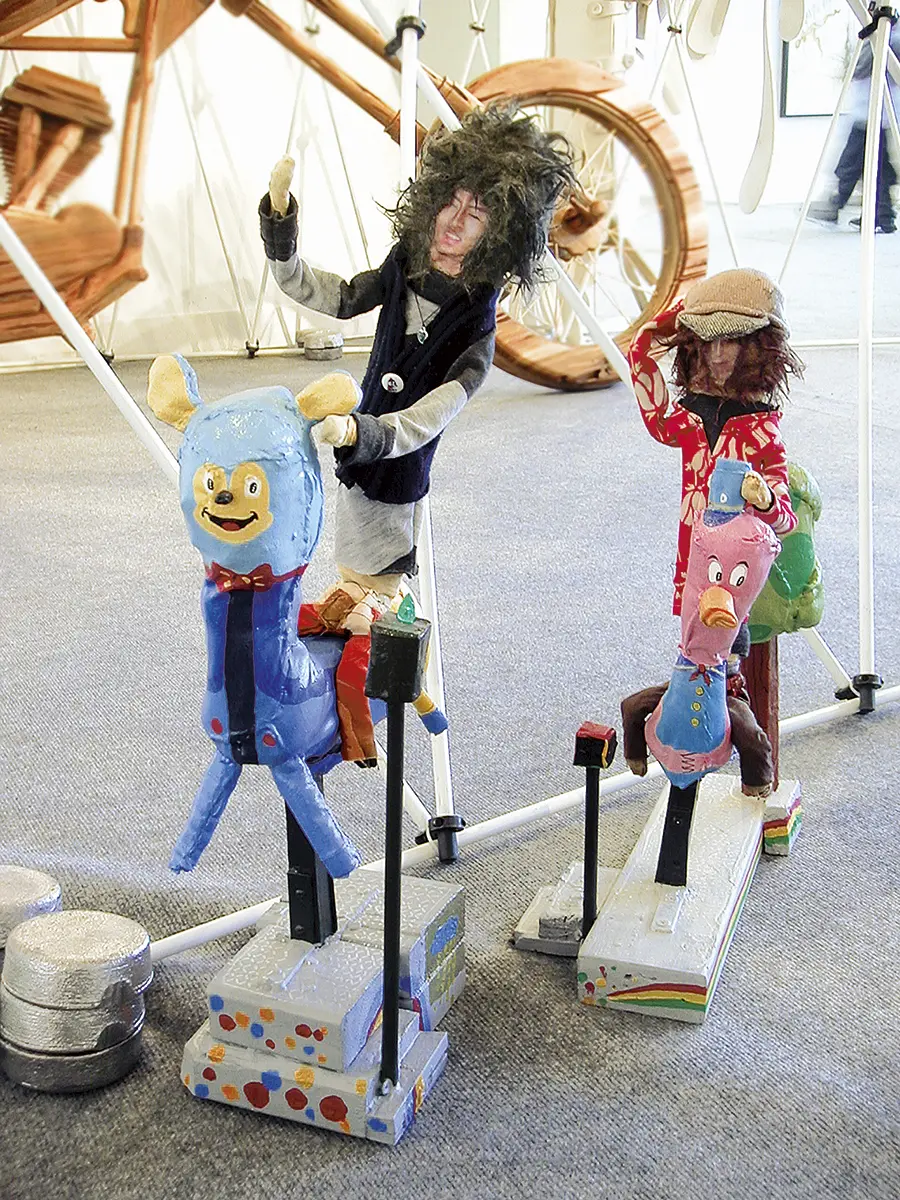
This year’s edition of The Armory Show was much more daring than last year’s. Installations, large-scale sculptures, and site-specific art abounded, as well as works in more conventional mediums, particularly pop-inspired paintings and color photography. Kenny Schachter Contemporary, a New York gallery, crammed its booth with a life-sized motorcycle carved out of wood by Lee Stoezel, a crudely rendered papier mâché airplane transporting dolls and stuffed animals by Misaki Kawai, and numerous paintings, all framed within a specially designed cage-like display of white plastic rods by Vito Acconci. At Galerie Emmanuel Perrotin from Paris, a Tony Matelli sculpture of a chimpanzee wearing a “Think Different” T-shirt with the Apple computer logo leaned against the wall after apparently having vomited. Entwistle Gallery of London filled up its booth with the sculpture Light Perpetual by Conrad Shawcross. It consisted of an enormous wood and wire cage housing a light-emitting, rotating wooden sculpture whose rhythmic movements referenced music theory and mathematics. Tanya Bonakdar organized a different installation for each day of the art fair. On the opening day, Mark Dion created an environment resembling the study of a gentleman explorer, complete with trophy heads and detailed scientific drawings. It harked back to cabinets of curiosities and the pre-history of the museum. All in all, the gamble to take risks paid off. The fair saw a 79.2% increase in sales from last year, and the gallerists were forced to keep bringing out new work, barely able to meet the high demand.
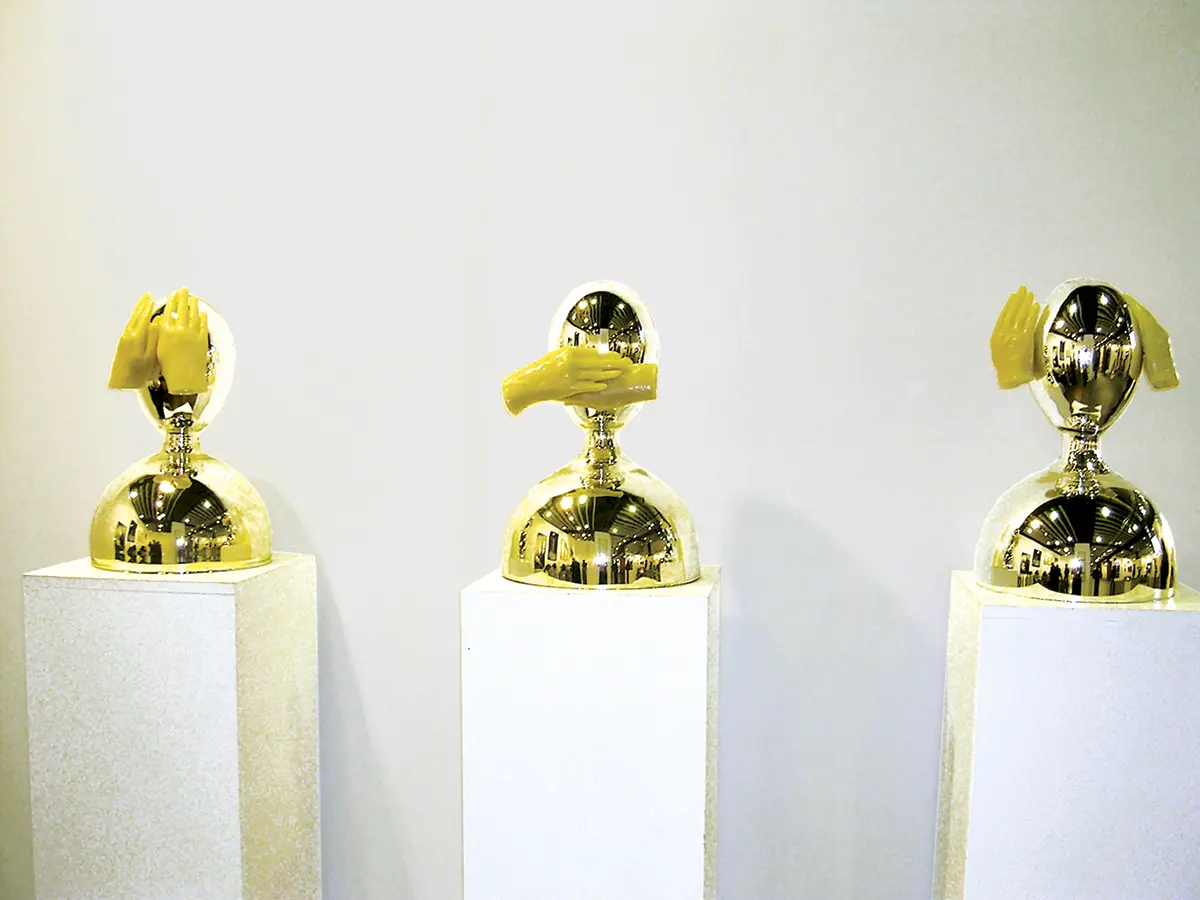
Some galleries also played it safe by choosing to feature artists from past years. Rena Bransten exhibited Vik Muniz’s recent series Rebus which employs subjects of the old American West composed of colorful plastic toy soldiers. The artist’s stunning new photographs depicting the faces of iconic Hollywood actresses in diamonds on a black background were on view at Brent Sikkema. Sandra Gering displayed José Antonio Hernández Diez’s widely seen sneaker series as well as light pieces by Leo Villarreal, two artists she also showed last year, while Lombard-Freid brought new work by Carlos Garaicoa and Rosângela Rennó. Jack Tilton showed Yellow Dragon, an amorphic lime yellow plastic sculpture by Eduardo Abaroa that builds on the themes of his earlier work exploring formlessness through synthetic materials. Marian Goodman displayed recent photographs and collages by Gabriel Orozco, as well as a compelling group of abstract sculptures made of steel mesh and polyethylene foam. Orozco’s photographs were also featured at Chantal Crousel. Galerie Lelong presented another piece from Alfredo Jaar’s Rwanda series, Walking, an ethereal, emotionally charged image that reflects on life’s transitory nature. The gallery also brought vintage photographs from Ana Mendieta’s Silhouette series. Stephen Friedman exhibited less impressive work by Rivane Neuenschwander than his selection last year. Her new series Ze Carioca consists of empty cartoon panels in bright colors with only the blank bubbles where the dialogue should be. However, recent collages by Beatriz Milhazes, also at Stephen Friedman, were a dazzling spectacle of high art and mass consumption. In a similar spirit, Ivan Navarro’s sculptures at Roebling Hall continue his simultaneous dialogue with constructivism and consumer culture, particularly through his humorous shopping cart of neon bulbs that called attention to The Armory Show’s status as the premier marketplace of new art.
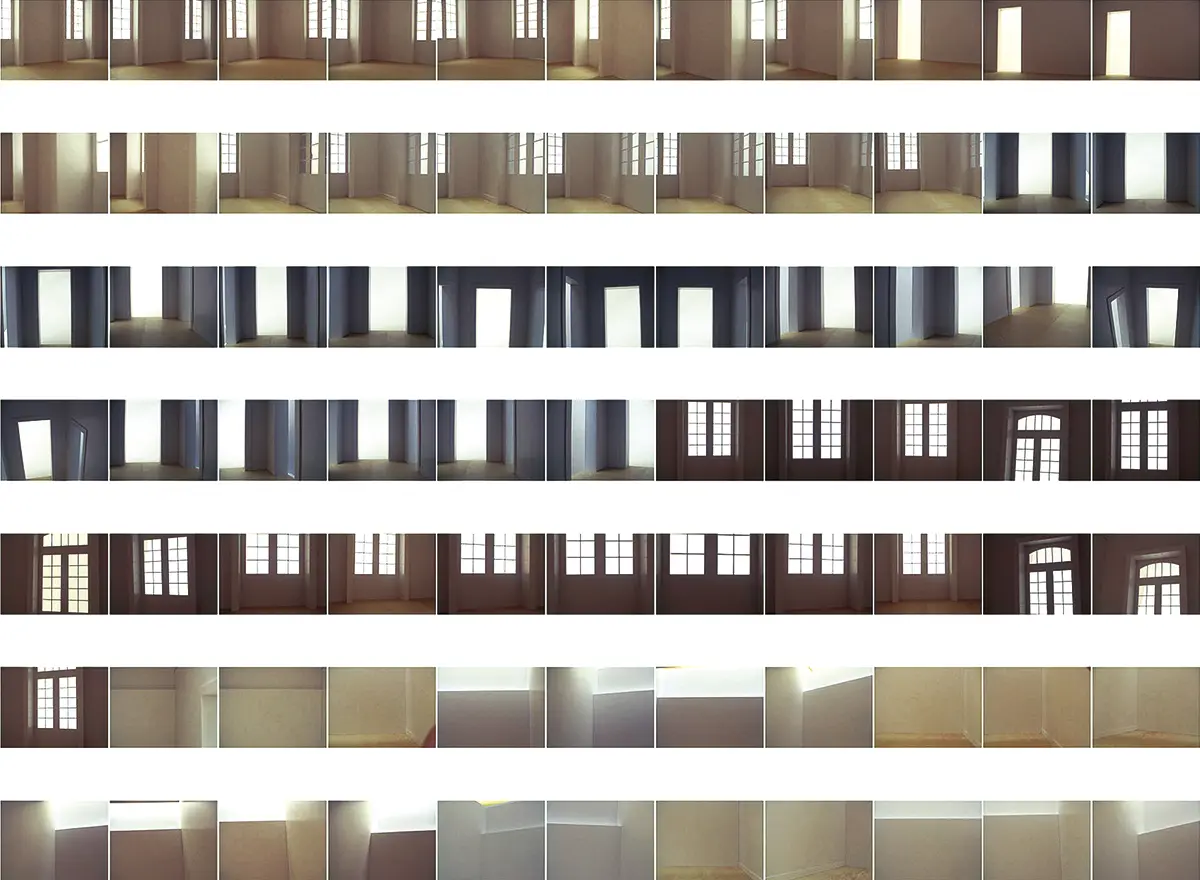
The Latin American galleries stood out for their emphasis on artists not seen before at this fair, particularly Galería OMR, Nina Menocal, and Jacob Karpio. OMR presented aerial photographs of Mexico City by Melanie Smith, similar work to that featured at the recent P.S. 1 exhibition on Mexico City. Another artist referencing the Mexican capital, Iñaki Bonillas contributed a series of contact sheets that isolated the identification numbers of the city’s taxis, striking compositions that simultaneously referenced the modernist grid and contemporary urban culture. Also noteworthy at OMR were new paintings by Fernanda Brunet with her characteristic orgasmic explosions here rendered in metallic paints.
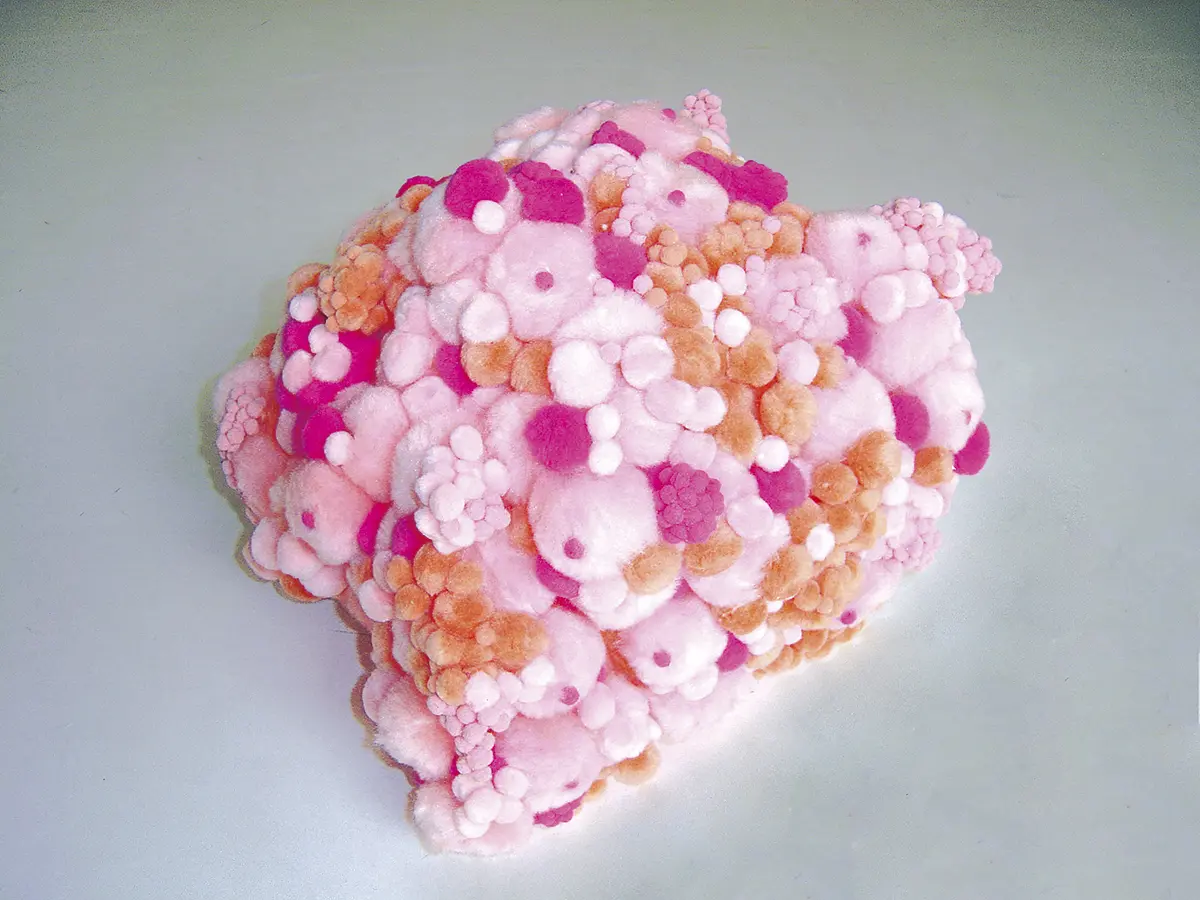
Nina Menocal organized her entire booth around the color pink and was seen sporting pink outfits throughout the course of the fair. As usual, the booth was well-curated. The emphasis on pink initially produced a soothing experience for the eye and mind after the sensory overload of the fair, but upon closer examination of the individual works of art, it became clear that many of the images subverted the traditional association of the color pink with serenity and innocence and instead pondered themes of violence and dystopia. The gallery featured new work by up-and-coming artists including synthetic formless sculptures by Adriana Riquer and cartoonish paintings by Balam Bartolome, as well as photomontages by Atelier Morales and dreamy photographic landscapes by Arturo Cuenca.
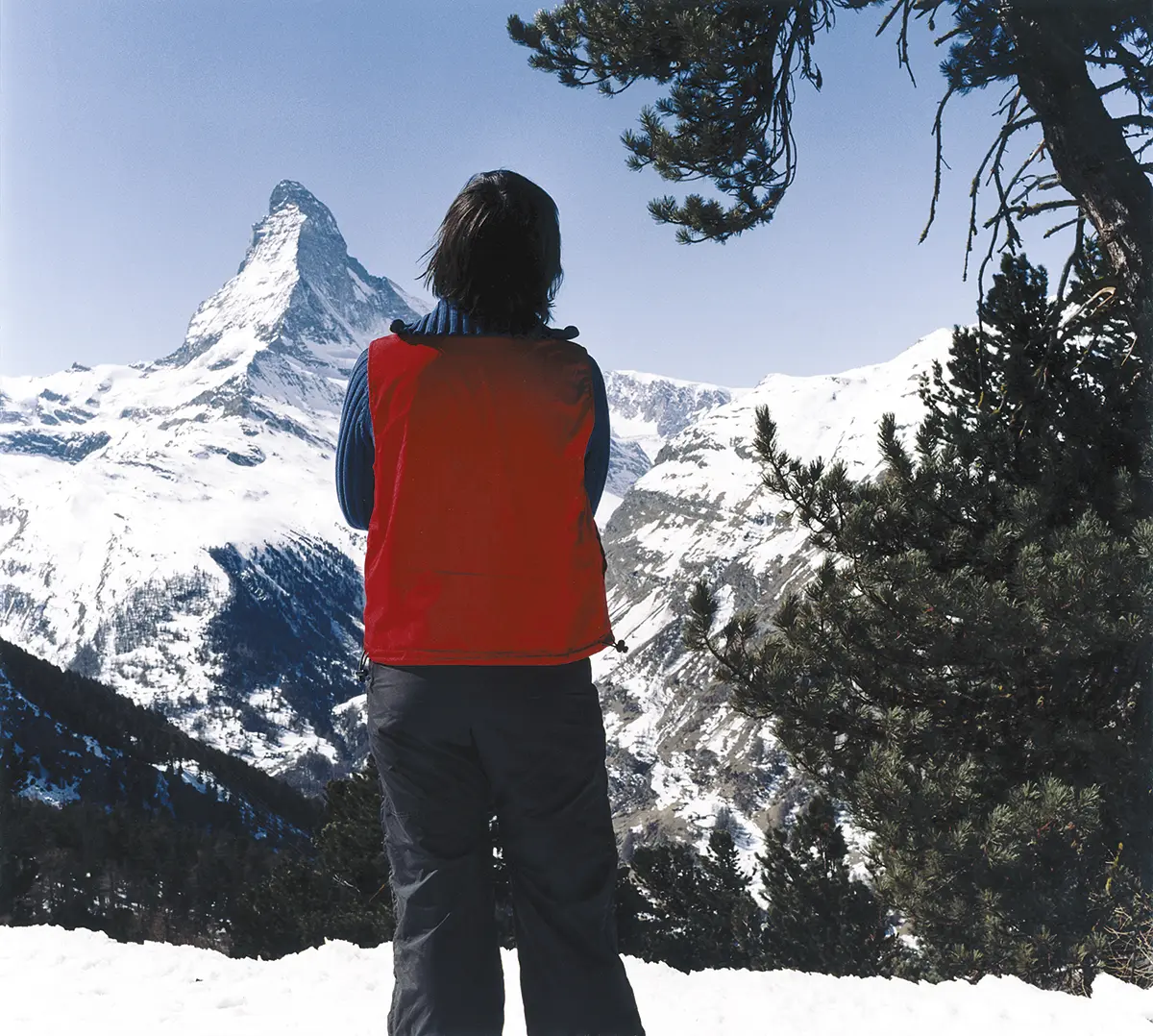
Jacob Karpio’s oversized booth included established and emerging artists. Gabriel Delponte presented a large abstract relief, Eternauta, an epoxy resin, depicting concentric ovals in cool metallic colors. The bold presence of the piece contrasted with faint pencil drawings on the wall behind it, creating tension between line and color, understatement, and overstatement. Daniel Arsham contributed two pieces meditating on the relationship between architecture and landscape. Unite Proposal, a large-scale gouache pictured a rectangular building eclipsed by craggy mountains, while the sculpture Untitled Proposal in white foam featured skyscrapers nestled into a rocky landscape. Also at Jacob Karpio were Darío Escobar’s playful constructions with baseball bats and soccer balls; paintings by Fabián Marcaccio, Rafael Vargas Suárez, and Damián Sarno; and striking large-scale color photographs by Cinthya Soto displaying her from the back positioned against diverse landscapes.
The Brazilian galleries featured artists who are now fixtures in the contemporary art scene. Fortes Vilaça included in its selection the work of Rivane Neuenschwander, Valeska Soares, Vik Muniz, and Janaina Tschäpe. Soares contributed a number of works in stainless steel, including the piece Self-Portrait in Denial with a concave mirror effect that distorts the viewer and surrounding objects. Tschäpe’s compositions demonstrate her interest in the possibilities of photography as a sculptural medium and reference the dreamscapes of Surrealism. Brito Cimino exhibited works by Daniel Senise, Liliana Porter, Regina Silveira, and Ernesto Pujol as well as two recent collage series by Nelson Leirner: a set of Sotheby’s catalogs altered for humorous effect and an old map of the Americas superimposed with images of Mickey Mouse and other cartoon characters that comment on globalization and cultural imperialism.
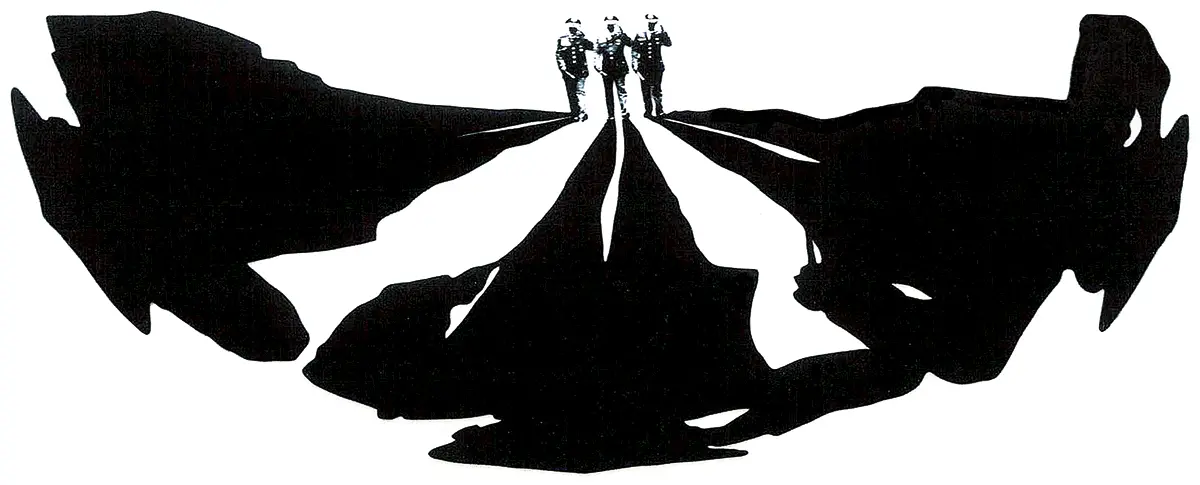
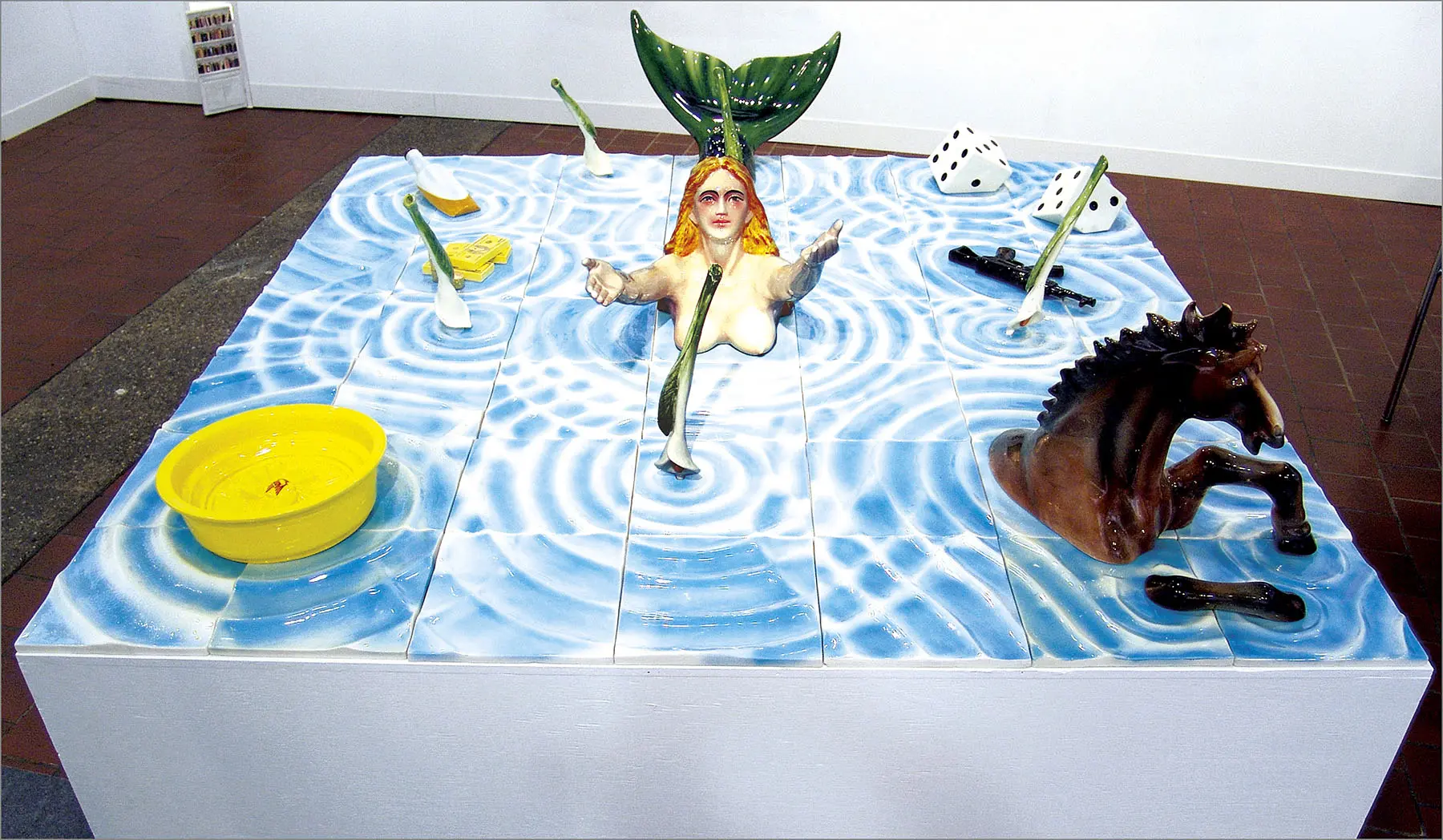
Other noteworthy works at The Armory Show included Lars Arrhenius’ A-Z, an illustrated map of London following the moves of a tiny cast of characters throughout the city, on view at Magnus Karlsson; Anish Kapoor’s Alba at Lisson Gallery, a large-scale concave relief in stainless steel and red lacquer that projected a strange echo that drew the spectator in; and the much commented Apparition of Fame by Milton Rosa-Ortiz, a mobile sculpture made up of shards of green glass bottles inspired by Jennifer Lopez’s dress from the 2000 Grammy Awards. Apart from Ivan Navarro’s pieces, Roebling Hall included the wall sculpture Tin tin por tin tin by Courtney Smith inspired by Antonio Carlos Jobim, a construction of fragments of wooden furniture that reflected the artist’s engagement with commonplace objects as markers of the contemporary baroque. Nancy Drew’s glitter paintings also at Roebling Hall were a feminine appropriation of the language of Abstract Expressionism, inspired by the work of Jackson Pollock and Clyfford Still. Finally, the polychrome ceramic sculptures of Mexican-American artist Eduardo Sarabia at I-20 were among the most memorable of the fair, particularly the horizontal tableau If This World Were Mine. The sculpture brought together a mermaid with arms outstretched, a horse, giant dice, and a machine gun on a watery surface. The composition engaged the spectator through its dynamic address and challenge to narrative conventions.
The scope was a welcome change of pace from the overwhelming scale of The Armory Show. It featured many talented emerging artists and newer galleries who may one day be included in the better-known fair. Each gallery exhibited in a hotel room and bathroom, forced us to find innovative ways to display the art. Also, the organizers of the fair required each gallery to devote 80% of its space to one artist, allowing for a more direct connection between the spectator and artwork.
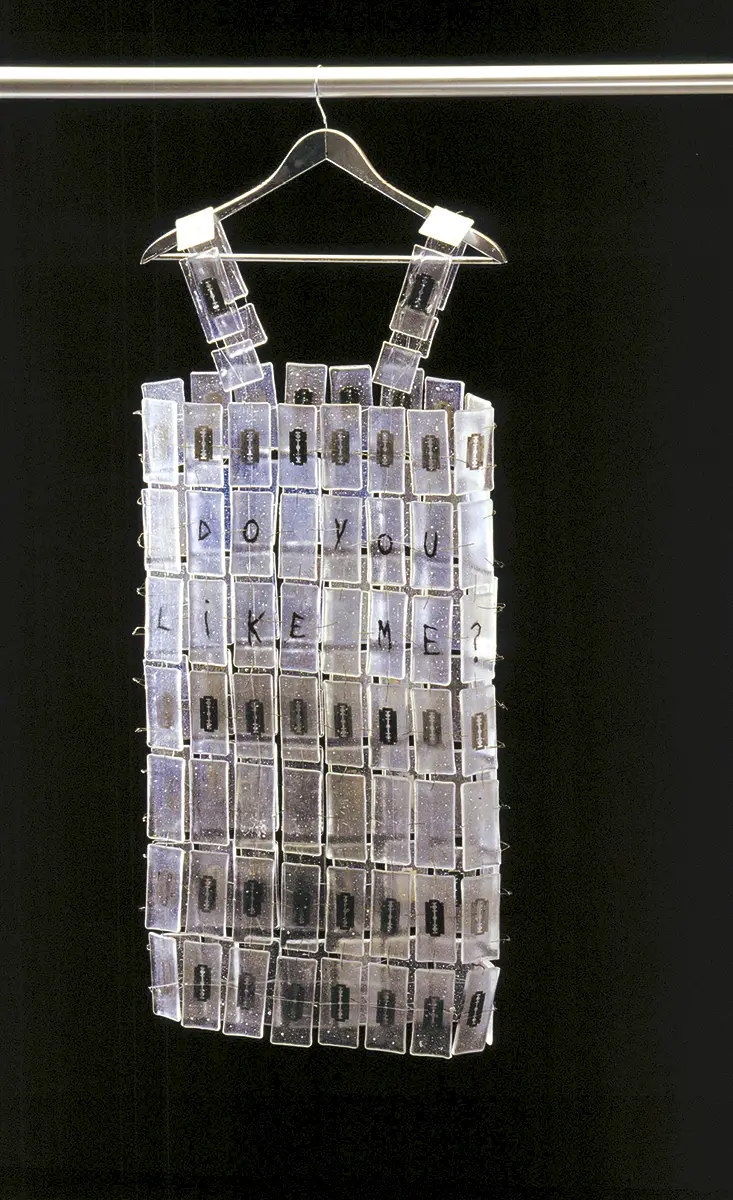
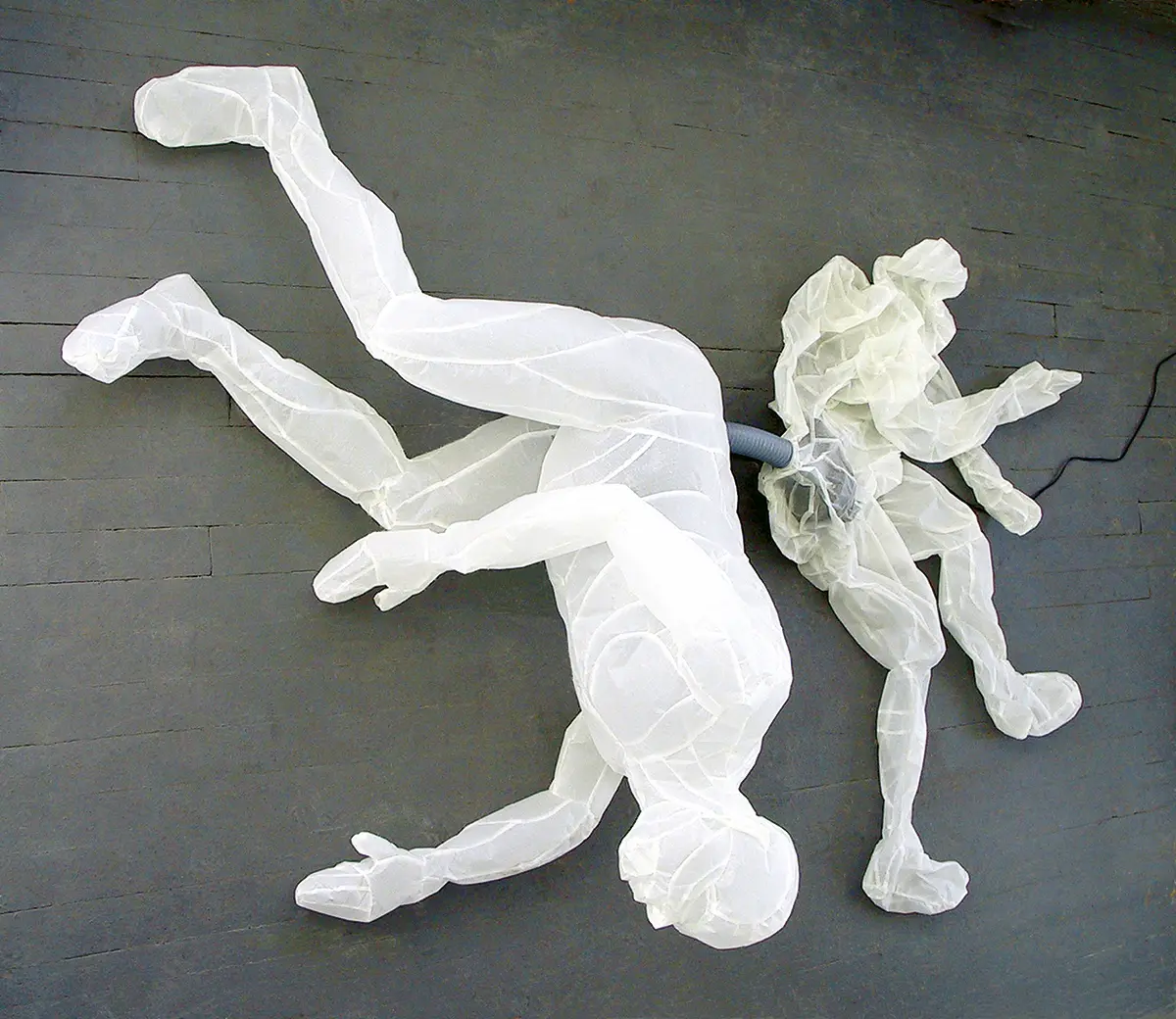
This year, numerous new galleries were included among the 65 exhibitors, mainly from Europe and North America. The Marina Kessler Gallery exhibited images by Irene Clouthier, whose recent series Playground focuses on plastic objects and toys as a means of reflecting on how the contemporary self is constructed through disposable culture. The gallery also organized a colorful bathroom installation with paintings and mixed-media work by Pablo Contrisciani. The work by artist Max Streicher at Artcore Gallery is worth noting. His inflatable figures are an overwhelming presence in the exhibition space and have become quite important in defying the inanimate object by placing kinetic qualities into them and therefore allowing for transformation by means of movement. With his installation Blow, the rhythmical breathing of volumes with human corporeity refers to the pulsations of the living condition and to the fragility of existence. Caterina Torgnon Arte Contemporáneo from Bergamo, Italy featured lovely pastel sculptures in glass by Silvia Levenson, an artist from Argentina who has not gotten the exposure she deserves outside of Europe. Galerie Bourbon-Lally from Montreal attended Scope for the first time this year, presenting paintings by Santiago Rodriguez Olazábal and Elsa Mora.
Overall, The Armory Show and Scope Art provided exhilarating experiences for the art lover. Could they possibly outdo themselves next year?
TATIANA FLORES
Assistant Professor of Art History at the Florida State University.