An indeterminate length of luminous cable intersects —from several directions— on a rigid and perfect earth pole. The image, with each and every one of its lines in black and white, captures the attention of a female viewer who has just begun her tour through one of the newest and most image-filled exhibitions in the Venezuela of the young twenty-first century.
The photograph, by artist Carlos Herrera, is titled Poste brillante. It was shot in 1943 and it is, without intending to be and thanks to the fate of beauty, one of the most precise metaphors for the essence of what is on view in Twentieth-Century Venezuelan Art. The Megashow, an exhibition of more than 3,000 works of art dating between 1901 and 2001, is presented at sixty-six spaces throughout the country.
On one hand, in the case of Caracas, the display is organized chronologically into five large blocks that, in turn, focus on five of the city’s significant exposition centers: Galería de Arte Nacional (1900–1952); Museo de Bellas Artes (1950–1969); Museo Jacobo Borges and Museo de la Estampa y del Diseño Carlos Cruz-Díez (1970–1979); Museo Alejandro Otero and Museo Arturo Michelena (1980–1989); and Museo de Arte Contemporáneo de Caracas Sofía Imber, Cadafe and Ipostel Galleries, and Centro de Estudios Latinoamericanos Rómulo Gallegos (1990–2000).
On the other hand, it represents one large gallery in which it is possible to see and appreciate many manifestations of a variety of artistic media from traditional painting, sculpture, and engraving, through installation and photography, to graphic design and video.
Without a doubt, we are talking —as once suggested by Venezuelan critic Roberto Guevara— about a country’s alternative history, presented under beauty’s pale hue, which has always had ways of manifesting itself in this mestizo land that is at the same time commonplace and strange.
We are also referring to the century of a Venezuela built on the basis of light and shadow, form and space, dot and line, on the basis of pencils, brushes, chisels, photo and video cameras, or any other tool used to create Venezuelan art of the twentieth century. The mega show can be defined, in Guevara’s words, as a kind of “re-encounter fired by imagination, which ends up being the truest, the most significant and revealing synthesis” of an epoch.
Beautiful Decades
The first period represented for the viewer goes from 1900 to 1952 and presents five main moments, from realism’s brush at the turn of the century, the foundation of the Círculo de Bellas Artes, the development of the Caracas School, and social realism in the 1940s, to the proposals made by Taller Libre de Arte. Its curator is Professor Francisco Da Antonio.
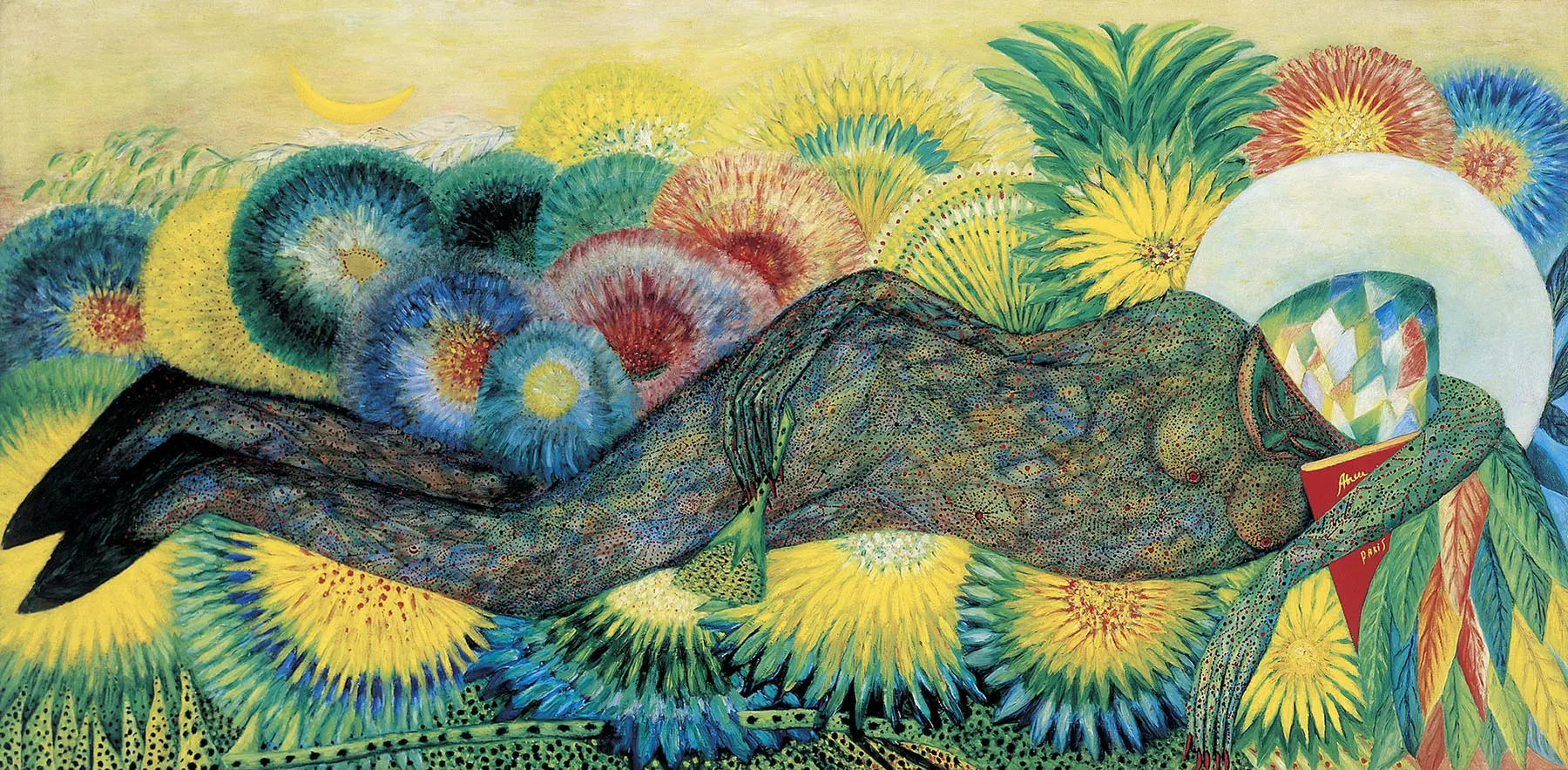
The highlights here, wall to wall at the Galería de Arte Nacional, are oil-on-canvas works such as The End of the Journey (1912) by Emilio Boggio; The Road to Cotiza (1920) by Antonio Alcántara; Manuel Cabré’s creations; The Shore Side (1942) by Armando Reverón; Portrait of Aunt Loló (1942) by Armando Barrios; Kites and Parrots (1951) by Alirio Oramas —oil with pencil and China ink on canvas; The Witch (infant) (1952) by Oswaldo Vigas, and Vegetable Woman (near 1954) by Mario Abreu. Of course, there are also works by Federico Brandt, Antonio Edmundo Monsanto, Marcos Castillo, Rafael Monasterios, Héctor Poleo, and César Rengifo, among others.
Next, the Museo de Bellas Artes enters the scene, exhibiting works from 1950 to 1969, that is to say, the nineteen years which basically presented the conflict between abstraction and figuration, the earliest manifestations of kinetic art, and the relationship between artistic movements and social views. María Luz Cárdenas was in charge of this curatorship.
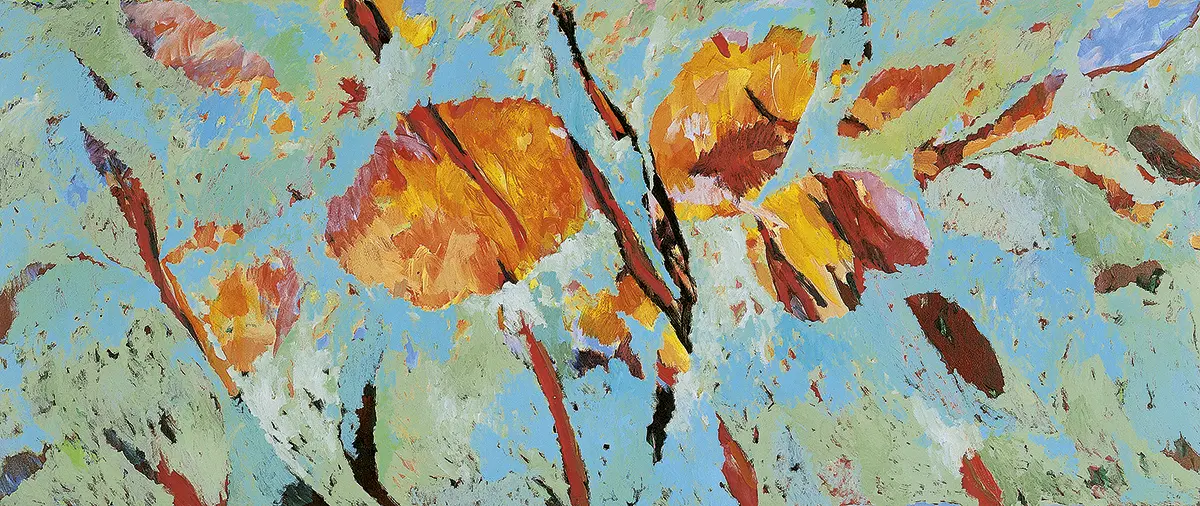
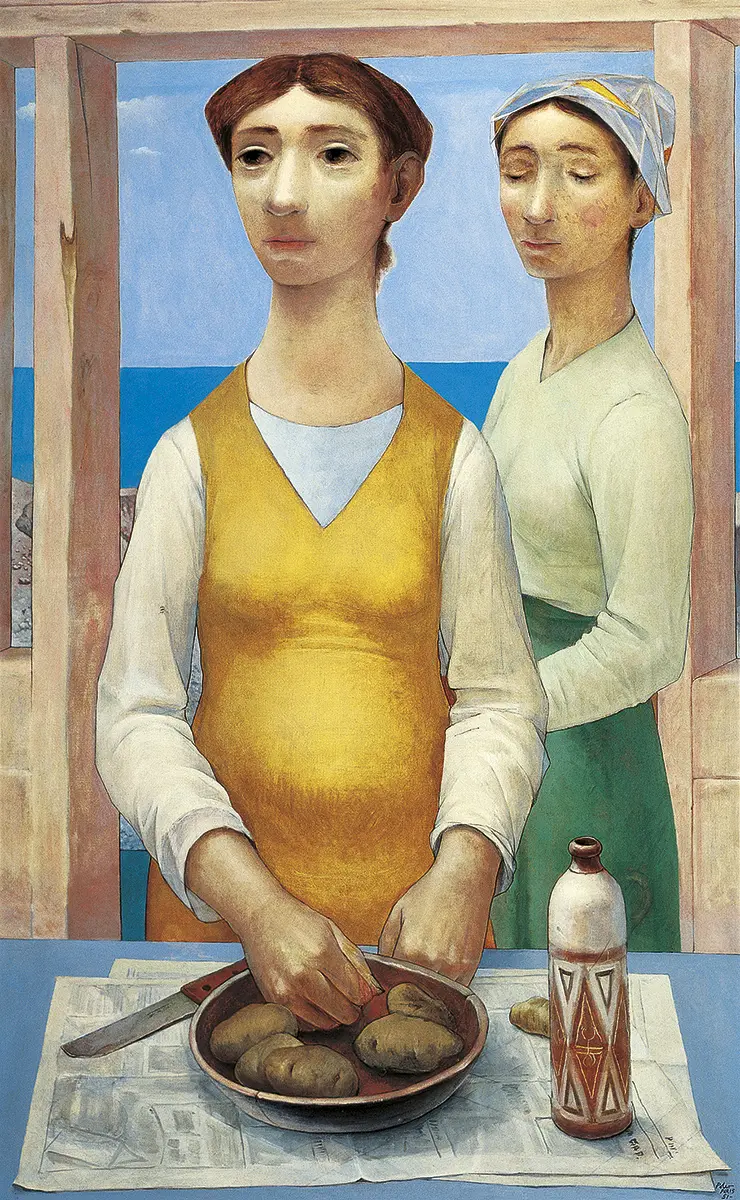
During this period emerged works like Two Figures (1951) by Héctor Poleo; Spiral (1954), a Plexiglas-and-wood serigraph by Jesús Soto; Cloud Weaver (1956), an oil-on-canvas by Manuel Quintana Castillo; Ships and Lifters (1958) by Hugo Baptista; Muertecito (1961), in plated bronze, by Cornelis Zitman; The Castle of the Sun (1964) by Elsa Gramcko, who worked in various materials on papier mâché; The Hunting Neck (1967) by Régulo Pérez; The Show has Begun (1964,) an oil on canvas by Jacobo Borges; Homage to Matthias Grünewald (1968-1970), a revealing assemblage of objects and multiple materials by Miguel von Dangel; and Víctor Valera’s sculptures.
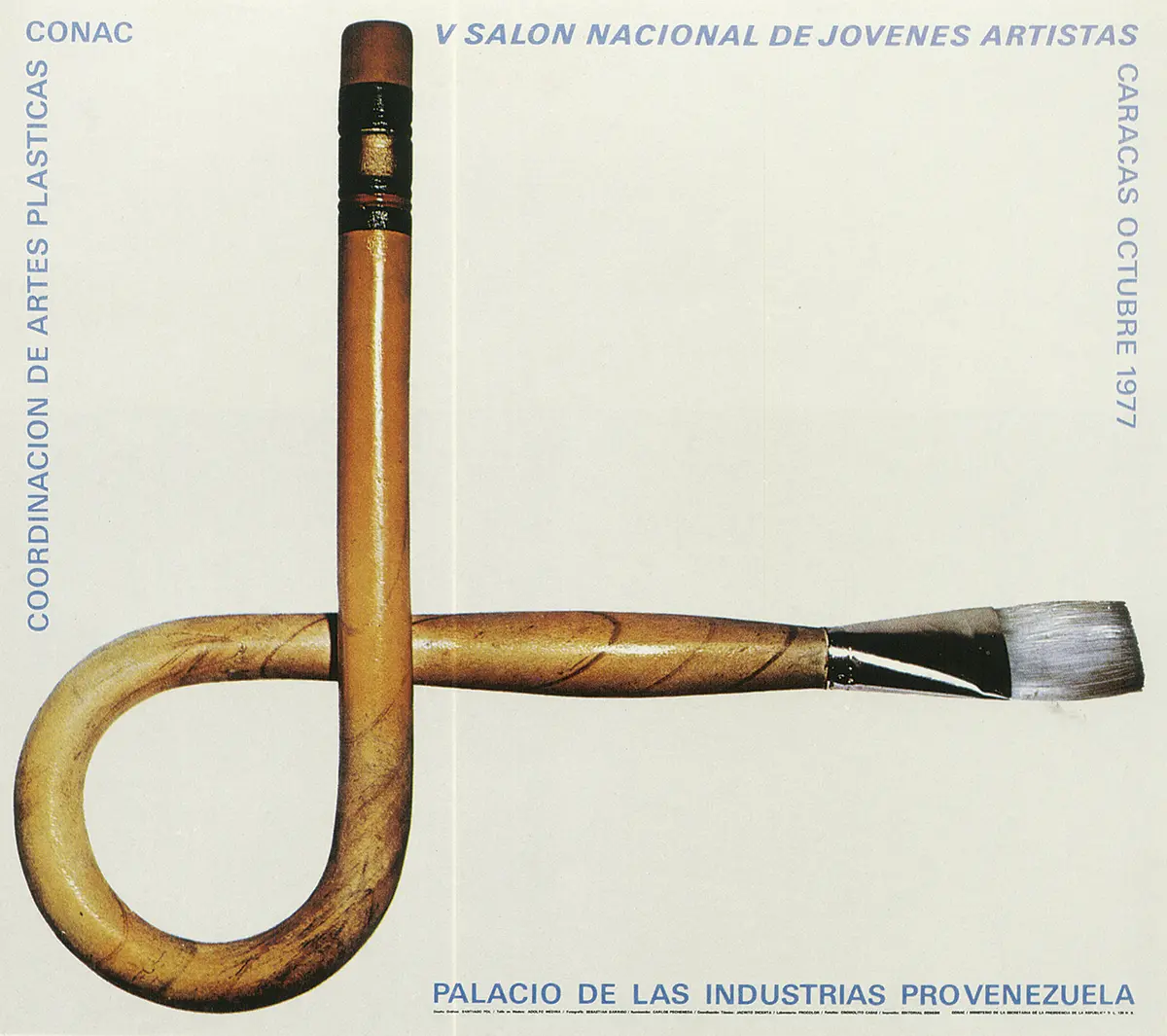
The Museo Jacobo Borges and the Museo de la Estampa y del Diseño Carlos Cruz-Díez— dedicated to presenting a selection of the 1970s aesthetic —emphasized the affirmation of new figurativism, the re-emergence of drawing and the graphic arts, and the manifestations of conceptualism and geometric art. Xiomara Jiménez was the visual arts curator for both museums. The essence of this period is defined as the basis of an “explosion of artistic experiences of a varied nature and a hybridization of styles and techniques,” as is noted in one of the catalogs of Twentieth Century Venezuelan Art. The Megashow.
Regarding design, it bears pointing out —as a positive achievement— the integral investigation of graphic, three-dimensional, and digital design during the twentieth century, something never seen before the inauguration of this exhibition. The curator in charge, Susana Benko, mentions that another significant result of this effort is the fact that the museums (normally devoted to the visual arts) integrated this discipline into their spaces.
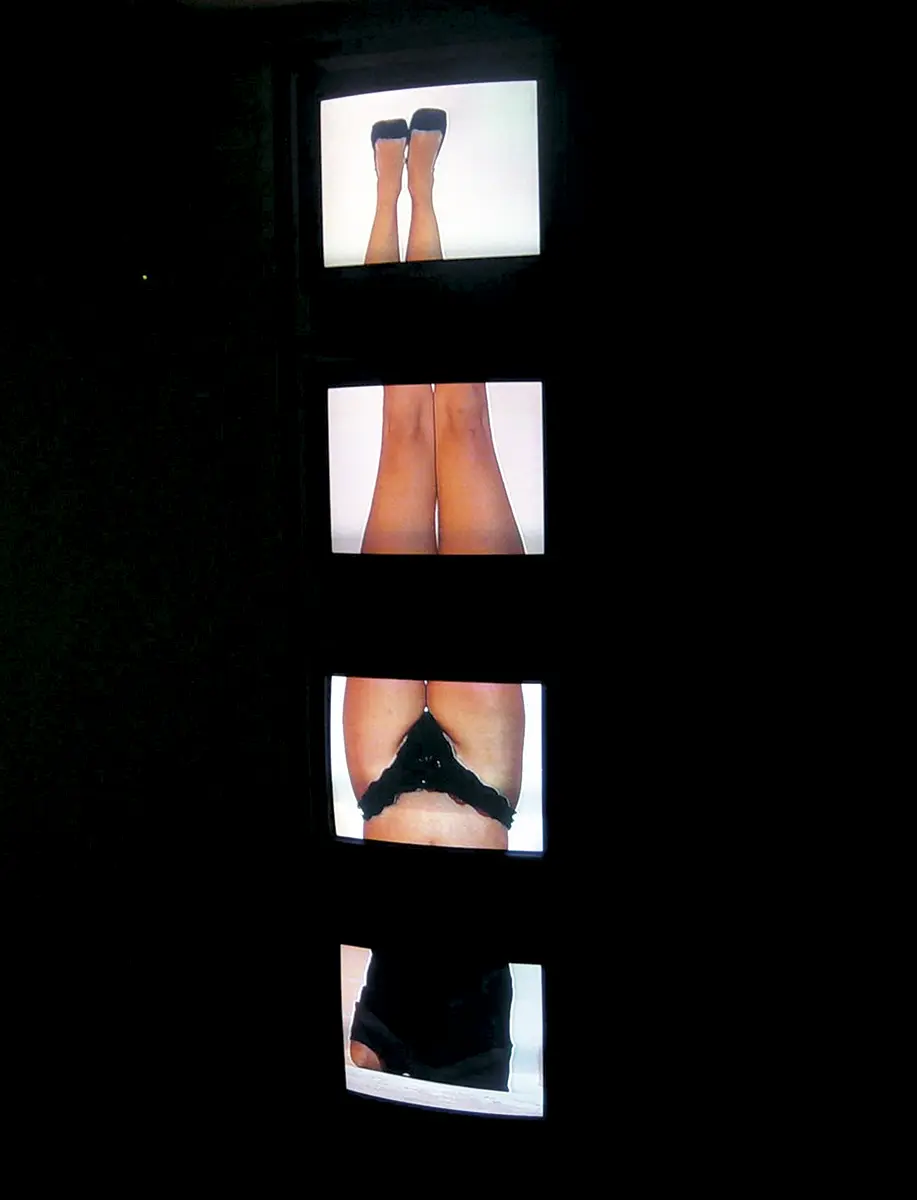
The heterogeneous decade of the 1970s is represented, in both museums, by more than 90 artists and 215 works, among which we find painters, sculptors, and photographers, but also graphic designers (Jesús Emilio Franco, Alvaro Sotillo, Santiago Pol, Gerd Leufert, and Nedo M. F.) and potters (Tecla Tofano, Seka Severín, and Cándido Millán.)
The nine very creative years between 1980 and 1989 at the Museo Alejandro Otero and the Museo Arturo Michelena, offer the viewer “an exuberant and versatile display of superposed styles, large formats, body language, blotches and drippings on the canvas—or on less conventional surfaces—documentary photographs, TV screens; works that are open in physical-lyrical dimension. It is a busy, individualistic time, one of the profound changes in the way of life of the average Venezuelan,” as can be read in one of the informational fliers distributed at both of the mentioned institutions. Famous during this period are This is how I paint for You (1984) by Ernesto León; The Red Painting (1986) by Eugenio Espinoza; and They Pass and Burn (1988) by Luis Lizardo. Diego Casanovas was the curator.
Meyer Vaisman’s installation Green on the Outside, Red on the Inside (1993) works as an emblem for the most recent period in the mega show, from 1990 to 2000. This is the selection of works displayed at the Maccsi, the Cadafe, and Ipostel galleries, and the Celarg, under the curatorship of Luis Ángel Duque.
After walking through these last exhibits, we are impressed by Nan González’s installations A Toast to the Universe (1992); Blood Bath (1993), a sculpture with video by Nela Ochoa; Installation Party. The Extraction of the Stone of Madness (1996)by Javier Téllez; Sara Maneiro’s installation Home-Made Weapons and Escaping Objects (1995-1997); and Surara, a car designed by the students of the Instituto de Diseño de Caracas. We must not forget that during this decade Venezuelan art displayed a revisionist spirit, giving a center to installations, video, and photography.
Posts and shadows
While the Megashow represents a positive space where diversity is possible, in a country that currently fights to accept itself in its social and political plurality, there are a number of conceptual and structural details that work against the idea of “bringing art to the masses” and which, also, demand more seriousness from the museographic standpoint.
In that sense. Perán Erminy, a Venezuelan artist and critic, says that art in Twentieth Century Venezuela cannot be seen as a linear structure. “A chronological classification causes confusion and results in grave omissions,” he comments. “It would have been logical to facilitate the axis to which our creation gravitated during this period.”
Nonetheless, the most luminous aspect of this proposal is the soft threads of beauty that, as a whole, the visitor’s gaze is apt to perceive once the tour has been completed. To appreciate the show, gallery by gallery and wall by wall, is like contemplating, in the solitude of an empty street, the nature of a shining lamppost: one of many objects that makes possible, like art, does, the miracle of light.
PABLO VILLAMIZAR