The characteristic feature of ArteBa 2004 was its commitment to contemporaneity. This was the evident goal of the ArteBa Foundation’s administrative council while designing the 2004 fair in the months prior to its opening, held on May 17 at the Argentinean Rural Society pavilion.
In 2000 we wrote for the Buenos Aires daily La Nación that the interested visitor would find “an imaginary route marked by the observation of works by artists of the youngest or intermediate generations, most of whom arrived on this space for the first time.” That route through the most contemporary seemed at the time a secret path, a path for initiates. What has transpired since then are four years and a crisis that shook the very foundations of the country.
In a conservative environment such as that of the Buenos Aires art public, the current situation experienced by Argentina’s citizens, among other things, worked as an accelerator, and contemporary art became something more than a sophisticated cult item, instead reaching out to the mainstream. At the same time, the ArteBa Foundation redefined its objectives, and in the process reinforced its commitment to supporting and promoting the most innovative expressions. Another activity of extended interest, renewed year after year, is the programming of debates with audience participation.
Different emphasis
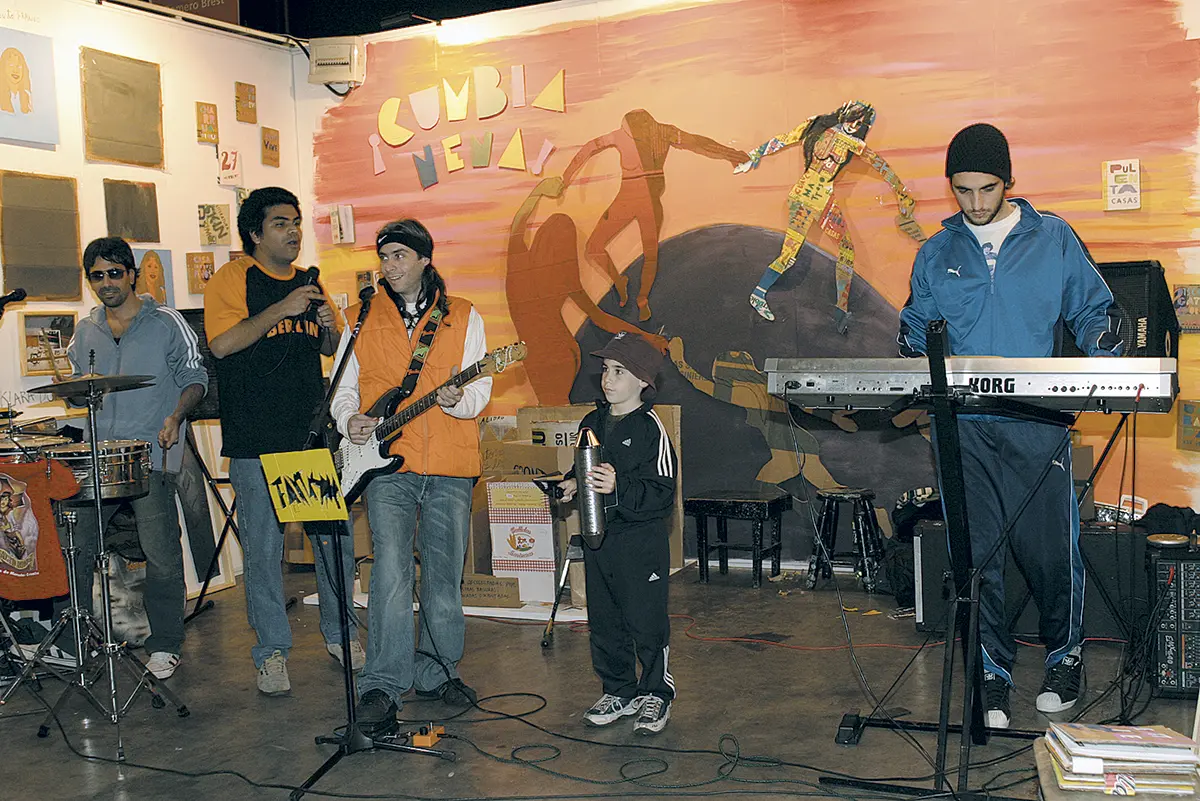
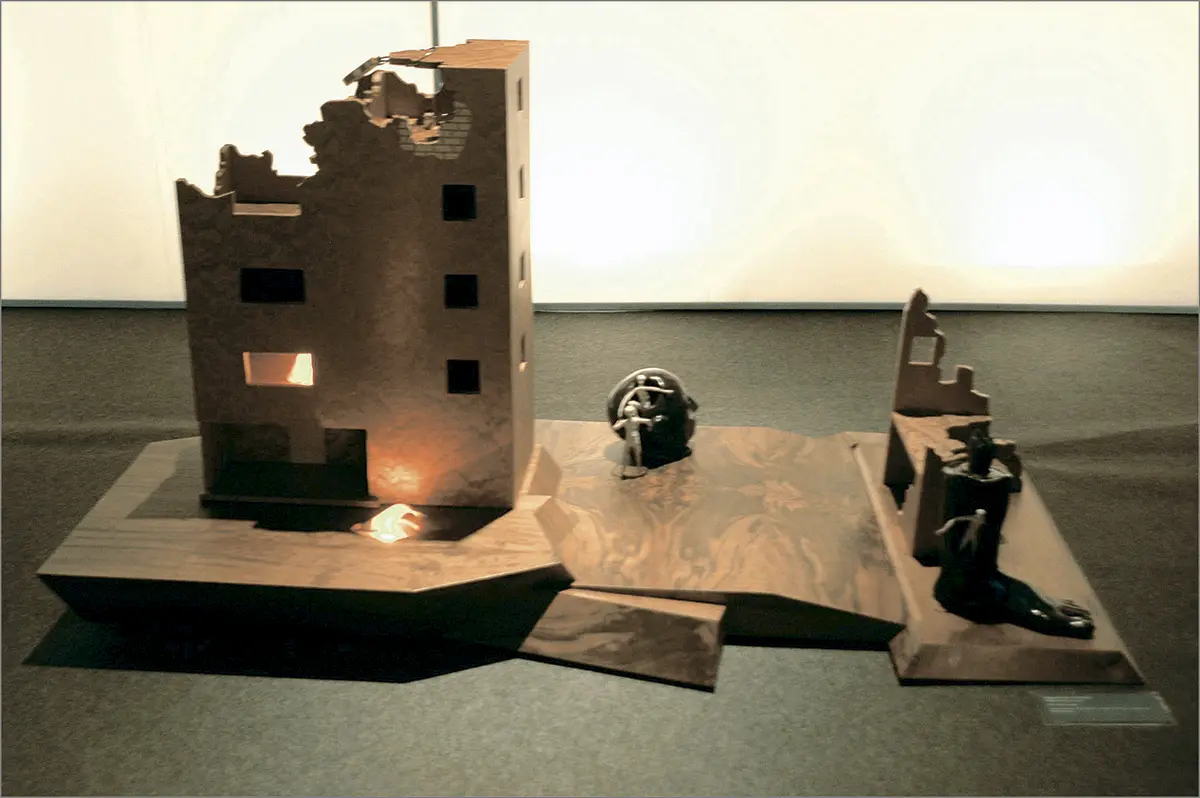
With the intention of fulfilling the premise of promoting what is new in art, for this 13th edition, the event’s organizers conceived calls for entries that resulted in high levels of responses. These focused on four general contests. One was the ArteBa-Petrobras prize for three-dimensional works, with two awards. Eight selected artists were given money for the execution of their projects. Their works were exhibited at the entrance of the fairgrounds, and among them, a first prize and a second prize were selected (to Sebastián Gordin and Alberto Passolini, respectively), as well as two honorary mentions that went to novel artists from the interior of the country. The jury seemed to focus on very young artists and on artists of an intermediate generation but with a solid oeuvre behind them. Proyecto Red, coordinated by Ana Martínez Quijano, was greatly anticipated. Its purpose was to present the latest trends among artists working both individually and in groups. Six collectives and two individual artists were selected. Proyecto Venus, Sonoridad Amarilla, La Re-colección, Universidad Nacional de Arte Contemporáneo, Taller La Estampa, and Eloísa Cartonera were the group projects, alongside Miguel Mitlag and Sebastián de Ganay. Eloísa Cartonera won the prize for Cumbia cartonera la más endiablada, a piece that is the product of working with cartoneros (cardboard salvagers), a social phenomenon in Argentina during the crisis, and of the artist’s experiences at the balances, another form of social expression that has gained momentum in recent years. Later, ArteBa Graphic Biennial, already in its fourth edition, took place. Produced by artist Matilde Marín, this event has the implicit goal of highlighting quality and innovation in contemporary graphic production. The first prize went to Mabel Rubli and the second prize to Celia Marcó del Pont. Emerging art competed in a separate category. Another innovation was the playful challenge of inviting twelve artists to paint a Mini Cooper; the winner, Marcela Mouján, executed the project live at the fair, in front of visitors. Lastly, the sponsorship of Bodegas Chandon was retained this year; a special jury selected one piece that later will be donated to a museum in the provinces. This time the work selected was by Sergio Avello and was displayed at Dabbah-Torrejón Arte Contemporáneo.
Open Doors
Visiting the fair has become mandatory not only for those accustomed to touring the art scene but also for those who are in contact with the visual arts on the occasion of this annual event. Each year the organization makes access and circulation easier, from the information that is offered and the excellent guided tours to the wider hallways that allow for an easy flow of people even at peak hours, among other features.
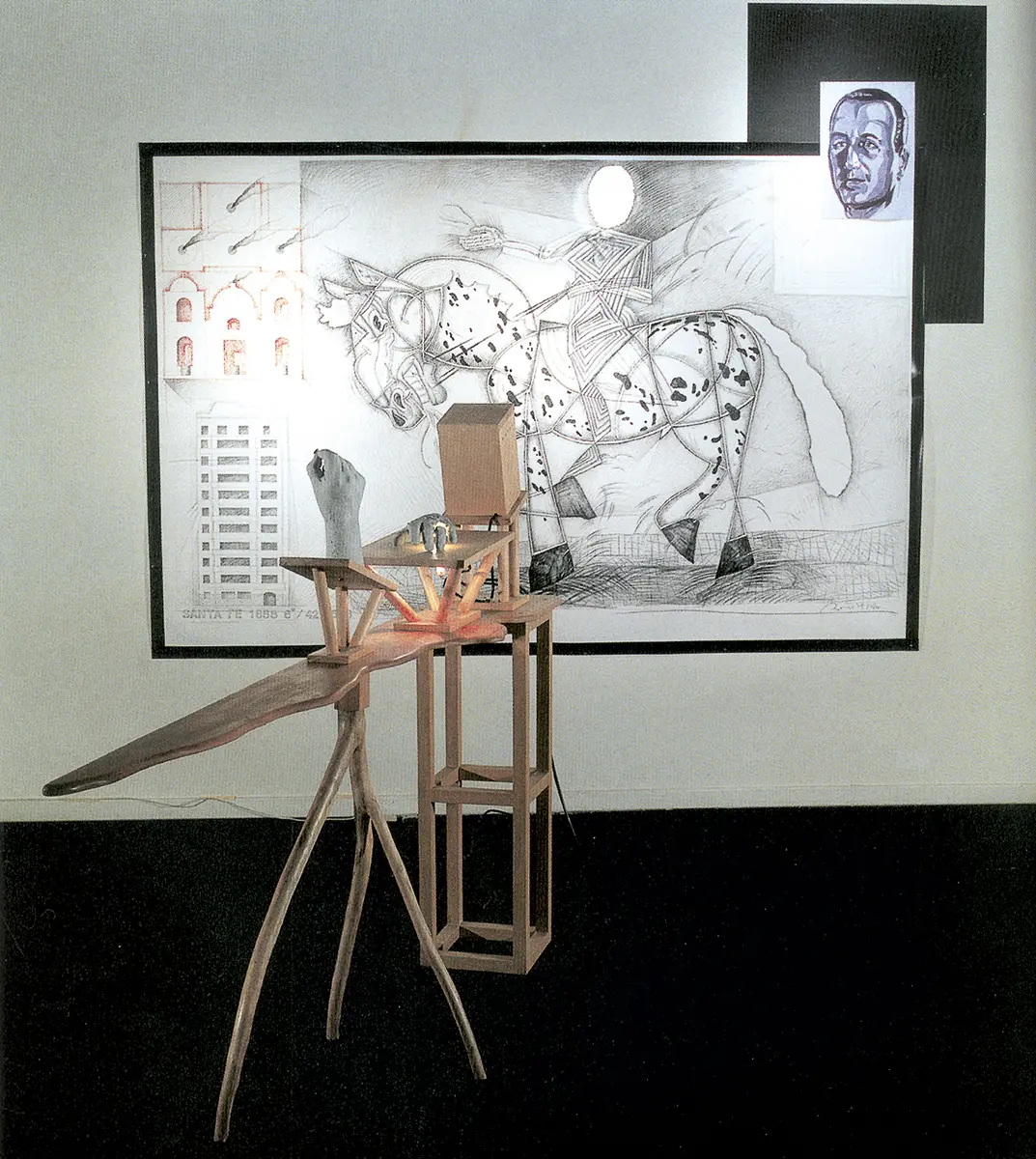
In terms of gallery presentations, what we see increasing every time is a commitment to artistic quality. Such is the case for Uruguay’s Galería Sur, and Ruth Benzacar, which had an excellent selection of works by Jorge de la Vega, León Ferrari, Liliana Porter, and Alessandra Sanguinetti; such is also the case for Jorge Mara, with examples of Alberto Greco’s excellent informalism, Kenneth Kemble’s best period, works by Kasuya Sakai, César Paternosto’s Andean-based abstraction, the jump to another generation with Roberto Elía, Eduardo Stupía, and Rosa González, as well as Horacio Coppola’s historic photographs. Daniel Maman exhibited works by other well-known artists, among them a piece alluding to Perón’s “hands” by Luis F. Benedit working in his most parodic vein. Among the spaces devoted to the most current trends, the standouts were Dabbah-Torrejón, Braga Menéndez, with their usual proposals; Alberto Sendrós and Zavaleta Lab, appearing for the first time; Daniel Abate; and the novel space 1/1 Caja de Arte, directed by Carla Rey.
The presence of foreign galleries has decreased since the devaluation of the Argentinean peso in 2002. Nevertheless, Thomas Cohn, Baró Cruz, and Nara Roesler, from Brazil; Fernando Pradilla, from Spain and the Generalitat Valenciana and Deutsche Bank booths, with works from the 80s and 90s, established a good international profile. Important representatives came, especially from Brazil, and they enjoyed guided tours to the fair and visits to Buenos Aires’s main art sites.
The auditorium hosted debates such as Art and Ethics, Curatorship, Public Spaces, International Institutions, and Latin American Art, among others. International guests to these roundtables were varied: Rosina Gómez Baeza, director of ARCO; Fernando Villalonga, Director of Telefónica de España; María Asunción Cabrera from La Caixa, España; Alfons Hug, curator of the 2004 São Paulo Biennial; María Elena Ramos from Venezuela; and Valentina Castellani, from the Contemporary Art Team at Sotheby’s, New York.
Finally, the country’s main art institutions, and not only those of Buenos Aires, were present with a booth at the fair.
MERCEDES CASANEGRA
Writer and researcher of art. President of the Argentine Association of Art Critics / AICA.