There are things that, if they were not so pathetic, they would almost be funny. In Cuba, everything bad is said to be de madre (mother-like). Yet, on the second Sunday in May, we celebrate motherhood with great display. That day, even children who show no interest in her the rest of the year, shower their mother with presents. It is a kind of subconscious competition within an established social norm with which, as in other countries, one must comply.
International Women’s Day, March 8, is a similar celebration, and it is possible that the same people who have no qualms about taking your seat in a sweltering public transportation unit—to cite but one example—will buy and present the mandatory bouquet of flowers on that date.
The rest of the year phallocentrism is evident, even aggressive, and can reach rather grotesque proportions. There are many anecdotes. But the funny thing is that the penis ends up being the measure of all things, good and bad alike, thus becoming a gendered construction that is validated in language. Male genitals are designated by the same word people use to punctuate their judgments, in a comical and eloquently expressive way: “¡de pinga!”
Another illustration from everyday life is that we commonly say: “vino preguntando por ti un negrito, alto él, delgado. . .” (“a little black man came asking for you, a tall, thin one. . .”) If the man in question is “white,” we will be specific: Aquí estuvo Juan Pérez, el electricista, que quería verte para. . .” (“Juan Pérez, the electrician, came looking for you to...”)
This lengthy introduction to the discussion of an art exhibition is intended to make it understood that concepts of gender, race, or social groups have become prejudices that can not be erased by decree; they have put out roots in our conscience like weeds, and despite the fact that the Republic’s constitution establishes equality for all (the economic sphere is a different matter, and this is not the place to discuss it), to focus on them from visual culture opens up many pathways for reflection.
This sometimes sad but fertile terrain of human subjectivity was one of the curatorial anchors for Labores domésticas. Versiones para otra historia de la visualidad en Cuba. Género, raza y grupos sociales, (Domestic Jobs. Versions for Another History of Visual Arts in Cuba. Gender, Race, and Social Groups.) presented by Dannys Montes de Oca, with curatorial assistance from Dayamick Cisneros. The show was initially presented in Pinar del Río with that title, which is taken from the series Labores domésticas by the well-known Cuban photographer Manuel Piña. The excellent catalog compiled by both curators also took the same title. All of this was financed by the Netherlands’s Humanistic Institute for Cooperation with Developing Countries (HIVOS), under the sponsorship of the Cuban Writers and Artists Union (UNEAC). It was recently shown in Havana as Labores domésticas II. In truth, the most general curatorial position was to present a varied mosaic of the typologies of representation in those three categories, beyond a possibly paternalistic or whiny gaze and without compensatory intention.
Beyond any negative observation that could come from the show’s museography—not all that effective—or perhaps in terms of the selection of works, the important thing about this exhibition is, first, the fact that it exists at all; and, second, its catalog, an indispensable collection of texts that reveal an unknown or forgotten fragment of Cuban history related to efforts by women, since the nineteenth century, to find a place in the realm of culture and in society as a whole. There are a number of pertinent articles, including: “Erotismo de salón (el extravío del deseo, el goce y la lástima), alusivo al homoerotismo,” by Andrés Isaac Santana from an exhibition curated by Ariel Ribeaux in 1999, at the Centro de Desarrollo de las Artes Visuales; “Queloides,” which dealt with the treatment of blacks in Cuban art; and its introductory text, “El otro que somos nosotros,” by Sara Vega and Ivo Sarría, which analyzes the representation in Cuban film of women, blacks, and homosexuals (a section of the show made possible to watch again all those emblematic films, like Fresa y chocolate, Lucía, Retrato de Teresa, to name a few).
If I pointed out the very existence of this show as an accomplishment, it is because today disinterest reigns in Cuba and in much of the world. Many people are interested in very little beyond making money, and visual artists and curators are not an exception. A latter-day abstract art abounds that is pretty and sweet, and eminently saleable. There is a demand for it, and artists are listening. To reflect, on the basis of existing art, on the condition of women, blacks, and homosexuals, is already something.
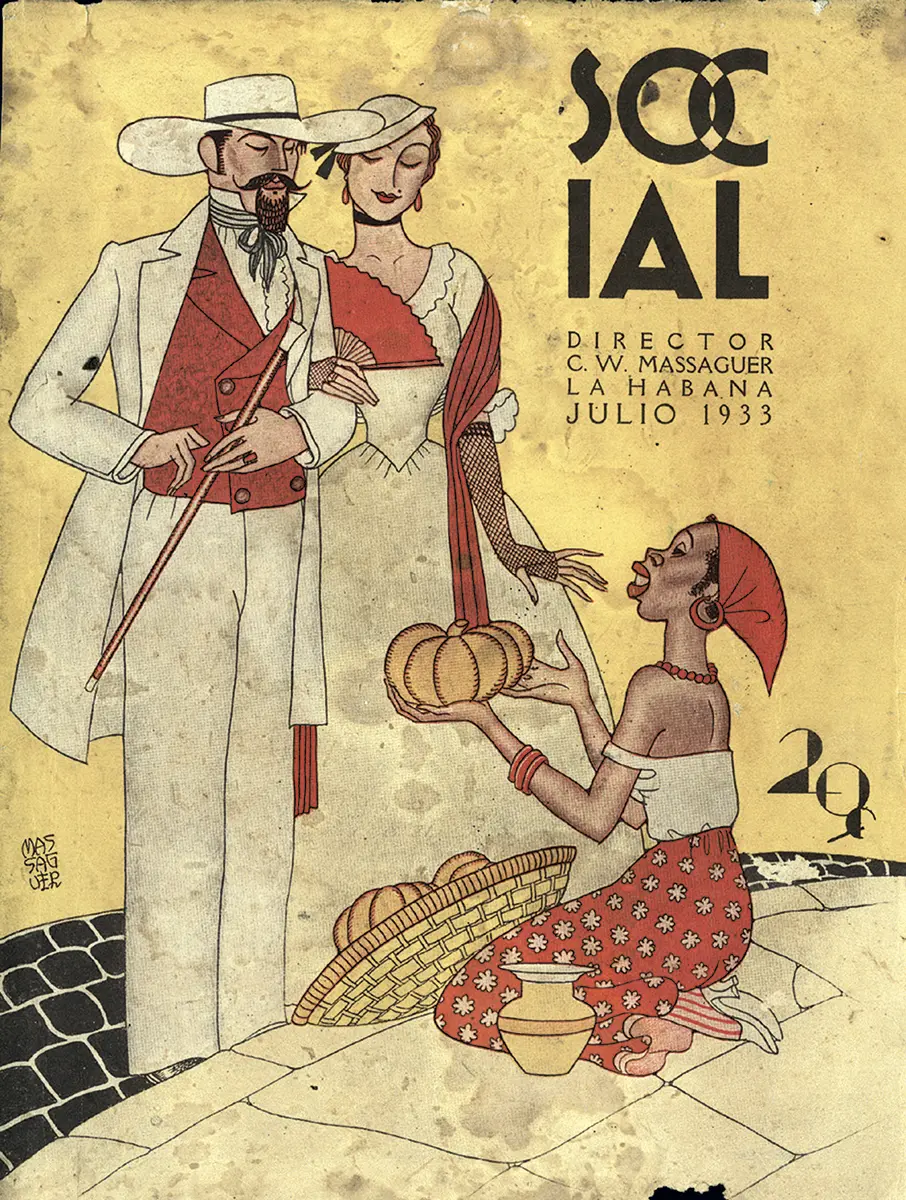
On page 10 of the catalog, the curator explains: “We want to use art in relation to some of its referents, be they artistic or from other fields of cultural contamination, in order to understand those processes of concretization and interaction of identities and subjectivities. This is also why the project includes other evidence or findings, such as souvenirs, handicrafts, covers of periodicals, illustrations, drawings from the world of advertising, and even documentary and feature films. They are not only nuclei for an open dialogue with the visual arts, and sometimes the source of inspiration, constructive material, or obligatory reference, but they also are indispensable fragments of a whole for an inclusive gaze at Cuba’s visual universe, such as the one to which we have aspired.”
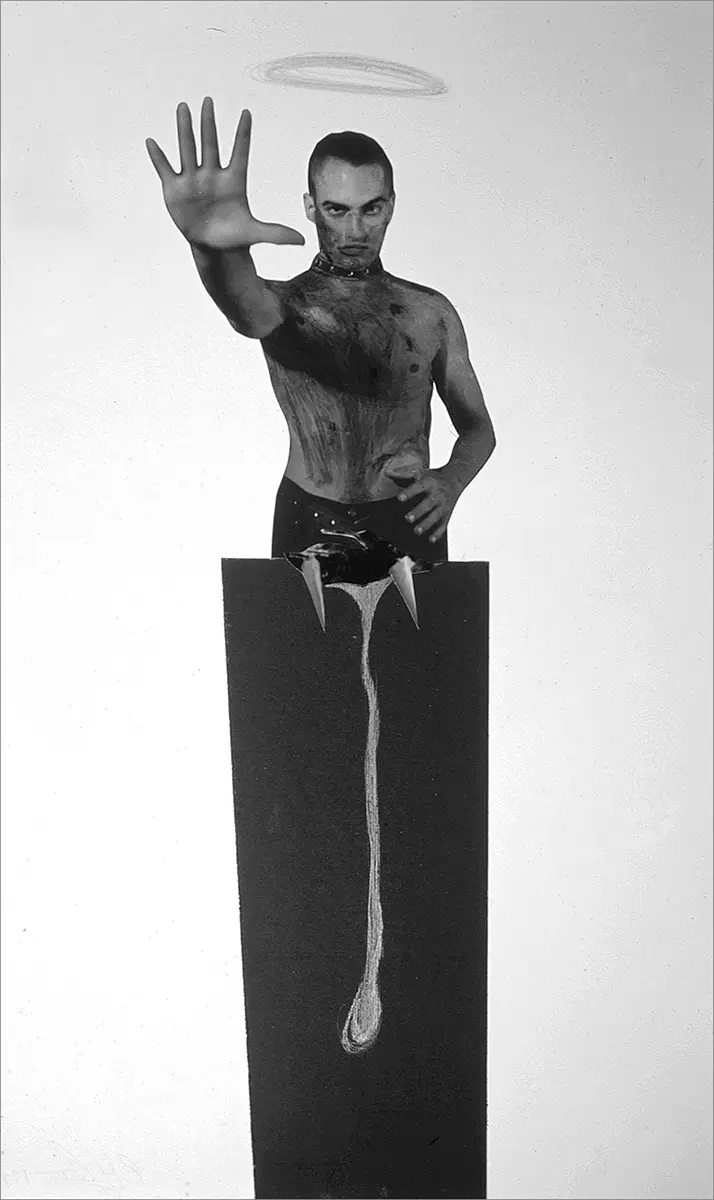
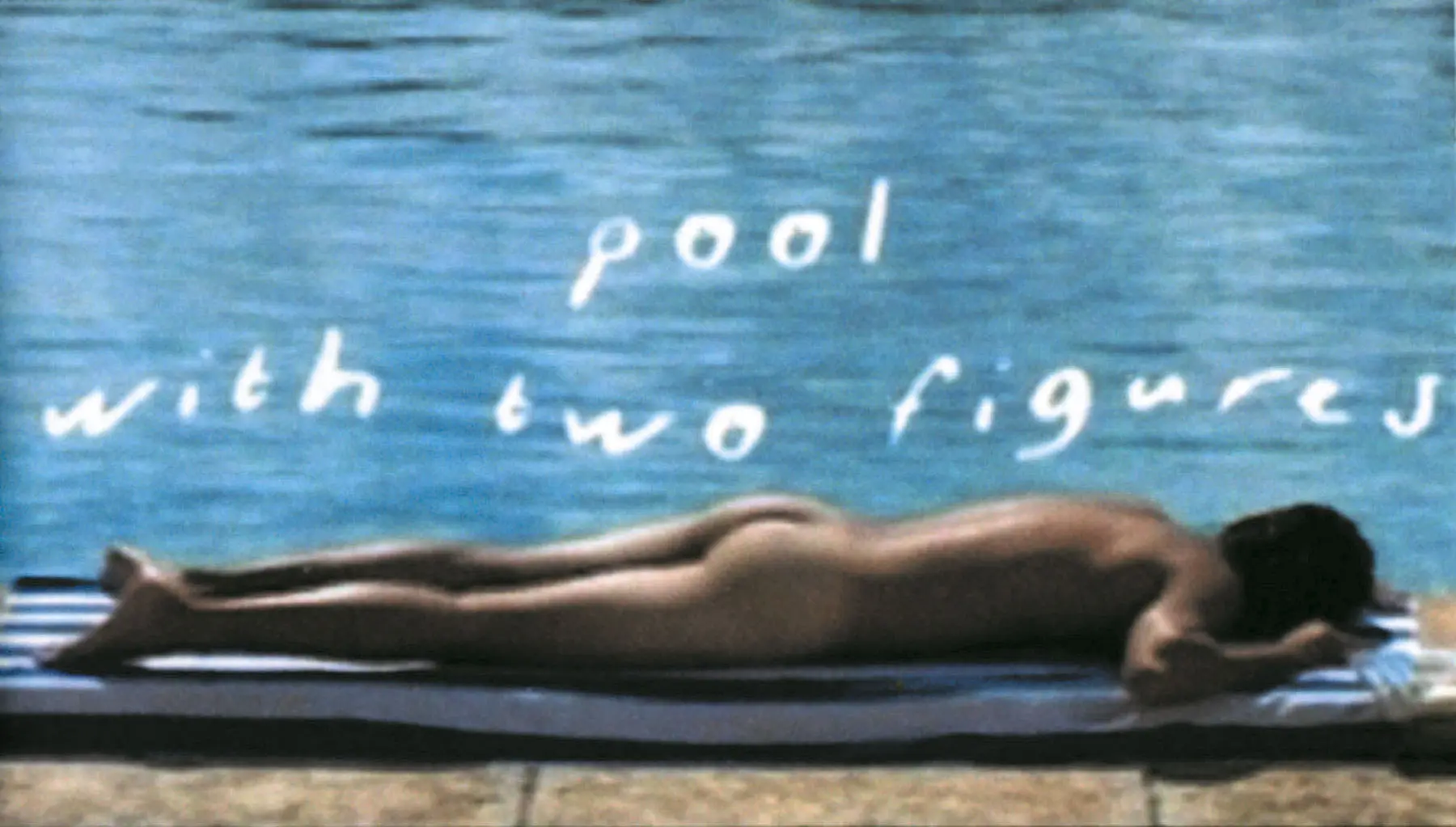
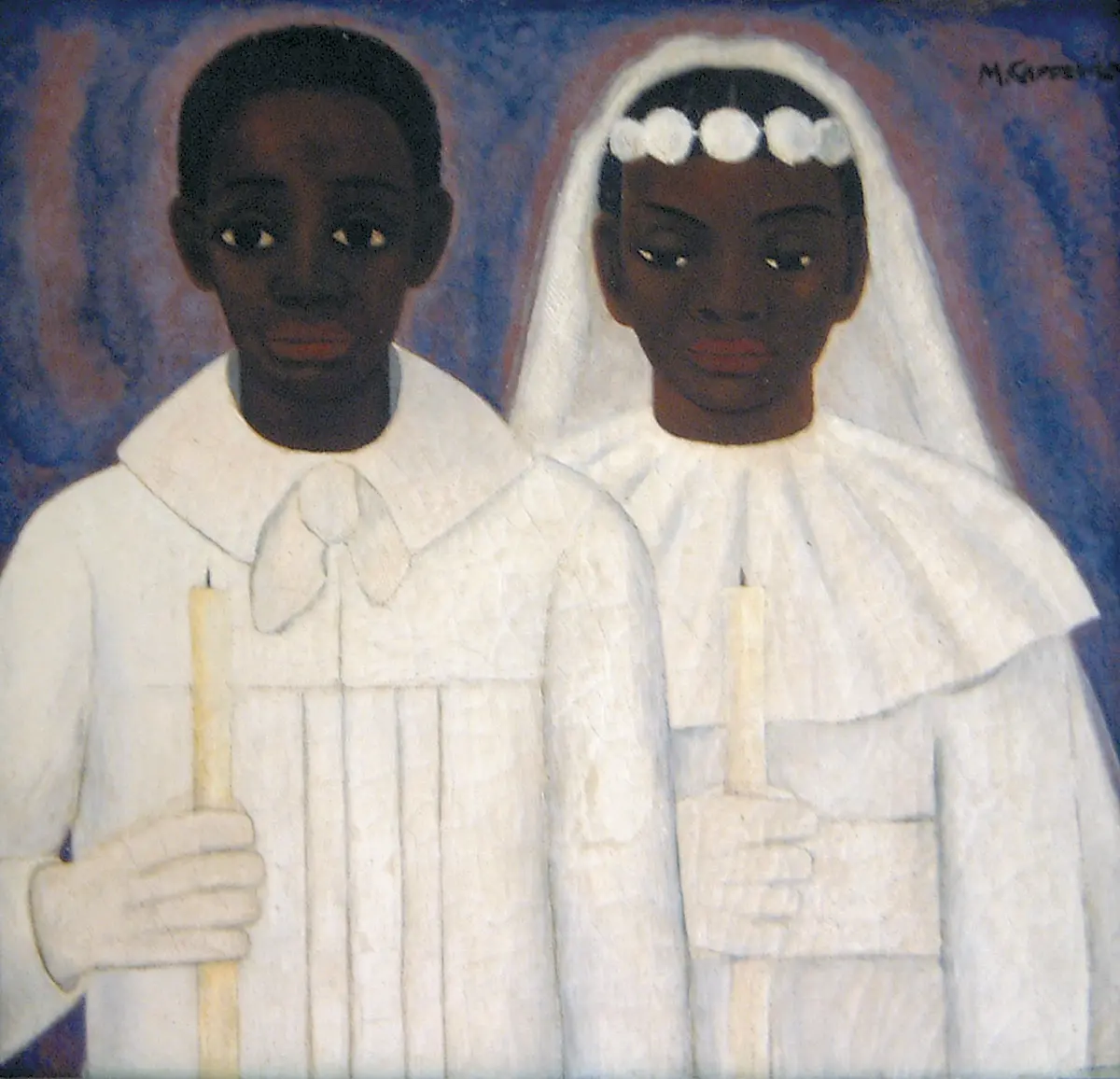
Thus, to cite some examples, the show fosters a dialogue between La primera comunión, a 1930 oil painting by María Capdevilla that portrays black characters dressed for the occasion, with some 1995 serigraphs by Elio Rodríguez, resembling movie posters that develop a satire of the hyperbolization of the black male as a sexual superman; or a digital print of La cocinera cubana, Adriana Billini’s 1885 oil painting in the collection of the Museo Nacional de Bellas Artes, with handicrafts sold to tourists, where the representation of blacks is still dominated by nineteenth-century folkloric stereotypes. Similarly, Pool with two figures and El beso robado, two videos by Julio Carrillo that boldly allude to the issue of homosexuality are close to Eduardo Hernández’s similarly themed photo-collages. The juxtaposition reveals that although such matters are not commonly discussed, they do have a presence, and they remind us of the very problem they deal with: rejection by a large majority of citizens (the public expressed this in front of the video monitors).
The roster of artists and media was long: Belkis Ayón, Tania Bruguera, Sandra Ramos, Lázaro Saavedra, Agustín Bejarano, Arturo Montoto, Eduardo Ponjuán, René Peña, Manuel Piña, Alberto Díaz (Korda), and others, around forty from the youngest—some representing the 1970s, some representing the 1980s and even more recent promotions—alongside artists from previous decades, especially the 1940s and 1950s. They were represented by paintings, drawings, engravings, photographs, videos, performance documentation, etc. Press photographs were included, as well as historical photographs, stills from documentaries and feature films, posters, and bags and fans with the images of the Cuban mulatta that are sold by the worlds of advertising and tourism.
The show fulfilled its purpose, illustrating well the consanguineous relationships that exist between images from different eras, media, and artists, in the representation of women, race, and different social groups, and the way the issue of homosexuality timidly enters the debate, sometimes dealt with indirectly, sometimes presented frontally.
This visual essay made clear that Labores domésticas is a platform that connects the current level of development of gender theory with the perspective of cultural studies, as these approaches redefine the fields of aesthetics, semiotics, and art history.
Overcoming the essentialist gaze is thus proposed, in order to understand that gender must correspond to a non-deterministic theory of the feminine, and to an awareness of the historical relationship between genders (male and female). We are also introduced to an analysis of issues such as female diversity, which includes a theory of women as a social group in which “we are not a woman, but a black woman or a white one, a poor woman or a rich one, a professional or a domestic-worker, hegemonic or peripheral, heterosexual or homosexual.” If gender is a cultural construction and, in consequence, theories of gender are a methodology for the analysis of the historical determinations that position this or another range of subalternity, then it is posited that gender, race, and social group are correlated analytical categories, inasmuch as levels of subalternity will always be associated with as many categories as can be executed from this action... What is required is a theory of gender, race, and social groups that is capable of pointing out and specifying the complexity of such relationships for the study of visuality in Cuba. And, by seeing such phenomena as socio-cultural constructions, it is finally established that this “does not relate only to its origins and formulation, but also to the way in which they are collectively reproduced and appreciated.”
It is also important to know the curatorial thesis regarding the opposition of public vs. private. In that sense, they add, “The visual universe is a collective universe of which art is just one component and the expression of much mediation. Parallel histories, and hidden codes model a certain degree of domestic, private environment. Domesticity is often presented as the substantiation of something invisible and perhaps embarrassing, non-transcendental; it also refers to the non-official, due to its opposition to publicity and its homologation with the everyday. Correlated to the home, to the most intimate relationships, domesticity nonetheless opens up question marks and correspondences between the individual and his or her condition as a citizen. In truth, there is no public space without the domestic space, and vice versa. What we seek is that interval in which one ceases to be and transforms into the other, where gender, race, and social group enter, as analytical categories, in the history of Cuban visuality.”
Labores domésticas have contributed to the tortured path towards understanding the true status of these subaltern identities, and the need to transform, even more, our way of apprehending and relocating them, both in real life and in terms of their visual representation.
ERENA HERNÁNDEZ