
Luis Fernando Peláez (Jericó, 1945) presents a series of 7 objects alluding to memory, reaffirming the pulchritude of his constructions in the transmission of ideas that are contained in the collective imaginary. They are flows of light that host in their bosom the presence of objects such as cows, dogs, and river landscapes, among others, which dig deep into mental geography and allow us to recognize such clarity and immediacy as to render unnecessary to keep our eyes open because it is a true déjà vu. They are in turn boxes containing landscapes (in the specific case of photographs by the artist of the Tajo river in Lisbon, Portugal) bathed not only by nostalgia but of matter that resembles humidity, with which Peláez has been able to build an objectual tradition that brings to mind his previous works.
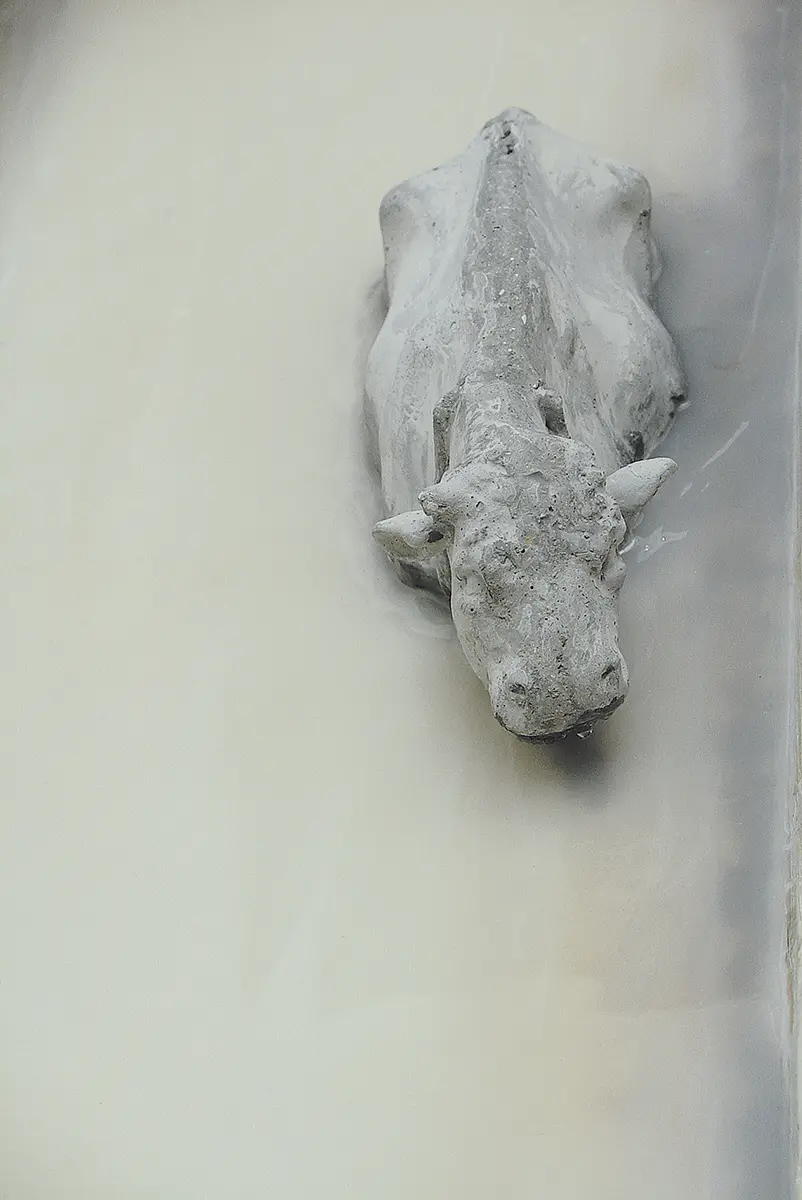
His carefully worked oeuvre allows for a historical sweep, and weaves threads through the subtle changes presented by each series. This feature, which can be understood as dangerous for his discourse’s conceptual contents, becomes merit and virtue, inasmuch as it allows the viewer to approach in an almost personal way this artist born in Jericó 1945, who belongs to a territory that has forged for him a well-paced personality that comprises the passage of time since the contemplation of cows crossing a river, and which this frequency represents and is translated into that calm we observe as we move about the gallery among his works.
The work of Luis Fernando Peláez, and specifically his series Mediodía, does not propose disturbances or surprises, but a mental state that links us to the artist and his way of calming down art’s hectic nature through bucolic scenes contained in our personal archive of remembrances.
In contrast to all that, José Horacio Martínez presents a series of 22 pieces titled Desde el jardín, which exemplifies the diversity of paths his artistic curiosity follows and above all the incredible virtuosity of transforming a conceptual discourse forged in the innermost halls of academia into a simple, easily recognizable, beautiful form.
To discover the work of José Horacio Martínez, one needs to use hyperboles and exaggerations because in order to understand the power, solidity, and force of his proposal it is precisely those words the ones that are sufficient to transmit the intention.
Desde el jardín is an enormous flow of sensations, this time around of an attitude towards color, its possibilities, and the boldness in dealing with it.
Large rectangular canvases (50 x 180 cm each) that can be hung vertically or horizontally as the owner desires, enormous surfaces of intensity that, despite contrasting visually with prior proposals, kept close guard on the secret of sonority, this is to say, they are works that shout color and, as such, participate in the plastic proposal Martínez has handled to relate painting with the sounds of the image, voiceless yet without silence, either.
But it is in truth the contrast between these pictorial scenarios that make the show at El Museo gallery, especially interesting, and it is its objectuality transformed into a sensorial dispositif that allows for a trid scenario directly connected to the viewer.
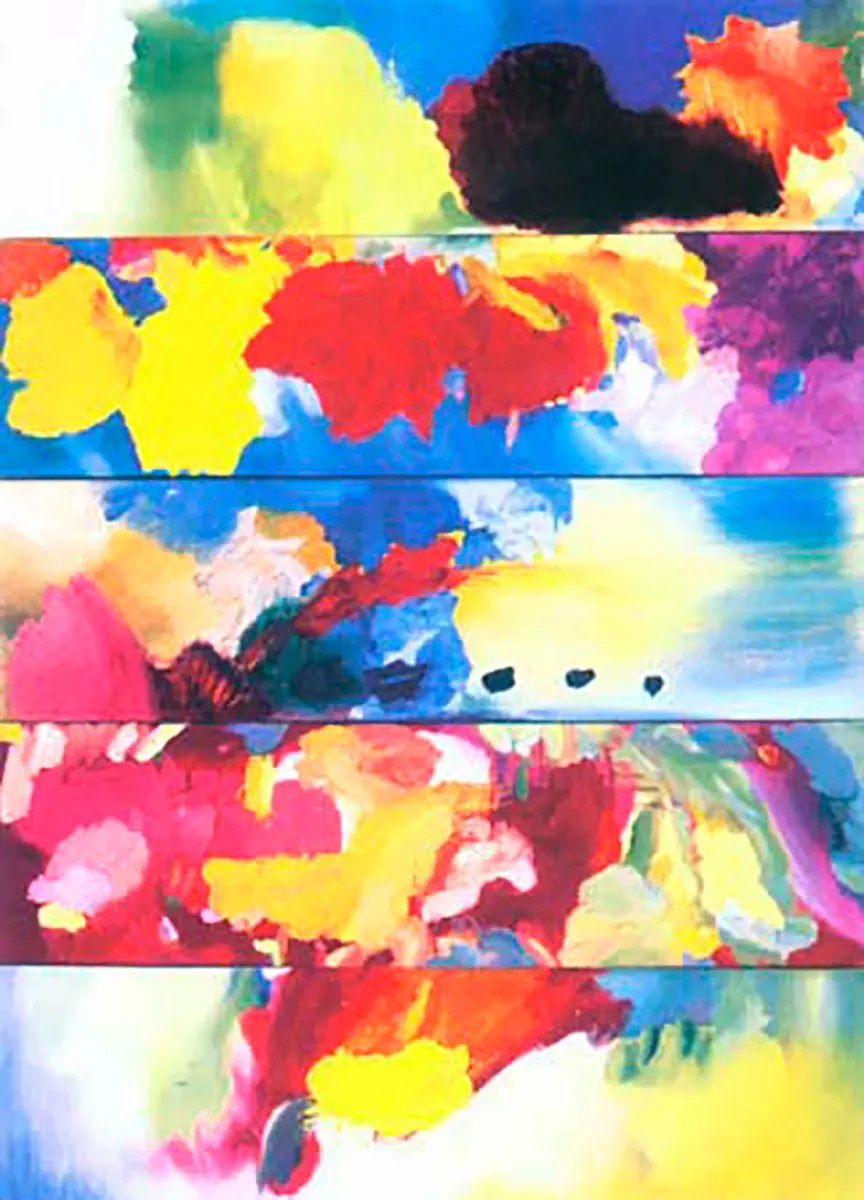
This third component covers the simultaneous way in which the painter's image is drawn how he contributes to society, and the way in which these works establish a dialog with their viewers and let them see the multiplicity of criteria intertwined in his art. It is this scenario that allows us to elucidate between proper names, Peláez and Martínez, a space of reflection that allows for continuity of pen on paper due to the exhibition of simple pleasure contained in this show. Peláez, looking inwardly, discovers contained passages in a timeless memory that covers not only a geographic plurality but a close relationship to lived experience. Martínez breaks down color into exuberance and composing through it spaces that are charged with contemplative possibilities, because, as the artist puts it, these works “are spaces capable of being inhabited.” It is in this way that El Museo has been able to cover this June, calm and exuberance coexisting without conflict but rather in felicitous balance.
ESTEFANÍA SOKOLOFF