
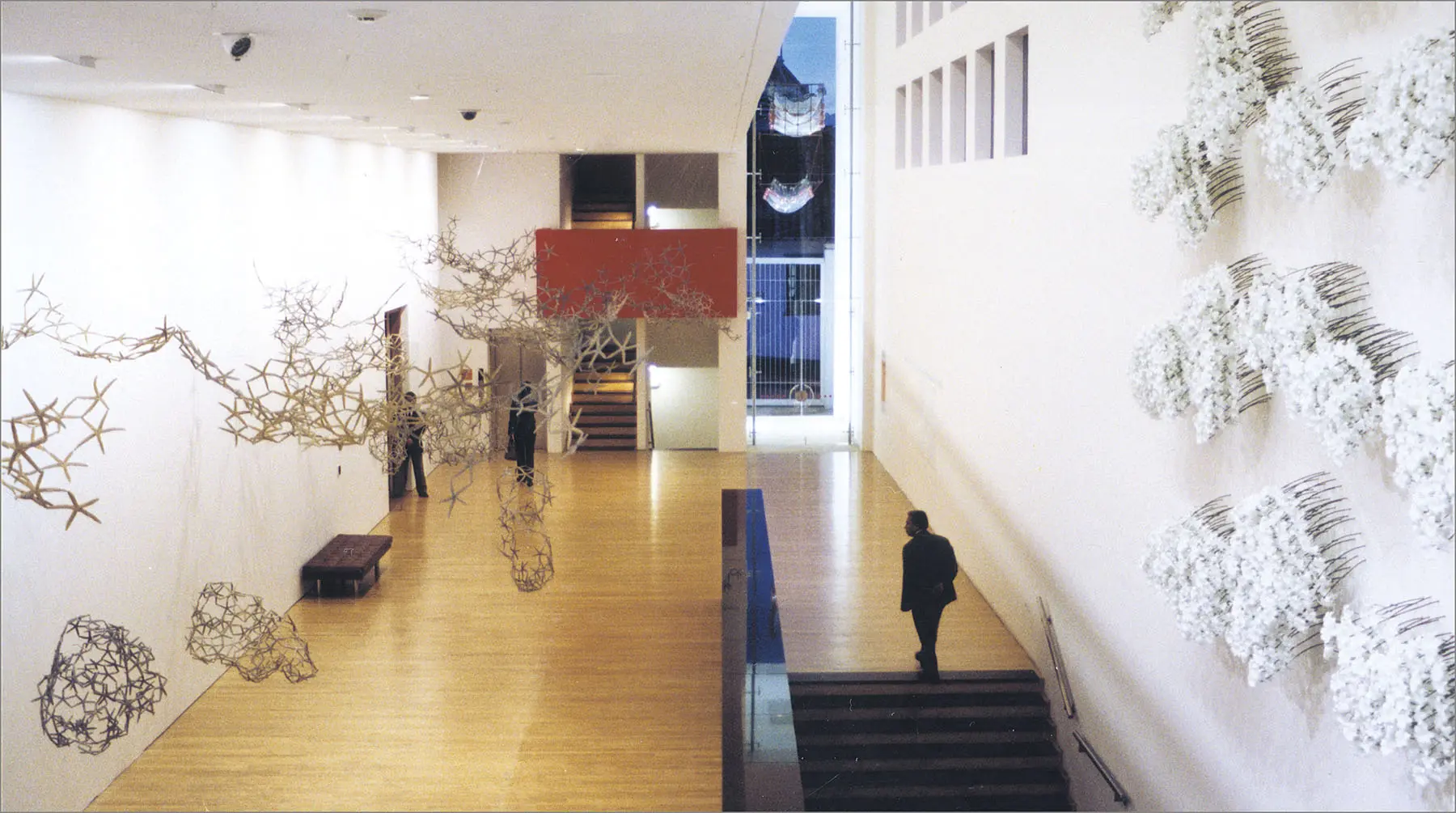
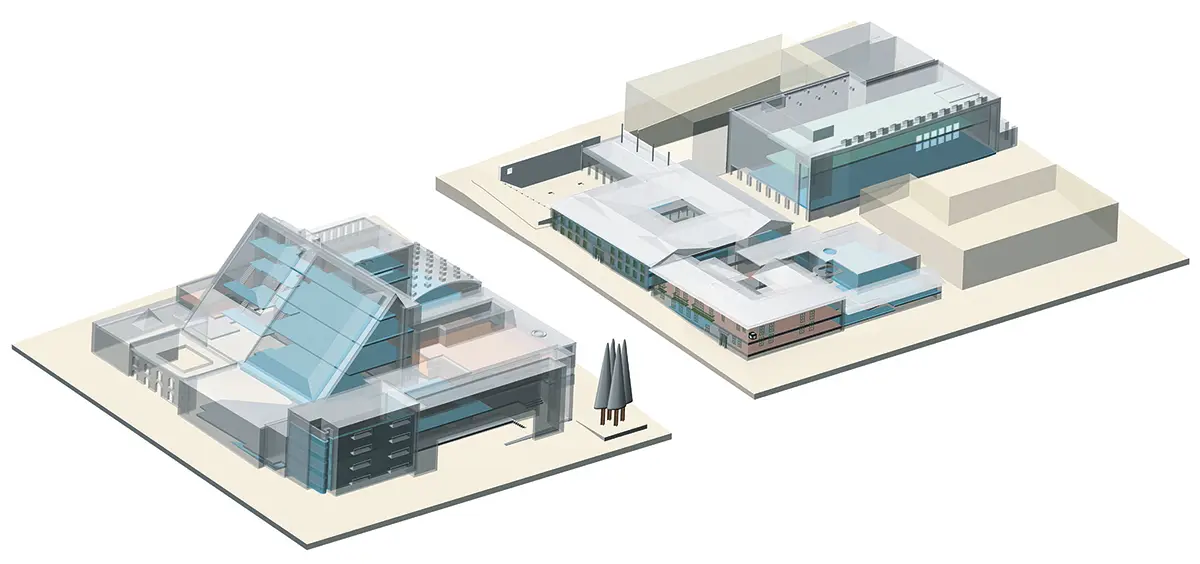
With the inauguration of its Museum of Art, Banco de la República has just completed one of its most ambitious cultural projects: to transform the south block of the Luis Ángel Arango library into a vast area almost entirely devoted to the visual arts—with the exclusion of the numismatic collection on display at the Casa de Moneda that harks back to the seventeenth century. While the museum building’s design by Enrique Triana and Juan Carlos Rojas is admirable for its functionality and presence, so is the remodeling of the old Gregorio Vásquez square—today sporting a very sober, and very tall, sculpture by Ramírez Villamizar—and the interior yard, presided over by a high black marble wall down which water pours continuously, and which allows visitors to circulate comfortably and securely towards the Museo Botero and the Casa de Moneda.
Since 1988 the back section of this space has had a building that holds—now with a new museographic script—an anthology of the Banco de la República permanent collection devoted to Colombian art from the colonial period to the modern, including some examples of contemporary art. With a coherent and didactic display, it is possible to follow a trajectory that goes from some seventeenth-century canvases by the Figueroa workshop and Gregorio Vásquez, to works by recent artists such as José Antonio Suárez, Teresa Sánchez, and Ana Patricia Palacios’s series of the Dead Nuns, Roberto Páramo, Alfonso González Camargo, Andrés de Santamaría, some of the nationalist and the earliest Masters of modern art, from Obregón to Botero, Bursztyn, the Cárdenases, the Amaraleses, Beatriz González, Lorenzo Jaramillo, etc. It is a luxurious collection that merits its own review.
But back to the Museum of Art, walking by a sculpture by Castles and two more by Ramírez Villamizar, it is important to point out some of the building’s specifications. The huge building has six floors, 8,200 square meters, two 500-square-meter galleries—one of them will hold traveling exhibits and the second one, located at a higher level, will present rotating selections from the Banco de la República permanent collections—a 160-seat auditorium, children’s workshops, two cafeterias, spaces for the reserves from the collection and for works in transit, and work areas for restoration, photography, modeling, and curators’ offices. Other important details are: the structure of the building is in concrete and the walls in drywall, as are the interior walls of each gallery and the roofs; the floors are laminated wood; the lighting is halogen, wall washer, and punctual, with UV protection. Finally, the galleries are air-conditioned, temperature- and humidity-controlled, and their electronic installation and electrical wiring allow for all kinds of video displays.
Moving on to the shows themselves, the one currently on the third level—devoted to permanent collection exhibitions—is titled, by way of boutade, Art from Latin America and other continents, and it gathers a number of good paintings and sculptures by artists from this region, from nineteenth-century artists such as Rafael Troya from Ecuador and Felipe Santiago Gutiérrez from Mexico to new names like photographer González Palma from Guatemala and Vik Muniz from Brazil. Although the European and North American collection has a number of small jewels—a Klee, some old drawings, works by Close and Tobey—the selection of these works is so small and heterogeneous—Agostino Brunias’s panels, Ramón Gaya’s oil, Luc Peire’s abstract painting, which could just as well be left out or installed somewhere else—that the few important works on display get lost amid the noise. And what of the other continents? Oh, yes, there are a handful of Ukiyo-Es. This international section does not fit in the wide hall, which could do a better job of exhibiting its Latin American collection. It is a collection that could be energized by acquisitions of the many names that are still missing, but this is a topic for another article because the cultural work of Banco de la República merits plenty of attention and interest.
The first-floor gallery was truly spectacular, with the show Edén from Mexico’s Jumex collection, a twenty-first-century exhibition that brought together works—especially photographs, videos, and video installations—by young European, Asian, North American, and Latin American artists.
The cosmopolitan character of the Jumex Collection is not unusual. One must keep in mind that alongside its strong nationalistic vein, there is in Mexican culture an important tradition of cosmopolitan openness. Think, for example, of nineteenth-century French influence; and especially during the Porfiriato, of the revolutionary positions of the estridentistas in the nineteen-twenties, headed by Maples Arce, in the search for international coexistence at the level of Alfonso Reyes’s ideas and in the astounding universal erudition of writers like Carlos Fuentes and Octavio Paz, who, as is well known, was one of the deepest students of the work of Marcel Duchamp. Against the background of the permanent idea of the lost paradise, Edén was a show about current notions of nature, space, and time; about the decay of the physical world and the optimistic desire to survive; about fraternity and particular approaches to what surrounds us; about a new kind of seeing, thanks to the technological resources of our age; about unbridled and predatory greed and the drug problem; about physical love in the middle of the desert and love in the French countryside.
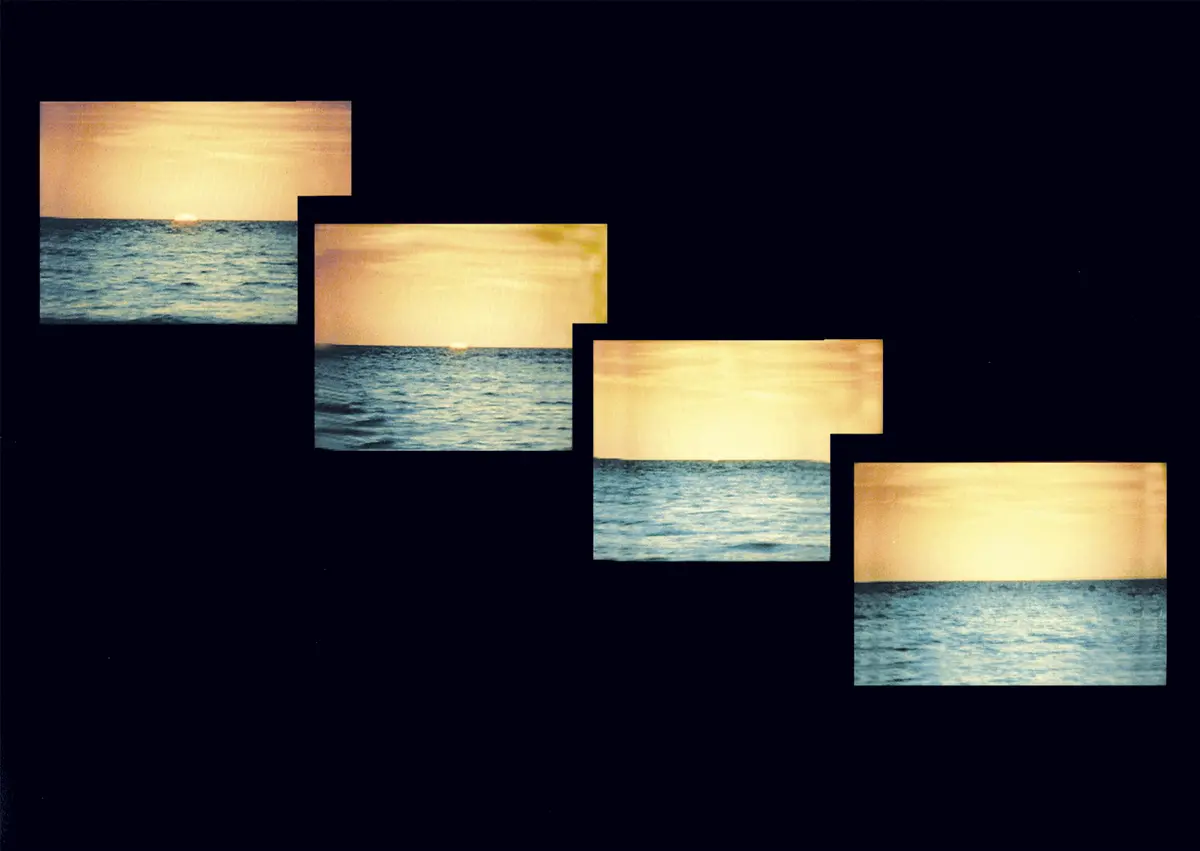
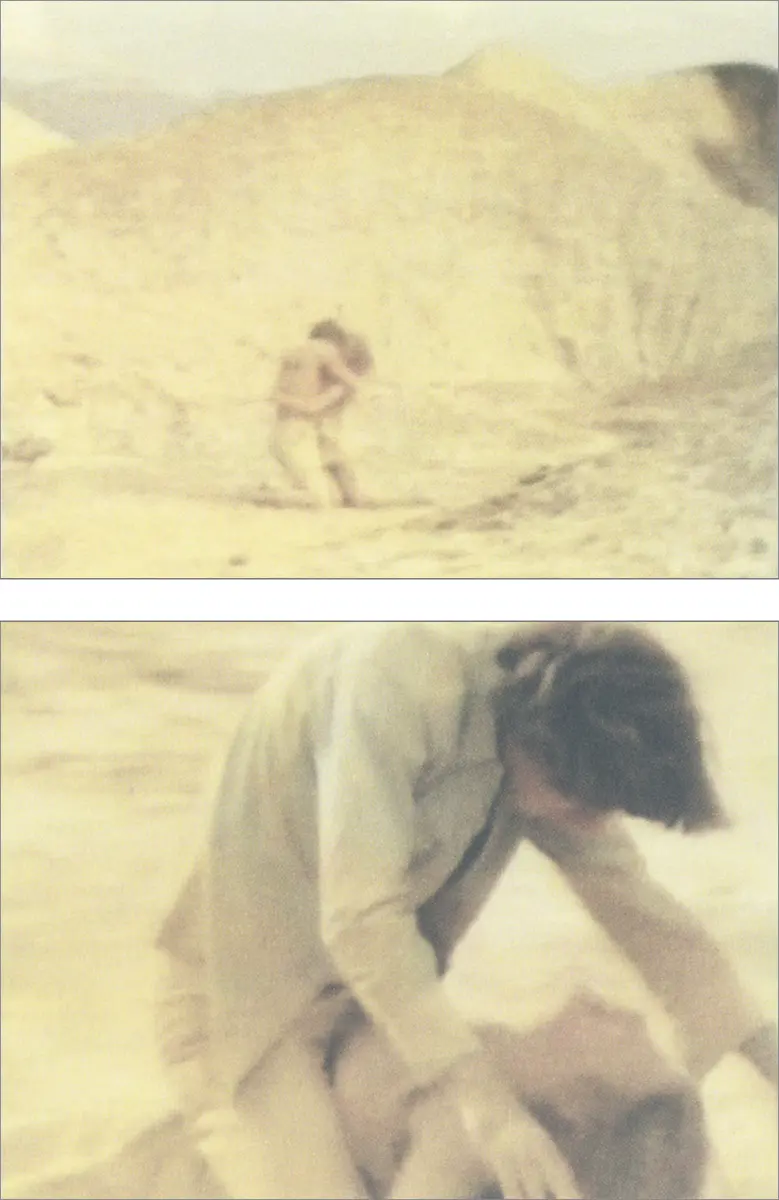
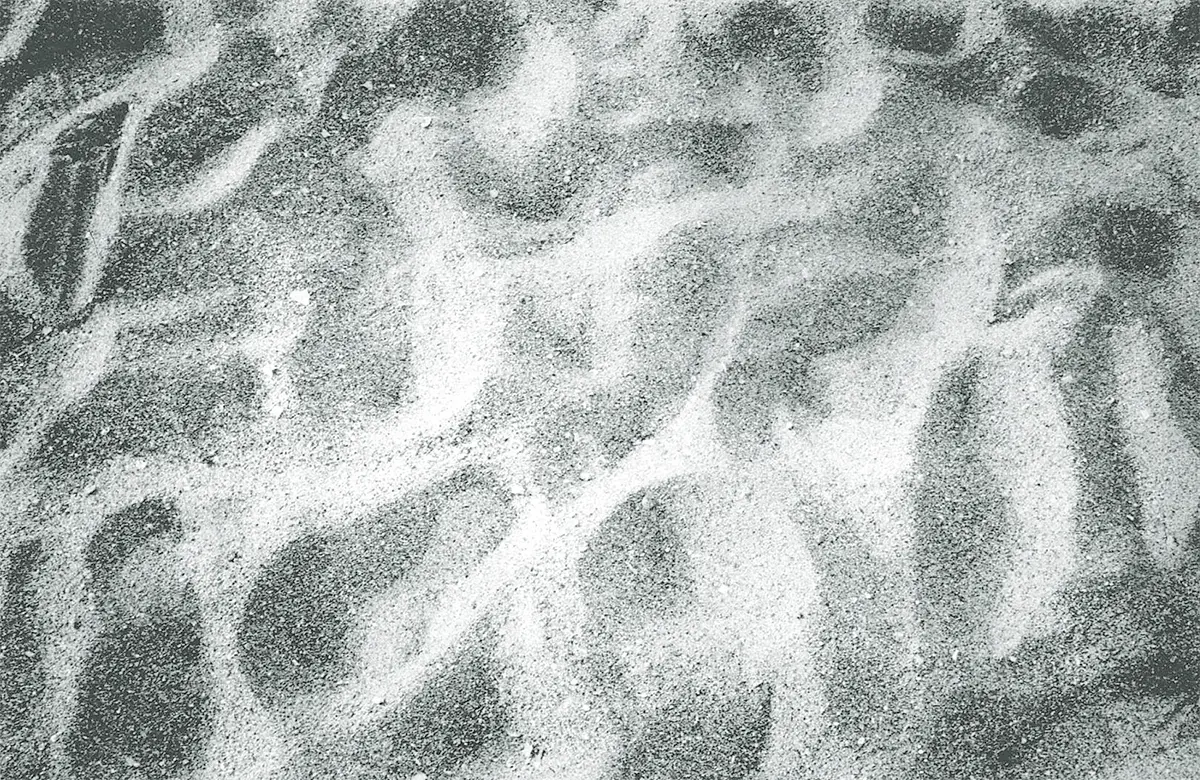
Although the show did not come in its entirety to Bogotá (it didn’t fit in the museum’s new spaces), it did bring along some of its most important works. Particularly outstanding were: the documentation of Cuando la fe mueve montañas, a performance by Belgian-Mexican artist Francis Alÿs. It is an internationally prestigious work of art, and an extraordinary example of volunteer work, superhuman persistence, and great solidarity. It would be such a great thing for a Colombian artist to lead 500 citizens in the removal of the useless, dangerous, threatening dunes that surround us! American artist Doug Aitken’s great video installation Diamond Sea was included, a dramatic stage for contradictory realities: seemingly permanent nature and Man with his devastating technology. Canadian artist Rodney Graham’s softcore video Guitar solo for sex scene, Zabriskie Point is a work of beautiful images where many bodies of young people involved in erotic games are oblivious to the desert that surrounds them. Also of great interest was Green Ray, a video projection by Britain’s Tacita Dean, an obsessive and expectant shot of the horizon in the sea near Madagascar; Japan’s Hiroshi Sugimoto’s photographic prints Bass Strait and Sagami Bay, are as mysterious as their topics themselves: sea and night; Sin Título (arena), a photo engraving by Cuban-American artist Félix González-Torres, is as ephemeral and evanescent as the passage of time to which it refers; Ochodeagostodedosmildos, an ink mural by Swiss artist Ugo Rondinone, makes us feel as though we are penetrating a forested area or the incisions of a Rembrandt print; Spring in Wood, a carving by Yoshihiro Suda, the Japanese artist, is a small artisanal flower lost in the vastness of the galleries and set in open contradiction to the reigning high-tech atmosphere.
It is undoubtedly an out-of-the-ordinary exhibition that, with a single exception, has not been mentioned, much less analyzed, in the capital’s newspapers.
GERMÁN RUBIANO CABALLERO
Art
historian and critic.