
Tunga’s new work, Elective Affinities, filled the central room of the Grimes Gallery with an all-encompassing architectonic structure that functioned both as an installation and performance stage. The structure featured four separate, yet connected spaces constructed with no more than a steel doorframe, five steel rods, and fabric curtains. The rods, several of which resembled shepherd’s staffs, were suspended through the central doorway and then anchored to aluminum boulder mounds that reworked surrealist sculptural ideas. Dove-grey curtain walls suspended from the steel rods created the appearance of four intersecting chambers. The doorframe provided access between two of the curtained spaces and also featured a small chamber protected by hanging grey felt blankets. Seeping from beneath the lower edges of the blankets was a mound of white talc that metaphorically suggested material wealth and power.
Tunga’s adaptation of shepherd’s canes and grey felt were consciously evocative talismans of Joseph Beuys’s shamanistic performance works. By extending Beuys’s belief that artists function as society’s priests and healers, Tunga’s work has embraced this trajectory of art; Elective Affinities continued these explorations. Emerging from the artist’s own experiences of loss and longing, the installation placed personal issues within the broader context of human history, memory, and time. The work builds mirrored relationships of form to invoke the power of ancient primal rites to assuage the pain of the present, and in the process redefines as mythic the concept that civilization and humanity have progressed or changed over time.
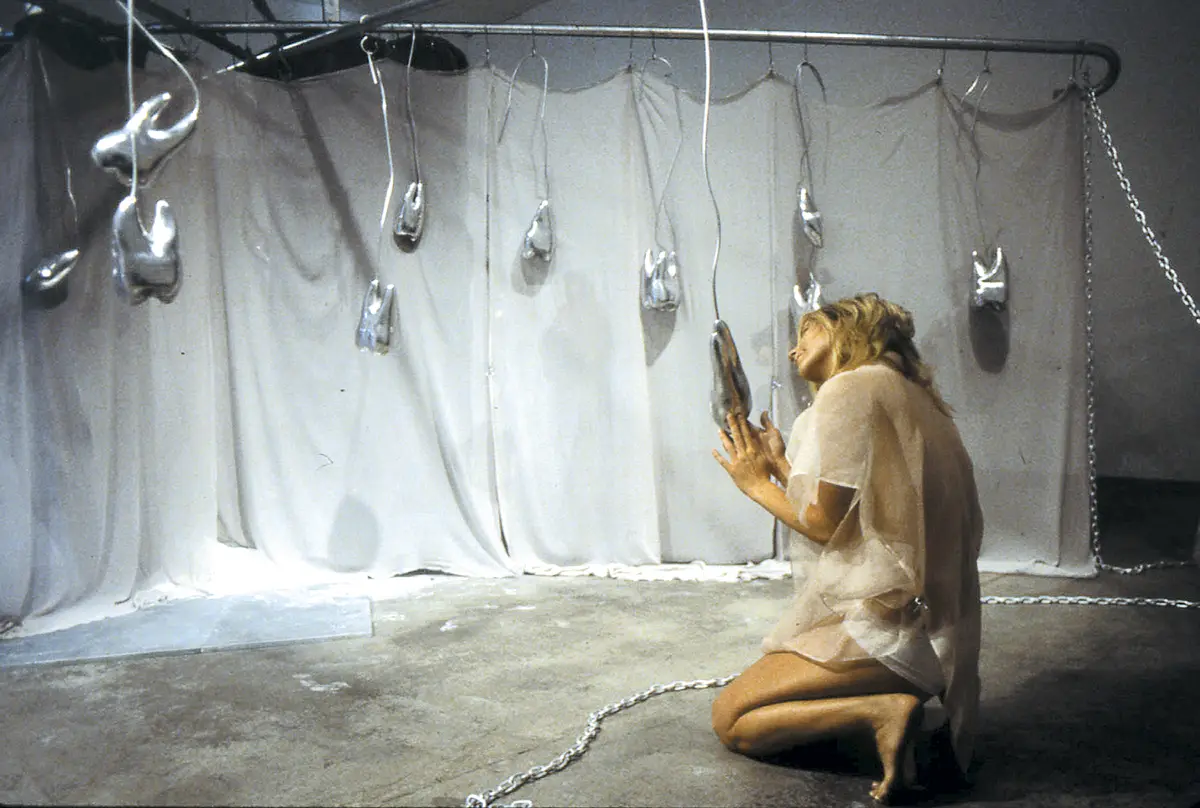
Strikingly smaller and more intimate than the colossal, three-story piece Rescate (Rescue) created and presented at the São Paulo Centro Cultural Banco do Brasil (CCBB) in April 2001, Tunga’s Elective Affinities performance transported viewers to what seemed to be the site of an ancient pyramid temple site. There, in a trance-like manner, two young, nearly nude females assumed the role of innocent acolytes performing a sacred rite. Caressing, polishing, and repositioning the gigantic, aluminum teeth that were the central focus of this installation, they worked to mitigate a sense of loss announced by the presence of each tooth. The two-hour performance was accompanied by experimental music performed by a classically trained cellist and violinist and like Yves Klein’s 1960 conceptual Monotone Symphony Performance, celebrated myth as central to art. By comparing contemporary life to that of our ancient forbears, the performance underscored the primal nature of modern existence, which, despite the alleged advances of civilization has not diminished the experiences of human loss and suffering.
Whether juxtaposing sensuous flesh with obdurate aluminum, or diaphanous fabric with coarse felt, Tunga’s work continually constructs symbiotic relationships between physical elements to construct metaphoric bridges to an immaterial realm. He thus arrives at a contemplation of time, pairing the alleged formidable power of the present with the specter of the past, which is envisioned as a realm of wisdom, tranquility, and solace. In Tunga’s work, the past reappears as a powerfully redemptive vision that modulates contemporary loss, soothing the pain and struggle of the present. By creating a ceremony dedicated to the longings and losses of advancing years, Tunga presents a contemplative mythic journey that travels from the present to the past and back again.
COLLETTE CHATTOPADHYAY