Religion, politics, and the media are at the center of Dando vuelta al poder (Turning Power Around), a disquieting interdisciplinary exhibition by León Ferrari, Luis Camnitzer, and François Bucher at Recoleta Cultural Center, an obligatory stop for all art connoisseurs as well as an enormous number of passers-by during weekends. The works of these three conceptual artists possess high emotional and political voltage while not at all cerebral or close-ended.
Dando vuelta al poder confronts the viewer with issues that are as immediate and misleadingly familiar as their beliefs and the sinister messages therein: their contradictory notions of security and freedom, and the omnipresence and massive manipulation of the media. The works “propose clear critiques to situations of power ... revealing common motivations in the artists . . . who seem to share the lens through which they approach reality,” writes curator Victoria Noorthoom, who brought together an established local artist, a well-known Uruguayan artist—more read than seen around these parts—and a total unknown to the Buenos Aires public.
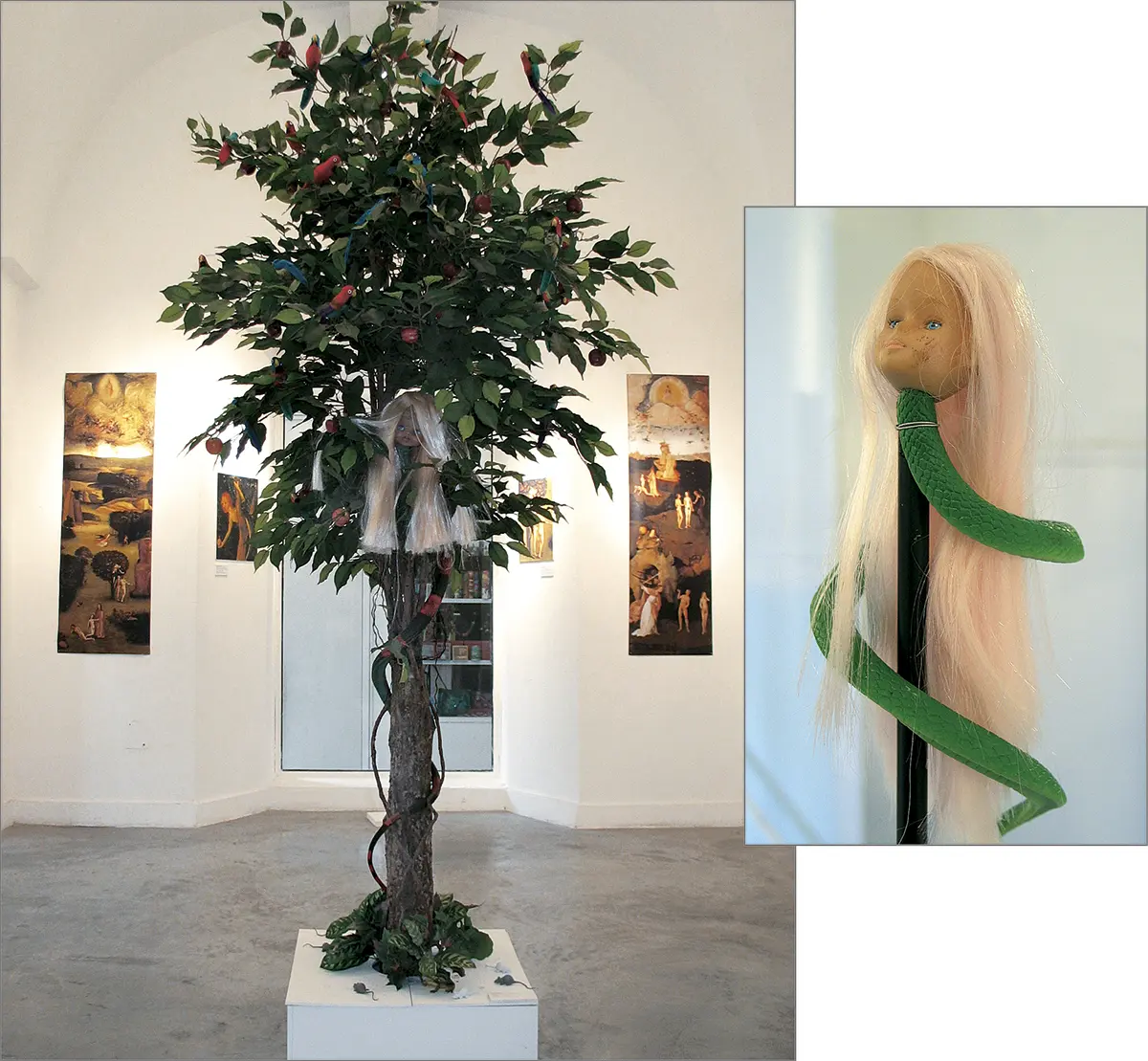
The established local artist is León Ferrari (Buenos Aires, Argentina, 1920), someone who rebels against all those—religious and military institutions—who claim a monopoly on “revealed truth.” An apostate and a self-confessed agnostic, Ferrari presents an installation titled El diablo (The Devil), an implacably ironic and very serious scenario that denounces the explicit misogyny of many passages of the Bible. Thanks to his elaborate research, the artist discovered a series of engravings and paintings by some of the great masters of Western art (Michelangelo, Raphael, Titian) that represent Satan as feminine, a female figure. Alongside appropriations and quotations—reproduced life-size—Ferrari exhibits an artificial tree and light box covered with religious images, in which a live serpent moves around among figures of the virgin Mary and the child Jesus.
Ferrari, who has exercised his critical mind against the authoritarianism and cruelty of “Western Christian civilization,"1 points out that according to this tradition, women/Eve was not only the first sinner, she was also the devil. As the devil, women play a dual role by becoming the “Axis of Evil,” and are thus deserving of multiple punishments. Ferrari denounces violence against women, even that practiced by saints and prophets in their texts, which are reproduced in the gallery.
Beyond the realm of the artistic, hell and its unspeakable horrors (as sources of extortion by religious powers) have been a prominent topic of interest for the artist, whose campaigns to abolish them for many years have even reached the Vatican. Fragile-looking and sweetly smiling, Ferrari is a tough man who doesn’t forgive but doesn’t lose his sense of humor, either. He is one of Argentina’s most outstanding contemporary artists, one whose work questions and denounces the injustices and crimes of power, from whatever quarters.
The well-known Uruguayan artist in the show—more often read, especially in ArtNexus, than seen in these parts—is Luis Camnitzer (Lübeck, Germany, 1937), who lives and works in New York. Camnitzer is an artist, with a staggering artistic oeuvre and a long career already behind him, who also believes in art’s potential for reflection.
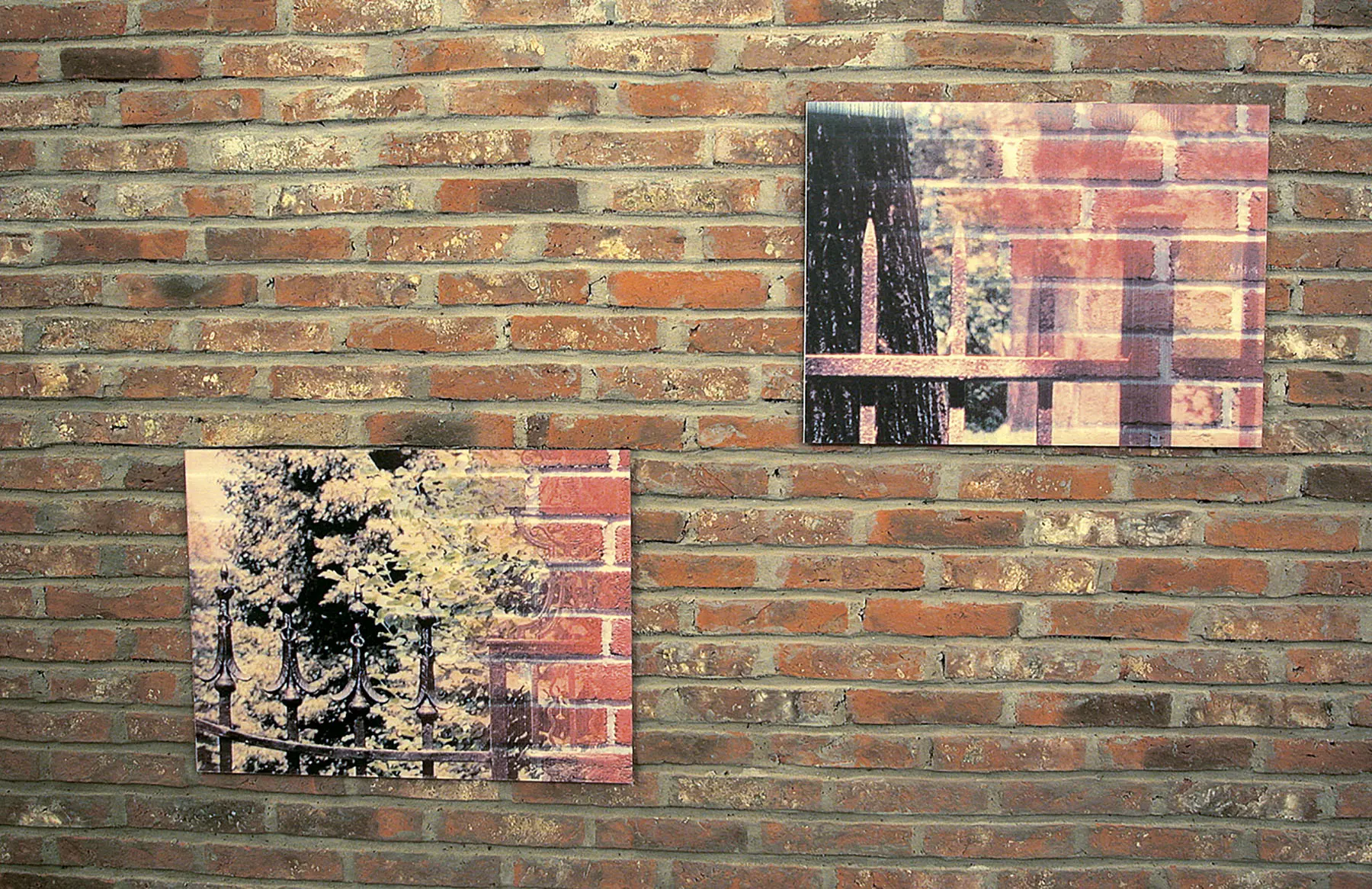
The artist does not need too many elements in order to project a wide variety of meanings in his work. In fact, Camnitzer’s nomadic condition as a contemporary artist favors the sharpening of his perspicacity without the transport of large volumes. His installation Sin título is comprised of two brick walls raised against the gallery’s own walls; on each one he placed five lenticular photographs showing cast-iron fences that are guarding something beyond the reach of common people.
The viewer gazes at the image from the outside of the fence, but we are outside of what? The images suggest the exterior of a large mansion, the campus of an important corporation, the site of a sinister lab, some sort of military installation, or perhaps the gardens of an exclusive private club. Precisely because of the knowledge of the growing and insulting economic disparity in Latin America (and the world?), the first thing that comes up after examining these photographs—which turn and change according to the physical movement of the observer—relates to the word “exclusion,” to exclude, exclusive, excluded. But the images also suggest its opposite: included; cloistered, or locked up.
Many of Camnitzer’s previous works relating to torture and political imprisonment, especially in the countries of the South, invite the viewer to incorporate a different kind of situation of confinement in his or her speculation: captured like the political prisoner, ensnared like the artist?
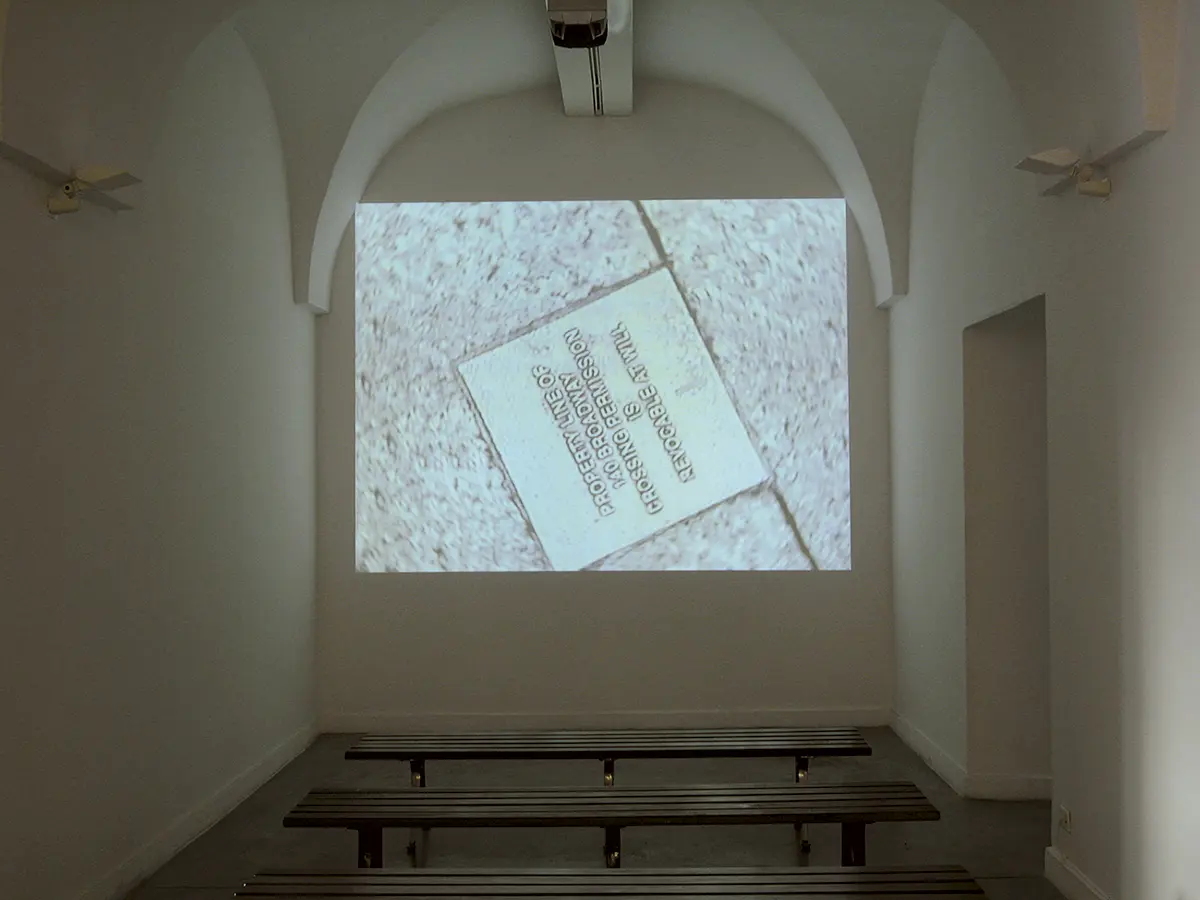
The total unknown for the Buenos Aires public is François Bucher (Cali, 1972), a very interesting artist who joins the roster of today’s provocative Colombian creators. Bucher, who also lives and works in New York, presents White Balance (To Think is to Forget Differences) 2002, a 32-minute film on DVD. Through a compilation of images—TV news clips, street surveys, web pages, press clips, video clips, texts by the artist, statistics, data, immigration identikits, and tattoos—Bucher attempts to unmask the double discourse installed in the United States’s big media and political narrative.
The film, which focuses on the everyday—subtle discrimination, exasperated patriotism—rather than the extraordinary, and the commentary in the artist’s own voice, are geared towards demonstrating how are images manipulated and scripted by an unscrupulous ruling class.
The interests displayed by these three artists have an impressive counterpart in local situations. When the inclusion to the country’s Supreme Court of Carmen Argibay, a jurist of international prestige, was being debated, the Catholic Church launched a campaign against her because she had come out in favor of decriminalizing abortion. Meanwhile, the evidence of the porous borders between certain criminal elements and the security forces grew more solid. Simultaneously, sectors of the press multiplied the sensation of insecurity and manipulated the debate about the right, or lack thereof, of the piqueteros to take to the street. Like reality, the visual evidence presented by Ferrari, Camnitzer, and Bucher deals with the will of the powerful to do battle and, above all, to acquire greater power.
NOTE
1. León Ferrari, La civilización occidental y cristiana, 1965, sculpture.
VICTORIA VERLICHAK