Inverted Utopias is one of the most important exhibitions of Latin American art held in the United States. Curated by Mari Carmen Ramírez and Héctor Olea, it presents the main contributors—both artists and theorists—to the development of the avant-garde movements in Latin America in the twentieth century. The exhibition is based on serious and detailed research, including the compilation of texts, manifestos, and unpublished documents, which are translated into English and published in a 600-page catalog that deserves its own review.1
Unlike other exhibitions of Latin American art held in Europe and the United States, Inverted Utopias is arranged thematically into clusters titled “constellations.” This approach, already used by the curators in Heterotopias,2 avoids geographic or chronological groupings, which tend to create false generalizations and to de-contextualize the art of Latin America and the Caribbean. Besides bringing together artists with common interests, these “constellations” make formal and/or thematic comparisons possible, which in turn enrich and promote the interpretation of the works.
One of the most felicitous consequences of this methodology is the possibility of grouping together artists of different origins and periods, and of including an artist in more than one category. The result is a well-balanced show in terms of the selection of authors and movements comprising the Latin American avant-garde, that introduces the notion of “inverted utopias” as a new dialectical approach to the understanding and appreciation of Latin America’s avant-garde art in a wider context.
The artists selected for this show made their innovative contributions in two specific periods: the 1920s and 1930s, on the one hand; and after the 1950s on the other. The works exhibited, many of which have never been seen in the United States, illustrate the independent and original labor of the groups and individuals who developed the Latin American avant-garde. One of the show’s goals is to demonstrate how many of the landmark innovations in the development of the European and North American avant-garde emerged earlier or simultaneously in Latin America.
Inverted Utopias begins with a reference to the movements of the 1920s and 1930s: Mexico’s Muralismo, Brazil’s Antropofagia, Argentina’s Martinfierrismo, and the Constructivism of Joaquín Torres-García and the Escuela del Sur. The major absence in this context is the Minorista group from Cuba, which, although mentioned in the catalog, is nowhere to be seen in the show. According to the organizers, the works requested by the Museo Nacional de Bellas Artes in Havana could not be exhibited due to technical reasons. Taking into account that there are enough important works in museums and private collections outside the island, they could have attempted to find alternatives, which would undoubtedly have enriched this important study of the avant-garde.3
On the other hand, the show excludes intentionally big names such as Diego Rivera, Frida Kahlo, Wifredo Lam, and Roberto Matta, who are already well-known, and focuses on introducing artists who are lesser-known -and in some cases, entirely unknown outside their countries.
The groups that emerged after the 1950s broke with the established canons. Their search for complete autonomy drove them to dissociate from official art and in some cases to carry out activities that bordered on subversion. Inverted Utopias includes representatives of Grupo Madí, of Venezuela’s Cinetismo, and of Brazil’s Neo-Concretismo, and conceptual artists from the mid-1960s, mainly from Argentina, Uruguay, and Brazil.
The show’s first constellation, “Play and Grief,” brings together an interesting group of artists committed to the reality of their world, where societies agonize as victims of colonialism, repression, corruption, and violence. Their works question and criticize the system from the perspective of an innovative figurative approach.
One artist who stands out in this constellation is León Ferrari (Argentina). His works Civilización occidental y cristiana (1965)—a representation of Christ nailed to a U.S. Air Force bomber—and Biblia Gofrada (1997)—a selection of images intervened with Braille texts—are powerful critiques of the role of the church in the Latin American context. The show’s curators reinforce the religious component of these works by placing them inside a niche resembling a chapel and hanging the Christ painting at a certain height, like an altarpiece.
Among the works that deal with religious issues we find José Clemente Orozco’s Cristo destruye su cruz (1943, Mexico); Luis Felipe Noé’s Nuestro señor de cada día (1964, Argentina); Alberto Heredia’s Cruz con calzoncillo (1980, Argentina); and Juan Carlos Distéfano’s Acción directa (1998, Argentina). The presence of Argentinean artists in this constellation is a good move on the part of the curators and a significant contribution to the study of the figurative avant-garde, characterized by its irreverent syncretism and formal eclecticism.
By starting the show with works by Ferrari, the curators introduce the militant attitude of the avant-garde artists included in this constellation. Some of them exercise forceful political and social critiques in their works, as in the case of Débora Arango (Colombia), Julio Tomás Martínez (Puerto Rico), and Carlos Raquel Rivera (Puerto Rico), who are not well-known in the United States.
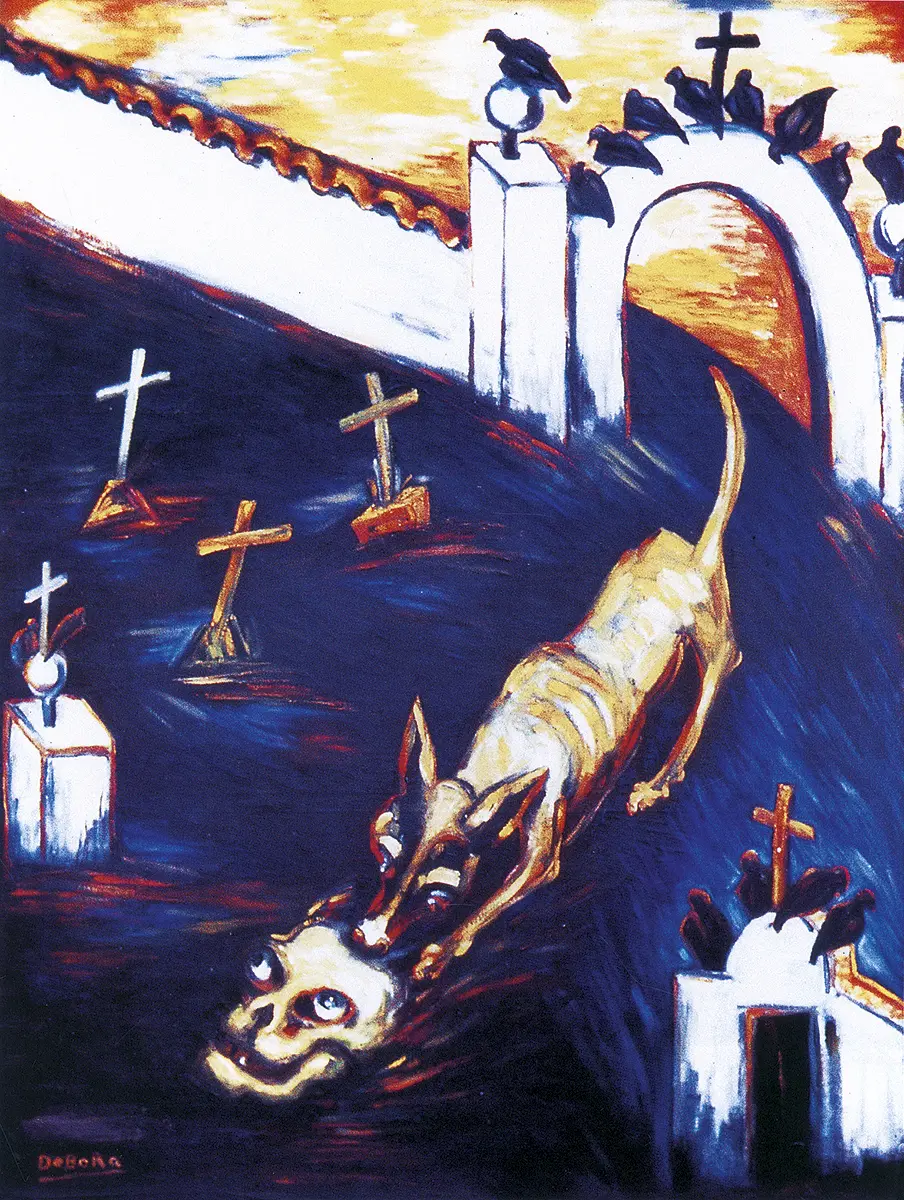
Arango’s Justicia (1944), El cementerio de la chusma y/o mi cabeza (1950), and Familia (1951) describe the corruption of authority, censorship (Arango was excommunicated from the Catholic Church for her artistic work), and misery in which the large majority of Latin Americans live. In this context, it would have been interesting to include other works by Arango with more forceful and direct messages. It is worth noting the accurate comparisons the curators made by placing Arango’s works next to La Victoria (1944), by José Clemente Orozco. Not only does the juxtaposition point out their thematic and formal similarities, but it also highlights Arango’s admiration for Orozco, whom she met during a trip to Mexico in 1946.
Another important artist in this constellation is Antonio Berni (Argentina), represented in the show with two masterpieces: La sordidez (1964), a “cosmic monster” created using non-traditional materials such as wood, steel, aluminum, cardboard, plastic, roots, and varnishes, which transgresses and demystifies the boundaries of art; and El mundo prometido a Juanito Laguna, which uses similar materials to formulate a social critique. His style, dubbed “Critical Realism,” was adopted by several of his contemporaries in Argentina, among them Luis Felipe Noé, Jorge de la Vega, and Rubén Santantonin. All of them, in some way, sneaked past the censors installed by the military dictatorship using materials that are closely associated with the social drama described in their works.
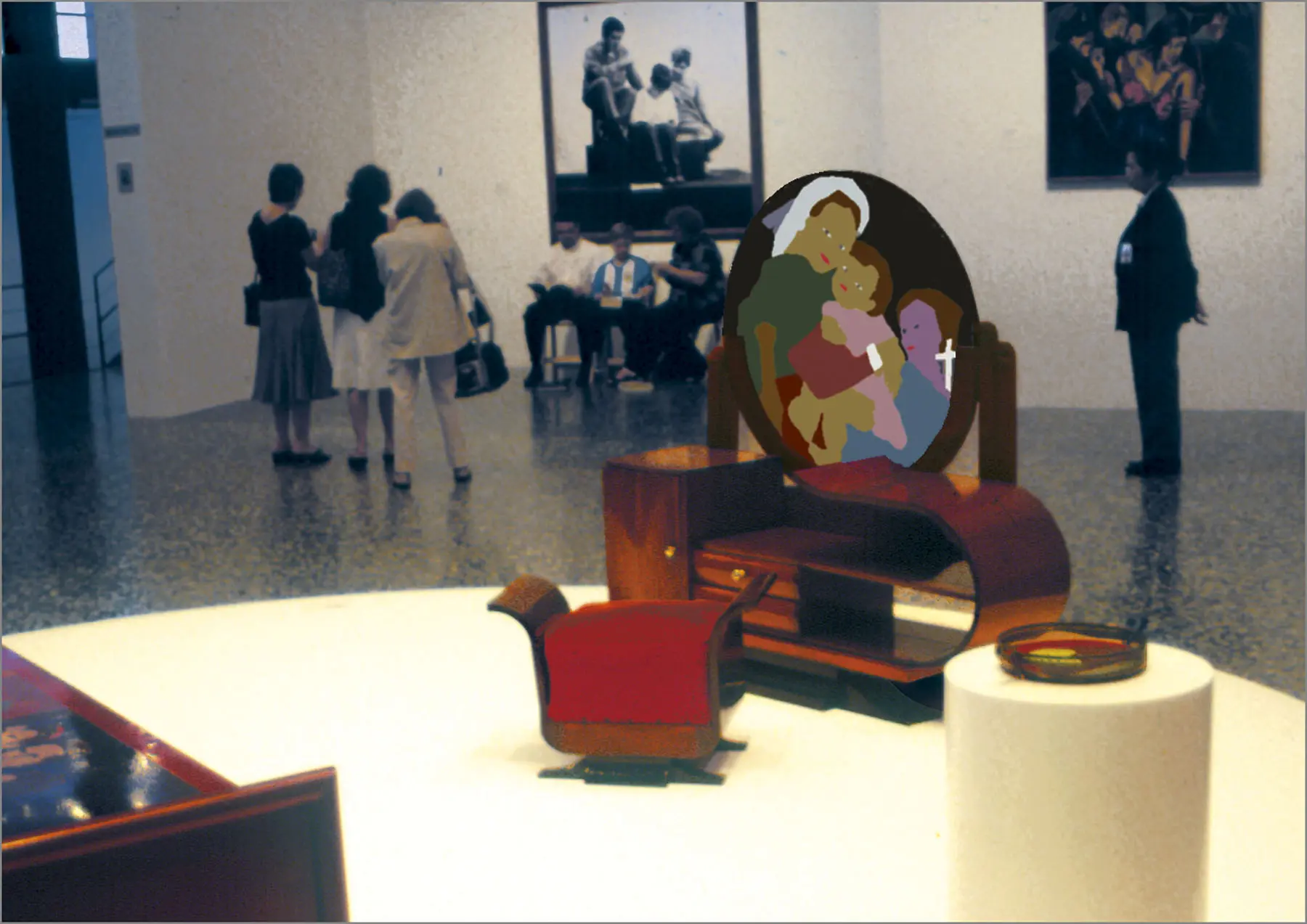
This constellation also includes furniture and objects by Beatriz González (Colombia) and the manifestos that document the efforts of El Techo de la Ballena (1961-63), a Venezuelan group of artists and writers. One of the achievements of Inverted Utopias is the inclusion in the show of manifestos, publications, and videos that illustrate the intellectual labor that accompanied the development of the Latin American avant-garde.
This is particularly true for the next constellation, “Universal and Vernacular,” in which manifestos and publications like El Machete, the journal of the Mexican painters, sculptors, and graphic artists union (1923-1924); Revista de Antropofagia from Brazil (1928); and Círculo cuadrado from Uruguay (1936), play a primordial role in the intellectual development of the avant-garde movements.
An important group of Latin American artists traveled to Europe in the 1920s and 1930s and established contacts with the avant-garde movements. Some of them returned to their countries with the idea of developing a modern art of their own, based on the dichotomy that inspires the title for this constellation: a universal language inspired by their own roots. Besides the Mexican muralists, who developed a social critique by exalting their mestizo condition and their rich ethnic diversity in their works, the curators include in this constellation four artists and/or groups representing the main innovators of the Latin American avant-garde from this perspective: Xul Solar (Argentina,) Vicente do Rego Monteiro (Brazil), Pedro Figari (Uruguay), and Joaquín Torres-García and the Escuela del Sur (Uruguay).
A member of the group associated with the Martín Fierro magazine, Xul Solar, is known for his colorful watercolors in a mystical language of clear pre-Columbian referents. Such pre-Hispanic roots also are present in his three-dimensional works as illustrated by Caras (undated), a papier mâché piece that can easily be taken for a pre-Columbian ceramic object. Like his Mexican contemporaries, Xul Solar denounced social injustice in some of his works, for example in Jefa (1923), reproduced on the catalog’s back cover.
Vicente do Rego Monteiro developed a universal language in a clearly cubist vein and focused his interest on the Brazilian native, as demonstrated in O atirador de Arco (1925). From a technical standpoint, it is interesting to note the rough texture of O Urso (1925), achieved by incorporating sand into the application of paint, which, as in the case of Berni, establishes a parallel between its formal aspect and its theme.
For the show’s curators, Pedro Figari (Uruguay) is perhaps the best representative of this constellation. Works like Candombe (1921) and El Pericón (1925) display a post-impressionist style, a mixture of pointillism and fauvism, and recreate typically Uruguayan scenes that recuperate the country’s black and mulatto roots, while at the same time denouncing the marginalization suffered by these cultures in the River Plate region. On a technical level, Figari combines the universal with the local by using cardboard instead of canvas and by painting in oil, achieving the colors and the lucidity that characterize his works.
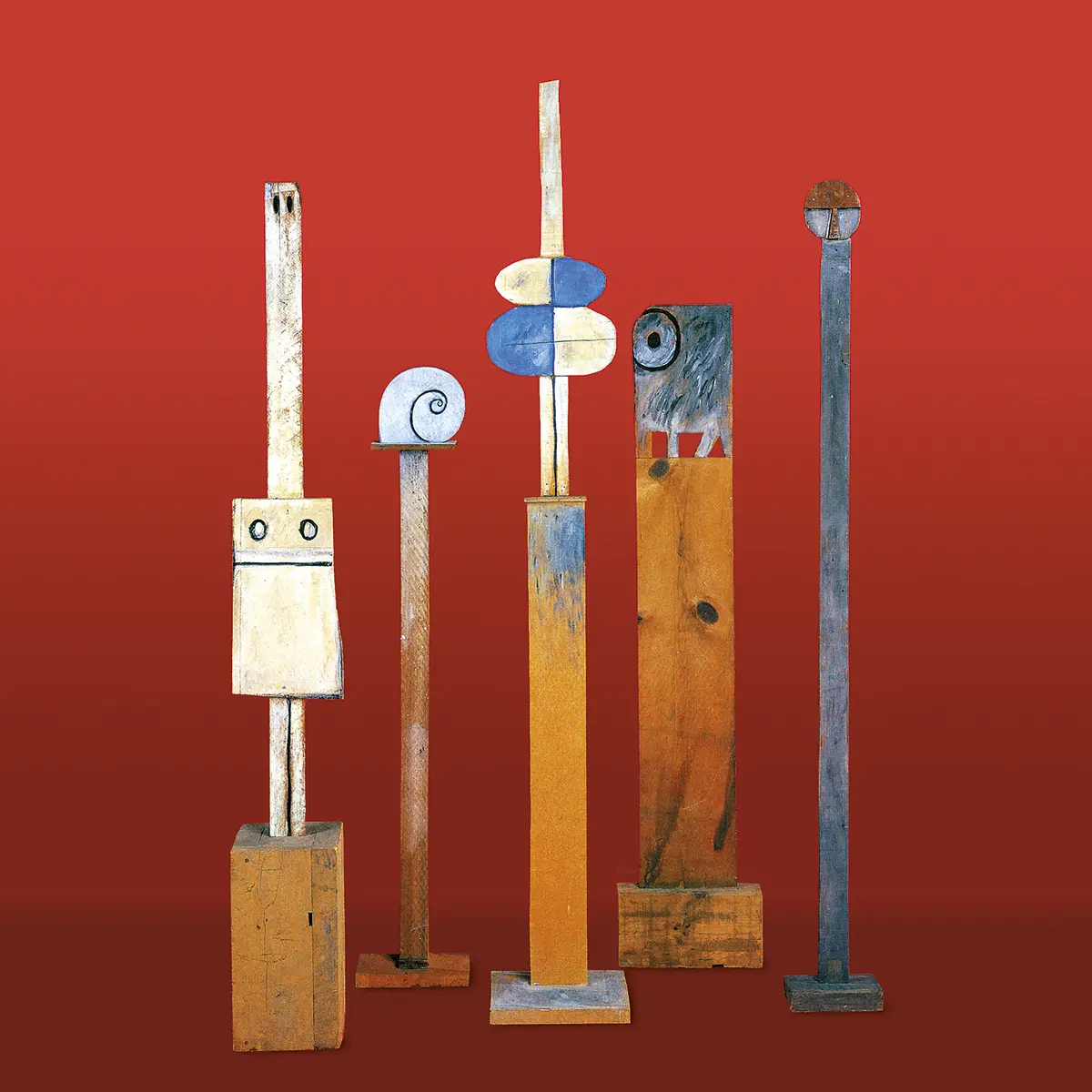
One of the show’s most interesting galleries displays the works of Joaquín Torres-García and the members of the Escuela del Sur. Besides exhibiting important documents in which Torres-García defines his theory of Abstract Constructivism, the curators bring together an important selection of works by the artists which illustrates their aesthetic proposal. Works like Composición con formas primitivas (1932) Indo-América (1941), by Torres-García, and Génesis, by Julio Alpuy (Uruguay), are excellent examples of the constructivist language developed on the basis of the use of reticulations and abstract constructions which incorporate pre-Columbian symbols. In formal terms, these artists work with rustic materials, especially wood, an autochthonous material that enriches Gonzalo Fonseca’s Poste (1958, Uruguay) and Francisco Matto’s Tótem (1979-1985, Uruguay).
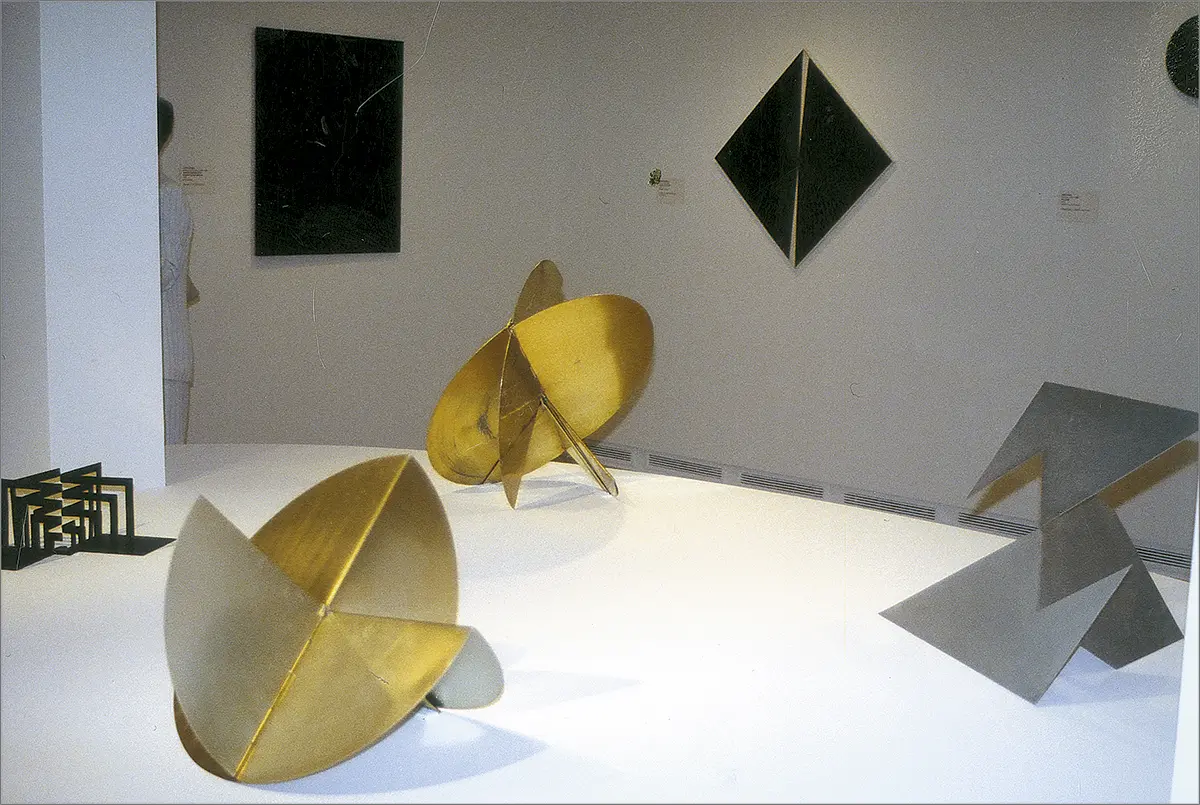
According to Ramírez and Olea, Torres-García’s theories anticipate some aspects of the abstract art that was to develop in Argentina, Uruguay, and Venezuela in the 1930s, the topic of the third constellation, titled “Progression and Rupture.” The common denominator among these artists is their ability to create art that is free of representational referents, using only lines, planes, and/or color. Joaquín Torres-García is acknowledged as one of the precursors of this generation, in which two important groups stand out: the Madí group (Argentina), which included among others Carmelo Arden Quin, Rhod Rothfuss, and Gyula Kosice, and the Ruptura group (Argentina), which included, among others, Waldemar Cordeiro and Luiz Sacilotto.
The
members of these groups revolutionized plastic language with innovative
proposals that in some cases precede similar developments in the United States.
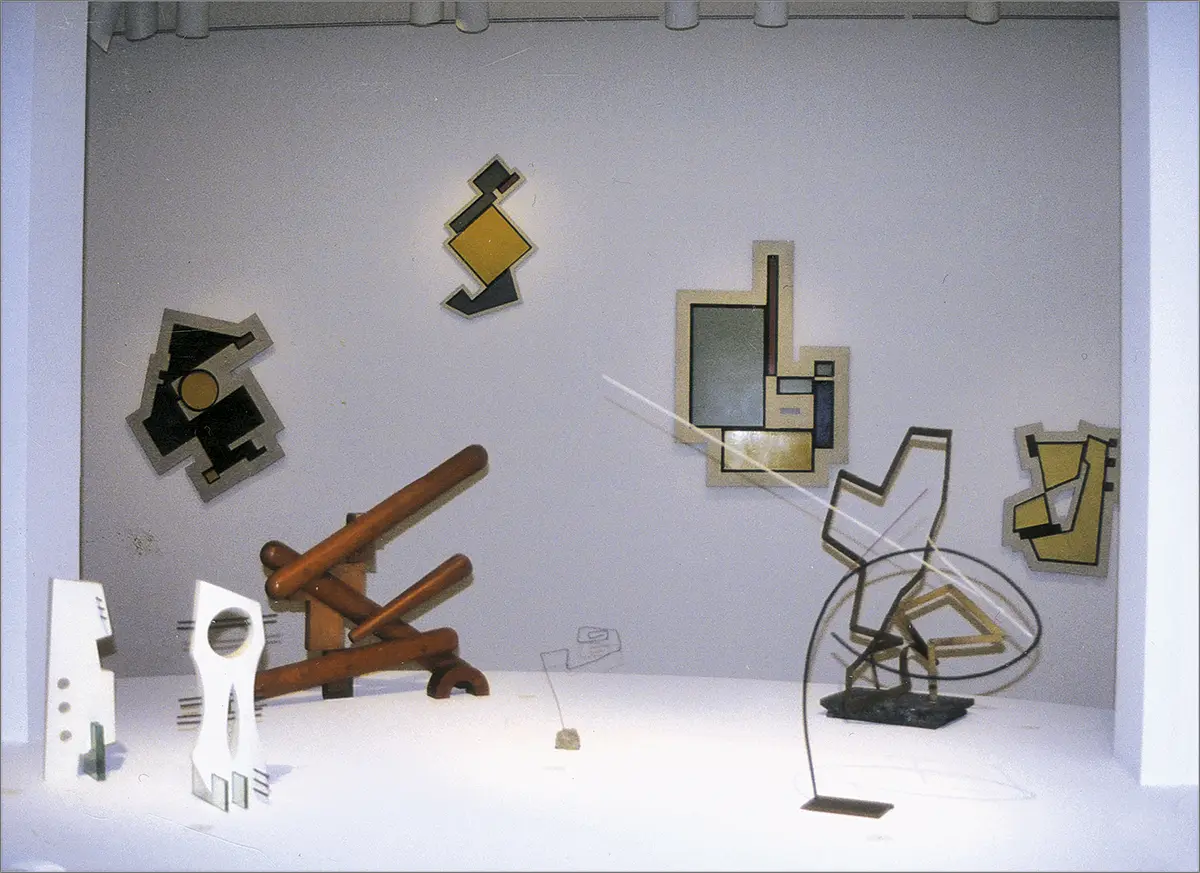
Rothfuss, for example, uses constructions with trimmed borders and geometric
vacuums and transforms painting into a concrete object. Kosice disarticulates
the autonomy of the work of art in a sculpture with an articulated movement titled
Röyi (1941). Cordeiro substitutes
mechanical objects for the artist’s hand, and Sacilotto experiments with the
concept of surface, establishing a precedent for those who would later work on
spatial approaches, such as Lygia Clark (Brazil), Hélio Oiticica (Brazil), Willys
de Castro (Brazil), and Hércules Barsotti (Brazil).
The arrangement of this constellation in the gallery allows us to establish interesting comparisons between the works and the artists of this generation. The first parallel shows the similarity that exists between Joaquín Torres-García’s construction, Estructura en blanco y negro (1930), and Scultura Astratta, by Lucio Fontana (1934, Argentina/Italy). An important comparison shows the formal relationship existing between Torres-García’s construction, Objet Plastique (1929) and Rhod Rothfuss’s (Argentina) trimmed-border/structured-frame constructions, Composición Madí (1946) and Superestructura Madí (1946).
The parallels continue with Torres-García’s Objet construit (1938), alongside Willys de Castro’s Objetos ativos (1961-1962); Concetto spaziale, attesa (1960) by Fontana and Branco e preto (1960) by Barsotti; and Planos em superficie modulada no. 5 (1957) by Clark, Conceição 5730 (1957) by Sacilotto, and Nucleos NC1 (1960) by Oiticica.
It is worth noting that Rothfuss’s Röyi (1944) and Clark’s Bicho (1960) can be considered a preamble to the constellation titled “Touch and Gaze.” In particular, a copy of Bicho allows the viewer to play with the different articulated planes and to create new forms that are completely autonomous from the original version.
One of the show’s most complex constellations, “Cryptic and Committed,” introduces the conceptual art that emerged in Latin America in the early 1960s. Luis Fernando Benedit’s (Argentina) installations, Filotrón (1972) and Minibotrón (1970) are an interesting transition from the curatorial point of view. In them, Benedit examines the survival of insects and plants in self-sufficient environments, while at the same time questioning the boundaries between science and art.
Most of these conceptual Latin American artists elaborate discourses that are committed to the political and social realities of their countries. The show’s curators posit Waldemar Cordeiro (Italy/Brazil) and José Balmes (Spain/Chile) as precursors of the conceptual avant-garde and highlight the work of an important group of artists who questions the role played by art in a historical moment characterized by censorship, repression, and authoritarianism.
Luis Camnitzer’s Execution (Uruguay, 1970), a mirror traversed by a bullet and stained with red resin; Mancha de sangre (1966), by Ricardo Carreira (Argentina); and Trouxa ensanguentada (1969), by Artur Barrio (Brazil) critique extreme political situations such as killings, executions of political prisoners, or war as a universal phenomenon (Carreira’s work alludes to the Vietnam War).
Antonio Dias (Brazil) documents strikes and rallies in To the police (1968)—comprising rocks similar to those used by students and union members in their confrontations with the police—and questions the concepts of freedom and territoriality in his installation Do it yourself: Freedom territory (1968).
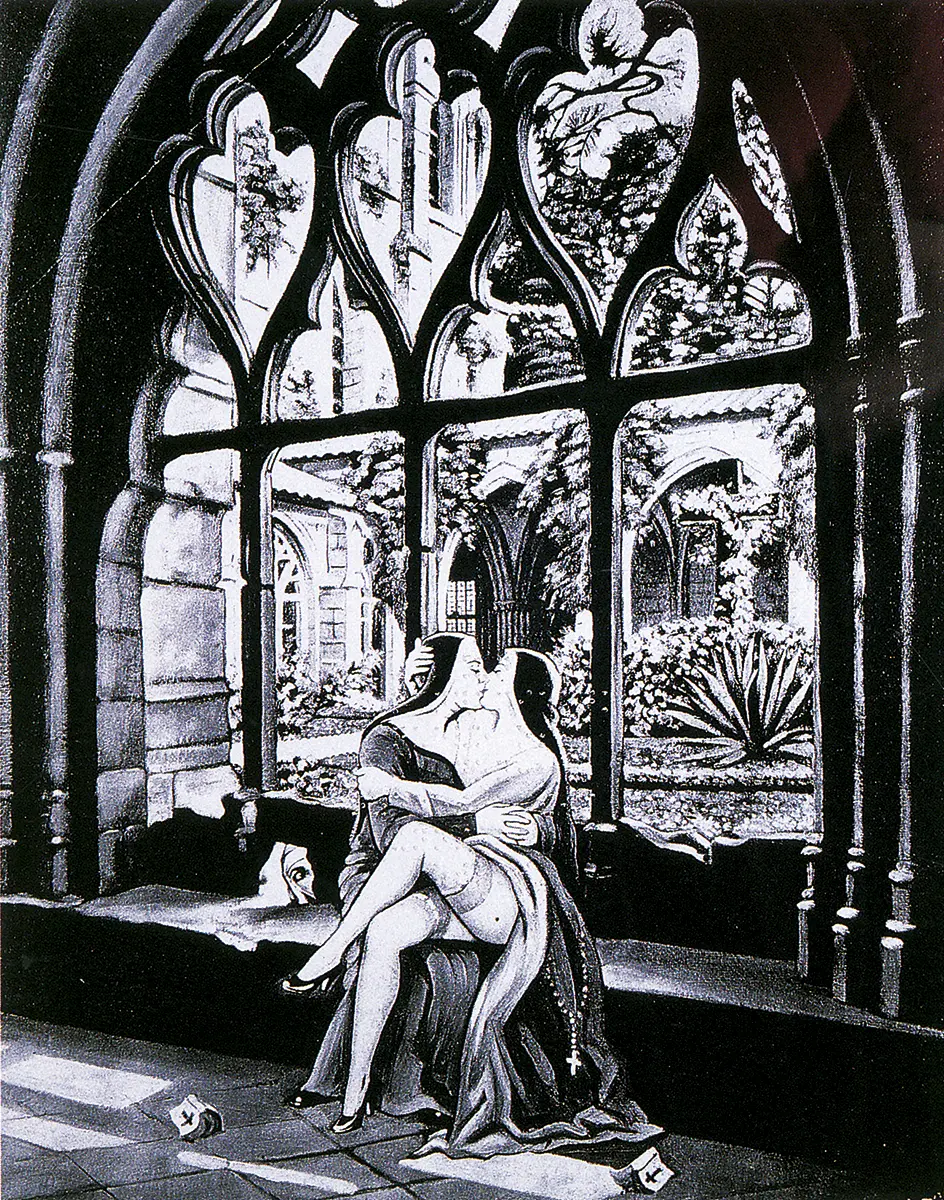
In the case of conceptual artists, photography plays a fundamental role from the point of view of documentation, as demonstrated by the series Vivo-Dito (1963) by Alberto Greco (Argentina), which documents acts carried out by the artist in different cities, such as disguising himself as a nun in Rome, or writing graffiti on the floor next to a policeman; the photographs of O corpo e a obra, a 1970 performance by Antonio Manuel (Brazil), in which the artist appears naked at the Museo de Arte Moderno in Rio de Janerio; and the images of Encierro y escape (1968) by Graciela Carnevale (Argentina), which document the experience of the Experimental Art Cycle in Rosario, Argentina, in which the public attending an exhibition was locked inside and had to break the gallery’s windows in order to come out.
Words acquire a new dimension in the context of Latin American conceptual arts, be it in Meireles’s intervention, Inserções em circuitos ideológicos: Projeto Coca-Cola (1970-1975), or in Ferrari’s calligraphic paintings, Génesis (1998). Conceptual art questions the role played by art in any field, be it fashion: Fashion Fictions (1966-1969) by Eduardo Costa (Argentina); or the process of circulation in consumerist society: A arvore de dinero (1969) by Meireles.
The exhibition’s curators highlight the work of the group Tucumán Arde (1968), which includes artists who, on the basis of a journalistic approach and using the mass media, carry out an effort of protesting that aspires to bring to light the dire social and economic consequences of a failed industrialization project in Rosario, Argentina.
Finally, they present La familia obrera (1968) by Oscar Bony (Argentina), a photo-documentary of a tableau-vivant recreated during the inauguration of Inverted Utopias. By placing the show’s last work in the gallery of the first constellation, thus making it possible to compare it to previous pieces (the parallel with Arango’s Familia is particularly strong), the curators shed light on the social function of the Latin American avant-garde and its relationship with the present and with its historical past.
“Cryptic and Committed” is one of the most striking successes in Inverted Utopias. By identifying the main protagonists and the topics of Latin American conceptual art of the 1960s and demonstrating that it precedes similar developments in England and the United States, the curators vindicate this movement, especially notable for its politicized character and the asocial function it assumes in the context in which it develops.
From the point of view of the show’s installation, it is worth noting the breadth of space and the abundance of natural light in the exhibition of the last two constellations: “Vibrational and Stationary,” and “Touch and Gaze.” The first of these gives recognition to the art of the masters of Venezuelan Cinetismo: Jesús Rafael Soto, Carlos Cruz-Diez, and Alejandro Otero. Although the curators recognize an approach to dynamics in art in the work of Siqueiros, it is the cinéticos who first transcend pictorial and sculptural conventions in search of movement in works of art.
In Soto’s Estructuras cinéticas (1956), designs traced in plexiglas sheets generate vibrations as the viewer moves. Viewer participation is fundamental to the process. Another piece, Penetrable Amarillo (1973 and 1995), installed outside the museum, invites the public to enter a jungle-like nylon space from which the perception of the environment is distorted as a result of the movement of the fabric’s threads.
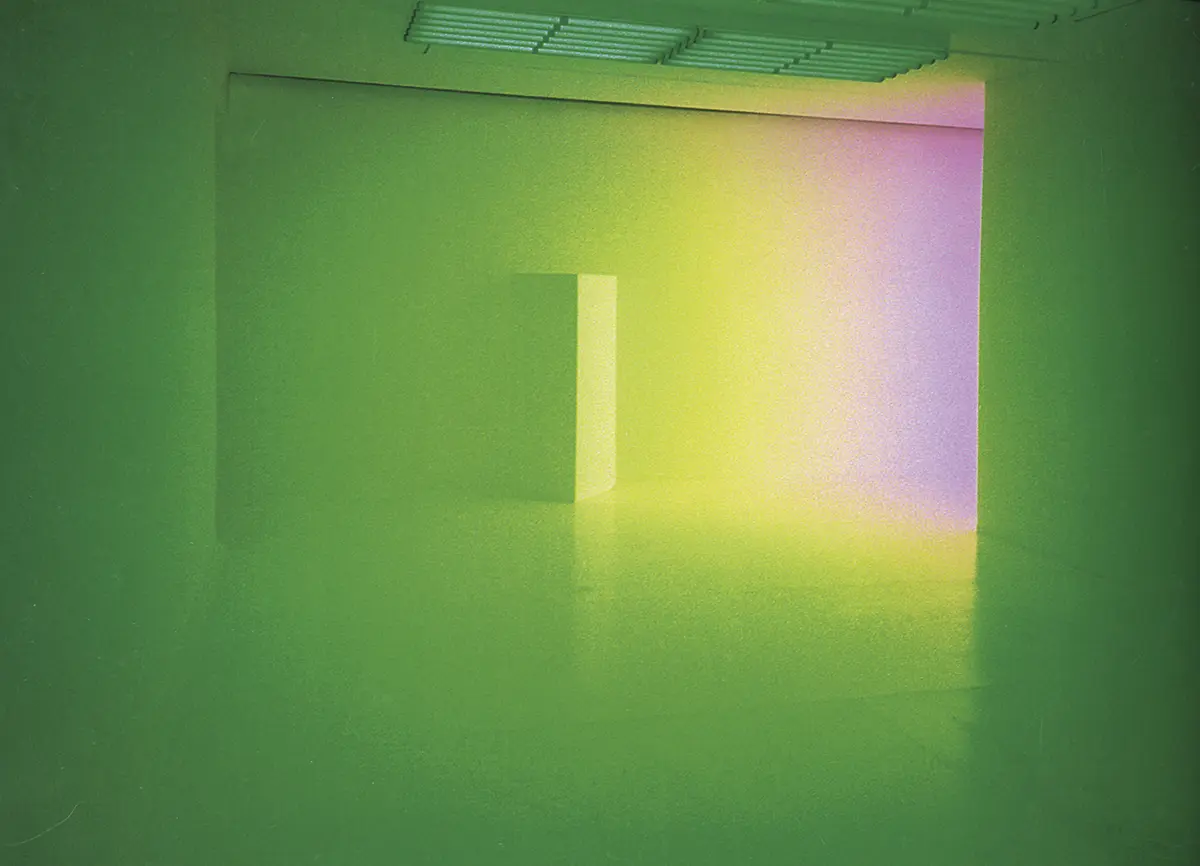
Carlos Cruz-Diez approaches movement from a different point of view. In Fisicromías (1958), he investigates the perception of color on the viewer’s retina. Cromosaturación (1965), a masterpiece especially reconstructed for this exhibition, experiments with the limits of this proposal by creating a closed space comprising three cubicles illuminated by fluorescent lights in blue, red, and green, creating a light lab where the retina mixes and produces its own colors. The third cinético in the show, Alejandro Otero, approaches movement by combining rhythm and color, and the use of black as a demarcating tone in his series Coloritmo (1956-1960).
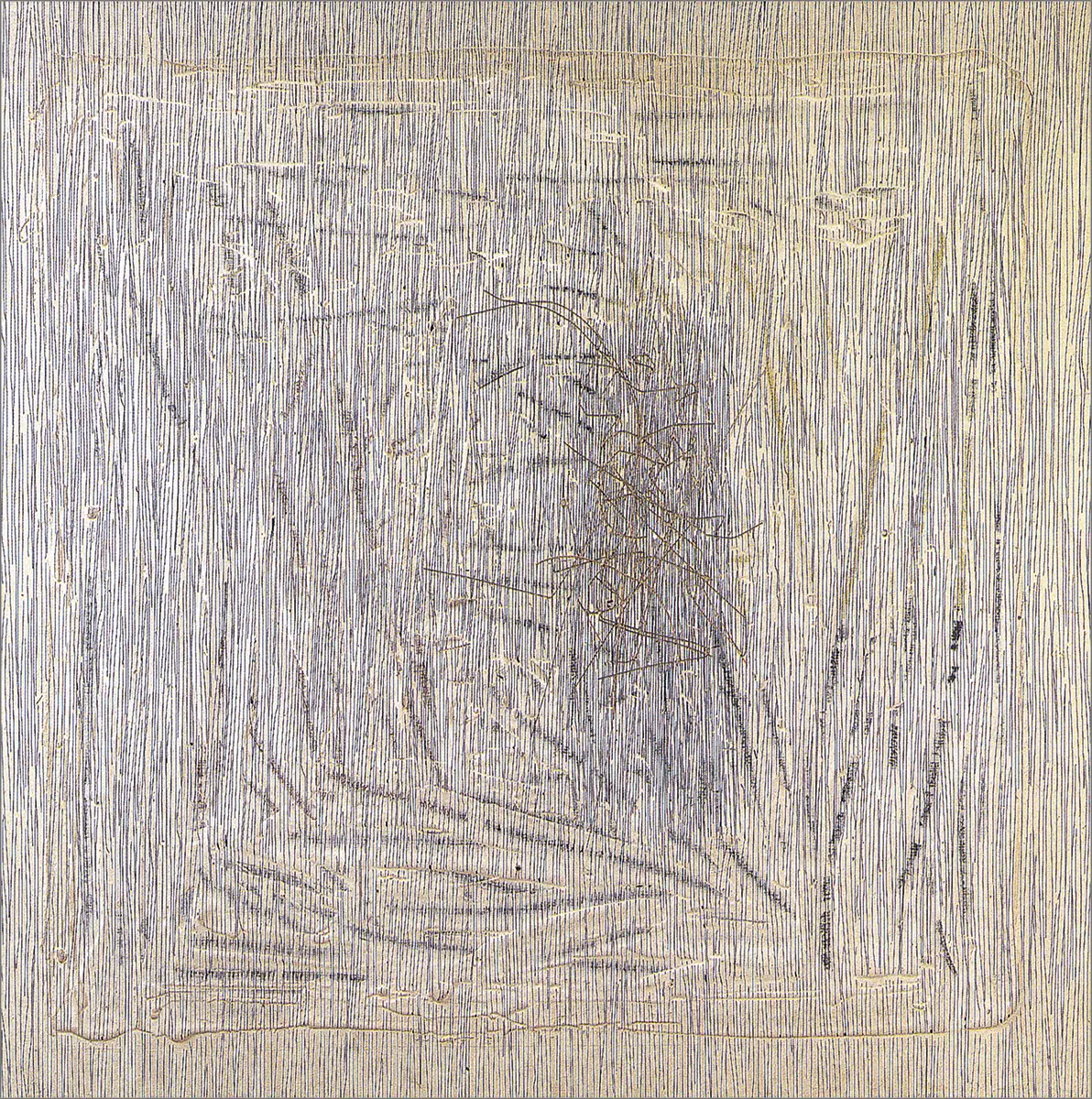
An important artist in this constellation is Gertrude Goldschmidt, better known as Gego (Germany/Venezuela), who deconstructs the postulates of cinetismo by transforming planes into three-dimensional shapes, and lines into a particular volume in Vibración en negro (1957), and Ocho cuadrados (1961). In her more delicate works, such as Dibujo sin papel (no. 85/12) of 1985, the matrix becomes reticulated and reduces the work to the very origins of art: line and plane.
The last constellation, titled “Touch and Gaze,” appears in the gallery without a formal presentation. It includes a large number of artists who express an interest in the sensorial aspect of the work of art, especially in relation to the senses of touch and sight.
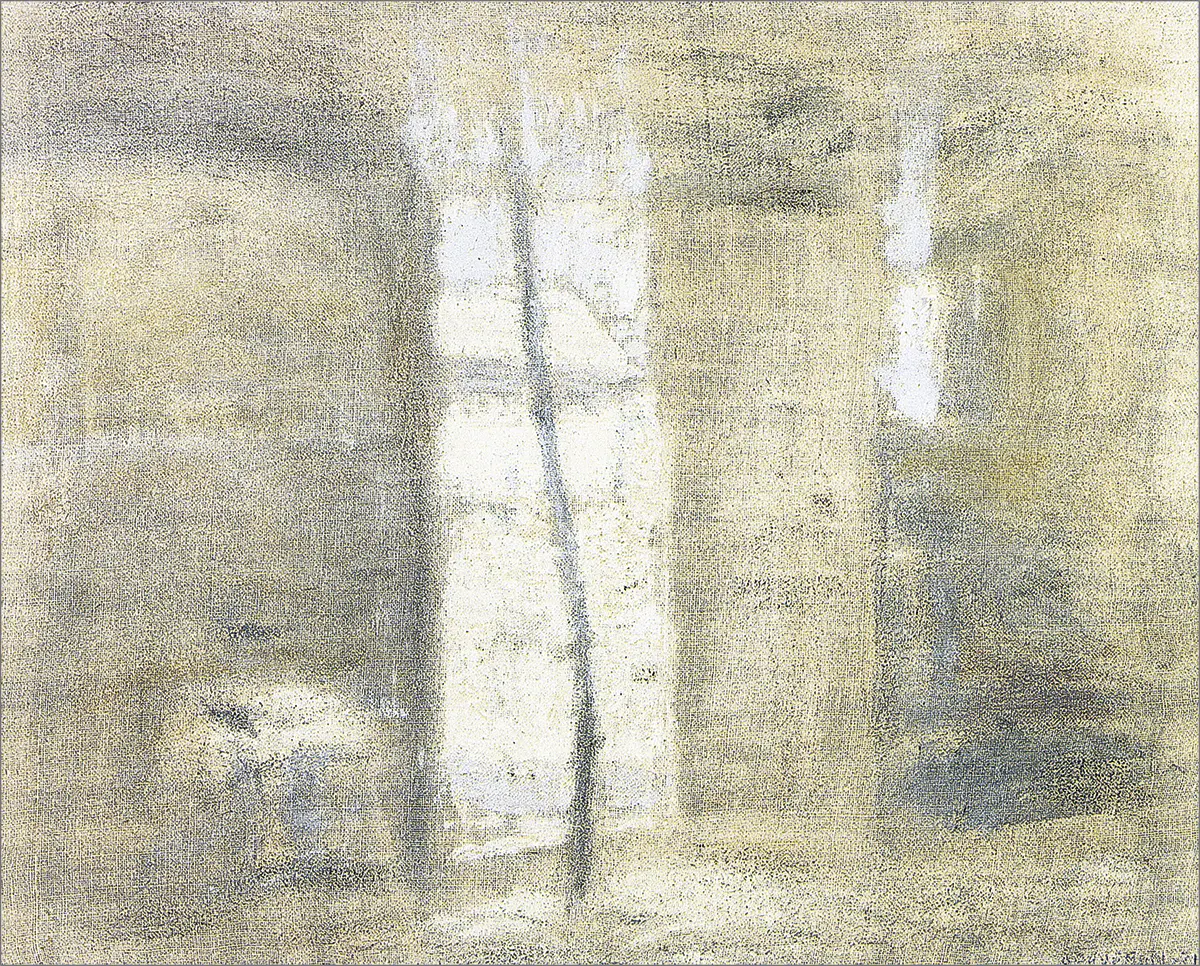
One of the show’s most illuminating parallels reveals similarities between Soto’s 1960 Vibración, and Sin titular (1926-1929) by Venezuela’s Armando Reverón. Despite professing polarized theories (the former develops an analytical sensorial synthesis and the latter explores the immateriality of light), the connection between these works is evident.
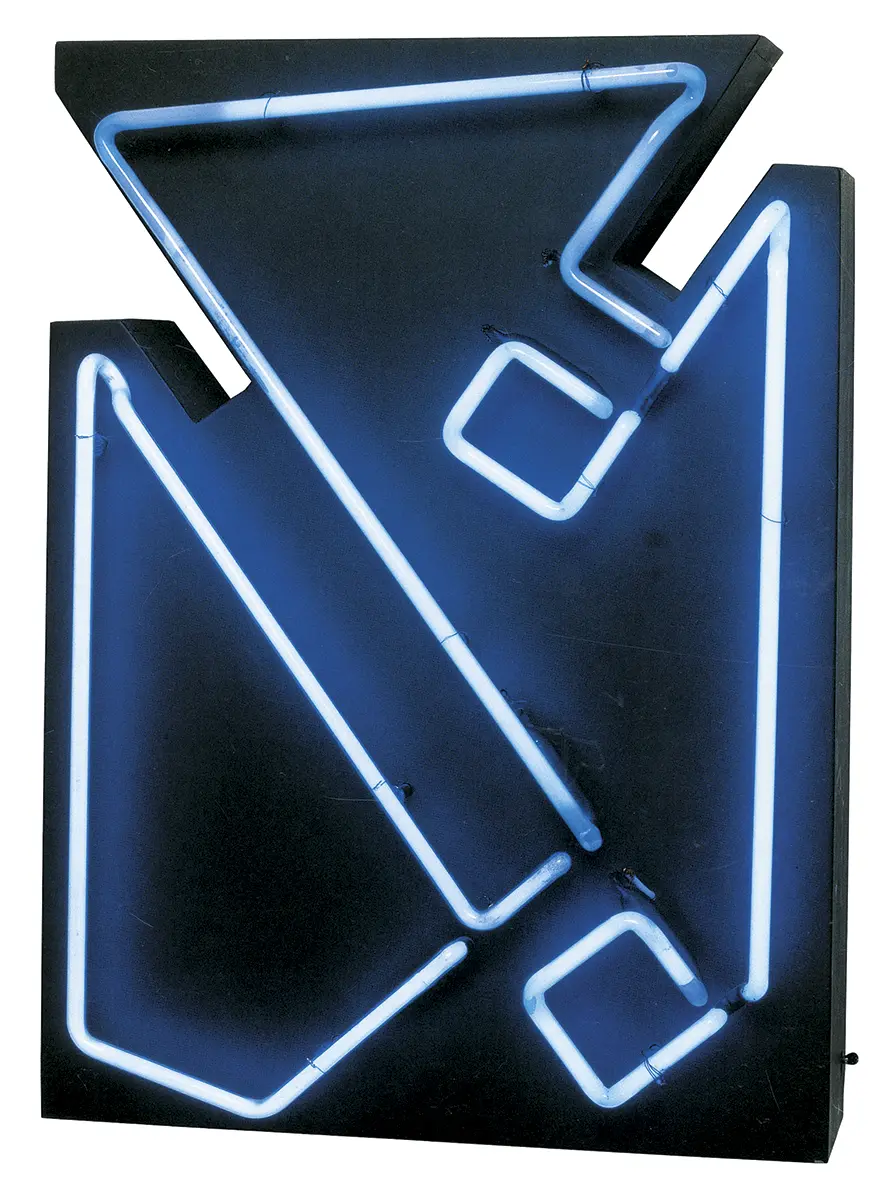
Among the concepts covered by this constellation are the analytic and sensorial syntheses explored by Soto, Fontana, Sergio Camargo (Brazil), and Mira Schendel (Switzerland/Brazil), and the spatial character of Gego’s drawings. The constellation also includes artists who explore movement by using water and/or light, such as Kosice, Abraham Palatnik (Brazil), and Julio Le Parc (Argentina). Two works by Kosice, Madí Neon no.3 (1946) and Estructura lumínica Madí No. 6 (1946), are surprising antecedents to Dan Flavin’s light pieces.
Le Parc’s installations, Continuel lumière mobile (1960-1966), and Mural de luz continua (1966-1967)—which, in the context of this show acquired an audio element due to a mechanical problem—exemplify a different approach to art in movement and to contrasts of light and shadows, through the creation of controlled installation in enclosed spaces. Another artist with an interest in the physical aspect of light, but from the perspective of color, is Cruz-Diez, whose Cromosaturación was already mentioned.
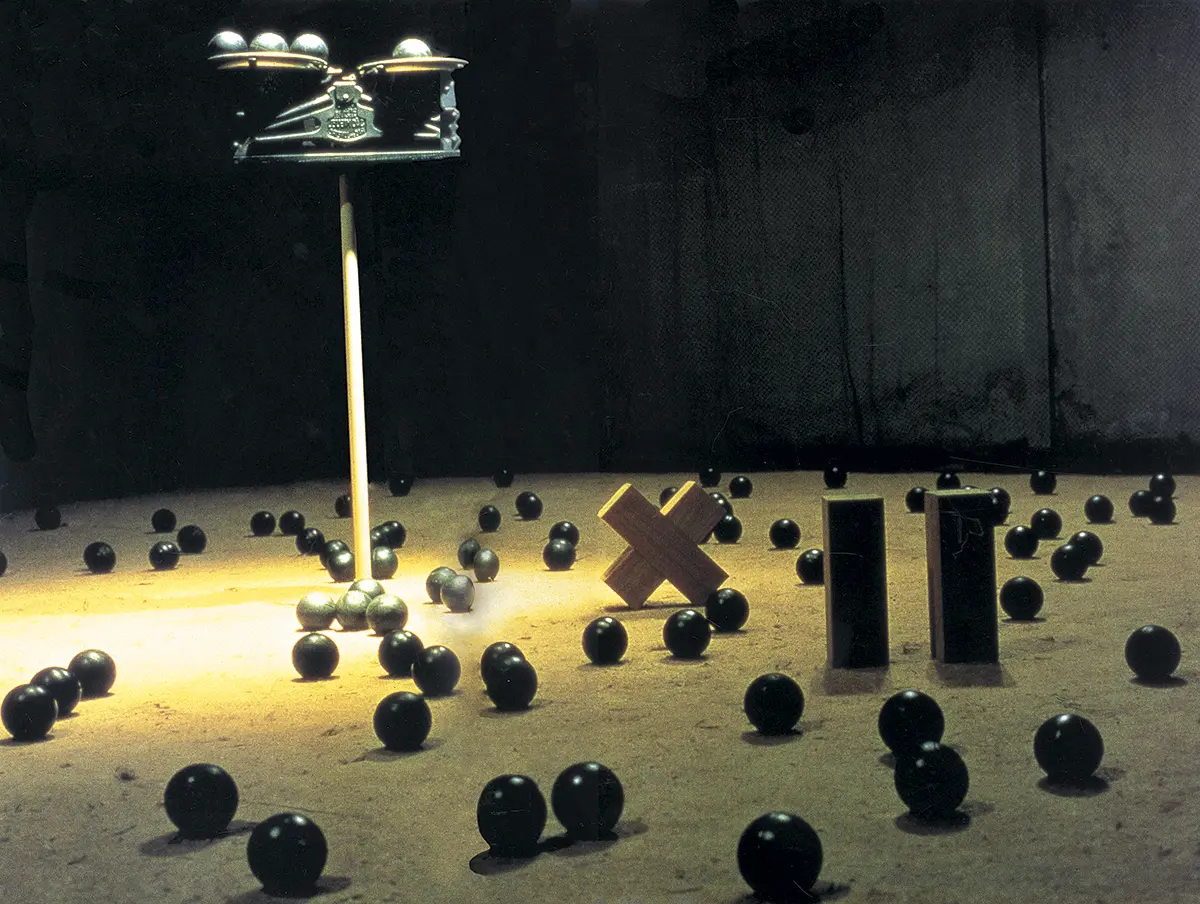
The show ends with a selection of works that promote the viewer’s participation. These range from the simplest, such as Óculos sensoriais (1968) by Clark, and Lunettes pour des différentes visions (1965) by Le Parc, to the most complex, such as Parangolés (1964-1970) by Oiticica, and Meireles’s Eureka/Blindhotland (1970-1975). In the latter, the conceptual aspect is closely related to the viewer’s participation, since it is the viewer who, by entering the space framed by a chain-link fence and weighing the rubber balls, discovers that each has a different weight and mass despite looking alike.
Inverted Utopias is a landmark in terms of its museography and academic approach to Latin American art in the United States. On the one hand, it proposes a novel and flexible methodology, one capable of adapting itself to the complexity of Latin American art, and on the other, it exhibits for the first time a large number of artists who deserve wider recognition for their role in the development of twentieth-century modernism.
Evidently, the success of this show, as indicated by the Museum director, Peter C. Marzio, resides in the curators’ ability—particularly that of Mari Carmen Ramírez—to combine academic knowledge with great curatorial sensitivity, two elements that are hard to find in a single individual.4
Inverted Utopias establishes new parameters and raises the bar for this kind of project. Interestingly, with the creation at the Houston Museum of Fine Arts of a Center for the Arts of the Americas headed by Ramírez, continuity is guaranteed not only in the presentation of new shows but also in the teaching of Latin American art in the United States, which will support the insertion of its most outstanding representatives into the context of universal art.
NOTES
1. Ramírez, Mari Carmen and Olea, Héctor, Inverted Utopias. Avant-Garde in Latin America (New Haven and London: Yale University Press and The Museum of Fine Arts, Houston, 2004).
2. Heterotopías: Medio Siglo sin lugar 1918-1968 was presented at the Museo Nacional Centro de Arte Reina Sofía in Madrid, December 2000-February 2001.
3. For a study of the Cuban avant-garde, see Cuban Art and National Identity, The Vanguard Painters, 1927-1950 by Juan A. Martínez (Gainesville: University Press of Florida, 1994).
4. Peter C. Marzio interviewed by the author, Houston, July 2004.
FRANCINE BIRBRAGHER
Doctoral candidate in Latin American history, University of Miami, and art historian specializing in contemporary Latin American art.