
The Latin American auctions this season were successful at both Christie’s and Sotheby’s, even though, for the first time since the very beginning of the Latin American auctions, the sales took place on different continents, since Christie’s decided to hold the sale of their Latin offerings in Paris.
The first auction took place on May 26 at Sotheby’s New York, where one of the highlights was five works by Claudio Bravo that were sold for the benefit of the Museum of Fine Arts, Boston, and brought a total of $381,000. Among the pieces included were two bronze sculptures, which are a rarity in Bravo’s oeuvre. They were a pair of nudes, a man and a woman, which had been estimated at $40,000/60,000 and rose with great speed due to fierce bidding from at least five determined bidders to the unbelievable sum of $200,000. The other great work by Claudio Bravo in the sale was a White Package from 1967. It was estimated at $900,000/1,000,000 and sold at the low estimate at $900,000. All the Claudio Bravo package paintings that have been brought to auction since 1999 surpassed their estimates and sold for record prices for the artist; the last one, Paquete Marfil from 1967, was sold at Sotheby’s in November 2002 for $1,439,500., surpassing its estimate of $900,000/1,100,000. The White package of this sale is the first of the series to stay within the estimated price, indicating that the market for these works may have reached saturation level.
Sotheby’s sales had a wide and high-quality selection of Mexican works, which was always a sure way to success in the Latin American art market. The well-known and colorful Nueva York desde la terraza, a great Rufino Tamayo from 1937 sold at $800,000.; another Tamayo, Frutera colmada, an early work from 1928 that was also the catalog cover, shows the artist already at work developing the iconic image of the sandía or watermelon as an image of Mexico. This elegant painting found a buyer at $390,000. (est. $300,000/400,000). The watermelons were also an important component for the sale of Mexican Family, a colorful work by Alfredo Ramos that sold for $150,000. (est. 175,000/225,000). Still, another victory for the Mexican school came with Francisco Toledo’s expressionistic Self-Portrait IV. It was estimated at $90,000/120,000 and sold for $120,000 following spirited competition from several bidders. Pedro Coronel also achieved a new world record when his Sobre la Tumba de Justino sold above the estimated price $120,000/150,000 to fetch $190,000. The very elaborate painted column by Rodolfo Morales also surpassed its estimated $40,000/60,000, selling at $90,000.
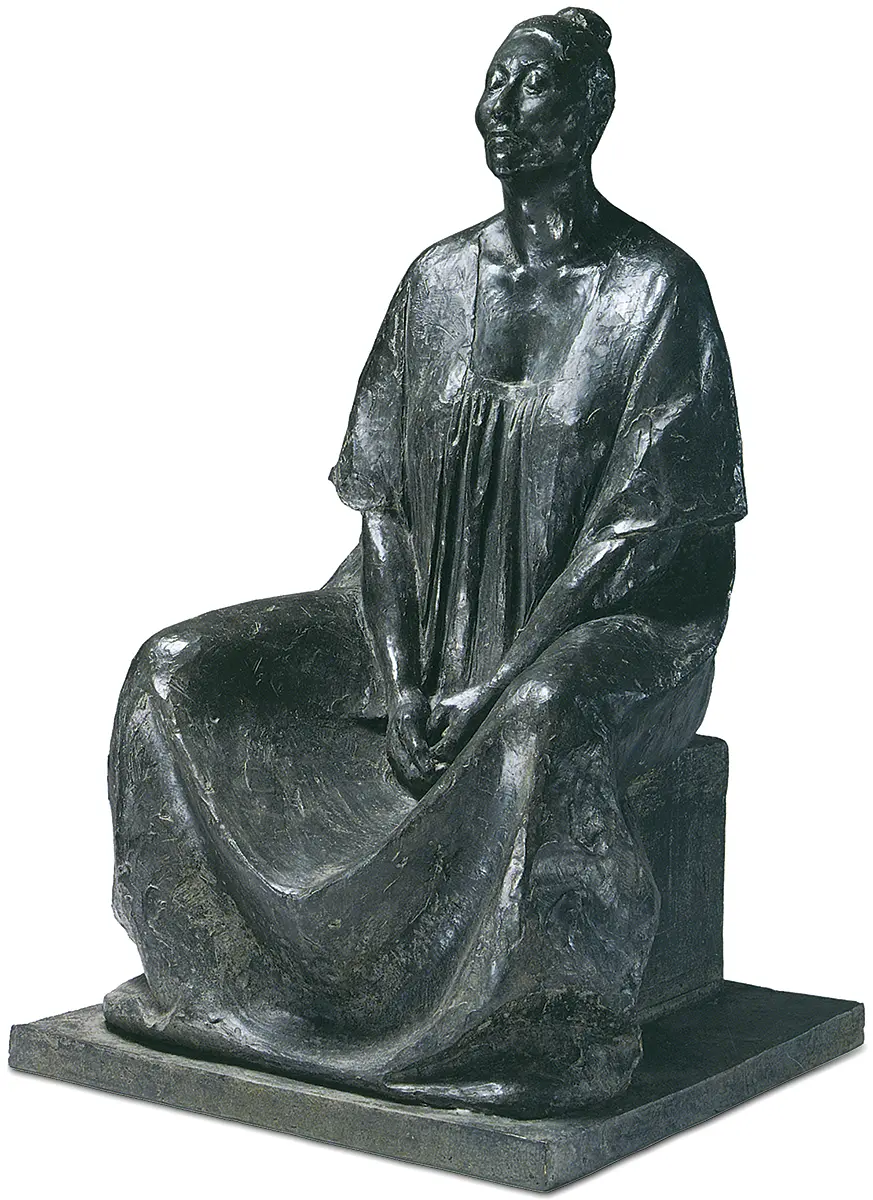
Francisco Zúñiga was the other artist to achieve a world record for his work at this auction, when bidding for his monumental bronze sculpture, Evelia Sentada, an iconic image that projects the serenity and dignified grandeur of the native Indian woman, rose past the estimate of $175,000/225,000 to settle at $350,000.
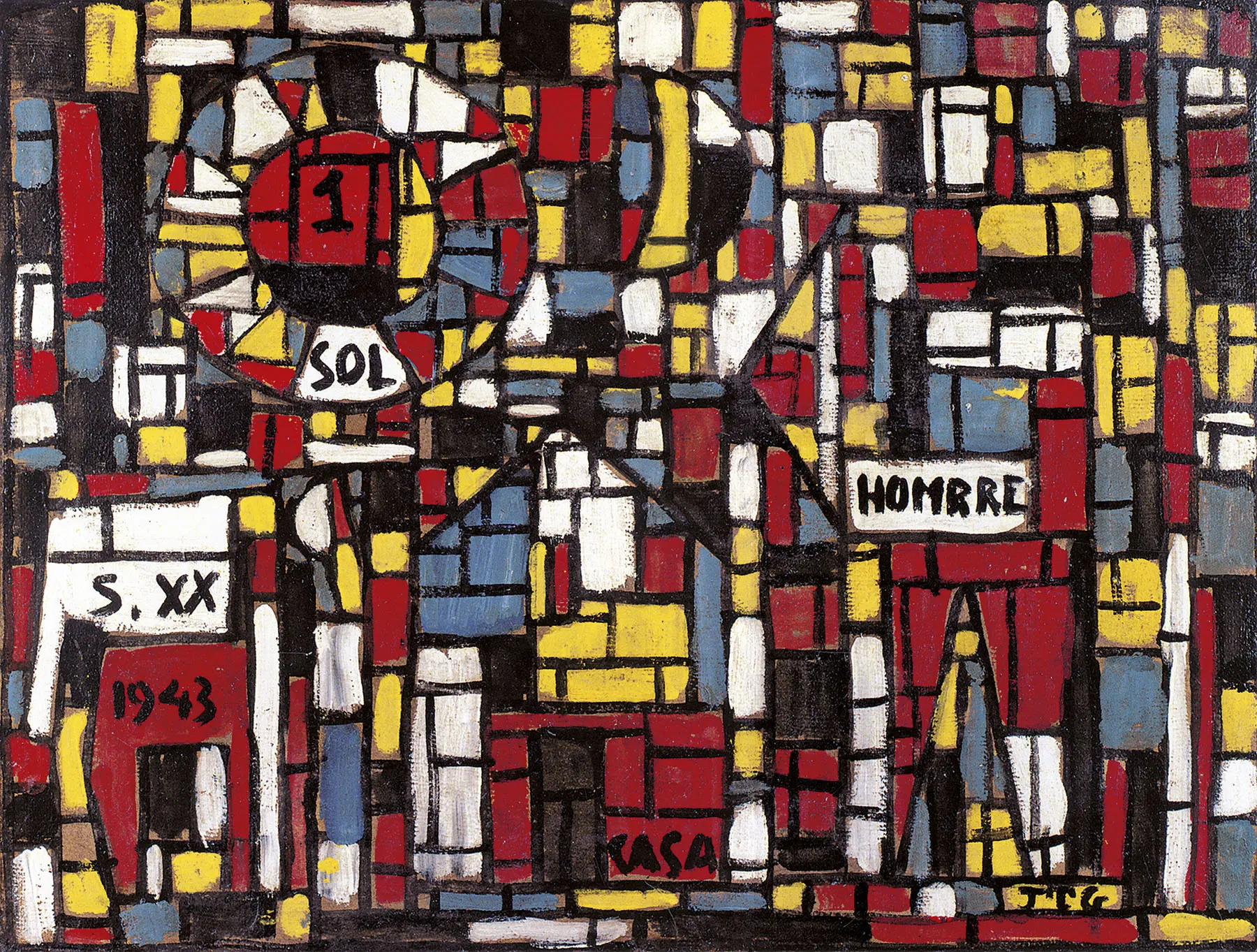
Wifredo Lam was one of the sought-after artists of the sale. His Grande Composition scored another success by surpassing its estimate of $180,000/200,000 to sell at $310,000, and a beautiful work on paper from 1947, Surrealistic, sold very well at $160,000. (est. $125,000/175,000). An early work from his years in Barcelona, La Letter, II, sold at $150,000 (est. $150,000/200,000). Another small sector of the sale was offered to benefit the Daniela Chappard Arte-Sida-Vida Foundation; all the works included were of great quality and it was completely sold. It included a spectacular painting by Joaquín Torres-García, Arte Constructivo, which carried an estimate of $275,000/325,000 and sold for $300,000.
The second part of the sale was particularly successful on this occasion, totaling an additional $3,042,000. Highlights of the morning session were an elegant drawing by Wifredo Lam, Mère et enfant, which climbed many times above the estimated $18,000/22,000 to finally sell at $65,000., and the continued success of Francisco Zúñiga, whose three sculptures sold far above their estimated prices. Mestiza sentada estimated at $25,000/35,000 realized $57,000.; his beautiful work in black marble, Mujer peinándose, which was estimated at $40,000/50,000 sold at $84,000.; and the bronze Juchitecas conversando also surpassed the estimated $40,000/60,000, selling at $114,000. Arnaldo Roche’s Los Amantes de las Flores also surpassed its estimate of $25,000/30,000 and sold for $48,000, and a particularly mysterious landscape by Tomás Sánchez brought competitive bidding that exceeded the estimated $30,000/40,000 and sold at $80,000.
Latin American buyers had to put everything on hold for a week and regroup in Paris for Christie’s sale on June 10. The elegant avenue Matignon welcomed the Latin buyers with three exhibitions that were held at the same time as the Christie’s exhibition: Daniel Malingue had a spectacular collection of works on paper and paintings by Matta, while Fabien Boulakia presented a museum-like retrospective of Wifredo Lam’s work with excellent examples from all his best periods, both oils and works on paper. Last but not least, Hopkings-Custot Gallery offered a wonderful selection of new sculptures and works on paper by Fernando Botero. It truly seemed that Paris was undergoing a Latin American invasion! Whether these efforts were all duly noted, however, remains to be seen. Dealer Mary Anne Martin expressed it best when she summarized: “The auction could have been held on the moon, and you still would have had the same phone bidders and buyers. The way I see it, European interest in this area of collecting is still in the developing stages, while I do think that separating the auctions is well-intentioned, it divides the interested buyers in timing and geography and this can cause more damage than good in the short term.”
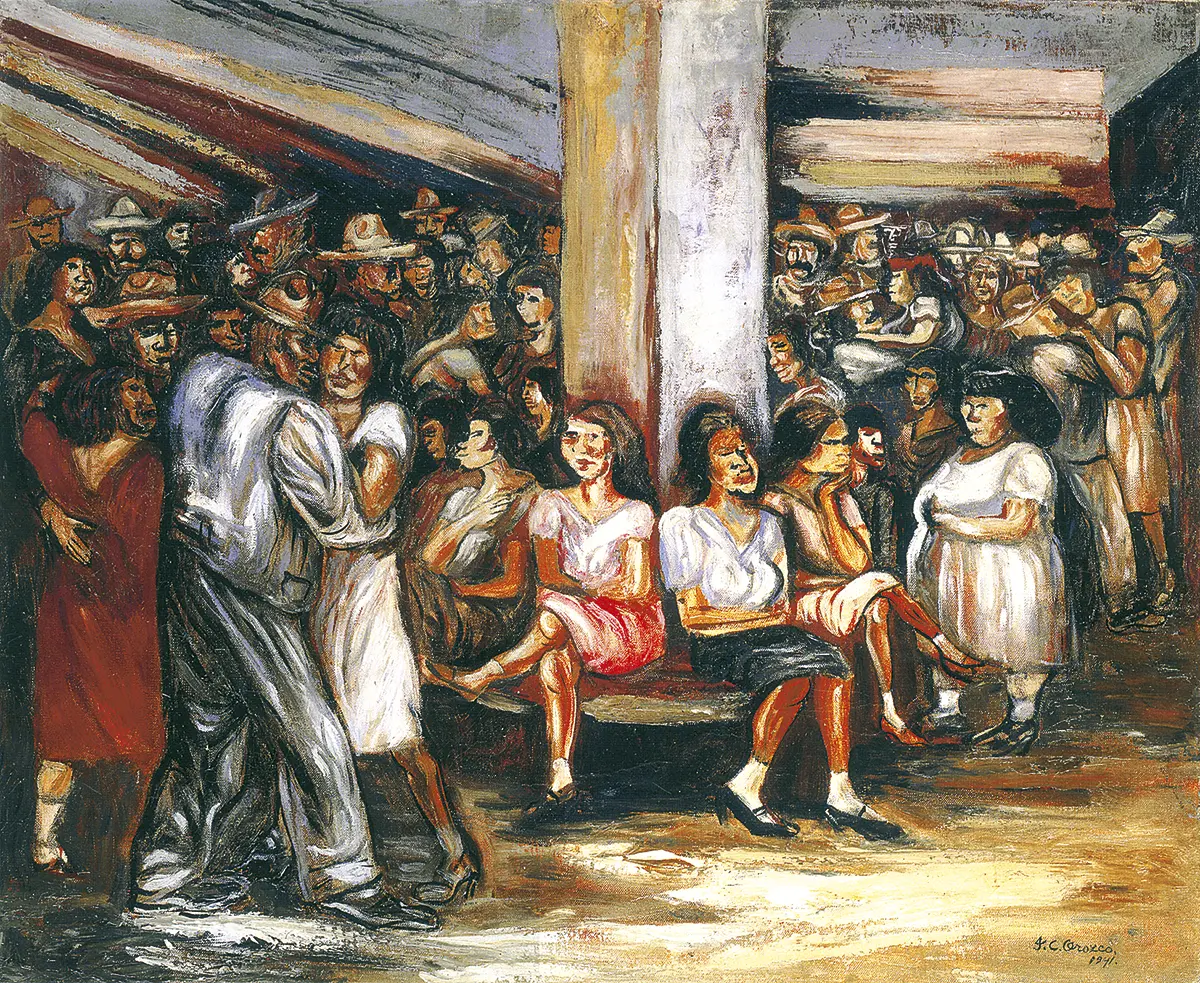
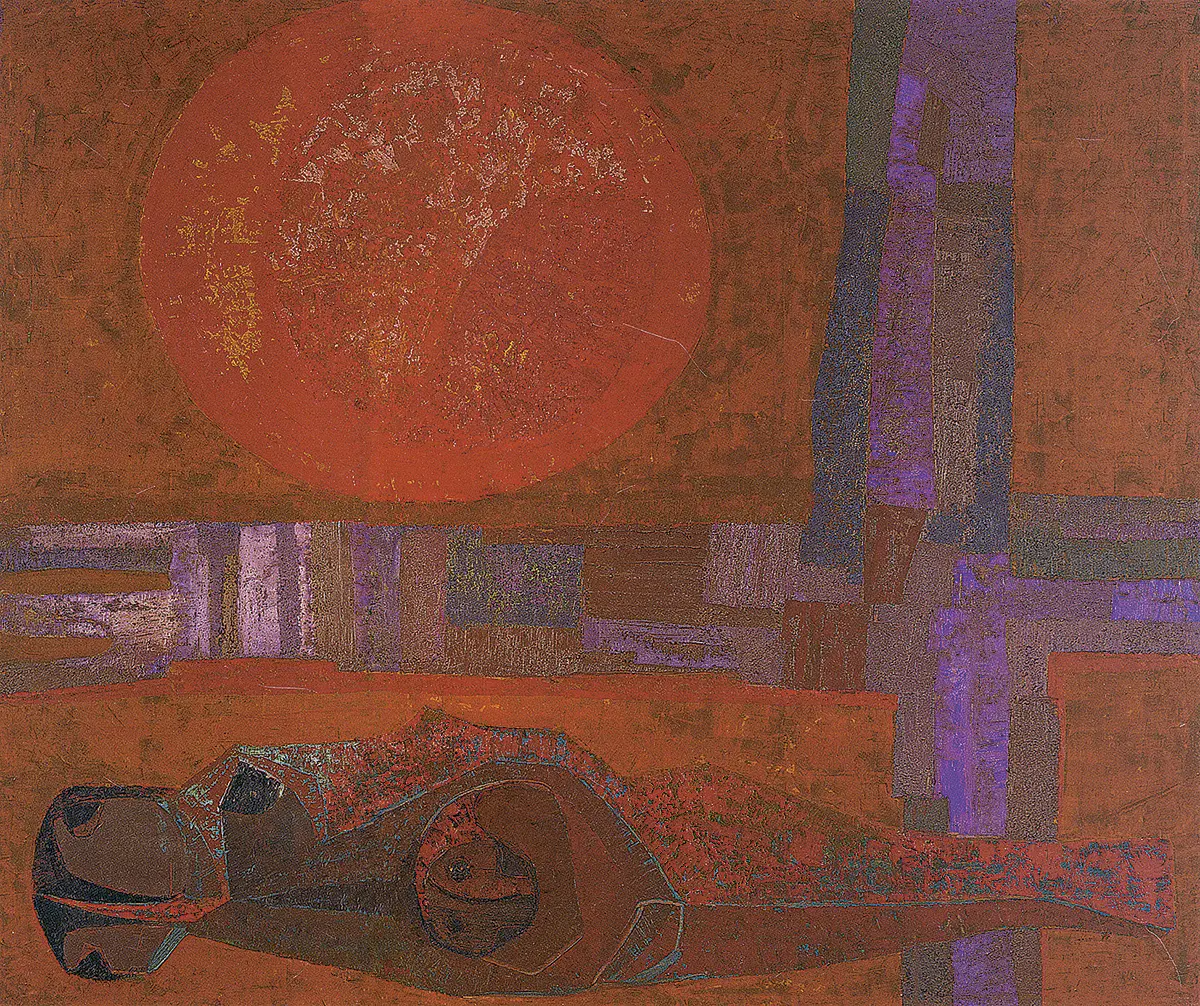
There is no question, however, that Christie’s made a special effort to gather Latin American works that took into consideration European taste and collecting patterns, and the superior quality of the collection that was offered achieved very good results. The first highlight was the cover lot, Claustrofobia, a great work by Tamayo from 1954, which had actually been exhibited at Miami Art Basel in December of last year and was now offered with an estimate of 650,000/800,000 ($800,000/1,000,000) and sold above the estimate for 860,000 ($1,171,083), after a bidding war between a telephone bidder and the buyer, León Tovar, a New York-based gallerist. Another Tamayo from an earlier period of the artist’s oeuvre, El fumador from 1945, also sold very well for 320,000 (est. 285,000/325,000). The success of Mexican art continued with the new world record that was set for José Clemente Orozco when La cantina, estimated at 570,000/730,000 ($700,000 /800,000) sold for 720,000 ($982,061); a new record was also achieved for Francisco Toledo who’s his seminal work, El mago sold for 400,000 (est. 365,000/445,000).
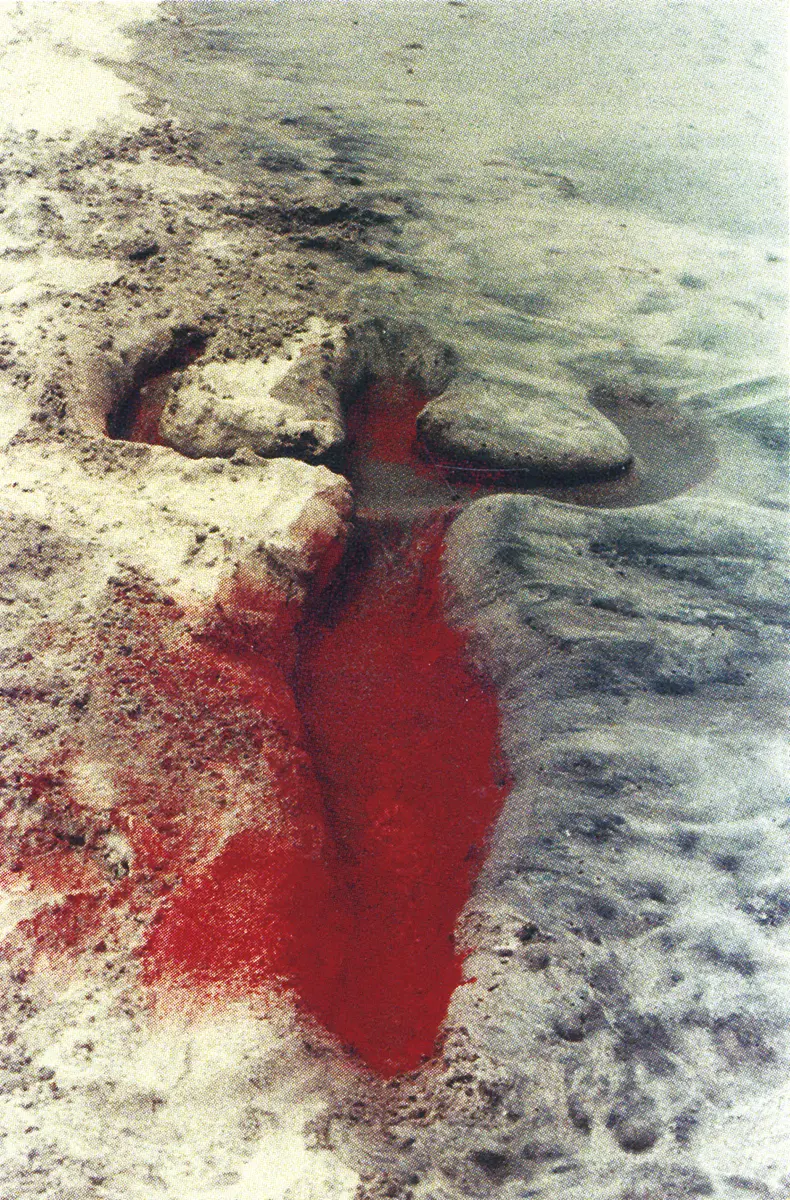
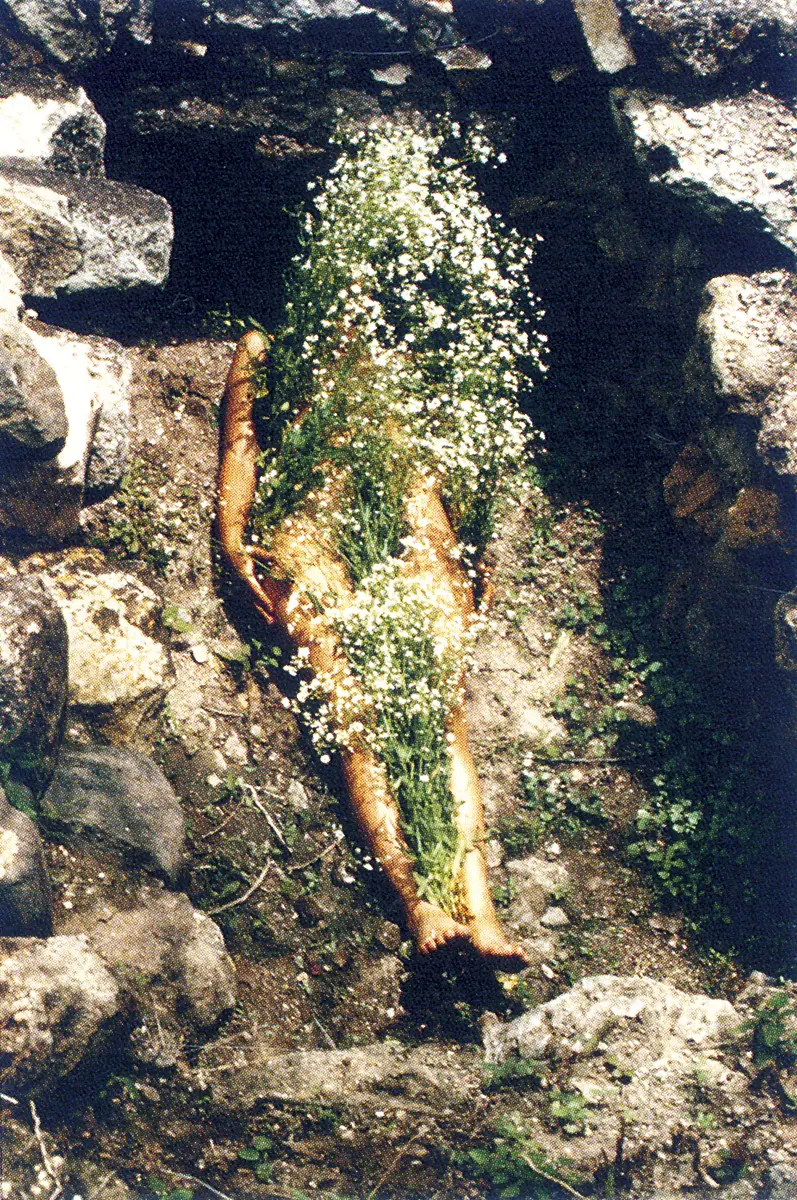
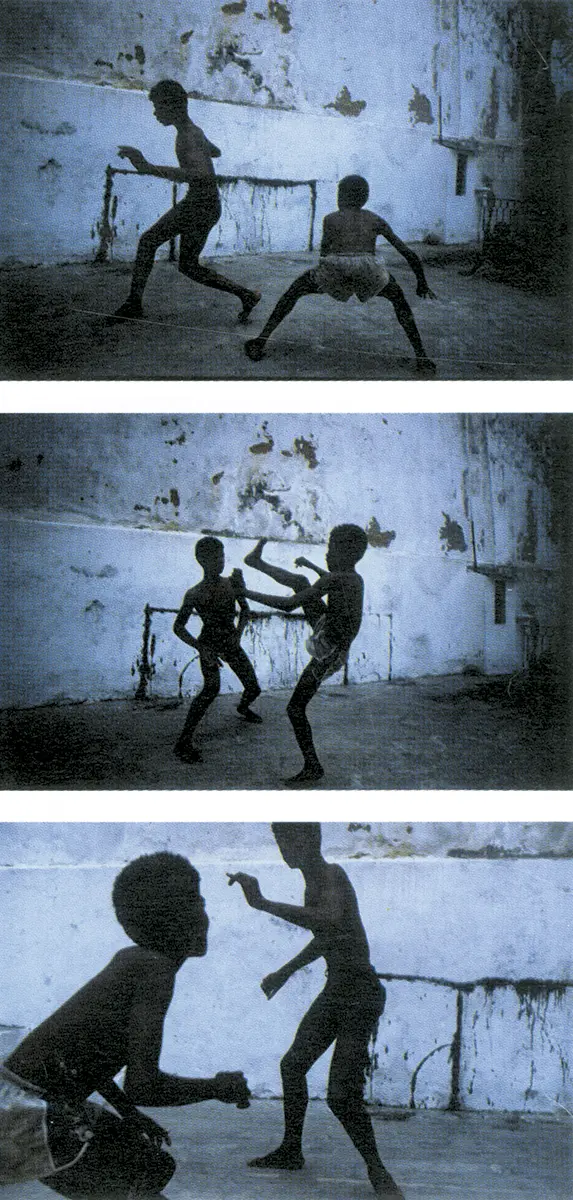
The contemporary part of the sale offered an interesting selection of works from some of the most important and sought-after “hot” Latin American contemporary artists. It brought a new world record for the work of Ana Mendieta with the sale of her collection of photographs, Siluetas, estimated at 18,000/24,000 sold for 35,000. This interesting artist will be having her first major retrospective in the United States in July at the Whitney Museum in New York. Valeska Soares, another contemporary Latin artist with a recent exhibition history in New York, where the Bronx Museum mounted an exhibition of her work last year, sold Model After Vanishing Point, which was reminiscent of the floor installation piece that was shown in the Bronx exhibit. It was sold for 5,500. (est. 4,000, 5,500). Miguel Rio Branco also achieved a new world record with his dynamic Blue Tango, which was estimated at 8,000/12,000 and soared to a total of 26,000, again bringing into focus the importance of photography in contemporary Latin American art.
As a concluding thought on Christie’s move to Paris, let us say that the argument for the integration of Latin American art into the international market is well-known in the field. In 1991 Sotheby’s tried to amalgamate the Latin American works into the Impressionist/Modern and Contemporary auctions for the spring season that year. The results were not only very discouraging, but it was a determining factor in the loss of the consignment of a Frida Kahlo self-portrait that went to Christie’s as the catalog cover, and set a record price for the artist and for Latin American art at $1,500,000. Over the years since that event, there has been an undisputed and enormous growth in the art market in general and certainly in the Latin American market as well.
It is now very common to find Latin American works, particularly by contemporary artists, in European or American collections. Yet the category remains a separate collecting area, which is explicable and understandable from a cultural point of view in the same way that American painters, or Canadian, or Irish and British pictures are still sold in separate categories. Latin artists have always been sensitive to being categorized as just Latin which had third-world connotations from an economic standpoint, but not within the context of cultural identity. Christie’s understood this well by bringing the sale to a new venue in Paris, a city that has had a long tradition of nourishing and forming great Latin artists. A wider audience is always worth the trouble of experimenting, and for its first attempt, Christie’s experiment was an interesting form of exposure that needs more time to be properly assessed.
Christie’s total: 6,528,639 ($7,870,274); sold by value: 69%; sold by lot: 61%
Sotheby’s total: $9,840,800; sold by value: 81.18%; sold by lot: 76.19%
All prices quoted do not include the commission charged by the auction houses.
ALBERTO BARRAL
Private New York dealer, specialized in the Latin American market.