
Almost twenty years
after her untimely death at the age of thirty-seven, artist Ana Mendieta
finally arrived at, or very near, the bosom of the American canon. A thorough
but entirely digestible survey of her work, from her graduate student days at
the University of Iowa at the beginning of the 1970s to what she was doing at
the time she perished in 1985, came to Whitney Museum of American Art in the
summer of 2004.
Earth Body refers to Mendieta’s custom of using her own body—or its outline—as the main element in small-scale earthworks; the exhibition consisted largely of film and photographic records of the artist’s one-time performances and set pieces. It was organized by the Smithsonian Institution’s Hirshhorn Museum and curated by the Hirshhorn’s deputy director, Olga Viso. Viso, along with scholars Guy Brett, Chrissie Iles, and Julia Herzberg argue convincingly in the impressively authoritative catalog that Mendieta was among the most adventurous and influential practitioners of the American avant-garde of the 1970s.
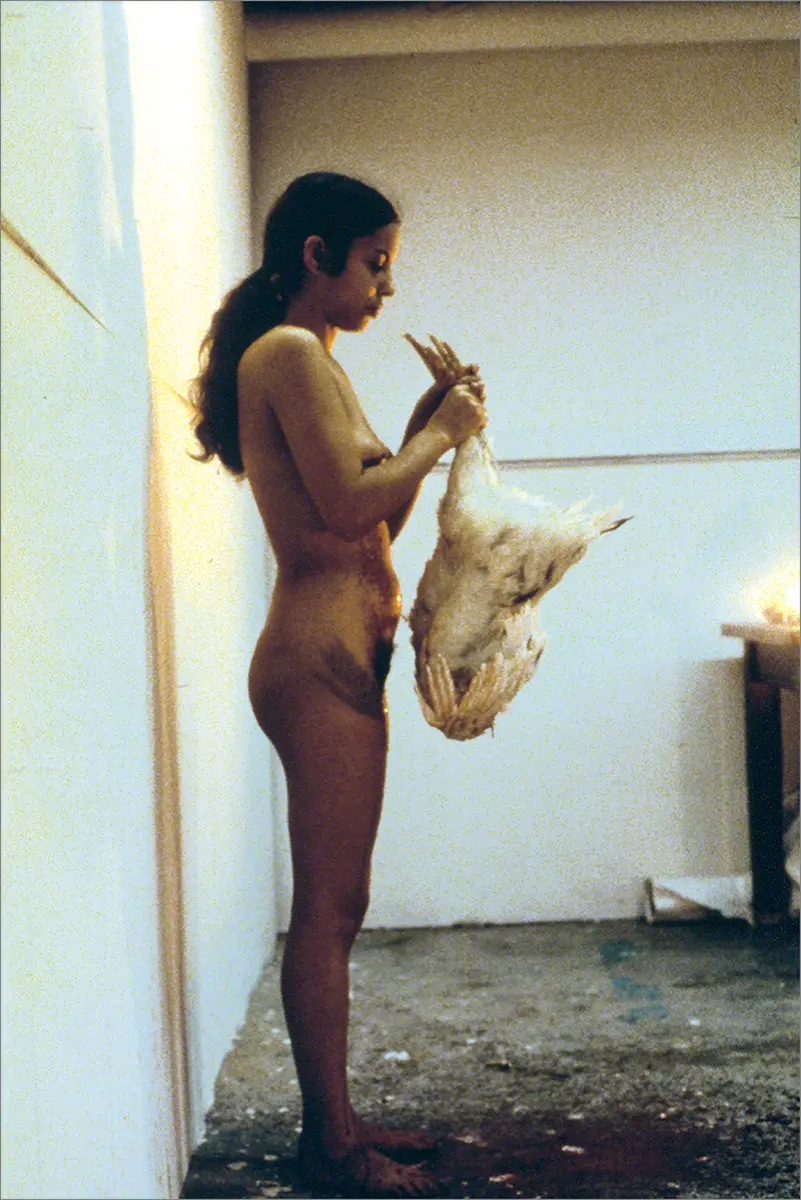
From the time she confronted fellow University of Iowa students with works involving freshly killed chickens, quantities of blood, and her own naked body, much about Mendieta has always seemed larger than life. In part because of the circumstances surrounding her tragic death, the artist’s mythical qualities continued to flourish long after she was gone, shrouding her legacy in mysticism and polemics. But if Earth Body definitively establishes any one thing, it is that a wide-ranging, serious examination of the creative force of her career is probably long overdue.
There are reasons to be skeptical about a major museum exhibition dealing with Ana Mendieta, however, especially one for which so much institutional coinage has been minted, because some of her most important milestones defied being exhibited before a large public; or, in some cases, any public at all.
Mendieta entered the University of Iowa fine arts program in the mid-1960s, but as a graduate student, she abandoned her original path, painting, to participate in an interdisciplinary program called Intermedia under the auspices of its founder, Hans Breder, an artist well-versed in performance and other then-fresh stirrings on the experimental fringes of the art world.
That Mendieta found her Intermedia experience liberating and enormously stimulating is evident in the Earth Body record of what she accomplished when she was performing before fellow students and her professors, often an unsuspecting audience for her latest advances. In Untitled (Death of a Chicken), 1972, for example, the artist holds a freshly killed chicken which splatters blood over her naked body.
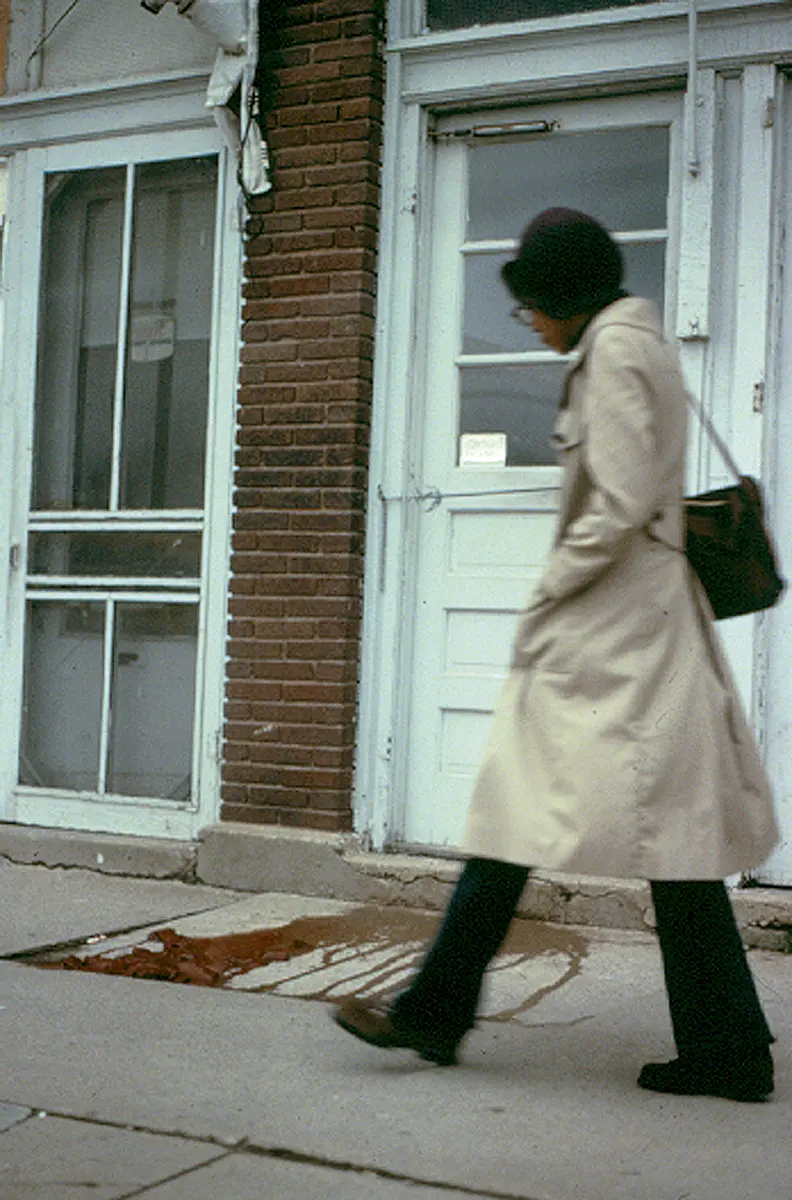
A subsequent series which made abundant use of blood-actions and interventions involving a campus rape-murder-carried the same unexpected, confrontational aspect of Mendieta’s work of that period outside the university walls. Untitled (People Looking at Blood, Moffitt), 1973, shows an unsuspecting passerby coming upon a vivid red stain on the sidewalk in front of an apartment doorway. In a considerably more theatrical mode, Mendieta placed herself in various settings—including her apartment and the boggy-looking Iowa countryside—supine, undressed, and besmeared with blood; sometimes these events were witnessed by a few students and other times only by the camera.
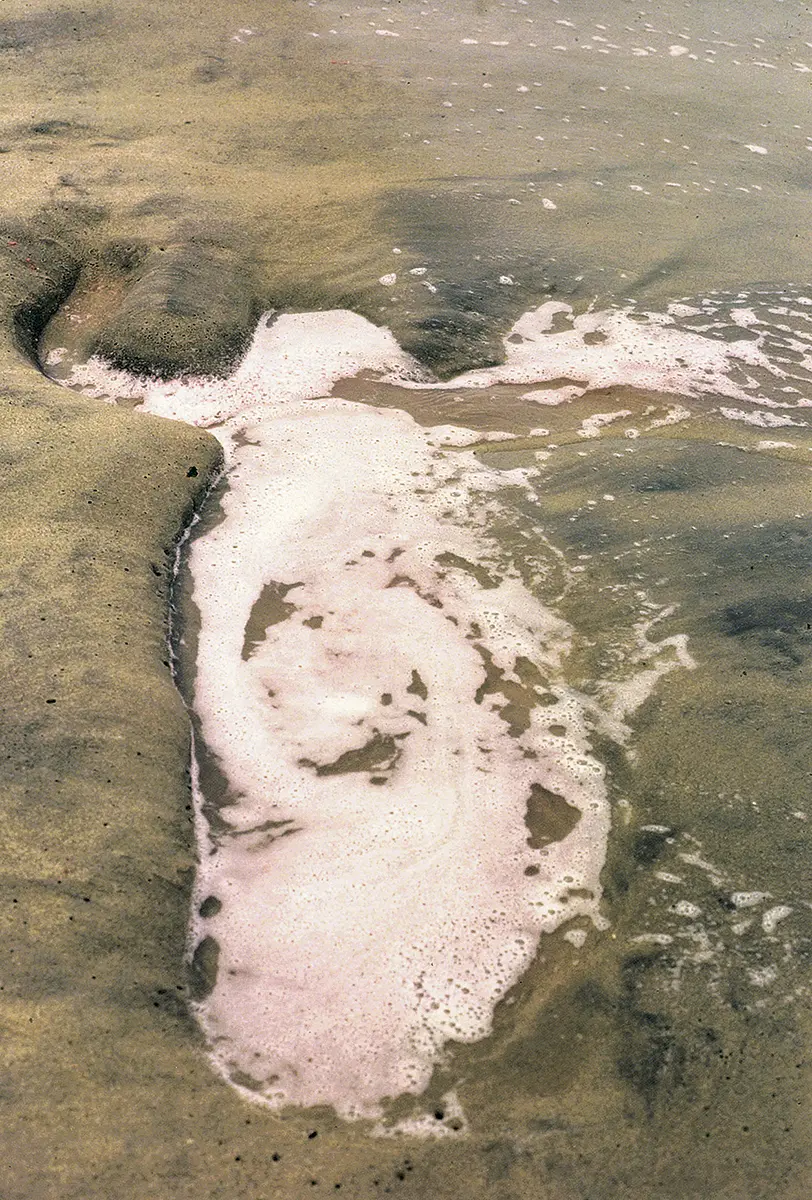
In 1973, she went with Breder to Oaxaca, Mexico, to explore Mesoamerican archeological sites, and this trip marked the beginning of the work that she is perhaps best-known for, her Silueta series, which had many incarnations. For the first of the Siluetas, Imágen de Yagul (Image from Yagul), 1973, Mendieta lay naked in a vacant grave at Yagul while Breder covered her with white flowers and photographed her. This was to be the template for years of works that followed, though sometimes the artist’s presence was only hinted at, as in Untitled (Silueta Series, Mexico), 1976, or the even more evanescent Untitled (Silueta Series, Mexico), 1976, where ocean waves wash over a cavity that Mendieta made in the sand at La Ventosa and filled with red tempera.
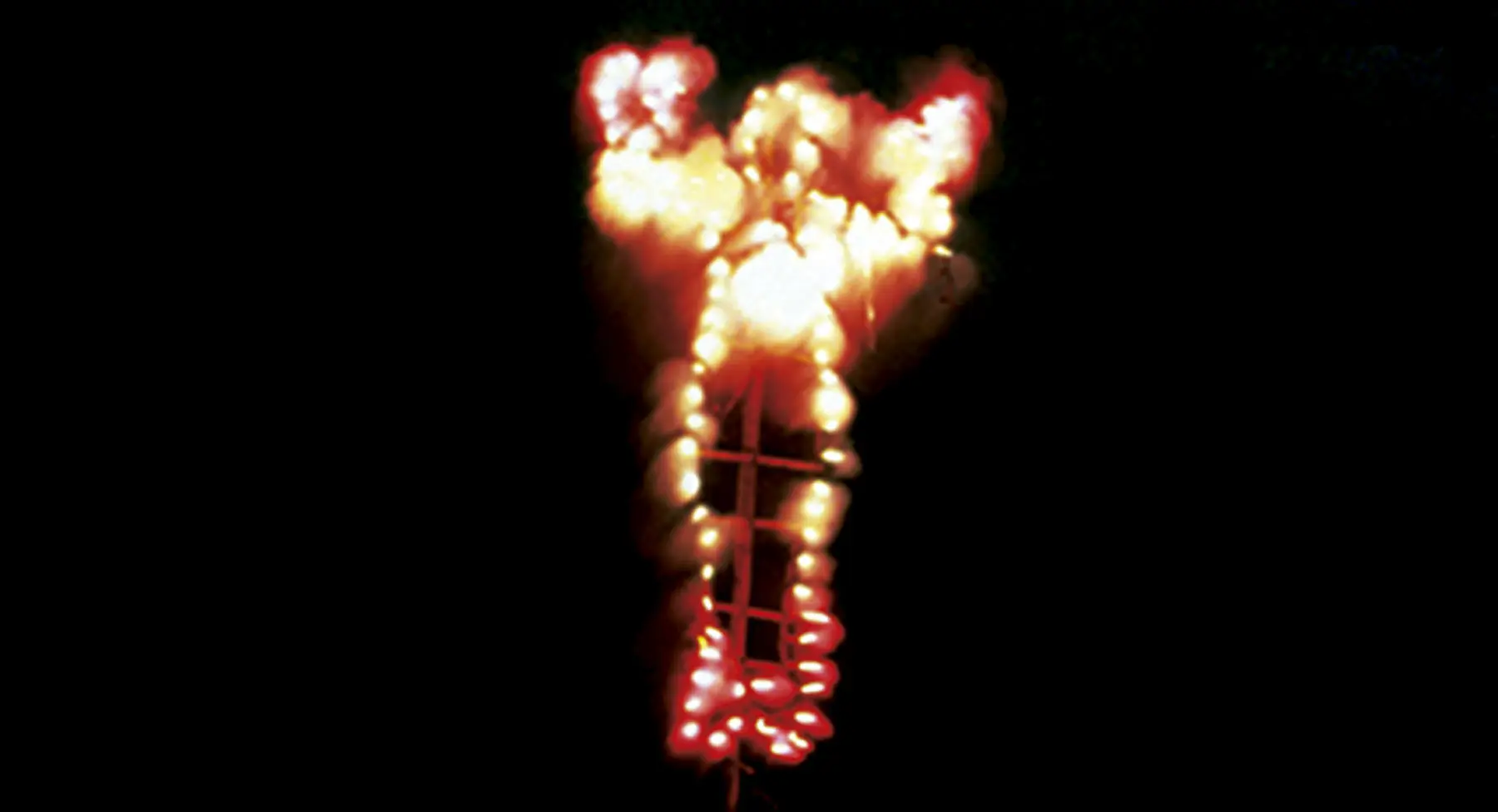
Fire became another signal motif for the Siluetas, and Mendieta employed a mixture of gunpowder and sugar to activate incendiary works in the landscape. Untitled (Maroya) (Moon), 1982, for example, consisted of a vulva-like niche dug into the yard of a private residence in Miami, filled with gunpowder, and ignited on moonlit nights. The most ethereal of these were not earthworks, however. Ñañigo Burial, 1976, was originally a gallery installation consisting of lit black candles arrayed on the floor in the outline of the artist’s body; as the candles melted, the wax pooled into a new silhouette. Ánima, Silueta de Cohetes (Soul, Silhouette of Fireworks), 1976, was one of the most impressive works in the exhibition, both for its explosive flaring and dying, and for demonstrating how Mendieta adapted ancient or popular folk traditions—in this case, she commissioned a Oaxacan fireworks maker, using local cane, to construct the work’s armature—to her own contemporary artistic ends.
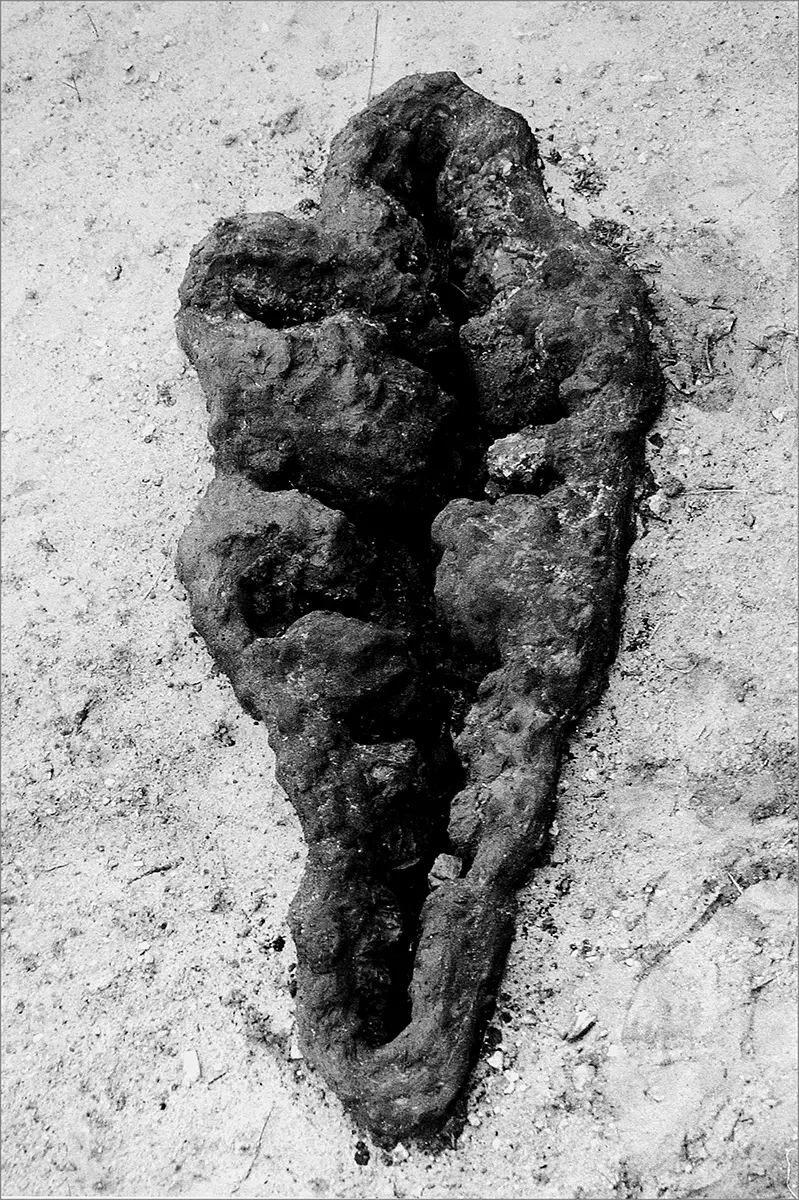
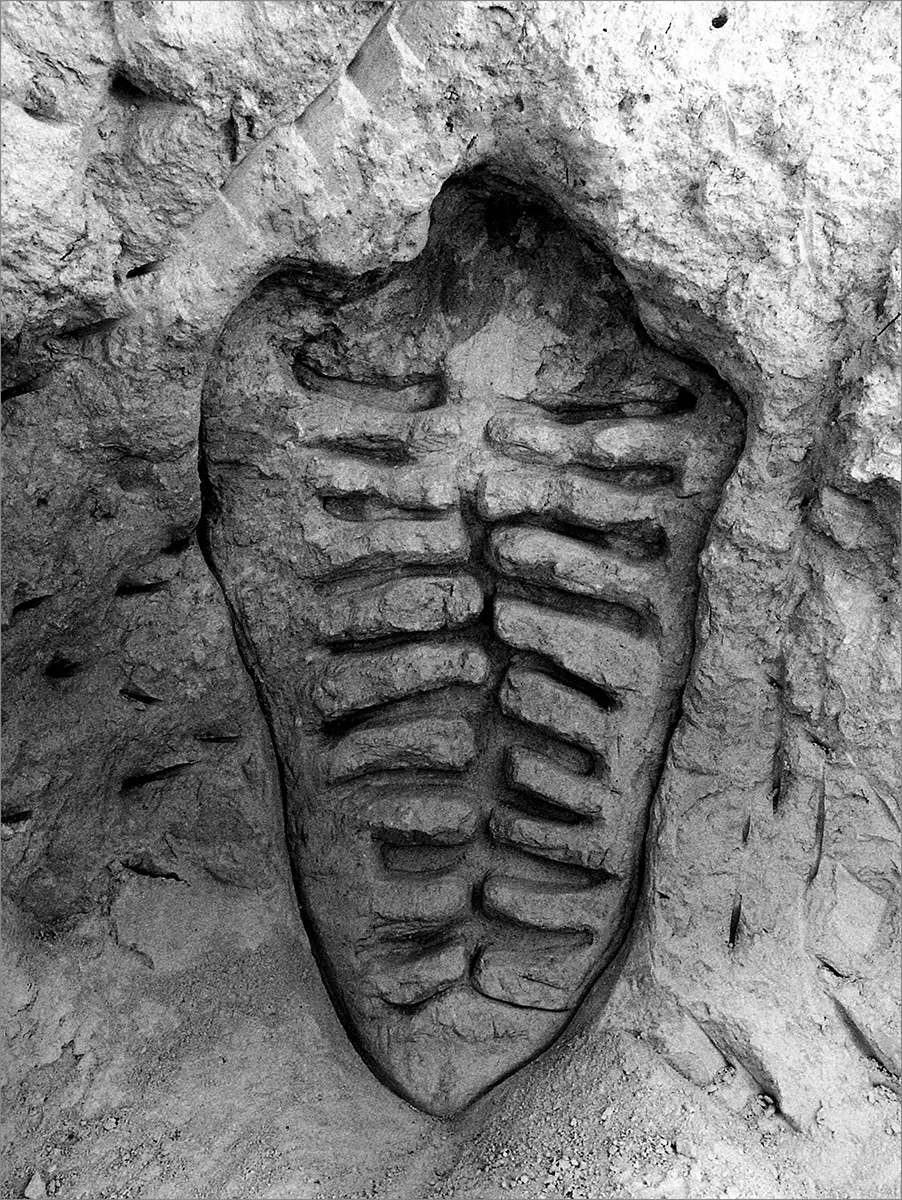
The Siluetas took further significant turns—in the early 1980s Mendieta traveled to Cuba and embarked on a series of rock sculptures known as Esculturas Rupestres (Rupestrian Sculptures)—and in general she began to move away from works of a suggestive, transitory nature and toward more solid objects. But for much of her career she dedicated the forceful vector of her artistic will to shaping and refining her earth body works, and although she invested these with an enormous range of intention, form, and mood, they had much in common.
The most troubling, paradoxical fact that any curator or museum administrator must confront when considering the whole spectrum of Mendieta’s oeuvre is that she was, in the beginning and throughout the most vital moments of her production, dedicated not only to whatever personal means of expression her work might find but also, in the spirit of Marcel Duchamp—an artist Mendieta much admired—to overturning the old artistic order of conventional media like painting and drawing, and the usual arrangements of artist and audience, and the customary ways that art objects are visited, in the fusty and perhaps hopelessly archaic confines of galleries and museums.
Over the years, many different things have been written about Mendieta, but there are recurring motifs: that she worked in isolation; that what she did often consisted of brief sequences of living gestures in landscapes so inconstant that all traces would soon vanish; and that she sometimes expressed the hope that her works, if seen at all, would be stumbled upon by accident and apprehended as things unintentionally left behind, perhaps by an ancient people.
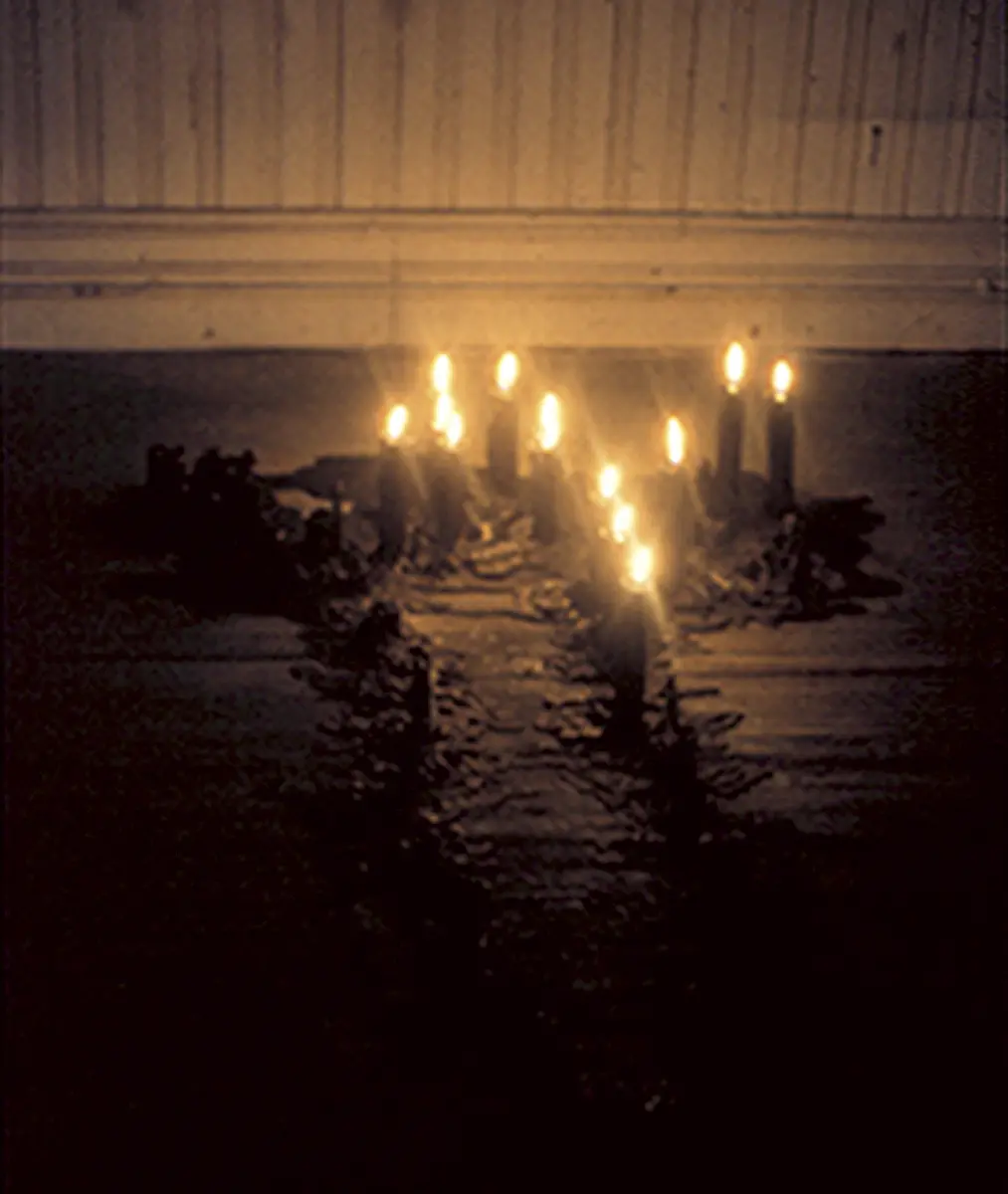
The artist’s own words and observations by those investigating her career, suggest that the fugitive nature of her work was not just important to her, but key. Guy Brett, writing in the exhibition catalog for Earth Body, manages to articulate the ineffable perfection of Mendieta’s fiery Ánima with a quote from Brazilian conceptualist Hélio Oiticica, who is describing fire tins along the roads of Rio de Janeiro, “...They are illustrations of life. The fire lasts and one day it goes out, but while it lasts it is eternal.”
To see Ánima as a video loop, repeating again and again in a somber, darkened alcove of the Whitney is to miss its going out, and this is at least half of the experience of the work. Even to witness the event so second-hand, to see any of Mendieta’s flesh-and-dirt works through the degraded media of film, slides, and photographs seems to fix these chancy, near spontaneous moments in a hard emulsive gloss, to give a deadening finality to what by nature was protean, vital, and bright with fierce intention.
Yet all in all, the exhibition did have that quality peculiar to freeway wreckage, celebrities, and celestial cataclysms: it was impossible to look away.
There are several possible reasons that Earth Body did not founder on its far remove from the artist’s heyday, and, on the contrary, admirably delivered a lot of the complexity that the organizers promised. First and foremost, Earth Body provided a breathtaking revelation of the wholeness of Ana Mendieta’s artistic project. Apparently this is not an original accomplishment. Over fifteen years ago, Luis Camnitzer devoted an article in this magazine (then titled Arte en Colombia, #38, pages 44-49 and 133–135) to a Mendieta retrospective mounted by The New Museum after the artist’s death. Camnitzer’s premise was precisely that for the first time Mendieta’s friends and admirers could see and evaluate the breadth of a career that previously they had only fitfully glimpsed.
But the reach of Earth Body was splendidly amplified by the passage of time and the fresh perspectives it allows: the discovery of new information about the artist, the ample opportunity to mull the information over, the gathering of additional works, and so forth. In addition, the Whitney Museum, so practiced, dedicated its usual unsurpassed care to the exhibition’s display, and at all moments, from the director’s opening remarks, the museum seemed to be sensitive to its rather awkward position as the official steward of a body of highly unofficial works.
Secondly, during her lifetime, Mendieta herself was not averse to exhibiting the photographic record of her actions and interventions, as Viso notes several times in her own catalog essay.
Finally, Earth Body held enough actual objects -in addition to plentiful leaf and root drawings and tree-bark sculptures, a rendition of Ñañigo Burial burned fitfully not far from the entrance to the exhibition—for visitors to witness something of the artist’s hand, if not the deepest part of her spirit.
That, by Mendieta’s own design, seems always to have been a near impossibility. Yet the still and flickering images of Earth Body worked hard to try, and in some measure, like a sudden sideways glance, they managed to catch a shadow, a reflection, an impression as fleeting and brilliant as the work once might have been.
This exhibition was organized by the Hirschhorn Museum and Sculpture Garden in Washington, D.C. It will be shown there and will travel to the Des Moines Art Center and Miami Art Museum.
© Copyright of all the works illustrating this article: The Estate of Ana Mendieta Collection. Courtesy: Galerie Lelong, New York.
JOEL WEINSTEIN
Lives in Miami and writes about visual art for national and international magazines.