While visiting a friend’s house in Madrid I passed a room stacked, floor to ceiling, with a library of his compact discs, probably the biggest collection I have ever seen. Observing my amazement, his wife shyly remarked: “The only problem is that they are organized by the date of birth of the composers.” The following day I visited the Museo Nacional Centro de Arte Reina Sofía. Monochromes: from Malevich to the Present1 was the first thing to see. An undeniably handsome show, it was the result of another odd way of inventorying. I was expecting the wife to appear and tell me, “Sorry, art history here is organized by color.” All the black pieces were in one section, followed by white, blue, red, silver, and gold sections. The result was an example of a simple yet impeccable interior decorator’s taste; sort of formalism gone mad in a search for beauty (or, more properly, spiritualism). The actual intent of the individual works of art was totally disregarded, yet the effect was more soothing than irritating.
Also in the Reina Sofía was Dalí: Mass Culture, inaugurating (together with a nice overview of Lichtenstein’s paintings) the new and barely opened extension of the museum designed by Jean Nouvel. Yet another example of biased inventory, it reorganized Dalí’s work in terms of his use of and impact on advertising, film, and magazines. Oppressive and dark in the set-up (although not necessarily out of line with what Dalí himself might have decided), the exhibition focused on Dalí’s better work sparing the viewer from his most blatant and notorious failures. But the curatorial “system” could equally have been applied to any number of the artists of the twentieth century and did not seem to reveal much more about Dalí than any normal good retrospective would have.
The next visit was to the Fundación “La Caixa,” to find yet another exercise in inventory. But in this one, there was a true revelation to be found. Unexpectedly, here cataloging was not a symptom of eccentricity or a thesis trick. Instead, inventory was the whole point of the show. More precisely, the subject matter was Hernando Colón’s inventory of his print collection.2
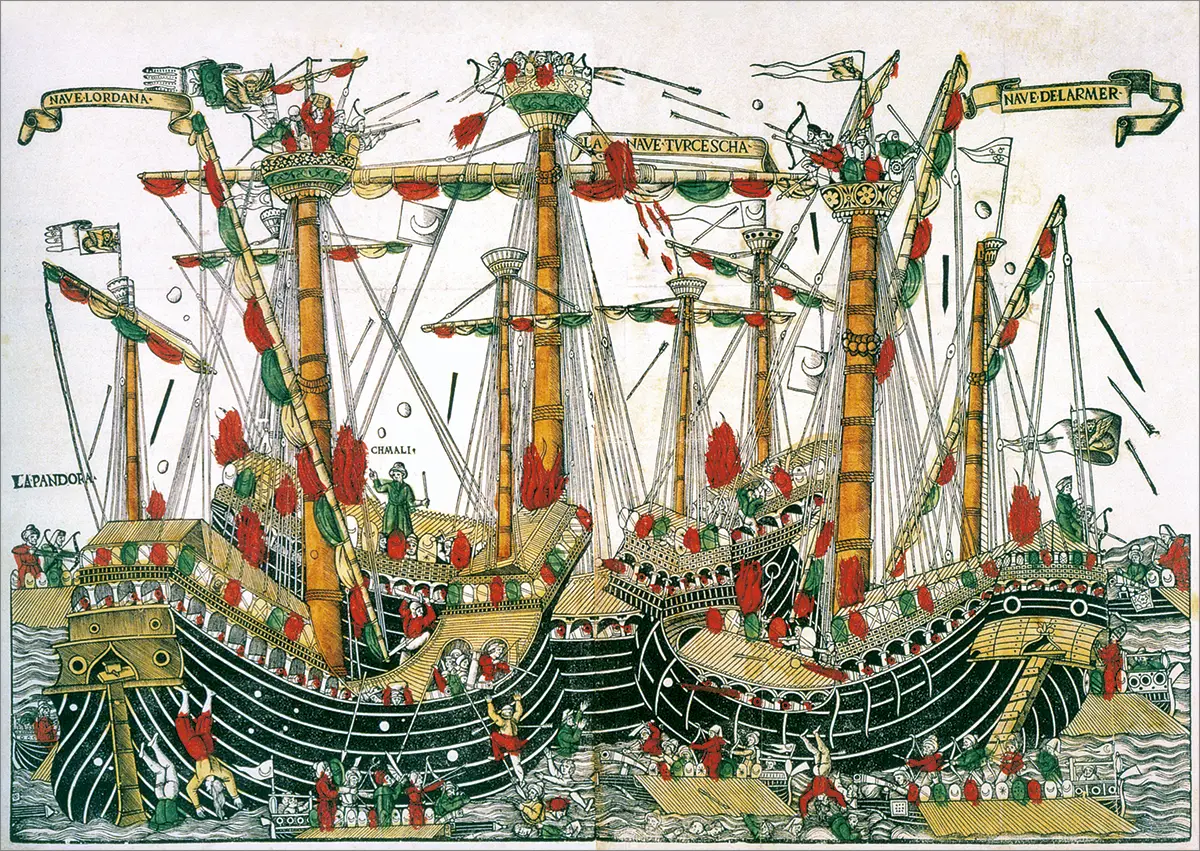
Hernando (1488-1539) was the bastard but recognized son of Christopher Columbus (Cristóbal Colón). While conventional wisdom tends to dismiss the Colóns as a family of reasonably educated pirates, Hernando was, in actual fact, a humanist of note. He counted Erasmus among his friends and was the biggest print and book collector of the Renaissance. His library had about 15,000 books and 3,200 prints; figures that were staggering at the time and indeed would be so today for any scholar.
Hernando’s obsessive collecting, while probably neurotic was not informed by personal greed. He had the altruistic motive of creating a center of universal knowledge in Seville rivaling that of Alexandria. While in good standing with the Spanish royalty, Columbus managed to have Hernando trained at the royal court and made a page at age twelve. There he received an excellent education and, already at age thirteen, he helped Columbus write his Prophesies. With this book Columbus wanted to prove that the ownership of the Americas would make the King and Queen of Spain God-appointed rulers of both Jerusalem and the world, thus justifying the need for them to fund his fourth trip. The ploy was only partially effective. Columbus succeeded in getting royal authorization for his trip, but the funding had to be found from private sources. Hernando, aged fourteen, accompanied his father on this trip to the Americas. His final mission in life was to write the first biography of his father.
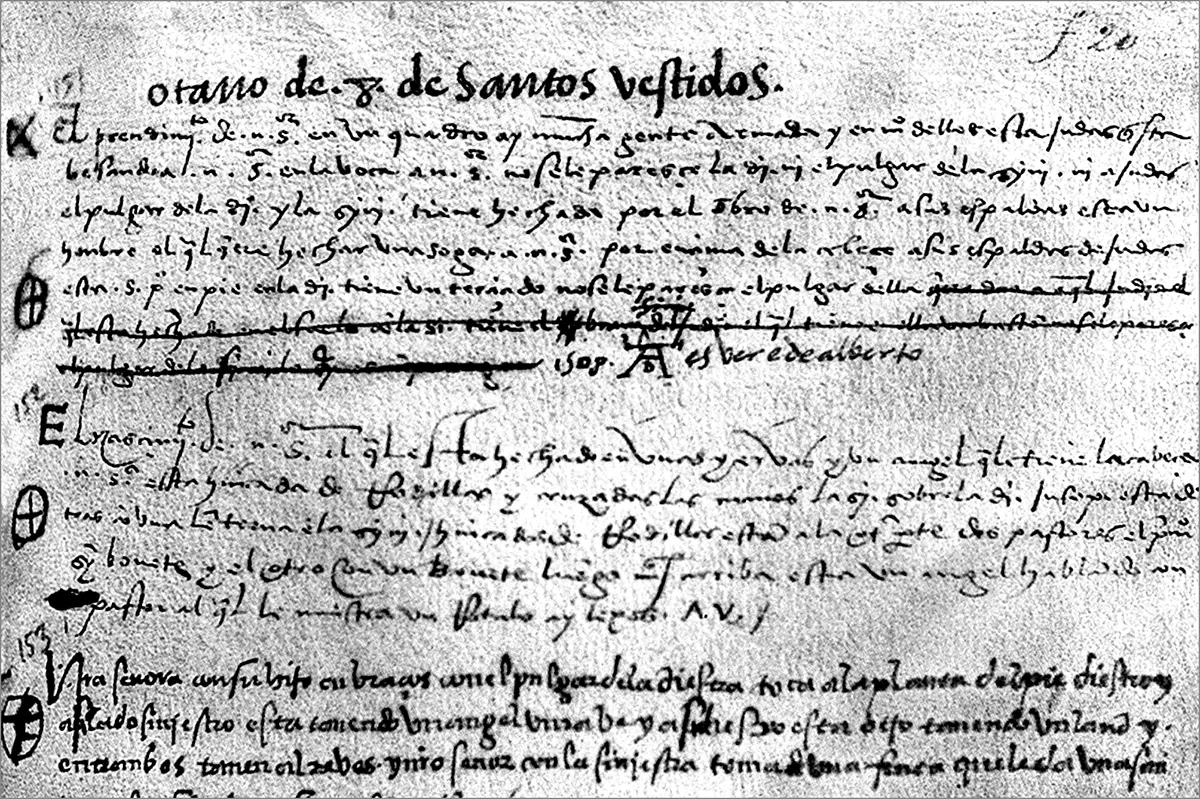
Given the ambition and size of his collection, Hernando had trouble keeping track of what he had and was in constant danger of duplicating purchases. To avoid waste, he developed a complex inventory system in which each print was carefully recorded. Without children, Hernando, upon his death, left everything to his nephew Luis (the son of his half-brother Diego Colón). Luis was not interested in maintaining the collection and decided instead to use it to pay off debts. In other words, the collection no longer exists, which makes this exhibition all the more remarkable. The inventory notes survived, however, and these were used to reconstruct Hernando’s holdings.
Mark McDonald, a curator of the Department of Prints and Drawings of the British Museum, is the author/detective to be credited with this feat. The result is more modest than the original collection, and it is not clear whether McDonald was selective among his findings or if the 109 prints exhibited were all that he was able to find. The show certainly looks like an exquisite primer on the high points of European printmaking between 1460 and 1530.
The chances were pretty high that many pieces, being prints, would be represented in collections today and, not surprisingly, the British Museum turns out to have the largest number of pieces included in this exhibition. One could therefore believe that the compilation of the exhibition was an easy task. But it was not, for Hernando‘s system did not reference authorship. With the exception of the works by Albert Dürer, whom both Erasmus and Hernando admired profoundly and whom the latter may have met in person during his travels, the other prints in his inventory are referred to by other factors. These are size; a mention of the general subject; then the detailed subject; the number of men; number of women; and whether people are dressed or nude. For similar subjects (e.g. “Last Suppers,” of which he had many) even more detailed descriptions were given, including the precise placement of objects and body parts. Unlike my friend with the unusual method of cataloguing music, Hernando did not use dates of birth, which, in any case, was at best a nebulous bit of information at the time. In the end, the information available to McDonald was sufficient for bringing this fascinating project to an impressive conclusion.
The lack of author information in Hernando’s inventory system is interesting. Today that would seem the crucial element since all the devices leading to recognition in a work of art are designed to establish authorship. Therefore, Hernando’s inventory system produces a totally different exhibition than what would be organized today. He obviously was not particularly interested in history (the St. Christopher woodcut of 1423, presumably the first European woodcut, is not there and presumably would have been there if McDonald had found it in the inventory), and he was more interested in quality and in information than in names. Which brings me back to Monochromes.
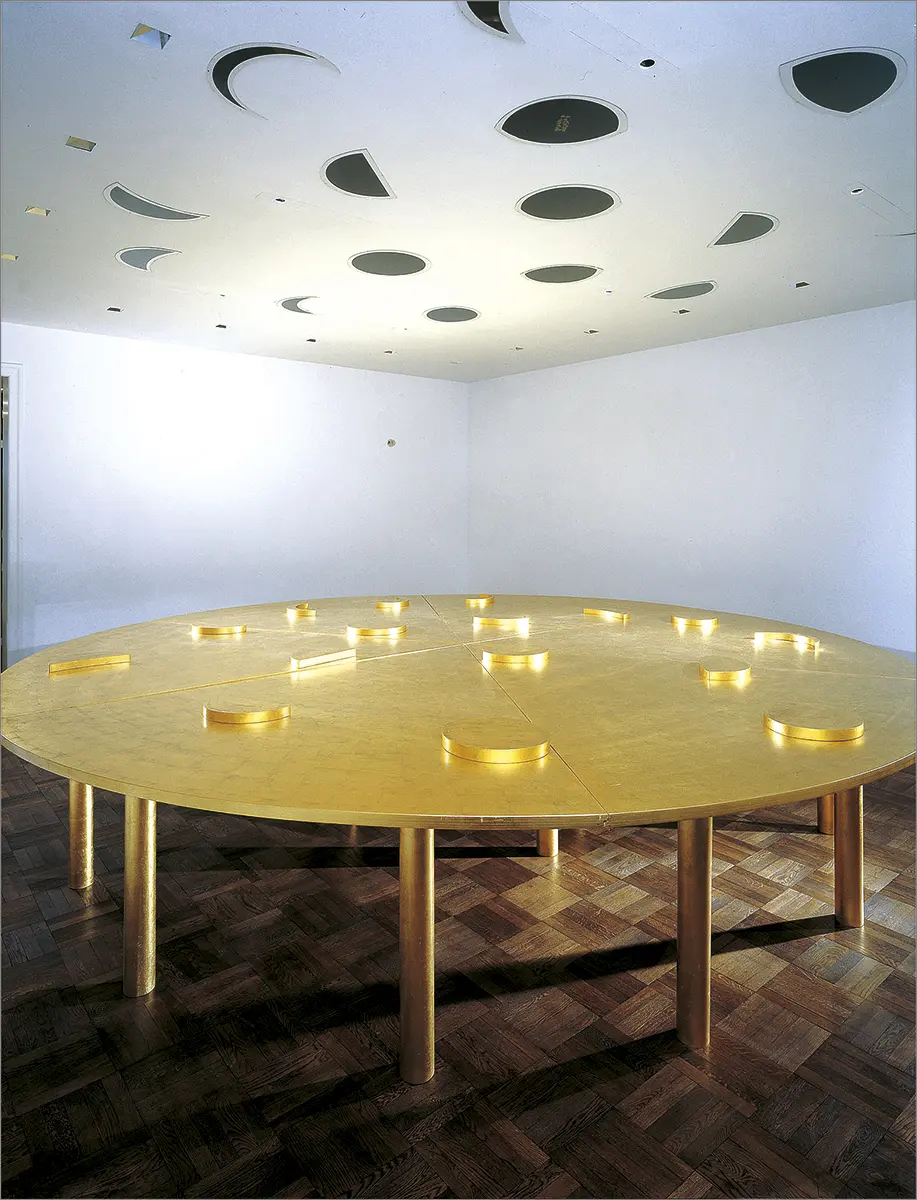
The curator of Monochromes, Barbara Rose, claims that “monochromes are the last vision of the modern.” It is only as I am writing this that I see how closely related the two exhibits are. In each case, the curators express more interest in the authors of the inventories rather than seeking an “objective” distance. In both cases, the individuality of the creators is not particularly relevant. If there is a unifying aura in Hernando’s exhibition, it is the stupefying level of skill developed by those first generations of printmakers. In the Rose exhibition, the unifying veneer is color, which hides the enormous differences in individual pursuits and anguishes, just to mention three examples of “gold,” Mathias Goeritz, Lucio Fontana, and James-Lee Byars. The curatorial choice to ignore individual complexity for the sake of the color of the packaging makes one wonder if formalism and racism are products of the same root ideology. The problem of Rose’s show is not so much the monochrome issue, but the way it was organized. A little jewel accompanying, though basically hidden within the big show is a small historical review that goes from Monet into the early twentieth century. Not hampered by color subdivisions, it makes a much more cogent case for Rose’s thesis and ultimately leaves the viewer feeling that the big exhibition is in reality a minor appendix of the “small” one. One revelation in the historical review is a work by Polish artist Wladislaw Strzeminski (1893 -1952), creator of Unism, a 1927 theory that affirmed the unity of the artwork with the place of its creation. The physical end of his paintings thus becomes a borderline with the rest of the world, and whatever happens on the canvas is a consequence of that space. With his work Strzeminski anticipated the Grupo Madí by twenty years and Frank Stella’s reductionist Black Paintings (strangely absent from the show) by more than thirty.
It is interesting how both shows reflect on the commodification of art in capitalist society and act as bookends for the artist's struggle with this process. The artists in Rose’s show seek a level of spiritual bliss or the affirmation of absolute and unchallengeable concreteness. For historical reasons, their search occurs in the unfriendly field of commodity production, trying to transcend the physicality of the object. Organize these fragile explorations by color thus seeming to put a further accent on the object. It can only be construed as a step back from spirit to body, an act of banalization. In the exhibition of Hernando’s collection, the tensions appearing due to the production of commodities also becomes apparent, but in a different way. The artists here are incipiently affirming their rights as producers even though Hernando himself is not fully aware of it. While Hernando as a collector attached little or no significance to signs of authorship such as handwriting or other forms of attribution, two of the artists present in the show, Dürer and Marc Raimondi, were the protagonists of the first bitter fights on the subject of authorship. Raimondi had “reproduced” Dürer’s works and included them in his monogram on his prints. Dürer, a fighter in the forefront for both printmakers as artists, and artists as individualized members of society, in a very modern way resented, sued, and won. In terms of the collection, it seems irrelevant if the prints are “original” contributions by themselves, or based on paintings by others. Some of the strongest works are “after” Titian (a nearly three-meters-long woodcut following The Triumph of Christ) or “popularizing” illustrations like the ones included in the Chronicle of Nuremberg, a history of the world since its creation published by Anton Koberger (Dürer’s godfather) in 1493.
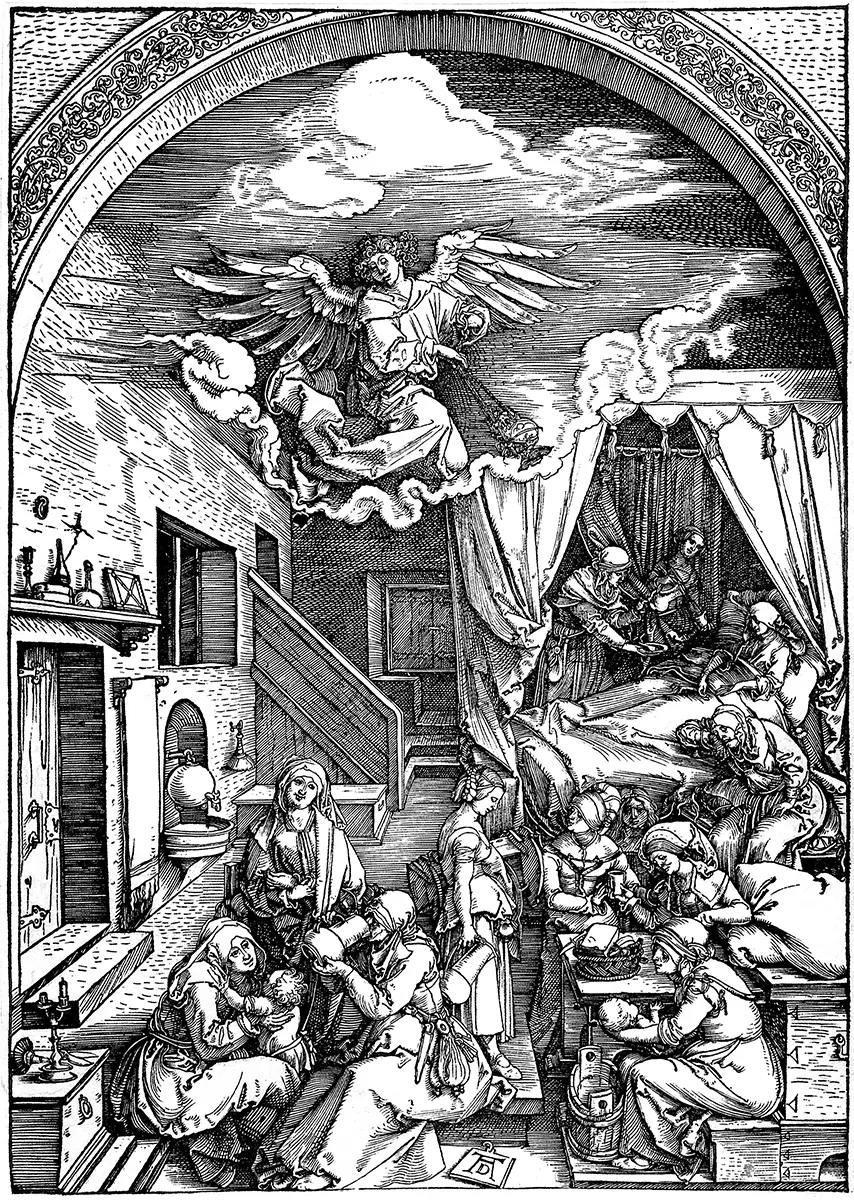
Printmaking was a way of reaching a broader public, a process accelerated in the fourteenth century by the relative abundance of paper thanks to the availability of rags caused by the recent introduction of underwear.3 The techniques were both crude and tedious so enormous skill was required to achieve the precision of imagery while satisfying “mass” taste. The nine decades covered by Hernando’s collection include the high points of what was a remarkable transition between craft and art. Dürer, Hernando’s favorite artist, rapidly developed into probably the greatest woodcut artist of all time. While his vision is mostly that of a painter and a draftsman, his ability to carve his drawings into wood planks is unparalleled, to such an extent that sometimes it is difficult to judge if the awe his prints inspire is based on the complex imagery or on his breathtaking skills. Until Thomas Bewick (1753-1828) decided, more than two centuries later, to engrave wood sliced transversally from the tree rather than planks following the grain, woodcutters were forced to struggle against the wood structure.4 Cutting with the grain is easy, cutting across the grain tends to rip and break the fibers. Meanwhile, metal engraving was setting a visual standard of precision in drawing virtually impossible for woodcuts to achieve.
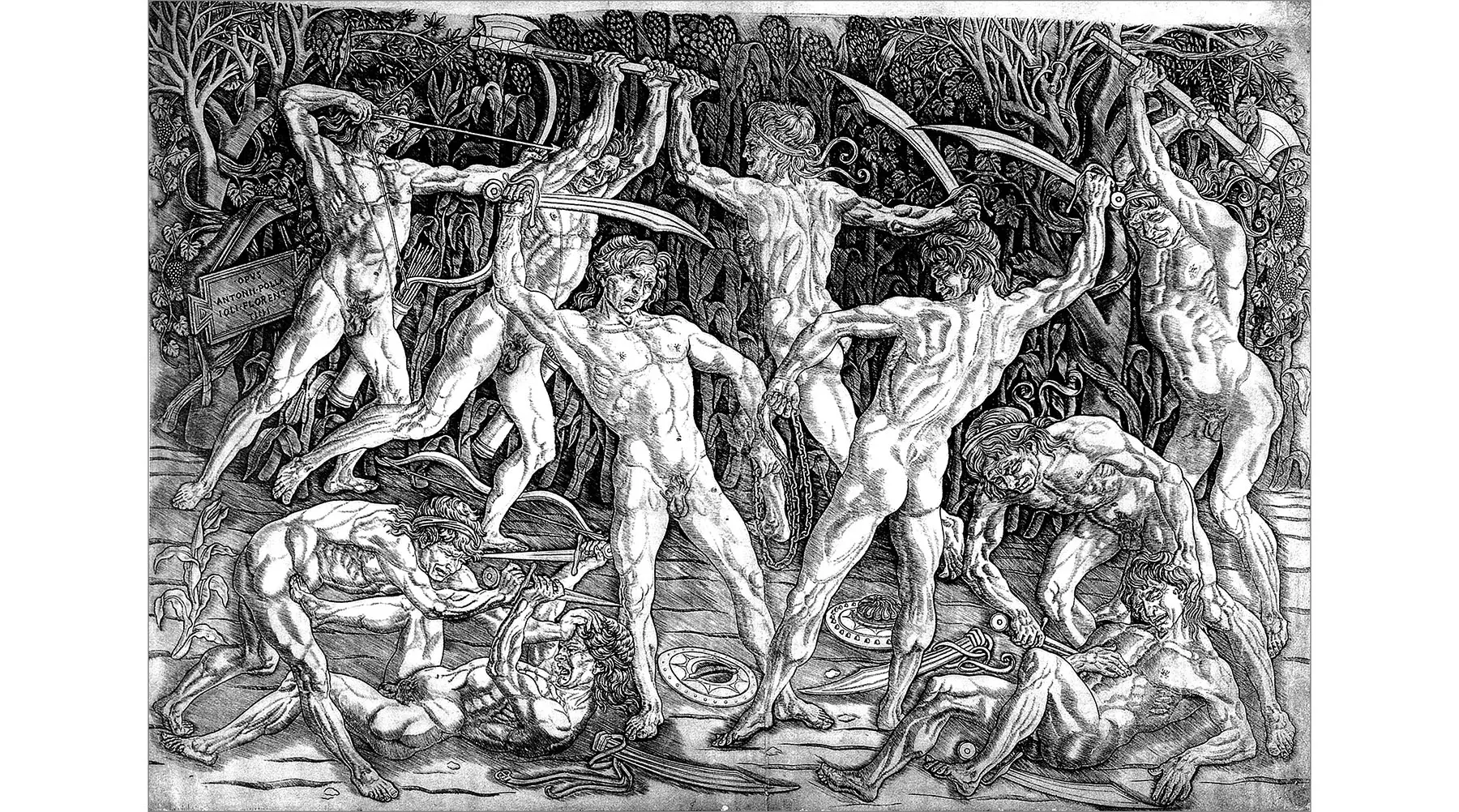
Hernando’s collection includes one of the paradigmatical pieces in the technique of engraving on copper—Antonio Pollaiuolo’s Battle of the Nude Men (ca.1460-1475) deploys skills used by goldsmiths. After the achievements of Pollaiuolo and his colleagues in metal engraving, woodcutters faced the challenge of overcoming the directionality of the wood block. Given today’s worship of technology, it is endearing to see Hernando’s entry about Pollaiuolo: “Ten naked men fight with sticks and bows and axes and daggers, both in the center are holding a chain, there are two trees on the left side and on one it says Opus Antonii Pollayolo Florentine, there are bushes and a black field.”
In the sixteenth century, it was not always clear whether the author of an image was also the artisan who carved it. Sometimes an artist would pass a drawing on to a cutter. Sometimes the drawing itself would be glued to a wood block and the cutter would cut through it. Other times the cutter would reinterpret a drawing by another artist. Even with Dürer, to whom authorship mattered, it is not always clear if he cut his own blocks, supervised the cutting by someone else, or limited himself to passing drawings on to a cutter. The amount of manual input seems to be an irrelevant issue, not only for Hernando Colón but also for a common sense appreciation of the prints themselves. It is only when authorship is fetishized, as it is today, that the amount of physical contact between artist and material becomes a key factor in the evaluation of work.
The exhibit at La Caixa, of 109 prints out of the original collection of 3200, is both frustrating and alluring. Only a hint is possible of the true magnitude of Hernando’s project, which must have been an overwhelmingly exhaustive display of the state of the art of printing and a peerless illustration of Renaissance culture. One sees enough at La Caixa, however, to empathize with Hernando’s delirious aims and sense his joy in capturing “all” the knowledge of his time respecting matters of quality. His seems to be a perennial aspiration. Bill Gates, for example, has collected copyrights to eleven million photographs and is preserving them 200 feet underground (over 60 meters) at –4 degrees Fahrenheit (–20 degrees Celsius) until they can be digitalized and licensed through his Corbis Corporation.
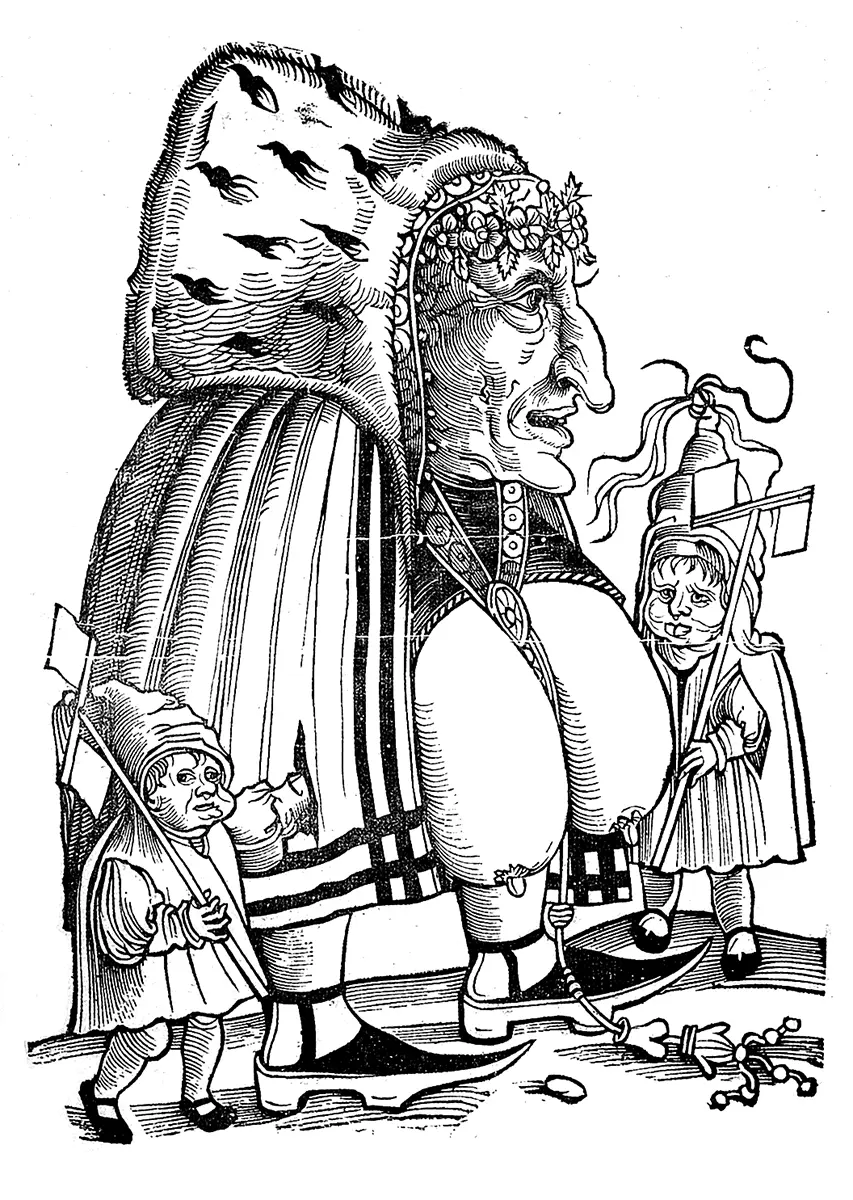
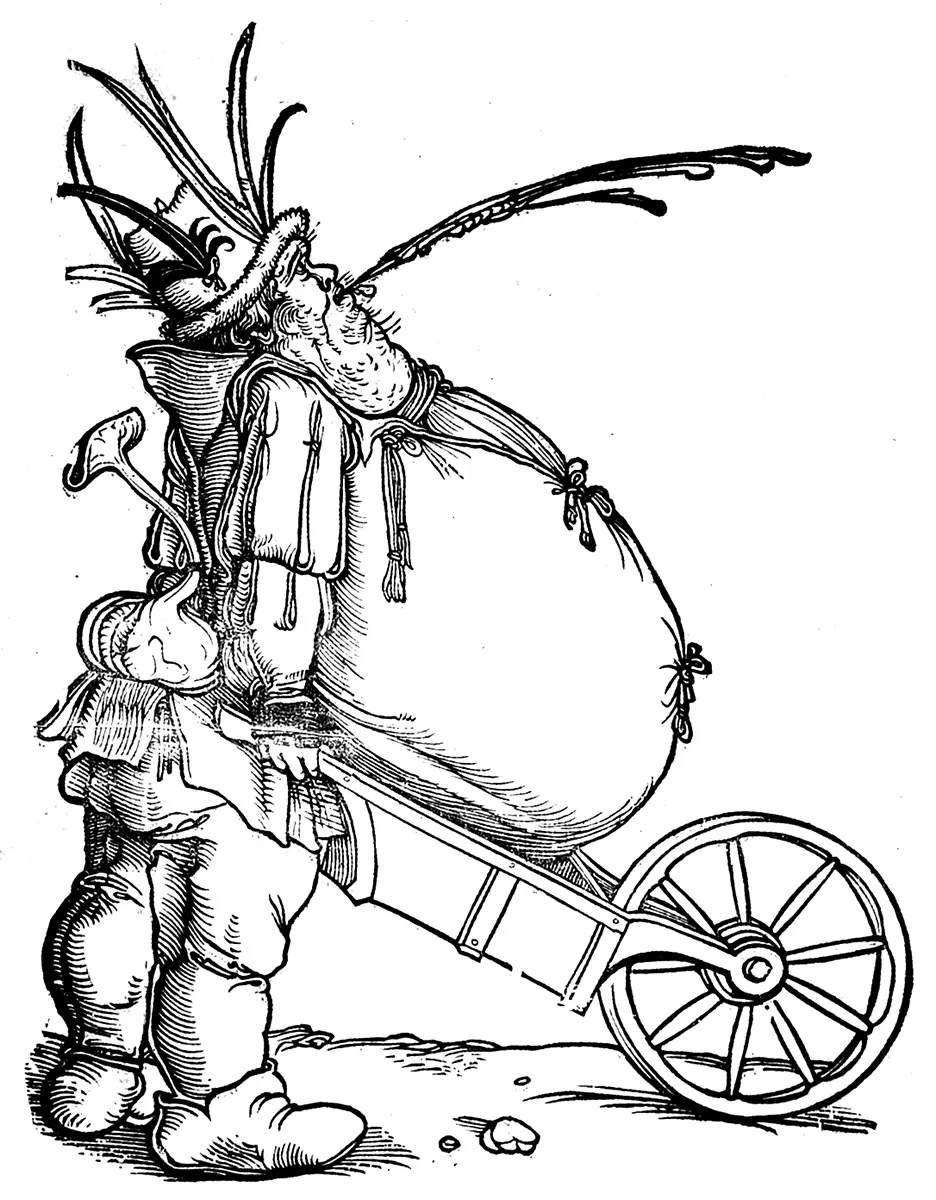
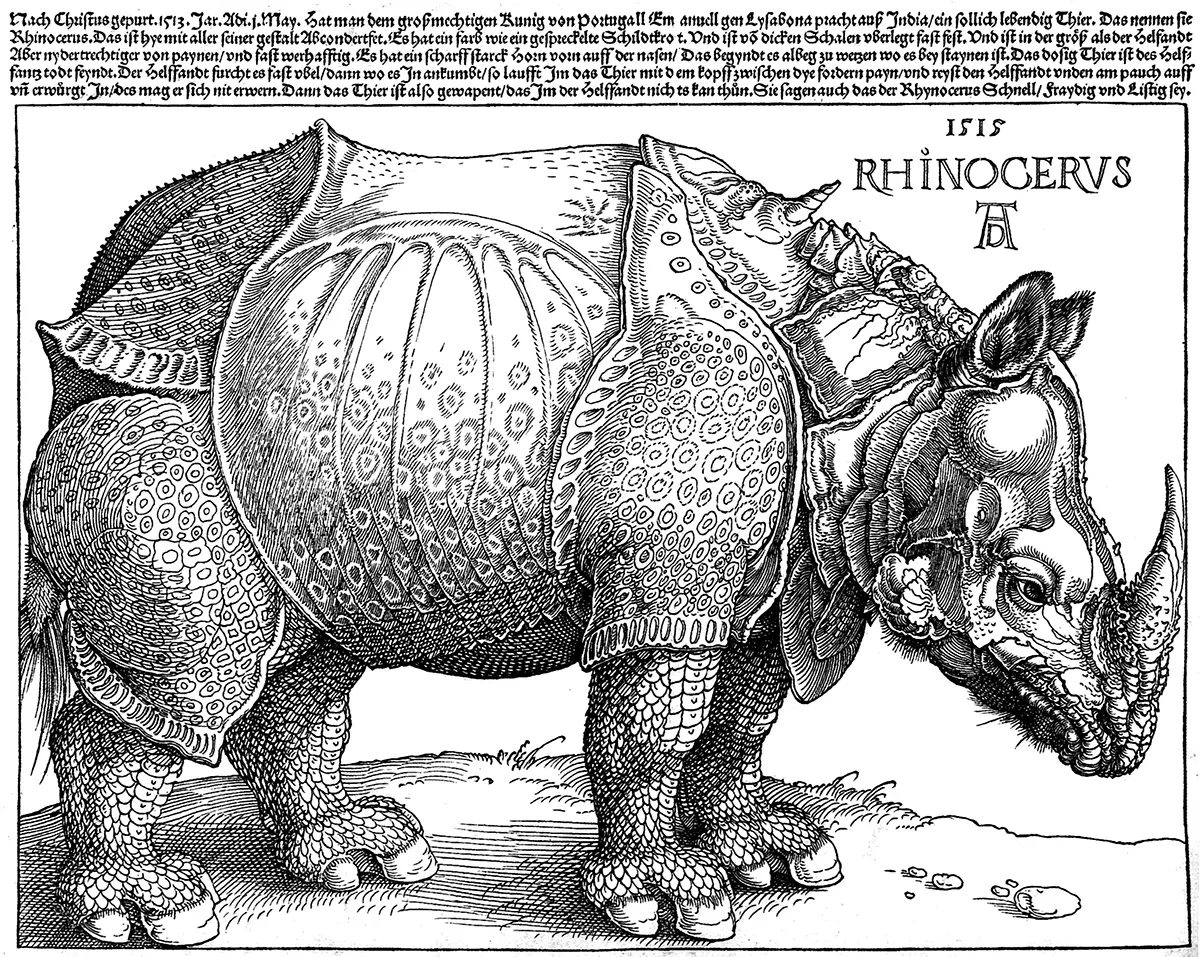
Hernando’s interest was not only in religious imagery, although a majority of the prints in his inventory fall into that category. He was also interested in secular subjects of which there are some wonderful examples in the show at La Caixa. The best is an “upside down” map of Europe by Martin Waldseemüller (1520), a stunning seven-meter-long genealogical tree of the Habsburgs by Robert Peril, Dürer’s Rhinoceros (1515), several portraits and some whimsical caricatures by Hans Weiditz, in particular one of a drunken man carrying his filled up belly on a wheelbarrow while spitting wine into the air (1521).
According to his secretary Juan Pérez, Hernando anticipated his death by fifty days. He used his remaining time to make careful inventories of his other goods. Then, two hours before his death, he asked his servants to bring him a plate filled with earth, instructing them to throw the earth into his face. They complied, but thinking he had lost his mind, they intentionally missed. Angrily, Hernando grabbed the plate and himself threw the earth into his face, yelling “ashes to ashes, dust to dust,” and lifting his hands to God.
The attempt to reconstruct his legacy, however incomplete the result, here is a work of art in its own right. The catalog, in certain ways an inventory of that odyssey, brings us even closer to an understanding of Hernando’s mind. Seeing him as the common denominator in this fragmentary show of individual pieces not only gives a structure to the exhibition but also allows us to extrapolate from what we can see, all that unfortunately remains absent.
Edited by Selby Hickey.
NOTES
1. Monochromes: from Malevich to the Present, Museo Nacional Centro de Arte Reina Sofía, June 15–September 6, 2004.
2. La colección de estampas de Hernando Colón (1488-1539): Coleccionismo en la era del Descubrimiento, June 11–July 25, 2004, Fundación “La Caixa,” Madrid; Real Alcázar de Sevilla, October–December, 2004.
3. Ando Gilardi (Storia Sociale della Fotografia, Milan: Mondadori, 1976) speculates that the population loss caused by the plague improved the standard of living of the survivors, who suddenly could afford underwear. The quicker wear and tear made rags available for the manufacture of paper. Gutenberg’s Bible required the skin of twenty lambs to make the needed parchment, making it a rather expensive object. The accessibility of paper increased the development of printing techniques.
4. It is not clear if Bewick was the actual author of the shift, but he is the first name associated with what is called “wood engraving” as opposed to “wood cutting.” With grain appearing as dots on the surface rather than as lines, there is no favored direction in the cutting and the wood behaves like metal. During printing each single wood grain acts like a column rather than a beam and, therefore is extremely resistant to pressure. This allowed for an increase in the size of editions and stimulated the development of more sophisticated presses.
LUIS CAMNITZER
Emeritus professor at the SUNY College, Old Westbury.