
Since it broke through to the art scene, the path of Pop has been followed by many artists. Supporting its diverse strategies both formally and conceptually, the language of Pop has adapted to different junctures and circumstances in the recent history of art, becoming one of the most common avenues of artistic intervention for our younger practitioners. Following the convoluted discourse of postmodernity, irony, cynicism, the questioning of dominant discourses, and relativism —all matter, by the way, that belong to the genealogy of Pop— came, as the Twentieth Century drew to a close, to fill artistic expression with effectist resources and a playful character that often facilitates art’s dissemination through popular or mass culture.
The work of young Uruguayan artist Martín Sastre (Montevideo, 1976) connects with all that. Taking advantage of all kinds of supports, such as, among others, photography, film, drawing, and sculpture, Sastre echoes the strategies of Pop to carry out a program that often defies classification, with questioning artistic activity itself as one of its most significant goals. From this perspective, we can understand how his work can aspire to be brazen and playful, ironic and popular, as it charges forth against political discourses and aesthetic refinements.
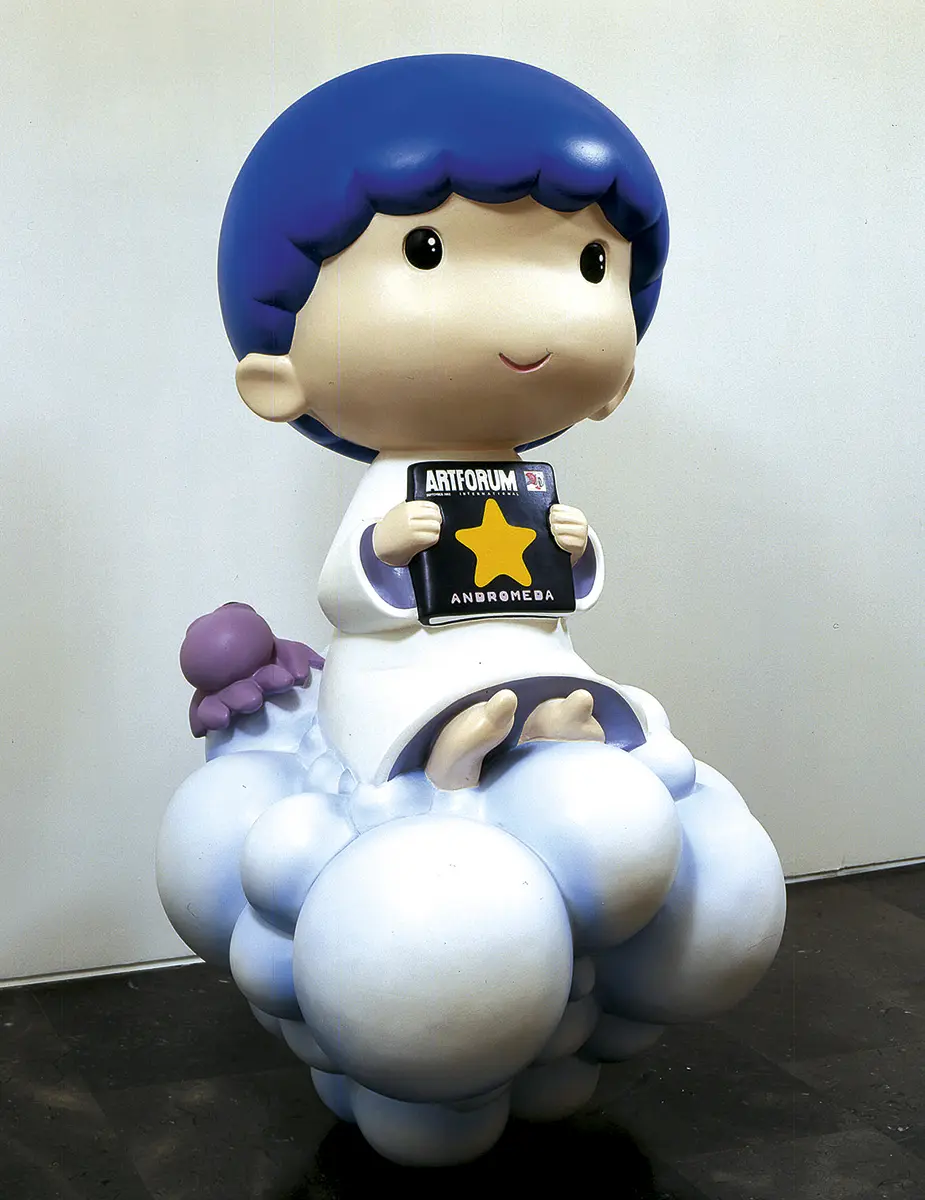
Early on in his career, in the late 1990s, Sastre’s work was primarily exhibited in fashion clubs and stores. The artist seemed intent on eluding the characterization of “art” that is guaranteed by galleries and institutional exhibition spaces. In that line we can locate his earliest videographic interventions, among them True Hollywood Story, Masturbated Virgin, Heidiboy, and Sor Kitty: La monja misionera.
More recently, in 2002, Martín Sastre was introduced to the Spanish public with Planet Sastre, presented at Casa de América. This was his first solo show in Madrid. In this piece, alongside other Spanish and Latin American artists, Martín Sastre expressed his interest in the audio-visual culture emanating from Hollywood, one of his basic sources of inspiration, which he maneuvers in order to demystify its legitimacy. Other sources are the Disney factory, or media icons such as Lady Di, Candy Candy, or Japanese comics. In this way, Martín Sastre appropriates and makes his own icons, magnifying their role and bringing into relief, at the same time, their saccharine substance.
It is in this context that his new exhibition at Luis Adelantado Gallery in Valencia needs to be understood. Under the title Paraíso Pop (levita conmigo) [Pop Paradise (Levitate with Me)], Sastre deploys his considerable wit, bringing into his show a good part of the characters that have appeared in his work, with the artist himself —as usual— acting as conductor and main protagonist. Remarkable among the works on exhibit is Sastre’s videographic production, which truly shows his reach. Special mention should go to The Iberoamerican Legend. Here the artist conceives a shrewd plan to alter the course of History as it is being told. With a wink in the direction of Walt Disney, Martín Sastre, coming back to life after being cryogenically preserved, reviews the large transformations undergone by the world. In 16 minutes, the artist-narrator awakens from his frozen slumber and guides us through a fictional history where the characters’ roles and actions have been radically altered; the viewer is transported to a different history, one where reality has become a kind of ultra-reality-controlled through the capricious information emanating from a news broadcast.
Equally remarkable is Montevideo en la parte oscura del Pop (Montevideo on the Dark Side of Pop), where autobiography leads once again to a narrative that is peppered with acidic allusions to the mass media, to politics, and to art itself. Reality and fiction hold hands in these videos, offering the viewer an image of what we are and what we could be, since, as the artist has pointed out, “whoever controls information has absolute control of the future.” On the other hand, in videos like Barney has a little problem, Martín Sastre pays (ironic) tribute to one of the central figures in late Twentieth Century art, Mathew Barney, charging against the art world star system —from which Martín Sastre himself is not entirely alien.
Especial mention also needs to be made of the artist’s recent incursion in an irregular production of objects that, in the manner of sculptures, recreate their fantasies. Lady Di, Mother Theresa, and Britney Spears are some of the characters that materialize in this series of soft sculptures done in the aesthetic of manga, the celebrated Japanese comics. These works, lacking the directness and the weight of his videos, are difficult to categorize within Sastre’s work, although will perhaps enjoy greater commercial success in the art market.
To summarize, as Eva Grinstein has pointed out on the occasion of Sastre’s show at the Ruth Benzacar gallery in Buenos Aires, “in the planet-mausoleum-story-journey Martín Sastre has invented, eccentricity is the most natural way of arguing in favor of fiction. The camouflaging of balderdash as relatively believable discourses becomes a useful mechanism for thinking about our critical abilities and the anesthesia we have been subjected to over many centuries, and to revalue an always-latent hunger for delirium and unreason (…). Sastre tells his truths-lies and exhibits a handful of fetishes, bizarre cult objects for an age that doesn’t know what to enthrone anymore. As a well-trained disciple in a peripheral country, he learned his lesson long ago and is convinced that Legend only survives by gazing upon itself, by self-congratulating, by offering itself as a panacea for salvation.”
JOSÉ LUIS CLEMENTE