Dando y Dando (Giving and Giving), was the suggestive title of the most recent exhibition of works by Ángel Ramírez (Havana, 1954), presented as one of the most interesting shows at the Encuentro Nacional de Grabado held in Cuba. The title is closely linked to a 1997 large-format colography by Belkis Ayón, in which both artists joined their very different figurations with very tight harmony, achieving a singular fusion of their languages in a piece filled with mystical beauty.
Ángel Ramírez, well known both in the field of printmaking and in painting and object art, is often referred to as a (parodic) appropriator of Romanesque and Gothic codes, an artifice he has used to critique Cuban society of the 1990s and to become a very unique kind of chronicler. But Ángel is much more than this succinct approximation. He is someone whose ingenuity allows him to deal with rather thorny issues deploying a sharp sense of irony and a remarkable ability for playfulness, hand in hand with a unique ingenuity rooted more in the popular world than in high culture, despite what one would think at first glance.
This show was curated by the artist himself and it displayed his characteristic wit, for instance by offering visitors to the inauguration café con leche (coffee and milk) and bread with butter, an action that relates to a similar action in the presentation of his 2002 show at La Acacia gallery, titled Kafé de la bodega.
The main character in Dando y Dando was a king, previously seen in other pieces by Ramírez but most directly descended from the commissioned piece the artist presented at the 8th Havana Biennial, Maneras de inventarse una sonrisa (Ways to Make Up a Smile). For this piece, he wrote a story titled “Un rey ha de estar en todo. Cuento con doce frases sueltas.” On this occasion, the show was accompanied by Gilma García’s narration, which reinforced the meanings as they expanded in each of the works exhibited.
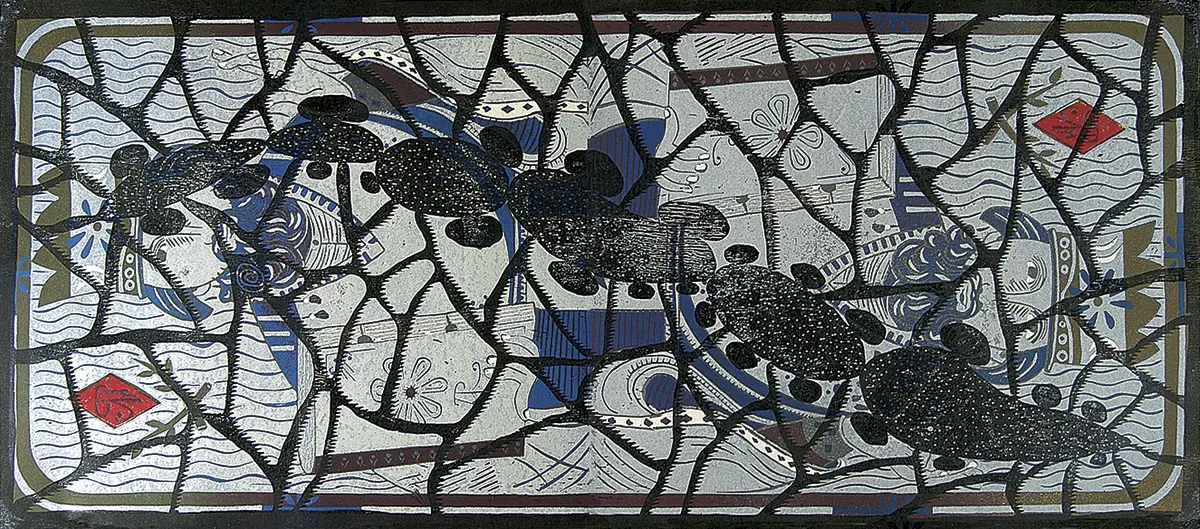
Dando y Dando was a project the artist considered for a long time, and he was able to collaborate with 17 visual artists in proposals that were tied together by the figure of the king. Ramírez purpose was shared by artists of the most diverse schools and generations: Sandra Ramos, Abel Barroso, Norberto Marrero, Rafael Zarza, Lesvia Vent Dumois, Armando Poosse, Rubén Rodríguez, Ramón Casas, Julio Cesar Peña, Eduardo Roca (Choco), Manuel Castellanos, Luis Miguel Valdés, Rigoberto Mena, Luis Cabrera, Ibrahim Miranda, Carlos del Toro, Frank Martínez, and Hugo Ascuy (First Prize winner at the Print Encounter).
Dando y Dando is a popular expression used to indicate a clean, honest barter, as a guarantee of the effectiveness and equity of the exchange. The 18 pieces that comprised the exhibition attested to the effectiveness of the deal struck between Ramírez and the 17 artists, the main beneficiary of which has been Cuban printmaking.
This show was varied in its formats and techniques, including lithography, xylography, serigraphy, colography, calcography, and digital prints, with examples of objectualism and installation. All these formats and assemblages skirted what is usually considered “classic” in printmaking. Ángel Ramírez had established what each artist was to do for the piece in which they collaborated, and held the reins of the project, yet the presence of the other artists was clearly noticeable.
The king that strutted around Dando y Dando was a return to the topics of power and hierarchy, which Ángel Ramírez has explored for a long time. His interest in social issues does not diminish his technical mastery and analytical skills, nor has he abandoned his neo-historicist figuration, his subtlety, his irony, his parody —in other words, his sense of humor.
CARIDAD BLANCO DE LA CRUZ