
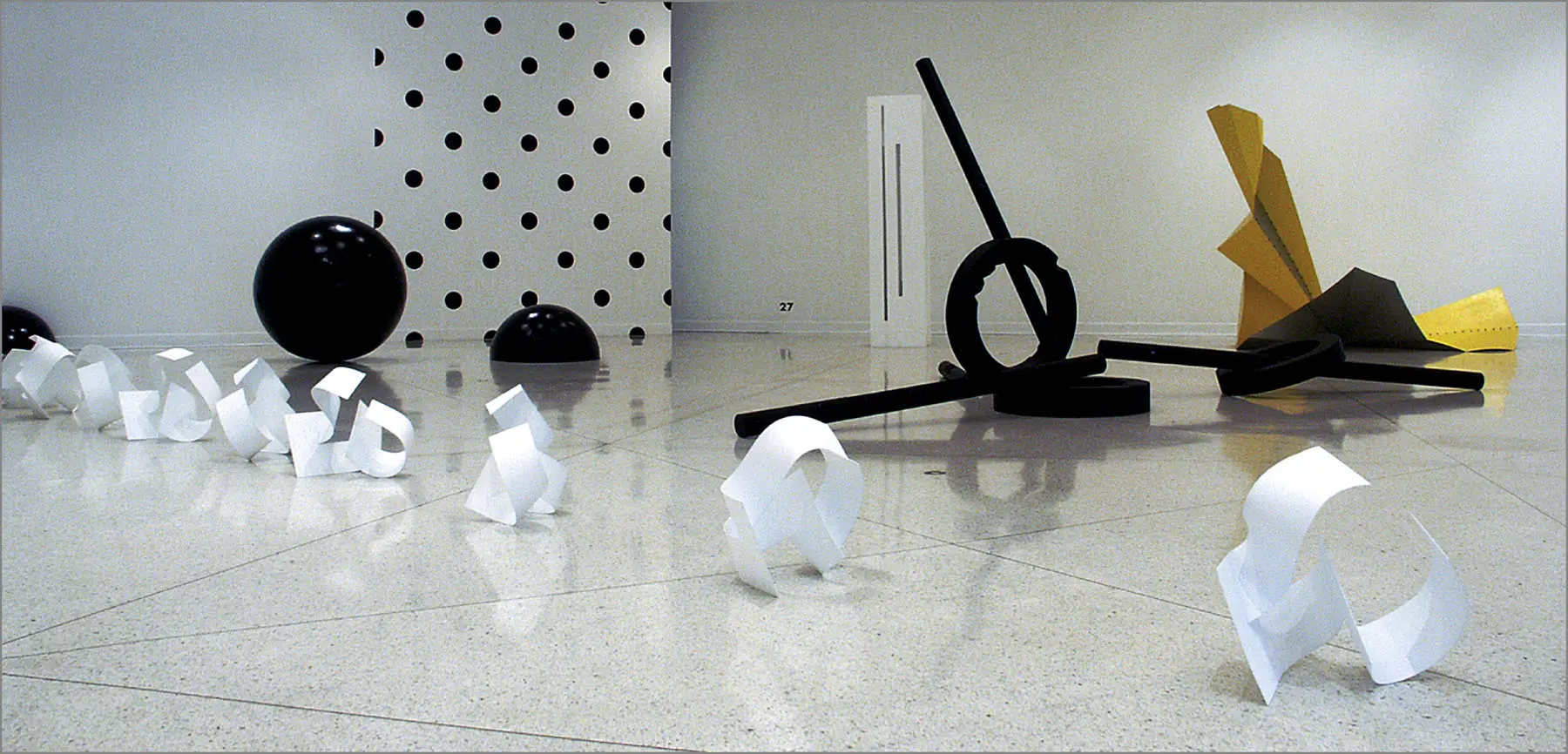
Even from the vastness of its own creative and conceptual potential, sculpture has been the object of constant questioning and redefinitions. In the beginning, there was the solid form —bulk of exempt—, conceived as a succession of profiles that needed to be walked around in order to be appreciated. After several centuries of naturalism and figurative contortions, modern sculpture abandoned pedestals and asserted its meaning in utopian structures that reneged all anecdotal or ornamental elements. Later, when the omnipresence of the corporeal became impossible to withstand, ideas came to substitute for the protagonist role of matter, while work and space aligned to conform to an articulated environment, an environment that was open to trajectory and experimentation.
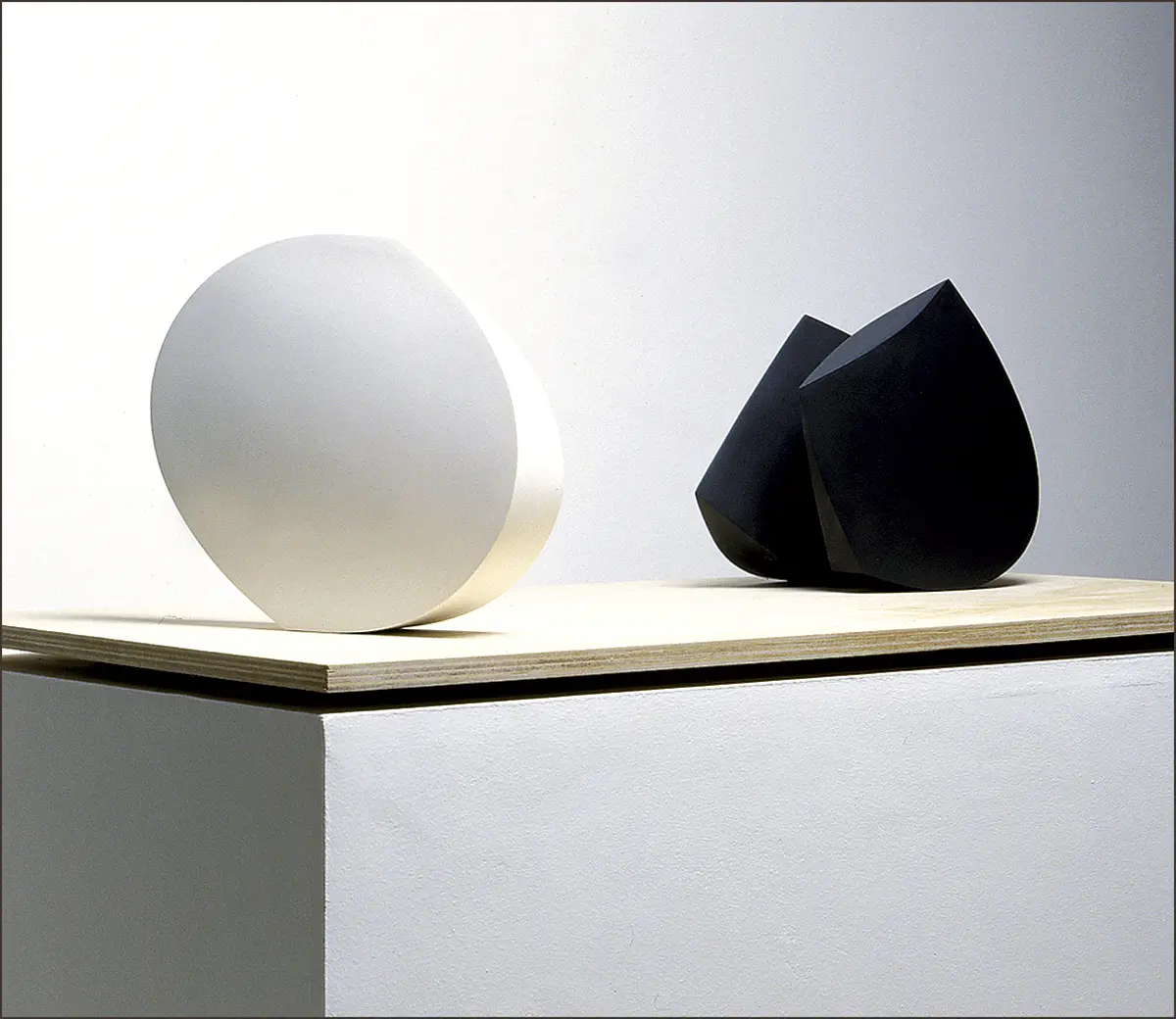
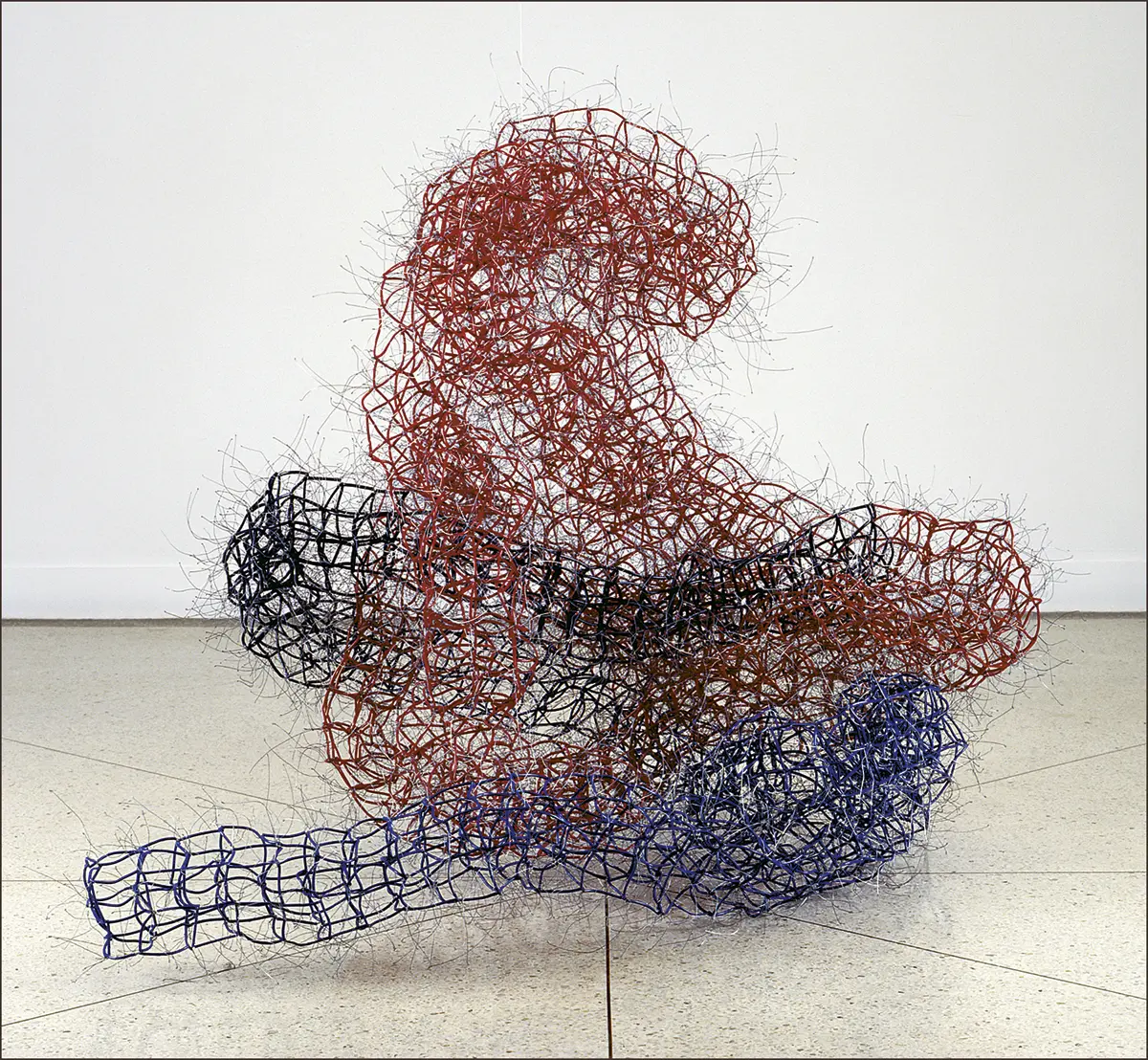
However, the radical nature of the changes this discipline has undergone in its history has not been sufficient to quiet down comments and suspicions regarding its validity, even at a time so marked by the permeability of discourses and the plurality of languages. On one side are those who raise the thesis of a presumptive outdatedness of sculpture, in contrast to the advances seen in other artistic modes. On the other side are those who prefer to exhume the mark of the sculpture in the heterogeneous realm of contemporary art, especially in the territory outlined by objectivism, ambient art, and installation.
In the light of these preliminary observations, between their utility and their biases, it is fitting to wonder about the evolution of three-dimensional art at the present time. That is, precisely, the direction taken by Back to Volume. Approaches to New Venezuelan Sculpture, presented at the Alejandro Otero Museum between July 11 and October 24 of 2004, with the presence of 31 artists from several disciplines and generational strata.
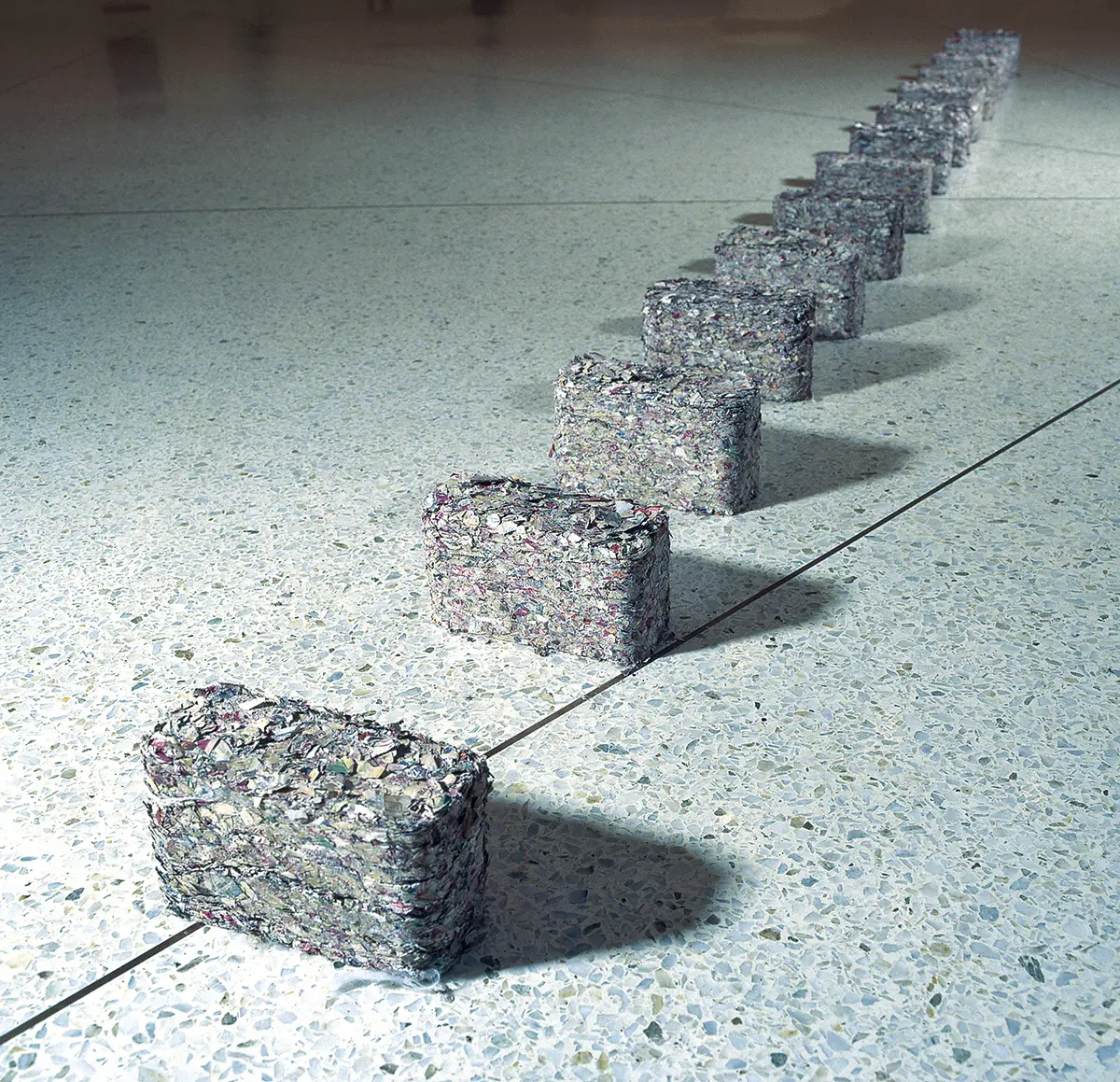
Under the curatorship of Miguel Miguel, the show gathers a group of three-dimensional propositions —sculptures, objects, ambients, installations— that bring together elements of painting, design, and architecture. On the basis of this premise, various working strategies coexist, with the prevalence of those supported in constructive, minimalist, and conceptual explorations. In most of these cases, the notion of volume as a magnitude that designates the extension of bodies in space transcends the language of sculpture and expands to the many creative practices of the contemporary age.
The material, a determinant aspect in the configuration of the language of sculpture, is not only a working support but also a communicative vessel filled with ambivalent connotations. In this sense, there are attempts to tame the hardness of marble and the rigidity of metal, as well as the hygroscopic fragility of paper, giving them an appearance of softness and plasticity that contradicts their physical consistency, an orientation represented, for example by Daniel Medina.
Between organic forms and severe geometry, a group of artists in the exhibition retains a tacit association with the firm legacy of constructivism in the country. Enrooted in the phenomenology of space, Ramsés Larzábal’s works manifest a sort of disinterest for solid matter, which he solves with reticular wire structures, natural fiber strings, and plastic tubes. A second derivation tends to confuse constructive print, with minimalist discourse, maintaining a sober counter-point between volume and space, sensuality and visual depuration, as shown in the proposed works by José Gabriel Fernández.
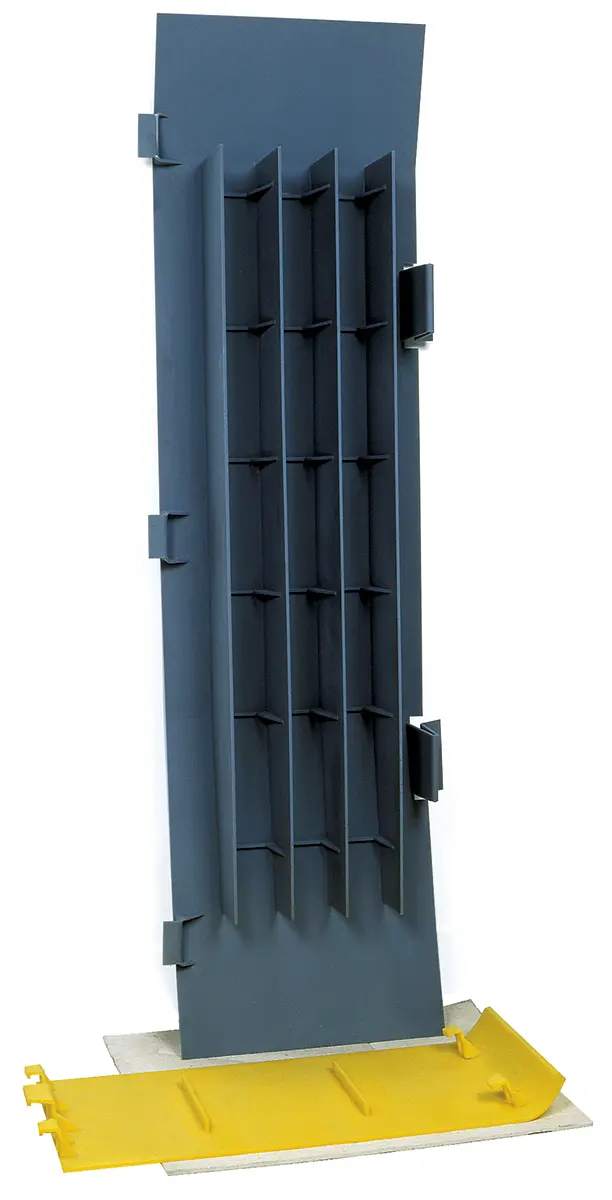
The recourse to humor, banality, and estrangement implies a critical and reflective space —a space reached by some of the artists present. Ironic operations unfold the myth of originality, by means of monumental reproduction of anodyne objects, done by Sigfredo Chacón and José Antonio Hernández-Díez, who remind us of the rituals for cultural legitimacy which are nothing more than the result of a convention, not excent of contradictions.
Weaving, something commonly associated with handcraft and fashion design, is also a resource for dealing with three-dimensionality.
In this way, Back to Volume opens a space for the valuation of three-dimensional productions, beyond the purely sculptoric and from a multi-disciplinary perspective. In that sense, volume works as an equally valid point of departure for any genre or kind of art, independent of the precepts that govern its expressive structure.
Of course, the show has provoked contradictory reactions, from an enthusiastic affirmation to erudite questionings, including a confusing incident associated with one of the elements in Héctor Fuenmayor’s installation Delirio sobre el Chimbo-Raso, specifically one of his drawings, which wasn’t shown, depicting Simón Bolívar feeding a bunch of pigs. Another aspect that has caused some discomfort refers to the absence of ceramics and audio-visual media, even though among the participants we find the noted ceramist Valerie Brathwaite and several video artists such as José Antonio Hernández-Díez and Nascimento/Lovera.
Despite these objections, some to the point and some rather excessive, the intention of moving back in the direction of volume makes possible a series of finds that in turn evoke a moment of transition, a moment in the making that is still finding its configuration. We must acknowledge, then, the formidable effort involved in organizing such a show in an unstable context, one marked by restrictions of all kinds and by strong socio-political tensions.
FÉLIX SUAZO