
The 31st International Contemporary Art Fair of Paris opened its doors from October 20–25, 2004 with a new “facelift.” This rejuvenating impulse has been in progress for some time. Loyal or disloyal competition from new European showrooms such as Freeze in London, or Art Paris in its own territory has compelled the organizers of FIAC to reflect on its position as an indispensable gathering of international contemporary art.
FIAC was no longer convening loyal exhibitors favoring wider-ranging events, such as the fairs of Basel, Cologne, or ARCO in Madrid. Gallery owners in the United States chose to participate in Frieze, which has only been open for two years and already ranks as a more contemporary and innovative fair. Latin American galleries have gradually opted for ARCO in Madrid, where its collectors are given priority treatment through high-quality shows thereby increasing their loyalty to that event.
A new committee was established for the 31st edition of FIAC under the artistic direction of Jennifer Flay, an ex-gallery owner from New Zealand who has been established in Paris since the early 1980s. Her objective was to give new dynamism, vitality, and energy to this event that for many has been diminishing over the years.
A total of 214 galleries, 1,300 artists, and nearly 10,000 works were included this year, along with a larger space, including the new Pavilion 4, which made it possible to invite more than 50 galleries to participate in this new sector. Actually, it could be said that there are several FIAC’s, a melting pot or “chaotic promiscuity” as Phillipe Dagen, Le Monde´s critic called it. In the traditional Pavilion 5 devoted to modern art, more than 140 galleries exhibited artists who represented the twentieth-century historical movements and the great artistic trends of the postwar years. This sector has been one of the mainstays for the success of this fair, although many who would like to see it compete more directly with New York’s Armory Show or Frieze in London have been critical.
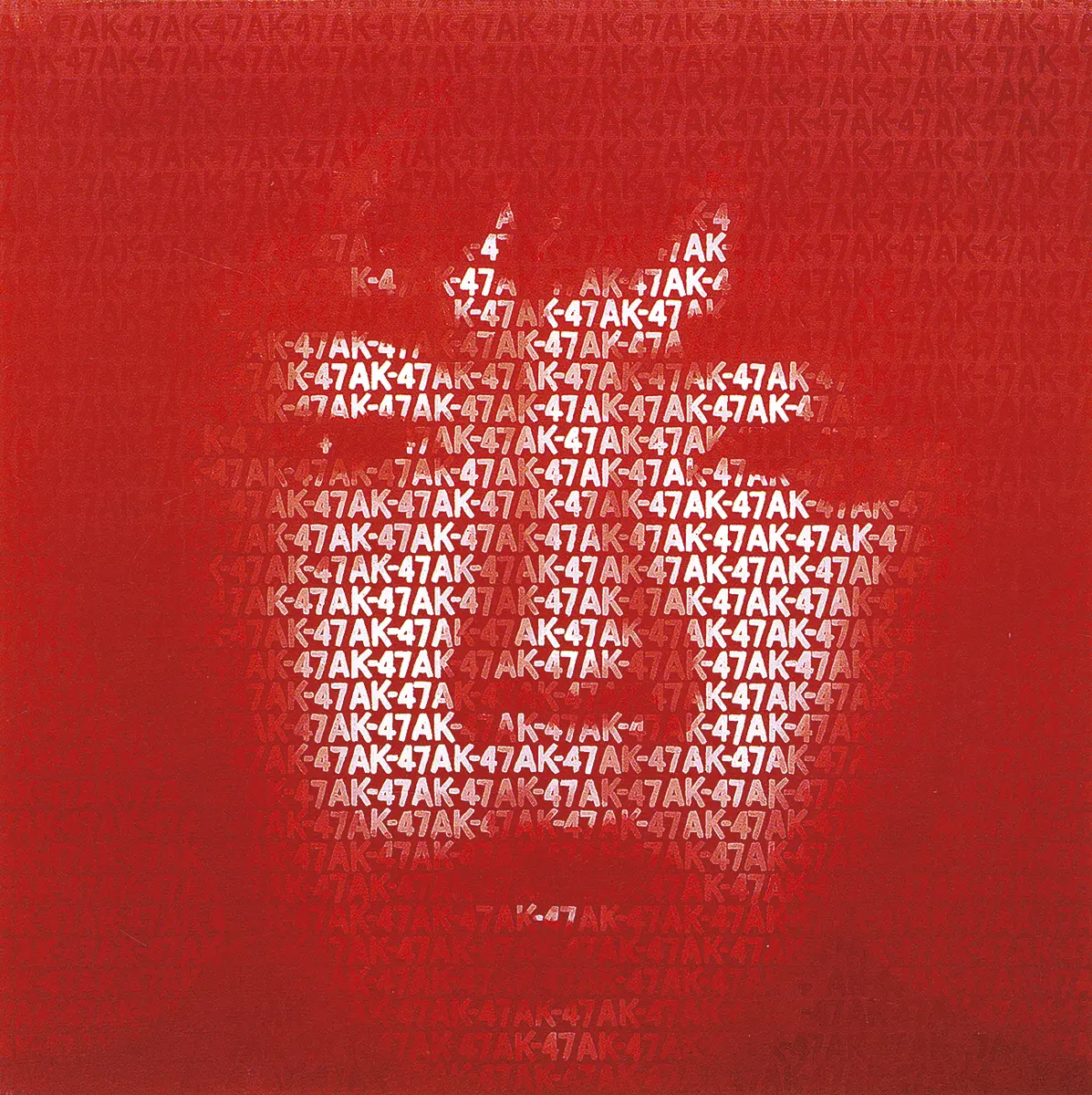
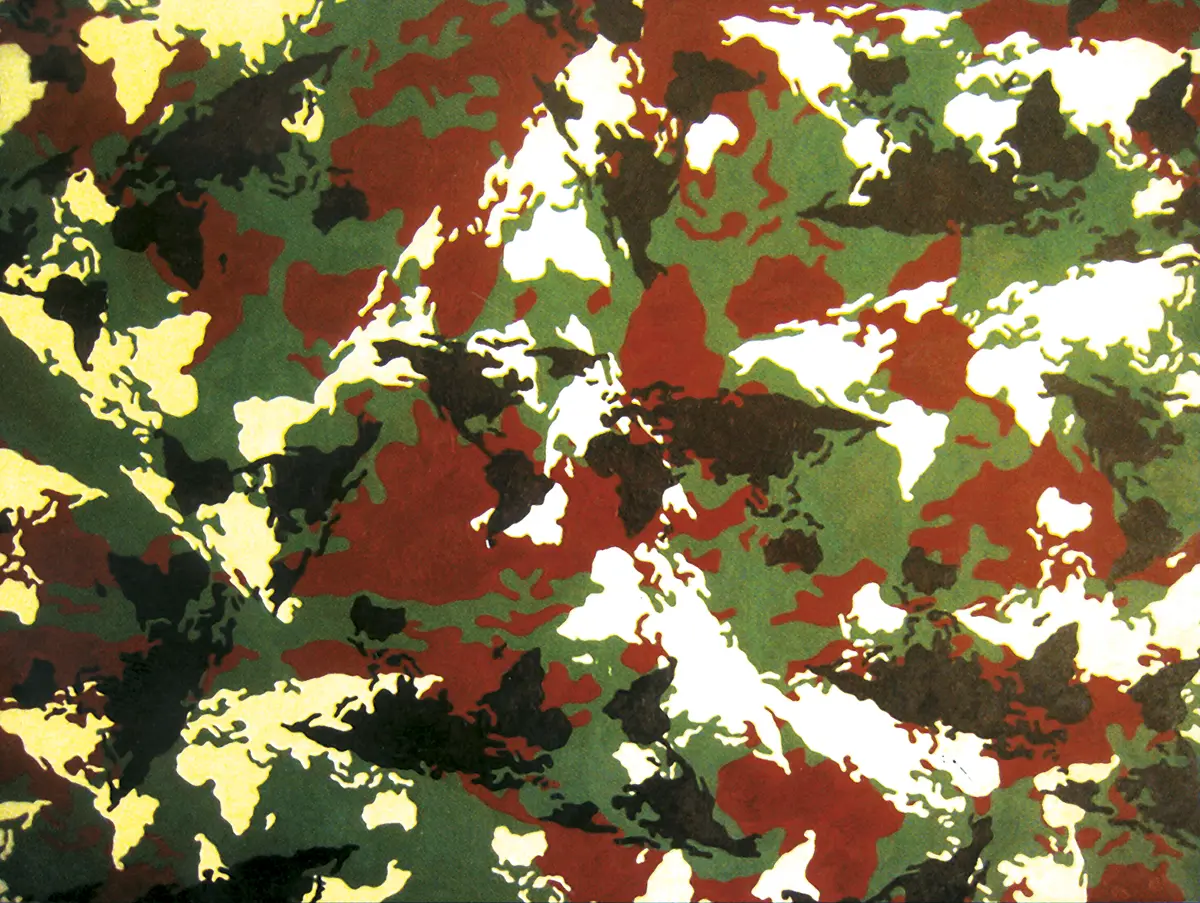
In the new Pavilion 4, Jennifer Flay wanted to face the renovation challenge with the inclusion of “Perspectivas” and “Future Quake,” an earthquake of new trends exhibited by young galleries—established less than three years ago—from Moscow, Vienna, Havana, Bogota, Bologna, Tokyo, and New York, among others. It was set up in a 6,000-square-meter space just a few meters away from Pavilion 5 and linked to it by an imposing fuchsia carpet that marked the fusion of these two worlds and was the only element that enabled us to recognize it as the same fair. Although many still miss the elegance and glamour of the Grand Palais, thanks to its installation in the Exhibition Park of the Porte de Versailles a spatial exuberance is possible. Among the new galleries, there is the Cuban Habana Gallery with works by Iván Capote, awarded the Noemí and Brownstone Foundation prize. One of Capote’s experimental works, Geopatia II, motivated by the twentieth-century obsession with war, is a canvas (100 x 140 cm) in which camouflage fatigue-colored world maps are overlaid in the battle for supremacy. For Capote, the twentieth-century war syndrome is perhaps a collective neurosis or an effective method of natural selection.
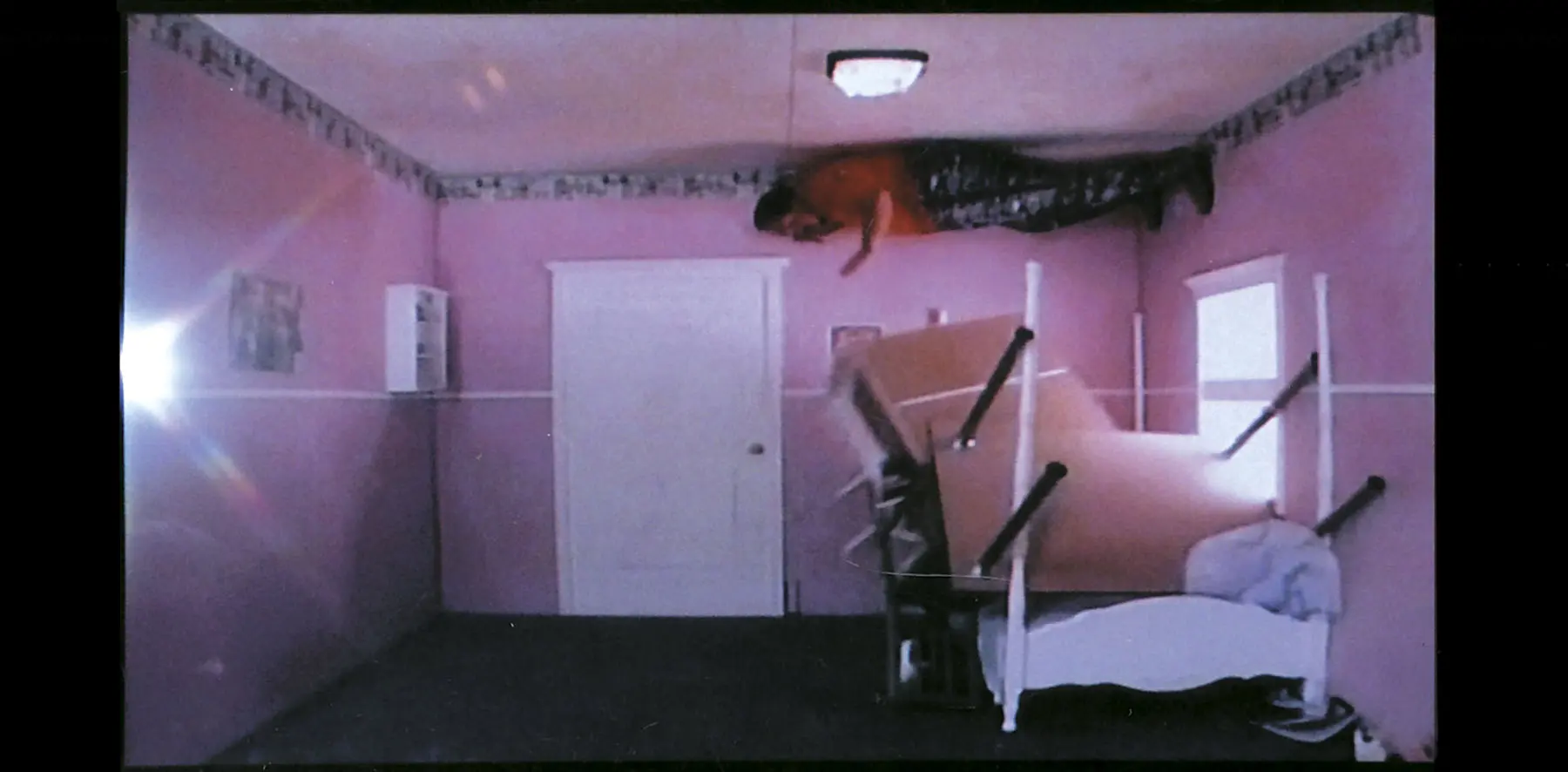
This year, FIAC closed the space called "Video Cube" that previously was devoted only to video art. Now the video artists are discovered and disseminated here and there as we stroll through the corridors of the fair. Certainly, the projection conditions are not good but in compensation, this type of art has been incorporated into the body of the exhibit between an oil painting and a sculpture, for example. In this adventure, the French public was able to discover the work of U.S. artist Martin Kersels, in the video Pink Constellation, shown by the Swiss gallery Edward Mitterand. For twenty minutes several characters take turns inside a child’s room, in pink colors, full of toys and dolls, where each one enters planning to find peace and quiet. Gradually they discover a strange situation when the gravity changes and the objects begin to move as though attracted by a force that sucks them like a tornado to the center of this gentle and welcoming space.
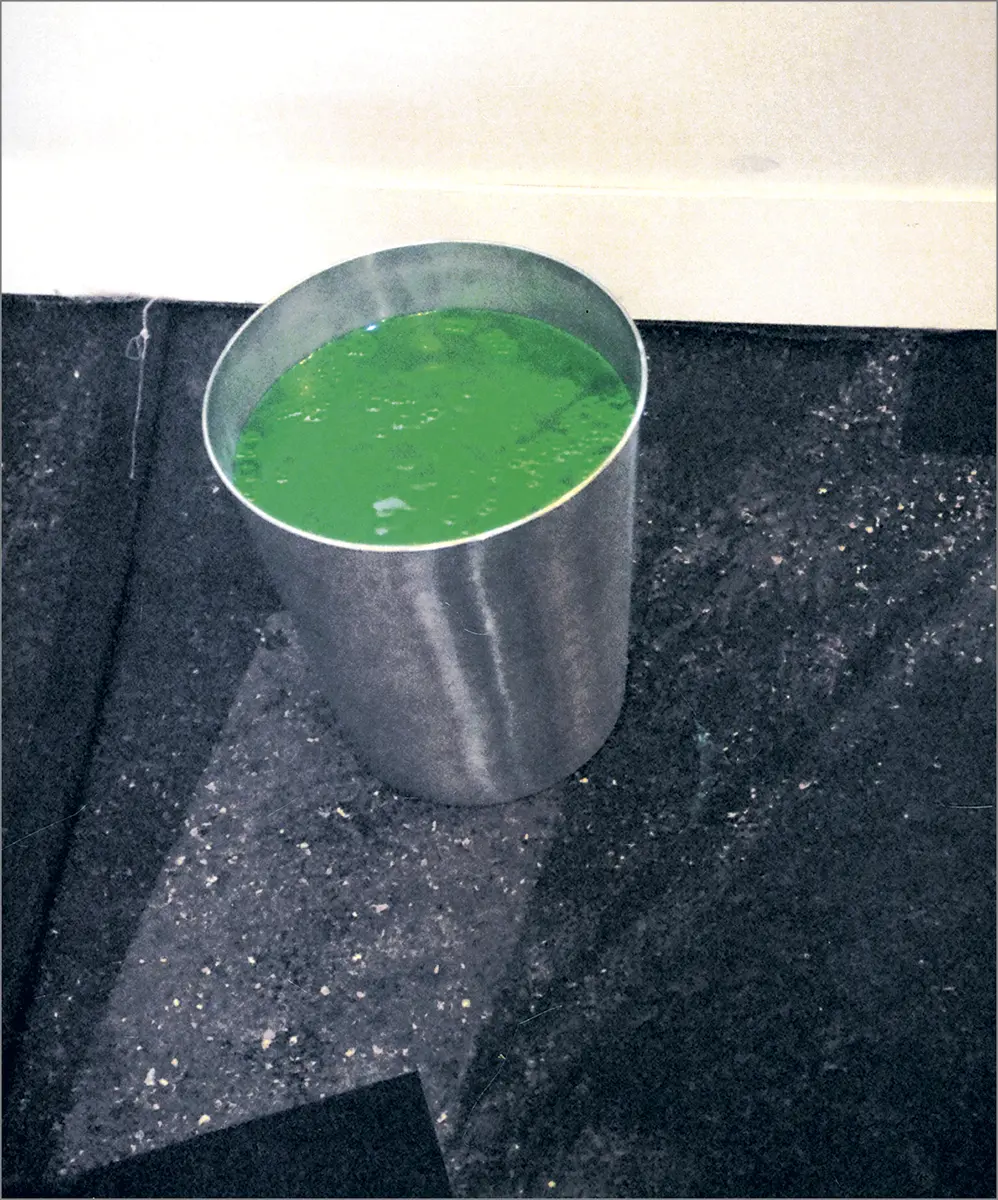
The young New York gallery I-20 presented artist Peter Sarkisian, born in California in 1965 and whose works were shown at the Whitney Biennial last March and at the Istanbul Biennial in 2003. A pail is full of a thick green fluid, like a magic potion in full boil. Bubbles crop up to the surface and pop as the temperature rises. After a while, we realize that it is a fake representation of reality by means of a video; the pail contains a circular screen on which the image of bubbles and smoke are projected. It is a ménage à trois of physical objective, sound, and video projection. As a new video magician, Peter Sarkisian shows a great talent for illusionism. Special cleverness is required to find the camera that projects the image and the source of the sound. This piece held the attraction of all those who visited the "Future Quake" Pavilion.
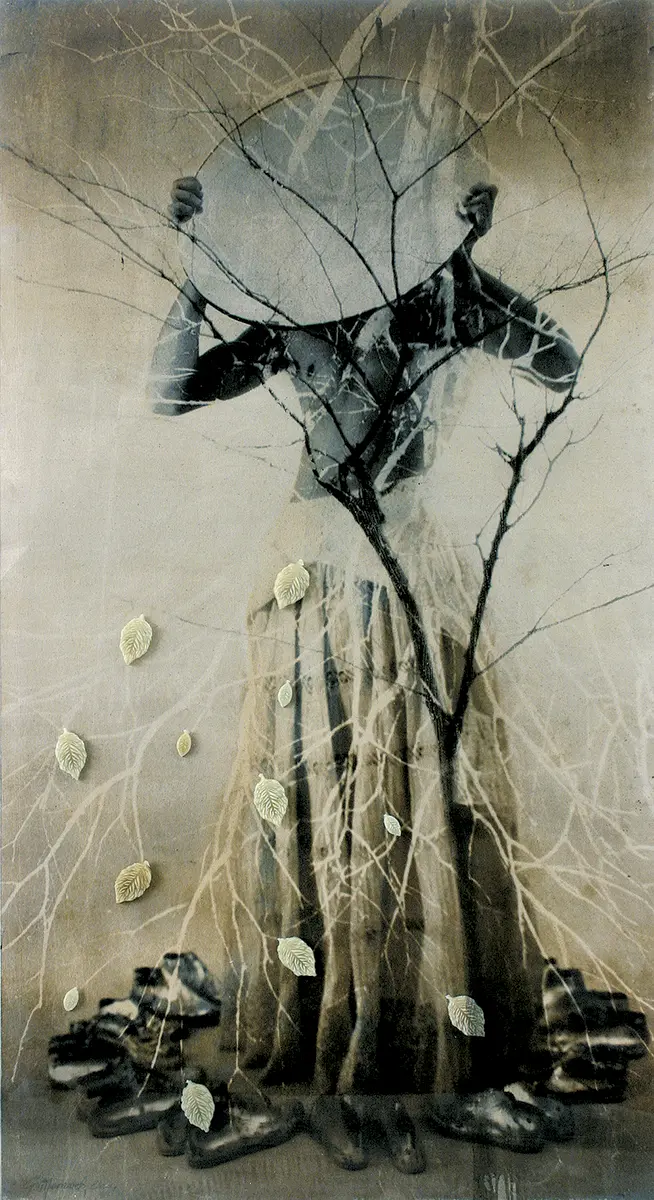
AlCuadrado, a new gallery from Bogota, shows an excellent Colombian representation with the works of Juan Fernando Herrán, Miguel Ángel Rojas, and Óscar Muñoz. Herrán’s work, Emplazamientos, shown at the São Paulo Biennial, appears here in photographs. The shots of segments of these large sculptures in concrete and iron give the illusion of being lunar landscapes totally deprived of organic life where a group of individuals, seemingly newly landed, roam aimlessly in complete desolation and inertia. Sub-urbano, Miguel Ángel Rojas’s diptych made of peonies hammered on sections of truck or bus tires as planted furrows, represents two jaguars engaged in a fight. Amazonas is a composition of characters and mythical animals made of round paper scraps in green and white, as if from a hole puncher, but out of dollar bills. Rojas worked here with unconventional urban material and the iconography of popular beliefs, establishing conceptual links with the social and political problems of Colombia through refined aesthetics. Óscar Muñoz presents Narcissus, a series of twelve photographs and one video, which follows the gradual process of the washing away of a face drawn in ink on the surface of a washbasin; after receiving a trickle of water from the tap the drawing starts to fade away.
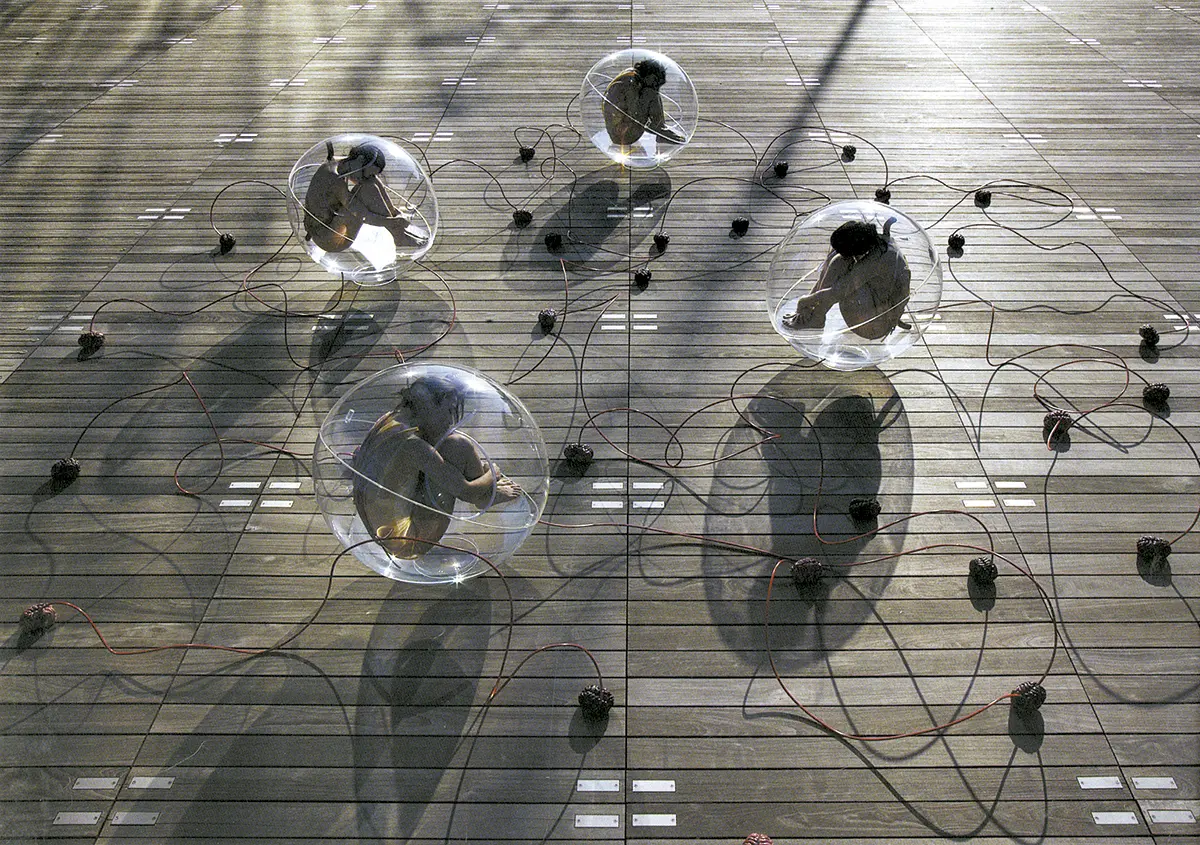
Simbiosis Paulagabriela, is the name adopted by two young Brazilian artists, born in 1975 and 1976, exhibited by the Valérie Cueto Gallery of Paris. Both artists work together in performance, video, photography, installation, painting, and sculpture. The work Connections is all of the above in one. In FIAC they show photographs of the performance made on the terrace of the François Mitterand Library in September 2003, as well as an exhibit in the Valérie Cueto gallery in the Marais district in Paris. Both artists, plus several replicas of themselves, are bound by many tubes, but each is also wrapped up in a Plexiglas sphere. They are locked up in an endless spiral and lost in a tubular labyrinth. When they advance they go nowhere, they are lost without being lost. Theirs is an obsession with the tube: the digestive tube, as in the Tube-performance Food for art, tubular deglutition; or the tunnel-tube to which they run in a schizophrenic state in order to become lost like Alice in Wonderland. Paulagabriela works with representation and its double: you/I-I/you; genetic obsession; cloning; and loss of identity, a passport to an imaginary world where “I” is forever confused with “you.” Searching for the fusion of the being, following the steps of Hélio Oiticica—without forgetting Tunga—Paulagabriela try to fuse themselves one with the other.
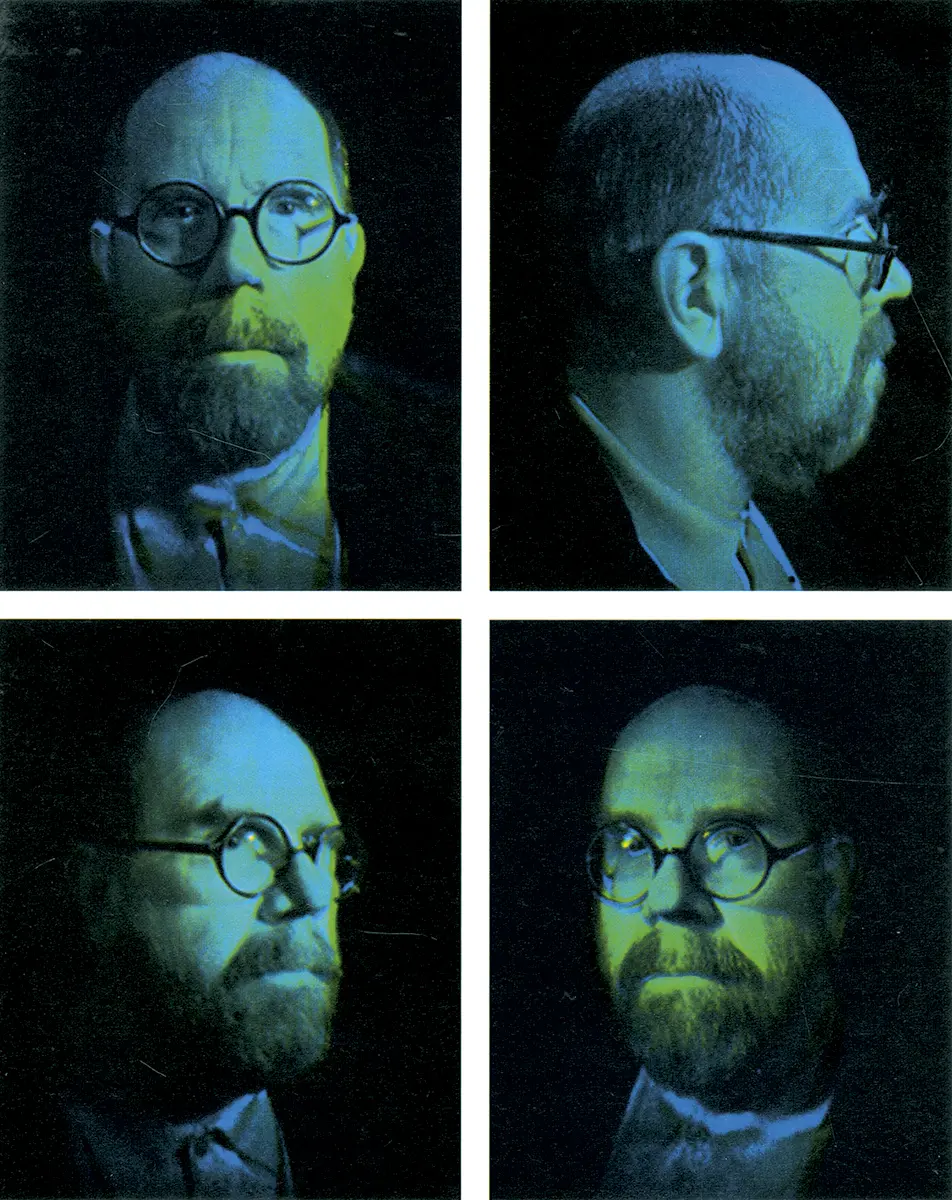
The section on international art editions can also be found in this new Pavilion, gathering prints, posters, lithographs, silkscreen, videos, photographs, and books of famous artists at very attractive prices. Exhibitors of multiple such as Catherine Putman show the works of celebrated artists such as Baselitz, Viallat, and Buraglio. The Art of this Century gallery shows a magnificent series of holograms by Louise Bourgeois and Chuck Close.
Back in the traditional Pavilion 5, we find that the great novelty is the inclusion of a mini-fair devoted to design, increasingly requested by art collectors. Ten stands of high level both for the design and the quality of the pieces represent the best example of the symbiosis between the beautiful and the utilitarian. Kréo, the French gallery owner who revolutionized this specialty, commissioned pieces from famous artists like the brothers Ronan and Erwan Bouroullec which, limited to twelve items, became, even before being made, desirable collection objects. The DownTown gallery, also Parisian, was confident having sold all the curved-form furniture made from polished steel by Ron Arad. The English gallery owner, David Gill, exhibited a set of colorful Baroque furniture by Mattia Bonetti; he wonders why it took so long for people to understand that there is no difference between art and design. Eric Philippe’s stand offered two Frank Lloyd Wright stools. In view of the success of this new section, the furniture gallery owners hope that the number of exhibitors does not increase in order to maintain the level of quality achieved by this sample.
One of the pièces de résistence of the fair was the work of Barthélemy, an artist from Cameroon shown in several galleries, and who also presented a magnificent solo show in the Parisian temple of contemporary art, the Palais de Tokyo. Barthélemy is a versatile thirty-six-year-old artist, who uses sculpture, video, photography, drawing, and performance to create an artistic language based on his experiences and travels. His profile became known when, in the mid-1990s, he staged a number of performances in airports and other places of great public transit, such as train and border stations. Toguo is an activist at the service of his region. He believes that African traditional art is mostly in Western hands and that contemporary art runs the same risk. He has decided to establish an Art Institute so that African artists and artists from other parts of the world may work together in a single place. He says that in Cameroon he can achieve quite a lot within his modest possibilities. And although it is not expected to have the impact of the Guggenheim in Bilbao, his project of an Art Institute in Douala has generated great expectation in the artistic community and his energy and positive attitude have made many offer their support so that it becomes a reality.
The stand of the Boghici Gallery of Rio de Janeiro is a true ovation to the art of Latin America with excellent works by Cícero Dias, Torres-García, Antonio Berni, Antonio Dias, Rubens Gerchman, Camacho, Cruz-Diez, Soto, Hélio Oiticica, Lygia Clark, Jack Vanarsky and Francisco Toledo. If it were the only Latin American gallery of this pavilion, we might think that the Latin American presence is deficient. On the contrary, looking for the presence of Latin American artists in international galleries leads to big surprises. The quest brings forth quite satisfactory results when verifying the profusion of works of great quality in many of the galleries.
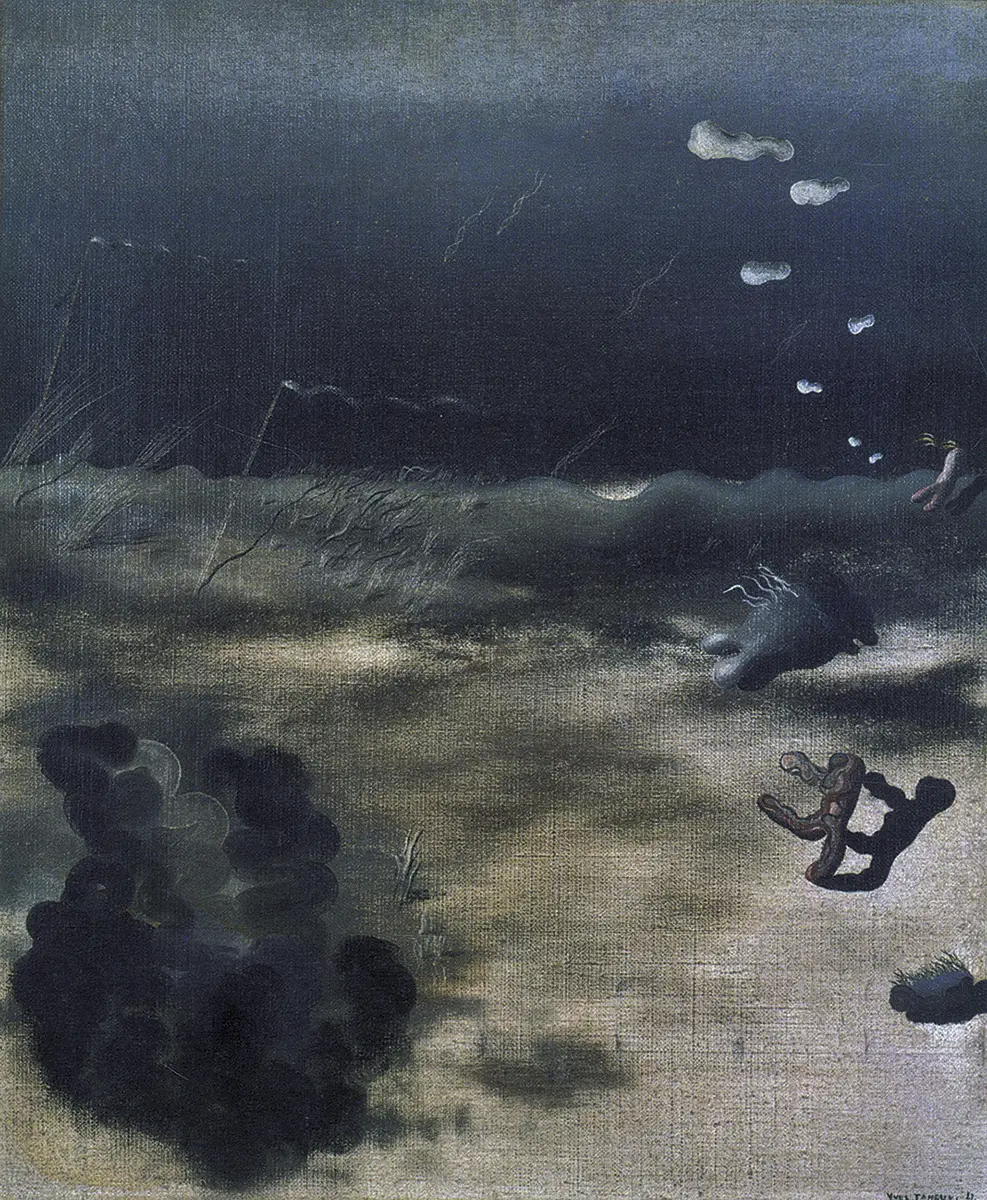
Malinge, the well-known traditional modern art gallery exhibits true museum pieces among which the Matta of 1941 Théorie de l’Arbre stands out. Its presence recalls the wonderful exhibition that this gallery devoted to his works of the 1940s in June 2004, which were the biggest attraction during the Latin American sales at Christie’s.
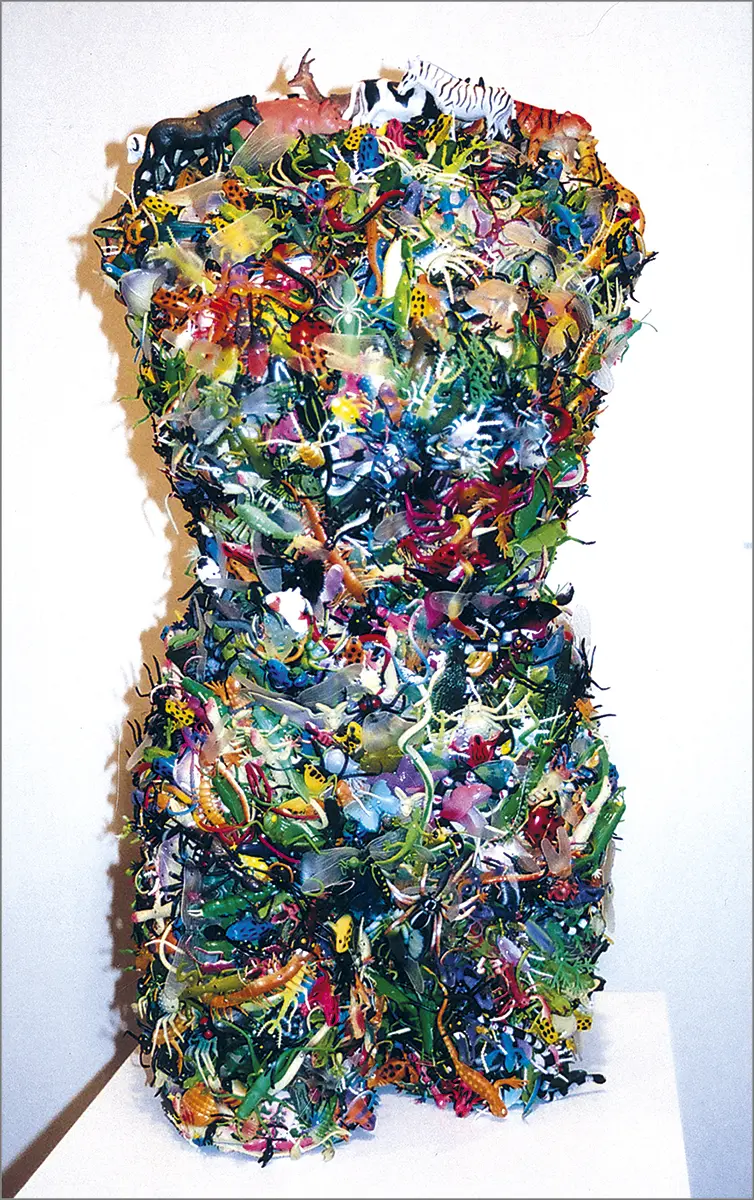
Patrice Trigano of Paris exhibits the works of the Uruguayan Iturria, and of the Colombian Federico Uribe. One of the works of the series Everybody gets screwed is shown in this gallery: Woman Screwed, the bust of a woman full of screws. Another one full of many colored drinking straws is called Bésame Mucho, and another is made with plastic animals. Anne de Villepoix exhibits works of the Cuban Carlos Garaicoa. His work is based on the theme of urban space and the clearing of ruins and debris.
The Pompidou Foundation presented a group exhibition of mirrors commissioned by famous artists to be auctioned soon for the institution’s work for charity. It includes works by the Argentinean Antonio Seguí, and the Venezuelan Soto.
Galerie Lelong presented Gold in the Morning, an excellent photography exhibit by Alfredo Jaar that depicts mine workers in Brazil. Denise René, always loyal in her defense of the kinetic movement exhibited the Venezuelan Pérez Flores with several mobiles that mix the optic illusion of color with movement, in the traditional style of Cruz-Diez and Soto. Chantal Croussel exhibited an excellent piece by Gabriel Orozco. Distrito Cuatro from Madrid exhibited Guillermo Kuitca and Tunga. The indispensable works of Bazilians Vik Muniz and Neto are also present in many galleries.
The Parisian gallery owner Thessa Harold stands out for her presentation of an excellent group of Latin artists. She exhibited a composition by Gabriela Morawetz of deep poetry, along with impressive spatial architectures by Pancho Quilici, and the mystic sculpture of Saúl Kaminer. Her gallery was noteworthy for a wonderful individual exhibit of fifteen large ink drawings by the Belgian poet Henri Michaux, made between 1958 and 1964. After declaring his hate for painting, Michaux did a series of abstract drawings and inks developed under the effects of mescaline, in an attempt to translate exceptional states of conscience into texture. The well-known French gallery owner Jean Gabriel Mitterand also showed the sculpture of the Cuban Agustín Cárdenas. Baudoin Lebon exhibited the work of the Colombian artist Ana Patricia Palacios. Kamel Mennour, the “golden boy” of young Parisian gallery owners, showed a sculpture by the Peruvian Jota Castro. It is an accurate replica of President Bush coming out of an oil barrel decorated with the U. S. flag. Castro describes his work as that of a disseminator of information to awaken citizens. He alleges he is not at the service of any ideology and revindicates his role as the explorer of new forms of communication in which humor plays a fundamental role. Mennour also presented several works from the series Self/hybridization by the famous French artist ORLAN who has developed photographic self-portraits of her face diffused among pre-Columbian sculptures. These works are the result of one year of research in Latin America on voluntary cranial transformations of the pre-Columbian peoples.
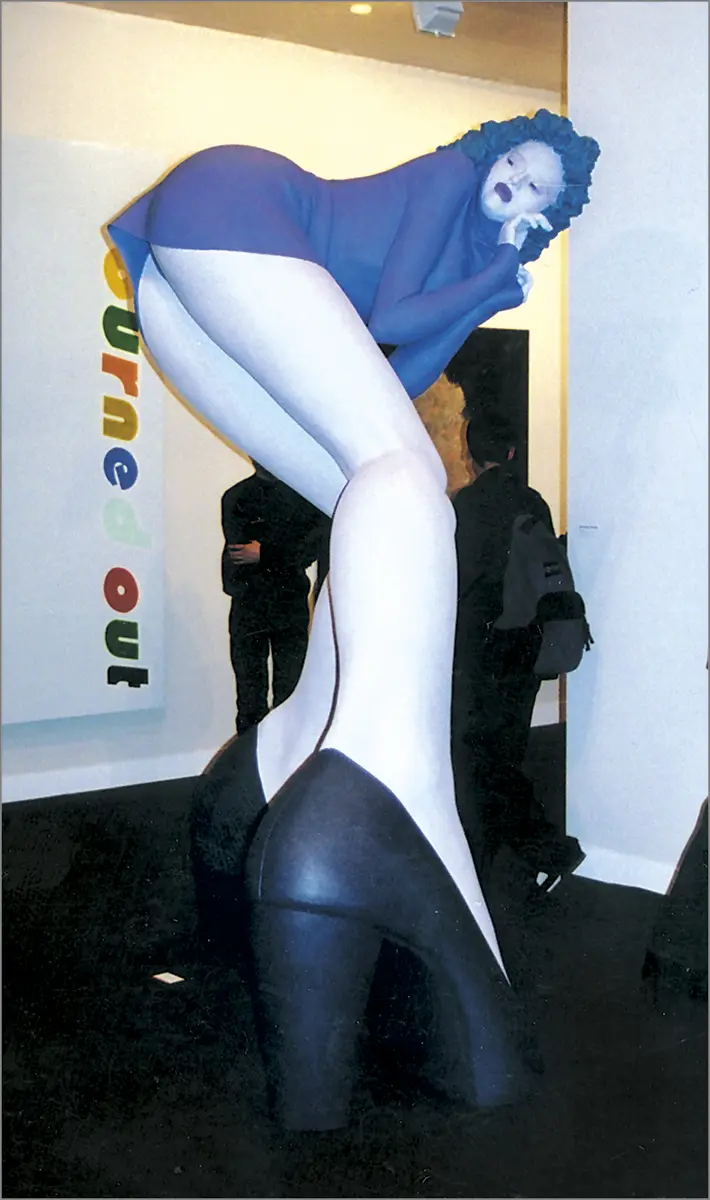
Since its 30th edition, FIAC has also become an important forum for Chinese art. A great number of galleries exhibit artists from China. Among them, the work of Wang Du stood out in the Baronian-Francey Gallery of Brussels, which presented an enormous sculpture of an attractive woman in a miniskirt who saw the visitors of the fair pass under her sensual legs. Zhag Dali, also Chinese and who was a sensation in the Beijing biennial, had a work of silent protest about the millions of workers who are forced to relocate in their search for work, and who lose their identity when it is traded for a registration number. Zhag Dali tries to give return their lost identity to his countrymen through his work in sculpture and painting.
After or during the long walks it was possible to enter the Café des Arts, a place of encounters and lectures animated by artists, researchers, critics, and gallery owners where one was able to listen to, for example, Gilbert and George in an Intimate Conversation, or attend a lecture on “Art and Fashion, Dangerous Liasons” animated by famous designer Christian Lacroix and gallery owner Alain Gutharc while drinking a Campari Rosso, thanks to the patronage of this company.
* Photos by León Birbragher.
TATIANA VILLEGAS
Art critic and writer.