As it flows through the
city of Seville, the Guadalquivir River divides into two branches and forms the
island of Cartuja. Cartuja is named after the Carthusians, the monastic order
that long ago built the Santa María de las Cuevas monastery, which, having been
renovated and altered several times through the centuries, now serves as
headquarters for the Centro Andaluz de Arte Contemporáneo. The monastery also
hosted the first edition of the Seville International Contemporary Art Biennial,
the BIACS (its acronym in Spanish.) For its spatial quality and its unique
character, the location could not have been better. Harald Szeeman, the curator
of BIACS, even declared in an interview with the Spanish press that the artists
and works for the Biennial were chosen to match the place and its unmistakable
architecture. “This is a Biennial for Cartuja,” he said. “I hope that’s well
understood.”
And he was right. The best aspect of this biennial resides in the way in which most of the works exhibited mingle with this formidable architectural complex, originally a convent and later a ceramics factory, where Christopher Columbus stayed before his first voyage to the Americas, and where the archways, chapels, hallways, patios, refectories, ovens, and pantries connect with one another and with the surrounding garden in an admirable way.
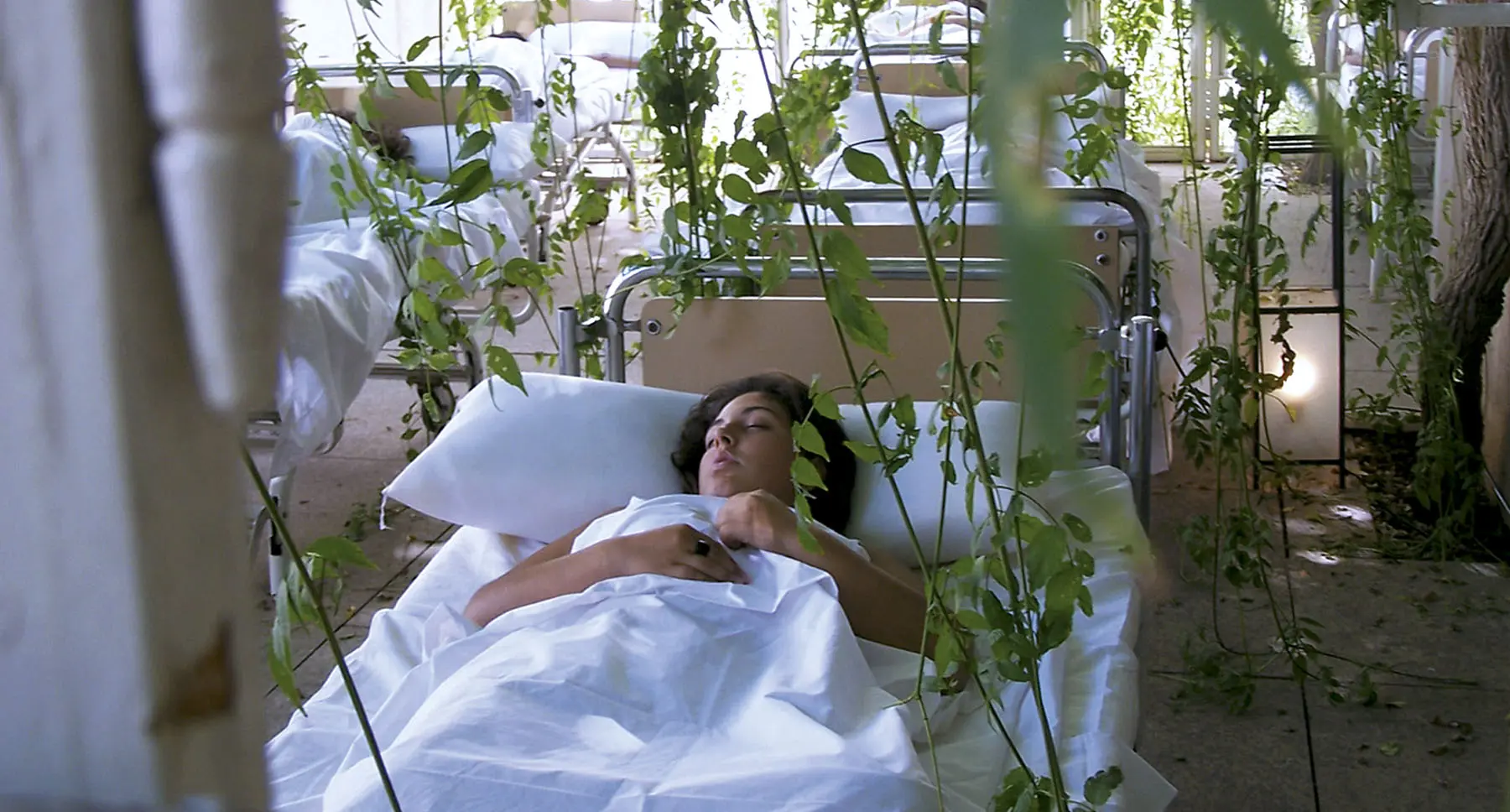
In fact, the three best pieces at the Biennial were those that best interpreted the space that was assigned to them. The first, pure peace and quiet, was an installation titled From-Into by Chiharu Shiota, a young Japanese artist living in Berlin. It was placed at the beginning of the Biennial, in a yard that was full of green climbing vines that the artist framed using wooden window frames salvaged from wrecked buildings and painted white. Inside, among the green branches that hung almost all the way to the ground, she arranged two dozen hospital beds with white sheets, on which young women slept peacefully. The proposition belonged squarely in contemporary art, yet its nostalgic lyricism moved between those “hospitals from beyond the sea” evoked by Álvaro Mutis, and these verses by Antonio Machado: “My childhood is a patio in Seville / Where the lemon tree blooms.”
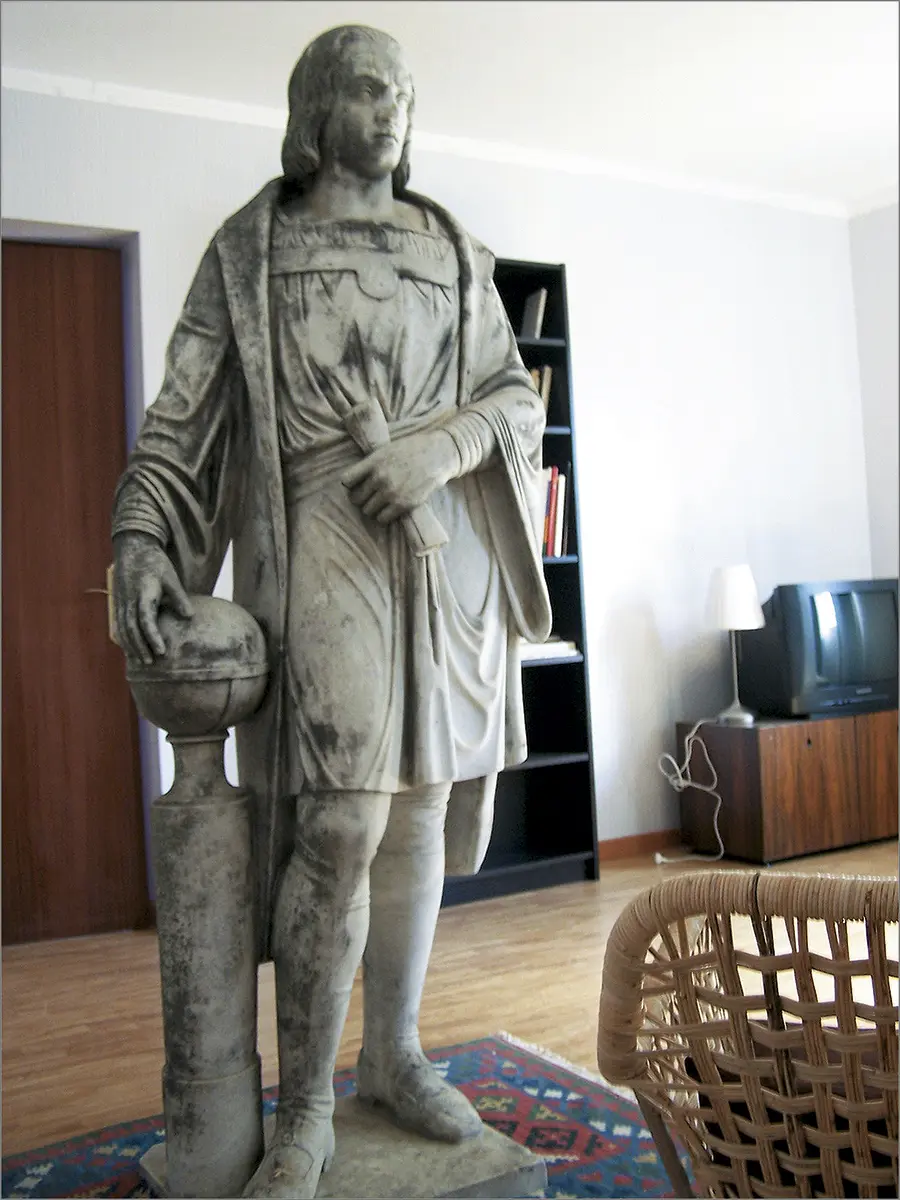
The author of the second great piece was also from Japan. His name is Tatsuro Bashi, and the title of his work, Cristóbal Colón, anticipated that it included a statue of the famous Voyager - the very statue that resides in one of the Cartuja’s gardens-around which was constructed the living room of a typical middle class apartment. Viewers arrived in that comfortable, petit-bourgeois living room, identical to any other, via a staircase supported by the same metal structure covered in blue plastic that hid the base on which the statue rests.
h
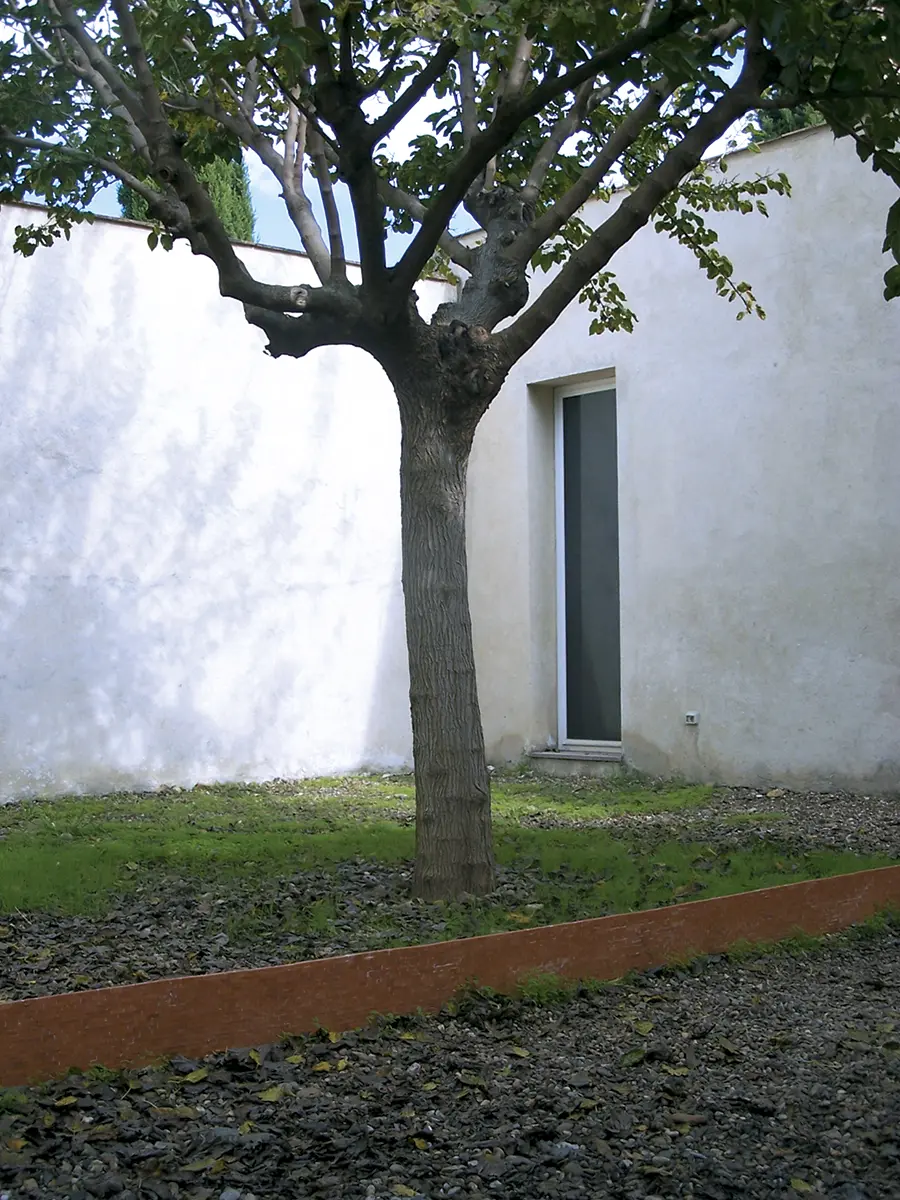
The third great piece at the Biennial was by the always unpredictable Priscila Monge, who has stunned us with a set of china and with school boards filled with ironic advice for a young female artist, and in Seville presented another exciting installation. Titled Muro, it was simple, unadorned, minimal yet exciting, and consisted of a brick wall barely 30 cm high that marked a dividing line in a small patio in the Cartuja. The patio was covered with pebbles and bordered by three bare whitewashed walls with a tree at its center. The fourth wall was the fourth wall of a theater scene: a glass wall with steel trims through which the piece could be seen. I am aware, however, that my description is poor and can’t communicate the extraordinary quality of this work as well as a photograph could. One had to be there in order to fully apprehend, with all of one’s senses, the way in which that small brick wall transformed the space entirely, making it even more extraordinary.
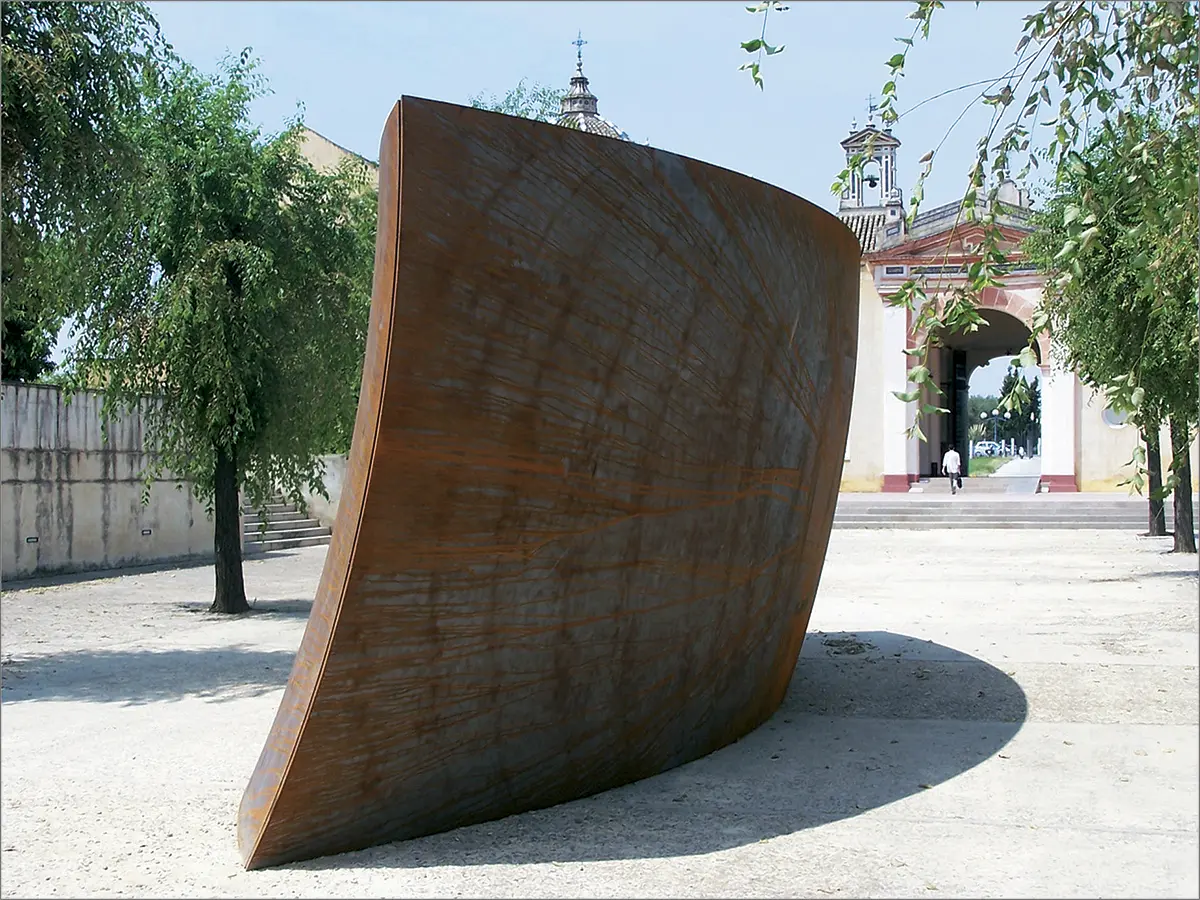
There were more than 60 other works at the Biennial, and the list of participating artists included names as established as Joseph Kossuth, Richard Serra, and Ulrich Ruckriem, as well as Eduardo Chillida and Juan Muñoz, to mention two remarkable Spanish artists, recently deceased. But none of these pieces was truly of interest, with the exception perhaps of New Union, a recent sculpture by Serra that is as refined and effective as all of his previous ones, and by the same token, equally predictable.
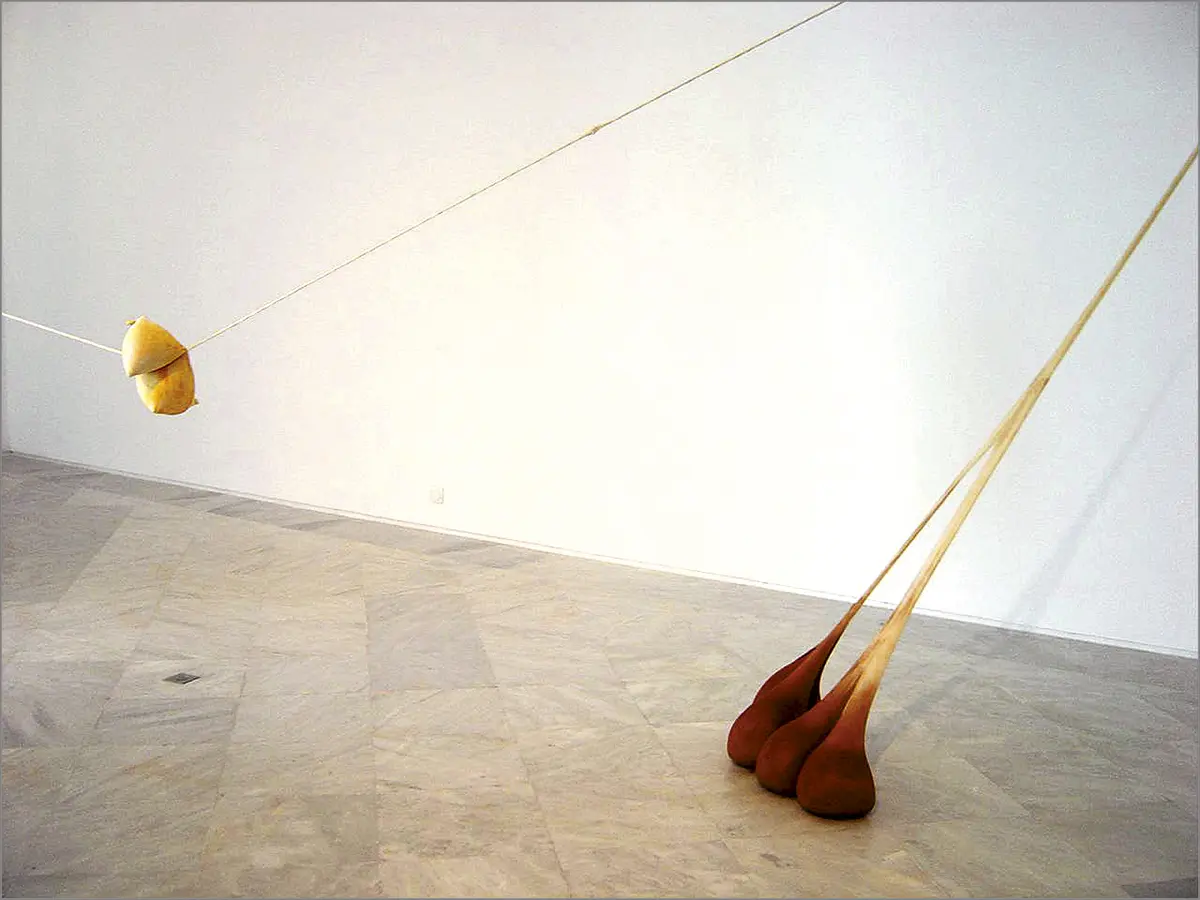
The real interest was elsewhere: in A pesar de todo estamos vivos, a delicate installation by Ernesto Neto using tensed ropes and bags filled with spices; or in the brutal cruel, challenging paintings of Serb artist Biljana Djurdjevic, and the rough, irritating works of Neo Rauch, a figurative German painter. Equally intense were Happy New Year and Vietnam: Towards The Complex—For the Courageous, the Curious, and the Cowards, two videos presented by Jun Nguyen-Hatsushiba, a Hanoi-based Japanese artist. I saw them first at the Berlin Biennial and have been fascinated ever since by their sequences that reconstruct, under the sea, the hard everyday life of Asian cities.
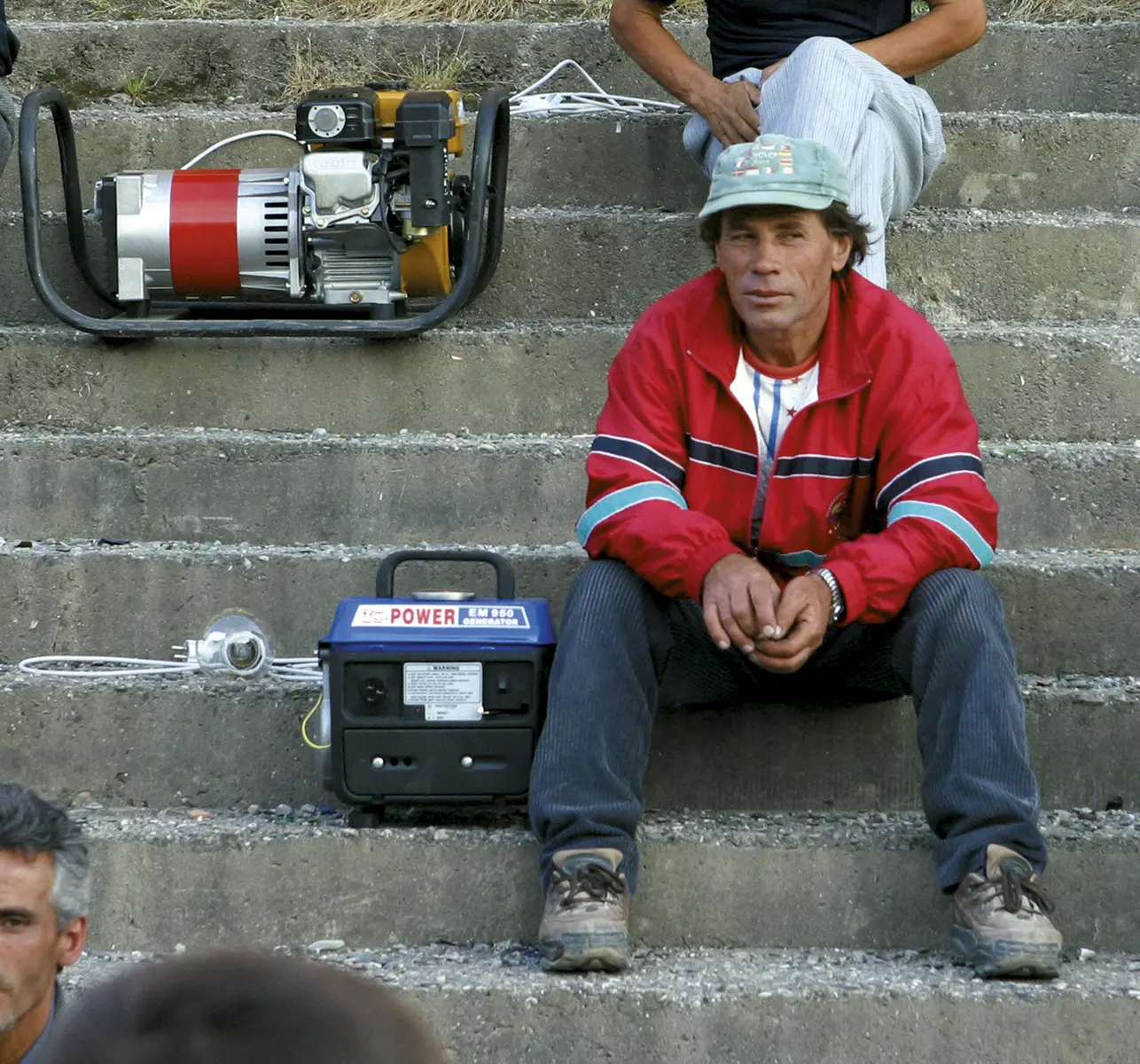
Albanian artist Andrea Paci must also be included in this group. He presented an installation, Home to Go, but I was especially intrigued by Turn On, a video projection that is, among everything that I have seen up to now, the best, most precise, most lyrical treatment of the drama of the migratory waves coming from the Eastern to Western Europe. Also noteworthy was the American artist Lucinda Devlin with her Water Rites, a sequence of magnificent photographs devoted to the restrooms of hotels, gyms, and resorts; Sweden’s Magnus Wallin with Anatomic Flor, one of his frightful computer-generated comic books; and Spaniard Santiago Sierra with 111, a black-and-white photographic mosaic showing a group of laborers in abstract compositions made of sheets of Pladur, a contemporary construction material. Last but not least, Zhou Xiahou, a Chinese artist who lives and works in Jiangsu, presented Desfile en la Plaza de Tien Amen, a large-format set that uses architectural models and clay figures to reconstruct, in a feverish way, a Maoist parade in that almost mythical place, the inescapable background for Chinese politics of the last century. Closing the scene were two monitors showing two unsettling and awe-inspiring animated narratives. I don’t know who Xiahou is, but I am convinced that his work will only grow and become better known in the future, because few have even able, like he is, to transform the vast Maoist iconography, joyous, optimistic, and luminous, into a harsh and somber futuristic tale.
Let me conclude by saying that in the end this Biennial presented no other argument that appealed to the joy of my dreams. But that doesn’t matter. Whatever the event lacked was more than compensated for by the experience, the know-how, and the intuition of its curator, Harald Szeeman.
CARLOS JIMÉNEZ
Writer and art critic. Professor at Universidad del Valle, Colombia.