
The Western notion of sculpture made of carefully carved stone or cast or welded metals that are displayed on a pedestal generally disappeared in the early years of the twentieth century when artists began to realize the value of “found” materials and ordinary objects as the basis for their work. However, in Haiti, the choice of “found” objects is less intentional and art-driven than it is necessary. With minimal resources and an aesthetic derived from religious, social, and political circumstances, Haitians invented their own artistic traditions and material techniques based on a distinctive appreciation for available resources that has its origins in Africa with its ancient reverence for assemblage and construction based on appropriation, re-fabricating, and re-creation.
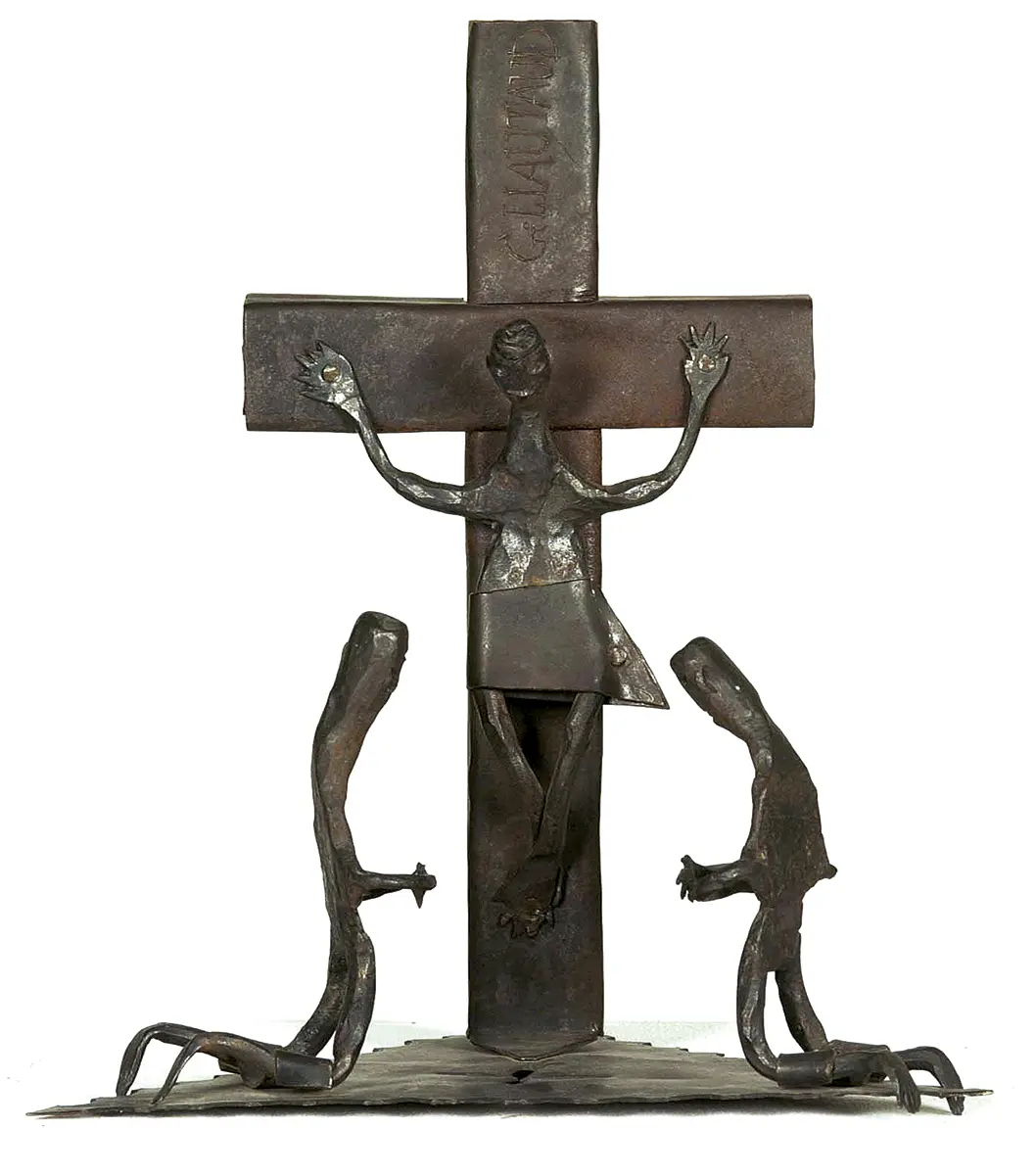
This exhibition is divided into three areas: Iron Masters; Vodou/Ritual, and Contemporary Artists. It is important to understand the significance of introducing the exhibition with the works of the Iron Masters, especially the iron crosses of the great Georges Liautaud. As symbols of connection between the earthly and the spiritual world, Christianity, and the markers in cemeteries, crosses soon were regarded as a market commodity and Liautaud and his followers became more inventive in their artistic re-figurations and in their Vodou additions. The simplicity of the designs also relates to the abstract drawings of vève, the cosmogram marked on the floors of Vodou temples. In the strictest of Catholic traditions, the spare and elegant Crucifixion (late 1970s) of Murat Brierre rivals Liautaud’s small devotional Calvary (ca. 1950) as a modern masterpiece of sorrow.
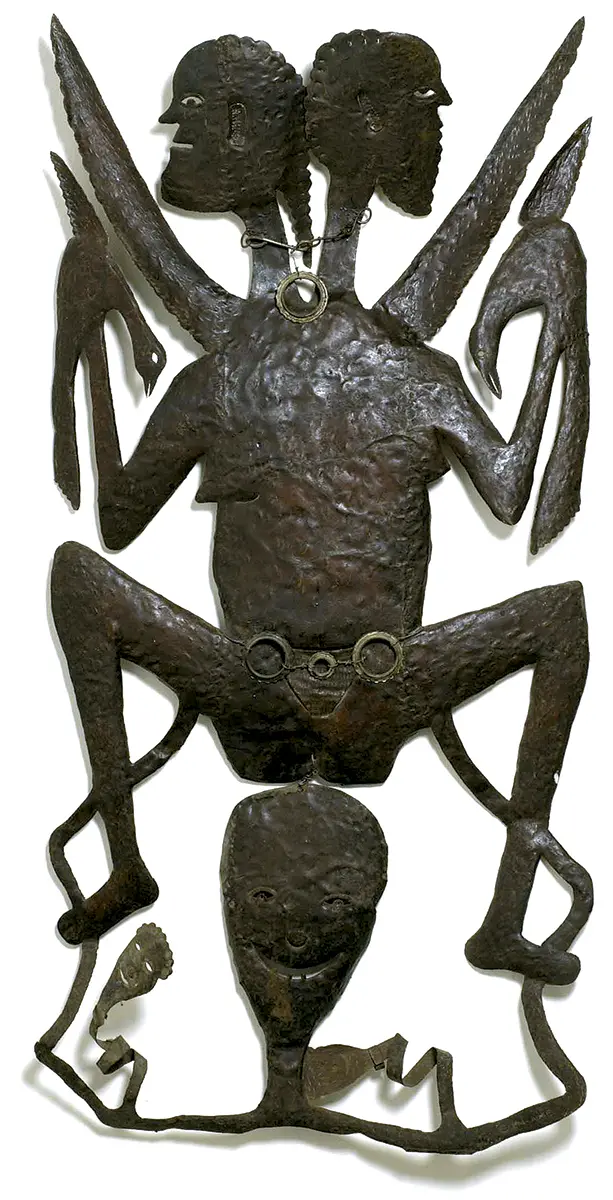
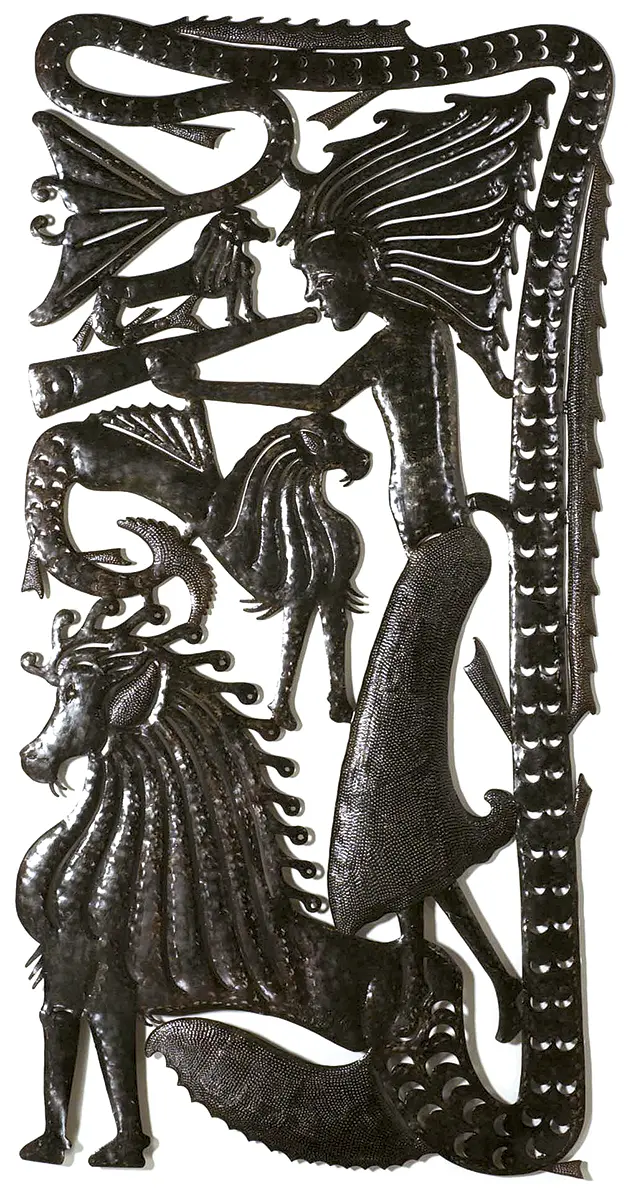
In this first area of the exhibition, dominated by ironwork ranging from the ritualistic to the whimsical shapes of animals and modern vampires, the large La Sirene Calling (1997) by Serge Jolimeau is particularly striking for its references to Medieval fantasies and trumpeting angels, as unintentional as they are authentically Haitian. The spread-eagled Sacred Twins in Marasa by Gabriel Bien-Aimé are also wonderful examples of how African lore is reinterpreted with recycled metals for impressive results. The Sacred Twins are invoked at the start of each Vodou ceremony so make a perfect introduction for visitors.
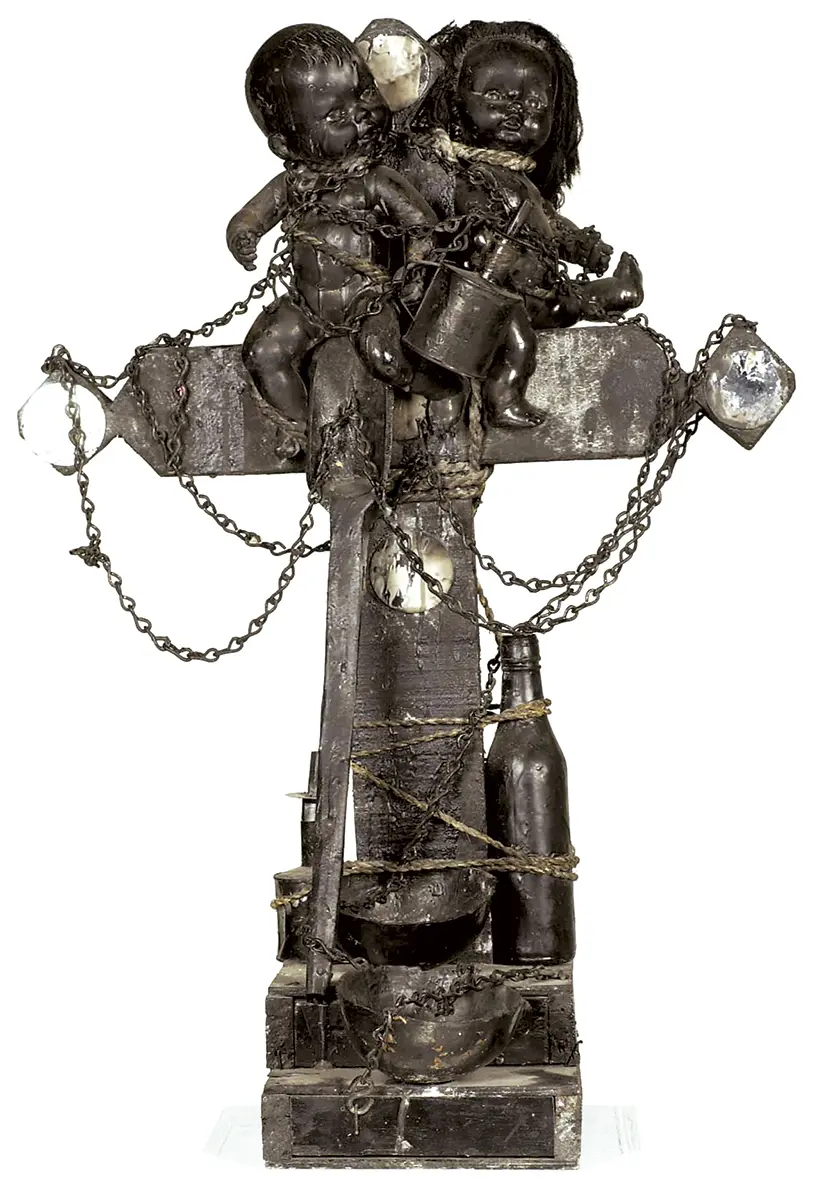
The second part of the museum is devoted to ritual objects, many installed in blue niches that offset their more scary features, especially the ones associated with Bawon (Baron) Samdi or Baron Lakwa, chief of the Gede family spirits of the cemetery. The evil countenance of Ti Bute’s assemblages made of plastic, wood, chains, glass, and rope portends the art of death as it pervades black wood assemblages of strange objects and mirrors that force the viewer to confront themselves and the world of darkness. Certainl,y the seven life-size nightmarish creatures of Jean Nasson Camille’s depictions of devils, bishops, preachers, Gede, and other religious personalities add to the sinister mood. Made of wood, metal, and the mixed media of found objects, they are as frightening as the recognizable artifacts that complete their construction, and the phallic horsemen of the Apocalypse interpreted by Jean Hérard Céleur as the “Zozos” (street talk or 4-letter words) directed at Gede, the lwa (spirit) of death and sexuality, defy comparison. The references to African assemblages and fetish figures, their every nail and power bundle a magical harbinger of supernatural powers, remove the works from the ordinary to the extraordinary on many levels.
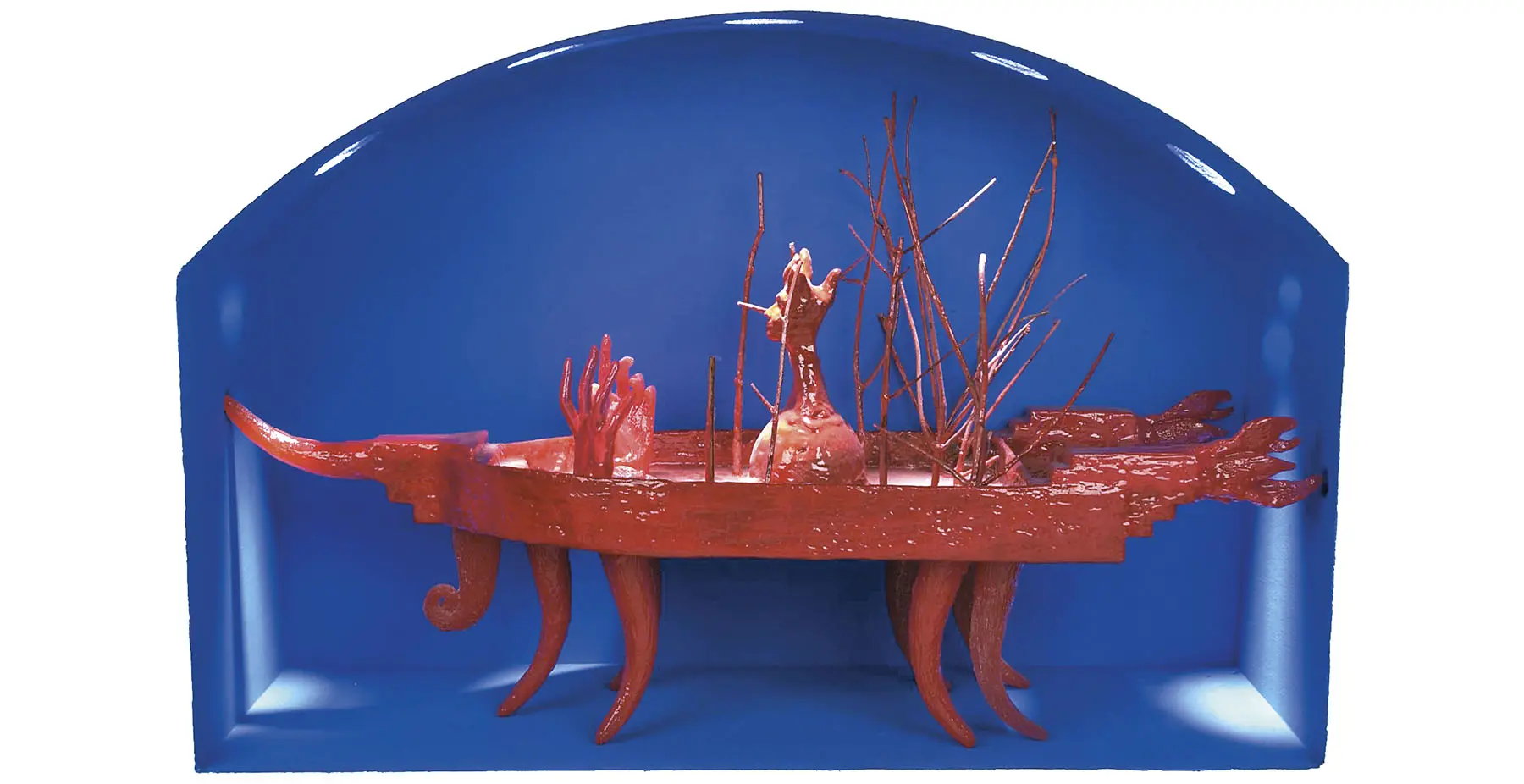
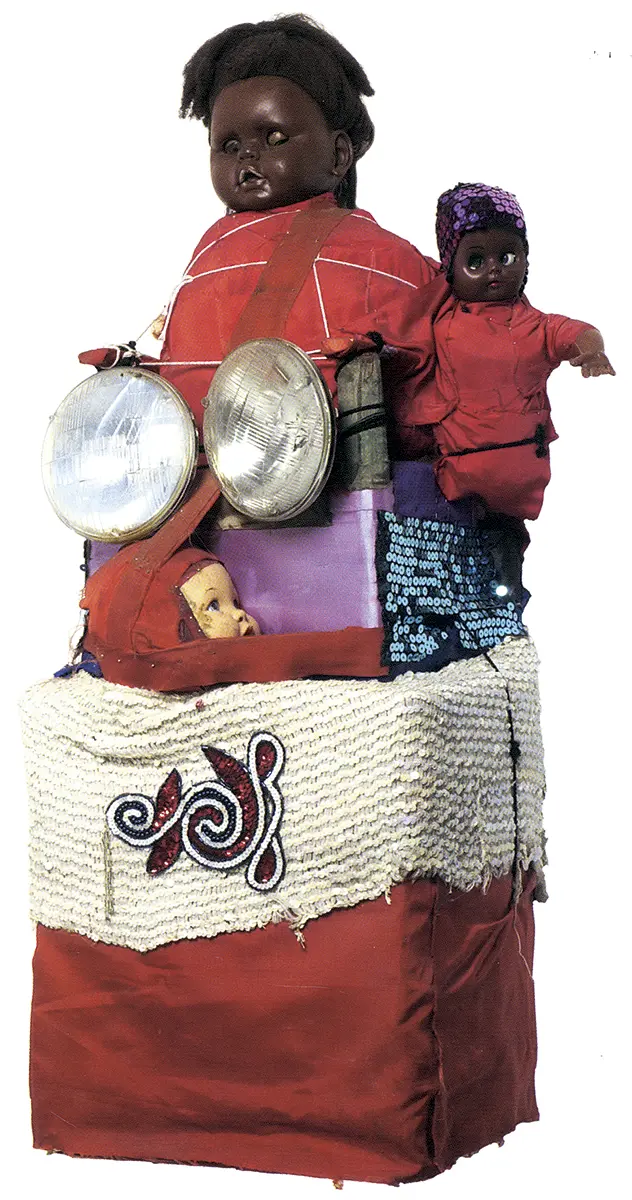
Contemporary artists maintain the same reverence for materials, appropriation and astute contextual associations in a post-modern art world. Edouard Duval-Carrié’s Bossou’s Red Boat (2003) defines his well-known “neo-Vodou” sensibility in a revival of the story of the three-horned bull, replete with universal symbolism associated with divine bulls, of the Bosou Twa Kòn now arriving on new soil reincarnated in red. The work speaks to issues of identity, migration, and exile – so pertinent to the Haitians today. Barque Agoué (late 1990s), Jean Camille Nasson’s old wooden boat which dominates the room, ferries holy figures, syncretic Catholic and Vodou imaginings, guided by a “figurehead” crocodile creature and a cross-masthead masked by a fan cover. Hovering from the ceiling, the red-satin horseman who fights for justice, Sen Jek Majè (St. James Major; Ogou; Santiago de Matamoros) is Ogou Feray (1994) of Pierrot Barra and just the contrast to mediate between the darkness and the beaded assemblages of dolls, cloth and other materials more familiar to the tourist market, yet equally unsettling. Barra and his wife Marie Cassaise are the masters of such reconfigured doll pieces. The dolls’ surreal faces haunt five-and-dime aesthetics as offerings and tributes to Vodou’s persistence in all aspects of life. Even the bird-men in Eddy Steinhauer’s boxes take Joseph Cornell into the tropics in the strangest of ways.
Barbara Prézeau’s Lantouraj (2000) “screen” is a large modern painting made of wood and metal siding. The color fields are rusted patinas that serve as a backdrop for an elongated Giacometti-like metal figure that casts its shadow on its surface, only to be mimicked by a painted ghost. The specters suspended from the ceiling in Mario Benjamin’s Dark Room (2004) are mannequins transformed by the forces of evil and nature’s detritus. The visitor enters the black room with a tinkling of bells that do nothing to prepare one for the purple glow and haunted atmosphere that prevails. This site-specific installation transcends Haitian references as it invites the viewer to contemplate the world of darkness.
This is an exhibition that is about darkness, joy, ritual, invention, materials, and perseverance. It is a most important addition to the wealth of information that has long been available about painting, especially since the artistic revival that began at the Centre d’Art in Port-au-Prince in the 1940s. The discovery of the unique artistry of Haiti, the artists’ precocious and distinctive approach to picturing their world according to their own personal visual language, and their admirable accomplishments through years of adversity, are perhaps even more evident in sculpture, as this impressive exhibition makes clear.
CAROL DAMIAN
Professor and member of the Directive Board of the Department of Visual Arts at Florida International University, Miami.