Historias was the slogan or leitmotif adopted by Horacio Fernández, PHE04 artistic director, in an attempt to mark an orientation or guideline for an event that has turned out to be massive, both in terms of the number of visitors that attend and the number of participating museums, contemporary art centers, foundations, and galleries. The term historias referred to the fact that in this large photography festival, held in Madrid during the months of June and July, what was privileged was a kind of photography informed by a will to narrate, in open defiance of the modernist paradigm fixed in its day by Beaumont Newhall, the legendary Director of the Photography Department at MoMA, for whom photography was above all a visual event, as self-referential as any abstract painting.
The photographers highlighted by Fernández were, instead, those who even when they accept the limitations of the still image—which, as Lessing would put it, only exists in space—try to place it in the service of a story or a fable, narrative modalities that, as we know thanks to the Romantic theorist, unfold over time.
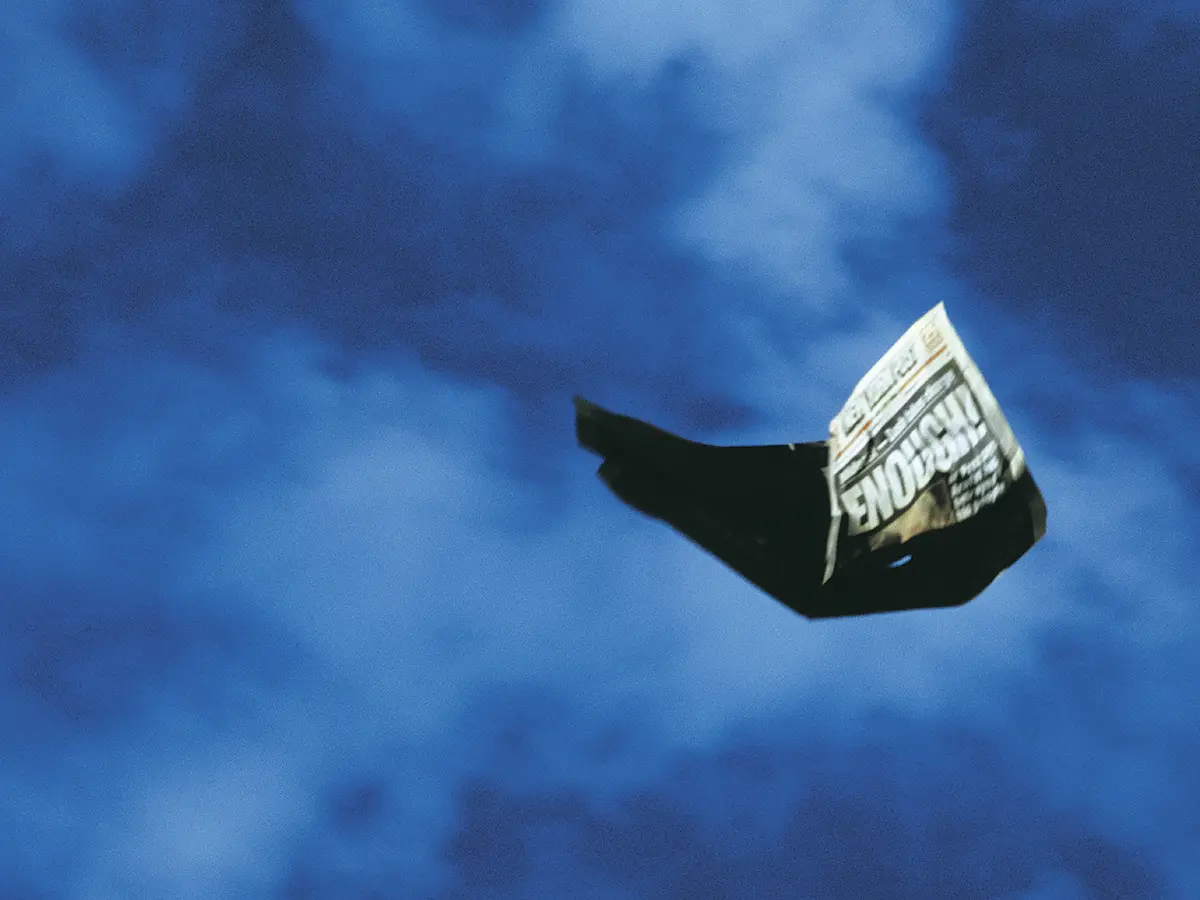
An excellent example of this orientation was given by American artist Dennis Adams, who in the exhibition galleries of Madrid’s Botanic Garden, under the common title Airborne, presented a collection of computer-manipulated photographs taken around Ground Zero in Manhattan shortly after the September 11 attacks. The images of those newspapers floating in the air, their headlines in close up, evoked or suggested many of the stories we have heard or imagined around the events of that terrible day. Another good example of narrative will be offered by Paul Graham, a young British photographer who exhibited, at the Telefónica Foundation, his series Troubled Land, New Europe, and American Night. These were three different series with a common purpose: provoking us to imagine the sequence in which each isolated image should be inserted.
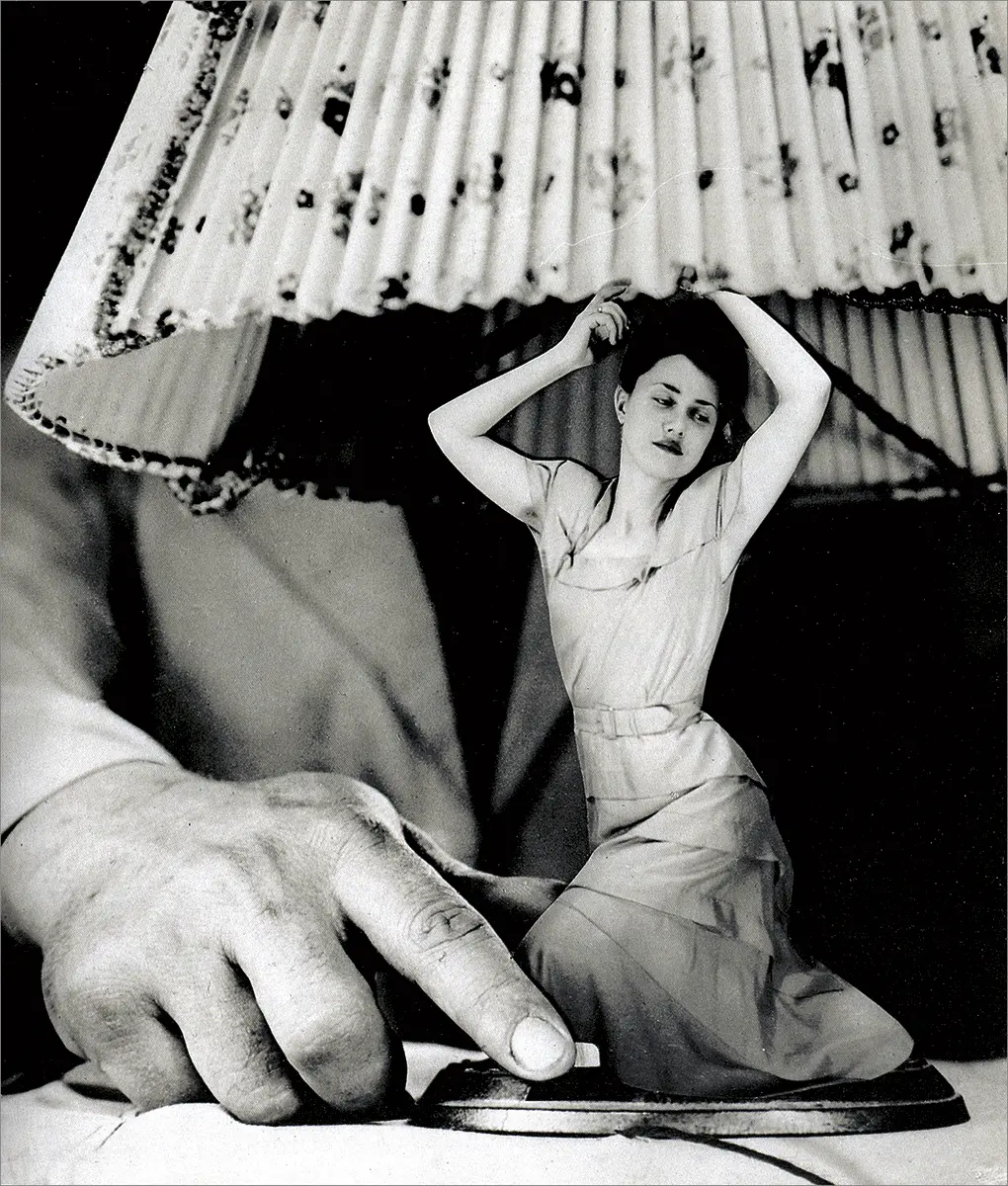
In my mind, however, the one true surprise, the one true landmark in the variety of offerings in PHE04, was Grete Stern’s show at the Centro de Arte Moderno, a small art gallery in Madrid administered by a group of Argentineans. As is well known, Grete Stern is a fundamental figure in twentieth-century Latin American photography. Born and educated in Germany, Stern met Horacio Coppola, another key photographer, when both were students at the Bauhaus school in Weimar. They became a couple and later left Germany fleeing from Nazism, first to London and later to Buenos Aires, where they stayed together for two decades and where Stern created her most important works. The ascent of Peronism, however, made life more complicated for many artists and intellectuals of the period, both local and exiled, who were forced to earn a living in many odd ways. Such was the case of Gino Germani—one of the founders of sociology in Argentina—who convinced Idilio, a popular women’s magazine, to include a column titled "Psychoanalysis can help you." This section was, in truth, an old but original twist on the “sentimental advice” columns that are typical in publications like Idilio. Rather than the typical dilemma, its readers were invited to send the magazine the narrative of a dream they had. Germani read them and selected one dream for interpretation in the next issue of the magazine, and then sent a copy to Grete Stern for her to compose a photo montage to illustrate it. The reader’s tale, Germani’s interpretation, and Stern’s photo montage appeared together in the magazine on most weeks between 1947 and 1951.
This is obviously a unique experience in the annals of journalism, psychoanalysis, and photo montage. We can only praise the managers of the Centro de Arte Moderno for the excellent idea of taking advantage of this edition of Madrid’s photo festival to exhibit, together for the first time, 143 of the surviving 147 Grete Stern photo montages, including 43 that are not lithographic copies but photographic originals. The whole collection possesses an extraordinary quality and, in its way, is an eccentric equivalent of Une semaine de Bonté, Max Ernst’s book about collage made in Paris in the 1920s, based on engravings; both works share the same strangeness, the same effective evocation of the discourse of dream and its unsettling images.
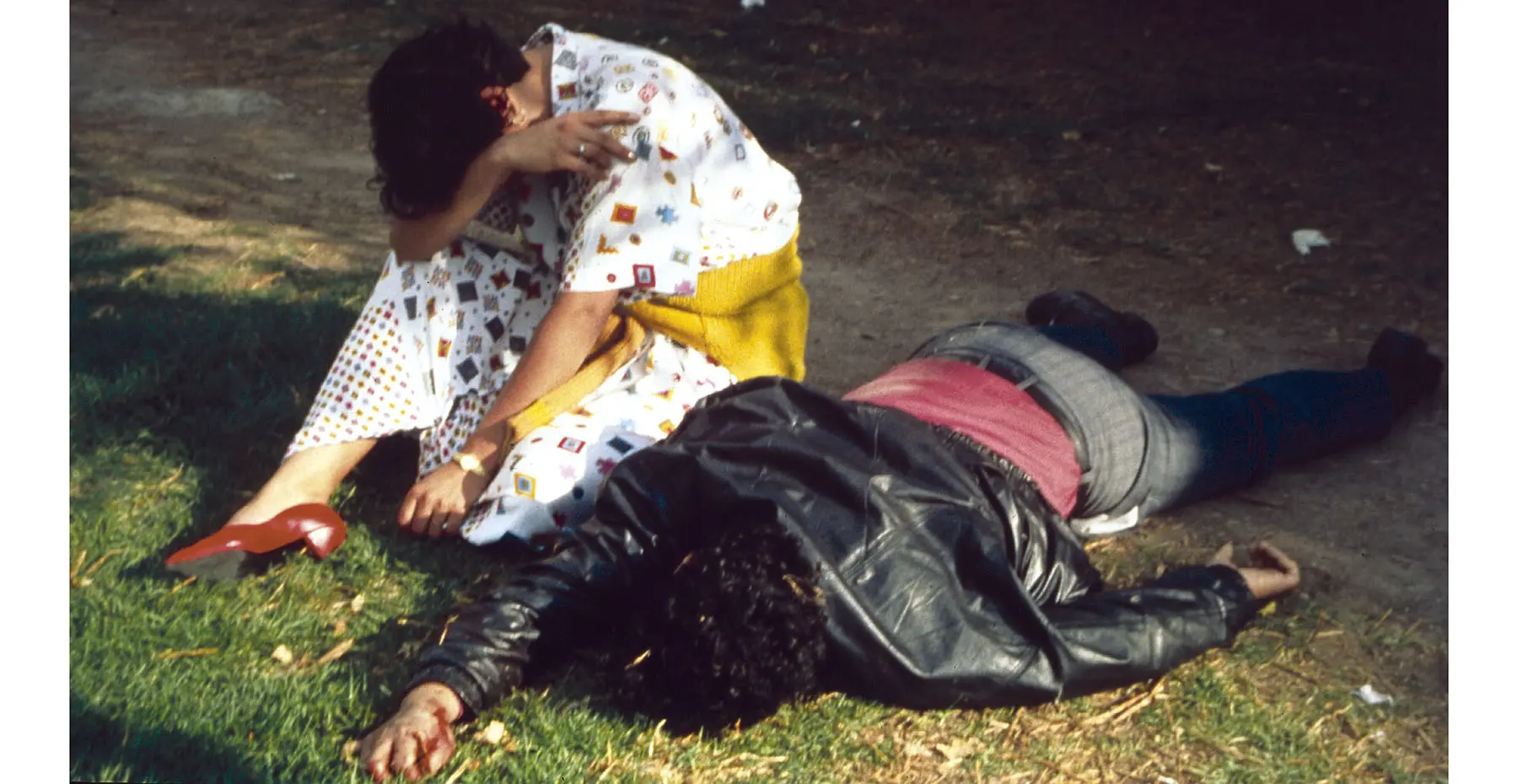
The next important landmark was Enrique Metinides’s exhibition at Casa de América, in Madrid.
His photographs however did not refer to the phantasmagoric territories of dream but to the rawest and most uncontestable reality: the reality of accidents that pop up in the normal course of our everyday lives without our having any control over them, especially in the case of everyday life in a large city, like Mexico City, where Metinides worked from the 1930s to the 1990s as a press photographer. It is an unchanged and imperturbable occupation; the fifty pieces exhibited by this remarkable photographer demonstrated the coldness of his gaze, similar to that of a skillful, sure-handed surgeon slicing up flesh, distanced from its pain. In Metinides photographs, as in the work of Weegee—his colleague, his New York match—the pain of the victims of a car, bus, plane, or train accident, as well as the crimes or suicides photographed, are frozen or deferred sine die. Metinides is a dispassionate observer, the neutral link between the victim’s pain and the hypothetical compassion of the viewer. And even if he doesn’t realize this, his coldness is in itself chilling.
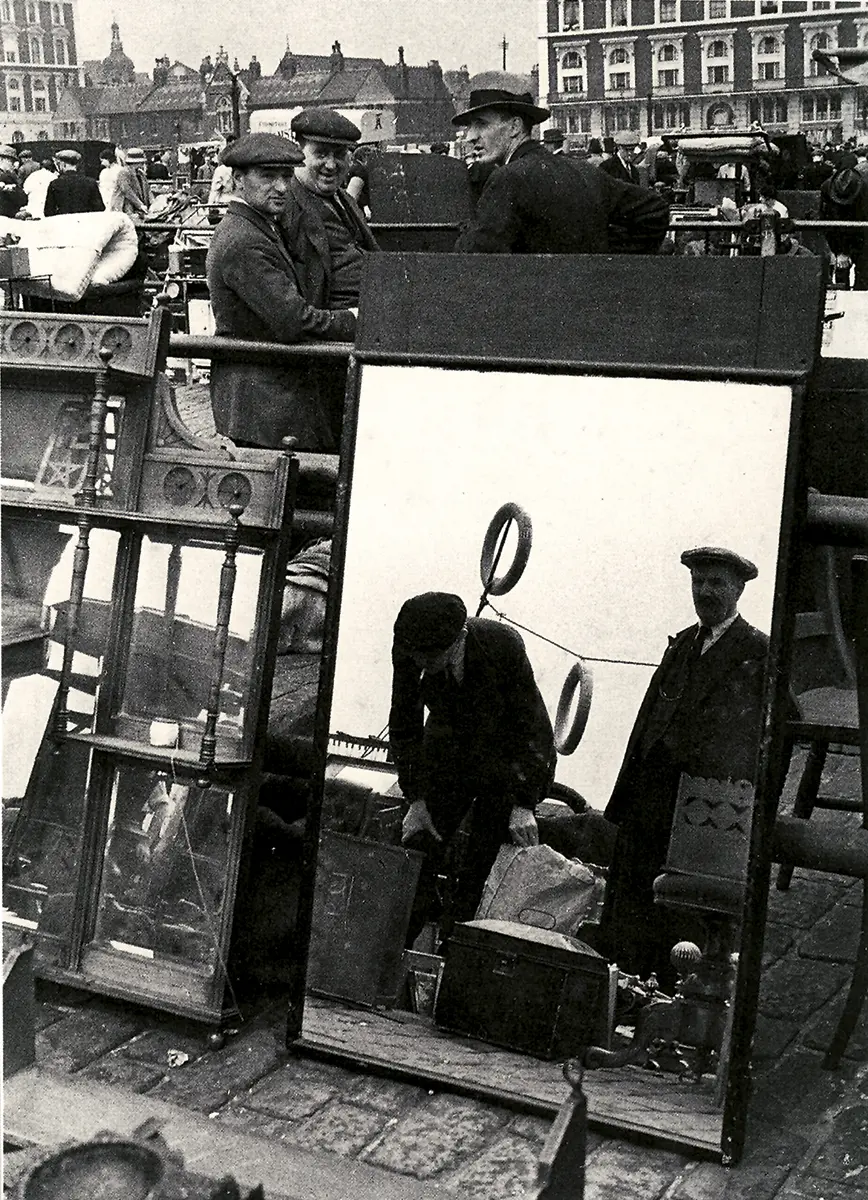
Lastly, we must talk about Horacio Coppola, mentioned before as Grete Stern’s companion. His photographs were shown at the Guillermo de Osma gallery, under the title From Bauhaus to Buenos Aires, and they belonged to the period of his life and career between the end of his studies at the famous architecture and design school, and his return, via London, to the Argentinean capital, where he had hardly arrived before he was commissioned a book. It was 1936 and the authorities of the day wanted to celebrate the city’s four-hundredth anniversary with a book of photographs that would show how modern and cosmopolitan Buenos Aires was already. Coppola fulfilled his commission thoroughly, expertly marrying the lessons in photographic rhetoric received from his constructivist teachers at the Bauhaus and the radically modern character of the architecture, the boulevards, and the streets his lens encountered.
But even as we acknowledge the formal virtuosity of this series, there is no doubt in my mind that the excellence of the exhibition resides in a single photograph. It is simply titled Londres and was shot in 1934 during his stay in the British capital. It may be an instant shot, but it is in no way naive or elemental. On the contrary, its composition is just as complex as the composition of Velázquez’s Las meninas, to give a classical and perhaps excessive example. Coppola took his photograph in a flea market crowded with knick-knacks and old furniture, among which a large mirror is very noticeable; although shot frontally, the mirror does not reflect the photographer. And in the same movement, we, robbed of our own reflection, become ghosts.
CARLOS JIMÉNEZ
Writer and art critic. Professor
at Universidad del Valle, Colombia.