
The opening of Art Basel Miami Beach on December 1,
2004, proved that, over a period of three years, this fair has become America’s
most important and eagerly awaited art event. More than 1,000 artists from
North America, Latin America, Asia, Europe, and Africa, represented by 190
invited galleries, had works at this event, which had an estimated 30,000-plus
visitors. For a whole week, an epidemic of Art Basel Miami Beach-related
celebrations takes over the social and artistic scene in Miami Beach. Limits
are broken: barriers of opulence are broken with the work of great masters
selling above the million-dollar mark. The hours of a single day are hardly
enough to attend all the events programmed to honor collectors, curators,
critics, reporters, artists, and the general fair-visiting public.
Yet, Art Basel Miami Beach did not lose its focus amidst such a carnival. The fair achieved its main objective, to offer its public a complete art selection, including both transcendental figures and emergent talents on the international art circuit.
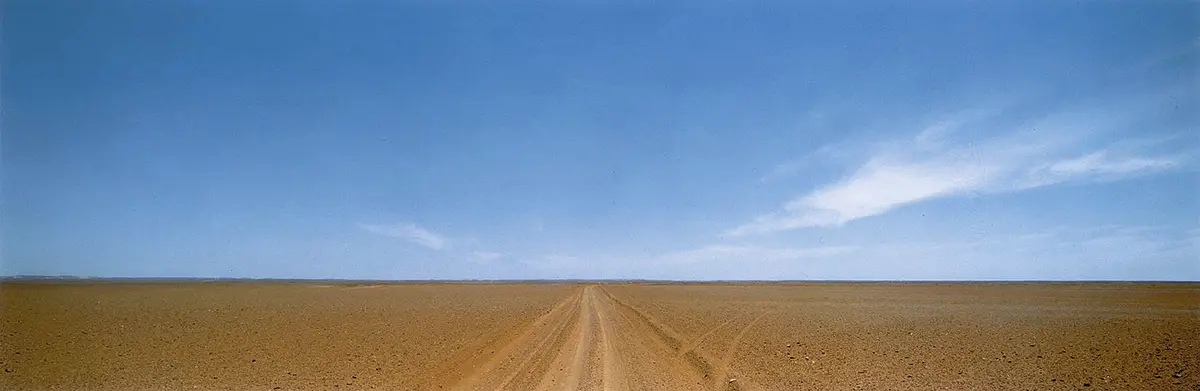
The combination of techniques and media presented by New York’s James Cohan Gallery worked. Among paintings and pastel works by Francesco Clemente, a representative of the Italian Transavantgarde, it was easy to mistake Bill Viola’s silent video Catherine’s Dream, for a painting. This mid-size video installation (70 x 45 cm) shows a woman’s facial expressions in slow motion, so that her movements are barely perceived. The exhibition also included photographs by German filmmaker Wim Wenders, among which was the largest photograph of the entire fair: Dust Road in West Australia (178.12 x 447 cm). Most of Wenders’s photographs have been taken during the filming of his movies or on personal trips. However, what began as a pastime soon developed into the creation of excellent works of art through the medium of photography. The choice of size for Dust Road in West Australia acts in favor of the piece, bringing the viewer in and transporting the viewer to that dirt road that seems to dive into the immensity of the sky.
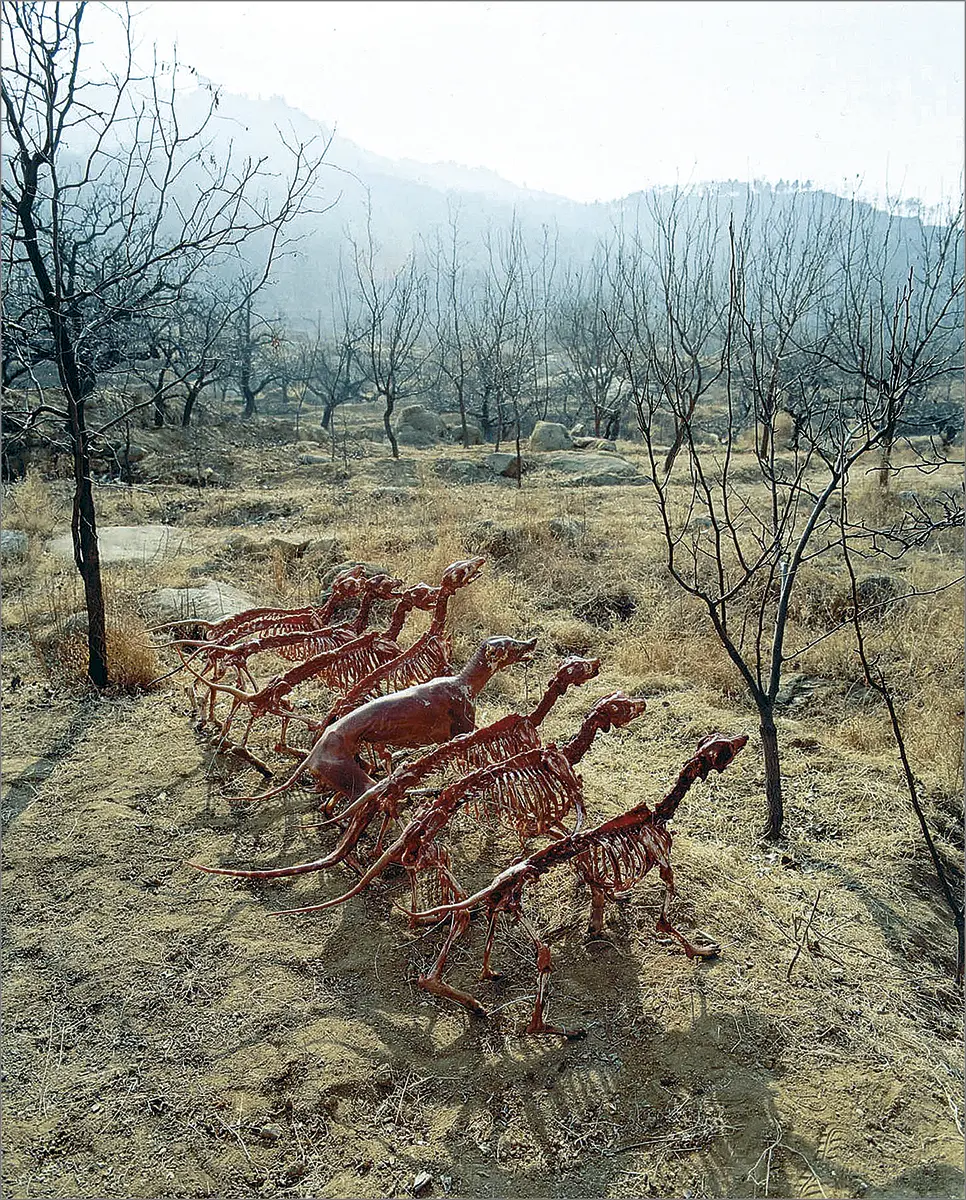
The sensation of immortality Wenders’ work evokes is soon replaced with the skeletal canine structures in Chinese artist’s Zhang Huan’s photographs at Canada’s Artcorte Gallery. The title of this piece, Pear Blossom Grove, invites viewers to visualize green fields with flowering trees and pleasurable aromas, which augment the horror of the morbid scene Huan has set up. In this sequence of photographs, dog skeletons roam an arid plain, amid dry trees and wastelands, and ironically, drink water from a puddle, as if thirsty for life. In a sector of China, dogs are considered a feast and Huan uses these animals’ bones as protagonic characters for these works.
The virtual installations by Jennifer Steinkamp at Lehman Maupin Gallery, from New York, proved that it is possible to include simulacra of nature in any architectural space, no matter how deprived of sunlight, water, or soil. Steinkamp presented a series of flowers that, thanks to a projector, came to life on the gallery walls. Steinkamp’s special effects allow her flowers to move from side to side under an imaginary breeze, creating a link between phenomena from tangible reality and virtual reality.
In a typical work by Jenny Holzer, presented by New York’s Cheim & Read Gallery, there is an LED sign with a nausea-and-dizziness-inducing neon text; the phosphorescent text keeps falling into the vertical sign, too narrow to allow the words to move.
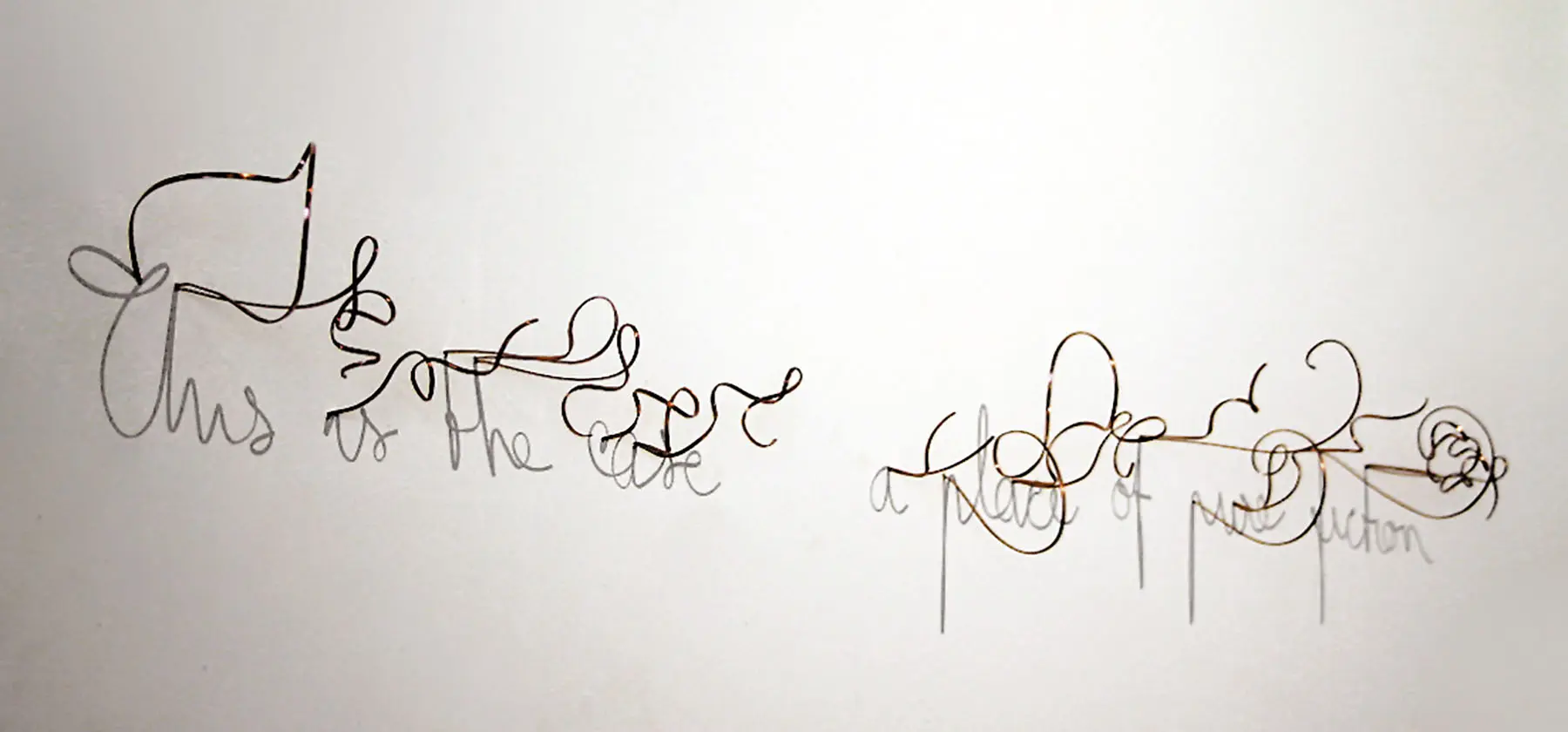
Belgian artist Fred Eerdekens also uses words as an artistic tool. However, contrary to what Holzer does, Eerdekens does not seek to filter important socio-political messages in his texts; rather, he seems intent on entertaining his public by creating optical illusions. From a tangle of copper spirals rising parallel to the walls at Spencer Brownstone Gallery, Eerdekens’s uses light to produce word-forming shadows. Seeing a text emerge from a tangle that appears to have no meaning is akin to seeing a magic trick being performed.
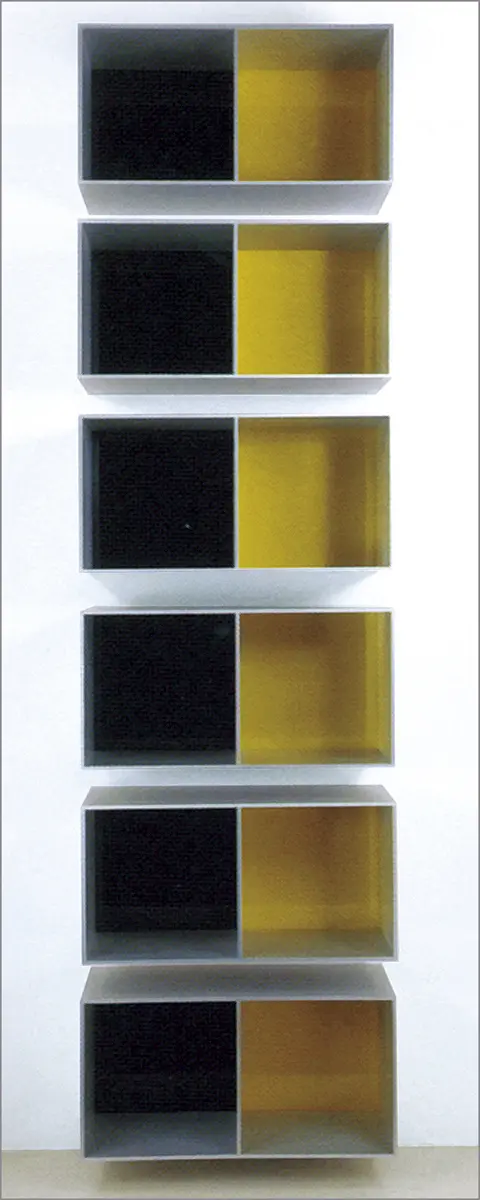
Several works by Anish Kapoor, considered by many today’s most significant British sculptor, were to be found throughout the fair. Both New York’s Barbara Gladstone Gallery and London’s Lisson Gallery presented Kapoor’s concave spheres in intense and uniform colors, with polished surfaces that projected onto the gallery walls. Made of aluminum, stainless steel, and lacquer, these sculptures reflect the viewer’s image and create a distorted, fused effect where the viewer becomes part of the artwork. Another widely represented American artist was Donald Judd, considered one of the most important post-war creators. His, is is one of the main minimalistic productions due to its exploration of form and color.
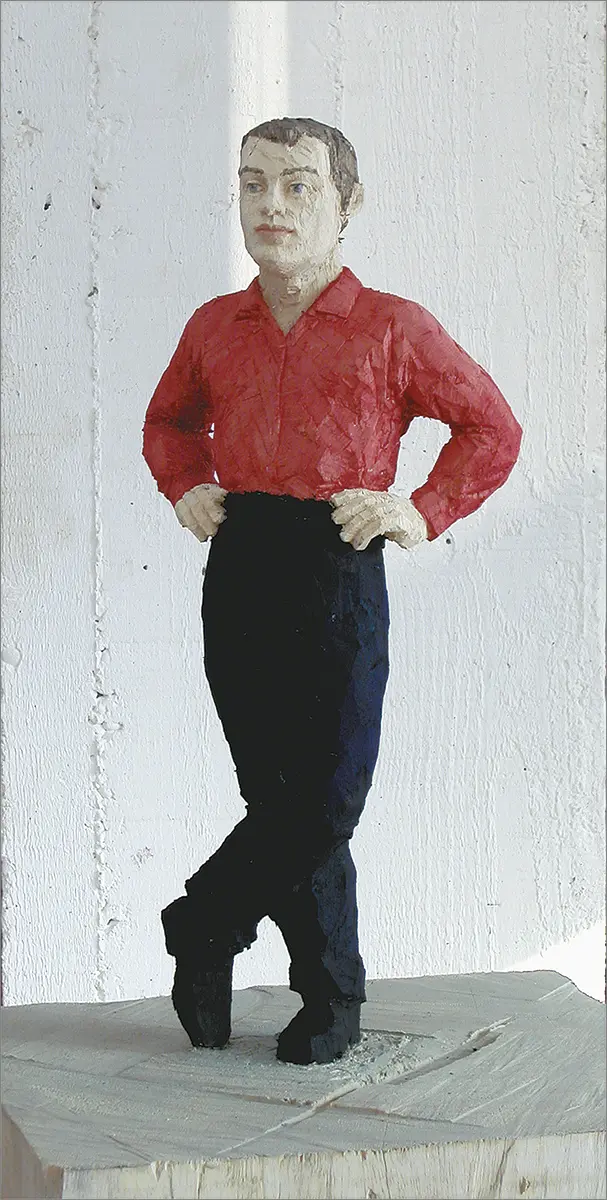
German artist’s Stephan Balkenhol’s wood sculptures had a space in different galleries, like Germany’s Johnen + Schöttle, and New York’s Barbara Gladstone, among others. Balkenhol uses a single block of wood to animate his drawings and sculptures, of men and women with rather ordinary features. The artist avoids using particular emotions that could suggest any kind of narrative; his men and women lack emotion, gaze fixedly, and their expressions are blank. Balkenhol’s sculptures are coarsely finished, which, in combination with the calm that dominates these works, evokes sensations of physical and emotional wear.
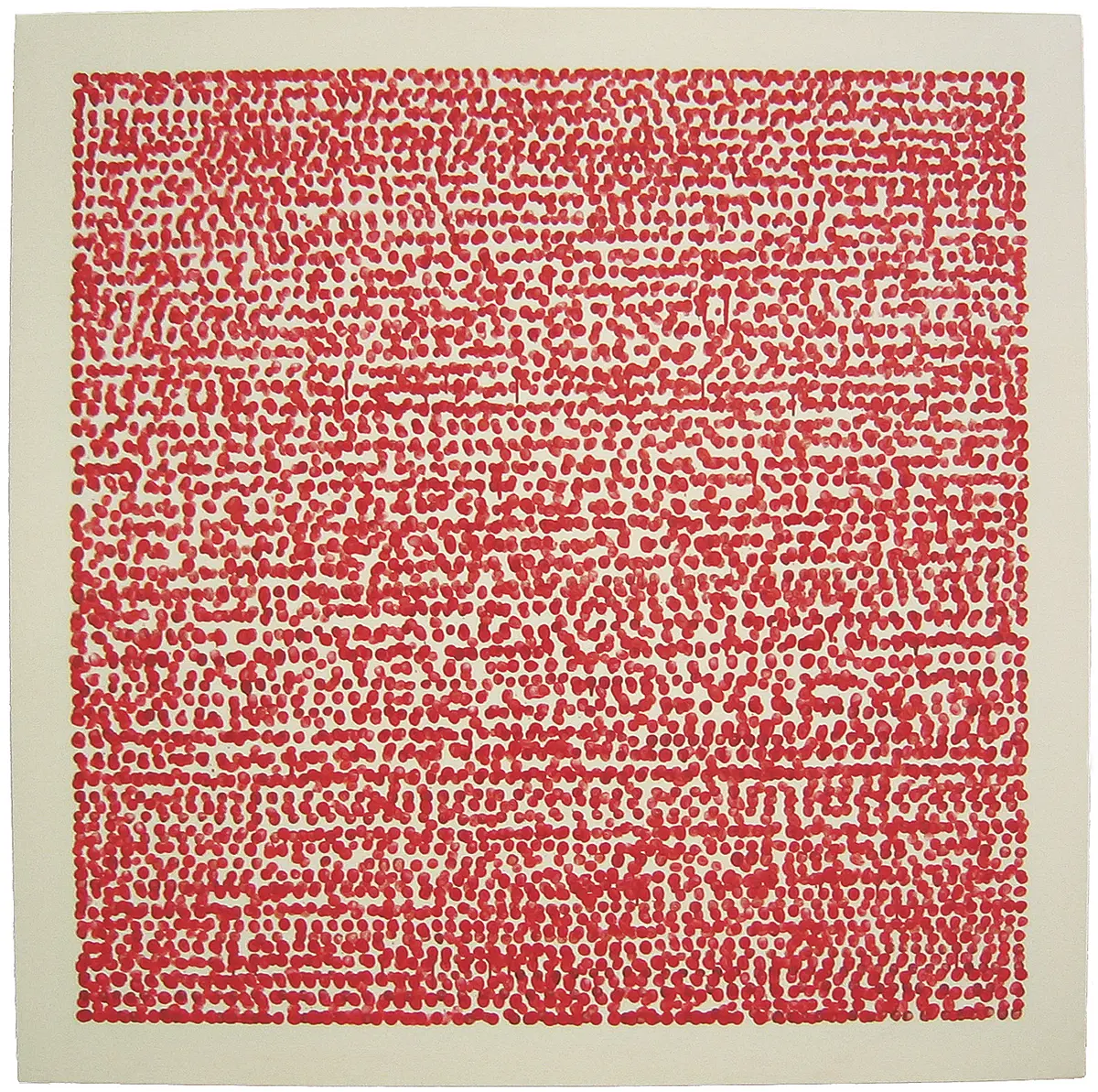
Once again, Luis Adelantado featured a group of young artists from Spain and Latin America among which are Alexander Apóstol, Priscila Monge and Milagros de la Torre. Photography took over the gallery´s space; however, it also showed the acrylic works by Mexican Luis Rodrigo Medina. The artist uses very elementary and monochrome drawings in the form of tangled up lines or dots on the canvas surface. In the work Teng —which may recall the Japanese hero of the 12th century—, he creates a sequence of red dots crowded on the canvas, creating the visual effect of a careful calligraphy.
While some galleries attempt to display works from the largest possible number of artists on their roster, others are satisfied with cutting down their inventories in order to offer more intensely consistent and better-focused presentations.
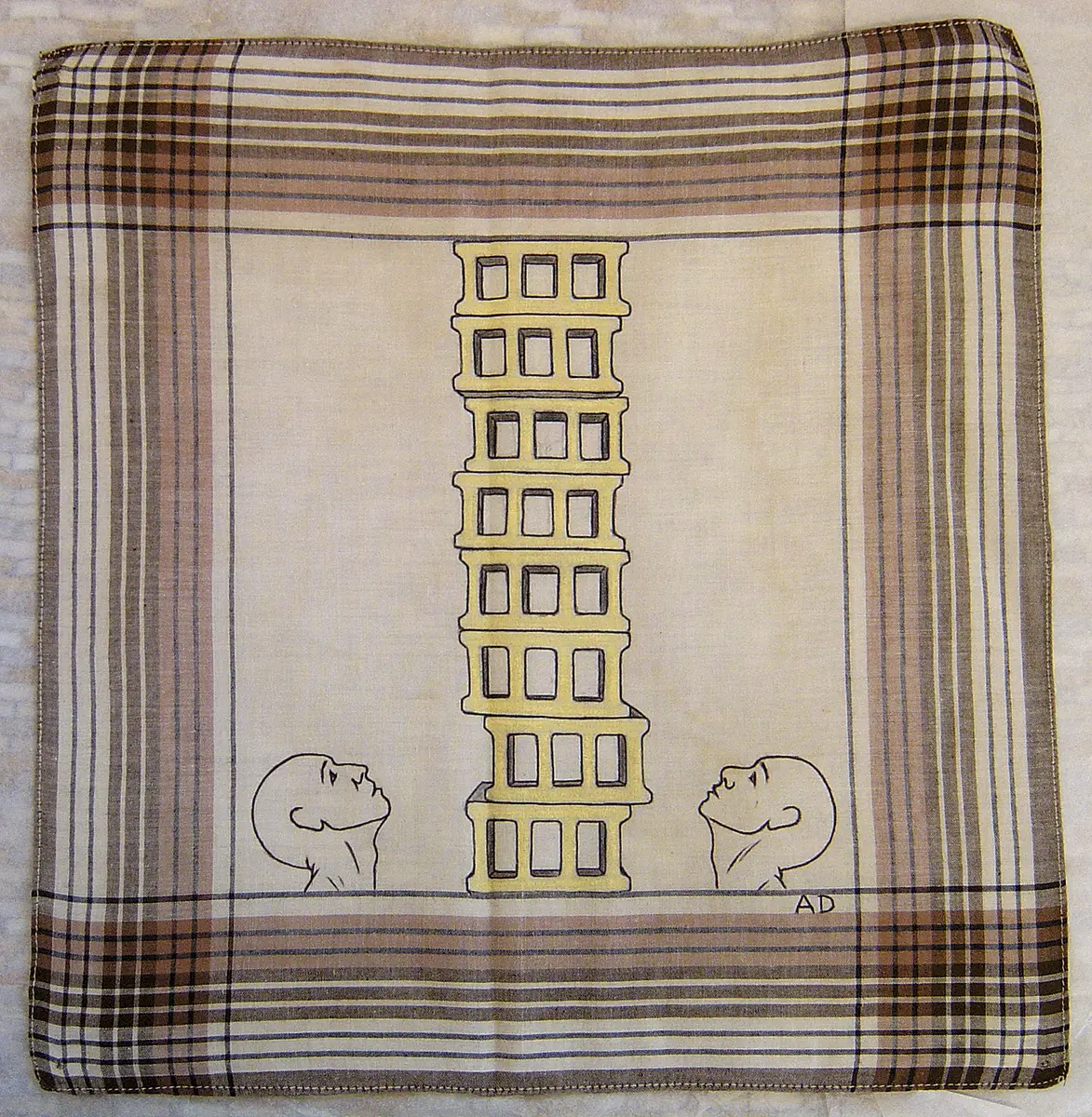
Such is the case of the roster of Cuban artists at Galería Nina Menocal, from Mexico, which covered a wide assortment of themes and techniques and demonstrated the variety of social, emotional, and religious elements in Cuban Art. Subasta, by René Francisco, projects images of Cuban landscapes, women, and old-model automobiles, among others, onto a canvas where a typical auction scene is painted. Filled with irony, this piece is a critique of the capitalist system’s insistent penetration of Cuba and of the way in which this system attempts to put a price on cultural and intangible aspects, both Cuban and human in general. Delgado’s handkerchiefs display color-pencil and ink drawings of human silhouettes, handcuffs, weapons, and knives. In 1989, the artist protested censorship in Cuba by defecating in public on a copy of Granma, the Cuban Communist Party official newspaper, which cost him six months in jail. His handkerchiefs are witnesses to Delgado’s experience as a prisoner; other convicts gave Delgado their handkerchiefs for the artist to draw religious themes or love messages on them for their spouses or girlfriends who visited them in prison. These small works became survival tools for Delgado, since they gained him access to extra rations of food, clean sheets, and cigarettes.
An indispensable presence was the celebrated José Bedia, who has lived in Miami since 1993. His paintings, not limited to Galería Nina Menocal, retain his favored topic of Man going through various periods of life, with reference to the Afro-Cuban influence of palo monte, a religion Bedia practices to this day.
Diana Lowenstein Fine Art from Miami, exhibited works by Darío Basso, José Bechara, Ángel Marcos, Sterz, Marcelo Mortarotti and Graciela Sacco among others. Sacco´s work has a great impact and shows the increasingly sophisticated development of her photo print and holographic techniques. In this opportunity, the artist used a projection to provide the piece with different visual levels.
Similarly, the Fortes Vilaça and Raquel Arnaud galleries, both from São Paulo, offered an accurate and very complete summary of their artists. Raquel Arnaud presented works by conceptual artist Waltercio Caldas. In Simples Simples, Caldas uses thin stainless steel cylinders to create a composition that is simple in structure but complex in form.
At the Fortes Villaça gallery, the highlights are the works of Ernesto Neto, Valeska Soares, and Vik Muniz. New York-based Brazilian artist Valeska Soares returns to sensory perceptions. In Breath Soares stimulates our sense of smell by means of a half-open mouth, imitating the smell of breath using women’s perfume.
Fabian Marcaccio had a modest presence at Gorney Bravin + Lee Gallery, from New York City. His work on exhibit here, Male Paintant, belongs to the series titled with the neologism pintantes, a term coined by Marcaccio to refer to mutating paintings that do not limit their abstract character to the traditional pictorial norms. However, the dimensions of Male Paintant are small compared to others in the series; parallel to Art Basel Miami Beach, his Miami Paintant was on exhibit at the Miami Art Museum.
Mexican artist Betsabeé Romero’s intervened automobile tires did not last through the end of the fair; the sale of this piece, titled Rodadas de diferentes latitudes IV, left a prominent hole at New York’s Tamis Barquet Gallery. Romero uses whole automobiles and auto parts as canvases, giving them new aesthetic and conceptual meanings. Romero carves the rubber of the tires as if it were pure leather, giving it new value as a handcraft.
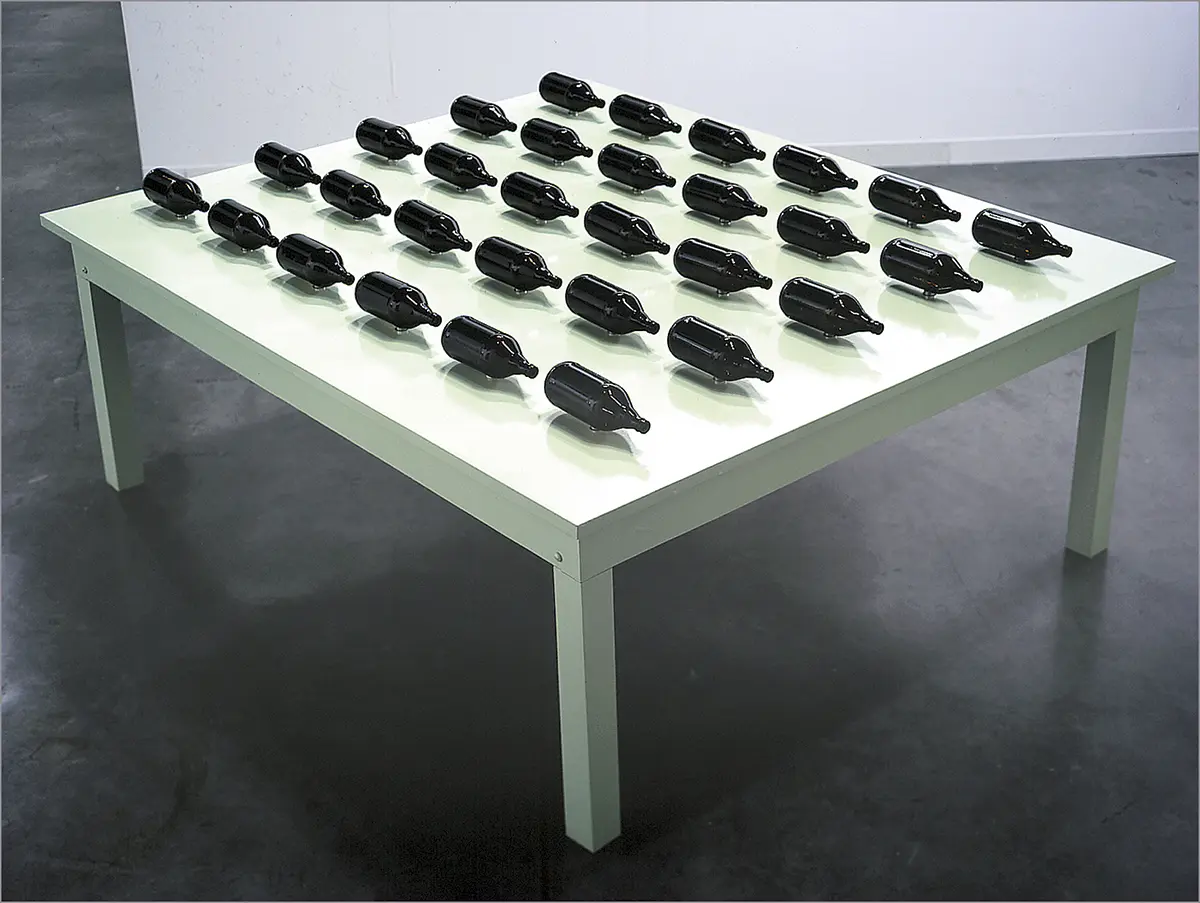
Mexico’s OMR gallery commanded great attention thanks to Caguamas Sinápticas, Subescultura 4 by Mexican/Canadian/Spanish artist Rafael Lozano-Hemmer. The artist’s complex national background matches his education: Lozano-Hemmer studied chemistry and art history, a combination that has proven more than interesting in his work. In Caguamas Sinápticas, Lozano-Hemmer uses 30 green-glass bottles on a wooden table controlled by algorithms. This means that the way in which the bottles turns is not governed by chance; rather, they are programmed to, at a given moment, align themselves and point in the same direction. The caguama is a sea turtle, and the word is also a Mexican colloquialism for any beer bottle, due to the greenish hue of the glass.
At Galería Enrique Guerrero, in a separate area divided by three walls and a curtain, was Crematorio, Fosa Común, a video by controversial artist Teresa Margolles, who in recent years has worked with morgues and with the Mexican forensic services. The crudity of Margolles’s work is not capricious or gratuitous. The artist is intent on creating awareness of a chilling reality that many know but opt to ignore. Margolles’s work was also on exhibit at Kilchman Gallery in Switzerland, which presented papers covered in the blood of unidentified corpses.
Fifteen galleries from eight countries had the chance to represent an artist in Art Statements, with the purpose of promoting emerging and innovative talents. The highlights among the works here were those by Ronald Morán from El Salvador and Beth Campbell from the United States.
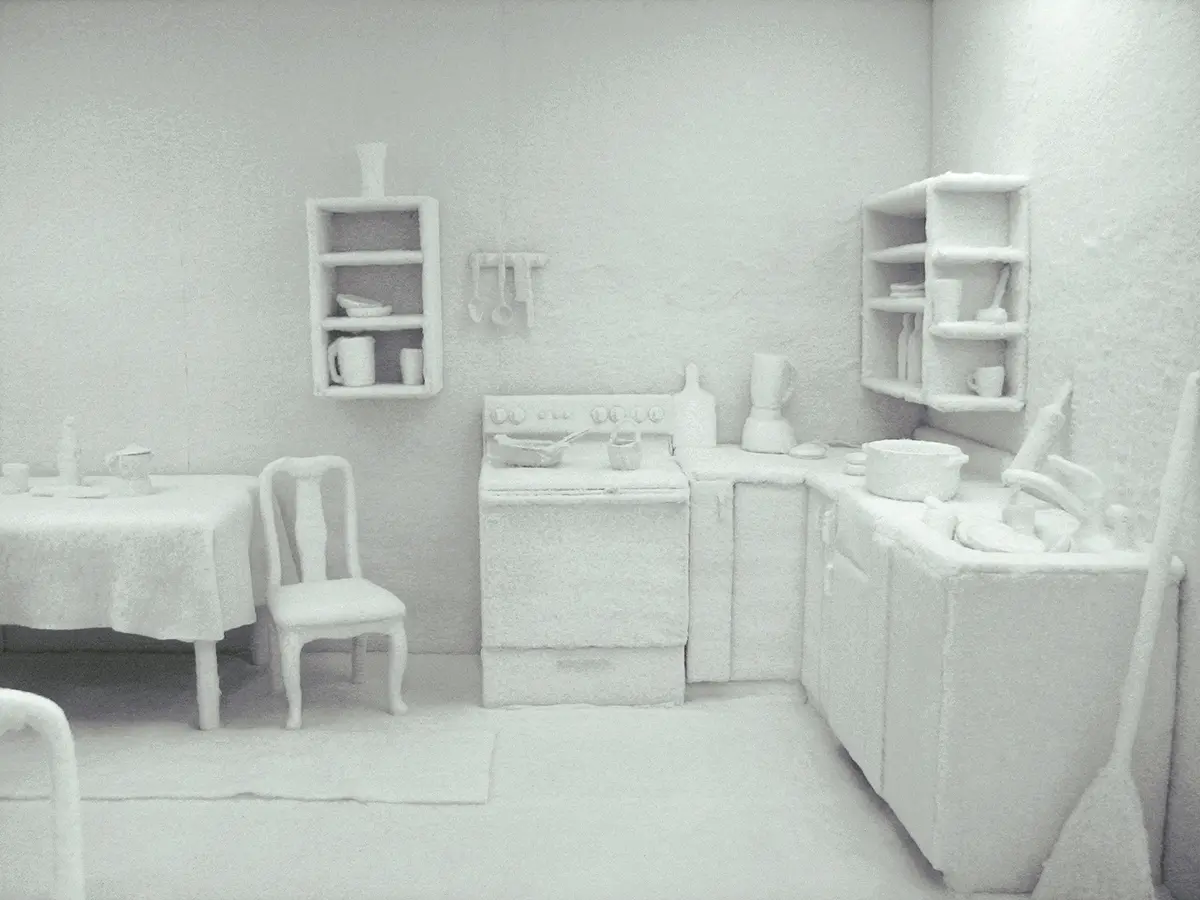
Morán’s installation, Home Sweet Home, was presented by Costa Rica’s Klaus Steinmetz Gallery. Morán recreated the interior of a kitchen/dining room using basic elements such as chairs, tables, furniture items, and kitchen utensils. Every cubic centimeter of his installation is covered in white cotton, giving walls, floor, chairs, table, and knives a fluffy consistency. At first glance, the scene seems to be covered in snow, it provokes in the viewer a fictitious sense of peace and purity. Once our eyes get used to the white uniformity and begin to take in the rooms’ details, however, there is a semiotic realization. On the chair we see a man’s belt, in the kitchen there are several knives, and what seemed to represent purity turns into something macabre: Home Sweet Home alludes to domestic violence and the abuse of women.
Like Morán’s, Beth Campbell’s installation recreated a physical space inside a home, in this case, a bathroom. However, Campbell deals with themes that are entirely different; she materializes the concept of existential crisis, where identity is lost in the morass of everyday monotony. The space of New York’s Kalgsbrun Gallery became a precise reproduction of a bathroom, including a mirror above a sink, a toothbrush, tile flooring, towels, and a wall separating this bathroom from the next. Campbell’s work is a sequence of identical bathrooms, built one after the other. The surprising element is that where we think there is a mirror in each bathroom, in truth what is there is a square hole carved on each wall, with a mirror only at the end. The artist forces us to reflect on how we lose consciousness as the days go by and how, consequently, we become immersed in a routine.
Art Basel Miami Beach topped the quality of its short history in previous years. This time around, the fair displayed a larger selection of Latin American art, as well as more works of political and social denunciation. Great names in the history of art, such as Pablo Picasso, Andy Warhol, Wifredo Lam, and Diego Rivera, among many others, did not cause as big a furor as in 2002 and 2003; rather, it was an interest in new talents and in recently established artists that seemed to drive the public. The growth of this fair has created expectations that are almost impossible to top, both in terms of art and in terms of social indulgences.
Scope & NADA
The magnetic power of Art Basel Miami Beach goes beyond its space at the Miami Convention Center. This fair generates a unique excitement about art, fueling the creation of a host of parallel spaces and events intent on taking advantage of the presence in town of collectors, artists, dealers, galleries, and the general art public.
For the third year in a row, Scope Miami -a project developed to parallel art fairs of greater logistic and economic capacity, such as New York’s Armory Show or London’s Frieze- set up shop at the TownHouse Hotel.
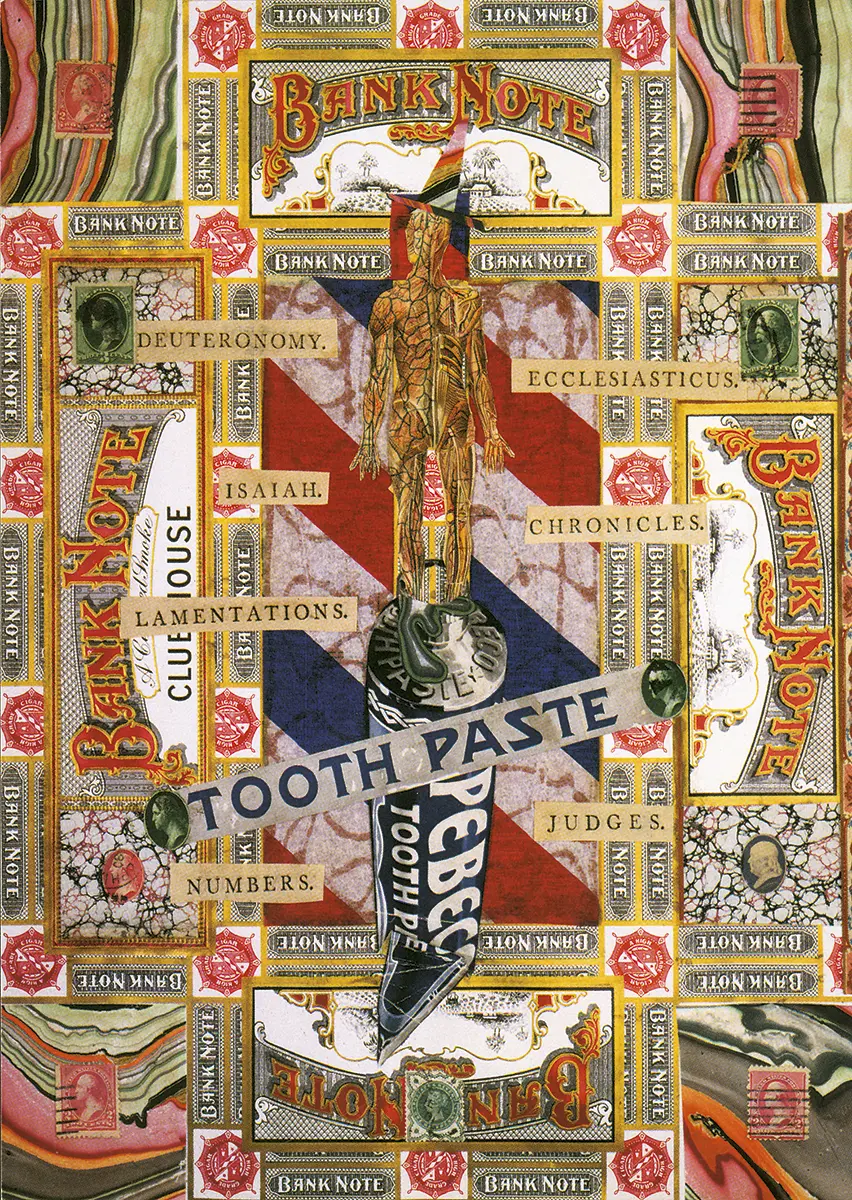
While visiting Scope we need to leave aside the traditional concept of the art fair and seek out art in the way antique-hunters do. In these art-covered walls, beds, and bathrooms there are some jewels to be found. It was interesting to find pieces by Felipe Jesús Consalvos/Fleisher/Olman Gallery from 1920–50 that incorporate collage using tobacco labels, images of books, and texts to recreate folk scenes typical of the period with the mulata and the negrito as their characters. These pieces were discovered by a private collector in the early 1980s and were presented here for the first time for public viewing.
Two very interesting propositions that centered on the economic situation in Latin America were presented by Mexico’s Art&Idea and Argentina’s Daniel Abate. At Art&Idea, Máximo Gonzalez (a Mexico-based, Argentinean-born artist) and Mercedes Gertz (a Mexican artist based in Los Angeles) create new geographies; using bank notes from Costa Rica, Mexico, or Argentina, the artists disassemble the landscape printed in each bill to produce new figurations. In other instances, they use the bills to make little flags and display great skill in traditional paper-cutting. Their conscious discourse comments on the economic crisis, on the powerlessness of devaluated currencies to cover basic individual necessities, and as an alternative proposes deconstruction and reconceptualization of currencies, revaluing with that move the whole iconography that is represented in them.
Daniel Abate Galería presented 3 x 1, a proposal involving the sale of three works of art for the price of one that matches the exchange rate between Argentinean currency and U.S. dollars, with all the implications it has for the world of art.
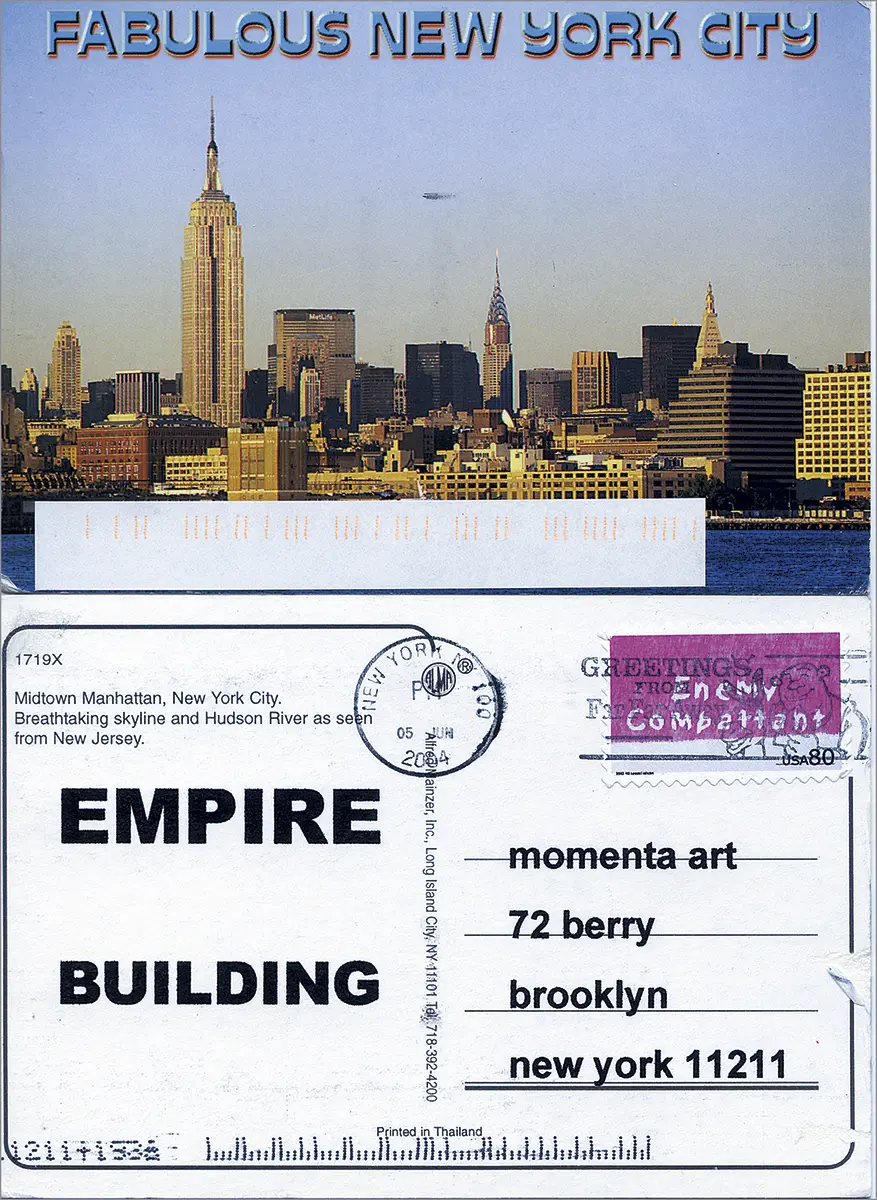
From Mexico, Ricardo Reyes Arte presented works by Gabriel de la Mora, Fernando García, and Alonso Mateo. The latter had works related to the glamorous world of fashion design and recreated, among other famous designers, Gianni Versace. This is a kind of work that few artists dare to attempt for fear of falling into banality, but Alonso Mateo handles it impeccably, both in concept and execution.
Another space devoted to Latin American artists, mostly Cuban, was Alberto Magnan’s, a dealer who used to be located in New York and who is returning to the art fair circuit. This project included significant works by artists like Ernesto Pujol, Arturo Cuenca, and Raúl Cordero. From Miami, Leonard Tachmes Gallery worked with the MSG Newness Collective, a group of some twelve artists working in different genres, such as photography, video, installation, music, painting, and drawing. These artists are characterized by working their pieces and keeping their personal intervention unheralded.
The New Art Dealers Alliance, Inc. —NADA— held its second edition on the same dates of Art Basel Miami Beach 2004. This time around, the event took place at Ice Palace Film Studios and was directed by Heather Hubbs. Approximately 61 galleries from all over the world were represented at NADA.
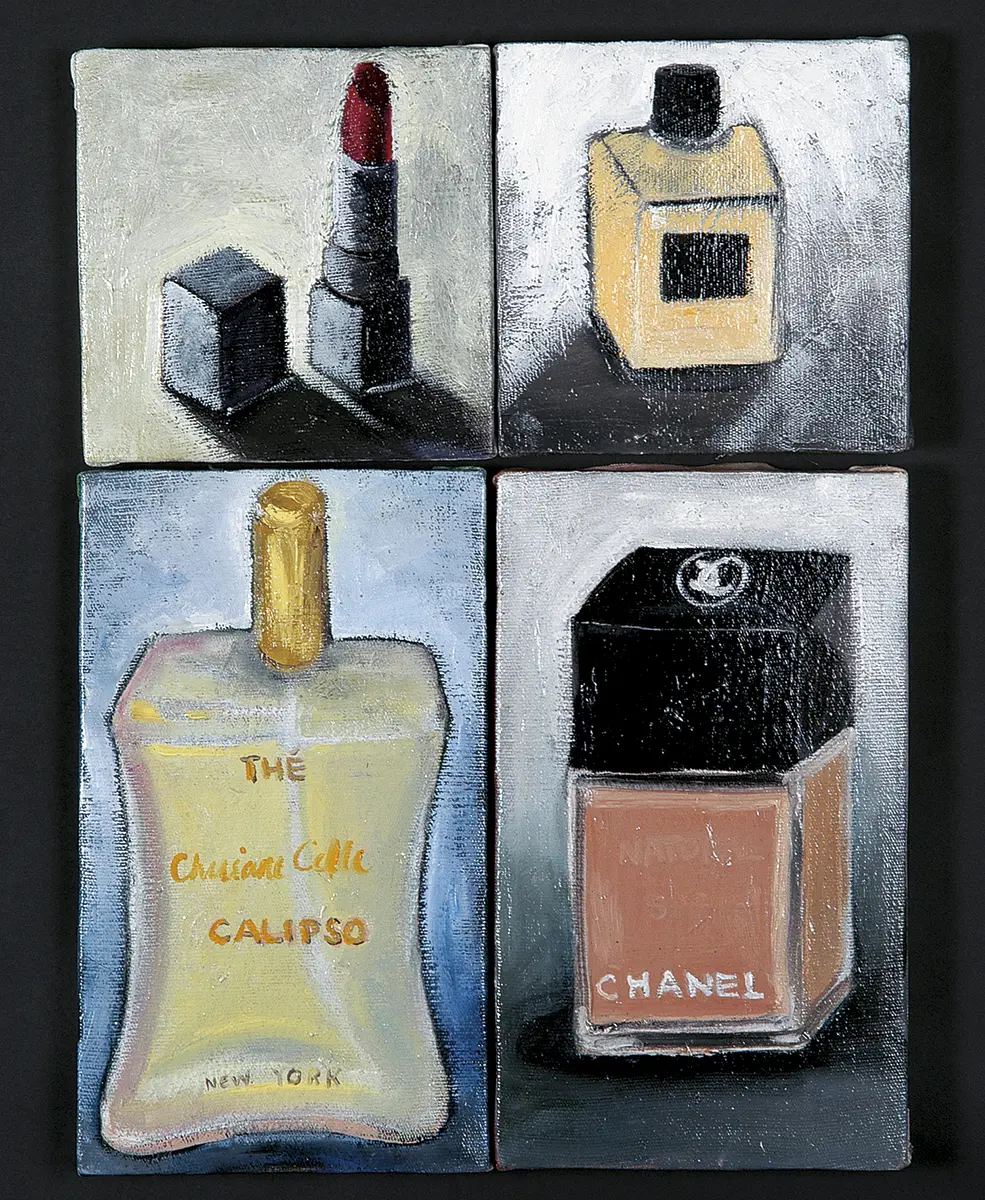
Among the highlights were the work of Brooklyn’s Momenta Art, which commented on economic realities associated with art, and the impact of September 11. Rainer Ganhl mailed close to 100 postcards with images of the Twin Towers to the gallery; interestingly, he created his own stamps inscribed with words like “Al-Qaeda” or “Afghanistan.” These stamps were undetected by the United States Postal Service, and most of the postcards made their way to the gallery.
Luis Gispert and Jeff Reed/Zach Feber Gallery presented images from a collaborative project they are creating for the Whitney Museum, a short film in the horror genre, where the main protagonist is the history of American art.
Undoubtedly, both fairs complement Art Basel Miami Beach’s vision of contemporary renewal and generate space for the enjoyment of young experimental art of the highest quality.
CARINA GALLEGOS
Journalist, artist, and art critic.
MARISOL MARTELL
Historian and art critic. Assistant to the Director, ArtNexus.