
There are many ways to look at an exhibition like The Uses of the image: photography, film and video in the Jumex Collection, a coproduction of Malba-Jumex and Fundación Telefónica, presented at Malba-Colección Constantini and at the Fundación Telefónica art space.1 Carlos Basualdo and Patricia Marín, the invited curators, chose to display more than 200 pieces by 40 artists, most of them well-known.
Seen from Buenos Aires, a city located more than 10 hours away by plane from New York or Madrid, the show is especially interesting because it offers a unique opportunity for the public at large -including artists, gallery people, and critics- to have access to a panoramic view of international artistic production.
But if the selection from Colección Jumex presented here is to be measured on its own merits, it must be pointed out that, although there are many provocative and valuable pieces, and even some historic ones, the show contains no big surprises nor does it risk much; the roster of artists reads like a who’s who of contemporary art. The Mexico-based collection is loaded with “stars” and, for the most part, does not deviate from well-known and already-approved at international art biennials and specialized magazines, and by the powerful curators who attend them in the US and Europe, who tend not to show much interest in works and artists that lie outside their geographic reach.
Despite its alleged globalism, the collection displays on this occasion almost all the European and American artists in the international circuit’s A-List. Yes, of course, among the Latin American artists included, there is a good Mexican representation, but they are also for the most part establishment figures, acknowledged mainstream names. Not even by chance do we find a Uruguayan, Brazilian, or Argentinean artist. How about Martín Sastre, Rochelles Costy, Jorge Macchi, if only for variety’s sake?
What is Colección Jumex? Colección Jumex is a multi-million dollar private project of wealthy businessman Eugenio López, director of Grupo Jumex, a market leader, founded by his father, in the natural juice industry. The collection is held in a specially built space of 1,400 square meters of highly-guarded galleries opened in March of 2001, inside the Jumex industrial complex in Ecatepec, a densely populated working-class area of Mexico City. As a whole, the collection comprises more than 1,200 contemporary art pieces.
Video-installations, objects, photographs, films, and videos by Doug Aitken, Francis Alÿs, Maurizio Catelan, Minerva Cuevas, Tacita Dean, Thomas Demand, Rineke Dijkstra, Philip Lorca Di Corcia, Olafur Eliasson, Fischli and Weiss, Tom Friedman, Douglas Gordon, Dan Graham, Rodney Graham, Andreas Gursky, Daniel Guzmán, Thomas Hirschhorn, Mike Kelley, Gabriel Kuri, Louise Lawler, Paul McCarthy, Gabriel Orozco, Daniela Rossell, Thomas Ruff, Andrés Serrano, Santiago Sierra, Robert Smithson, Pablo Vargas Lugo, Jeff Wall, among others, basically all from the 1990s with the exception of a few conceptual pieces from the 1960s.
Rejecting chronology, the curators arranged the works in several sections: “The uses of the image,” “Image/register/performance,” “Image/face/archive,” “Image/landscape/performance,” “Image as a tool for critique,” “Image/reality/fiction,” “Reverse of the image”. The proposed trajectory accounts for conditions of production and of the works themselves that challenge every assumption made about the means by which they are done.
The artists in this show take advantage of preexisting images from the fashion world, TV, graphic arts, film, videoclips, or advertising; they emphasize the making of a photograph rather than its taking. The use of the notion of appropriation, which puts into question conventinal assumptions about originality in art. Mostly, they seem uninterested in the photographic process, even if they use its materials. They explore in depth the idea of the simulacrum in order to represent as real something that doesn’t exist, thus blurring the distinction between reality and its image. The concept behind these ways of working frees artists from any restriction.
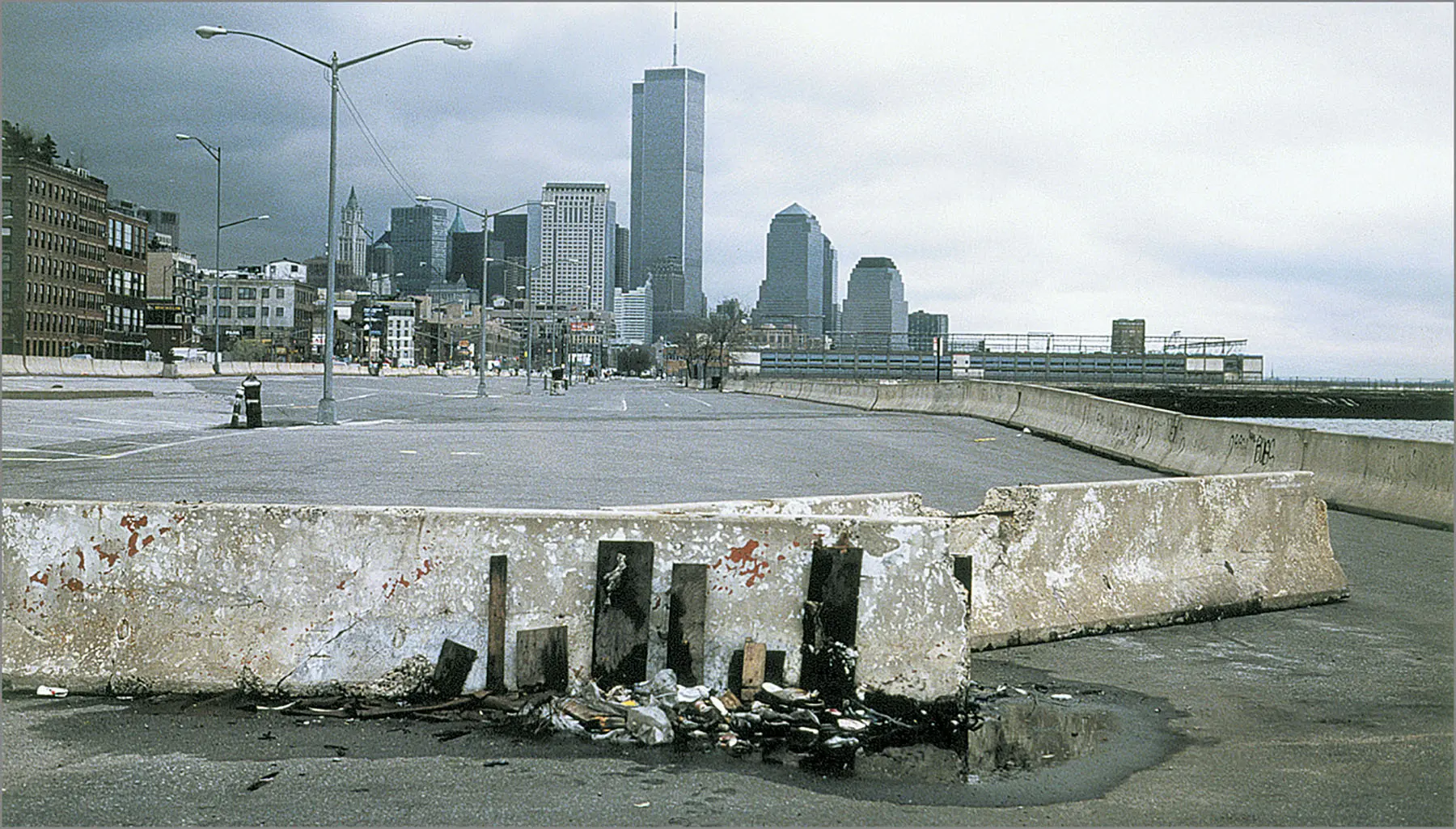
Of the works on display, Cuando la fe mueve montañas (When faith moves mountains) by Francis Alÿs, a Belgian artist born in 1959 and based in Mexico, and Island within an island by Gabriel Orozco (México, 1962,) are based on the intervention of existing landscape rather than on the production of a new object. Alÿs documents an action (the moving of a mountain thanks to the work of tens of volunteers who, shovel in hand, transported mounds of dirt from one place to a different place) carried out in Ventanilla, Lima, in cooperation with Rafael Ortega and Cuauhtémoc Medina. On his part, Orozco shows the tragically destroyed towers of New York’s World Trade Center alongside a small, paradoxical replica of them, made with discarded items.
In terms of portraits, we can verify that despite the diversity of authors and the “technological hardware,” many of the perspectives from which the photographs come to us are similar. The large-scale potraits by Daniela Rosell (México, 1973,) Rineke Dijkstra (Netherlands, 1959,) and Andrés Serrano (USA, 1950) stand out thanks to the qualities they are able to extract from their protagonists.
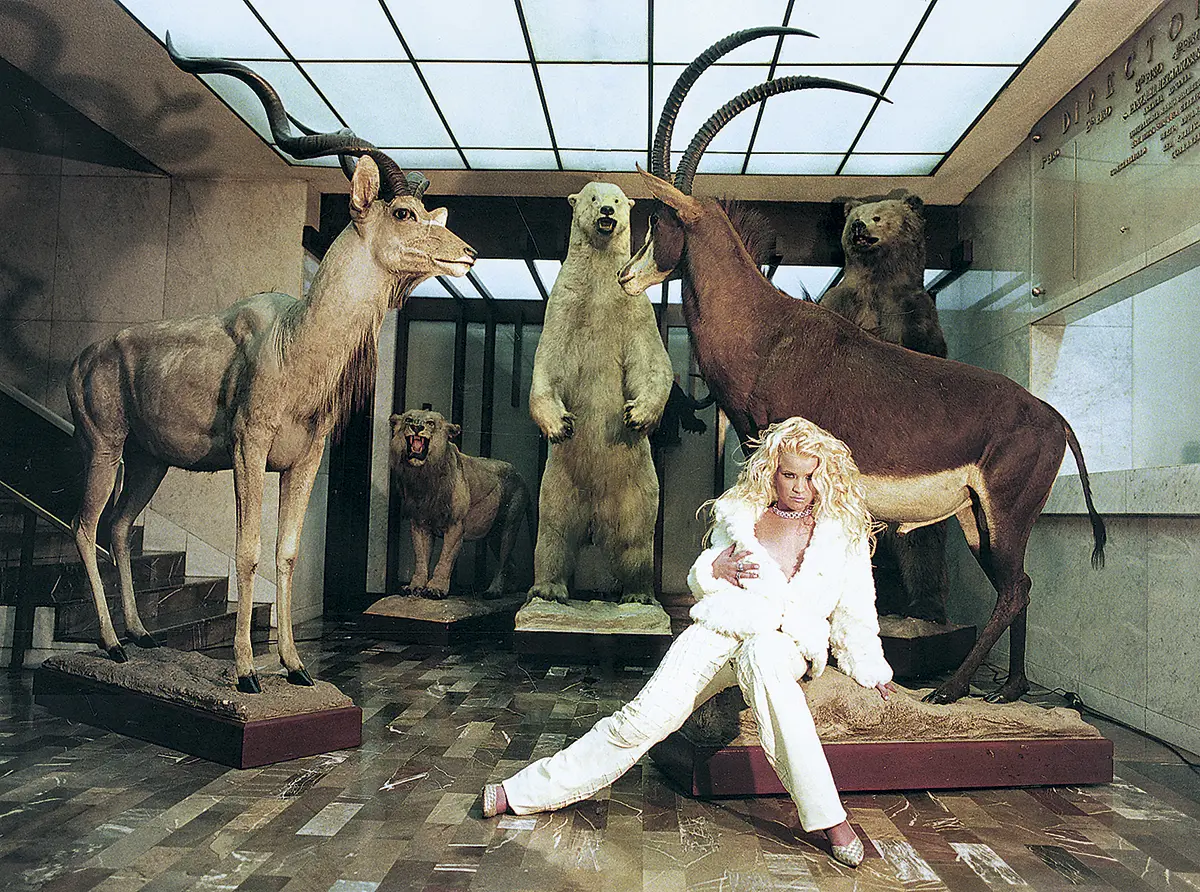
Irony and social critique in Rosell’s baroque series “Third World Blondes,” which opens the door to a world of pretenses where things are not what they seem; the “rubias” (blonde women) are not “rubias” and their worlds are far from being shining paradises.
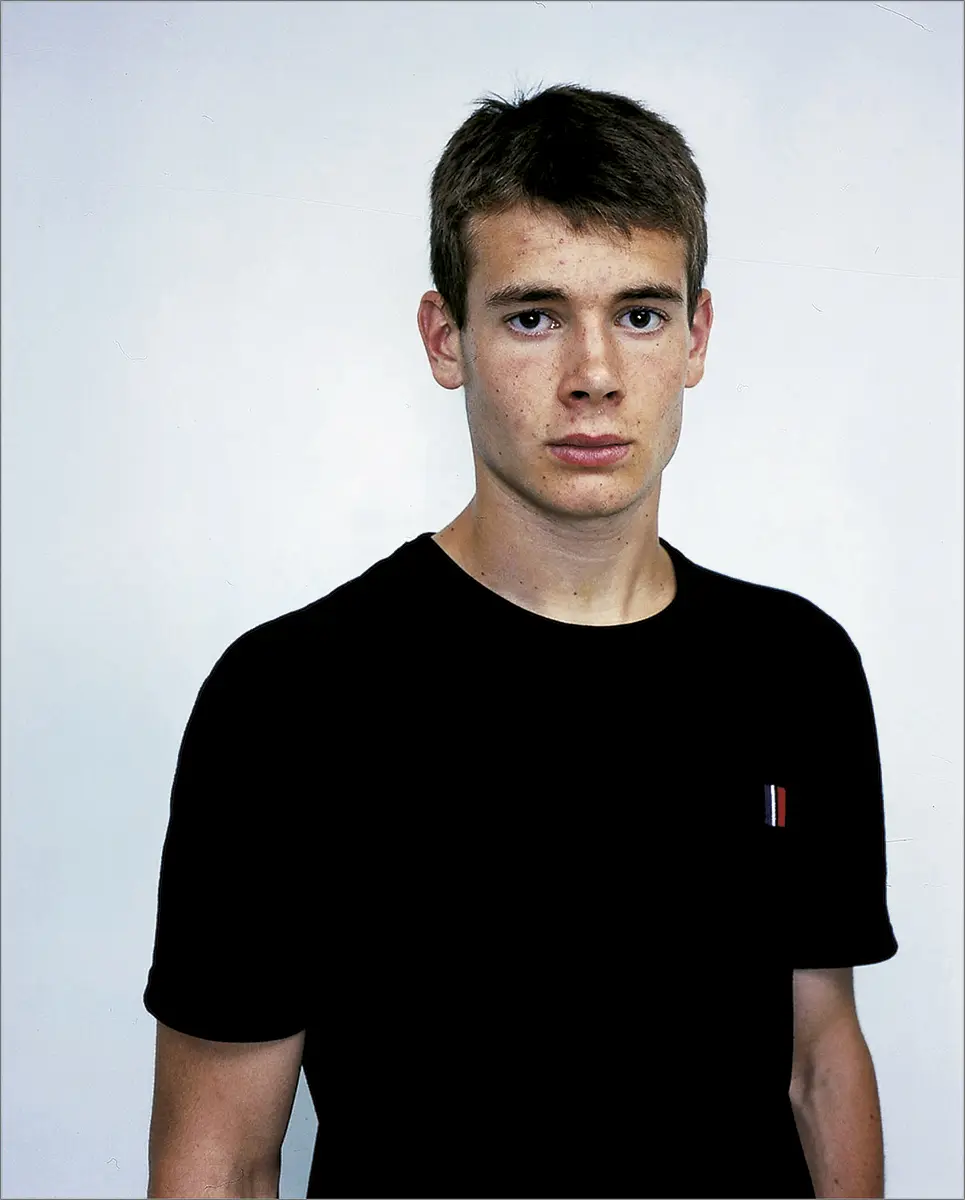
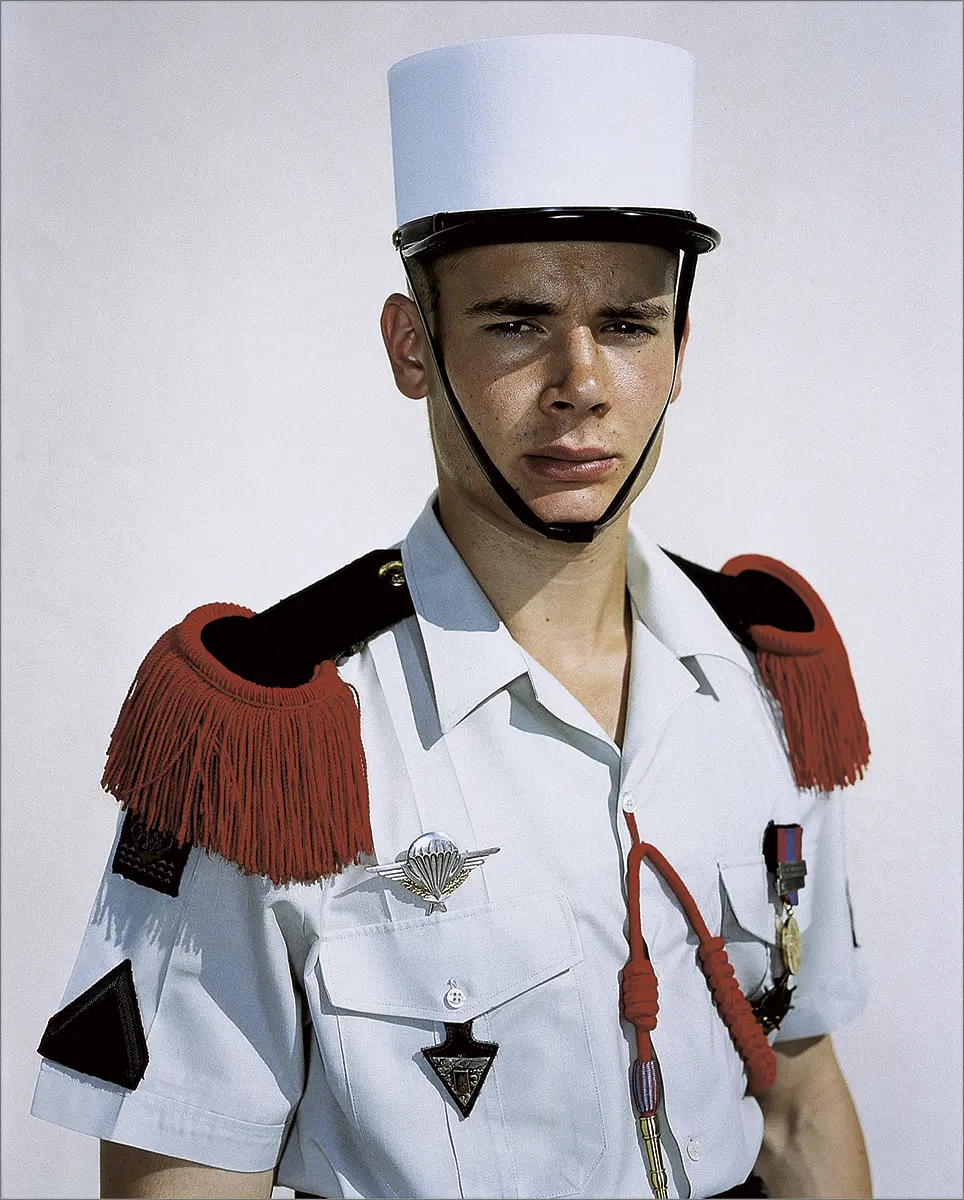
On her part, Dijkstra has achieved fame for her light close-ups of faces and figures of adolescents, through which she is able to communicat her characters’ emotions. Her photographic series “Olivier Silva” even captures, in a devastating way, the changes underwent by a conscripted soldier in the course of two years, from boyish kid to stern armed knight.
The elegance of Serrano’s portraits is directed at capturing the viewer’s emotions rather than his or her intellect. Disturbing or innocent his photographs seek out the humanity of their characters and hold freedom as a possibility.
Irreverent and sharp, implacably critical, the works of Paul McCarthy, Mike Kelley, and Thomas Hirschorn justify their prestige, while the mise en scène of Jeff Wall’s images offers a reality that is as apparently precise as it is false.
It is impossible to review all the films and videos that move between poetry and politics, mock-documentarism, and the illusion that everything can be filmed and photographed. Yet we can establish a position about the uneven work of Santiago Sierra, a Spanish-born artist based in Mexico, whose pieces are as perverse as they are exasperating. His critique of the exploitation of immigrants or of factory workers, for instance, exploits them in its own way by making them engage in extremely difficult tasks such as supporting a wall for hours or letting themselves be tattooed.
Besides the documentation of such actions, Sierra presents here a piece created specifically for the collection, in which he set large Jumex distribution trucks so that they blocked traffic in one of the world’s largest metropolis. Mexico City suffers the scourges of overpopulation and pollution, and is brought to a crazed standstill by traffic every morning and afternoon, as locals slowly circulate from home to work and back. Do we need an artist to prove the evident, with the support of a powerful company?
The show was complemented by the publication of an important Spanish-English catalog, with color reproductions, irreplaceable when it comes to analyzing the works on exhibit. The catalog design dictates that most pages of text resemble photocopies from a different publication. The effect of this design waters down if we remember that in Latin America, a large percentage of young people have to study photocopies because they lack the funds to purchase original copies of the books.
Aside from revealing the “uses of the image” and the uses of new technologies thanks to the acquisition and promotion policies of private collectors, this show brings to the fore the responsibilities, ambition, and potential for intervention of, in this case, Eugenio López and Eduardo Constantini regarding the construction of a contemporary art canon, as well as its production and diffusion. Are collectors the owners of the ball?
NOTE
1. After the controversy caused by the necessary and unimpeachable León Ferrari retrospective in Buenos Aires, starting in March 2005 Fundación Telefónica decided to stop organizing exhibitions; we are left to assume that contemporary art is too controversial for the palate of the owners of this space.
VICTORIA VERLICHAK