

The Americas Society recently exhibited an intriguing little group show of contemporary art from Guadalajara. Entitled So Far, So Close, this deceptively simple exhibition can be read in ways that are as paradoxical as its title would suggest.
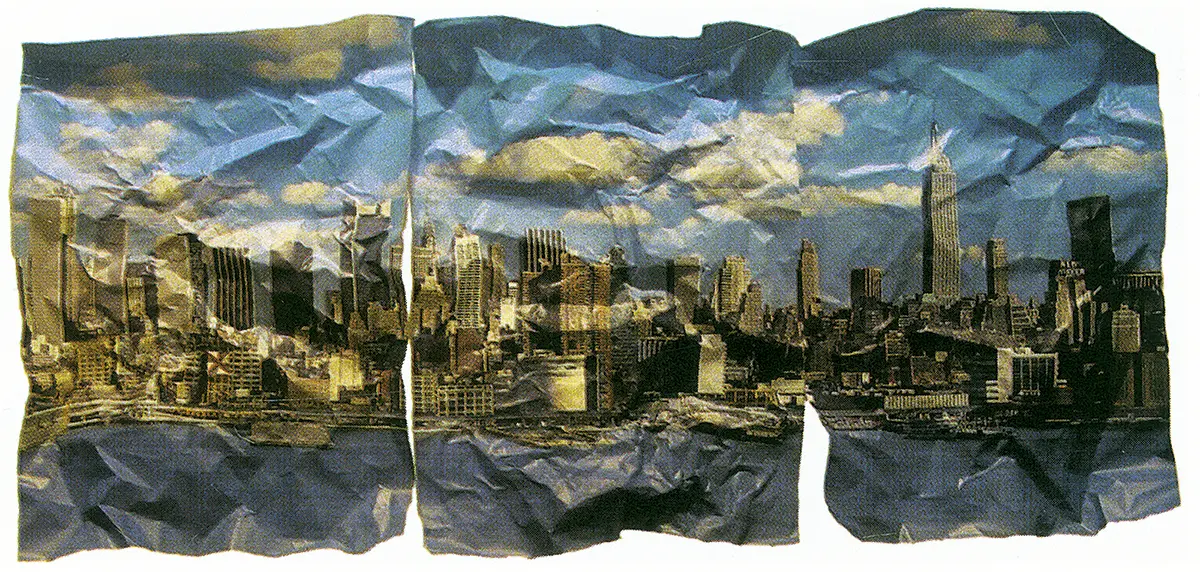
Arranged in an almost random fashion were fourteen works by six artists who had been selected by the curator to represent the contemporary art scene of the region (although the specific requirements of regional identity were never explicitly spelled out, and in the case of José Dávila, for example, do not include current residency). The works in the exhibition seemed to be unrelated in most respects: scale, medium, style, technique, and subject matter. This diversity tempts one to regard the exhibition as a series of independent artworks as much as -if not more so- a unified collection.

The artists in question are a strong lot, who demonstrate a range, not only from each other, but also within each of their own respective practices. Augustín Solórzano, for example, utilized contemporary computer programs that are used in industrial design in works such as Untitled (cars and fans), as well as appropriating a local ceramic technique of “talavera de Puebla” in sculpted works like Untitled (helmet). On the other hand, Fernando Palomar has engaged in a dialogue with the traditions of Mexican mural art by creating works that are potentially architecturally scaled and use textural projections or positive/negative space abstractions.
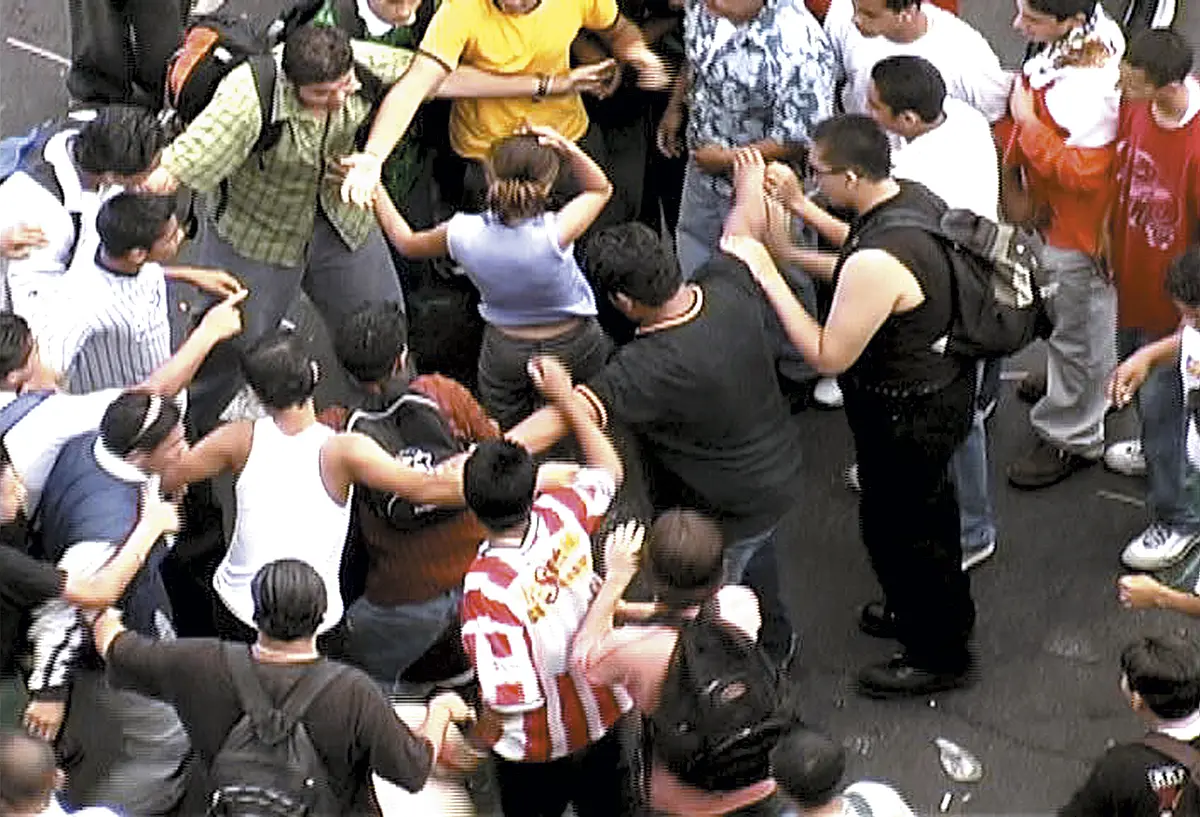
Gonzalo Lebrija employs the large scale that might suggest the mural tradition, but he also uses the narrative sweep and photogenic compositions suggestive of the cinema in his large photographs. It is therefore not surprising to see the same artist also engage in video art as well. Aranjuez depicts a small group of women momentarily overtaken in a large mob of men after a soccer match. A brief moment of common occurrence becomes an inquiry into gender relations and male rituals through the use of slow motion, multiple views, and an evocative soundtrack.
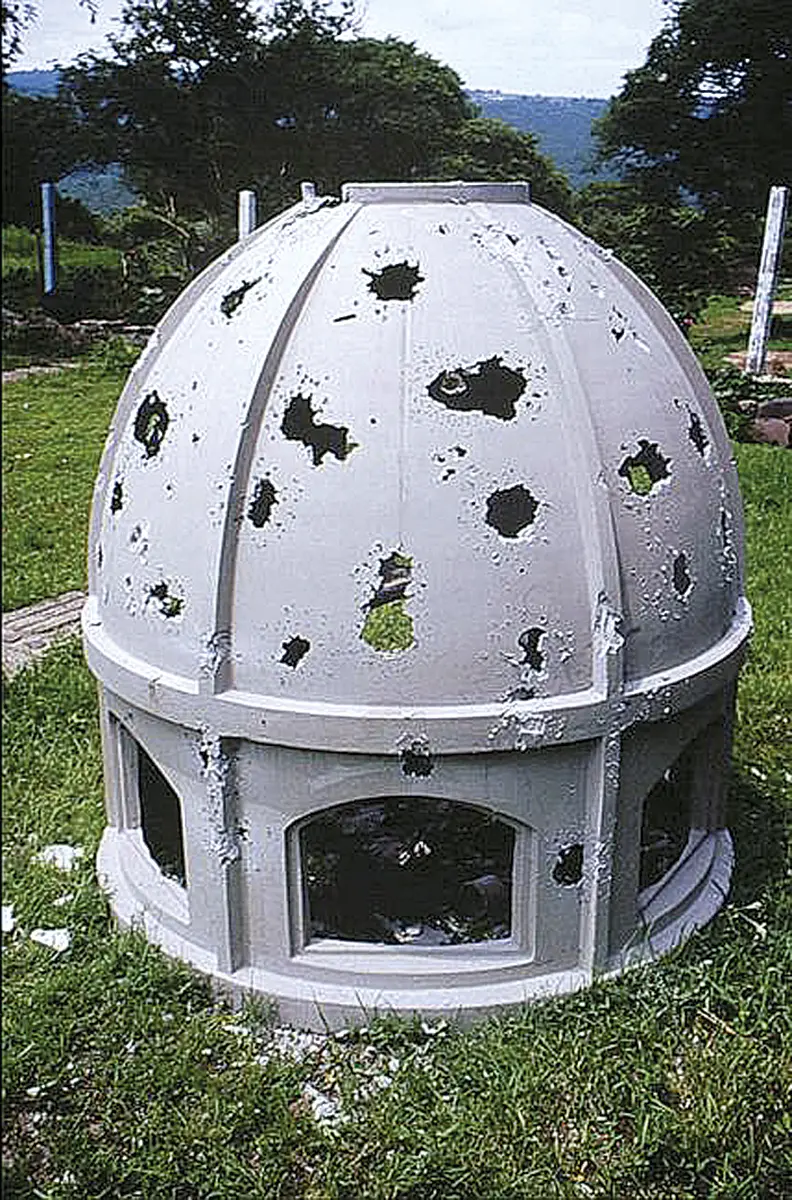
Video is also effectively utilized by one of the most interesting artists in the exhibition, Luis Miguel Suro. Concepto Espacial shows the odd yet seemingly mindless act of an asbestos gazebo dome being shot full of holes. A discourse on violence, industrial waste, Bourgeois taste, and art history (the title is taken from the art and manifestoes of Luciano Fontana), this elaborate work is also probably the most explicit in terms of social critique in the show. Suro also moves from contemporary technology to traditional craft with a pair of gold-plated ceramic works which were fabricated in a factory founded and run by the artist’s own family. Golden Tacos wittily fetishizes the Mexican culinary export and its garish gilding evokes not only the ceramic art but also the meaning of Mexican fast food in terms of the local economy. One of the most poignant works in the exhibition is Suro’s Oscar statuette. Commissioned for a museum gala, it was poorly received. The golden surface of the statue belies the fact that it is a shoddy replica, and its kneeling position could be read as a gesture of prayer (evoking the region’s strong Catholic tradition) or supplication (a commentary on the occasional and fleeting recognition of Mexican film internationally?). These works, unfortunately, carry an even greater poignancy given the recent, untimely murder of Suro by thieves in December; an artist who commented on the violence in his society has been cut down by it.
The odd combination of heterogeneity and a relatively small number of artists seems to challenge the premise of the exhibition, which one presumes to have been to present a survey of the contemporary art scene in Guadalajara. There are occasional thematic overlaps, but no apparent connective theme or commentary that bespeaks a common heritage or current social ties. If this is truly an honest representation of the tapatía art scene, then that “scene” seems to be a bit meager.
It is only by considering the background of the region that a sort of counter-theme emerges. Guadalajara, the capital of the Jalisco region of Mexico, is the second-largest urban center in Mexico. Throughout the 1990s, it was home to an international art fair that was considered by many to be among the most successful and interesting in Latin America. Today, due to a combination of economic, political, and conservative social factors, there is no longer an art fair or much organized support for the arts to speak of. The barely contained outrage felt by the exhibition’s curator over this situation is the underlying raison d’être of the exhibition, and it colors her interpretation of all the works in the show.
As rich and exciting as these works are, one wonders if this overarching thesis is really the best one for organizing an art show. In effect, the work becomes a de facto protest, and yet the works alone do not make the case in a strong and unified enough manner. One could argue that it is the very limited number of artists and somewhat disjointed nature of the exhibition that effectively epitomizes the current situation of the Guadalajaran arts community, but the paucity in numbers is undercut by the quality of the art. When the curator describes the plight of an artist from “a provincial city with obsolete institutions and systems of circulation often consisting merely of interpersonal networks of contacts and random professional exchanges,” she could just as easily be describing Williamsburg, Brooklyn, yet when those artists were given a survey show, it was cause for celebration and overflowed with a generous number of works and participants. What may be a legitimate concern and the subject of a strong editorial or provocative essay does not necessarily translate neatly as an exhibition. Moreover, despite its limited scope, one cannot help but wonder about possible exclusions: for example, are there no women artists from this region? So Far, So Close attempts to present an art scene that putatively does not exist. It is this very paradox that makes the title so apt, but which also may make such an exhibition ultimately untenable.
JOHN ANGELINE