
We saw it coming. After
more than twenty years, ARCO continues to experiment. Even keeping in mind the
historical, political, and social grounds that have given this fair its current
character, it would seem that its organizers find it increasingly difficult to
understand that Spain is not what it used to be. The country’s admission to the
European Union and its insertion in the international art market pose new
challenges for an art fair that for several years has been confronted with the
harsh choice of either becoming in effect Europe’s second art fair after Basel,
or getting mired in provincialism. If there is one word to describe ARCO’s
most recent edition, it would be—scattered. Conceptually, economically, and
artistically scattered is how we can best describe a fair where the presence of
Mexico as guest country felt like an unexpected anti-climax.
It is difficult to understand the reasons that drive this organization to continually reinvent itself after a more than successful twenty-year history. Perhaps the secret is in the details; every year the organization radically transforms the spatial arrangement and the graphic design of the fair’s materials. This might seem a minor point, yet it is a rather disconcerting element since every time we are faced with a new fair, it seems one that never fully matures and comes into its own visually in the collective imagination. Each year the distribution of booths -except for that of the selection committee- is reinvented, creating great confusion for visitors and for the participating galleries, which never quite settle in or acquire a “profile” in a fair that attempts to redefine the temporal and conceptual divisions of the history of art.
One day there is a modern art pavilion and a contemporary art pavilion, the next day everything is lumped together, and this year many historically important galleries with a long tradition at ARCO, like Thessa Herold or Gmuezynska, have been eliminated -or eliminated themselves- outright in order to include a large contingent of second-tier German or American galleries with propositions that, had they come from Spanish galleries, would not have passed muster. Until last year, the substantive presence of historic galleries served, on one hand, to legitimize more contemporary propositions, and on the other, as a challenge for the local public and for local collectors who still understand Juan Gris better than they understand Thomas Hirschhorn. The possibility of giving space to both was a way of gradually introducing contemporary art to collectors as conservative as Spain’s. This year, the presence of historic galleries was diminished and badly distributed so that the few that attended seemed a little out of place. One should not underestimate the serious presence of these kinds of propositions in a country like Spain, so prone to frivolity and extravagance when it comes to contemporary art.
While it is true that ARCO’s spatial arrangement has improved with the elimination of its crowded walkways and the rest areas that obstructed the flow inside the fair, never before has its core of influence been so centralized, monopolizing attention —and a good chunk of sales— and leaving in the dust everything situated away from that core. In ARCO 2005 we have seen a resurgence of the center/periphery dichotomy, and just when the guest country is a Latin American nation. Paradoxically, Latin American galleries were regrouped in a new “program” titled —no joke— ARCOLatino, with the sole apparent purpose of placing them, all together, as far away as possible from the “contemporary” sector. After so many years of including world-wide propositions in programs like Cutting Edge and Futuribles, now cancelled, this time around ARCO has produced the strict marginalization of a group of artists and galleries that, obviously, are not as highly valued as those Latin American galleries that can pay their way into the general program, or as those Latin American artists able to obtain representation by a European gallery. The new program seems more a product of condescension than of a genuine interest in Latin American artistic production.
The cancellation of those programs also appears to be a symptom of the general confusion: while they were certainly perfectible, they had the virtue of having established themselves as conceptual categories and as localized areas within the fair itself. By erasing or camouflaging them within new programs with new names, or within old programs —like the project romos— with new definitions and directions, the fair’s specific profile is blurred, along with the reading codes that allow collectors, critics, and members of the general public to judge ARCO on the basis of a minimum of parameters and expectations. The biggest absurdity was perhaps a lackluster Black Box —a metallic cubic construction divided into tiny, poorly installed projection rooms that were awkward to access and only worked irregularly— that attempted to justify the redefinition of the Project Rooms. This reorientation of one of ARCO’s best and most cohesive programs in recent years had the result of adding to the already large selection of galleries, a group of mini-galleries of widely varying quality that generated more visual noise than attractive propositions. The most interesting aspect of the project rooms as they were presented last year was precisely the fact that they took advantage of the IFEMA pavilion’s excellent facilities and transformed them into projection rooms, installations, or galleries that had their own identity and hosted conceptually defined projects, rather than limiting themselves to establishing subdivisions based on the available material or technical support.
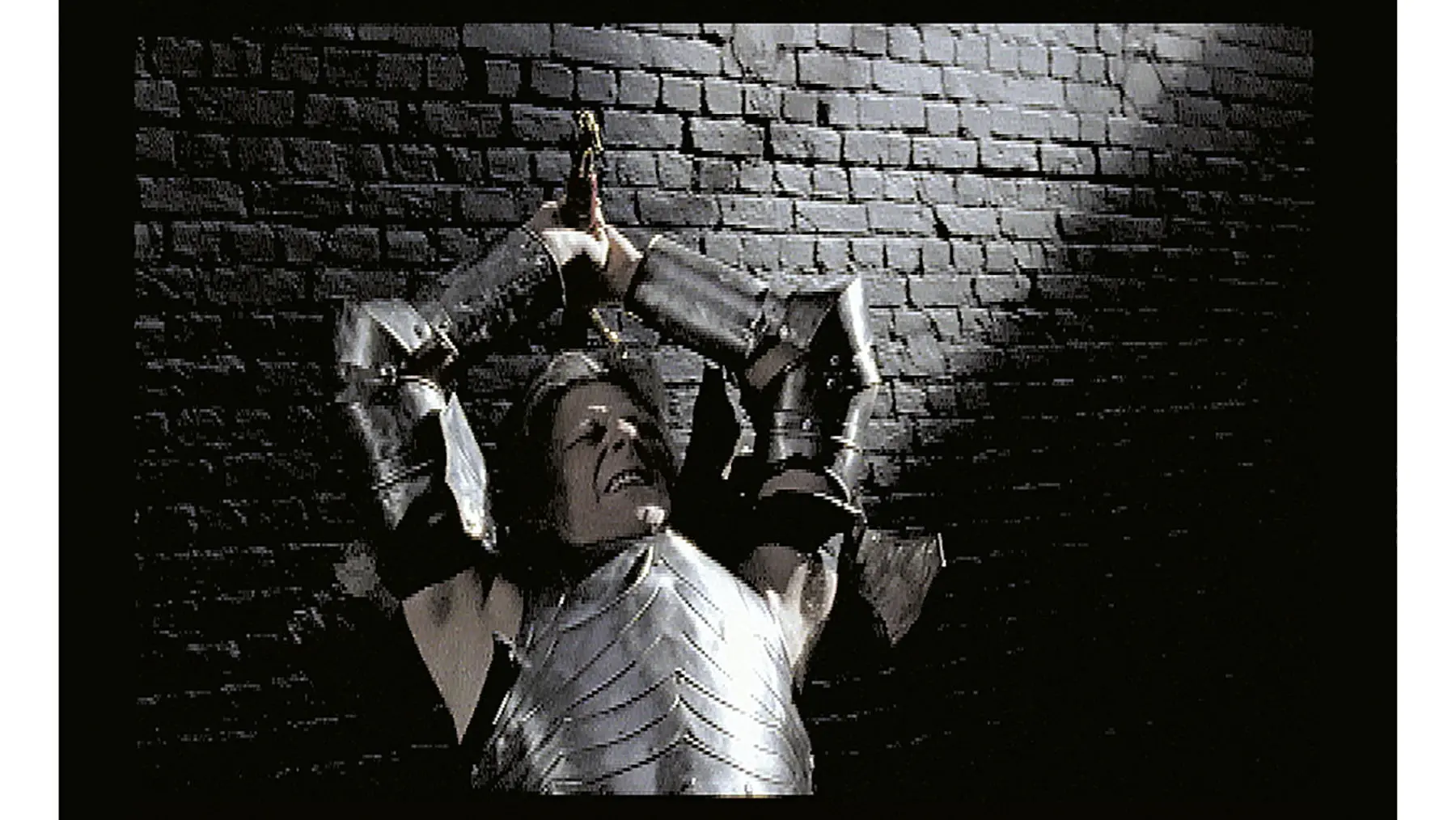
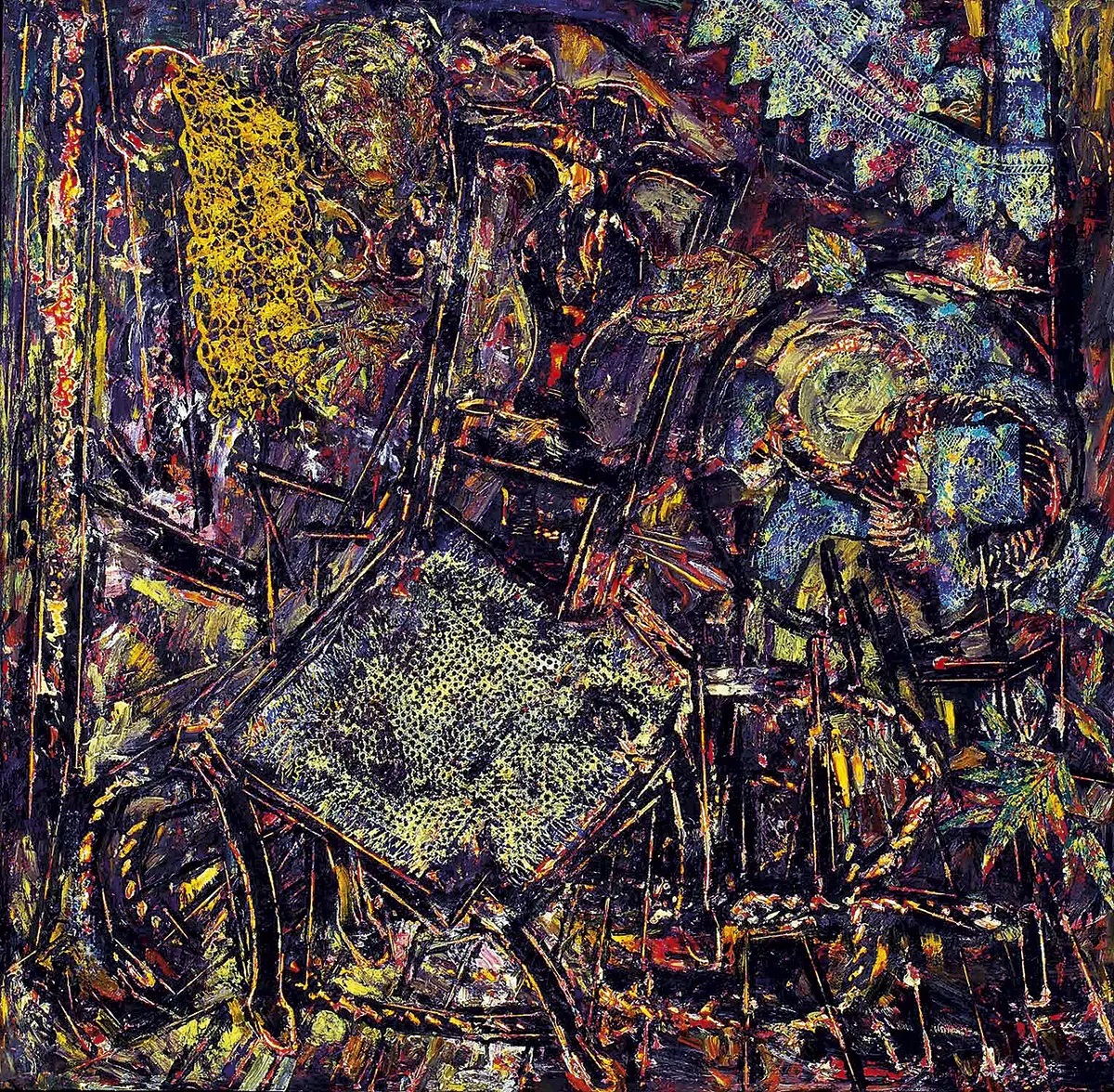
In this context, it was difficult to identify the fair’s profile; to be sure, it was inundated with paintings of varied quality, but this was due less to the heralded “return” of painting than to the kind of galleries, mainly from abroad, admitted to this edition. Meanwhile, the propositions were clearly conservative and there were very few artists to be discovered. Safe values prevailed, albeit of high quality in many cases. Among the highlights were Jorge Macchi and Miguel Rothschild at Ruth Benzacar, Distrito 4, and Luisa Strina; Joao Onofre at Toni Tàpies and Cristina Guerra; Xawery Wolski at Lisbon’s Jorge Shirley Gallery; Arnaldo Roche at Walter Otero gallery; Vik Muniz and Carlos Garaicoa at Elba Benítez and Fortes Vilaça, which also presented Ernesto Neto. Lisson didn’t fail with its team of Jason Martin, Santiago Sierra, Julian Opie, Anish Kapoor, and Joana Vasconcelos, who was also at Elba Benítez, Casa Triangulo, and Galería 111. Ángel Romero had a magnificent Santiago Sierra piece, dated 1990; Allora & Calzadilla were amply represented at Chantal Crousel; and although more discreet, Ignasi Alballi’s Listas series at Estrany-de la Mota gallery was also of interest. Among works that have not been seen too often, the standouts were Spanish artist Nico Munuera’s paintings at T20 and Borés & Mallo galleries; Martí Ansón’s Fitzcarraldo project at Toni Tàpies; Blaise Drummont’s “naturalistic” projects and Toni Molloy’s very subtle works on paper at Rubicon Gallery; Lancelot, an extremely intense video by Jan Fabre, presented by Espacio Mínimo; Rosângela Rennó’s projection on vapor Experiencing Cinema, presented by Cristina Guerra; Sven Phälsson’s work at Oslo’s MGM Gallery; and Ryan McGuiness’s paintings and drawings at Moriarty gallery.

Special mention should be made of the presence of this year’s guest country. Many expected the combination of ARCO and Mexico to be explosive, but in the end, it proved to be no more than wet gunpowder. The effort mounted by the Mexican government, including the unprecedented presence of President Vicente Fox at the inauguration, was practically spent the week before ARCO, with many exhibitions —some of them excellent— opening throughout Madrid. Up to that point Mexico’s presence was very convincing, but things started to change once the fair opened. As it is every year, the area dedicated to the guest country was toward the back of Pavilion 7, too far from the main stage. In the same area was a group of galleries selected by Carlos Ashida and Julián Zugazagoitia, curators designated by the National Council for Culture and The Arts (CNCA). The galleries’ participation in the fair, subsidized by the Mexican government, forced them to bring along certain artists chosen by the curators. It seems that their attempt was to offer a “historical” view of the work of galleries in Mexico, a laudable idea but something more appropriate for a different type of exhibition, not a commercial art fair. At any rate, there were large disparities in the quality of the works presented. For example, the presentation of Galería de Arte Mexicano, the country’s oldest, included excellent pieces by Gunther Gerszo alongside works by Leonora Carrington, but its presence was not truly representative inasmuch as it didn’t show some of the most interesting contemporary artists it represents, such as Jan Hendrix and Stefan Bruggeman—represented in ARCO by La Caja Negra gallery and I-20, respectively. The López Quiroga and Juan Martín galleries missed an opportunity to show the work of Francisco Toledo, who is somewhat known in Spain and certainly deserved to be represented with a major piece to account for his global significance. Similarly, the recent works by Julio Galán did not do justice to Arte Actual gallery and were meaningful only in relation to more localized Mexican collecting. More interesting was the presence of galleries more active in the emerging art scene: Garash, Art & Idea, or Alternativa 11 truly had contributions to make, and in a fair so filled with déja-vu they had some of the most refreshing pieces, especially works by Diego Teo and Máximo González. These emanated subtle irony and great skill that transformed the most minimal materials into works of art loaded with meaning and very distant from self-complacent aestheticism. Equally important was the presence of Nina Menocal with an installation and videos by Claudia Fernández or the photography series by Alexander Apóstol in its project space, and Enrique Guerrero whose stand highlighted the porno wallpaper by Carlos Ranc and the sublime ‘’sculpture’’ on the floor by Santiago Borja made of colored post-its. Both galleries had two spaces at the fair with propositions that are guaranteed to make the jump to a larger international stage.
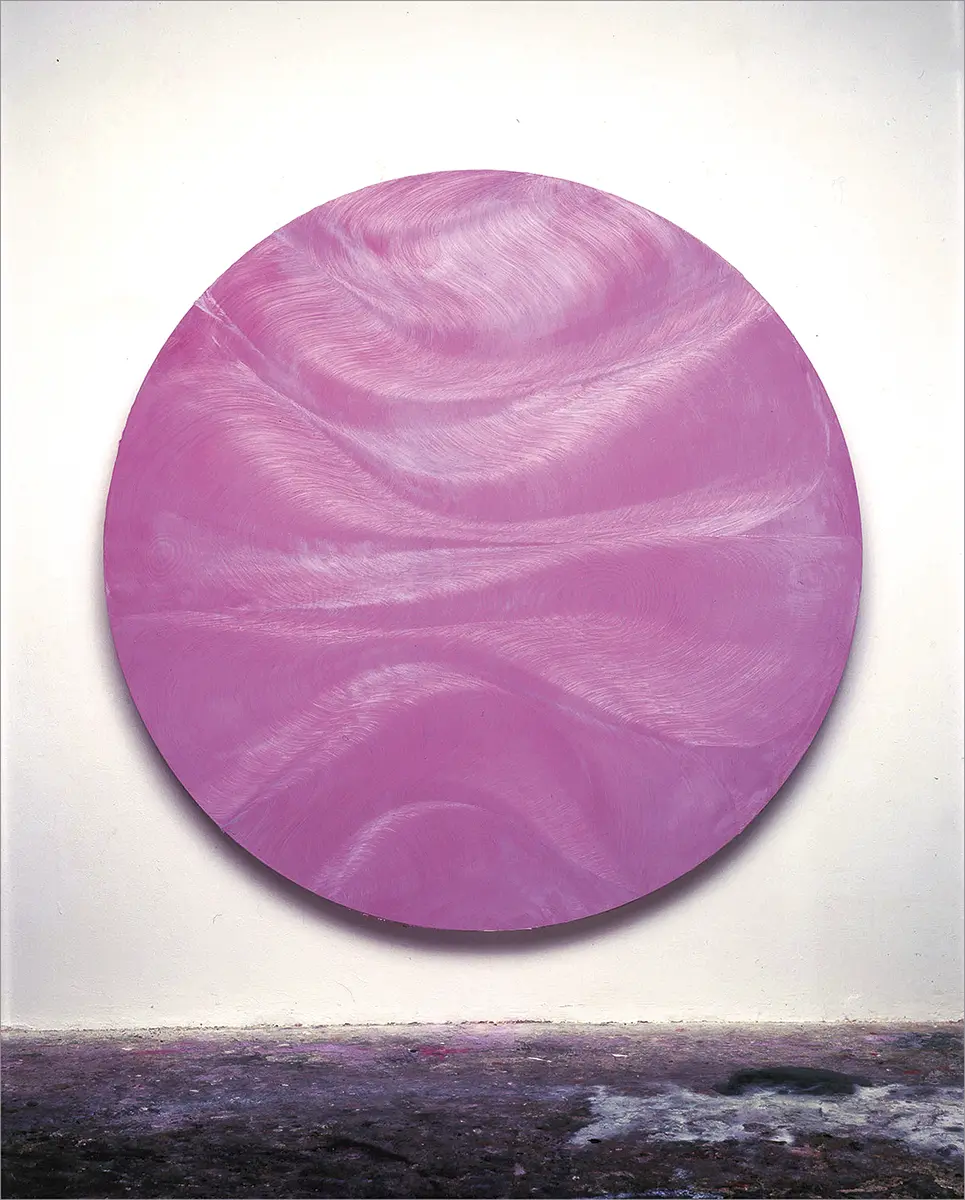
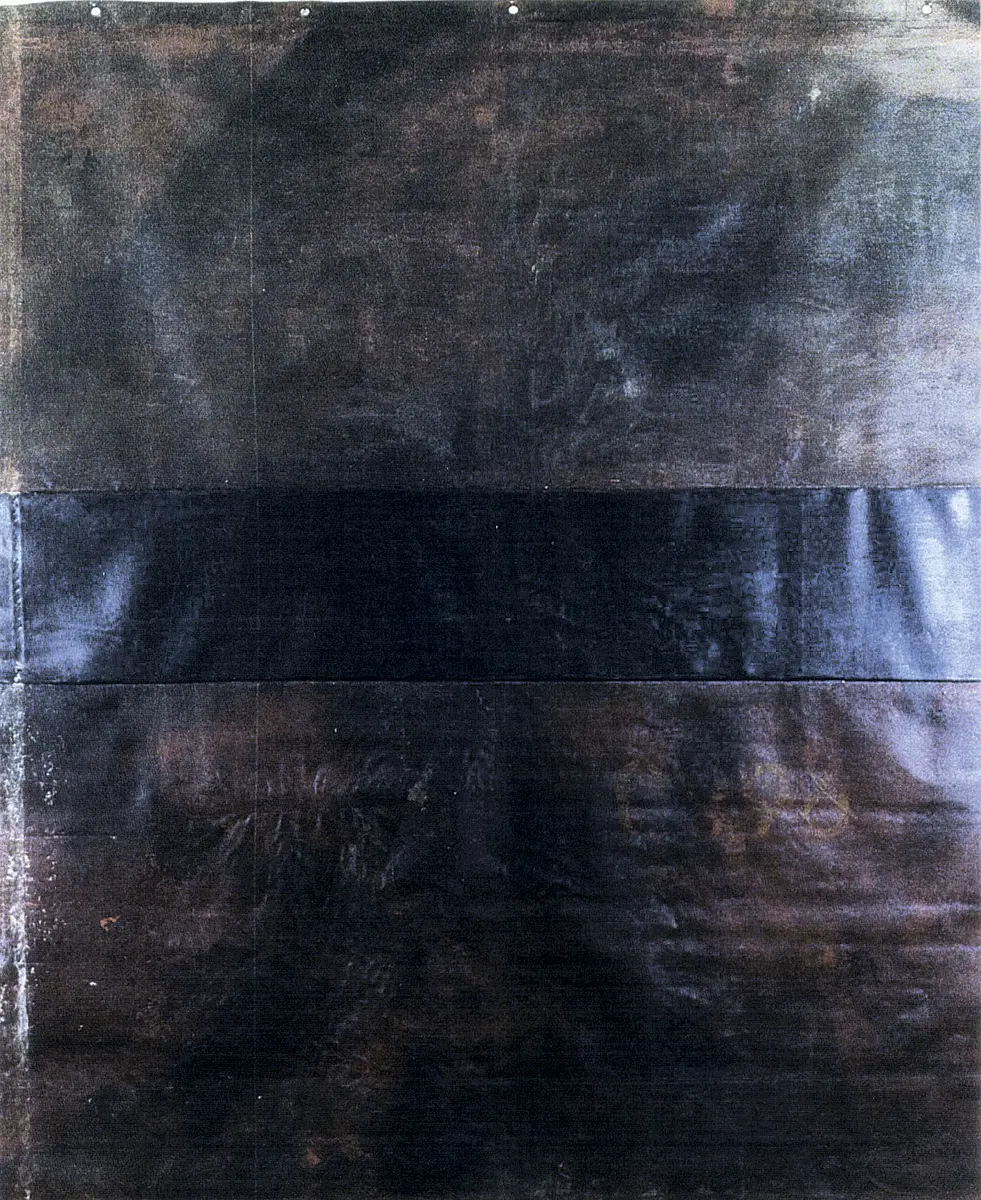
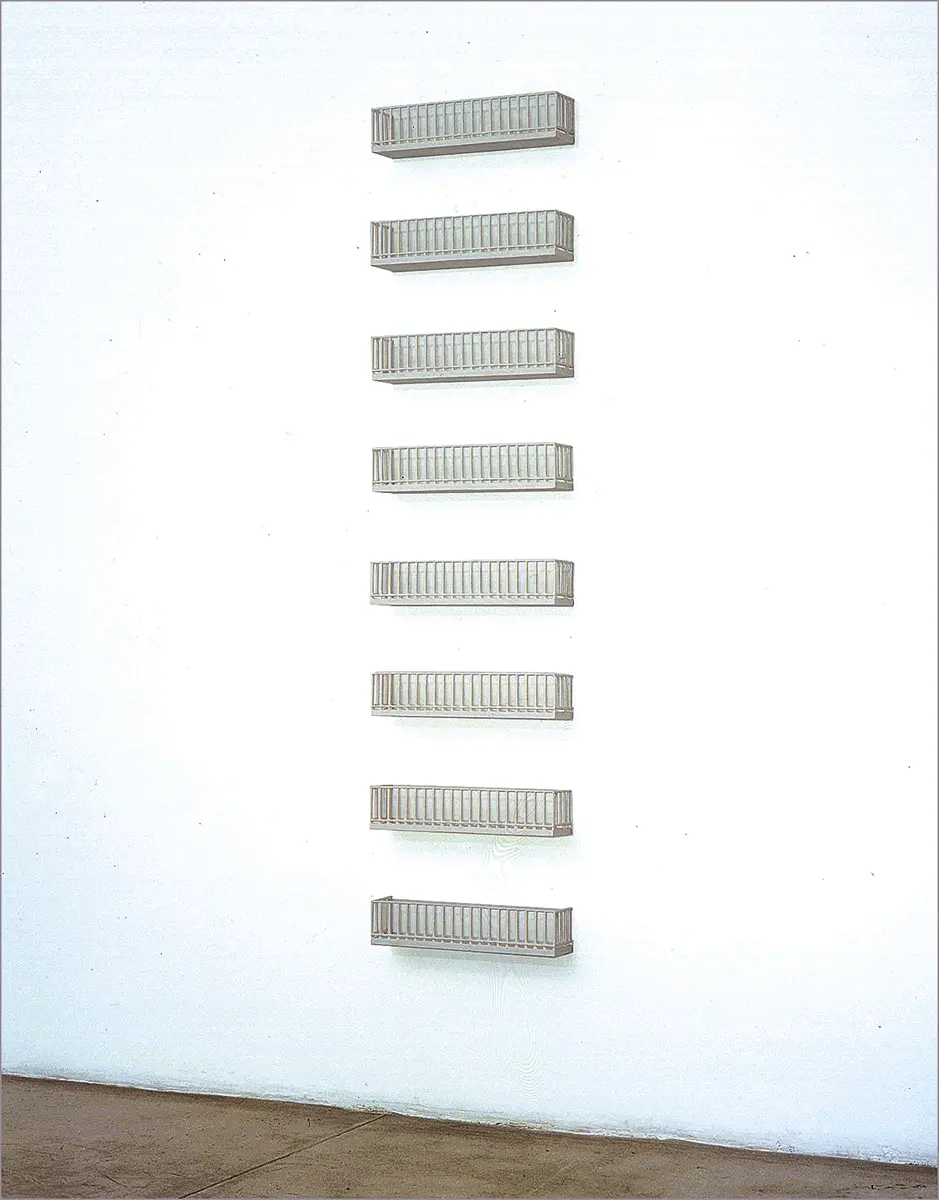
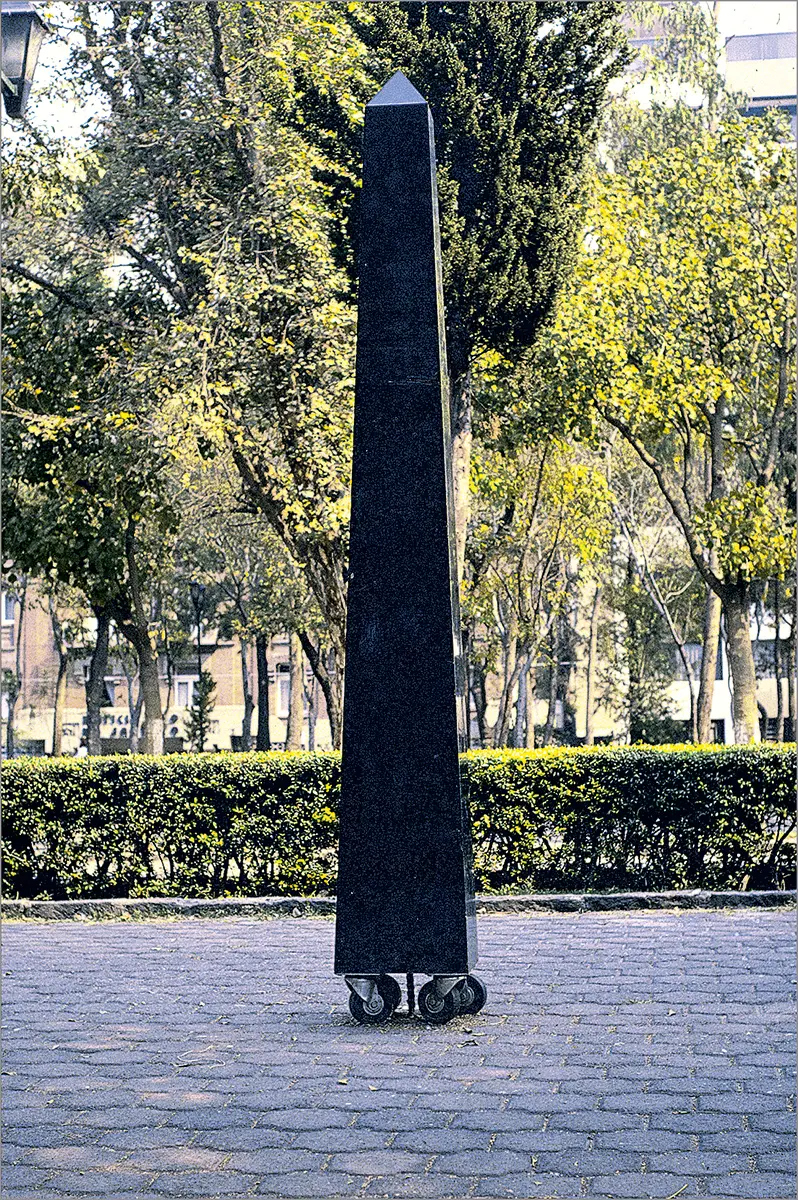
Despite all of them, the “official” Mexican presence at ARCO did nothing but corroborate that the visibility of a country’s art, such as Mexico’s, is not necessarily matched by cohesive cultural policies, much less by minimally stable markets and collecting. The gap between some of the galleries that came to ARCO is abysmal, and it is clear that the only galleries playing successfully on an international level today are OMR and Kurimanzutto, which are used to large stages and are armed with a roster of artists of unquestionable quality. Thus, besides their rather representative presence in the official Mexican section, both galleries had very large booths in the privileged areas and, of course, they did not disappoint. Most surprising perhaps was Kurimanzutto’s ease in transitioning from the small, almost-hidden booth it had in previous editions of ARCO to a large, strategically positioned one this year. All the art on display there was of importance: Damián Ortega’s mobile obelisk; Carlos Amorales’s collection of drawings; Eduardo Abaroa’s “molecular” constructions based on straws; two excellent paintings by Gabriel Orozco; and Rirkit Tiravanija’s work—all of it was first-rate and proved that the gallery is in the process of consolidating its mission. More experienced in these matters, OMR presented, among other things, a brilliant selection of works by Thomas Glassford, Rafael Lozano-Hemmer, and Pablo Vargas Lugo.
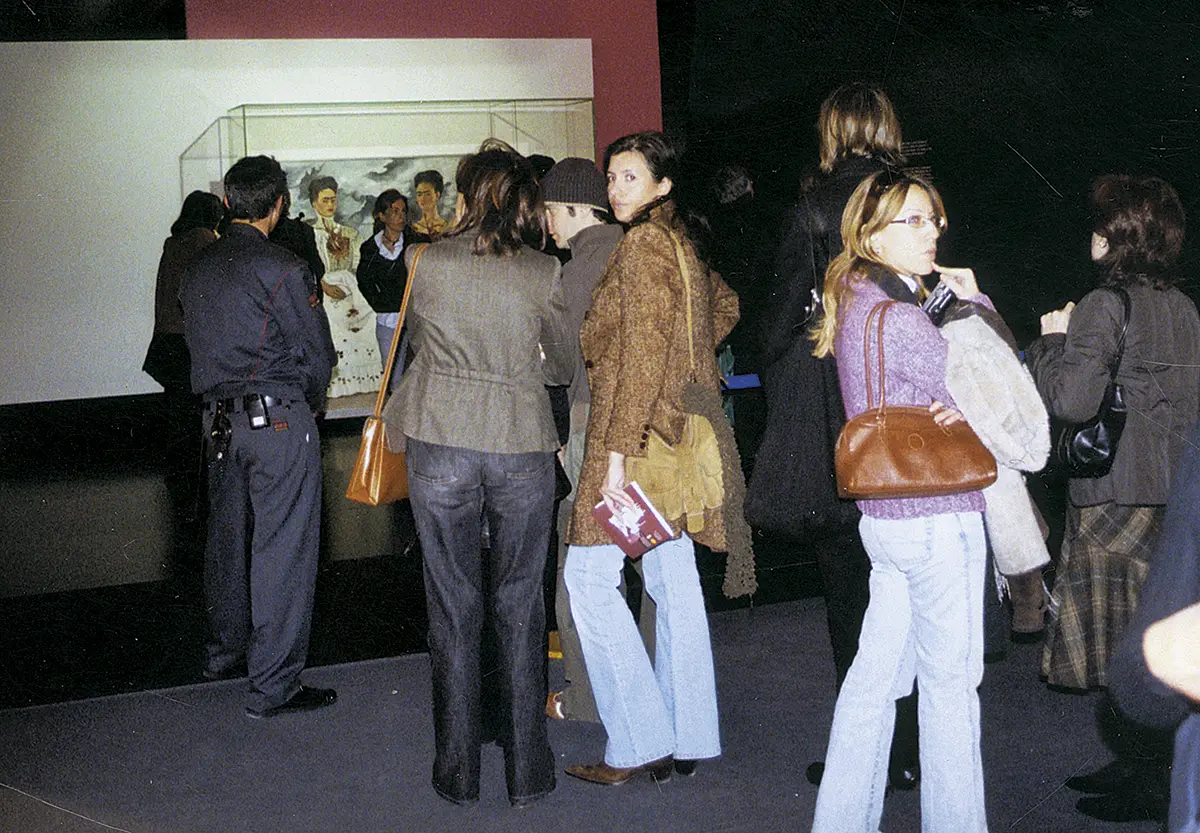
It is ironic for a program like the Guest Country (whose relevance has been questioned often) to have as its protagonist Mexico —a country that spent the twentieth century and has started the twenty-first debating the terms in which its identity is to be represented. And it is even more so when that debate has been taken— through the preposterous staging of Las dos Fridas, to the hallways of a five-day-long commercial art fair. But each country’s political absurdities aside, it behooves ARCO to clarify its objectives and its scope, define its public, and promote collecting beyond official acquisitions. They must transform ARCO into the fair of reference for both Europe and the Americas. It has everything it needs to achieve just that.
ISSA MARÍA BENÍTEZ DUEÑAS
Art historian and specialist in contemporary art and art theory.