
An anthology exhibition covering fifty years of creative efforts by Venezuelan-Costa Rican artist Carlos Poveda (Costa Rica, 1940) and sixty of his works, was presented at the Museo de Arte Costarricense between August and late November 2004. The event was a well-deserved tribute to an artist who has developed his oeuvre with perseverance, sensitivity, and talent. Imaginario irreverente was the title that served as a guide for the exhibition, which, curated by María Enriqueta Guardia, art historian and researcher from that Central American nation, marked the start of Elizabeth Barquero’s tenure as the museum’s new director, for whom “this exhibition presents the portrait of an authentic, rigorous, and cosmopolitan artist who in all of his productions injects an existential and creative charge, expressed un the solidity of his proposals,” hastening to add that in the course of the show ten viewer “can admire the strength and the confident tracing of his drawings, his synthesis of the landscape, his white-on-white period, his matteric investigations, his inclination towards volume, and the treatment of his most recent proposal, the still lifes or domestic landscapes.” In its museographic arrangement and following a chronological order, the selection of works was divided into six groups: "Human Figure," "Landscapes," "Clouds," "Zacatales and germinals," "Trees and orchard-related themes," and "Domestic landscapes."
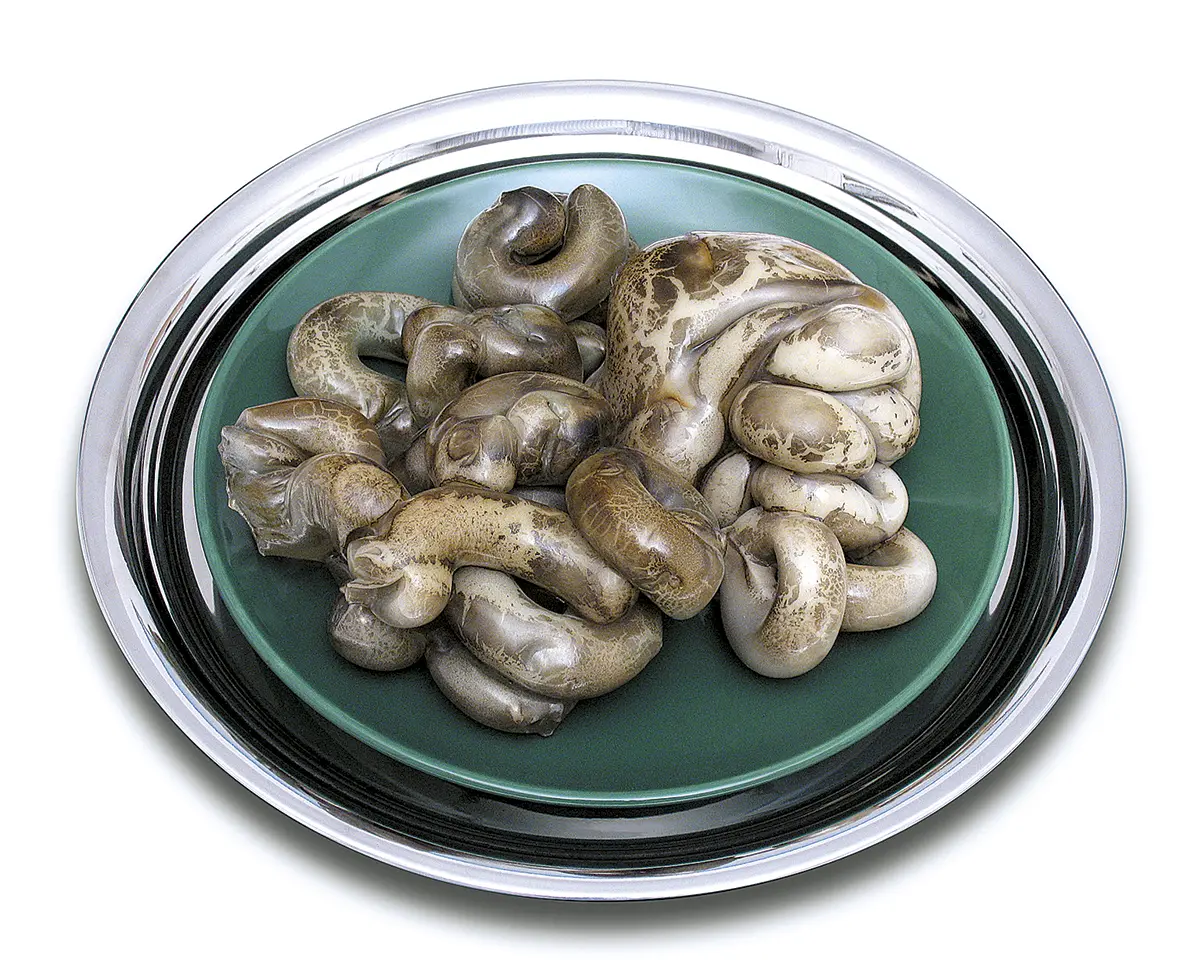
Carlos Poveda resided in Venezuela since the mid-1960s, and it was in Venezuela that he did his most mature and profound work, after becoming well known, on the basis of exhibitions at the OAS Latin American Art Museum in Washington, D.C., 1965, by then the Pan-American Union, as one of the most talented draftsmen in the Latin American artistic scene. The artist now lives in Paris. He hadn’t exhibited in his native country since 1981, when the same Museo de Arte Costarricense presented an important series titled Nubes, a proposal that related to a new, practically monochrome conception of the landscape. A solid catalog accompanied the show. In it, the curator analyzes the different periods in Poveda’s oeuvre, while inscribing him in the context of Costa Rican art, for instance, through his participation in some shows by the now emblematic Grupo Ocho. An important element in the development of Poveda’s work has been his investigations into different materials, an opinion shared by the curator, who writes that “since the beginnings of his artistic adventure, Poveda has carried forward a very personal search of materials, and he acknowledges that, lacking formal artistic training, his technique was the result of his own initiative and even, if you will, of his ignorance of conventional artistic techniques. What is true is that those circumstances turned him into someone who goes constantly after new raw materials and explores their intrinsic potential, considering himself a researcher of the visual arts.” Poveda —in his permanent curiosity about the expressive behavior of materials as sensible elements, be them ink and paper in his drawings, wire and wood in his landscapes, plastic, acrylic and sand in his clouds, and “found: materials in his domestic landscapes or still lifes, which we can call three-dimensional (plates, dishes, or industrial— size trays filled with edible elements such as pasta, chorizo, grains)—has been able to create a thick and sustainable oeuvre in the context of Latin American art. Given that Imaginario irreverente is anchored mainly in the latter kind of work, journalist Marjorie Ross, who specialized in gastronomic culture, notes in the catalog that “these subversive three-dimensional objects allude to humanity’s shameful predatory reality,: while Bélgica Rodríguez, also writing in the catalog, says that “figurative drawing brought him closer to human nature, his landscapes to nature itself, and his still lifes to Man’s most intimate nature.”
BÉLGICA RODRÍGUEZ