
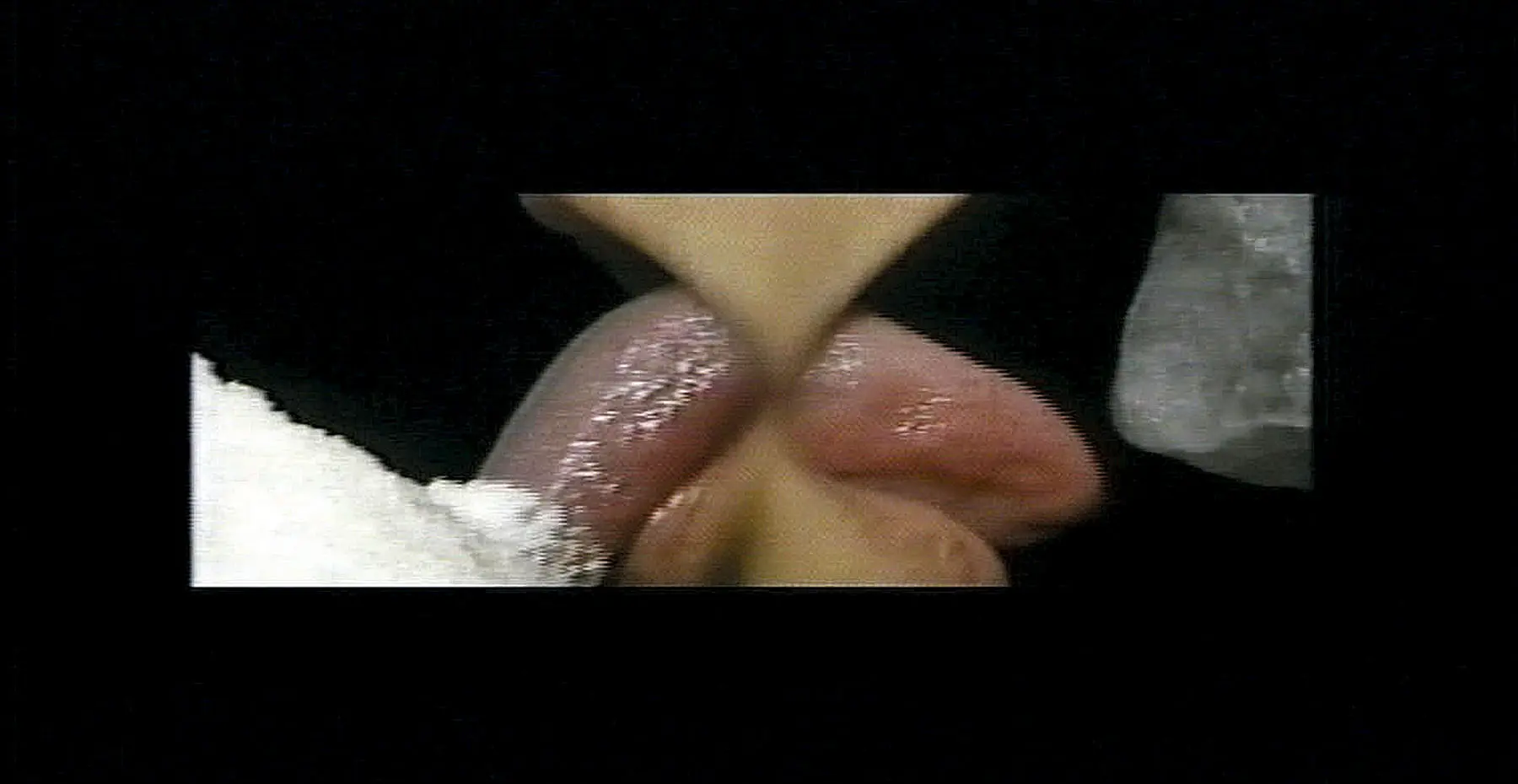
Sixty artists speak to us in unison; Don’t call it performance is what they say in the show presented by New York’s Museo del Barrio in collaboration with DA2 —Domus Atrium 2002— of Salamanca, Spain. In Salamanca and New York, the number of exhibitors doubled with the participation of Latin American artists who were not part of the initial show, originated by Bertha Sichel as director of the Audiovisual Department at the Museo Nacional Centro de Arte Reina Sofía. What is significant here is not the revised curatorship but the possibility of making comparisons. At the intersection of performance, video, photography, and installation, the necessarily participatory public was provided with seats and with the comfort of having the whole museum at their disposal to try to understand aspects of this renovation of a practice that, since its inception, has caused a certain uneasiness. In what could be termed an expanded genre, one in a permanent state of transformation and interaction, Don’t call it performance attends to the enrichment of non-traditional gazes.
After Madrid, the show traveled to Centro Párraga, in Murcia; later, it was at the Centro Andaluz de Arte Contemporáneo, in Seville; at the Domus Atrium, in Salamanca; at the Museo del Barrio; and at the Konceptkonstmuseum, in Rydbohlm, Sweden. Paco Barragán was its commissar; his essay appears alongside texts by Javier Panera, Director of DA2, Rosalee Goldberg, and Coco Fusco, all of whom ratify this show as a meeting of specialists. For the New York show, Museo del Barrio curator Deborah Cullen suggested the addition of a number of Latin American artists, who gave this version a more immediate, more indispensable veneer. The show’s many outreach activities developed a program of collaboration with other institutions, topics, and media, among them the Guggenheim Museum: the show on the Aztec Empire presented there; another topic was the Mexican Day of the Dead tradition, musical programs with the Americas Society, and New Latin Cinema, in collaboration with the Lincoln Center Film Society.
It was an interesting presentation, one that required plenty of time for the active viewer to penetrate the various expressions, arranged in five constellations, each with two sections. Regarding this, in a phone interview, Deborah Cullen says: “We considered several factors, among them the timing of a film session. With the support of our small team of museum people, we determined a little more than two hours was needed for the full presentation. This is why we divided it into two periods of approximately a month and a half each, offering people the chance and the incentive of coming back with the same ticket. Under the same considerations, we sought to offer seats, efficient traffic, and the comfort of having the entire museum at their disposal, to avoid sound clashes.”
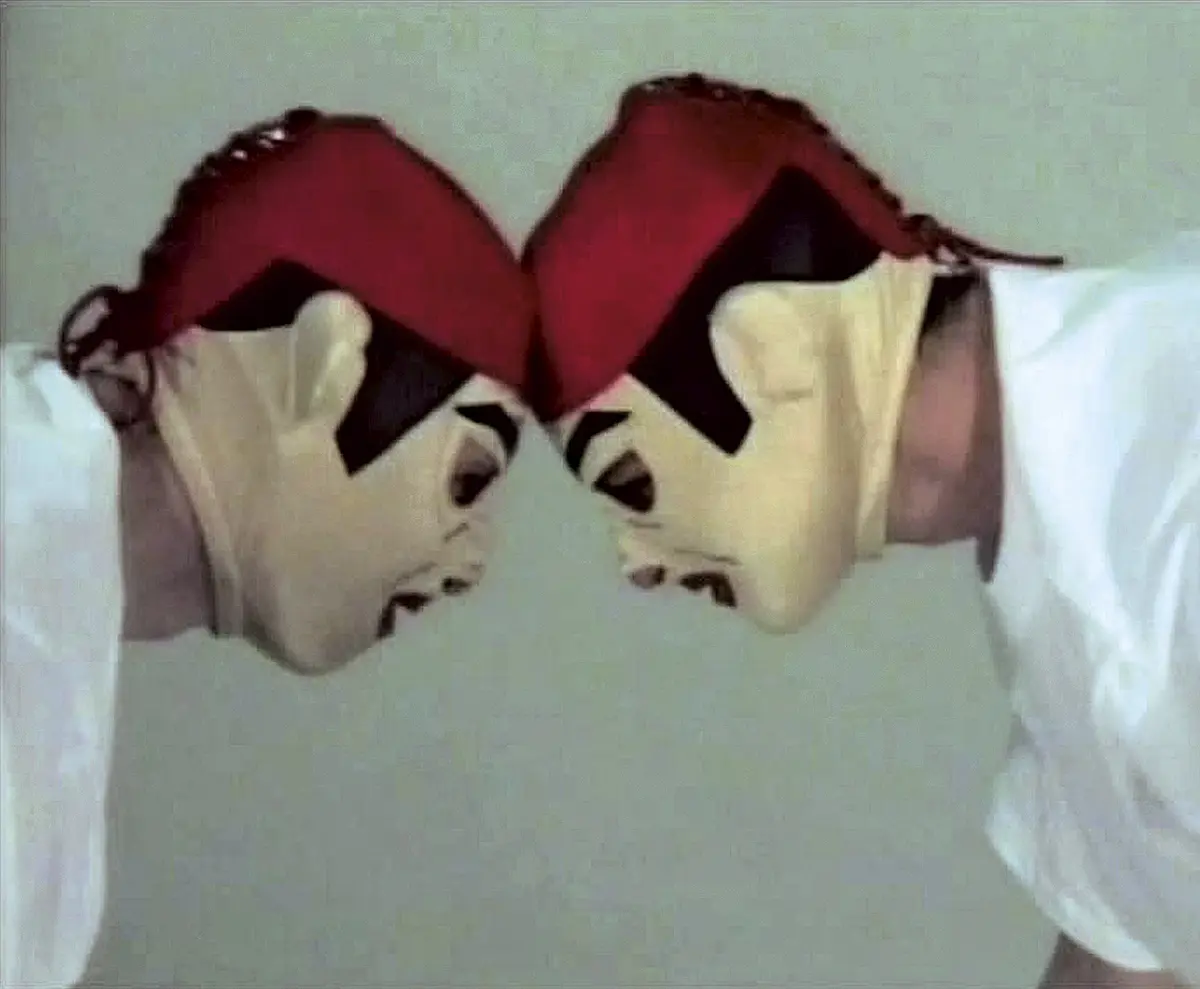
Much has been debated about the presentation of videographic recordings and the public’s attention. The often-used succession of video cabins —like the one we saw at the Venice Biennale— is not the best solution. How does one present a series of different works without having them interfere with each other, while at the same time avoiding the pitfalls of isolation and monotony? This question has been posed with relative frequency, particularly at a time when acceleration is an integral part of life. How does one retain viewers for lapses that go from 1.5 to 9 minutes —the average duration of a performance recording or of authorial videos, or even in media that —collective or not— reach a riskier longer duration? In that sense, the show’s version with half the participants was less complex. In Salamanca and New York, where the number of participants doubled, people didn’t know with any precision how long they would need for a full tour, although this also depends on each person’s individual timing. To put it another way, actions, videos, and all those formats refer a mirror individuality, “I am the body executing the performative act,” in parallel to “I am the subject/viewer that is motivated, disgusted, captured, disengaged by this artist’s performative act.” In consequence, each viewer establishes his or her own time, especially in such an interdisciplinary artistic activity, in times of intense restlessness, desired or forced on us.
The five constellations mentioned above are: "Art/Form," "Memory and Devotion," "Mass Interest," "Commitments," and "Audio Escapes." "Art/Form" included works dealing to formal, structural, or artistic problems relative to the passage of time, behavior, style, sculpture, and art. In this constellation, Erwin Wurm and his One minute Sculptures, live, tends a bridge towards traditional performance and keeps Beuysian elements in force. Ricardo Zulueta refers gradually to the myriad forms of falseness. Yael Davids articulates human presence to inanimate objects —and to magic—, establishing a parallel between performance —human action using the body— and a photographic or video camera —inanimate objects—. "Memory and Devotion" deals with works referred to the body, to being, and to personal and communal stories. Kimsooja is a witness to that; while two body-based testimonials, spiritual, meditative works expressing situations that are so different yet equally remarkable, are those of Sandra Bermúdez —the allusion and the distance between film and video, between acting and meditating—; Liza May post —the demarcation of order and space and solitude in an oppressive way. Pedro Vélez is reviewing themes and interacting roles as curator and commissar. Issues of popular culture, globalization, and the constant relationship between high and low culture, are found in the third constellation. With the exception of Suzanne Treister and Catarina Campino, it is in this important constellation where we find the most reiteration and perceived expressive media that are tired —surely due to having worked consistently about what continues to occur and seems not to have solution, as if there were just a few scripts in an artistic practice that should follow none. The fourth constellation, which includes political or social visions of culture, comes close to what we said in the previous instance, with resources from traditional performance and video-art; even so, the work of Cabello/Carceller, Quisqueya Henríquez and Wanda Ortiz allow for interesting readings. César Martínez, despite a usual path, has worked consistently in performance, in his videatic vision, and in his theoretical meditations. As its title indicates, the fifth constellation gathers works dealing mainly with images that allude to or integrate sound, language, and music. David Pérez produces performance works bringing together several levels and less narcissism; it could also refer to issues dealt with in the third constellation. Longina contributes to performance in complex installations. Impossible to mention all the participants and their works, these are only some references with the caveat that the majority requires individual attention. Multimedia, narrative, conceptual, these artists are the thread connecting two centuries, in this different, portable way of bridging the public and the private.
Other achievements of this show go beyond its gathering, displaying, and organizing performative actions from the 1990s to today. F. Javier Panera puts it well: “...paradoxical sliding between action and recording that performance has experienced since its beginnings to the present. We are talking about a practice born with the express will to counter the commercialization of the art object through —necessarily ephemeral— actions that sought a more direct and spontaneous relationship with the viewer; and which has evolved from the reformulation of the original action in relation to the available means of recording it, to the execution of performances —in private— whose main purpose was, in fact, to be publicly displayed by means of photographs or videos.1
The media developed by conceptual art will undoubtedly be the tools of all posterior artistic production. Revised, revisited, denyed, recuperated, conceptualism and its branches are the delta for art of the second half of the 20th century and what has ran of the 21st century. There are those who prefer to be called neo-conceptualists, others are post-conceptual, but they all drink from the same fountain. Disagreements, reconfirmations, new formats, expansion, exchange with other areas, performance “is here to stay: in its various natures. Don’t call it performance quotes especially Vito Acconci’s words: ‘We hated the word ‘performance.’ We couldn’t, we refused to call what we did ‘performance’… because performance had its place, which traditionally had been the theater, a place you went to like you were going to the museum.”2 The essays in the show’s catalog are indispensable for those who approach performance art for the first time or who hesitate to approach it and can do it now through this publication. It needs to be added that Paco Barragán communicates his work passionately. The presence of Latin American artists also brings to the table the possibility of debating the term “performance.” It is occasionally used in Spanish where acción should be used. This would have helped assuage Vito Acconci’s and other’s anxiety, because in Spanish acción (action) differs from actuación (performance.)
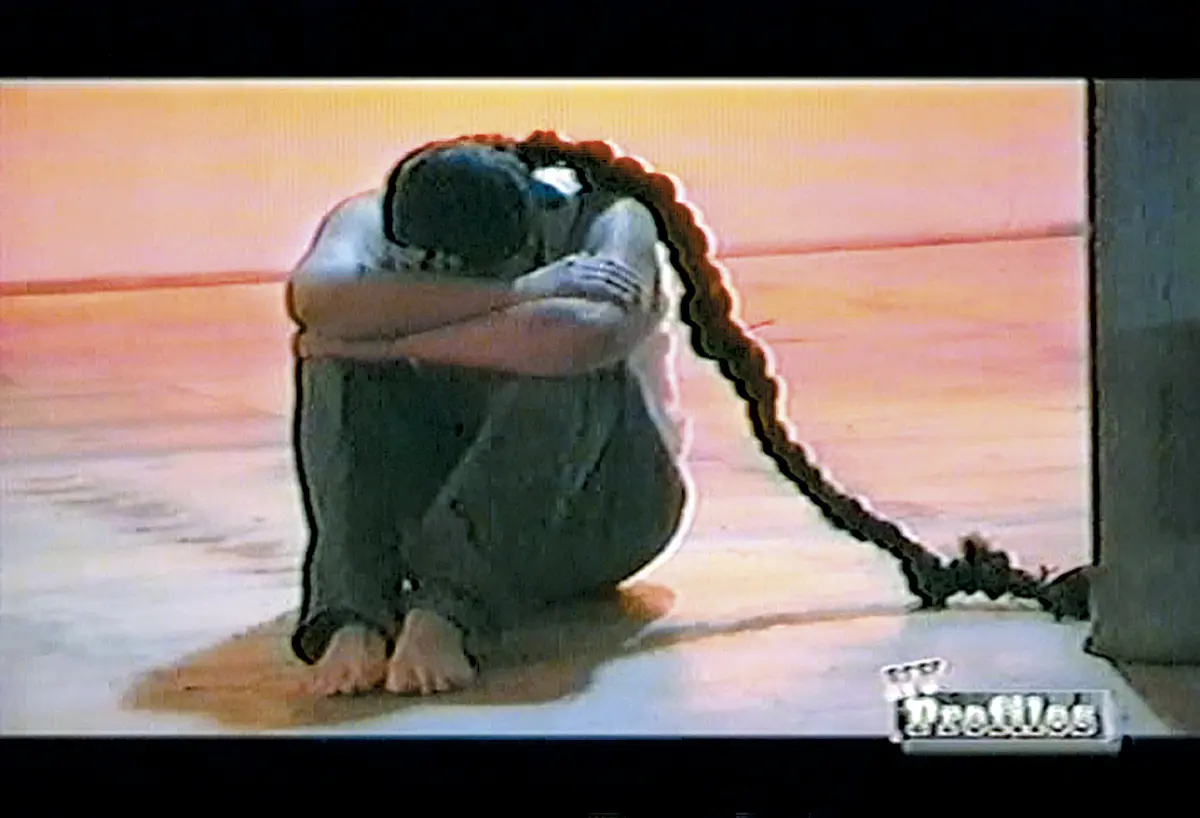
This is the first time Museo del Barrio devotes all its galleries to video formats and to a number of live performances —this is to say, to what has essentially been an anti-institutional practice. There will be those who say that nowadays one finds videos in every museum, but we are not talking about videos in general, but of live performances and videos recording performative expressions. Without turning this into the Museo del Barrio’s main orientation, it is a significant update and a new awareness of the bedrock importance performance art has acquired over the past 25 years even if the diagonal axis already took place with Joseph Beuys, John Cage, and Fluxus. Having underscored all this, and having Museo del Barrio launch this effort in international collaboration —which has awakened, unsettled, and interested a certain public—, it would be optimal to pen a small historical revision chapter, simultaneous to small updates. Don’t call it performance, outside of what we knew of its traditional practitioners, of those who have blazed trail and pointed direction, confirms that art remains alive, in a process of change and constant readjustment, through these almost five decades in which performance has treasured interdisciplinary practices without a governing movement or “ism,” all the while perceiving that it doesn’t matter where something is produced, but that a given artist conceptualizes his or her concerns and those of society, which has been called a global village.
NOTES
1. F. Javier Panera, No lo llames Performance, p. 9
2. Vito Acconci, quoted in No lo llames performance catalog, p. 20, from Michael Rush, New media in the Late 20th Century Art, London, Thames & Hudson, p. 52 (translated by Paco Barragán)
GRACIELA KARTOFEL