
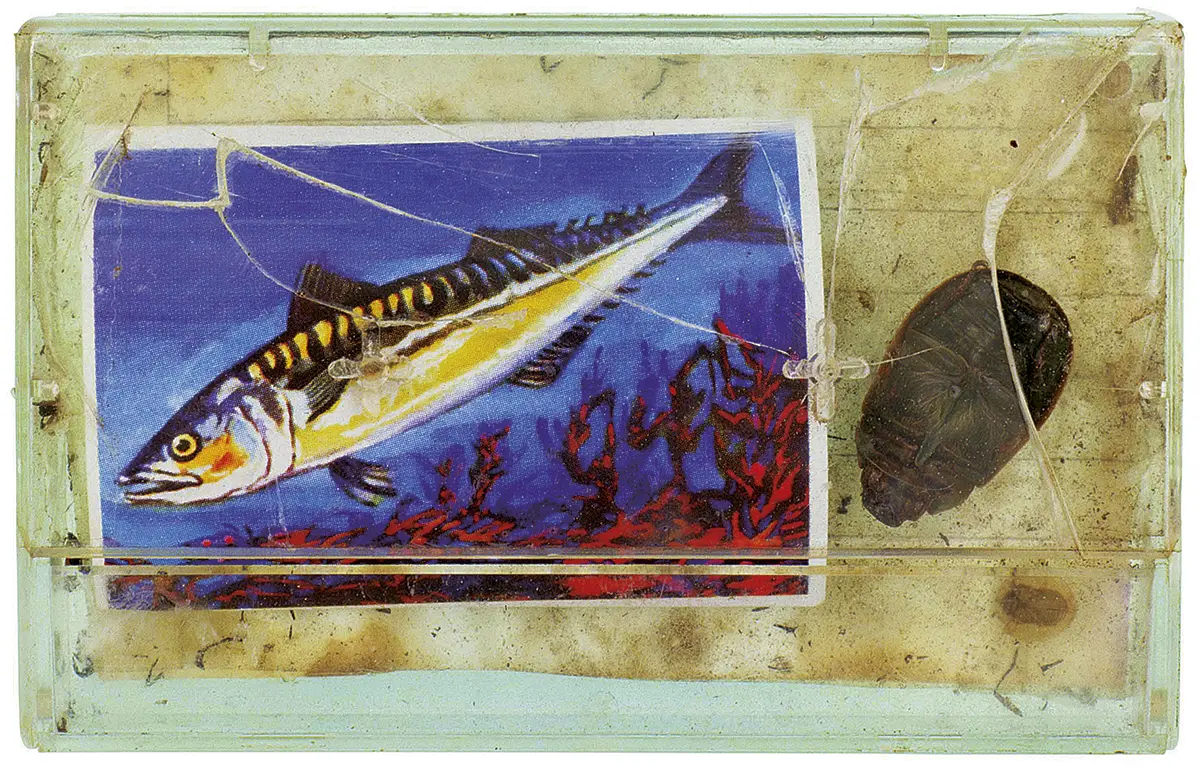
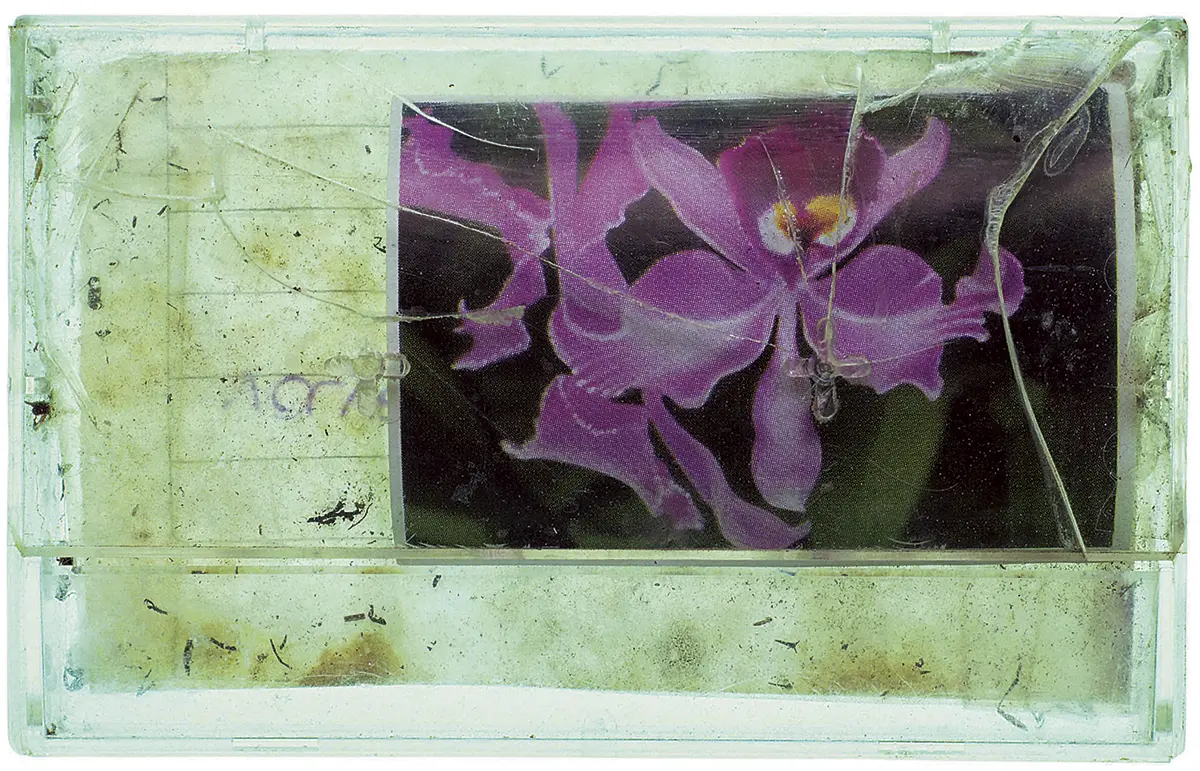
The last series of photographs by Juan Manuel Echavarría (Medellín, 1947) gathers the object-mementos of the women abducted from La María church, in a rich neighborhood of Cali. In the middle of the Sunday Mass, a great number of parishioners were abducted and taken to the mountains. As testimony of their existence, a dozen of the hostages brought back leaves, clothes, butterflies, knitting, and insects on their return. These were used in the series of twenty-eight prints and the video of the primitive altar of the church, recorded by a fixed camera and voices with the relevant testimonials of the experience: painful but without bitterness. The visual projection and the declarations are thirty minutes long. The group of photographs in various formats provokes diverse emotions, including nostalgia, memory, the passage of time, precariousness of human life, suffering, patience, optimism, hope, resignation, and adaptation.
The phenomenon of taking hostages, one of the usual ways in Colombian society to frighten and overwhelm the citizenry, and an effective and frequent means of financing armed groups of various ideologies, resulted in this unusual paraphernalia that, once assembled and shown, raises dissimilar and contradictory feelings. It points to existence of great adventure in extreme weather and distress. When gathering their mementos, the hostages built friendships, observed their captors, and shared conflicting emotions with them. Photographs whose meaning extends beyond their appearance are loaded with questions and contradictory answers. Work on this series began in 2000 and was concluded at the beginning of 2004, when the video was concluded.
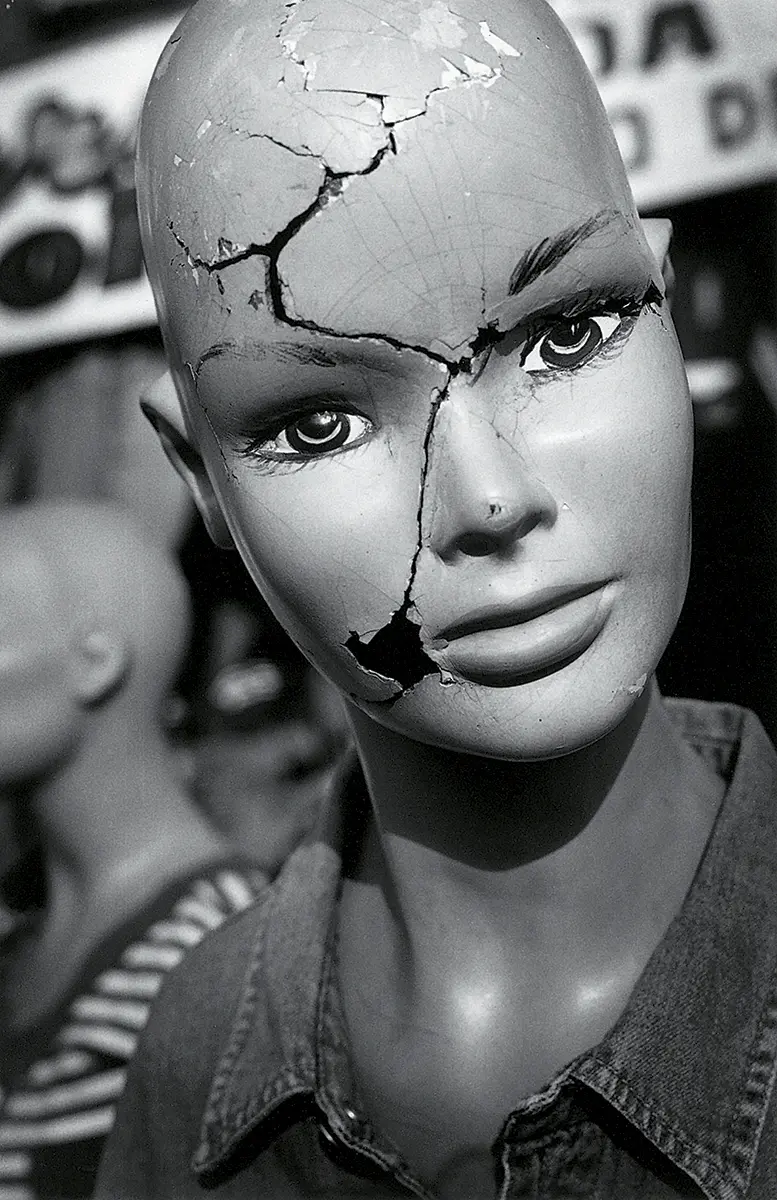
The La María ensemble is the culmination of work that attempts to be meaningful through photography and video. Echavarría’s interest in images captured by the lens and in pertinent arguments to reflect or denounce the scenario of uncertainty, chaos, death, and violence that Colombia is enduring has been evident since his first series in 1996, when he chose this language to make art. The series of ten small-format black-and-white photographs was titled Retratos (Portraits). The artist used deteriorating mannequins from the “Veinte de Julio” neighborhood in Bogotá —a depressed sector of the capital— but these broken and cracked dolls offer new garments to the customer who wants to buy clothing. The images focus on faces scarred from use, the passage of time, negligence, and certainly from abuse. It is the representation of the human being at the service of the community is now reused to question sexual violence and physical decline as a sign of obvious and symptomatic attrition. This statement is equally powerful as a meditation on appearance, mimesis, and the power and significance of the image and its implications.
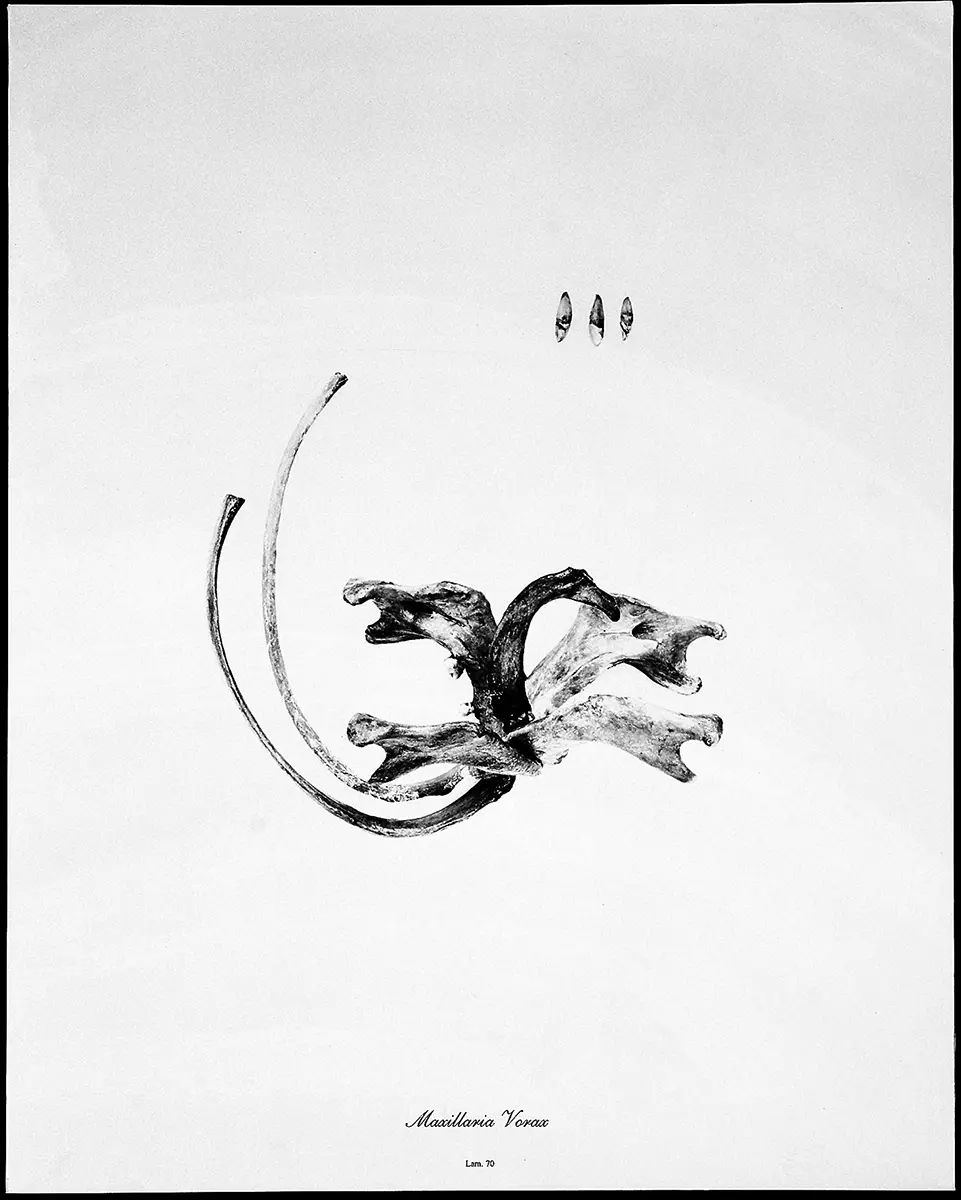
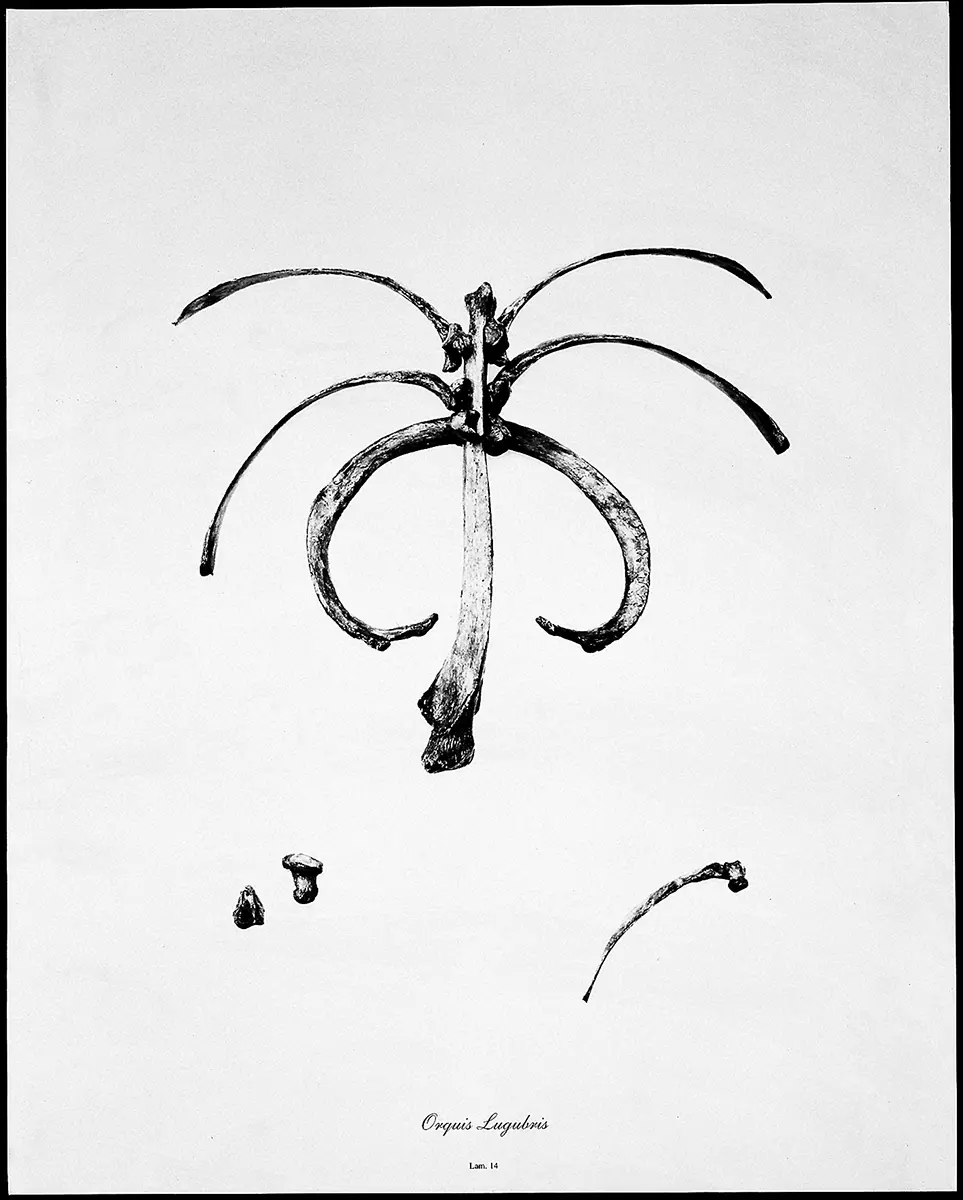
Corte de Florero (1997) is a group of twenty-five works in black and white. At first glance, they seem to be drawings of flowers. The main flower refers to the documentation made by the Botanical Expedition in the last years of the colonial period and during the first stages of the Republic, including the fight for independence in Colombia. There is a label in elegant letters that names the species, and the artist invents signposts that underline its macabre and brutal aspect. The title Corte de Florero alludes to the “redesign” of cadavers in the Colombian violence, a result of amputating the upper and lower limbs and placing them on the victims’ necks after cutting off their heads. To achieve this gross assemblage, the author obtained human bones and assembled them in subtle forms with branches, twigs, and petals. These accursed flowers reinvent the skeleton of a cadaver in a gesture that imposes the presence of the victim on the viewer: the terrible memory of history and the memory of the deceased, a permanent reminder of funereal character and a possibility of recalling life and its relativity.
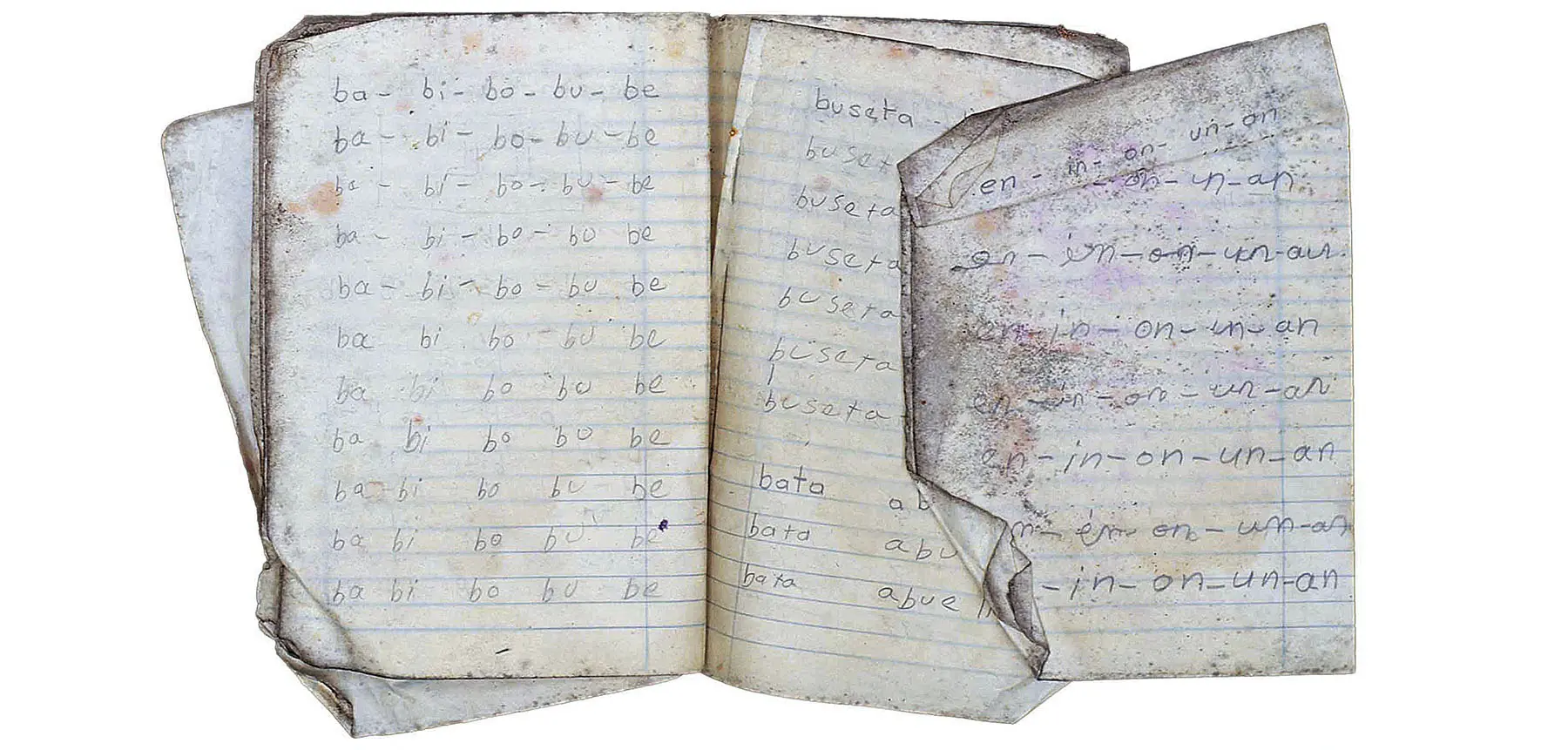
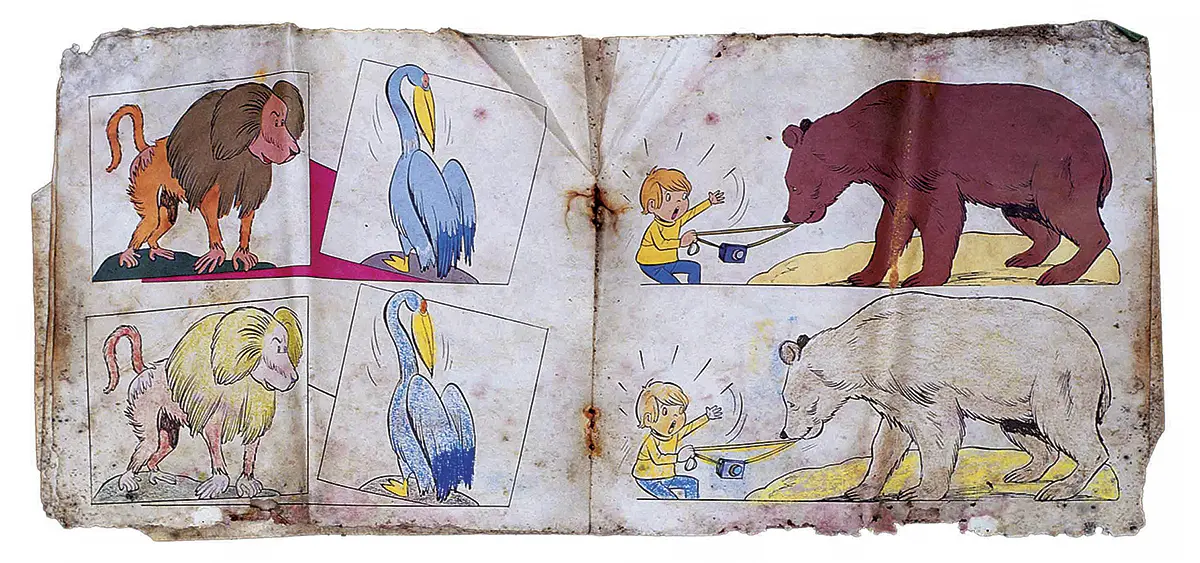
Escuela Nueva (1998) is a series carried out in Chicocora, a town of Chocó, from which the inhabitants have fled to escape a paramilitary threat. Children’s notebooks were left behind in the destroyed school. When photographing these naive but premonitory motifs on a black background, Echavarréa points to an environment of innocence in a circle of terror.
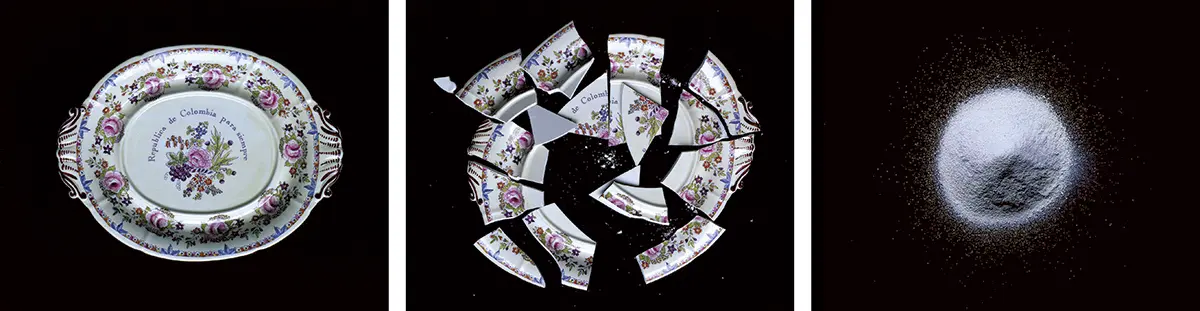
In 1999, he finished two series: Bandeja de Bolívar and Bocas de Ceniza. The first is a sequence that shows a piece of Simon Bolívar’s dinner service with the inscription “Republic of Colombia forever.” In the various images, the object gradually loses its integrity to become a heap of cocaine. Symbols of the country and drugs, disintegration and transformation, are some of the expressions in these Works —presented both on paper fixed to the wall and in a four-minute video— in which the transformation of a dish into a substance to excite the senses and generate an economic conflict is most evident.
Bocas de Ceniza describes the mouth of the Magdalena River in Colombia, one of the largest in the country and witness to a great violence. Many cadavers have appeared on its banks or floating down the river. The name Bocas de Ceniza derives from the season of Lent and penance, and alludes to a bloody cartography. In the series, a fruit called auyama is cut, like a skull split to reveal its inside and representing the sectioning of the human brain. These peculiar images use the human still life to produce a localized allegory.
Animals are among the icons used by Echavarría. Testigos (Witnesses) includes two individual photographs of a cow in camouflage (1998) and a starving horse in a lonely landscape (2000).
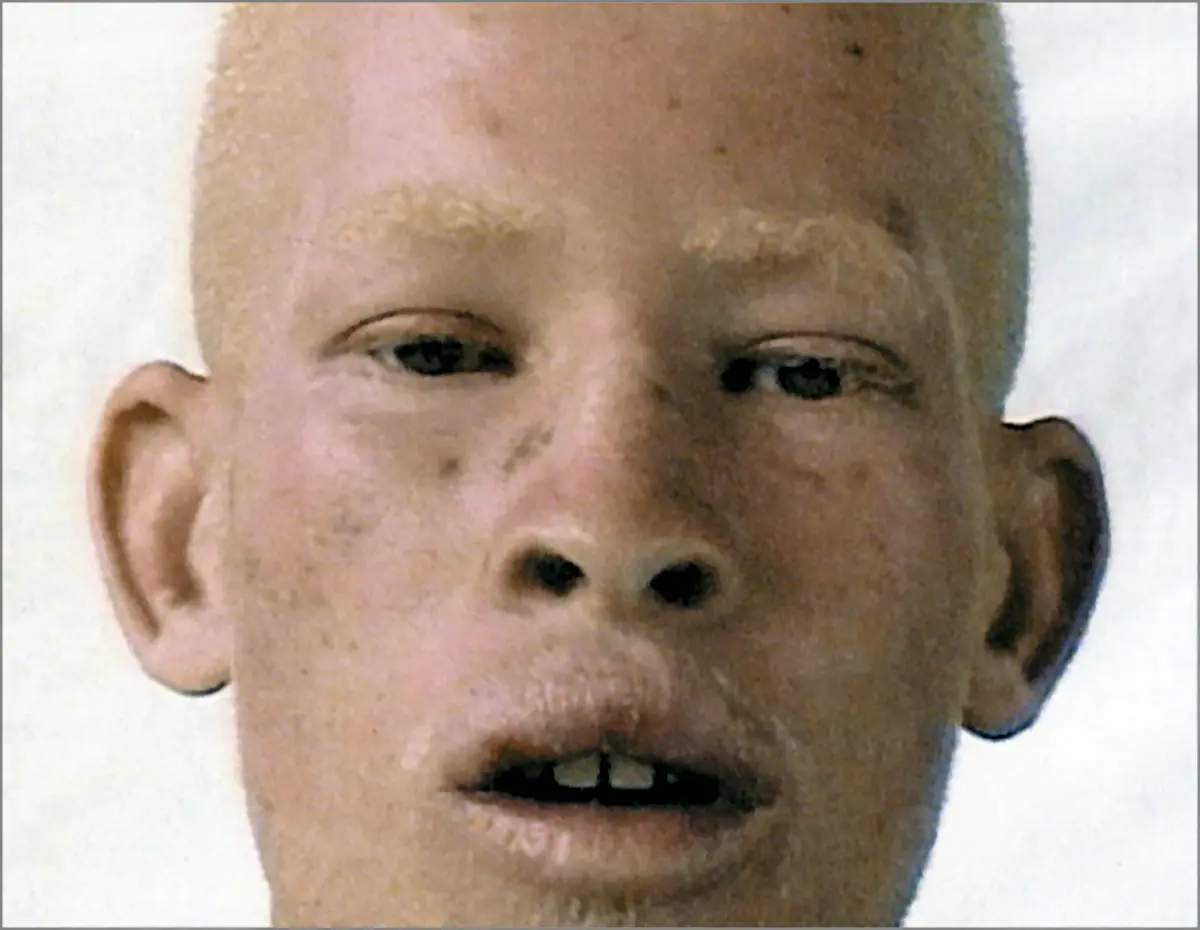
Echavarría’s affinity with video is a result of his photographic experience. Bandeja de Bolívar (1999), and the video that supplements the La María series (2000–2003) have been mentioned. His enthusiasm for the medium increased in 2001, when he worked on Guerra y Paz, in which two trained parrots repeat the two words of the title with sinister humor and a reference to the animal world to frame violence. When traveling through Magdalena Medio and El Choco, he has found survivors of massacres who have composed and sung allusive songs. These works correspond to a series called Retratos cantados. These are close-ups of the faces of people who sing hymns about their tragedy and distress in funereal musicals that make up a polyptych pierced with terror. Dos hermanos shows two adolescents, one black and the other albino, who describe the destruction of the church in Bojaya. In another, a woman lets us hear her laments with phrases such as “Jurado, relieve me of my suffering” or “The war did away with joy.” From San Antonio de Icho, a mature man composed and sang his tale of war and destruction to the President of the Republic. A fifteen-year-old girl from Riosucio, Chocó, speaks movingly and says: “There isn’t a day without killing.”
Through symbols or metaphors Juan Manuel Echavarría’s work not only offers the viewer arguments on topics that generate violence and death, but also shows its victims shattered physically and morally. With calculated relevancy, his esthetic proposal submits the results of a plan with historical and poetic comments in order to enhance its impact: his work is capable of questioning language, status, and its own prerogatives.
MIGUEL GONZÁLEZ
Art critic and curator, Museo de Arte Moderno La Tertulia, Cali, Colombia. Art history professor in Colombia and Latin America.