
From a visual artist’s
perspective, the perceptions of the events that “populate” our surroundings
acquire a meaning that transcends the commonplace and becomes an act of
unveiling and discovery. Through art, a certain kind of events, which by force
of their repetition seem to lose importance and to become lost in the
labyrinths of the everyday, are salvaged and understood in a new dimension as
facts that affect people, families, communities, and countries. In this way, an
artist’s gaze, expressed in all its intensity in the work itself, gives the
real a different status and offers the viewer the possibility of a perception
that is interested in the surrounding world, its recognition, and comprehension.
The exhibition titled Otras miradas enabled the perception of new explorations into contemporary Latin American reality from the point of view of art. Presented at the Museo de Arte Contemporáneo de Caracas, Sofía Ímber from September 9 to October 10, 2004, and selected by the curator Carmen María Jaramillo, it gathered works by Débora Arango, Patricia Bravo, Johanna Calle, María Fernanda Cardoso, Clemencia Echeverri, María Elvira Escallón, Beatriz González, Delcy Morelos, Gloria Posada, and Libia Posada Restrepo. Different events that Colombian society has undergone, consequences of the conflicts that seem destined never to end, are the starting point for the artists to express their vision, confusion, and pain over these situations. Like the Sibyls of ancient and recondite oracles, they try to offer an answer to the violent causes of the tragic events and attempt to salvage a memory of the past for the future.
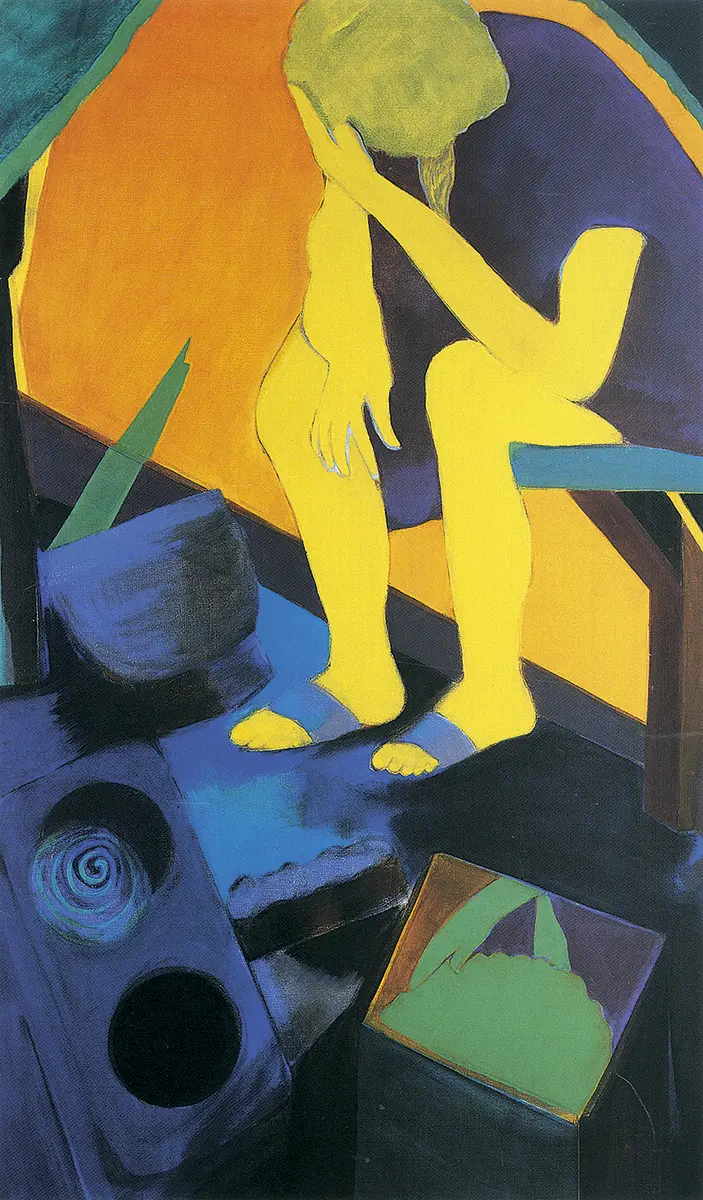
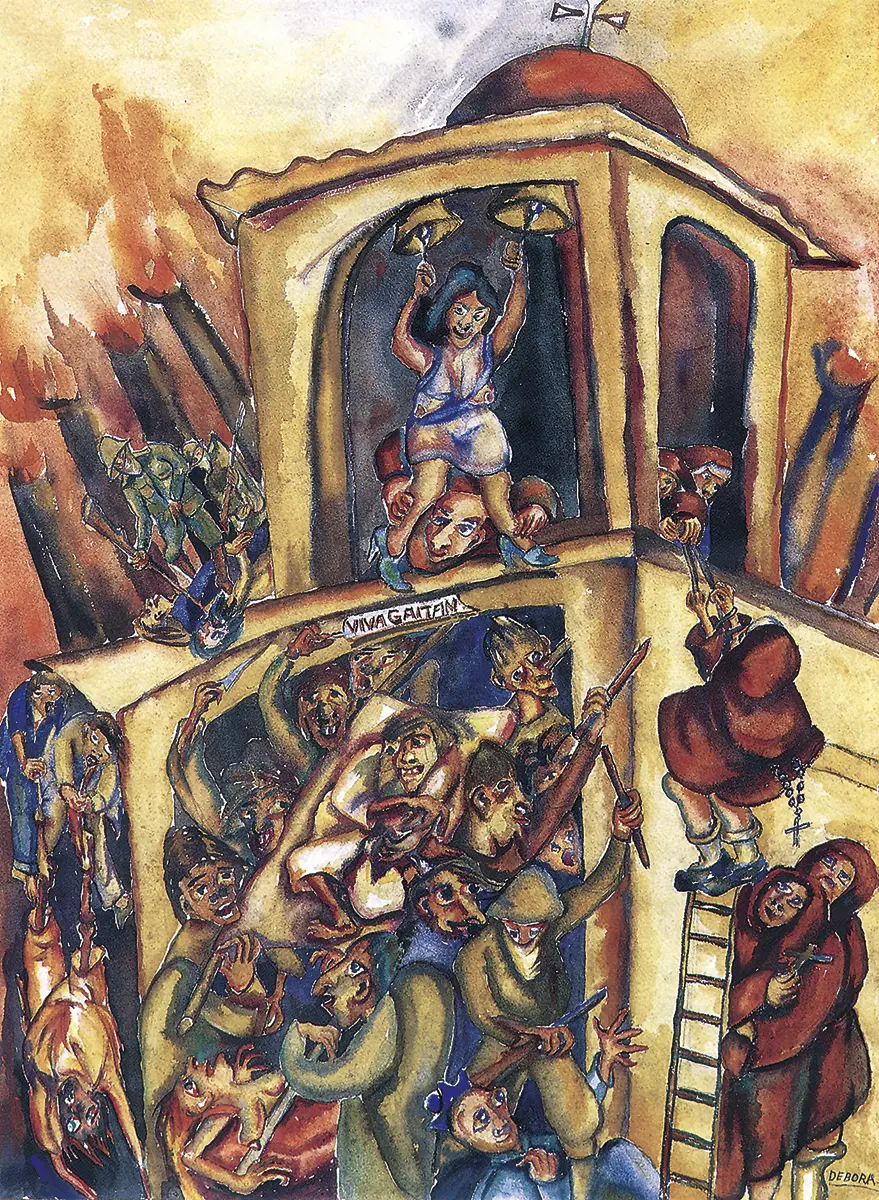
In their diversity, the proposals presented in the show do not posit explicit relationships at the formal or thematic level; each explores particular aspects of a process that has many facets. Nevertheless, it is possible to identify affinities between them that allow us, without establishing categories, to review them as groups. Thus, Débora Arango’s work appears as a precursor of the register carried out by the participants in the show; alongside Arango’s, the proposals offered by Clemencia Echeverri, Beatriz González, and Gloria Posada present a particular view of the drama. Arango’s work never ceases to be touching, despite showing images that imply rage, pain, and a severe critique of the social model that allows and even fosters such violent events. Her paintings, resolved with the speed demanded by watercolor, are loaded with a satirical intention, and her characters, formally built with only a few elements, possess great expressiveness. In Masacre del 9 de abril, undated, she represents, in a tightly packed composition of great chromatic richness, events related to the assassination of Jorge Eliécer Gaitán. The images in De doble filo 1/5, 1997–1998, a video by Clemencia Echeverri, are filled with metaphorical allusions to those formal configurations that mark a human being’s life: family, society, death, and destruction. They contrast the violence of the natural environment and human violence with a plasticity characterized by its Dante-esque boundlessness that confronts us with a dramatic perspective; as in a version of the Sisyphus myth, the life of a human being seems doomed to be an eternal struggle against evil without respite or a guarantee of victory, a realization that points towards the tragic sense of existence. Beatriz González, in El Paraíso 1997: Mátenme a mí que ya yo viví, 1997, among others, builds intimate shelters around anonymous people; more than intimate, these spaces are minimal, schematic, and lacking in depth, fields that frame the loneliness of their characters to the point of rendering it suffocating and amplify, to the limit of the endurable, the pain caused by loss. The richness of the color and the bright contrast between flat hues does not create antagonism between the unfortunate and the chromatic exuberance. On the contrary, it emphasizes the dramatic character of the reduced space and of its solitary, torn protagonists. In Mapa, 1990–2000, Gloria Posada uses the lines of a hand, the same lines where fortune-tellers “read” the future, to build imaginary, depersonalized cartographies that structure the morphology of an abandoned territory. The artists does not seek answers in those lines; she asks her viewers to move along them with the intention of having them feel the desolation of the experience, in a way, the drama of the displaced.
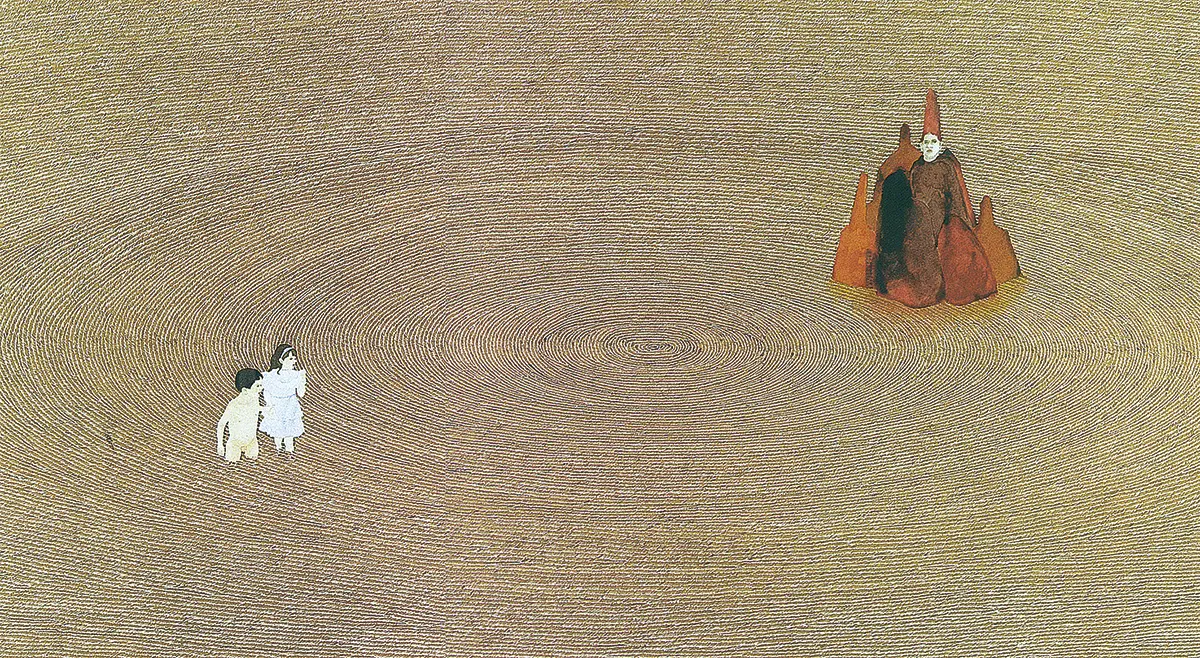
From our standpoint as viewers, the works of Patricia Bravo, Johanna Calle, and María Elvira Escallón form another group. At first glance, we perceive the images of an intensely rouged sky in the large-format photographs that serve as the basis for Mate que Dios perdona, 1998, Patricia Bravo’s piece; Bravo also “observes” them from another photograph. Studied attentively, these images show us a different reality: more than an illuminated tropical sky, this is a space for the dead, in the manner of popular prayer prints that use the image of the sky as support for their text. Bravo uses the symbolic character of the sky/heavens as the place of “eternal rest” in order to denounce; she contrasts the intense presence of her work with the tenacity of forgetting. Perhaps one of the most unsettling kinds of violence is the kind that condemns human beings to loneliness as a consequence of their own weaknesses, of their unexplainable mistakes. Defenseless, lost beings in unknown spaces, swamps shaken by strange occult forces, become astonishing references to isolation, separation, and estrangement in Efluvios, 2000–2004, a piece by Johanna Calle that displays the artist’s technical expertise and extraordinary work capacity. Through the photographic images in her series Desde adentro, February 2003, María Elvira Escallón salvages the remains that persist after the effects of destruction: traces of light, fleeting images that are the remnants of lost lives, of thwarted illusions, of fruitless efforts, are presented as updated symbols of the many exterminations that have always accompanied Man in his journey through life.
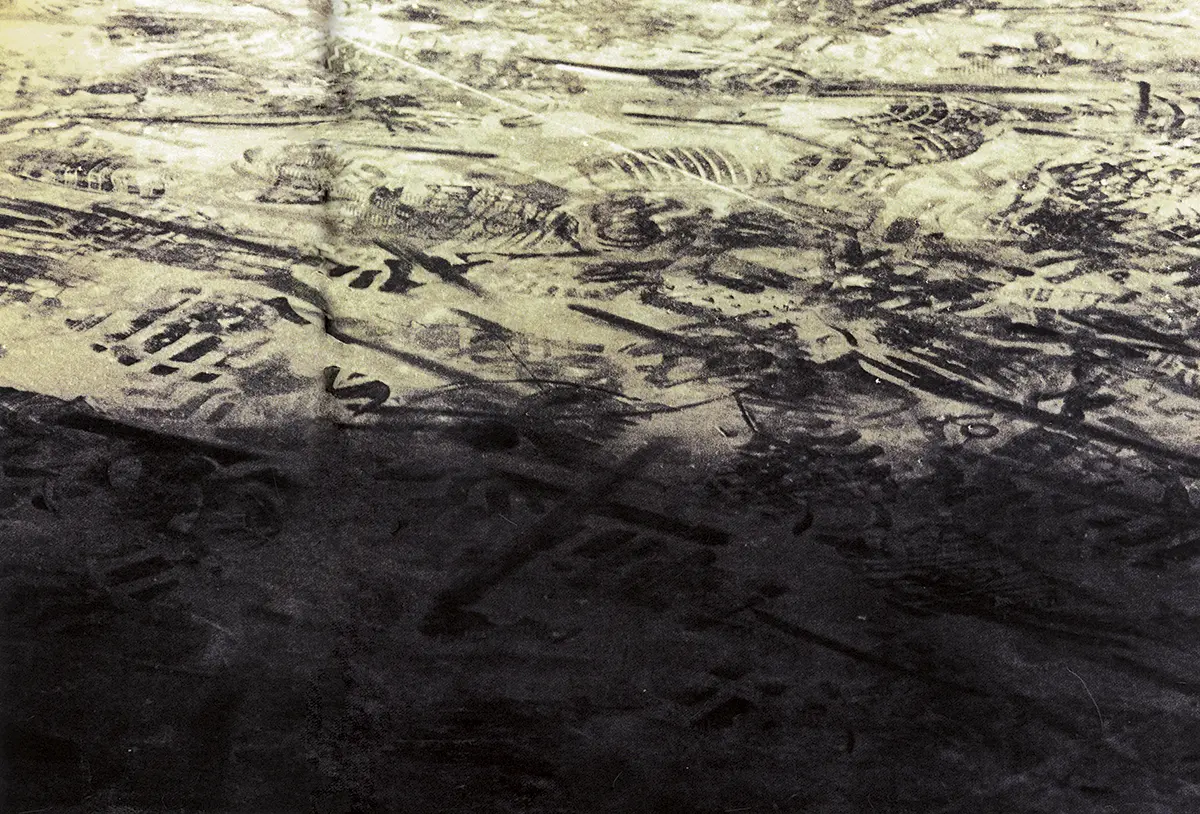
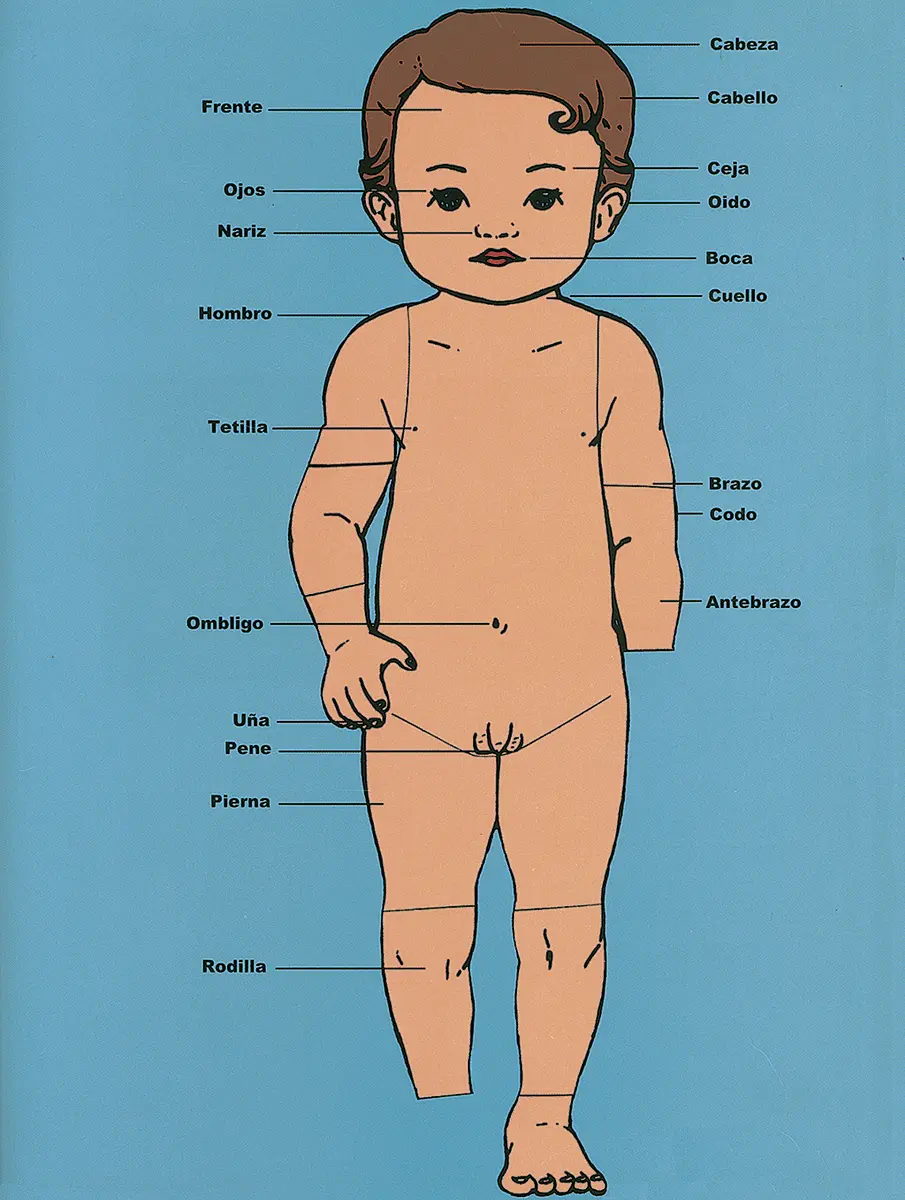
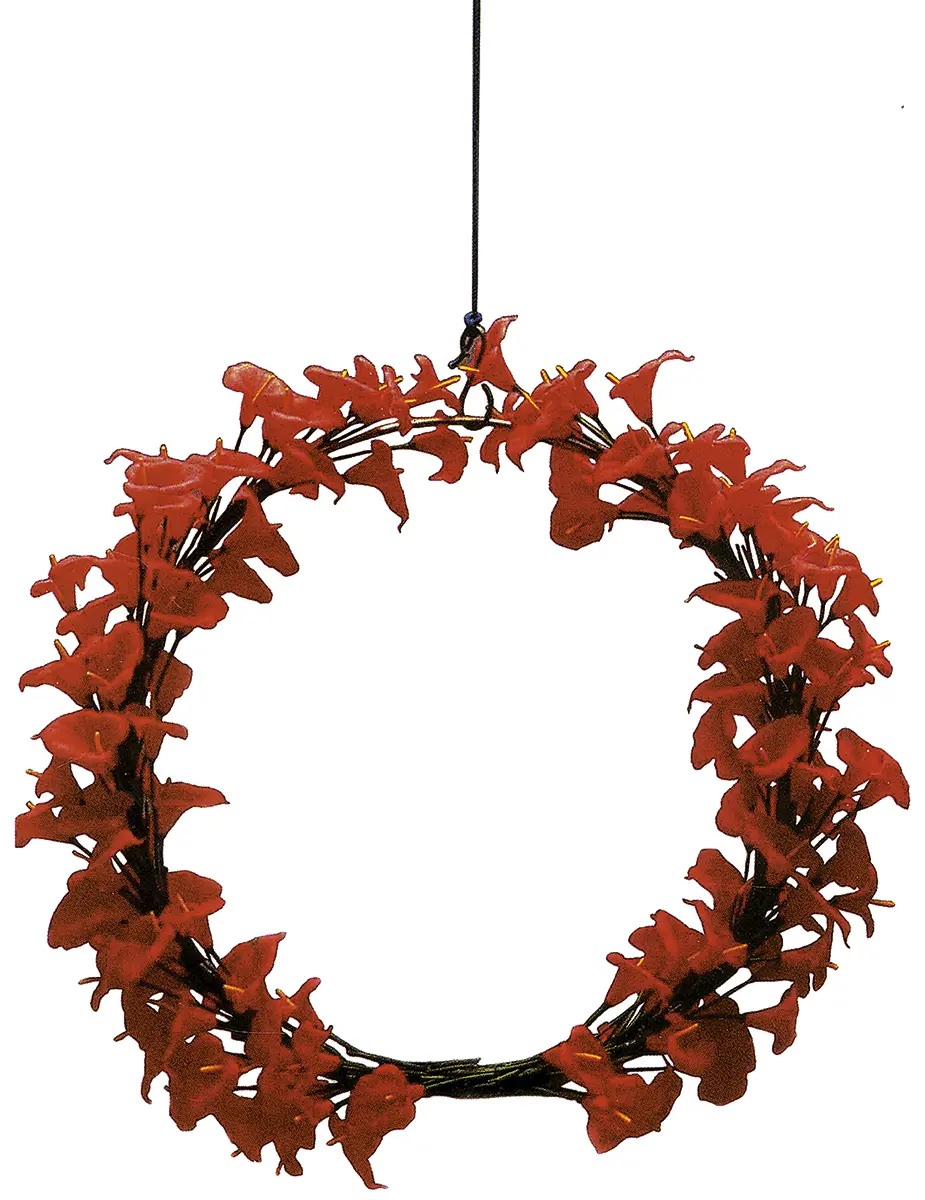
Their work with images that are, at first glance, alien to the exhibition topic would seem to link the pieces presented by Delcy Morelos, Libia Posada Restrepo, and María Fernanda Cardoso. The work of Morelos is the exhibition’s most conceptual, and paradoxically, closest to being explicitly pictorial: 4.408 veces, 1997–2004. The image of a container on which a liquid is poured is formed by thousands of intensely red particles that “cascade” from a location that lies outside the piece; it is a figure repeated several times and values the potency of its color, its plasticity, and what is explicitly visual. But the color red also refers to passion and death: blood that flows with great intensity, spilled blood with which, as the artist explains, “life is leaving you.” We tend to forget that destruction does not discriminate, that it doesn’t choose, much less forgive; that is why Lidia Posada Restrepo’s piece, Lección de anatomía, 2000–2004, is so unsettling. Its apparently normal images, such as anatomical representations of children of both sexes, reveal their transgressive charge by presenting the viewer with the children’s mutilated bodies. Such crudity makes us aware of what we reject because we are afraid, what we intentionally ignore, of manipulations that stunt and destroy societies. Lastly, the wreaths used by María Fernanda Cardoso in her installation have visual value as artistic objects and singular presence in Latin America’s cultural tradition: they pay homage to heroes or acknowledge our affection for a deceased person, meanings that kitsch culture has brought into question. With her Coronas funerarias, 1991, Cardoso pays tribute to the thousands of victims who become anonymous heroes and who are quickly forgotten by the collective consciousness.
In the past, artists attempted to represent truth through beauty; today, their expressive needs point in different directions, but nevertheless, there remains a will to portray an interpretation of what is true in the images that are created. The works selected for Otras miradas offer visions of reality traversed by artistry, and as such, they refer to the formal values of the visual arts. Nonetheless, this does not limit them to follow pre-established models, but allows the artists to express themselves with great freedom, awareness, and critical sense. In its moment, we recognized Otras miradas as one of the most interesting exhibitions organized by MASCI in 2004.
*The exhibition traveled to Santiago de Chile in January and was featured at the galleries Gabriela Mistral, BECH, Metropolitana, Balmaceda 1215, and Posada del Corregidor. It will be on view through March 27 at the MNBA in Buenos Aires, Argentina, and it has been programmed to continue the tour in Brazil.
FREDDY CARREÑO
Art critic.