
The recent and revamped edition of the old San Juan Latin American and Caribbean Print Biennial (1970-2001) constituted a true landmark in the island’s artistic calendar. One of the goals of the international event that unfolded throughout Old San Juan, Puerta de Tierra, and Santurce was a review of graphic arts and its potential in the context of contemporary practices. Despite a few deficiencies in the areas of logistics, programming, and information, the event was an undeniable success, making it possible to envision an alternative to the Havana Biennial, the most important Caribbean-region event for over a decade.
This process of renewal has been possible thanks to the island’s newfound openness not only to the participation of its artists in international events, but also to hosting such events. Notable examples of this were the biennial events organized by Michelle Marxuach and M&M Proyectos in 2000, 2002, and 2004, which brought to Puerto Rico artists and curators from such different countries as Brazil, Colombia, Mexico, Peru, Finland, Germany, Lithuania, and the Netherlands, among others.
This renewed edition of the Biennial has now been transformed into a Triennial, under the assumption that an event of this kind demands resources and efforts that barely can be met in only two years, given the area’s disadvantages in relation to countries in Europe, and to the Unites States, which can fully meet the challenge of organizing biennials without major mishaps or economic setbacks. However, that was the only change: an invitation was extended to Mari Carmen Ramírez, currently the Wortham Curator of Latin American Arts at the Houston Fine Arts Museum, to preside over the curatorial group and to reinvent the event’s discursive format around the topic of contemporary graphic arts. Ramírez, in turn, invited an international group of curators to participate: Justo Pastor Mellado (Chile), José Ignacio Roca (Colombia), Harper Montgomery (United States), and Margarita Fernández Zavala (Puerto Rico). To group the works on exhibit, the curatorial team conceived categories that differed from a medium-based nomenclature. Their rather more operative classifications were useful to respond to the question posed by the organizers: “What is the role of the graphic arts in contemporary art?” The event’s different sections, titled Tramas, Inserciones, Impugnaciones, and Fuera de Registro, interrogate new or diverging uses of graphic elements in contemporary artistic discourse, or their traditional use.
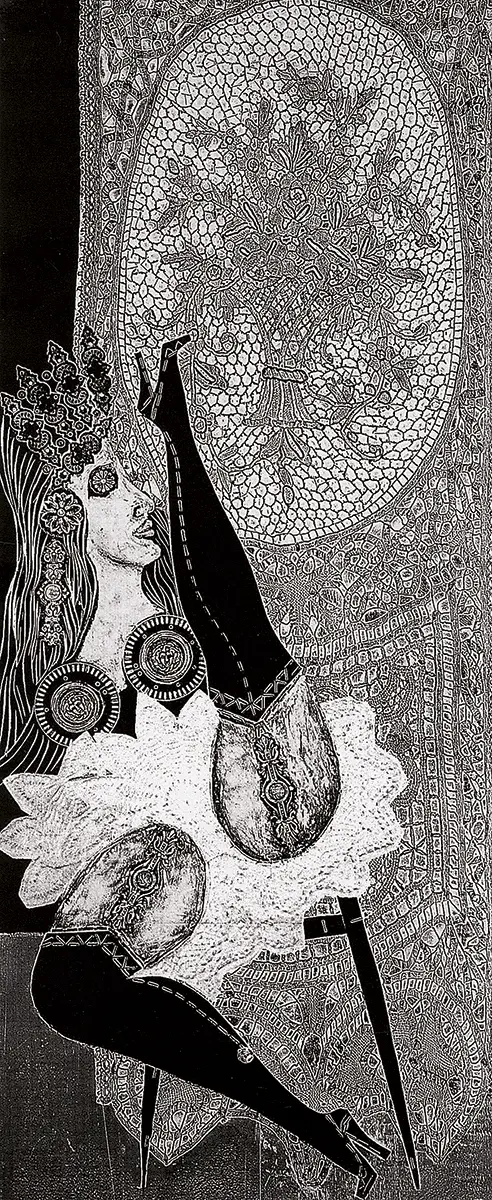
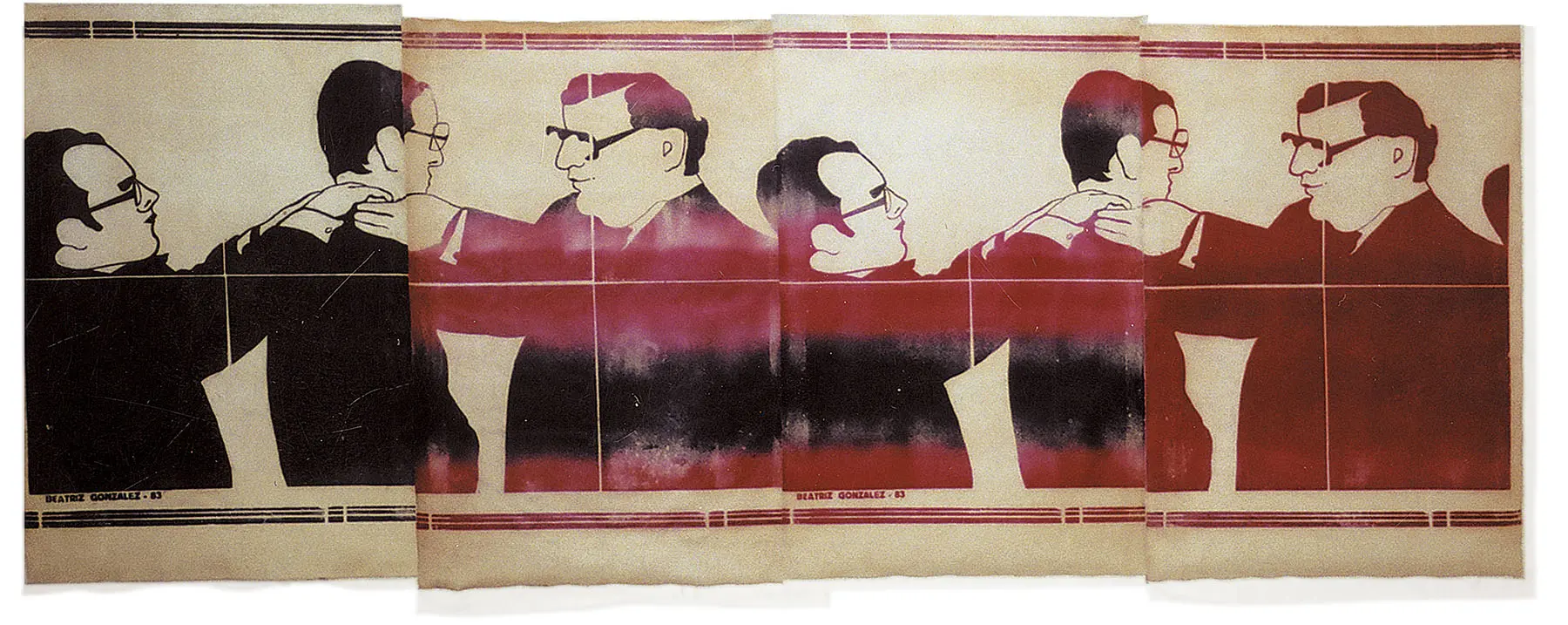
Besides the main exhibition, titled Trans/Migrations, the Triennial organized several parallel shows, such as Inscrit@s y Proscrit@as, which presented a selection from six decades of experimental printmaking in Puerto Rico; two excellent exhibitions, one of prints by Argentinean artist Antonio Berni and another with pieces by Beatriz González, from Colombia, all of them held at various San Juan museums. Participation in the event was heterogeneous and included several generations. Alongside the youngest emerging artists were works by established figures such as Waltercio Caldas, Luis Camnitzer, Liliana Porter, and Puerto Rico’s Antonio Martorell, who had several interventions in the Triennial’s different sections.
The Triennial was held in different sites of Old San Juan and the nearby areas of Puerta de Tierra and Santurce, and in this way became a tour of the city and its Spanish colonial architecture, since the participating works were exhibited in those buildings, many of them now transformed into museums and galleries.
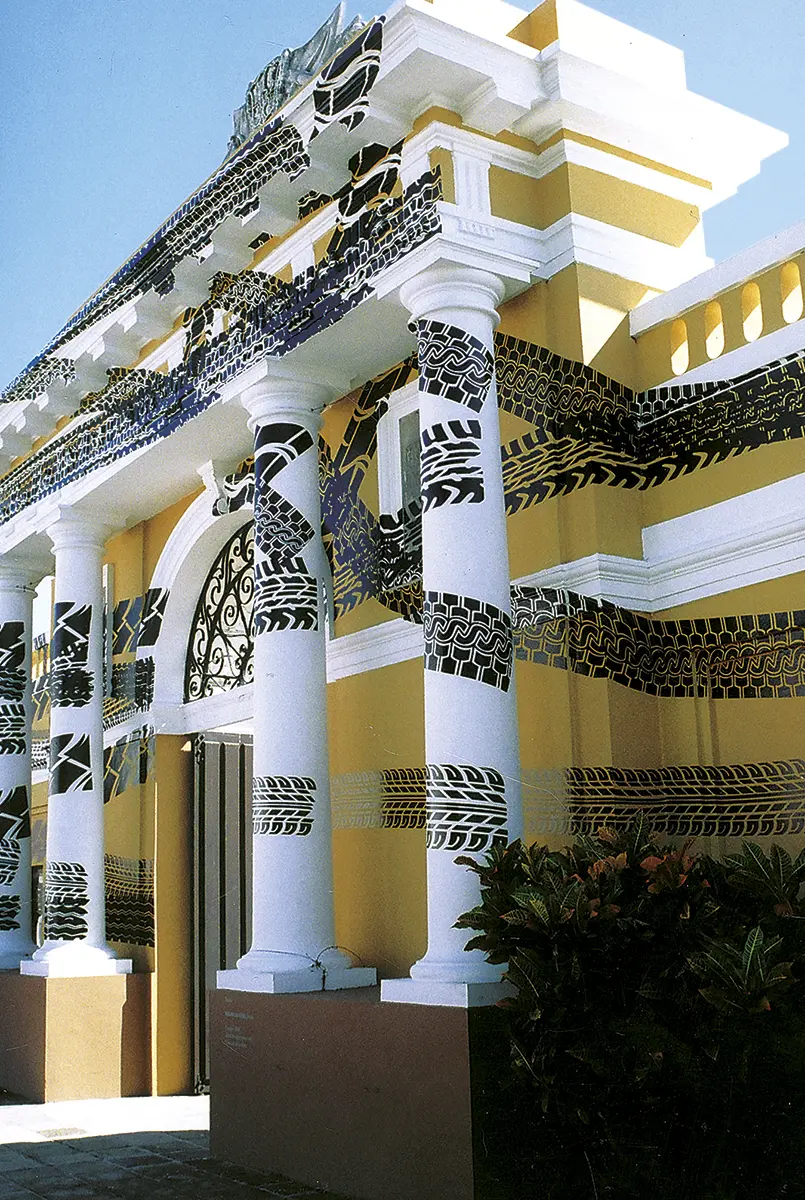
The inaugural opening took place at the site with the largest number of works on exhibit: the Old Spanish Navy Arsenal. The building’s façade was altered by Regina Silveira with an installation from her series Frenazos, in which the artist places on a building’s complex façade vinyl impressions of marks left by tires on the pavement, indicating the possibility of such marks or traces existing on those surfaces. These recent pieces, however, establish links with a body of work Silveira has been developing for years, where shadows are projected at odd angles that speak of “the impossibility of transferring the represented to the real.”1 In this case, more than a shadow, it is the trace or mark, the material imprint that more patently generates that unbridgeable gap between reality and representation.
Once the building’s threshold was crossed, there was an opening cocktail reception in the central patio, offering, among other things, an alphabet soup created by Rosana Ricalde, from Brazil. It was one of the event’s most poetic pieces and inserted itself seamlessly into the inauguration, inviting viewers to take part in the anthropophagical act that Brazilian modernity assumed, according to Oswaldo de Andrade’s manifesto, is the true essence of our cultural identity. While ingesting that alphabet soup, cooked precisely with the entire text of the Manifesto antropofágico, viewers were able to re-read fragments of the text, such as the well-known “roteiros, roteiros, roteiros” (“routes, routes, routes”) that immediately established a connection between the tire marks added by Silveira to the building’s entrance and the history of migrations, displacements, acculturations, and transculturations that has characterized the continent since its discovery by Europeans. There were also other memorable fragments, such as “Tupí or not Tupí, that is the question,” regurgitating Shakespeare in a true act of cannibalism, and with him the difficult and still unresolved issue of our cultural identity between the Old and the New Worlds, Western Civilization or the “noble savage,” or the text that speaks of a Caraiba instinct, alluding to the true etymology of the word cannibal, derived from the pronunciation of the name of the karinha, caniba, or cariba ethnic group that populated the Caribbean islands and the coasts of Venezuela. Consummating the anthropophagical act, the viewer could visit the galleries arranged around the central patio and later follow the event’s tour that included a variety of historic sites in the old part of town.
At the arsenal, one of the most impressive installations was Marco Maggi’s, which at first sight consisted of reams of paper dumped on the gallery floor with very little room left for people to walk. Upon closer inspection, however, each one of the upper sheets of paper was “carved.” The cuts were folded in special ways to form minimal reliefs with an office-like topography that revealed an ephemeral and changing landscape, as the viewers walked and inevitably moved the papers around. This approach to drawing refers us, in a way, to Matta Clark’s cut drawings, but their contained scale and their painstaking execution emphasized the format and the quality of the paper, the same kind of paper we use daily without ever imagining such a constructive use for it as the one in the “invisible cities” the artist presented at the Triennial.
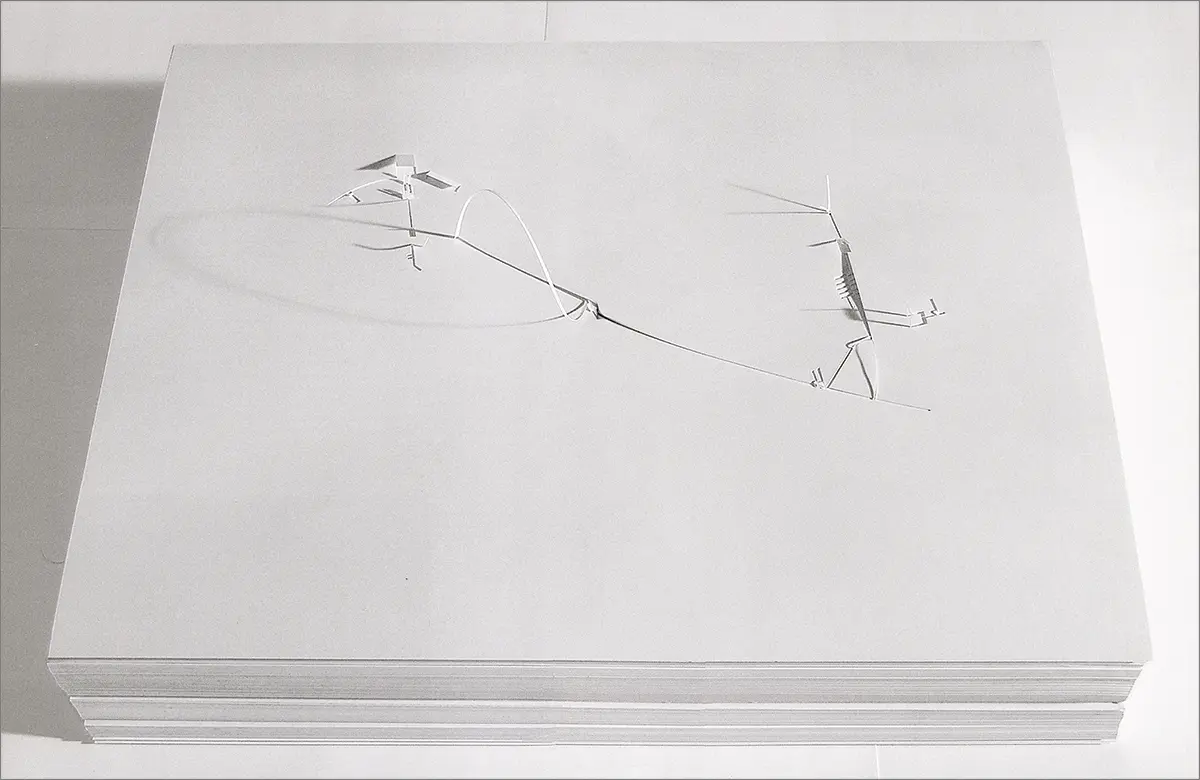
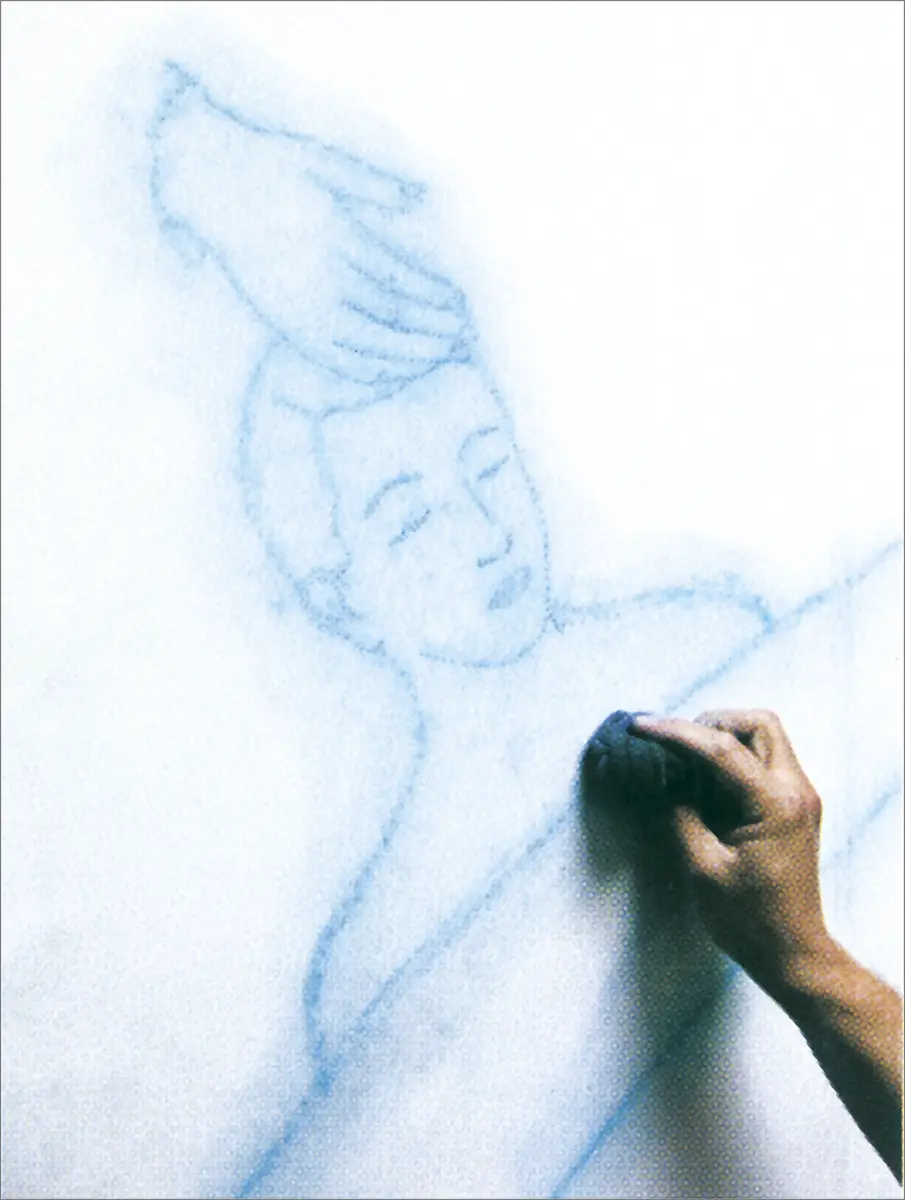
On the walls on both sides was another series of works repeating the same technique on Bond paper, and others that were a kind of dry-point engraving on aluminum paper. However, and despite the beauty of their execution, next to the installation on the floor they looked somewhat unnecessary; the installation captured the viewer’s perception by encouraging us to inspect it closely in order to discover, in its details, a complex and at the same time fleeting architecture.
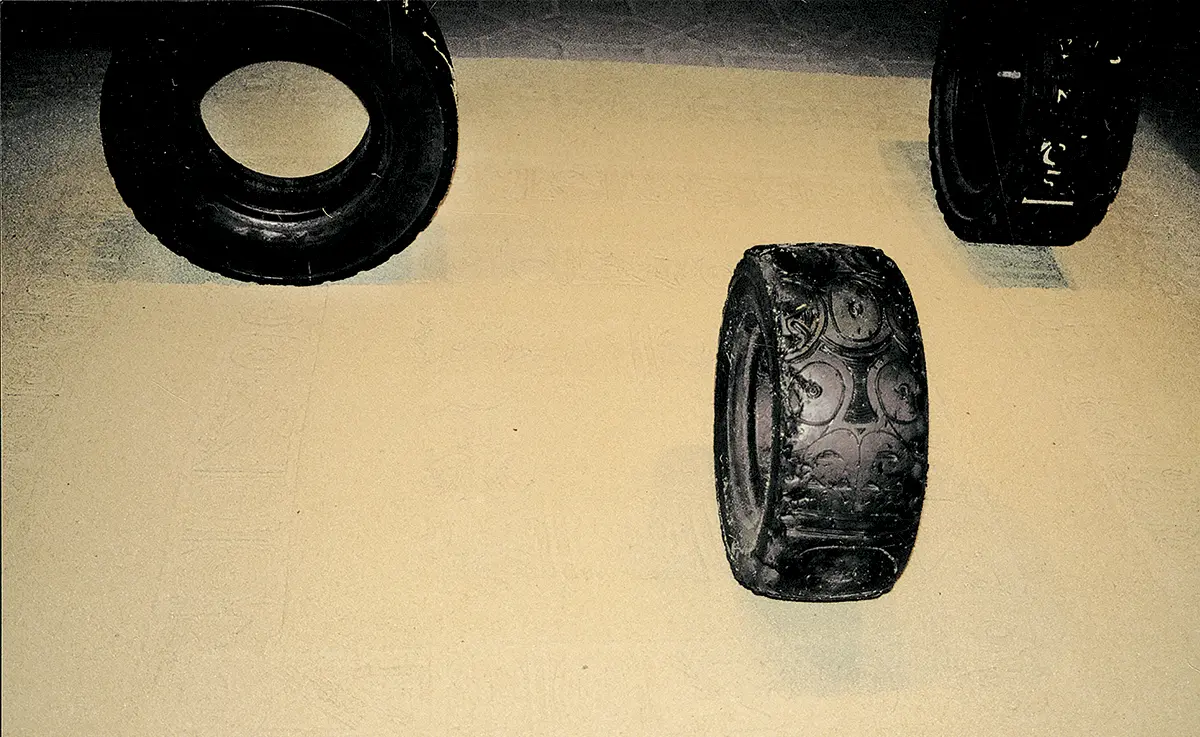
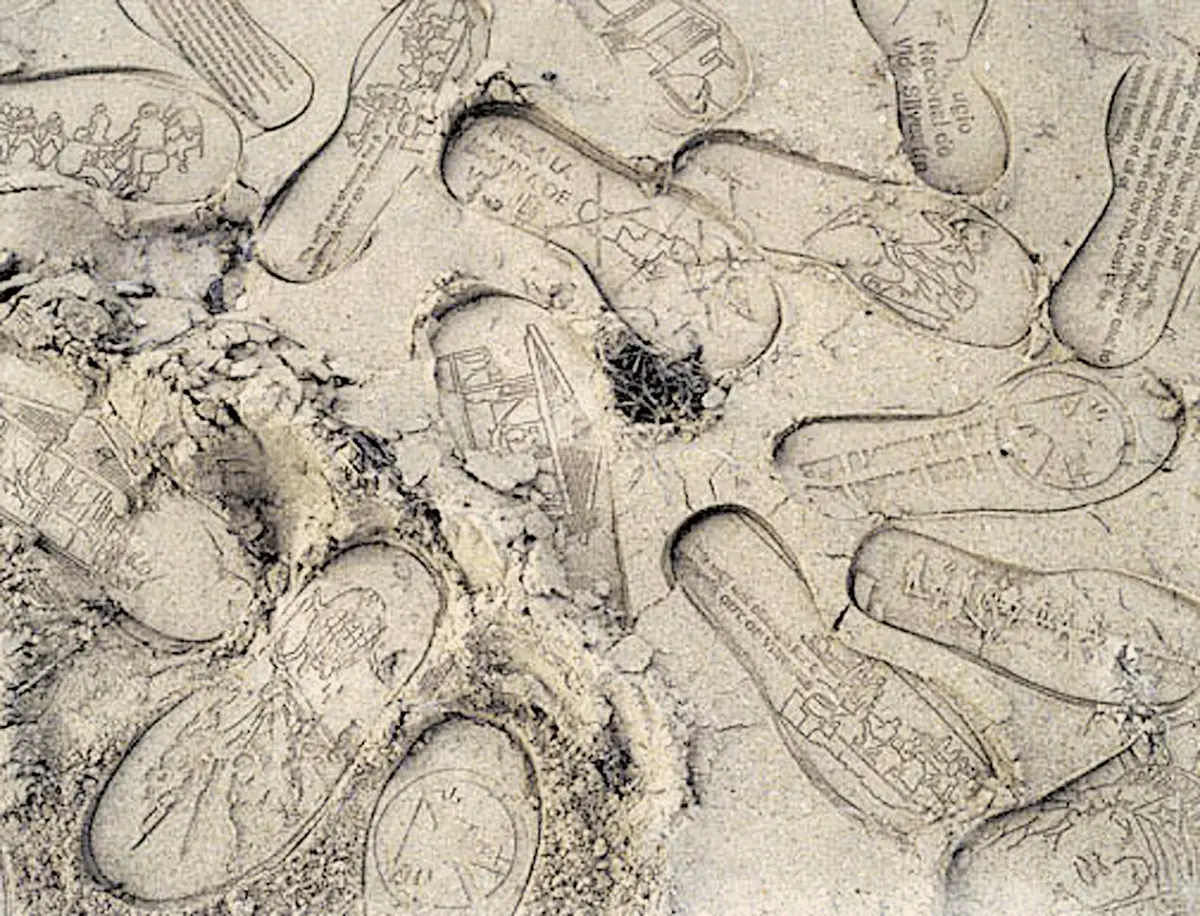
Appropriately, traces and marks had an important presence in the exhibition, not only in Regina Silveira’s work, but also in the works of Betsabée Romero, Felipe Barbosa, and Allora and Calzadilla. Romero had her well known carved tires that imprint other surfaces with all kinds of prints. On this occasion they had been placed on a brown sugar square that filled the gallery with its intense aroma and alluded to the foundation of the Caribbean colonial economy. Barbosa gathered the traces of a specific urban Dynamic—the consumption of alcohol in San Juan—and placed them on the walls in circular arrangements, creating “maps of consumption” that registered the “density” of certain activities in a given area. I found in this piece many associations with a previous work by Venezuelan artist Emilia Azcárate (not included in the exhibition), who creates psycho-geographic maps of some Latin American and Caribbean cities using soda and beer-bottle caps she picks up in the streets and arranges on the wall in the shape of a mandala. The traces in the work of Allora and Calzadilla possess clear political coloration. During the protests that ended with the U.S. military leaving the Puerto Rican island of Vieques, which was used for decades by the American army as an explosive-testing field, Allora and Calzadilla made shoes with slogans against the occupation of Vieques. The activists protesting the testing could wear the shoes and leave their slogans imprinted on the sand, later to be erased by the action of the wind and the sea.
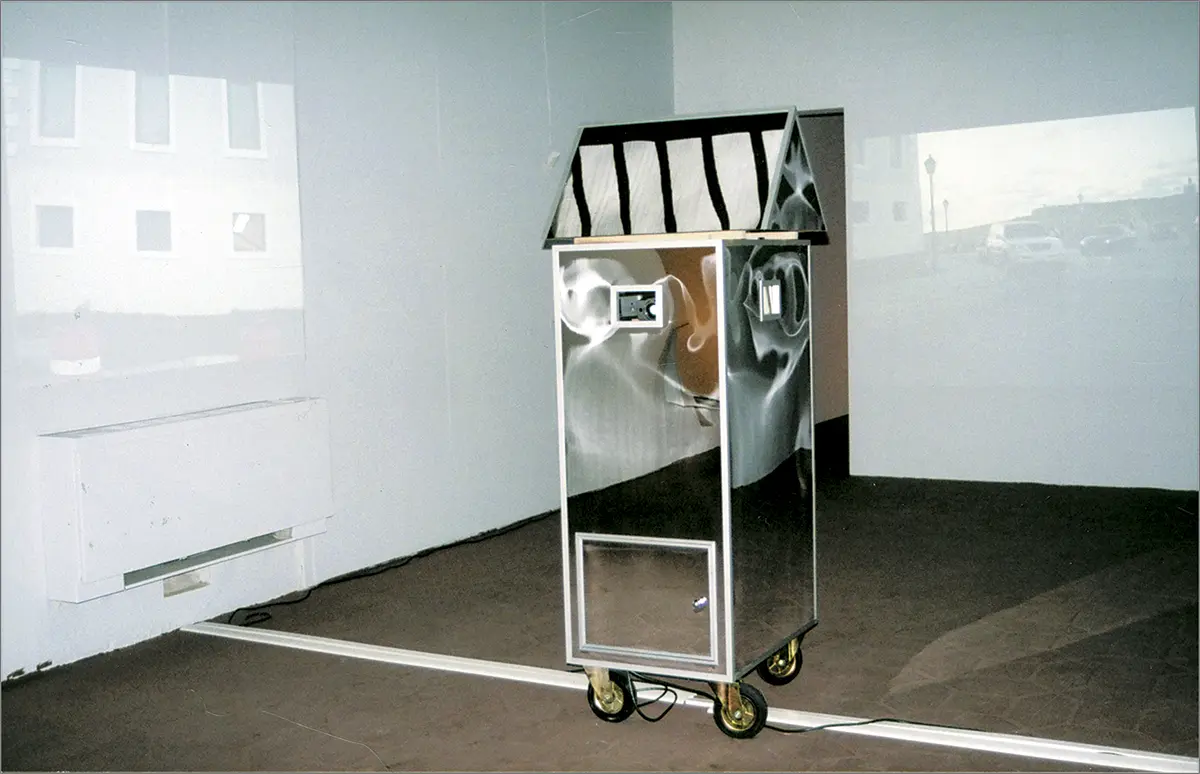
Both Barbosa’s and Allora’s and Calzadilla’s work incorporate elements of the Situationist discourse. But it is Carlos Garaicoa who does that in a more incisive way; Garaicoa built a kind of ambulatory booth covered in mirrors that was to be dragged by an assistant throughout San Juan during the days before the inauguration. Once in the gallery, the true purpose of the mirrored booth was revealed: to register, using several hidden cameras, everything it found in its path. Filming ended in the gallery; there the result of the tour through the streets of San Juan was projected for the public. Francis Alÿs, whose work has always been affiliated with Situationist aesthetics and ideology, presented a series of small interventions in the city, which also work as indicators and demarcations of places that are often ignored as we move around such a tourist-oriented locale, where visitors go in search of famous monuments.
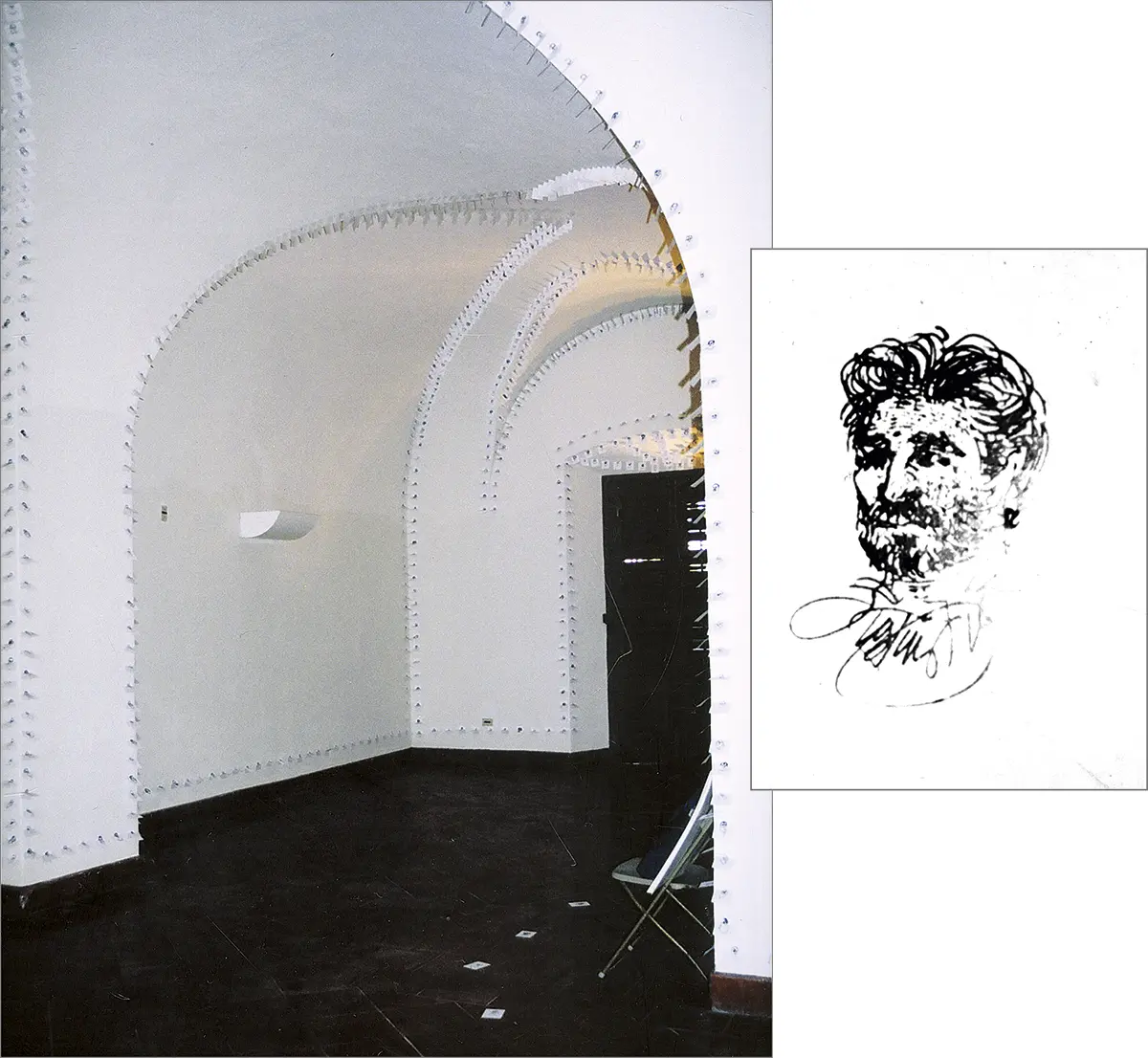
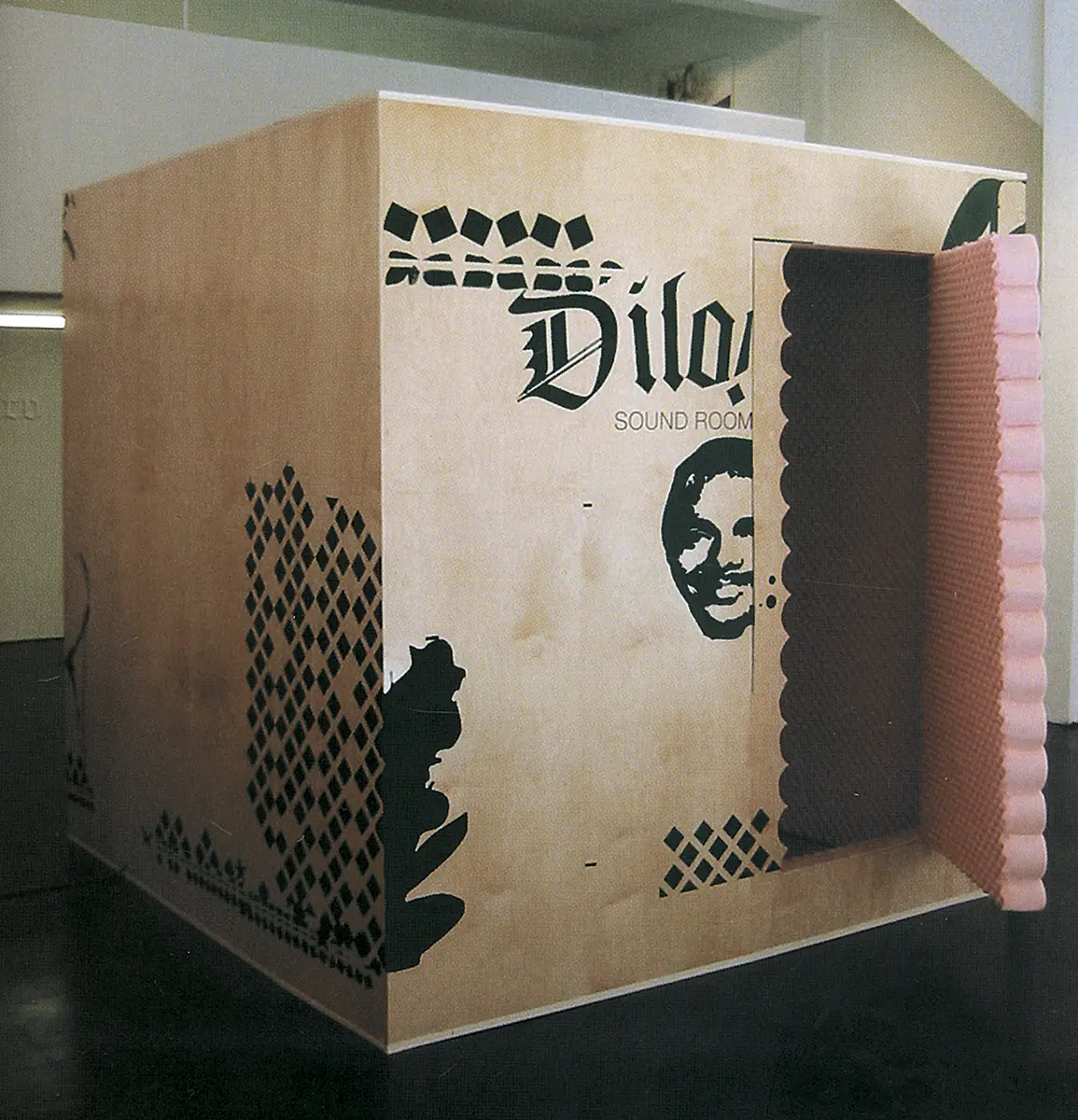
The idea of recording was visited by several artists in the show, especially audio recording. Pablo Helguera presented a piece in which this idea is taken to a different plane. Using a phonograph like the one invented by Thomas Alva Edison, the artist built a Conservatorio de lenguas muertas (Dead Language Conservatory) in which he reads, and records on wax cylinders, texts written in languages that are threatened with extinction. This concern with audio recording appears in other works, such as the work of Julio César Morales, who built a booth inside of which the viewer could listen to and record mambo songs by Pérez Prado. Records, albeit not the act of recording audio, also play an important role in the work presented by the Canadian collective Instant Coffee, and by Darío Robleto. Instant Coffee’s installation consisted of a kind of “chill out” area for people to rest, listen to music, and share with the artists (they were in Puerto Rico for almost a month), as well as receive printed materials produced by the collective and similar groups. Darío Robleto presented a series of his well known album covers and a series of small sculptures alluding to rock and pop music.

One of the Triennial high points was the documentary section devoted to Félix Gonzalez Torres. Born in Cuba, the artist was brought up in Puerto Rico and attended the University of Puerto Rico in Rio Piedras. At an early age he already had started doing performances and video, and he wrote for several publications. For the Triennial to engage in this rescue effort and the exhibition of these important documents is very significant. A series of videos made in Puerto Rico and a piece named Untitled (Spaghetti) were presented alongside the documents. One of González Torres’s works, where the artist denounces pollution in Ocean Park Beach, introduces us to the issue of activism in the graphic arts, which also had an important presence in the Triennial. Works like those presented by Daniel J. Martínez, Gilda Mantilla, Allora y Calzadilla, and Art Rebate contributed a variety of perspectives in this regard. At the same time, the historical selection of Puerto Rican graphic art included a good sample of graphic activism, establishing—at least for the Island—an important historical precedent. Daniel J. Martínez made a series of banners and took them on a tour of Old San Juan, inviting passers-by to join him in his walk, carrying signs with phrases that were more poetic than allusive to concrete problems, as if to emphasize the street-protest action in itself. One of them read “this funeral is for another dead person.” Gilda Mantilla practiced a kind of silent activism. The work consisted of a series of postcards depicting the “special community” of La Perla, annexed to Old San Juan’s fortified walls. But these were not run-of-the-mill postcards, but images of houses that were destroyed by the police during anti-drug raids in an attempt to give coverage, the artist explains, to events that are rarely reported by the press in their full complexity. The work of Allora and Calzadilla, already mentioned, shares this element. Similarly, the Triennial devoted one entire gallery to graphic activism in opposition to the occupation of Vieques with posters, banners, and stickers alluding to the recently-ended conflict. The project presented by Art Rebate, while already a document, offers one of the most controversial examples of graphic activism. In 1993, Californian artists Elizabeth Sisco, Louis Hock, and David Avalos distributed thousands of dollars given to them by the National Endowment for the Arts to many illegal immigrants in the San Diego, California area, as a way of reimbursing the immigrants for their tax contributions, which by virtue of their undocumented status are not acknowledged. The act also demonstrated that these workers are “integrated into an economic community indifferent to national borders.” At the time, the project caused virulent reactions from many sides, especially those that advocate for stricter immigration laws; some of these reactions, documented in video, were presented in the gallery alongside the graphic record of the project.
This work also speaks, perhaps importantly, of the idea of symbolic exchange that is similarly present in several works at the Triennial, including those by Raimond Chaves, María Linares, and Jesús (Bubu) Negrón. But first I need to point out that the great omission from this group was Minerva Cuevas, from Mexico, who installed part of her office, Mejor Vida Corporación, in one of the galleries; the installation remained incomplete, and perhaps due to logistical problems none of the actions for which Cuevas is renowned took place, without an explanation from the organizers. Raimond Chaves, an artist with a long background in artworks that involve entire communities—many of them in Puerto Rico, such as the publication Hangueando, periódico con patas, created in the context of Puerto Rico 02, organized by M&M Proyectos—presented on this occasion a street workshop where participants could, using a photograph of themselves, create three prints: one for the artist’s archive, one for themselves, and one to be exhibited in the Triennial. María Linares, from Colombia, opted for a kind of exchange of “knowledge and flavors,” offering for sale hand-made cookies decorated with Puerto Rican street slang, words the artist had gathered during her stay on the island before the Triennial. In this way, Linares put a language normally restricted to the realm of the spoken into printed circulation, although by virtue of their being edible, her inventory returned to domain of the oral. The work of Jesús (Bubu) Negrón, in turn, speaks of symbolic exchanges and of the recognition due the informal economies that exist in every city. In this case, he dealt with the subject of Old San Juan’s car “parkers,” people who, in exchange for a tip, will reserve a parking spot in the city’s congested historic center. This occupation is often practiced by the indigent and by drug addicts who live on the margins of society, yet its economic dynamics are a visible and integral part of life in the city. In an attempt to legitimize their activities, the artist created a kind of corporative image for them, comprised of a shirt and cap with distinctive logo, under the name of Vela Parking Service, as well as business cards and an explanatory booklet with a map indicating the several points in the city where the “service” is “offered.”
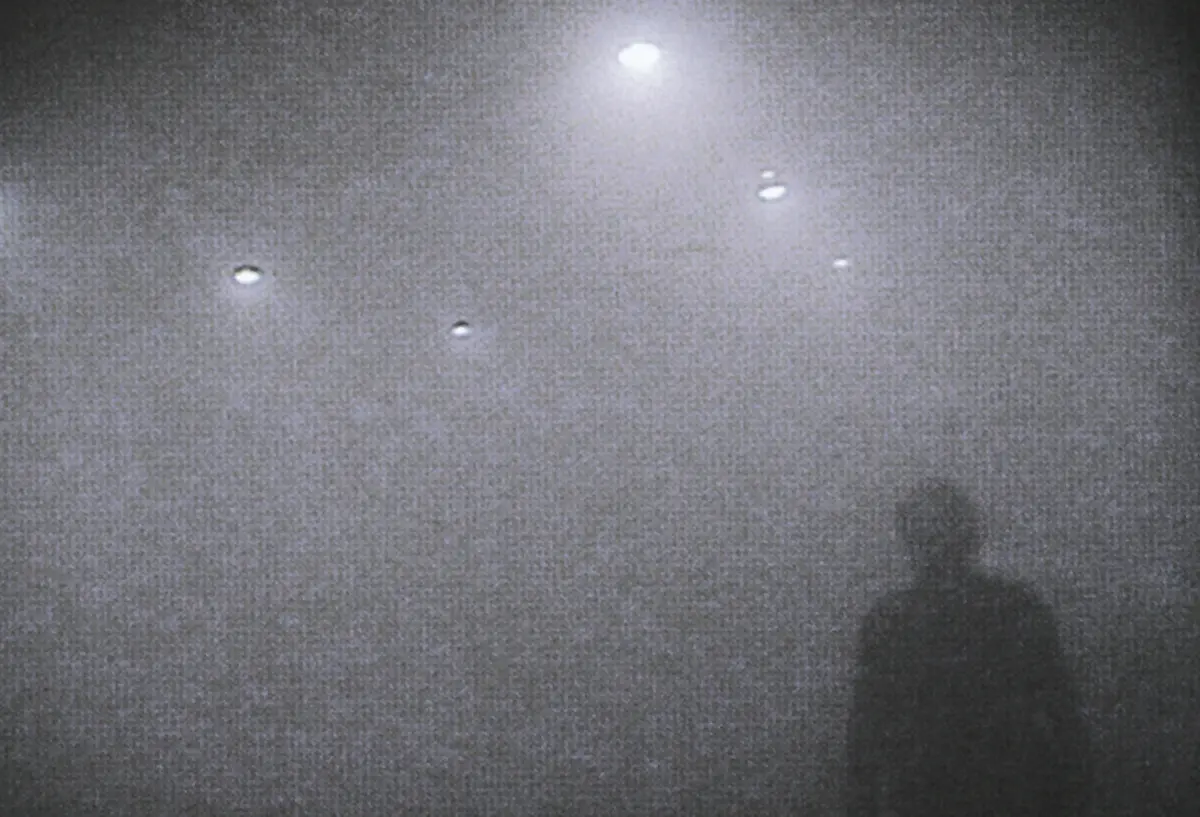
One of the most fleeting works, which apparently was only seen on opening night, was Teresa Margolles’s installation, Vaporización (2001), a memento mori whose exchange of vapors between the living and the dead serves as a background to close this review of the new uses of graphic art in the contemporary scene. In the words of José Roca, writing for the show’s catalogue, “in the context of the Print Triennial, with its displacement of the notion of print, the work of Margolles can be considered an extreme degree of inscription of the marks of death on the social body.”
NOTE
1. Angélica de Moraes, Cartografías das Sombras, 1997. Cited by Justo Pastor Mellado in the catalogue of the Triennial.
*Photo: León Birbragher.
JULIETA GONZÁLEZ
Independent curator and art critic. Curator of the Berezdivin Collection, San Juan, Puerto Rico.