
The 5th Edition of Barro de América, with its main exhibition opening on December 16, 2004, with a tribute to it creator, Roberto Guevara (1932-1998), developed as an effort intended to give continuity to the idea materialized by the Venezuelan critic and curator in 1992 when he produced the first edition of an event ever since distinguished by its conceptual clarity and openness. Man’s link to the Earth and its tangible expression in contemporary Latin American art constitute the guiding line of a curatorial proposal in which clay is understood, as Guevara put it, as “This matter, this primordial spirit that vertebrates the passage of times and spaces in the Americas, the subject of this and other Biennials, can become, as demonstrated now, an alternative of recognition and profundity for the renewal of contemporary art and its basic postulates. Earthen clay can be not only the heritage of all past civilizations, but it can also be the terrain for any possible future.”
A future that today appears transformed into artistic action, in institutional communal work. Barro de América, 5th Edition is the sum of many efforts and it gathers 74 artists from the whole region in three separate exhibitions. The main show, presented at the Centro de Arte de Maracaibo Lía Bermúdez, presents some pieces from the Barro de América collection alongside a series of works created in situ. The second Venezuelan site, the Museo Carmelo Fernández de San Felipe, presents four new projects and 22 pieces from the collection in a show inaugurated on December 19, 2004, to run in parallel to the Maracaibo show. And, thirdly, the Marta Traba Gallery at the Latin America Memorial in São Paulo, were part of the Maracaibo show is expected to travel in late July. A plurality of sites that seems to confirm the plurality of possible gazes in so wide and diverse a territory as our region is.
In this Latin American encounter, clay is approached from its condition as a malleable, multifunctional, metaphorical, permeable elemental; the works exhibited here follow traditional techniques or allude to the Earth using visual means linked to contemporary languages. The show at the CAM-LB occupied all the spaces of the art center with works devoted to exploring the subject’s many angles, presented in a museogrpahic proposal that strived to take advantage of unconventional spaces.
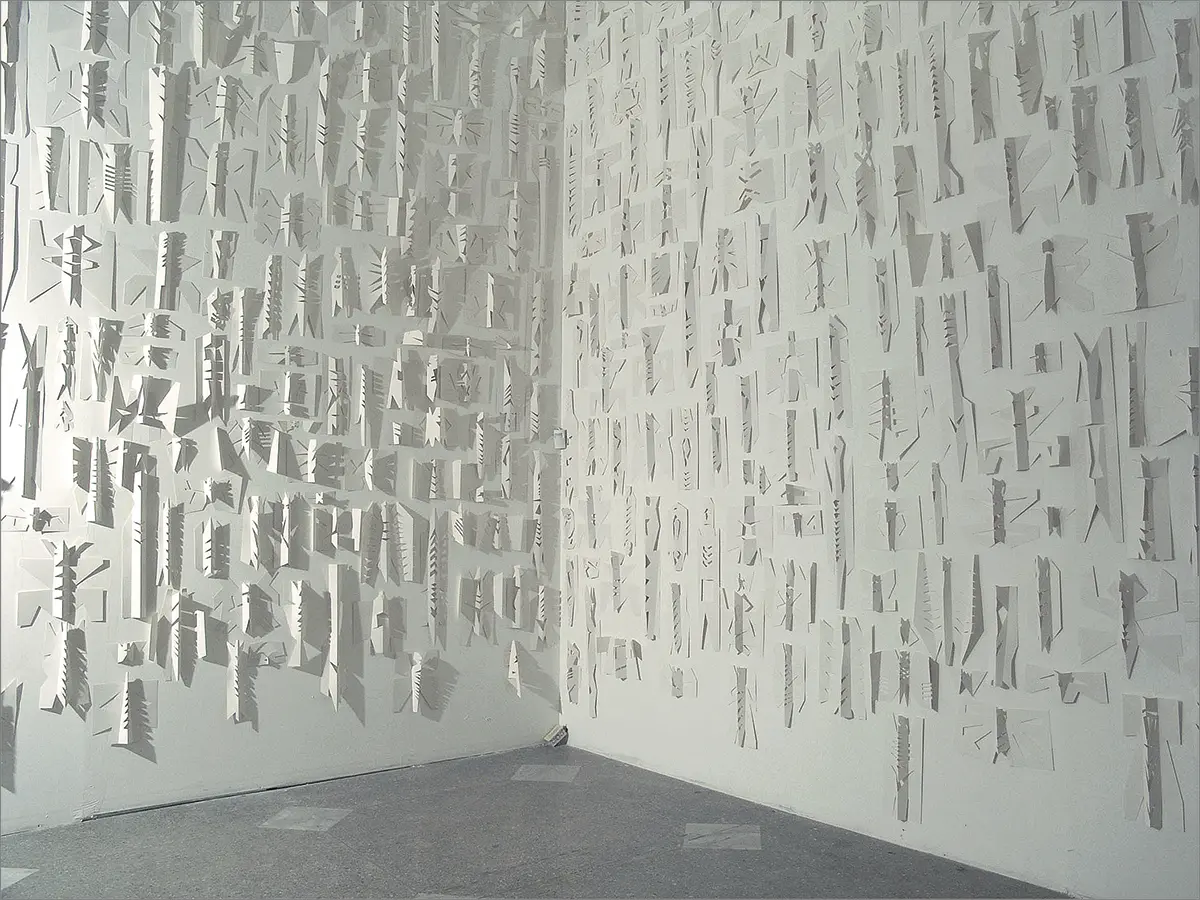
We found pieces that use clay as an alluded element and poetic presence, beyond its formal utilization, among which we can mention pieces by Víctor Hugo Irazabal, from Venezuela, and Carlos Runcie Tanaka, from Peru. The former presents El vuelo del Shapori, an installation carrying forward his investigations on shamanic rituals among Southern Venezuelan tribes, in a white room with its walls covered with signs made with paper cut-outs, an intermittent lighting and ritual music seem to drive us to continue the shaman’s flight and to engage with the earth through the contemporary recreation of sensorial states linked to mystical experiences. On his part, Runcie Tanaka presents his video Desplazamiento, silent in parts and otherwise accompanied by sounds of ocean waves, created through the impeccable editing of still photographs where the artist uses elements as simple as paper and sand; adding poetry, digital media, and the millenniums-old tradition of origami, Runcie Tanaka speaks of the continuity of the universe, from a grain of sand to the shining of the stars.
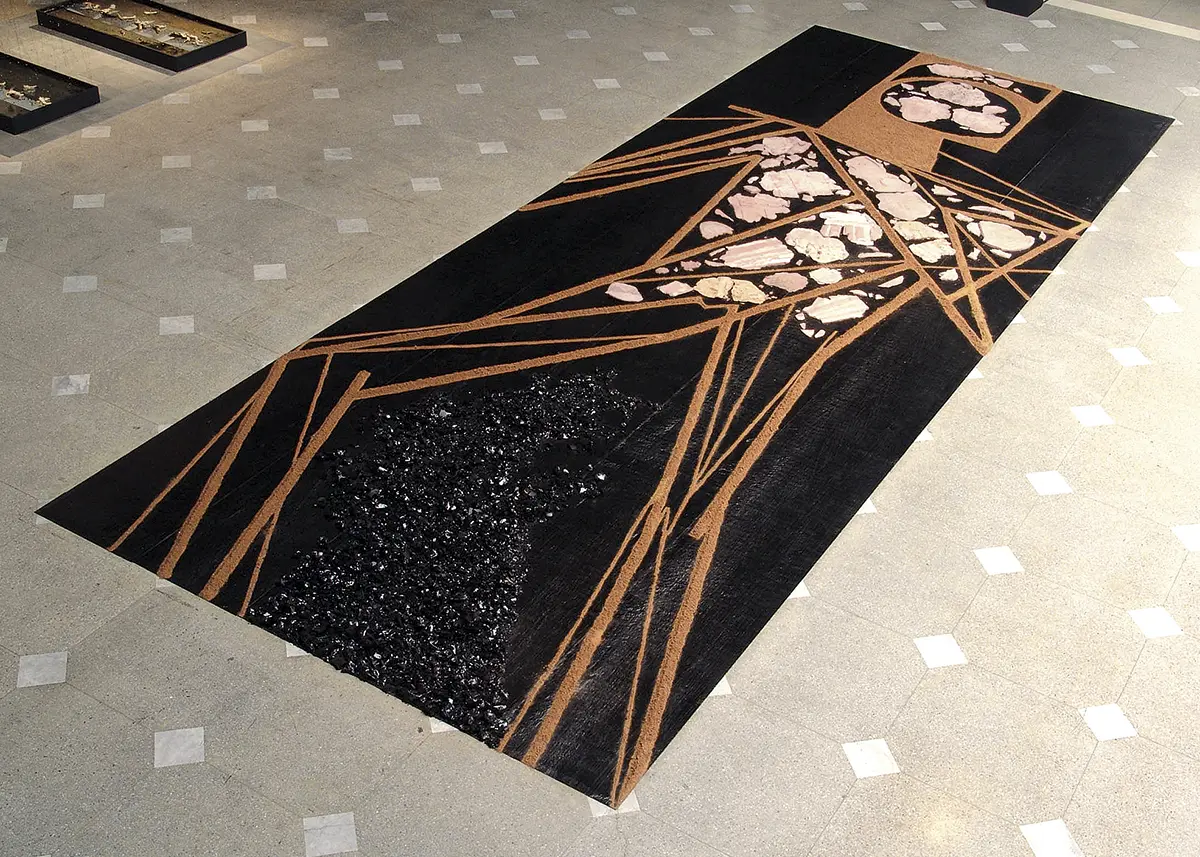
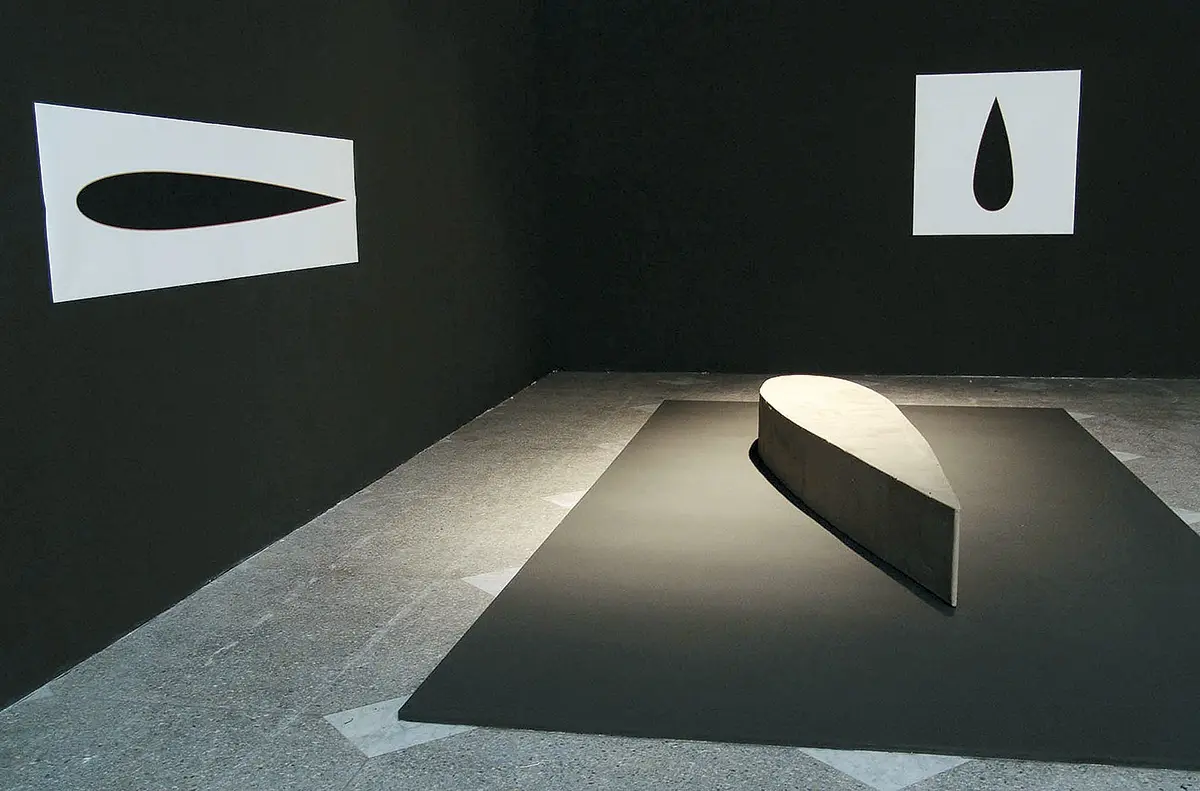
Kneaded, live, contemporary clay is manifest in works like the installations by Gilbert Poissant, from Canada, and María Bonomi, from Brazil. Poissant’s piece, 3 veces, 2 tiempos. Luna, gota y escalera, is comprised of an element of uncooked clay placed on the floor and two digital prints on the wall; droplet, ladder, ship, and tear, are all images of transit, of the impossibility of preventing the clay piece from drying up and break to the rhythm of a metronome. Maria Bonomi’s installation, Piel urbana (Piel humana), also touches on the problem of time, but on the basis of the problem posed by the capture of memory. For her, clay serves as a support for documenting the traces of the city and transferring them to the museum space linking humanity, geographic context, and the contemporary art world.
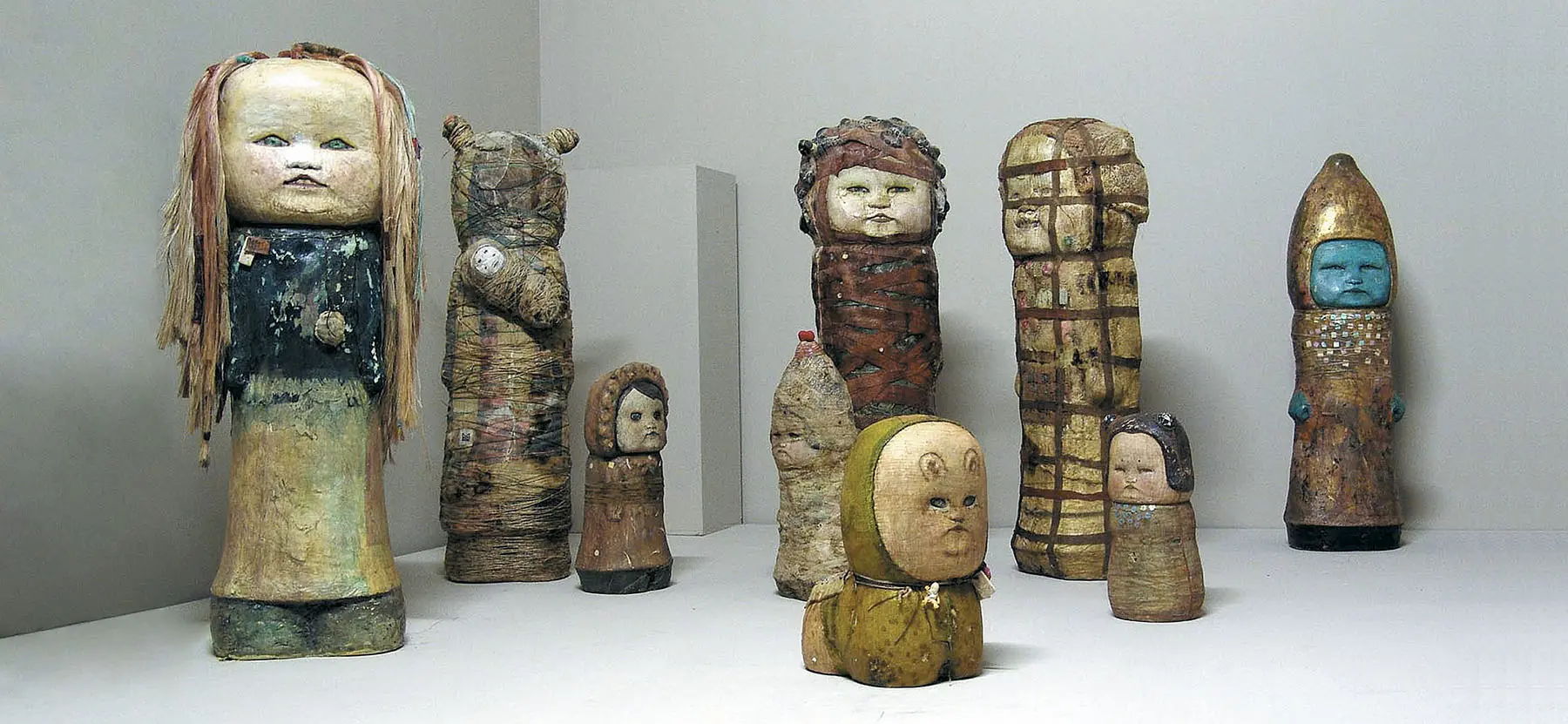
Another important feature of Barro de América is the possibility of bringing together established artists and young creators whose careers are just starting. Among the latter are Rosher Acevedo and Mariana Monteagudo, both from Venezuela. Acevedo uses his skills for imitation in modeling his piece Ofrenda, an in-situ work in red clay representing a small pig who seems to smile ironically at us from a black cubicle. Monteagudo on her part groups together several of her usual human figures in order to form a family of being with deeply expressive faces and shrouded bodies, superimposing vital and inanimate images.
The links between clay and the primary aspects of the Americas appear reinforced in this show through the exhibition of archeological ceramic artifacts from the CorpoZulia collection. That introductory set works as an epigraph, reminding us of the fact that every culture in the region found sustenance in its relationship with the Earth, which is, and will always be, the origin of our heritage and a dimension of infinite possibilities, as Roberto Guevara, to whom just homage is paid here through the continuation of his work, said.
SUSANA QUINTERO BOROWIAK