
The show organized around Germán Rubiano Caballero’s book, Arte de América Latina, 1981-2000, seeks to bring to the fore the “pluralism” and the “coexistence of opposed tendencies and attitudes” in Latin American art. Professor Rubiano shares the curatorship with Félix Ángel; based on the idea that these two decades in the region’s art are “two decades of contradictions and coexistences,” they selected a group of 40 artists.
Creating an exhibition about Latin American art is an overwhelming task, even if the exercise is framed within a two-decade time period. Not only because of the already trite argument that Latin America doe snot represents a single cultural block, but also because the idea that it is impossible to approach cultural production on the basis of a pre-determined, clearly determined geographic context arose precisely during the two decades to which the book and the exhibition refer.
Yet, intentionally or not, the works selected for this exhibition point to a situation beyond the “contradictions and coexistences” at the level of art. The contradictions and coexistences of Latin America’s cultural spaces and the “negotiations” between them, which are what make possible the richness and diversity of the art produced in that conceptual framework that is our region, are also made evident. Within that “negotiation” it seems important to highlight the work of Cuban artists Alexis Leyva (Kcho) and José Bedia, Chile’s Alfredo Jaar, and Peru’s Carlos Runcie Tanaka, precisely because they signal a series of migrations that render it impossible to think about Latin America in the same ways in which we thought about it three decades ago, when Marta Traba wrote her Arte en América Latina, 1900-1980.
While the Island of Youth on which Kcho builds a city on top of a car tire works as a memorial to the massive migrations of Cuban citizens to the United States in 1994, when Fidel Castro opened a window of opportunity for people to leave the island, Bedia’s work speaks of what happens as a result of those migrations, in his work Un largo recorrido. The title does not refer only to the geographical distance between Cuba and the United States; it also incorporates the cultural distance that an immigrant must overcome in order to integrate into the alien culture in which he or she is settling.
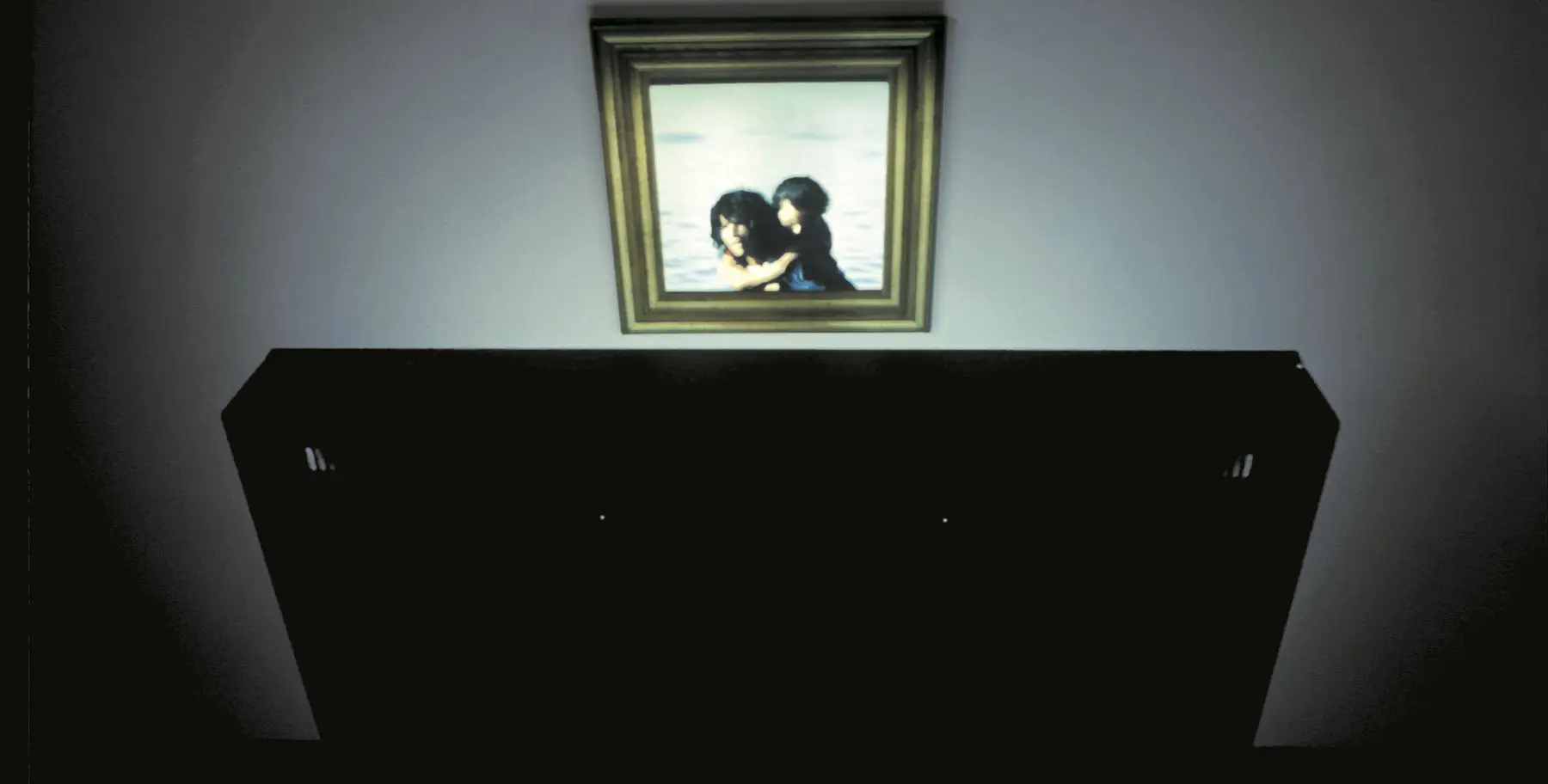
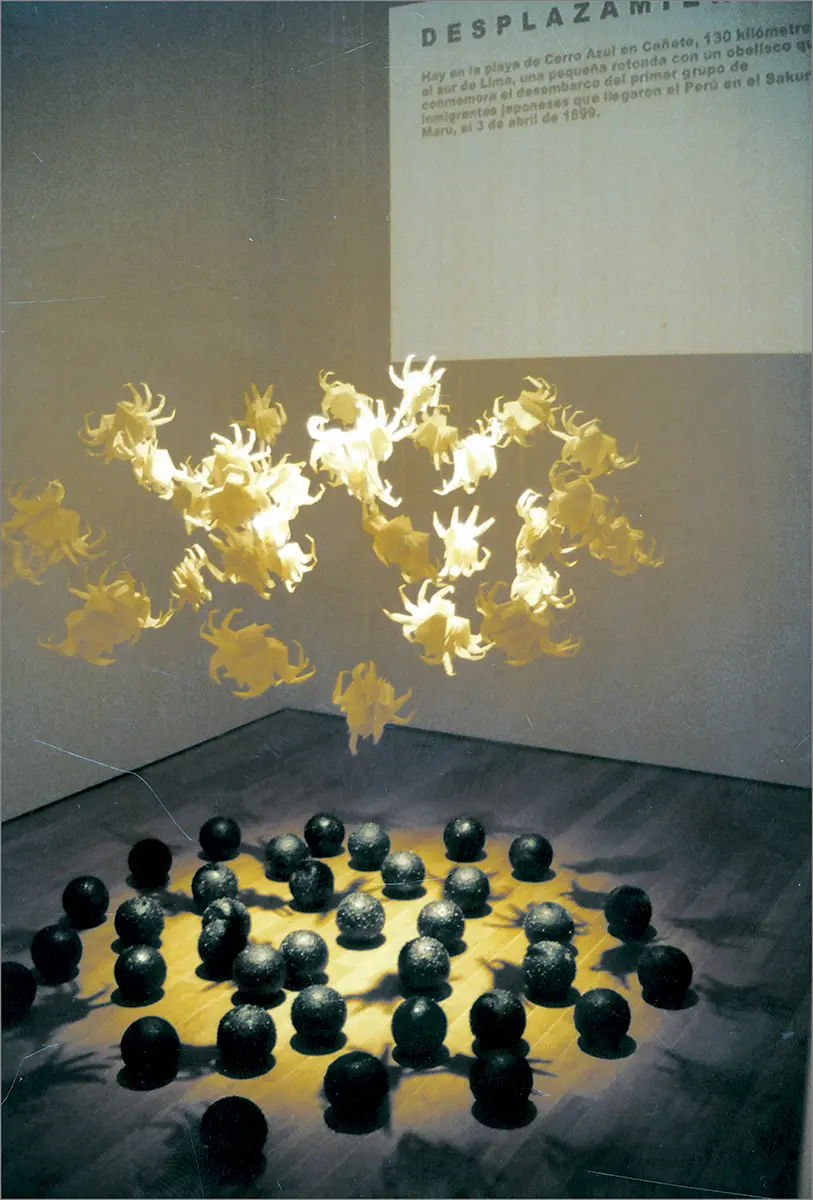
On his part, Alfredo Jaar has devoted a large portion of his work to exploring the problematic relationship between the United States and the rest of the continent. In his installation Coyote, Jaar exhibits a photograph of a girl crossing a river with a smaller girl on her back. The photograph is mounted on a lightbox and placed in a corner, with a mirror angled in such a way as to reflect the image. The piece is somewhat hermetic and it refers to the illegal crossing of the "Rio Grande" in the frontier between Mexico and the United States. The work This is not America, is also included in this show. It refers to the way in which we Latin Americans understand the word America as referring to the whole continent. Finally, Carlos Runcie Tanaka’s work, an installation in which a series of origami crabs are suspended from the ceiling and project their shadows on ceramic spheres installed on the floor, is also a “monument” to migration and cultural exchange; in this case, the arrival of the first Japanese citizens to Peru. In his installation, Runcie Tanaka creates a “conversation” between heterogeneous elements that are representative of both cultures –Peruvian and Japanese—, unifying them through the use of shadows.
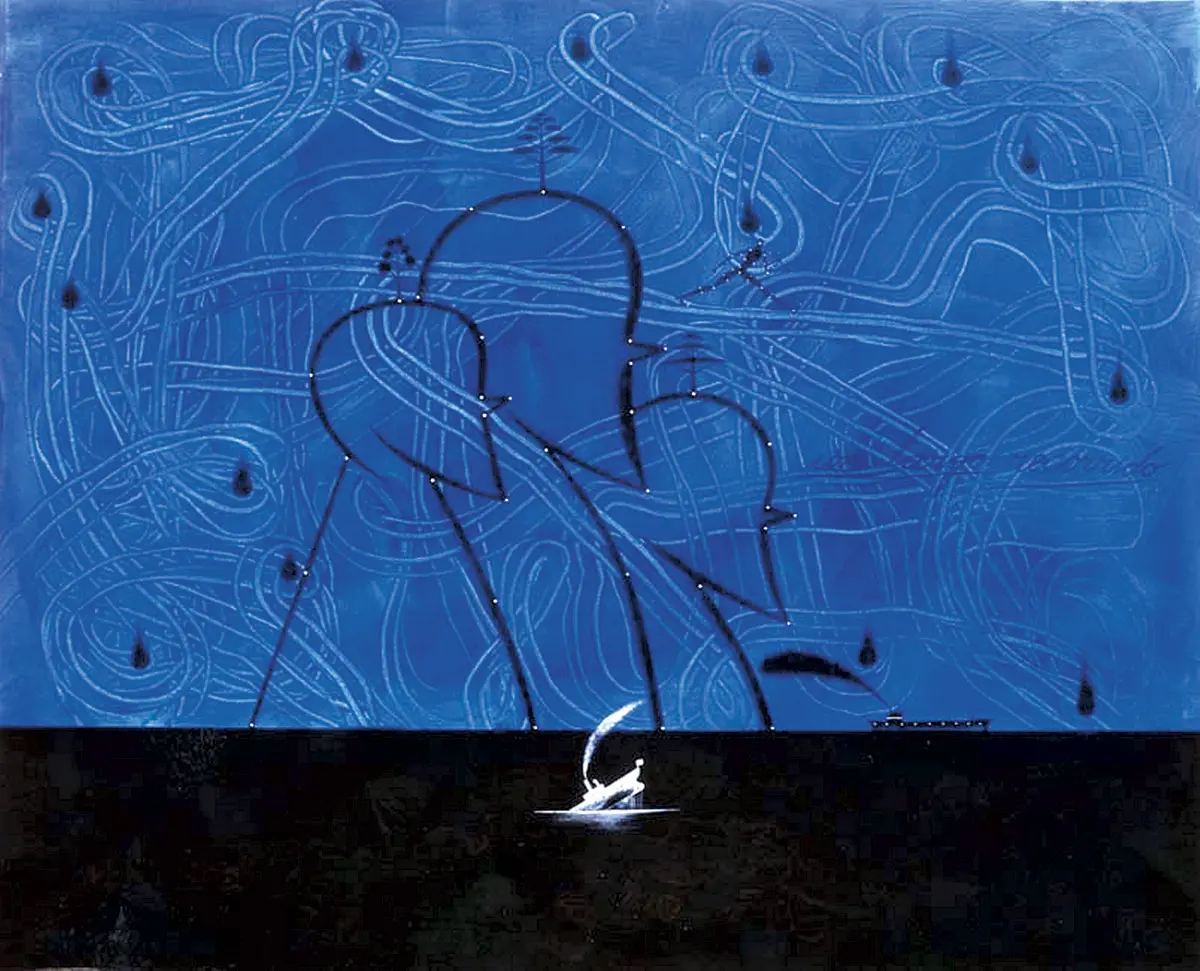
Another one of the show’s strong points is the incorporation of contemporary artistic production from Central America and the Caribbean, usually not easy to access. Represented here are artists like Panama’s Brooke Alfaro, with his video installation Nueve, where the artist plays with the imagination of a viewer unable to decide whether two soccer teams or two gangs are confronting each other in the video, to the sounds of popular music and warrior chants. Also preset is Arnaldo Roche, from Puerto Rico, who in Tenemos que soñar azul touches on the subject of neo-colonialism in his country, rooted in economic dependence on the United States; or the work of Haiti’s Yves Telemak, who adapts and secularizes the vevé flags that are used in voodoo religious practices, translating them into a contemporary artistic language. Finally, it is worth mentioning Lección de Maquillaje, by Costa Rica’s Priscilla Monge, who presents an impressive video about violence against women.
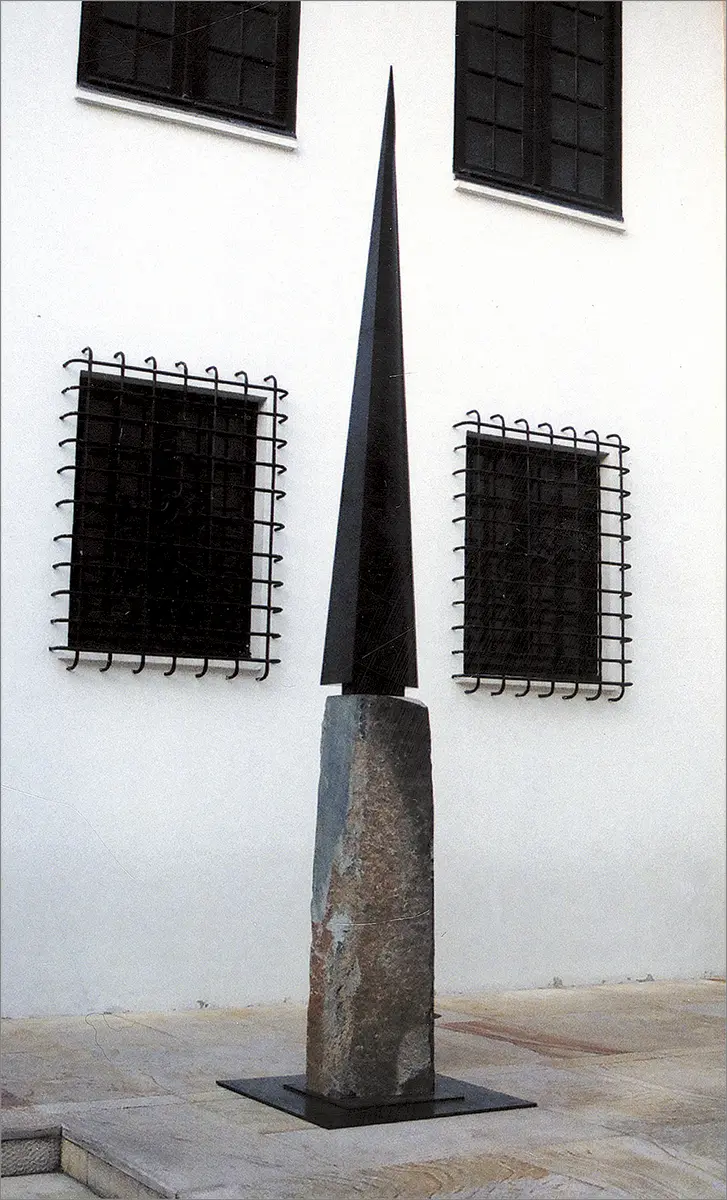
The work by Lika Mutal, who was born in the Netherlands and currently represents Peru, is also worth mentioning. The tip of the metal arrow that lies on a stone base, pointing toward the sky, is less the result of her dialogue with Pre-Hispanic Peruvian cultures than the result of a strong interest in the crafts and practices of the Zen. As the artist said: “Stone enfolds me in its silence”. The work by Matilde Marín counter poses the solidness of Lika Mutal's work. It is also a sculpture manifestation in which the artist defies the properties of paper as dimensional support, by providing it with a volumetric character. Marín creates her relief on the wall generating a sensation of levity and fragility which is nonetheless compelling at the moment of occupying the space.
Colombia, being the host country, has the largest number of artists in the show: Félix Ángel, Germán Botero, Johanna Calle, Óscar Muñoz, José Alejandro Restrepo, Miguel Ángel Rojas, Doris Salcedo, José Antonio Suárez, Ronny Vayda, and Gustavo Zalamea. However, this selection of names once again reveals the difficulties inherent in curating an exhibition about Latin America, even if it doesn’t purport to be exhaustive. The problem is that there will always be some names missing: artists as important as Juan Fernando Herrán, Fernando Uhía, María Elvira Escallón, Clemencia Echeverry, and many more were left out. Surely there are also many names missing in the rosters of artists from other countries present in the show. Understandably, not every artist from every country can be included, but this situation makes it evident that nowadays artistic production and political geography are difficult to reconcile.
MARÍA CLARA BERNAL