
The visitor to Graciela Sacco’s exhibition of works from the series Sombras del sur y del norte (Shadows from the South and the North), 1999-2004, becomes just another face in the crowd, appearing and disappearing like the shadowy fragments of strangers lined up for some unknown purpose. Over the years, the series has provided the basis for the artist’s ongoing investigation of people and places, and the new techniques to reveal their social and emotional circumstances. In this new interactive installation, Glances, 2004, people appear from their place in line, diffused in light projected through the suspended slats of a plastic veil. The viewer emerges from the light and through the light at the same time to become an unsuspecting participant. The effect is both mesmerizing and disturbing. The flickering light of the two simultaneous video projections creates a strange sensation as faces slowly become familiar and recognizable, but have no identity. Sacco’s continued exploration of time and space, and the interrelationships of the viewer and the subject gives new meaning to the loneliness of the crowd; uncertainty increases and anonymity prevails. The never-ending circle of waiting that defines urban life is reflected on the wall and back onto the viewer as he/she steps into its path of light to become part of the piece, but no more than a shadow. The installation is an ever-changing work in progress, and another example of the ongoing discourse that has informed Sacco’s multi-media work in photography, video, and other photosensitive processes for many years.
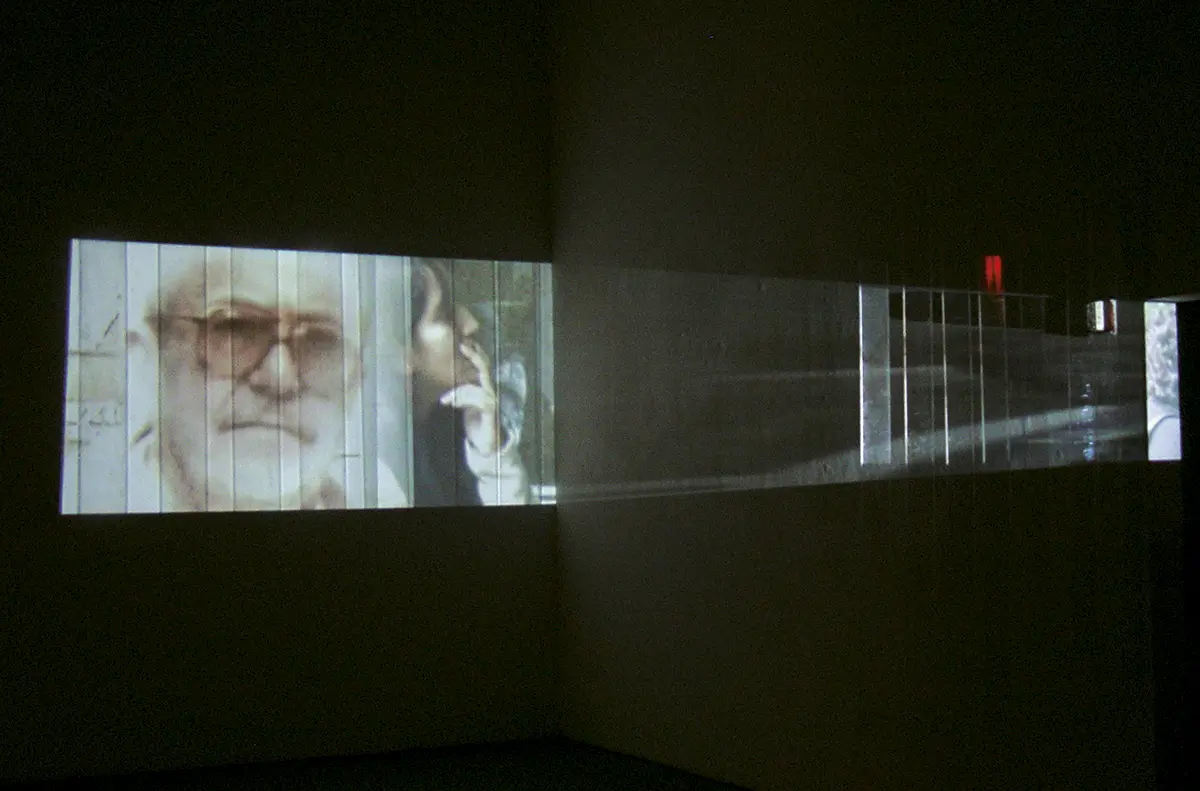
In addition to the videos of the crowds, Sombras del sur y del norte includes heliographic images developed on translucent canvases, fabrics, a shelf of books, Plexiglas, and Roman shades (commercial window blinds) that provide other variable surfaces for her elusive imagery. The same fragmentary descriptions of people and places seen in the videos are captured in the photographic process she calls heliography, which allows the most illusory of shadows to become fixed, yet diffuse. Perhaps this helps her to deal more effectively with the vagaries of memory as a signifier of past and present; the viewer is able to manipulate the image and his/her participation in it, for the same reasons. Vistos 1 (Glances 1), 2004 arrests the introspective expression of a woman in a heliograph on fabric, while Vistos 2 (Glances 2), 2004 is a faded image of a man. The fabric functions like a shroud. The materials of the diverse surfaces capture faces, but allow for their constant and complicated transformation as the blinds are manually altered, translucent Plexiglas moves in the air, and the fabric stretches in place. Strangers become acquaintances in these vague circumstances, yet threaten to stray from commitment and disappear. Do the books stand as the only objects able to capture their presence for posterity?
Graciela Sacco continues to provoke questions of anonymity, identity, and belonging. The crowd is her subject and her audience. The gaze of each person seeks to contact and engage but disappears before the possibility of a relationship. Her subjects move from being the viewer to being viewed and then repeat the cycle again in a most disconcerting arrangement. A flicker of light and then shadow and it begins again.
CAROL DAMIAN