
Celia Sredni de Birbragher: When did
buying the warehouse occur to you?
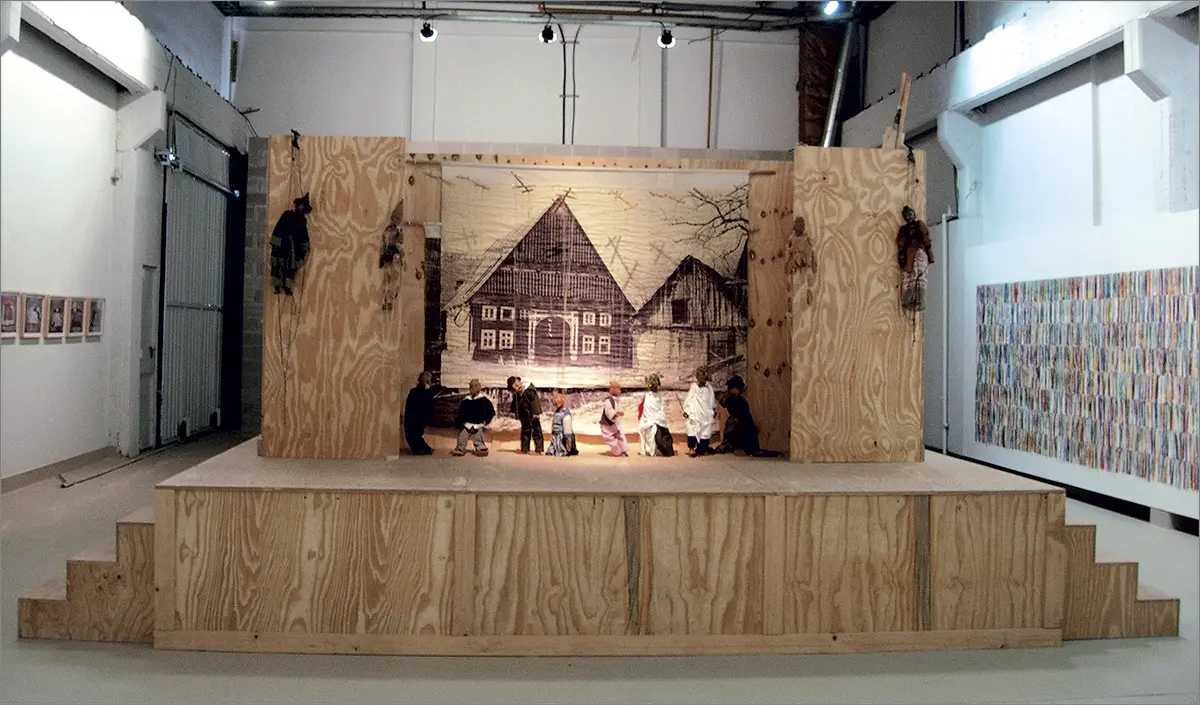
Juan Vergez: When we finally filled up our house. The issue of space is important for collectors—you realize you need space. What helped me the most was having the largest possible space: my mind. When you collect inside your mind there are no limits. That’s how I dreamed up the collection. These works were kept in containers for years, and I dreamed of them. I didn’t have a clear idea of the dimensions of each piece, their sizes, or the size of the space where they would be placed. I was completely free. I wasn’t concerned when I bought something like Rirkrit Tiravanija’s stage, which is 9 x 7 x 4.5 meters in size. So, where are you going to put something like that if you don’t have the space for it? Well, in my mind. They would enter my mind and then go into the container. This is why my book is going to be titled Container. Then we finally got the space and the works started to move there almost exactly as we had imagined it. But after the installation, we were back dealing with the same problem: space was controlling us. It is 2,600 square feet, and it is controlling us. Today, that’s the situation we are in: we still have pieces in storage that need to be rotated.
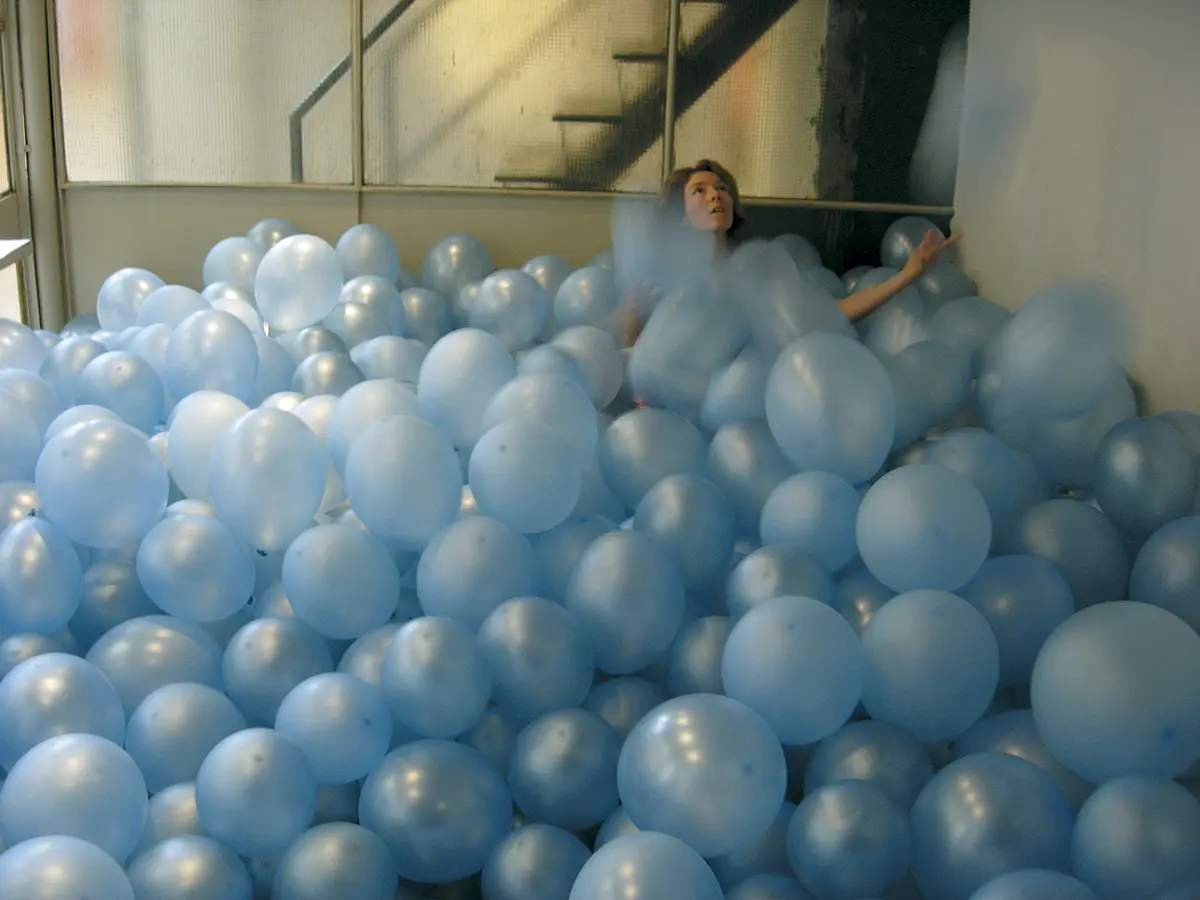
That’s why Martin Creed’s piece is fantastic for me. The volume of space is calculated in cubic meters; when it is filled with blue balloons, the balloons take up only half the space. This piece seems harmless because you think it will cover only half your body, but if I were to fill a space 30 feet high with blue balloons, we wouldn’t be able to see each other and there would be a point when it became claustrophobic. That is the piece that marks the limits of space for you, the one that tells you that space will always win; space will always be a challenge.
CSB: However, even museums with large collections have worked in storage.
JV: Yes, of course, and that’s precisely the problem because think about it, what good is a stored work of art? It has to be exhibited. I understand that there comes a moment when museums and collectors must acquire a warehouse, but a work of art is alive only when it is exhibited. So the ideal would be to be able to exhibit everything. Of course, there is no ideal world—for me, for a museum, for anyone.
CSB: Let’s talk about the building.
JV: The building has an identity. It is an unimportant identity, and not worth commenting on. The walls are gray blocks, and you would think that art is better displayed against a perfectly white wall, yet they look great this way.
CSB: Did you have help with the arrangement of the works? Do you have any advisors?
JV: No, Patricia and I do everything. We buy the piece; we install it; we talk to the artist and the galleries.
It gives me great pleasure when we acquire a piece that is difficult to install, like Jorge Pardo’s tent, which unmounted must have 5,000 pieces. It took me fifteen days to set up the tent and I turned every screw myself. It seemed like the biggest undertaking of my life. And I was inside Olafur Eliasson’s kaleidoscope—there was no other way to put it together. I realized that someone needed to be inside it to hold the panels upright until they were lifted.
CSB: When did the idea of the Tantica foundation first arise?
JV: When I was at the Modern Art Museum I learned that a person can be much more effective from within an institution than as an isolated individual. With the foundation, my idea is to bring in people who are able to and want to be a part of this project; I want to create a board of reasonable people, good people tied to the project, and reputable people who can contribute from their field of expertise. They don’t have to be collectors, but they do need to be people who feel they are doing something important. On that point, I believe the foundation is really interesting.
As a foundation project, we will produce the book and we will bring a couple of foreign curators to Argentina to lecture. The idea is to generate movement. This is a two, or three-year project, to see how we can strengthen the corridor that first arose around the São Paulo Biennial, and includes Rio, Belo Horizonte, and Buenos Aires.
CSB: When did you start collecting?
JV: We started more than twenty years ago. When we got married we said that we needed art for this white house so we decided to create a wedding gift list at Ruth Benzacar Gallery. One of our guests gave us a painting by Batlle Planas. That was how we got started, with one work that was not enough; we wanted more, and there were two, then three, and so forth, and of course there was always room for one more until the point that we ran out of space. Ruth was an important figure because she introduced me to the whole question of art.
We started out by collecting –very intensely– Argentinean artists. Later we went to São Paulo, where I met Marcantonio Vilaça (he was great), whom I started calling at least two or three times a week. I called him and asked him for advice; he said yes or no, we debated, and on the basis of those meetings with him I bought works by Brazilian artists, many of whom are famous today.
Later we moved on to Colombians, Mexicans, Cubans, and Latin America as a whole, but with a vision that was very unlike our vision today. We were Latin American collectors and we missed our chance to acquire, at a low price, works by artists like Kippenberger. I could have bought those works, but at that time I restrained myself. Until one day when we were at the Basel fair, Patricia saw a photograph by Shirin Neshat and she said to me, “What a beautiful photograph, I love it. Why don’t we buy it?” And I said, “But we are collectors of Latin American art.” And she insisted: “So what?” And I said, “OK if you like it, let’s talk about the price.”
Of course, one could buy Shirin Neshat’s whole work at a relatively low price, but what scared me was the huge and ungovernable world. Yet when Patricia said —why not?– I just kept going forward. We started meeting artists in Berlin. We were there at the best time, and I’m grateful for the trust that German gallery people had in us, especially people like Tim Neuger and Burkhard Riemschneider. They saw Argentinean collectors coming to buy a work of art like Rirkrit’s stage, and they believed in me; they sold me that piece, one of his most important ones. I think that in Berlin we had the good fortune of timing, of being at the right place at the right time, and being able to establish a collection with the artists who captivated us. The fact is that we developed a level of trust with the gallerists that, for example, I didn’t feel in New York.
CSB: Let’s talk about the project you did to bring Argentinean artists to Miami.
JV: It was our first experience, and in part, the reason for the foundation, because we couldn’t just bring Argentinean artists to Miami as individuals. It needed to be done through an institution and that’s where the idea was born. We set up the Tantica Foundation (Trends and New Tendencies in Contemporary Art) to bring the works to the United States and to support all this. It was a great project because we brought the artists—a lot of people—along with the works. A catalog was published and everything was done right.
CSB: Did all the pieces come from your collection?
JV: Yes. When Craig Robins offered me a space, I thought I had to request the works, pay insurance, and oversee all the problems with packing and shipping. I made a decision to tell the artists we wanted to bring the works, and they supported it. Six out of ten artists came along. I was just another guy hanging the art and sweeping the floors.
CSB: What can you tell me about the fellowship project you have in the program?
JV: There is a cultural exchange project that seeks to invite people from abroad to do projects with Argentinean artists. We want them to converse, to sit down and discuss and collaborate. The language I see among young Argentinean artists is very similar to the language of the Germans. But what is missing is the dimension the German artists can achieve thanks to the budgets they have to work with.
For instance, Ernesto Ballesteros proposed a project in which he travels around the world with a thread. So we need to define how we can organize the execution of this project through the foundation. It involves around forty tons of thread, but it is a mega-installation that seems spectacular to me!
CSB: What background do you and Patricia have that makes you so interested in art?
JV: None. It’s just a matter of “vibrating” when you see something you like, to enjoy having a trained eye after seeing, seeing more, and seeing even more art.
I come from a family where there was no understanding of these things; we didn’t know what a work of art was. My father once had a French friend who really liked this one painter. They went to the painter’s studio in Paris and my father came back with a rolled-up painting under his arm. For him, it was something spectacular, by someone named Chaput. It hung in his house for fifteen years or more. I always said I wanted it, and in the end, it was the only item I took from my father’s house. I was on a trip once and I tried to find out who this Chaput was, thinking he might have been a well-known figure. I searched and searched at the Pompidou and other archives, but nobody had heard of him. Later I went to Saint Honoré and I checked with important galleries; I spoke with a gallery owner and I asked about Chaput. They told me that right across the street there was an exhibition of his works, but I saw the gallery was closed. I went back to my hotel that night thinking that if the artist was in Saint Honoré, maybe the painting was valuable. The next day I woke up early and went to the gallery but when I saw what was there, it didn’t seem at all like the Chaput I had. I asked if this was a Chaput exhibition, and realized it wasn’t Chaput, it was Chapeau. It wasn’t the artist I had, and nobody knew that painter. My father had bought that painting because he liked it, but the lesson here is double: he followed his feelings and bought a painting because he loved it and he returned very happy with the rolled-up painting under his arm, but the second lesson is that you need to be careful in these matters. You must follow your instincts, but that may not be the best thing for a collection.
CSB: You have to educate yourself.
JV: Sure, it might be that you are walking along the Seine and you see a spectacular painter, or you encounter one of those photographers in the streets of New York City and you love the photograph. Maybe you’ll show it at some point, but you have to be careful. The idea is to follow your instincts passionately but accompanied by research and education. Pawel Althamer’s piece for instance –his train coach at Documenta– it took me eight months to buy it. It took me that amount of time to digest it and to learn who he is, to study his work, what he has done, and how he has done it. There was something in that piece and in truth, it is one of those works of art that is like an icon. Although it took me a very long time to make a decision, it is one of those works that soon becomes a favorite. After buying it I understood that what we need to begin doing is to “commission” works, talking to the artist, and putting together a project, side by side with them. That’s the idea, to think in terms of projects. That is how we feel most comfortable. Ninety percent of all the artists in the collection are our personal friends.
CSB: Did you go to Berlin because of the fair?
JV: Yes, I went to the fair to visit the galleries and I realized it is an exceptional city. I realized Berlin has fantastic galleries and a lot of people. I saw Kids from Berlin, a show at the P.S.1. It turns out that all these kids from Berlin were the same kids I was seeing in the galleries. This type of thing always happens to me; it was an easy road, and besides, there was a great confluence of artists in Berlin after the fall of the Wall. Berlin is not Germany, is great artistic power in Europe. There is London also, there are fantastic artists there, but to be honest I am not interested in them. I focus on Berlin.
CSB: We met at ARCO many years ago. Did you go there as a guest collector?
JV: Yes, every time we went we went as guests.
CSB: And what was your experience at ARCO?
JV: It was a good experience. I also had a good experience in Guadalajara, because it was the first fair I attended and I will never forget it. I had very good experiences at ARCO. Later of course I saw Basel and was able to put things in perspective.
I think ARCO is a good fair and I think it taught the whole world that, in addition to exhibiting art, it also educated. Later, of course, the ARCO model was copied. People also copy us. One has to innovate and change and update oneself to be at the vanguard. I think cities fight over these things: which offers the best art fair, which is the best educator, and so forth. The expansion of the Reina Sofía Art Center in Madrid is going to turn the whole situation upside-down. I believe things got much better when museums and galleries began to generate shows throughout the city to accompany ARCO.
I don’t know that I’d go to ARCO every year, but I wouldn’t stop going altogether. There are some fairs that I won’t visit again; I tried them once and never went back. But ARCO is a good alternative.
CSB: Have you bought the majority of works in your collection at art fairs?
JV: No, I bought most of them through galleries. I have a problem with fairs –and maybe it is not a problem for everyone– which is that gallery people only have three minutes for you because they have so many clients to whom they must explain one thing and another. I need more than three minutes for someone to take me through what an artist does, because who can possibly have Rirkrit’s stage, or Pavel Althammer’s coach other than at Unlimited, in Basel? Nobody! I need to know what else an artist does.
I have bought many pieces in fairs, indeed most of them, but I think we need more time. We need to research what’s happening.

CSB: So, what about the Latin American context? Are you still interested in it?
JV: The issue with the Latin American context is that what we need to avoid is precisely that. When we were Latin American collectors, we felt constrained. We need to stop saying “Latin American art” or “Contemporary Latin American Art.” Art is contemporary, language is contemporary. In the collection, there are ten or twelve Argentinean artists mixed with the Germans, and maybe you just hit it big and realize that their pieces really work well together.
Hernández Diez is facing Rirkrit and Hirschhorn; Hirschhorn speaks of tears and of a woman’s suffering in order to be pretty and to shop, and Hernández Diez tells you that a woman’s great obsession is to care for her nails as she does the dishes. But he also speaks of a woman’s obsession to be pretty and her suffering stems from that obsession. This is a Latin American man and right next to him is a man from Switzerland; this is why you have to speak of contemporary art. It’s the same for me whether I travel through Latin America, Thailand, or wherever.
PV: The key is dialogue—that’s what makes us feel something is happening there.
JV: Patricia is a part of all this. She gets involved, it was she who pushed me forward and, in essence, she is my greatest support. It is not that I am a collector; we are a couple who collects. That’s our strength.
CSB: I see that is not only you and Patricia; I see your children getting involved as well.
JV: Yes, they enjoy it greatly, and in fact yesterday twelve of their friends came and they all changed clothes and helped me. They had a great time, and they like it, they think it’s interesting. I think they come because they feel it, because they get from us a natural, unprejudiced feeling, without boasting, it is an authentic thing. I don’t fret over whether things are impeccably well done or if everything is perfect. In truth, that’s how things are. It’s what gives life to the collection, with the floors like that, the unfinished ceilings. Maybe there are those who need some sort of purity in order to hang a work of art, but that’s not the case with us.
CSB: Sometimes one buys something by chance, and later that artist becomes famous. Have you had that pleasure?
JV: For example, we were passing by Liste this year and we saw the work of Katherine Stengele. It’s spectacular because there are a whole lot of plaster-streaked papers, and she recorded the sound of those scratches close to the panels. A Swiss insurance company had established a prize that she had won.
PV: At that point, we didn’t yet know she’d won the prize.
JV: No, we didn’t know what the whole thing was about. When I saw the work I told the person at the booth, “I want to buy everything!” And she said, “What?” The artist couldn’t believe it. But there you go, those are the things that make me feel a special vibration; this is something new, they are making music by scratching paintings, then the whole thing is more than a painting for me, because it is the painting painted and scratched, and on top of that she recorded the music.
The same thing happened to me with Yishai Jusidman. When they brought him to Guadalajara I went to the museum and saw thirty white panels and I thought: why did he bring him here? The Russians already did this in the 1920s. But then as I was leaving I noticed that in one of the panels there was a geisha and I said: “I don’t know who the artist is, I have no idea what gallery he works with, but I must buy one of these pieces because it really caught me, it really tricked me. This is one of the first things I bought from Yishai and today he is well known in Mexico.
CSB: You devoted the whole area at the warehouse entrance to Prior and called it Planet Prior.
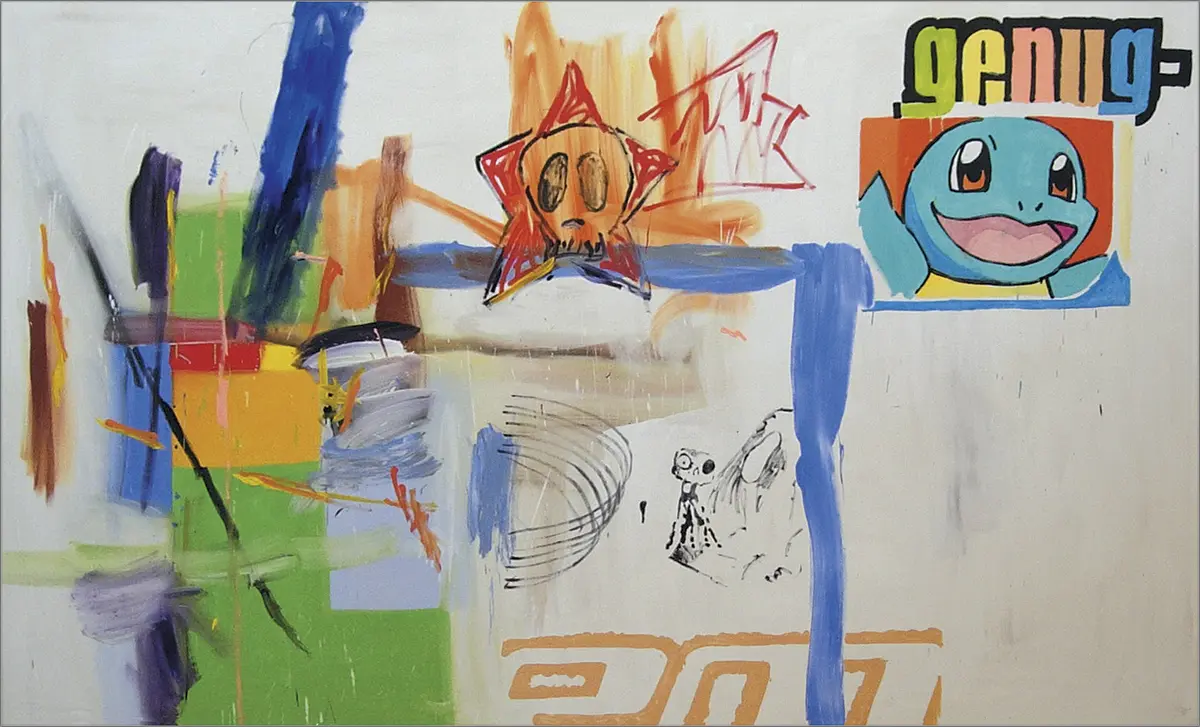
JV: You are touching on a complex issue. In Argentina, in the 1980s there were two very important artists: one was Guillermo Kuitca, the other one Alfredo Prior. They made paintings together in their early period. One ended up being very successful, and the other one has yet to get there. One had the opportunity to gain recognition in the marketplace and the other one didn’t. As you can see I love Prior’s work. I think he deserves this. He deserves for people from abroad to encounter a kind of Prior chapel.
So I indulged my wish and had the pleasure of inviting him to set up the chapel for a night. That’s what I could do for people to learn about Prior. And I believe that the history of art, as always happens, goes beyond us. Someone will come who will revise our archives and will place artists like Prior in a very important position.
CSB: Do your children take part in the collection?
PV: We took our daughter on our last trip and Juan said to her: “You have so much to choose from, choose one piece!” And she answered, “I can’t choose any of them because what I like is not in this range.”
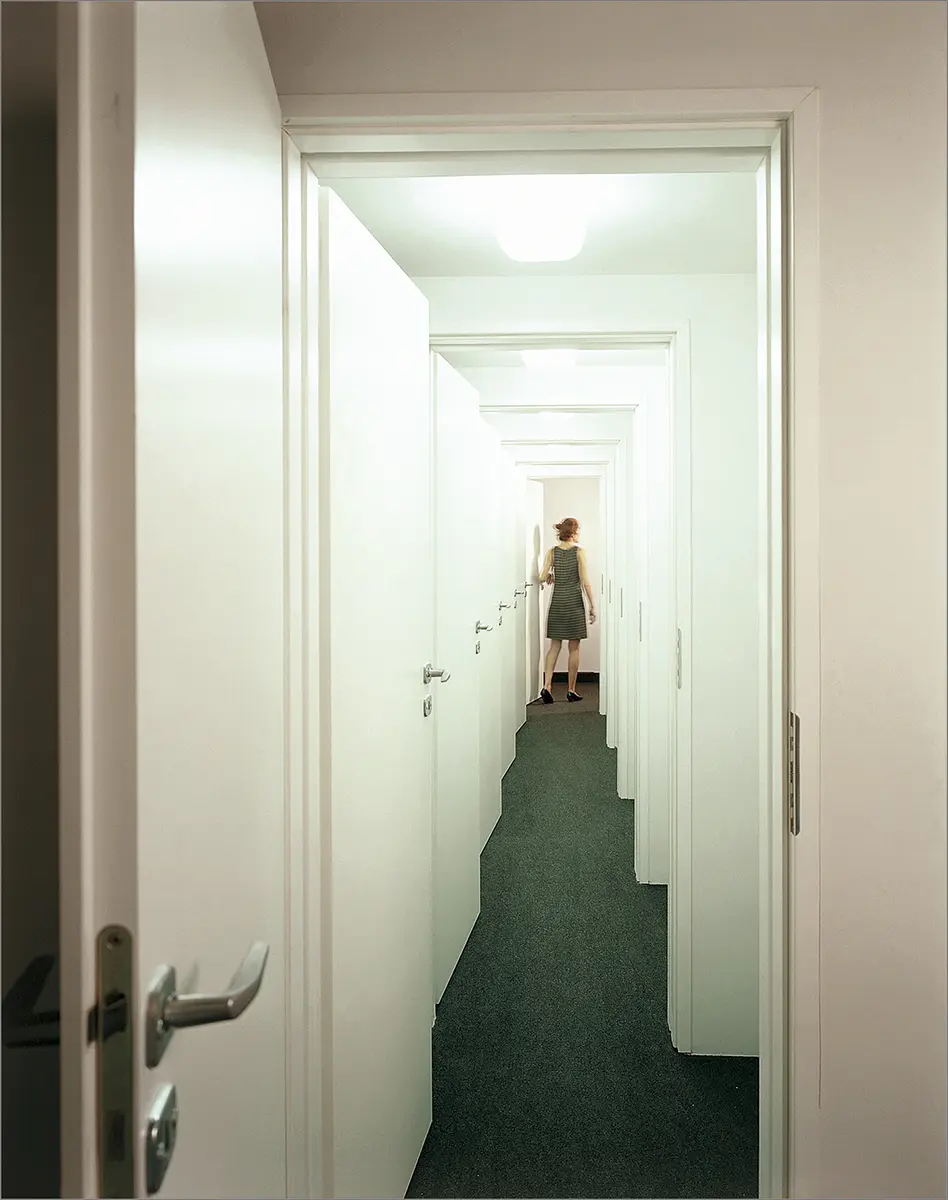
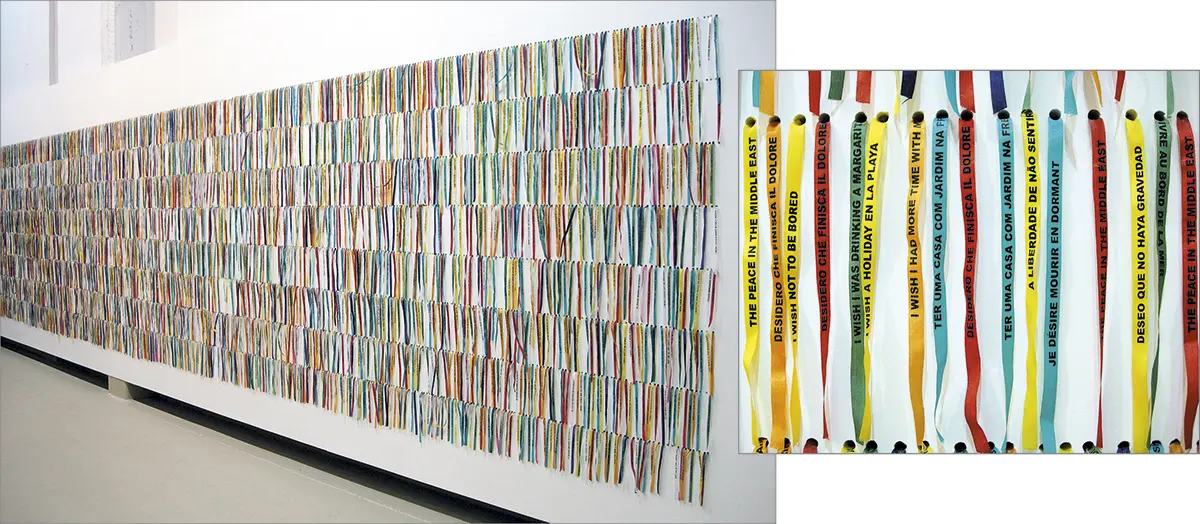
JV: So I said to her, “Well, what did you like?” She liked Rivane Neuenschwander's and Mónica Sosnowska’s –the one with the doors, I’d seen it at the Venice Biennale— and we bought them. Sosnowska’s piece is the one with the doors.
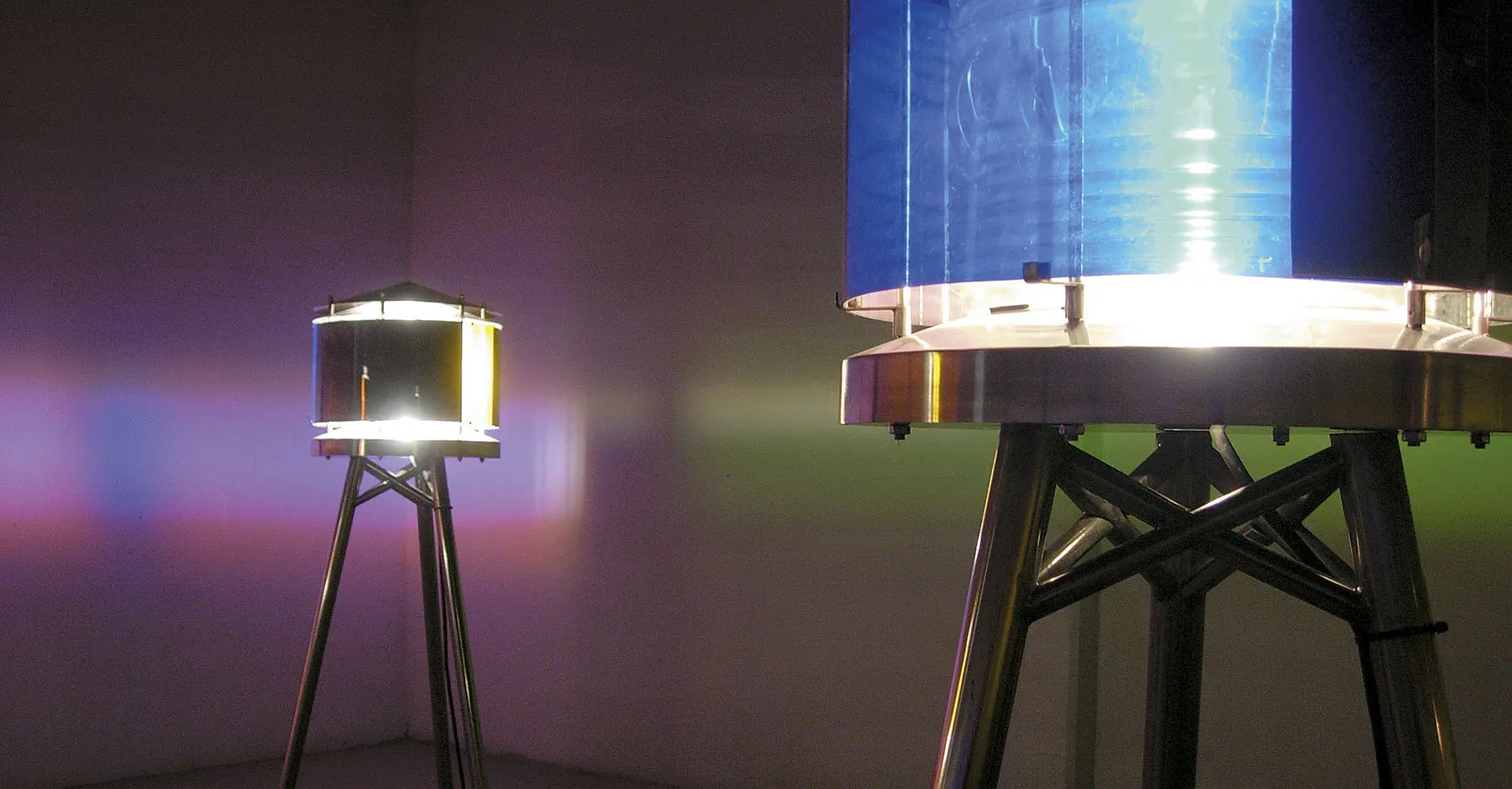
The collection is based on orientation and disorientation. That is its theme. When you are in the collection you have a large number of sensations because you don’t know where you are standing. Basically, if a collection lacks a direction it won’t capture you; we reached the conclusion that the pieces we were buying were about orientation and disorientation. With Sosnowska’s maybe you go to Olafur Eliasson’s hallway and inside you see in black and white; then you have a false elevator by Leandro Erlich; and there is Yinka Shonibare’s work, for instance, her Victorian bonnet, or her African cloths; you get inside a tent by Jorge Pardo and you get dizzy. You come out and see Rodney Graham’s piece with the inverted tree; Tomás Salcedo’s piece that does not click; Eliasson’s kaleidoscope that multiplies light by a thousand times; and Piotr Uklánski’s work, which is a Polish western.
If you come to the collection with that concept, you will find that everything matches.
PV: You enter the space that holds the three tents, one by Ernesto Neto, one by John Bock, and one by Jorge Pardo. The three of them are in a dialogue in a way; there is warmth there but each one has its own identity.
CSB: Speaking of Rivane’s piece —where you grab the wish and place a little paper— are the ribbons replaced?
JV: They are. We have them printed in Brazil. This piece was requested for Art Basel Miami.
To finalize, what I think I can tell you is that if you ask me what’s in the future and how do I see this whole thing develop, what I will say is that I don’t know. Because everything that has happened to us in these last twenty years with regard to art is a series of chance events that have brought us to this point. We never thought we’d be contemporary art collectors. We never thought we’d become well-known people in international contemporary art, or that we’d speak at an art fair. We never thought we’d have a party to inaugurate our space with all the personalities attending. We never thought we’d set up a foundation, publish a catalog, or take artists to Miami, I don’t think about it even now; things just happen. So, it may be that something else will happen in the next ten years.
*Photos: Gian Paolo Minelli.
CELIA SREDNI DE BIRBRAGHER
Founder editor and publisher for Arte en Colombia/ArtNexus.