
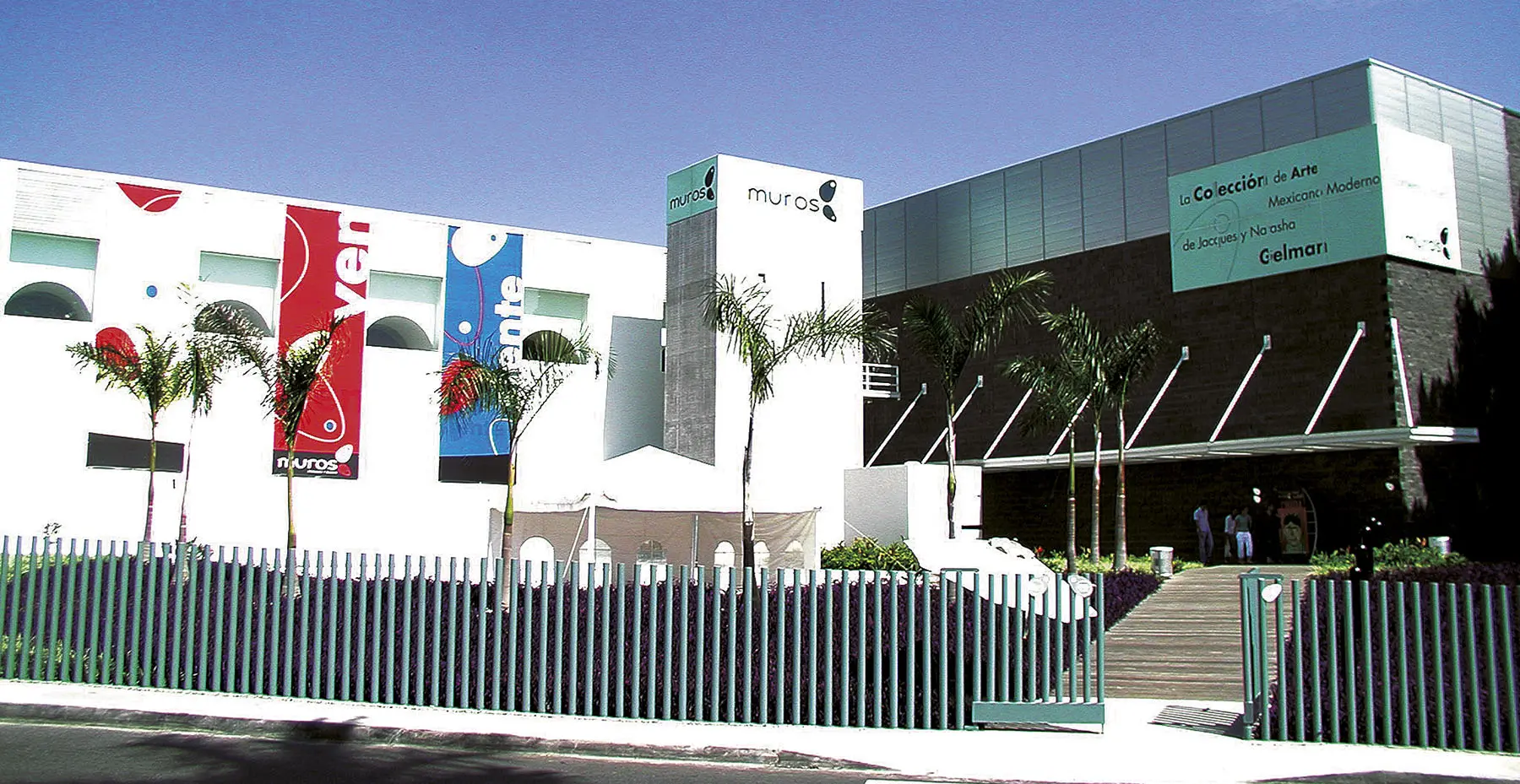
MUROS Cultural Center,
a space devoted to the exhibition of modern and contemporary Mexican art,
opened its doors recently and changed the history of the city and the
perception of its residents.
After a tireless struggle on the part of Cuernavaca’s population through the Civic Front for the Defense of Casino de la Selva in defense of the murals there, and against the unilateral impositions of a large corporation such as COSTCO-Mega Comercial Mexicana, the MUROS museum is the best conciliatory answer offered to the citizenry by the corporations.
The museum is the architectural work of Alejandro Bernardi and Francisco Guzmán and comprises several different spaces. The first space is a replica of the Mural Hall at the old hotel and is devoted to the restored murals of the former casino, including España conquista América (1946) by Josep Renay, and México prehispánico, La conquista, y Nuevo México (1959) by José Reyes Meza, all of them almost completely restored.
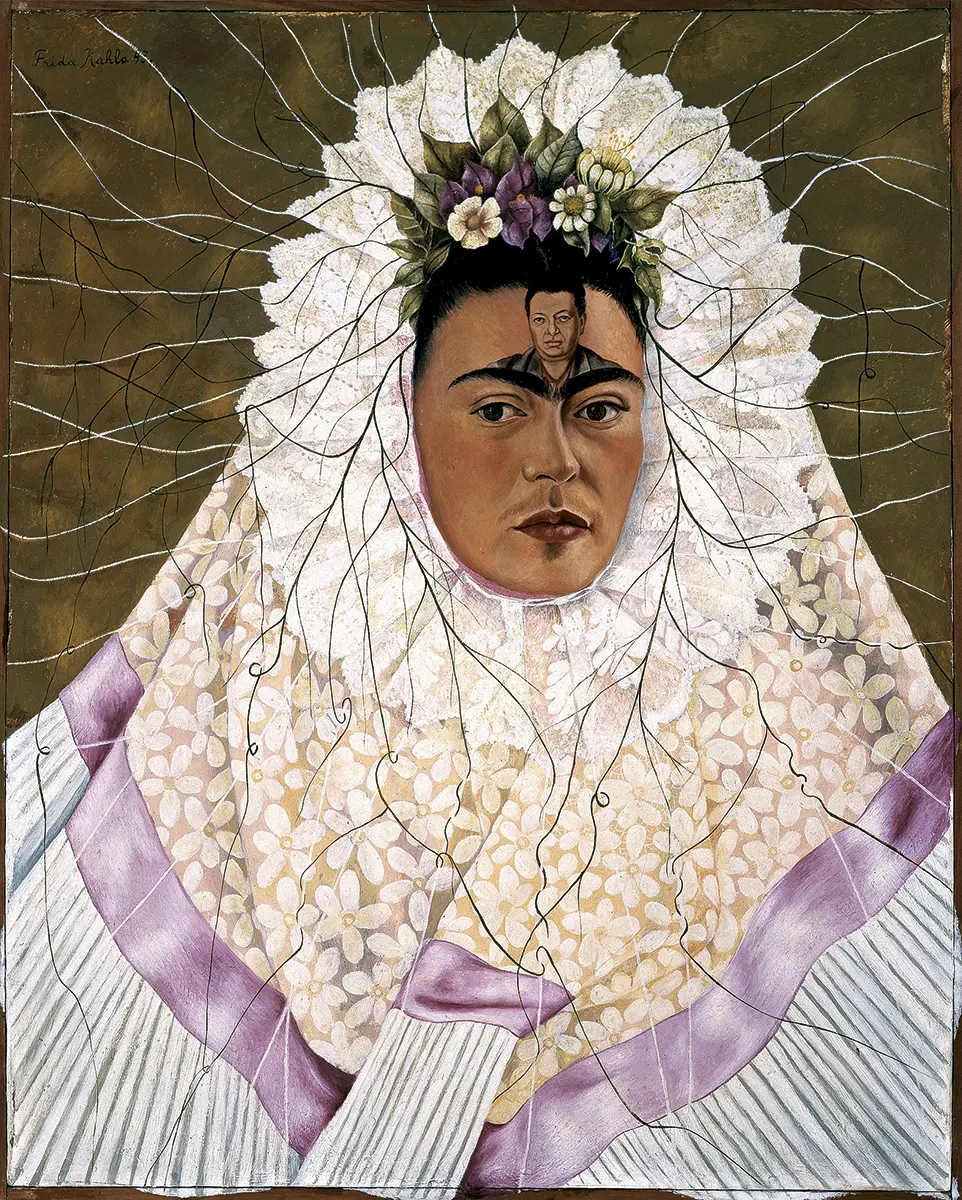
The second hall is divided into two levels and it holds the 318 works in the Jacques and Natasha Gelman Collection. The upper level is devoted to modern Mexican art, including paintings and drawings by Francisco Toledo; oils by Diego Rivera; eleven Frida Kahlo works; five paintings by José Clemente Orozco; Rufino Tamayo’s portrait of Cantinflas; several photographs by Manuel Álvarez Bravo; David Alfaro Siqueiros’s last portrait of Natasha Gelman; and an assortment of works by María Izquierdo, Leonora Carrington, Tina Modotti, Carlos Mérida, and Gunther Gerszo.
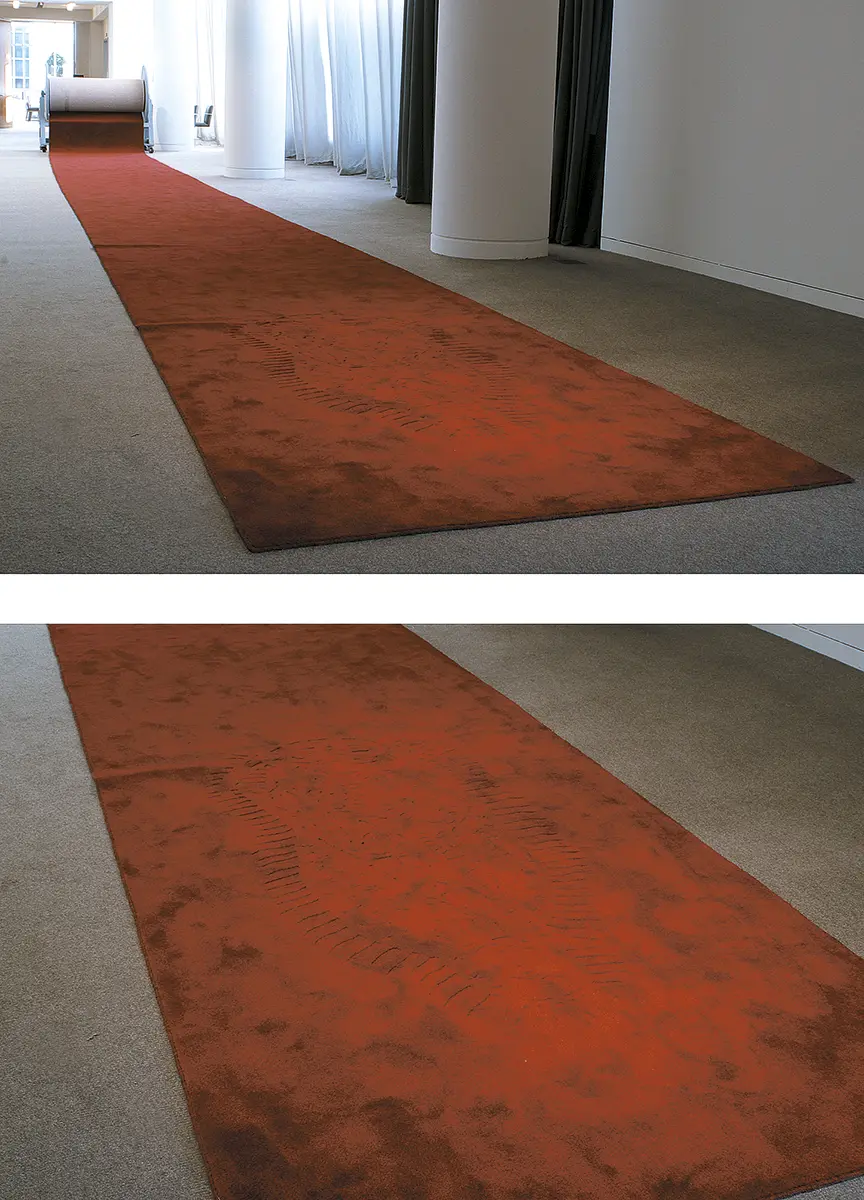
The lower level in turn offers an exquisite selection of contemporary Mexican art, or at least, art made in Mexico. In this collection we can find works from Mona Hatoum’s piece for Laboratorio Arte Alameda—a red carpet unfurled along the Laboratorio’s central wing that ends at an image of the Virgin of Guadalupe—to works by Gabriel Orozco, Jan Hendrix, Francis Alÿs, Thomas Glassford, Sergio Hernández, Silvia Gruner, Stephan Brüggemann, Santiago Sierra, Héctor García, and Graciela Iturbide; it covers installation, graphic art, photography, video, sculpture, and painting.
Among the most notable pieces is Silvia Gruner’s stone necklace. This piece was based on Mexican culture perceived through an emotional resonance that is its very vision of Mexico’s archaeological past. Also archaeological, but in a different sense, are Gerardo Suter’s photographs; Octecomatl harks back to pre-Hispanic elements in order to recreate the past from the vantage point of a vital contemporary eye that breaks the barrier between reality and fiction, between historical event and myth. Manuel Santis Gómez’s Helecho, Cisco Jiménez’s Chafamex Codex, and Betsabeé Romero’s Llantas para pavimento con memoria integrate a complex network of debates about creative work in the provinces, but, above all, they attempt to disentangle the complex notion of identity as the result of socio-cultural influxes on the individual.
Since 1992, the collection had been on display at Fundación Televisa’s Arte Contemporáneo Centro Cultural, but after the latter’s closing in 1998 and the passing of Natasha Gelman, it was taken over by the Vergel Foundation and became a permanent exhibition that traveled to Phoenix, Paris, Rio de Janeiro, and Madrid, among many other cities. Currently, the collection continues to acquire pieces and to become richer in contemporary art through its executor, Robert Littman, director of the Foundation, curator, and personal friend of the Gelmans. Most striking, however, is that their acquisitions are building an inclusive collection, a place where the periphery coexists with the center—not one imported from Mexico City in order to impose the center on the periphery—and where Morelos artists can find a home and achieve the recognition that the state’s Secretary of Culture does not bestow. I have in mind the recent acquisition of works by artists such as Magali Lara, Javier de la Garza, Gerardo Suter, and Cisco Jiménez; all of the residents in the state and all of them active in the cultural development of Morelos.
The focus of the Center’s curatorial
criteria is a general reading of the collection, but according to Susan Grilo,
museum director, MUROS will develop relationships with other museums both at
the national and international level, for the exhibition of modern and
contemporary artists important to Mexican culture and history, as well as
thematic re-readings of the permanent collection.
MUROS is the first art museum in Cuernavaca, the first space intended for artistic proposal in a city that is developing trail-blazing educational and curatorial projects and becoming a living space where Morelense, Mexican, and international cultures can coexist and offer citizens a new experience of art. It was born of the citizen’s defense of their culture and, as such, it constitutes a civic triumph over corporations that forget that cultural wealth is sometimes more important than job creation.
LARISA ESCOBEDO
Art critic based in Mexico.