
The ephemeral nature of
utopian architecture has been one of the recurrent themes in the work of Cuban
artist Carlos Garaicoa. Thirteen works are presented in his recent solo
exhibition at the Museum of Contemporary Art, Los Angeles, the product of four
years of investigations into the frustration and decay of twentieth-century
utopias. The show occupies the entire space at MoCA’s satellite gallery at the
Pacific Design Center.
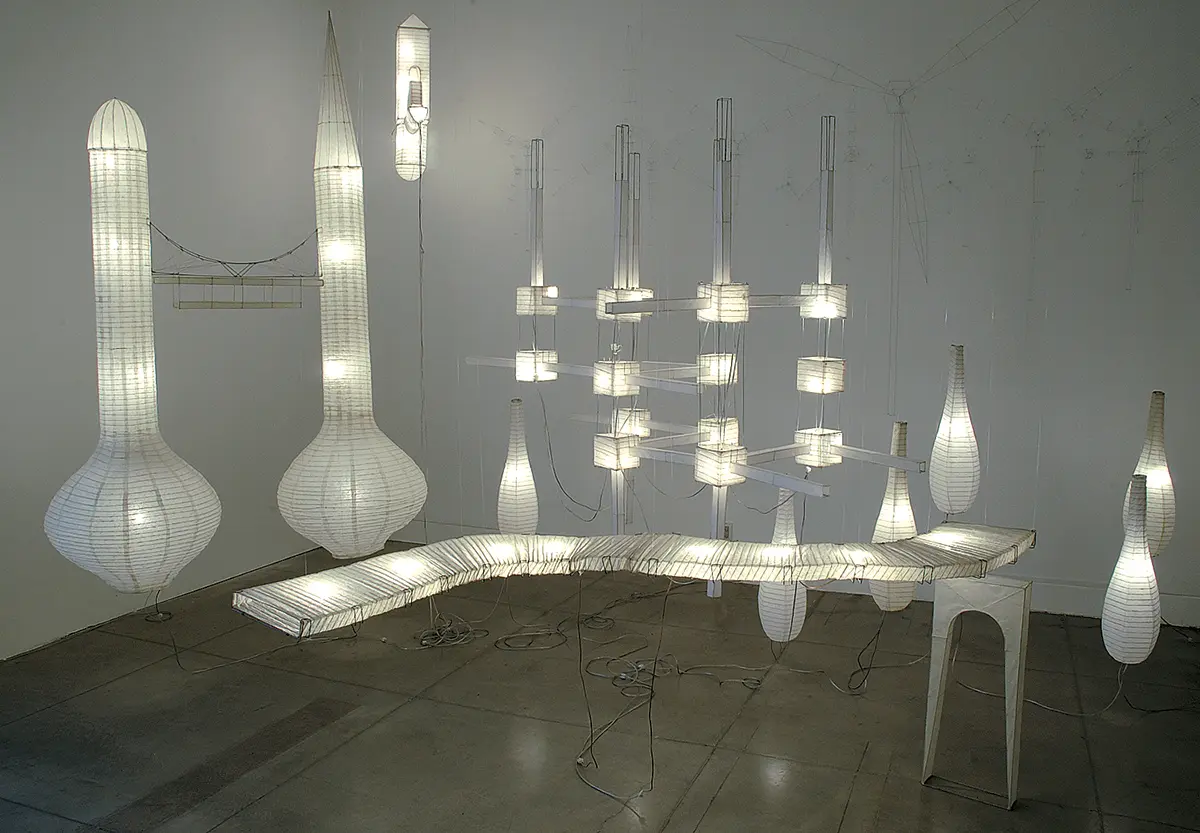
The visitor begins by entering the impressive ground floor gallery which is filled with the installation from the series Nuevas arquitecturas (New Architectures), 2003. This work is composed of constellations of glowing lanterns made of rice paper suspended from the ceiling. Dozens of lanterns combining organic and geometric shapes take over the entire room and hang together in configurations that gradually reveal they are loosely based on common architectural types: an arch is positioned to support one end of a curved plane; small domes top several cubes; and a small, intricately designed suspension bridge connects two tower-shaped lanterns. The fragility and precariousness of this installation are evoked in several ways to undermine one’s assumption of the durability and permanence of architecture. Works are installed at various heights: some structures are suspended overhead, while others lie on the ground as though they had fallen and initially cause one to think that the work has been damaged. Connected to one another by the loosely draped electrical cords that power the low-voltage light bulbs inside, these structures sway gently as visitors pass, again highlighting their tenuous existence.
Because the gallery is lit primarily by the lanterns, the second work installed in this space reveals itself much more slowly. Because All Cities Have a Right to Call Themselves Utopia (Wall Drawing) [Porque toda ciudad tienen derecho a llamarse Utopía (Dibujo a la pared)], 2002 is a series of drawings installed directly on three of the gallery walls, creating a backdrop for the urban landscape invented by the lanterns. Mimicking some of the same organic and geometric shapes, they are exquisite perspective renderings, principally of modern industrial buildings that resemble silos, blimps, and windmills. Upon closer inspection these illustrations reveal themselves to be even more fragile and ephemeral than the lanterns. They are, in fact, bas-relief drawings carefully constructed with thread and silver sewing pins, sitting approximately one inch from the wall. The discovery of the true nature and subtle delicacy of these works is a visitor’s well-earned reward for careful looking. These two installations work effortlessly together; one can almost imagine that the wall-drawn windmills provide the energy to power the lanterns in the series New Architectures.
The fragility of this fictional urban space evokes the conditions of Garaicoa’s native Havana. Since the revolution in 1959, many architectural projects were left unfinished and conservation efforts were abandoned. Recent estimates gauge that approximately 300 buildings collapse each year and many more become uninhabitable and have to be demolished. In his photo diptychs, Garaicoa attempts to document the changing architectural fabric of Havana’s Plaza Vieja as structures crumble and disappear. In these, he pairs photographs of the same site with a crumbling structure that is present in the image on the left, and absent on the right. Employing his thread and pin drawing technique, he fills in the structural outline of the missing building in the second photograph, simultaneously preserving the past and emphasizing its vulnerability. However, Garaicoa endeavors to complicate over-simplified readings of his works, which are often based exclusively on national specificity. In a video interview included in the show, he discusses his desire to escape the stigma associated with being a Cuban artist. The universal relevance of his project is conveyed through a number of pieces but is perhaps most evident in the final photo diptych. Executed in Los Angeles last year, it shows a seven-story warehouse in the first photograph. With the exception of his ghostly thread drawing, every trace of the building has completely vanished in the second image.
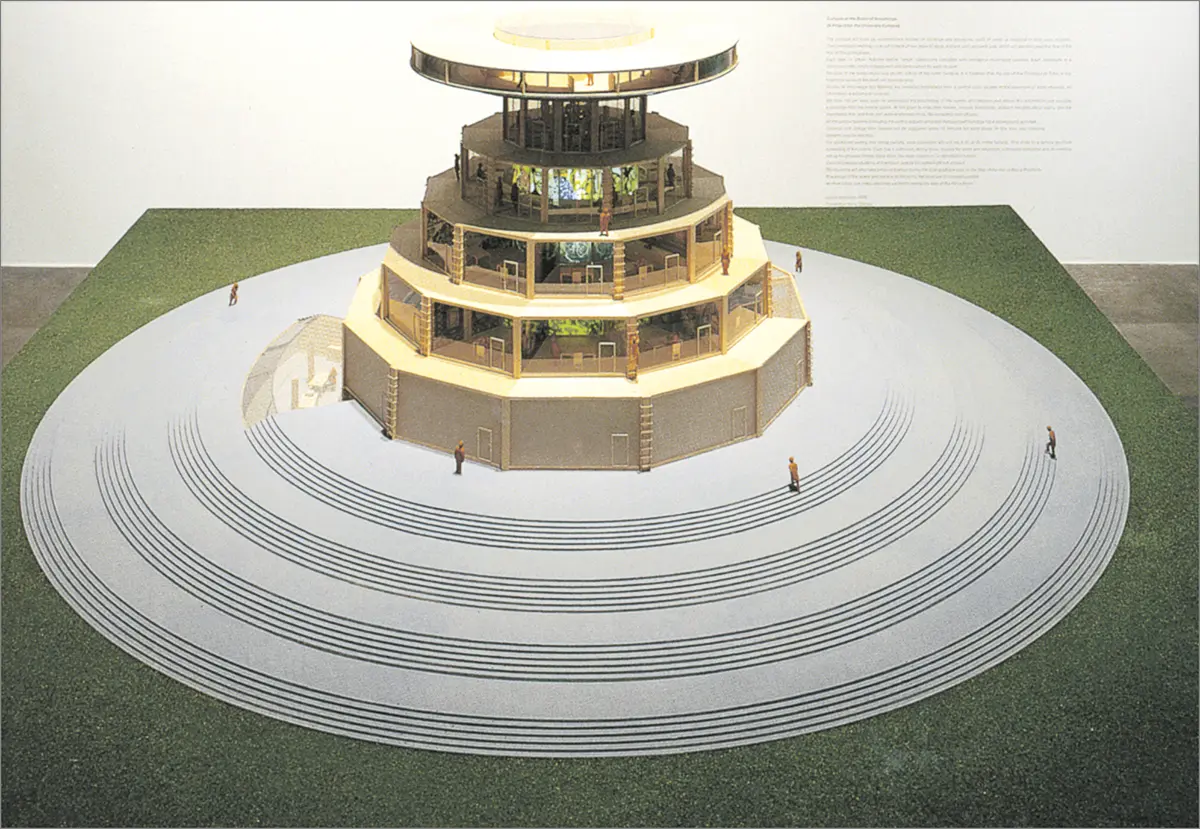
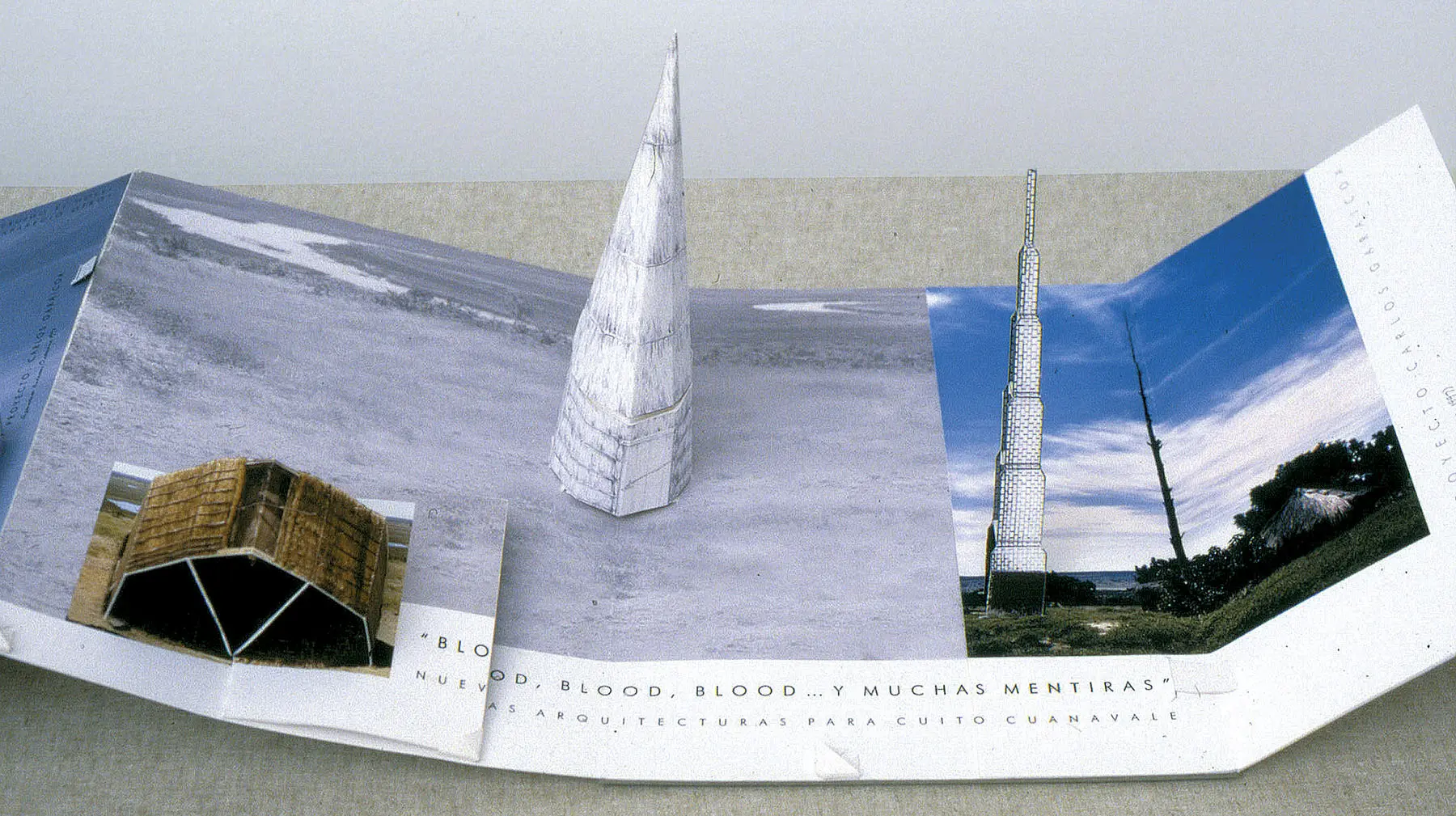
Garaicoa works with a range of architectural possibilities, from ruinous to utopian, through exercises in several media. Astutely avoiding easy categorization as painter, sculptor, or photographer, his works employ traditional mediums and also incorporate architectural models, 3-D animation, and pop-up books. In Capablanca’s Real Passion, Garaicoa has converted the game of chess into a maquette for an urban plan. Each square is a wooden block of a different height and models of small buildings represent chess pieces. Churches, municipal structures, apartments, and stadiums, ranging in style from neoclassical to modern, can be moved from square to square, constantly altering the fictional urban space of the chess board. Several of the same buildings appear in his pop-up books, which are displayed here under two vitrines. His manipulation of a game and children’s books to construct utopian cities is laced with sarcasm about the impossibility of a government actually achieving this.
Carlos Garaicoa; Capablanca’s Real Passion is an updated version of the artist’s 2004 catalog, which has been republished in conjunction with the MoCA exhibition. An essay by exhibition curator Alma Ruiz was added to the texts by Adriano Pedrosa, and Orlando Hernández and an interview with the artist was conducted by Lorenzo Fusi. Many of Garaicoa’s works are reproduced in color, making them an excellent document of his body of work.
ALECA LE BLANC
Art historian and critic, specializing in modern and contemporary art.