Among the
members of Latin America’s newest generations of artists, Jorge Macchi (Buenos
Aires, 1963) has achieved one of the strongest international presences in
recent years. His participation in the 7th Havana Biennial (2000);
the 8th Istanbul Biennial (2003); the 26th São Paulo
Biennial (2004); the 51st Venice Biennale (2005); and the acquisition
of his works by collections such as the University of Essex Latin American Art
Collection, the Tate Modern in London, and ARCO Foundation, are evidence of
sustained international recognition. From the initial accolades gained after
receiving the Braque prize in 1993, through his residencies in Paris, London,
Rotterdam, Italy, and Germany, to the more recent Guggenheim fellowship (2001),
all speak to a path of continued encouragement from which Macchi has greatly
profited. In the 2005 season, he will have a double presence at the Venice
Biennale, as a representative of Argentina and as one of the artists selected
by the Biennale’s co-curator, María de Corral.
Macchi first became known in Argentina in the late 1980s as a member of Grupo de la X, which also included Carolina Antoniadis, Enrique Ježik, Pablo Siquier, Ernesto Ballesteros, and Juan Paparella, among others. The collective marked a shift in Argentinean art by bringing about a crisis of the neo-expressionist aesthetics embodied in large-format paintings, spontaneous brushstrokes, and art-historical quotations. Grupo de la X may be said to have inaugurated the “90’s generation” in Argentina; they brought to the forefront the fact that the conceptual aspects of art opened up by Duchamp remained fully valid. A gaze turned towards minimalism, arte povera, and frugality of concept distinguished the group from the “noise” of sensory seduction or what Pierre Restany was to call guarango art (a trend that, according to the French critic, dominated the “Menem era” of “pizza and champagne,” using resources such as kitsch and Neo-Baroque excess.)1 None of this helps define Macchi’s position, which is oriented toward the aesthetics of silence cultivated by artists like Alighiero Boetti and Tom Friedman, among others.
Although Macchi graduated with a degree as a painting teacher, it was not in this genre that he would be most comfortable. He had his first solo show, titled Pinturas y retablos de fines del siglo XX in 1989. It included works on pieces of paper superposed and glued to form a thick layer, to which the artist added objects found in the Buenos Aires neighborhood of La Boca.
Macchi’s interest in objects and installations remained constant and more intense in the early 1990s. In 1991, at the Banco Patricios Foundation, Macchi presented a series of works that used different, commonplace objects. He drew cathedral domes and vaults and other sacred-building interiors on mopping cloths. Unlike his Venice installation Oratorio (Oratory, 2005), the basic intention of those early pieces was not the religious reference per se (although they did make use of such reference), but to signal the crisis of pictorial illusion. Ropes, scrap iron, weathered pieces of wood, and other elements emerging from the plane speak of the medium itself more than of any extrinsic content; they attempt to show the fictional nature of the image and call our attention to the materiality of the support and the presence of the (real) subject in the real space. “In the Domes series,” Macchi says, “I build large spaces according to the rules of perspective. To that illusionistic space, I add the presence, on the surface of the canvas, of drops or schematic drawings created using dirt, tar, or sand. On that basis I reconstitute bi-dimensionality, breaking free of the trap, the visual game, the illusion.” This was perhaps his way of bidding goodbye to planimetrics in order to fully enter the field of objects and installations.
The incorporation of ready-made, in Macchi’s case, implies minimal manual intervention. “To make the most minimal movement possible,” he says. This is what happens in Escalón (Stair step, 1995), where the isolated element of the ladder has the particularity of simulating a coffin; or in Mar muerto (Dead Sea, 1995), where the aligned crystal glasses are transformed into a saltpeter sea.
Forgetting: the greatest violence
Sensitive to his times, Macchi had to place violence at the center of his explorations. But beyond the real tragedy of bloody events, he is intrigued by the way in which the news of them is broadcast by the media and soon disappears from the public’s view as if the purpose of the media was to feed itself. Through the press we have contact with situations that are as tragic as violent, unnatural death; yet their impact is fleeting. Soon everything disappears through a veil of forgetting, and this is perhaps the greatest violence.
“For years,” Macchi says, “I have kept a news clipping from a London newspaper: ‘Baby Dead Under Drunk Baby Sitter.’ It seems the sitter had a few too many drinks and laid on the couch, without noticing that the baby she was supposed to be sitting for was there.” The interest for the artist lies in the confirmation that, besides himself and those directly implicated in the tragedy, nobody remembered the event. “You learn at the same time that they existed and that they are now dead. And by the next page, you have forgotten them, which is the same thing as killing them a second time.” The dead baby gets lost in the multiplicity of the grid traversed by politicians, economists, horse races, and comic-strip characters.
News becomes as disposable as the paper on which it is printed. There is no difference between those mnemonic residues and the materials —pieces of wood, bottle caps, and threads– Macchi gleans from the streets. They belong to different categories but are detritus nonetheless.
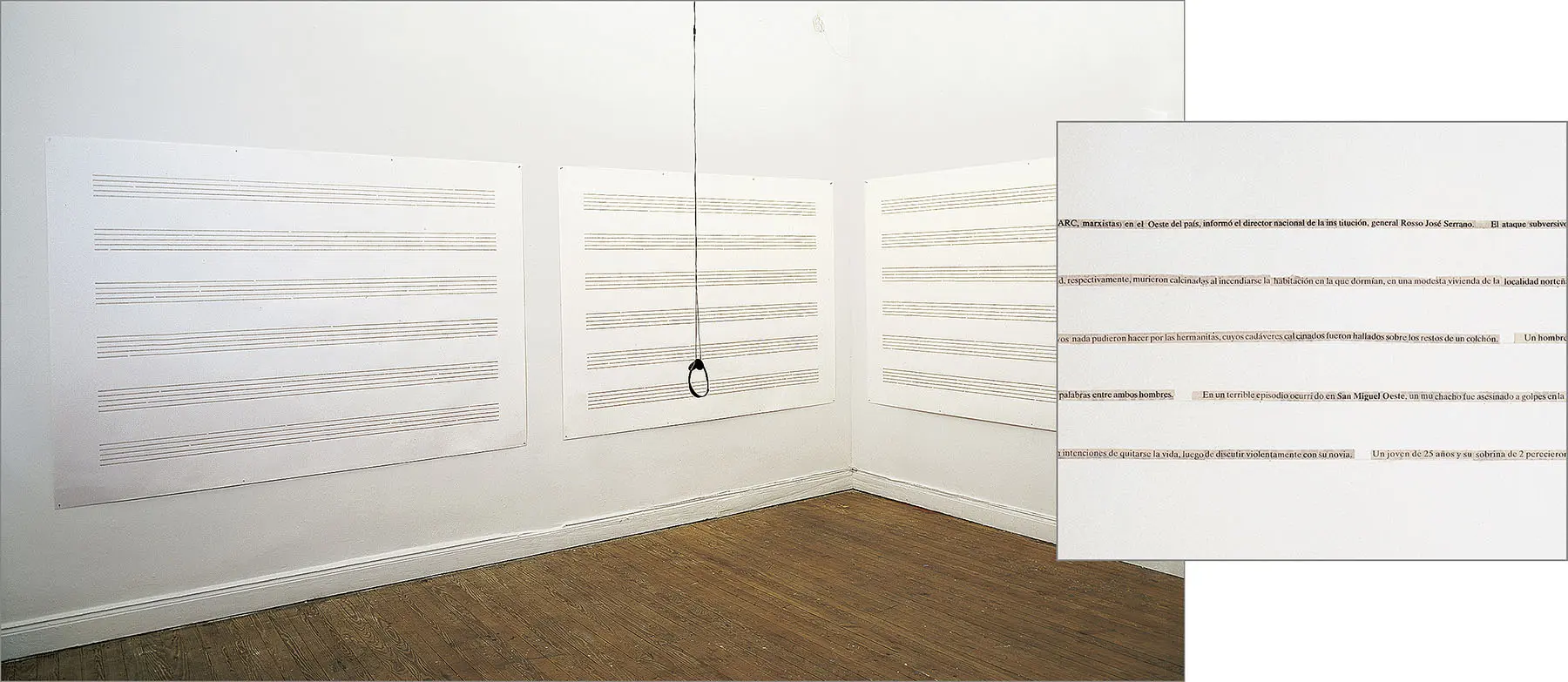
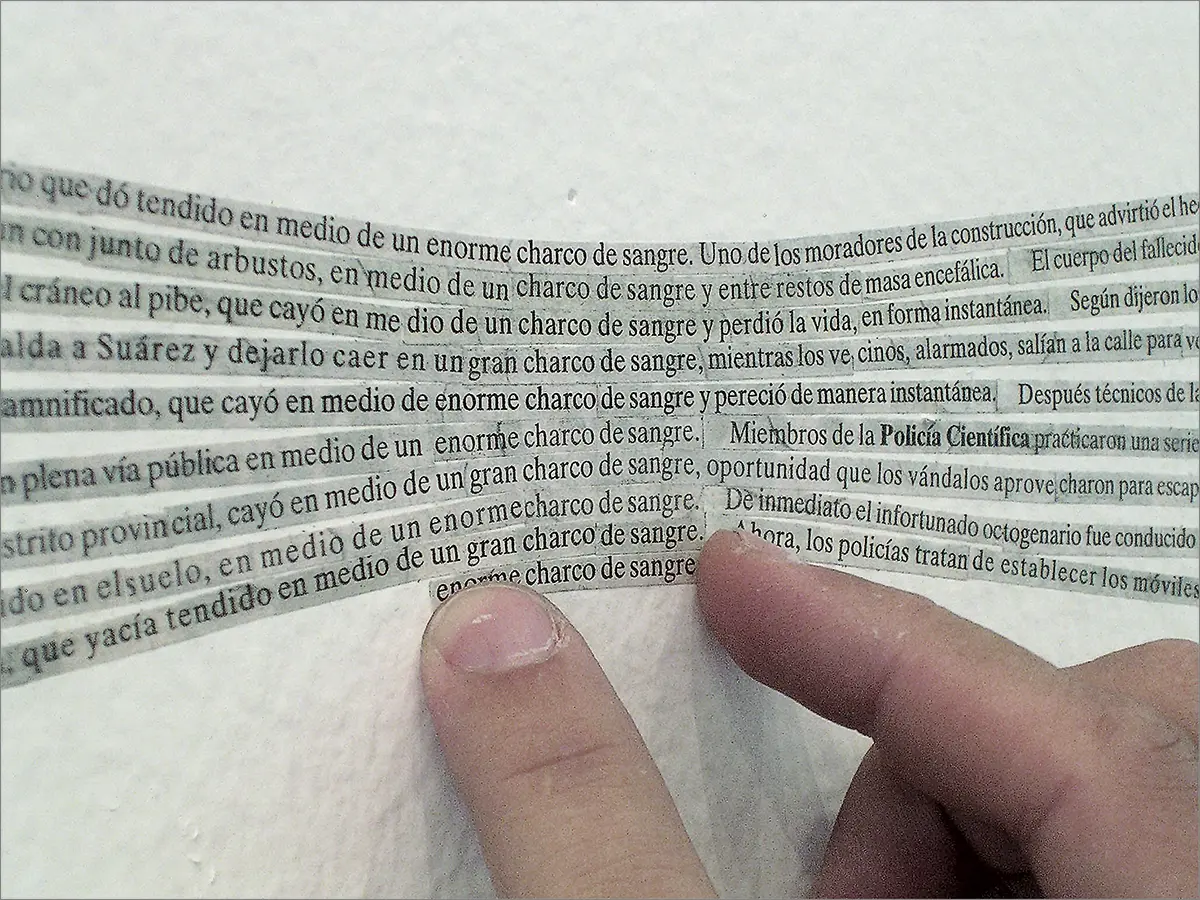
Among Macchi’s most important works dealing with the exhaustion of information is Incidental Music (1997). Presented at the University Gallery at the University of Essex, and at Ruth Benzacar Gallery in Buenos Aires, it comprises three 230 x 150 cm panels; in front of them, suspended from the roof, hang a pair of headphones. Each panel holds music sheets that appear blank from a distance; upon coming closer, the viewer notices that each line contains a description of a crime story taken from a newspaper. Blank, one-centimeter spaces are formed at the beginning and the end of each narrative. They cut the lines of the music sheets and serve to determine the length of the sounds in a piece for piano composed by the artist. As they read the news, viewers can use the headphones to listen to the background, “incidental” music, which is similar to the soundtrack of a movie (which is barely noticed but can influence the way viewers perceive the film’s sequences). Both the news items and the incidental music soon become a background, a muted rumble lost in that dispersed perception Walter Benjamin relates to as the “progressive atrophy of experience.” Something similar occurs in Un charco de sangre (A Pool of Blood, 1998), composed using news items taken from the Buenos Aires daily Crónica. The title refers to the recurring kitsch of the so-called yellow press, and the different news items flow towards that commonplace expression —a pool of blood– and emphasize its monotonous resonance.
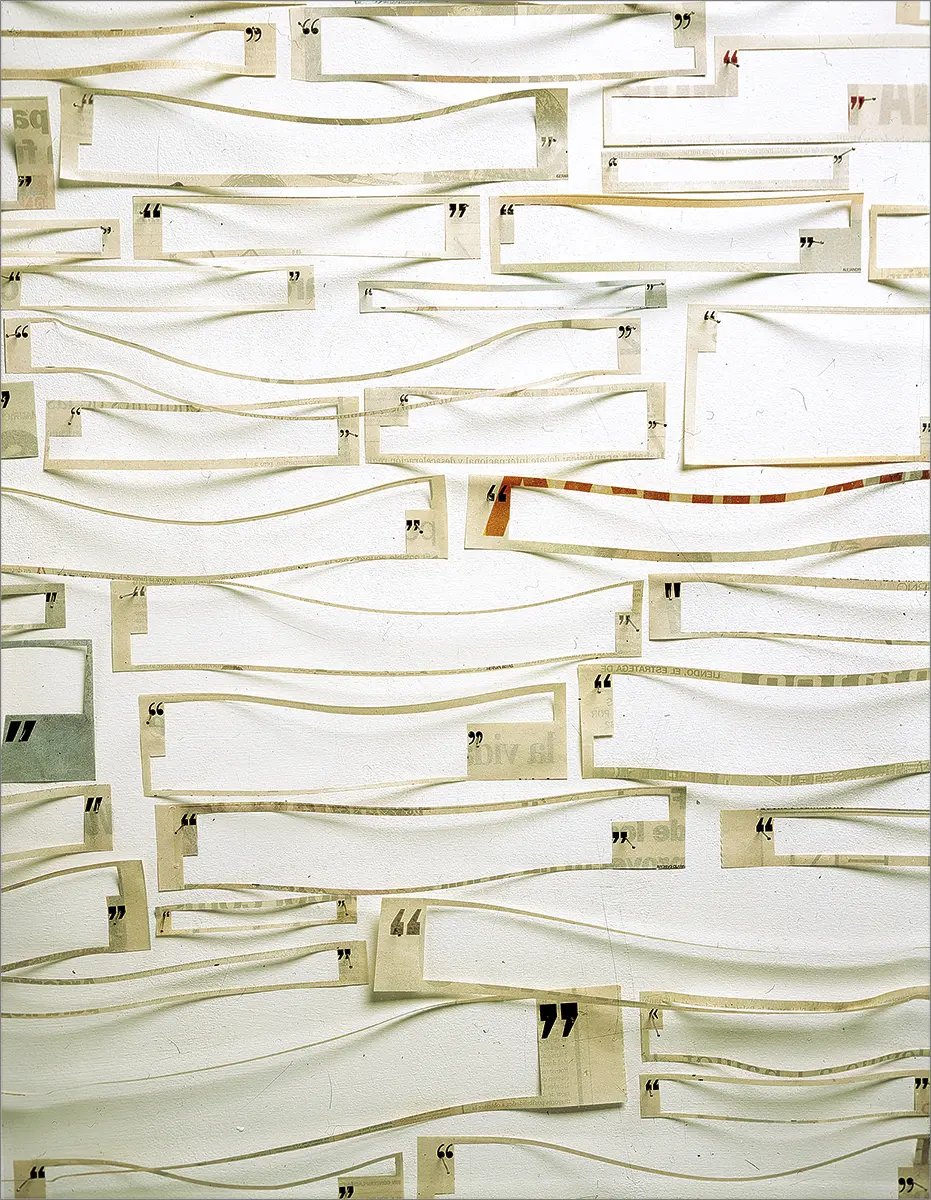
If nobody is listening, why use words? As in Canción insomne (Sleepless Song, 2004), where the music sheet lines hang against a black background, in Speaker’s corner, a series of paper cutouts hang from pins and display a complete absence of information. The text has been cut out and all that remains are the quotation marks that frame an absent quote. The title alludes to the area in London’s Hyde Park where anyone can address the passing public. But, who is really listening?
Signing off on the chance
Chance, like violence, is a central topic in Macchi’s work. It is the starting point for his Buenos Aires Tour (2003), and for musical scores like Canción marginal (Marginal Song, 2004), comprised of two sheets of music, one of which retains its original perforations while in the other the perforations are distributed haphazardly to indicate the location of the notes. A different case is Nocturno (Nocturne, 2004), where a number of nails throw suggestive shadows onto the paper and indicate the placement of the notes, which are those of Eric Satie’s piece of the same title.
It is important to remember that Macchi studied piano for eight years and that this experience, like that he had with theatre, later would be integrated naturally into his visual works. Since music originates in images, an alienating effect occurs that, according to the artist, modifies the nature of the initial raw materials. Thus, “in the case of Caja de música (Music Box, 2003–2004), the loop is very important, because the unending repetition of the passage of the same group of automobiles, and in consequence of the musical piece they originate, provides a melancholy, sinister element that is not in the image.”
Caja de Música, exhibited at the 26th São Paulo Biennial, is a visual and sound installation that mimics the mechanism of a music box. A video screen shows a six-lane avenue delimited by five dotted lines that resemble a music sheet, through which automobiles circulate. As they appear in the top portion of the screen, they produce a sound whose timbre is similar to that of a music box. The haphazard entrance of these automobiles determines the musical piece: those coming in from the left will produce deep sounds, and those coming in from the right produce high-pitched sounds.
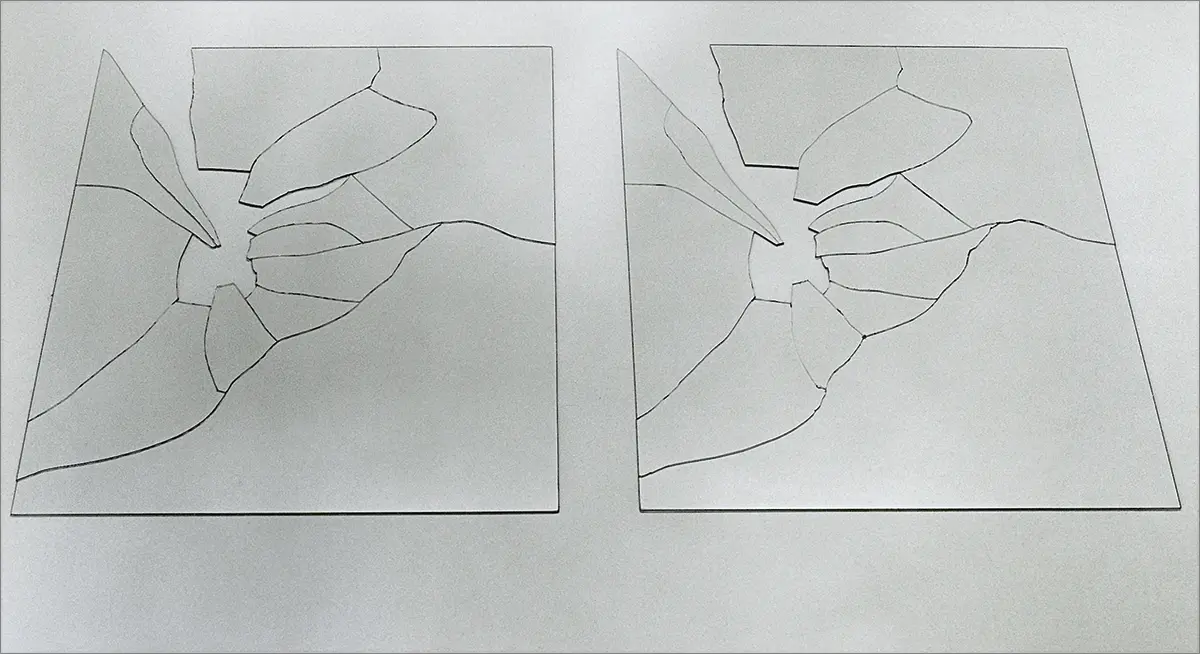
In some of his works, Macchi attempts to contradict the capricious nature of chance. He does this by duplicating it, producing something we know to be impossible: the existence of two identical chance events. Among the best-known examples of what Macchi calls “frozen chance” is Vidas paralelas (Parallel Lives, 1998), created using two 80 x 60 cm pieces of glass. One was found in the street and is broken haphazardly, with a section missing; the other piece was reproduced by the artist and is identical to the first one. Macchi seems to want to play with the impossible since we all know that there is no chance of two broken pieces of glass being identical. Another one of his Vidas paralelas (1996) surprises us with the same kind of painstaking imitation of chance. In this case, two matchboxes are opened to reveal an identical distribution, the contents of one having been cloned from the other.
Duplicating chance, finding an author for it: Is it just a game, or can it be the expression of a desire to control chance itself? “I feel like the gods in a Greek tragedy, who are aware of the fatality of all beings and laugh about it,” Macchi says; however, the intention of his work, beyond the intention of the author, reminds us of “the Flores photographer,” the character created by Ricardo Piglia who modified a small replica of Buenos Aires only to see his changes appear in the real city. In this way by freezing chance, or duplicating it, a fatality can perhaps be controlled or frozen so that it doesn’t happen again.
“Chance is perhaps God’s pseudonym when He doesn’t want to sign his work,” Anatole France said once. By cloning chance, the artist would be placing himself, in his own way, in the position of God.
A Twenty-first-century flâneur
José Jiménez has said that “Macchi is a flâneur in the global city of our times. Like the promenader outlined by Baudelaire, he moves his gaze through the labyrinthine flow of a city perceived at once as a source of knowledge and as a threat.”2
The sense of urban violence will come to the fore in pieces like Serial victim (2000), presented at the 7th Havana Biennial. Sixty color photographs (each 10 x 15 cm) displayed on the walls in two five-meter lines, showed words or letters in different typographies taken from advertising posters. They formed an anonymous, threatening, mafia-like message. The piece was presented in the format of a video installation, as part of the traveling show The End of the Eclipse, curated by Jiménez. The text read as follows: “Rage. That is all I feel. A boundless rage. Like a hot iron at the center of my heart. But you’ll see. You will never be able to forget my rage. Everything is ready. I will crush you. Being careful will do you no good. There is nowhere to go. I need blood. Blood will make me forget forever the permanent shadow I feel over me. There is still much to do. Two victims already, and there will be more. The best is yet to come.” The message is essentially ambiguous: Who is the speaker? The victim or the killer? Who is issuing the threat?
The city is not only a threat but also a catastrophe. This is what we feel in Intimidad (Intimacy, 2000), a building that is “swallowed” by a wall, with only its white balconies remaining intact, or in Monobloc (1999), a building constructed using necrological rubrics. All texts have been carefully cut out to retain only the religious symbol (Christian or Jewish.)
It is evident that, unlike the flâneur as described by Baudelaire, Macchi does not abandon himself meekly to the impressions of his environment; his gaze is active and investigative, and it uncovers clues that reveal social conflict, extreme poverty, unemployment, and other forms of violence in the globalized world. Publicity (2000) —which received the Banco Nación Prize for the Visual Arts— transforms a spectacular advertising sign into a demand for work. Instead of promoting attractive consumer items, two advertising signs, poorly lit by two small lamps and located atop a tower, read “Leaks” and “Electricity” next to two phone numbers.
The big-city street cannot but appear, in Macchi’s counter-utopian vision, as a synonym for “accident.” The sequential photographs in Accident in Rotterdam (1996–1998) end with the clash of two cars at a crossroads. It is a model created by the artist in his Rotterdam studio: the axis formed by the moving shadow of the squares from a window represents a crossroads where, finally, two Matchbox cars clash. Perhaps we must remember here that Argentina boasts one of the highest levels of traffic accidents in the world, with at least twenty deaths daily.
Despite his nomadism, Macchi does not relegate a vision of his native city to the background. Morir en Buenos Aires (To Die in Buenos Aires, 1995) is a rain of nails on wood attacking the image of the city’s seal. “When I made Morir en Buenos Aires,” Macchi says, “I was thinking about my own death, perhaps using millions of other deaths and acts of violence.” In TWG100 (2000), a couple who had supposedly run over someone argued inside a parked car in Buenos Aires, their voices amplified by loudspeakers placed on the roof of their vehicle. The performance provoked the ire of those who, walking by the area, felt they had been had, that their good faith had been betrayed.
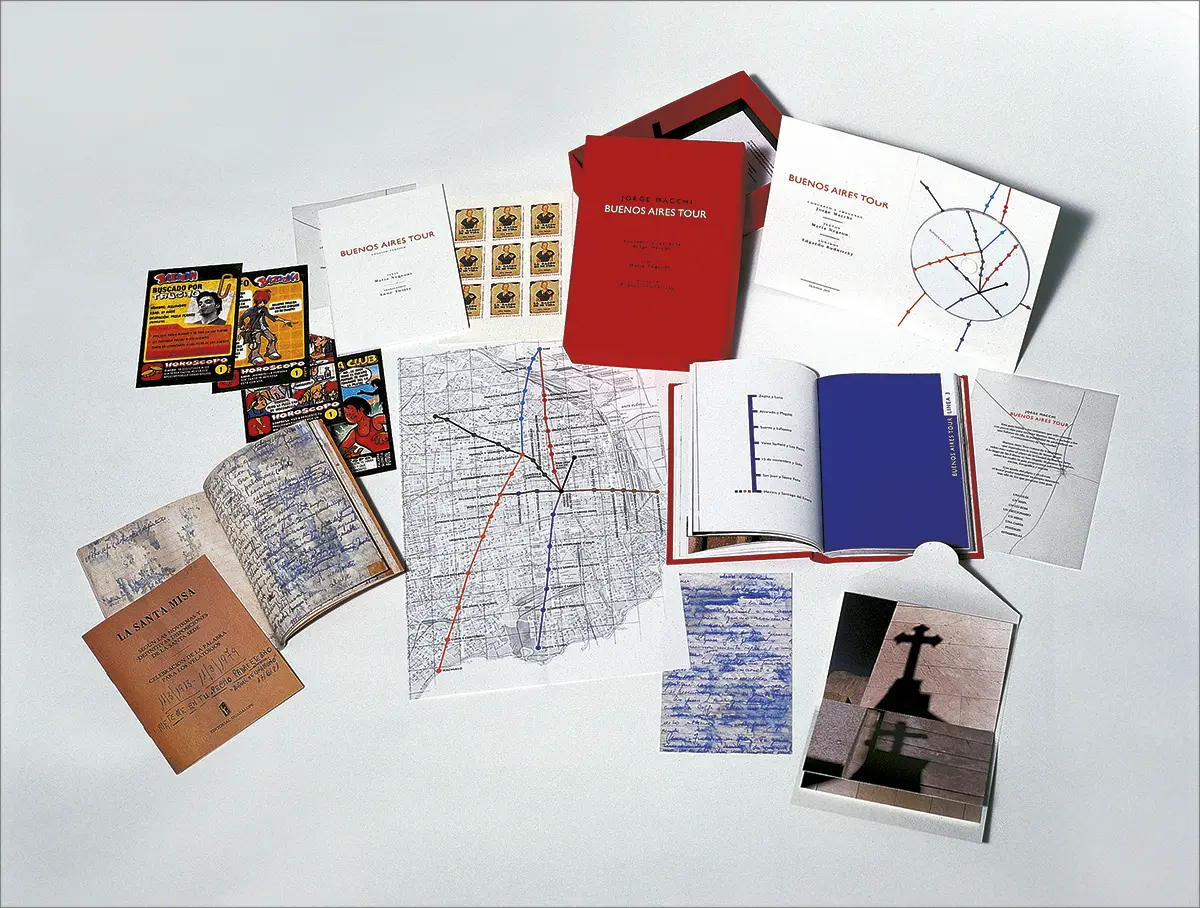
Buenos Aires Tour (2003) is among Macchi’s most ambitious works. Made thanks to a Guggenheim fellowship and a fellowship from the Fondo Nacional para las Artes, it is a collaboration with María Negroni (texts) and Edgardo Rudnitzky (sound). This book object is absolutely useless and unpredictable as a city guide (isn’t unpredictability a characteristic feature of Latin America?). The notion of a tour centered around notable places, monuments, and historical buildings, is displaced in favor of the insignificant and the ephemeral. Buenos Aires Tour lets us see things that no tour program would allow: the Big City’s “little” life. In this case, our trajectory is determined by the haphazard break lines in a piece of glass the artist placed on a map of Buenos Aires. Later, he gathered insignificant materials (letters, photographs, a book cover, a dictionary, a notebook, and a prayer book) according to that configuration, while recording the sounds of each location. Rudnitzky was able to capture the cacerolazo, a popular form of protest against the financial dealings that confiscated the bank deposits of thousands of citizens.
Buenos Aires Tour reminds us of Heath Bunting’s 1994 Visitors Guide to London, a Net Art project that allows one to leave clichés of the tourism industry behind and access 250 London sites with no historical value.
Cartographies in the key to catastrophe
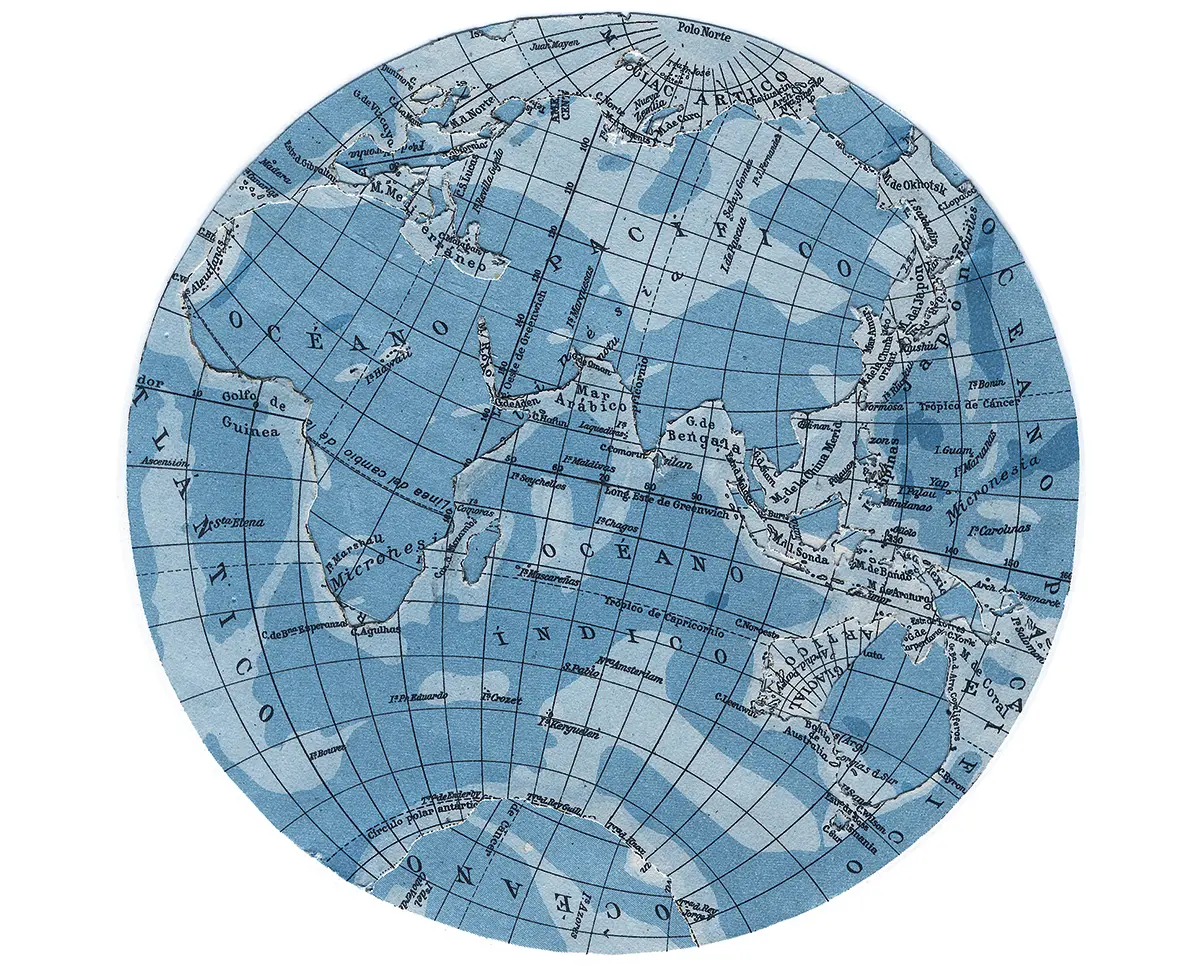
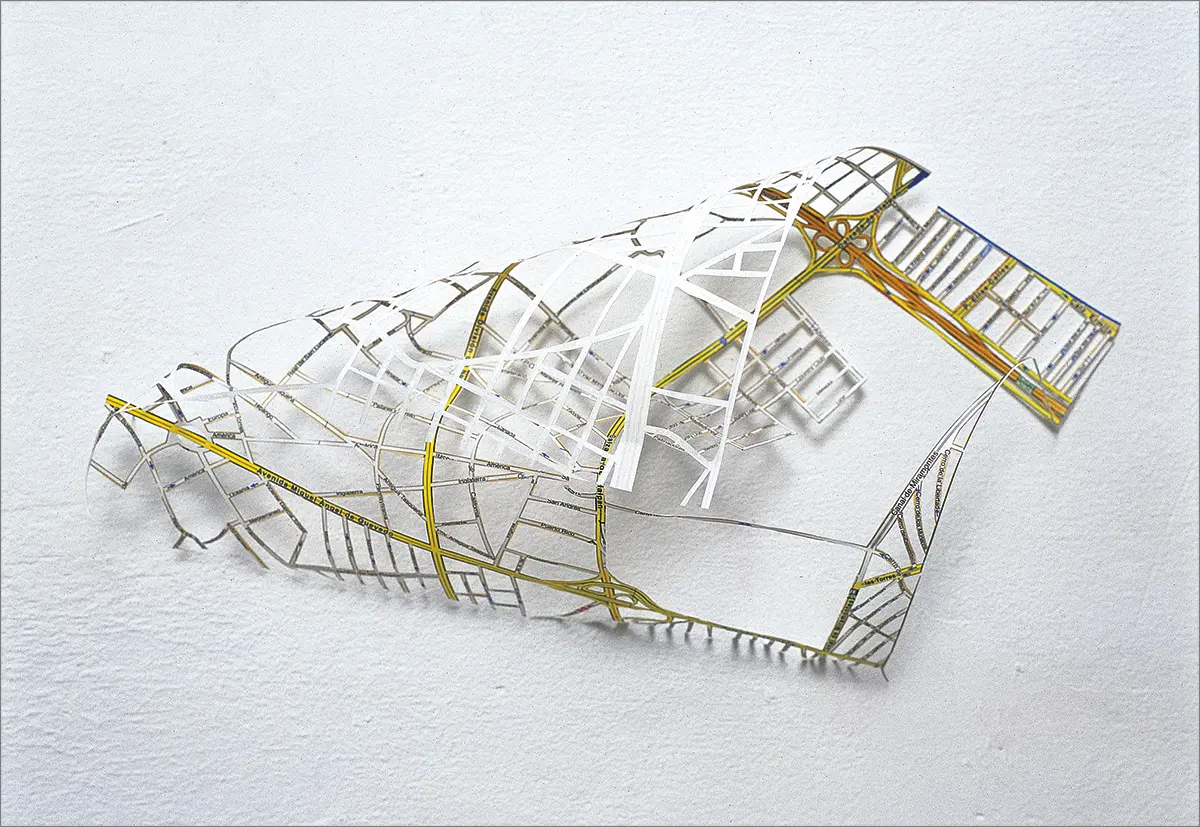
The air of alienation that surrounds projects such as Buenos Aires Tour is also apparent in the series of maps created by Macchi in the mid-1990s. Autistic, they seem indifferent to the very essence of cartographic projection; they dispense with a regime of continuities and fixed spatial relationships where each point must coincide, although at a different scale, with the real datum (block, street, avenue, intersection, rivers). Precisely where there is not supposed to be a margin for subjective interpretation, Macchi insists on imposing one. We find it in Déluge (1994), with its cut-outs of names of Parisian underground locations that are located above the Seine; and in 32 morceaux d’eau (1994), where so many segments of the same river, delimited by its bridges, are distributed arbitrarily; and in Blue Planet (2003), where the Earth’s zones become liquid, in the same blue hue used to represent seas and oceans.
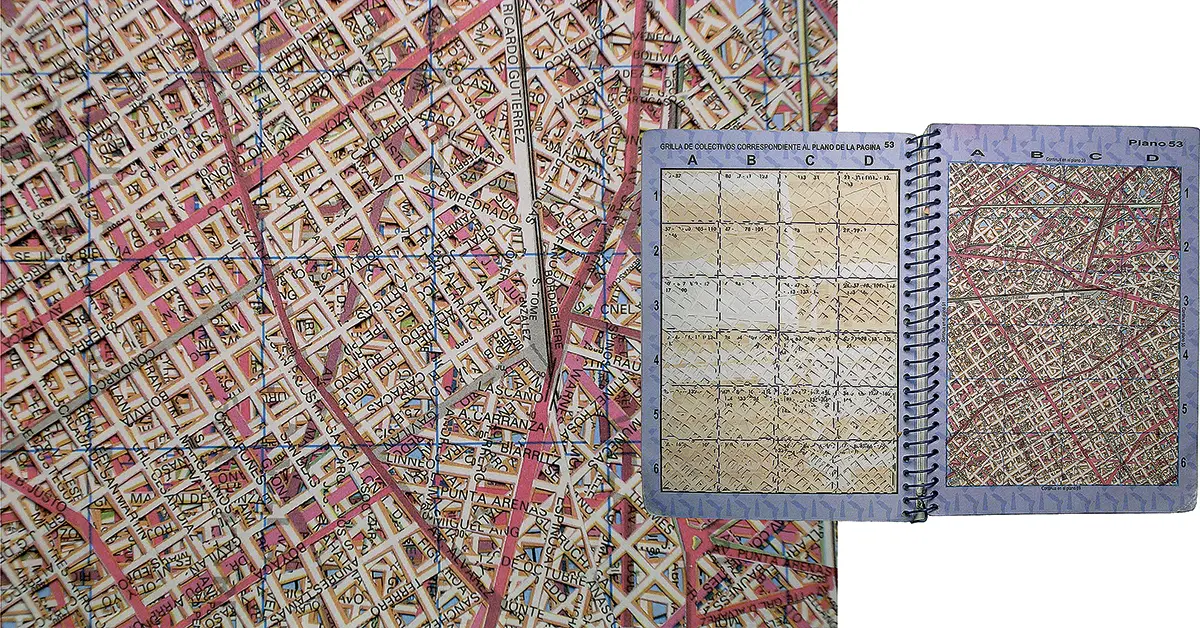
Like Blue Planet, Guía de la Inmovilidad is one of the best examples of the diatopic sense in Macchi’s cartographic series. A number of Buenos Aires city blocks are cut out from a guide and become empty areas. So, movement no longer makes sense. There is nowhere to go.
Fuegos de artificio (Fireworks of Artifice, 2003) is deeply diatopic in that it shows shoe tracks (printed in dirt and glue on paper) that explode and grow to outsize proportions. The steps do not find their place, they cannot fulfill their destiny. Not even the most innocent decoration can achieve that. That is what Ornamento (Ornament, 2002) reveals by presenting us with a flower design printed on a wall where the flowers can no longer stay put and fall, accumulating on the floor.
An absolute conformity
For his artist statement, Macchi selected a text by Thomas Bernhardt: “Like ninety percent of Humanity, I always want, very deeply, not to be where I am, to be in the place I just left. . . and the truth is that I am only happy when I am inside the car, between the place I have just left behind and the place towards which I am moving. I am happy only in the car, during the trip. I am the most miserable of newcomers. Wherever I arrive somewhere, from the moment I arrive, I feel unhappy to have arrived...”3 Perhaps the plurality of paths traversed by Macchi (visual arts, music, set design, and literature) reveals a similar lack of settling, something also expressed in his methodical breaking with the predictable, and his recontextualizations based on the interplay of opposites that transform chance in the necessity, immensity in intimacy —as in Publicidad or Caja de música— and music in silence, as in Still Song (2005).
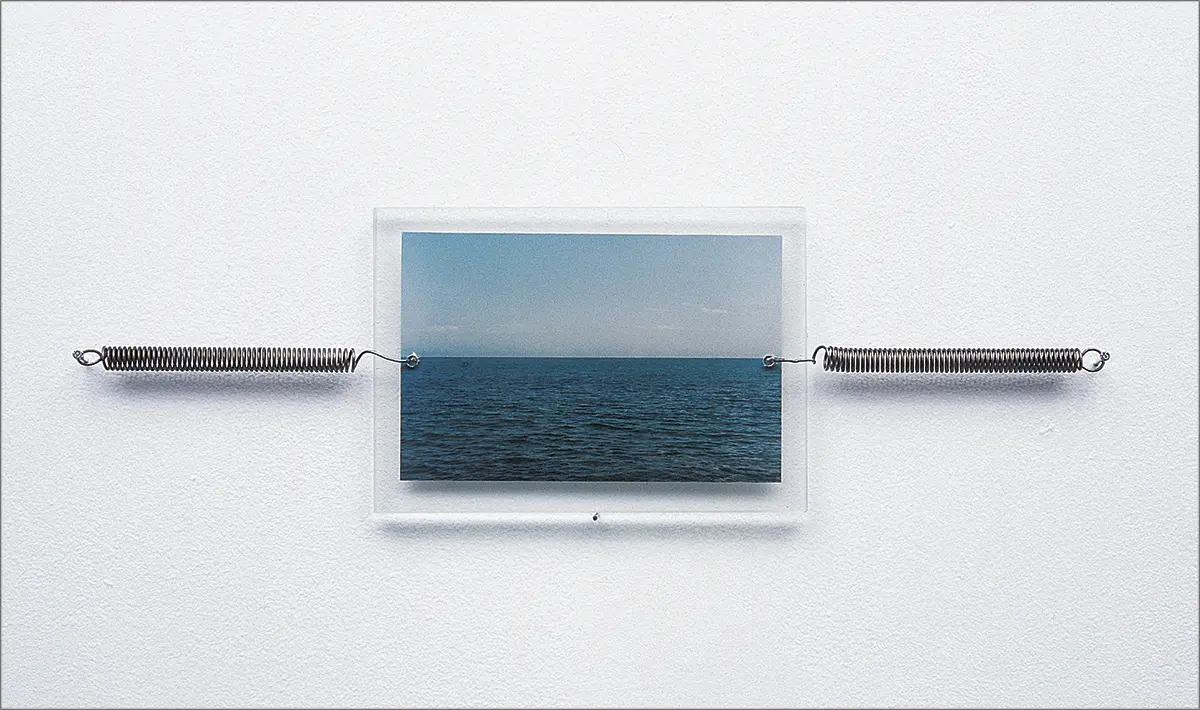
If there is a common thread running through Macchi’s various works it is a kind of poetics of contained intensities, as evinced in the paradigm of Horizonte (1995), a photograph of the sea “held” by two springs. It is surprising for the poetry of misfortune and catastrophe to flow, as in this instance, towards an almost minimalist silence. A brilliant strategy on the part of Macchi, and an occasion for viewers to wake up their voices there.
NOTES
1. Pierre Restany, “Arte guarango para la Argentina de Menem”, Lápiz, 116, Year XIII, Madrid, 1995, pp. 50-55.
2. José Jiménez. El final del eclipse. El arte de América Latina en la transición del siglo XX, Museo Extremeño e Iberoamericano de Arte Contemporáneo, 2002, p. 187.
3. J. Macchi. En tránsito, Banco Patricios Foundation, Buenos Aires, 1996, p. 15.
ELENA OLIVERAS
Elena Oliveras has a Ph.D. in aesthetics from the University of Paris. She teaches aesthetics at the University of Buenos Aires and is vice president of the Argentinean Art Critics Association and a member of the International Art Critics Association, AICA.