
Last March New York
hosted the latest edition of The Armory Show to an eager public. The fair
featured a new design with fewer galleries (162, down from 189 last year) and
larger booths; despite the change in format, however, it achieved record sales
of $45 million. The results reflected the organizers’ gargantuan efforts to
maintain the status of The Armory Show as one of the foremost venues for
contemporary art. Now that it must compete with newer crowd favorites such as
Art Basel Miami and London Frieze, The Armory Show relied on its setting in New
York, the self-proclaimed art capital of the world, to assert its unique
identity. Teaming up with cultural institutions and important collectors, The
Armory Show offered a week’s worth of activities for its guests. The
thirty-five-page V.I.P. calendar included numerous museum parties, visits to
private collections, artist’s talks, the ARCO forums on contemporary art, and
receptions at the concurrent fairs, Scope New York, and the Digital and Video
Art Fair. Several high-profile exhibitions of contemporary art also debuted
during the same period, most notably P.S.1’s Greater New York 2005, a
follow-up to the eponymous 2000 show, which opened to a packed house. Even
Rockefeller Center, never at a loss for visitors, participated in the
festivities and hosted Art Rock, a week-long public exhibition of
contemporary art.
With so many activities, it would seem that The Armory Show itself might have risked being overlooked. This was not the case at all. The fair attracted 40,000 visitors from around the world, including the celebrities Steve Martin and Catherine Deneuve, the artists Maurizio Cattelan and Frank Stella, and a barrage of collectors and art professionals. Gallery selection was more competitive than ever; five-hundred-fifty galleries applied for admission, reflecting an increase of 23 percent from 2004. Twenty-seven of those accepted made their debuts, including Kurimanzutto and Enrique Guerrero from Mexico City, Frederic Snitzer from Miami, Angstrom from Dallas, Lia Rumma from Naples, and Nature Morte from New Delhi. The only additional Latin American gallery was the long-time participant Fortes Vilaça from São Paulo. Artists from Latin America were well represented throughout the fair, but the diminished presence of galleries from the region was disappointing. Nina Menocal and Jacob Karpio, who have made strong contributions to previous editions of The Armory Show, were sorely missed. In fact, less than 10 percent of the participating galleries were from places outside the United States and Europe; these included five from Tokyo, and one each from Osaka, Seoul, and Tel-Aviv. By contrast, half of the galleries were European, reflecting the strength of the Euro in the global economy. Hopefully, next year’s edition of The Armory Show will include a broader selection of international galleries.

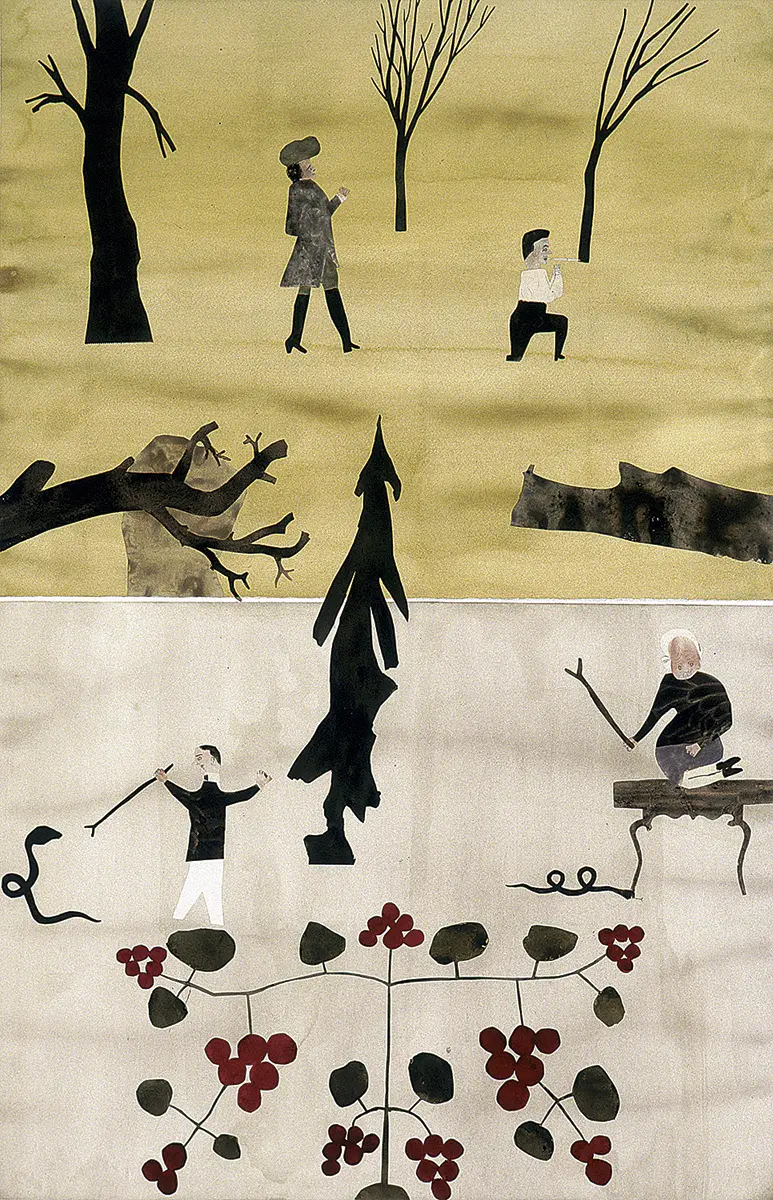
The featured artist at The Armory Show this year was Jockum Nordström from Stockholm, who contributed a dynamic series of drawings and collages to the catalog. These images included quirky characters, buildings, and decorative still lifes, the best of which visually commented on the process of collage and provided a sense of spatial disorientation. Indeed, small-scale figurative paintings and drawings seemed to be a dominant trend at the fair. Amy Cutler’s drawings at Leslie Tonkonow Artworks + Projects drew much attention, as did the little paintings by Francis Alÿs at Yvon Lambert, the mixed-media drawings by Carlos Vega at Jack Shainman, and Marcel Dzama’s intriguing watercolors at David Zwirner.
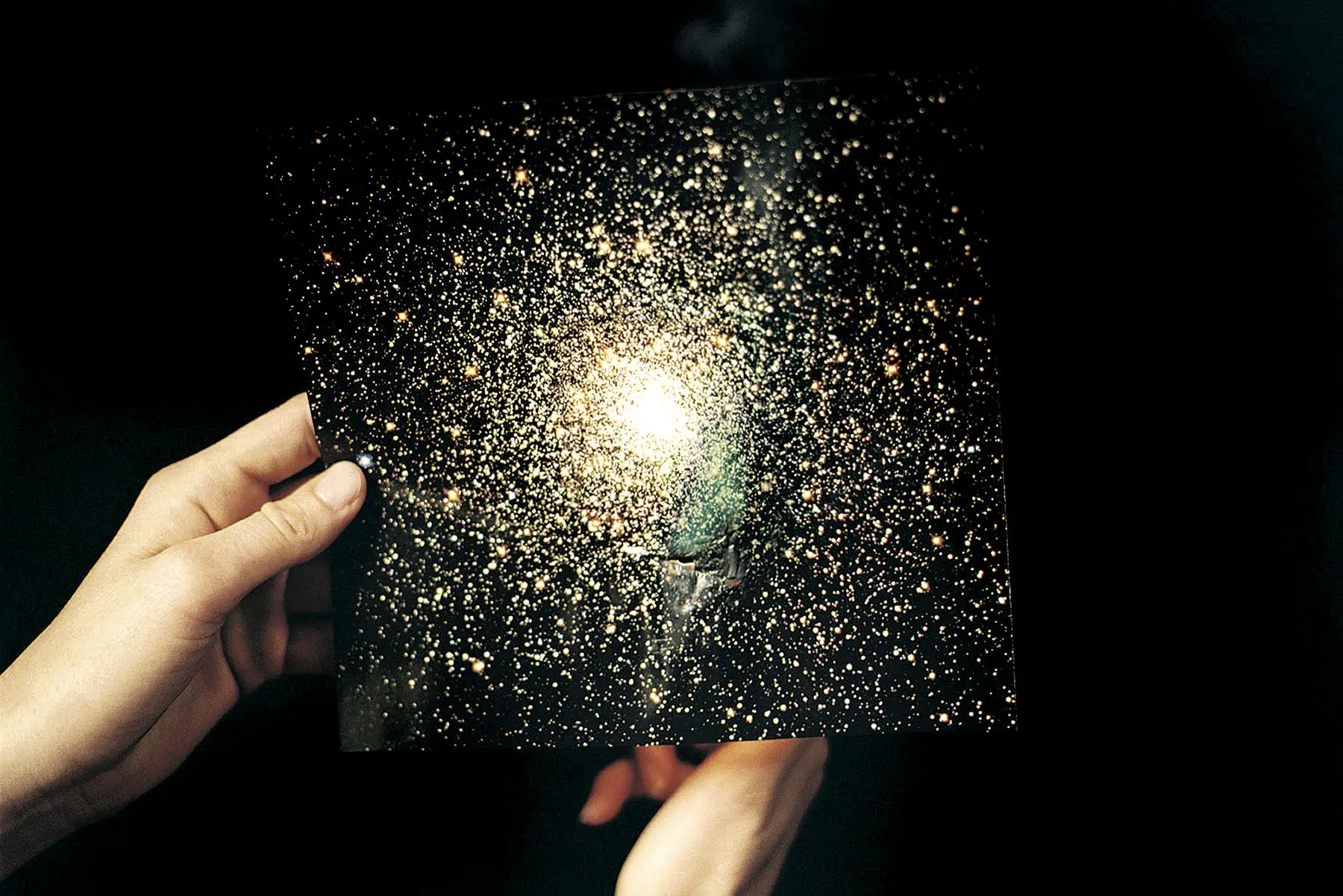
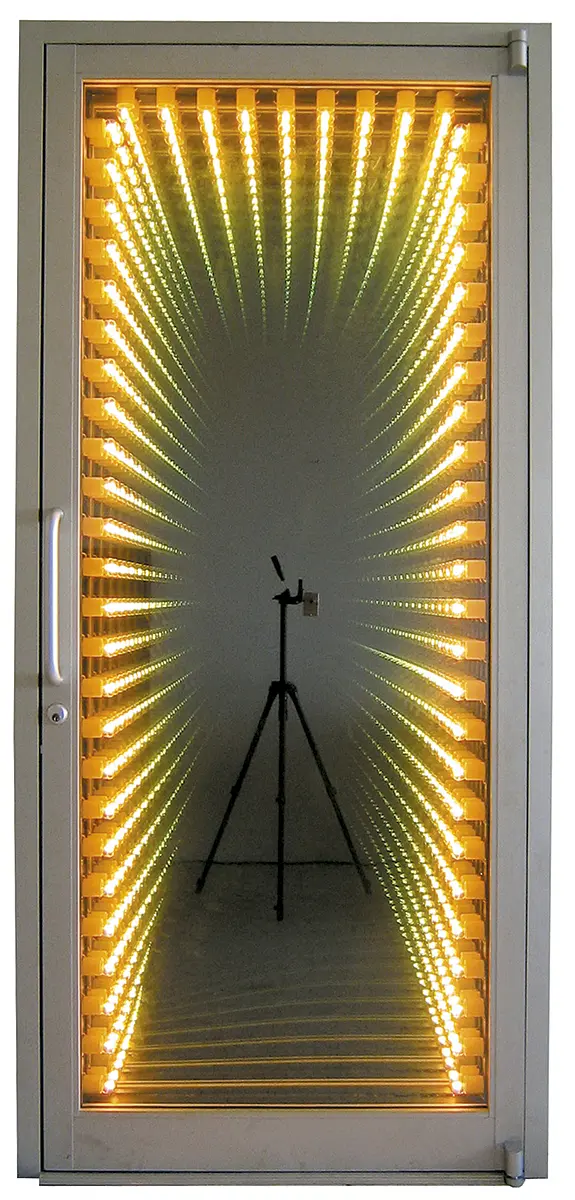
New York and European galleries presented a diverse selection of artists who have worked in or are originally from Latin American countries. Brent Sikkema featured a set of collage cut-outs by Arturo Herrera that consisted of allusive, fragmented, cartoon-like imagery, and Vik Muniz’s self-portrait from his Rebus series (2003), made up of little plastic toys. Roebling Hall brought new works by gallery artists Iván Navarro and Courtney Smith. Navarro contributed a fantastic light piece entitled Holeway (2005), featuring an aluminum and mirror door circumscribed by light bulbs that upset the spatial awareness of the viewer and appeared to extend into infinity. A similar triptych by the artist, consisting of three doors with neon lights in primary colors, was on view at the exhibition Art Rock at Rockefeller Center and fascinated a vast audience. Courtney Smith, who was also included in Greater New York at P.S.1, presented a sculptural deconstruction of retro furniture in natural wood and lavender. Alfredo Jaar’s continued investigation of contemporary life in post-colonial societies was evident in his photographic works presented at Lia Rumma and Galerie Lelong. Lia Rumma, who recently exhibited Jaar’s latest work, Searching for Gramsci, in her Milan gallery, brought a selection of photographs on light boxes from the artist’s new series on Luanda, Angola; these consisted of images of people and abandoned architectural structures juxtaposed with stark black spaces. London’s White Cube presented a dramatic sculpture in wood and cement by Doris Salcedo, and the Lisson Gallery featured black and white photographs by Santiago Sierra depicting blocks of industrial cement arbitrarily arranged on the floor to upset the cool perfection of the minimalist legacy. Lisson also exhibited a new series of color photographs by Allora & Calzadilla titled Back Fire, each of which depicted a pair of hands holding an image of the galaxy at the moment that the back of the image is being set on fire. The works contrast the transitory nature of life with the presumed permanence of the work of art. At the Lehmann Maupin booth, a lovely wall piece by Teresita Fernández titled Burnout, made of glass cubes in orange and yellow tones that radiated outward from a central core, occupied a prominent place. Galleria Continua displayed fabulous architectural photographs altered with pins and thread by Carlos Garaicoa, who has been a strong presence at the fair for several consecutive years. New sculpture and graphic works by Iran do Espirito Santo exploring minimalist forms could be seen at Sean Kelly’s booth. The artist’s compelling new series of abstract drawings were composed of obsessively rendered vertical lines contrasted with the very literal Drops, Unit 2 (2005), a solid granite dies that alluded to the sculpture of Tony Smith. Marian Goodman presented a new selection of photographs by Gabriel Orozco that elevated images of nature and domestic labor to the status of sculptural objects.
The three Latin American galleries brought a diverse array of art from established, as well as emerging artists. Enrique Guerrero’s booth included a strong selection of works by Pedro Reyes (who was also represented at Yvon Lambert), Manuel Cerda, Teresa Margolles, and Carlos Amorales. Of these, Cerda’s paintings with their decorative patterned surfaces and subliminal words and images immediately caught the viewers’ attention, forcing them to choose between two different modes of perception. Margolles’s sculptures and works on paper, like so much of her art, were eerily disturbing. A sculpture consisting of two heads wrapped in cellophane, and another appearing to be the interior space of a plaster cast of a corpse that had been submitted to an autopsy induced a visceral effect on the public. Kurimanzutto featured a large selection of works by a variety of mostly Mexican artists, including sculptures by Eduardo Abaroa and kitschy ink drawings on magazines by Dr. Lakra. Lastly, Fortes Vilaça made an imposing presence with a massive triptych by Vik Muniz based on Monet’s Water Lilies, a work composed of colorful hole punches from magazines and created especially for The Armory Show. Also notable at the same gallery was a sculpture by José Damasceno that contrasted organic structures with man-made materials, and an abstract watercolor landscape in whimsical pastels by Janaina Tschäpe.
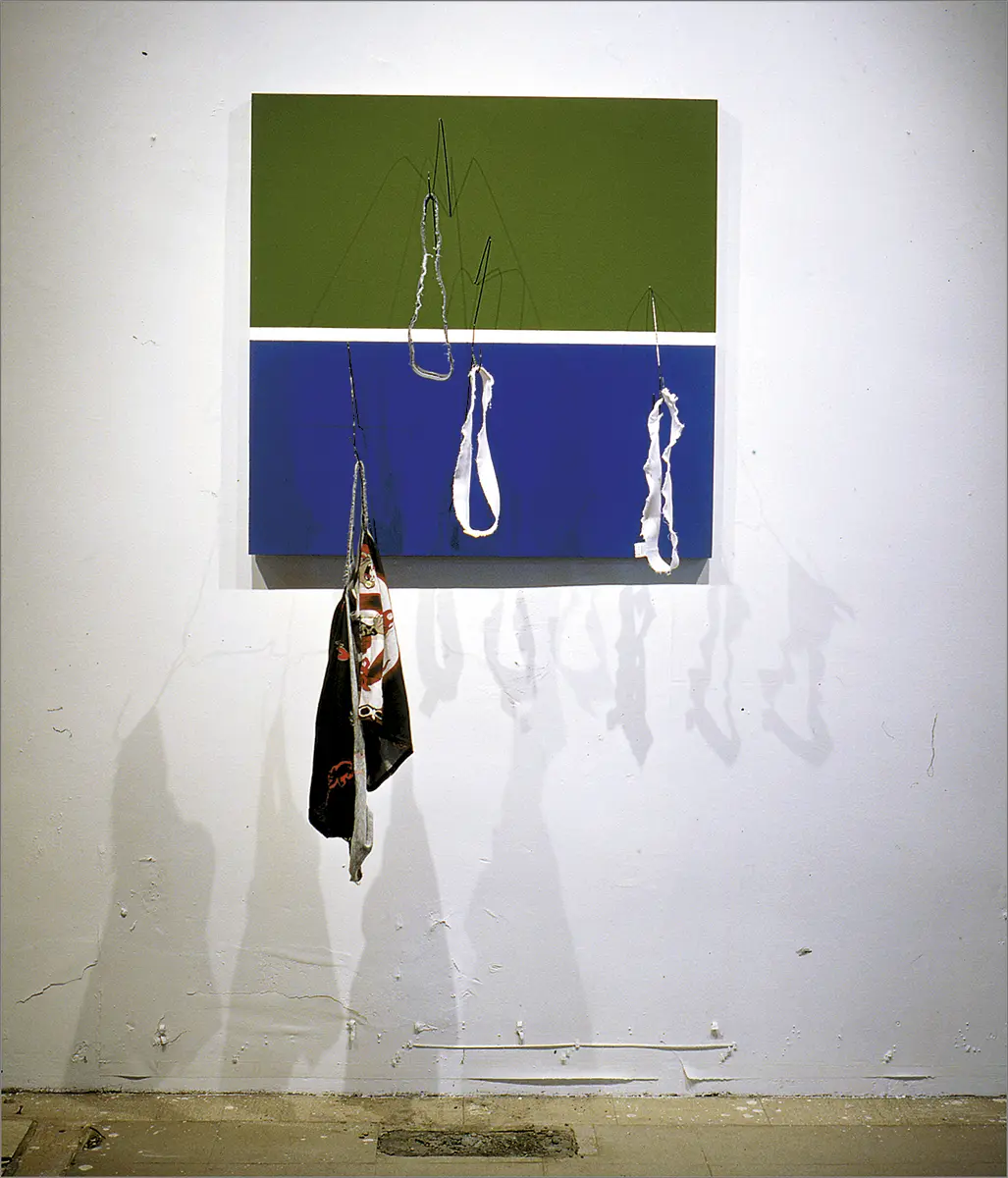
Although the main emphasis of The Armory Show was on saleable works that were “ready-to-hang” as it were, Bellwether Gallery stood out for its inclusion of site-specific performance work by Allison Smith. Punning the name of the fair, Smith created her own “armory,” transforming part of the gallery’s booth into a makeshift arsenal selling colorful wooden rifles. Disguised in a costume reminiscent of an American Civil War uniform, the artist urged spectators to “arm themselves for art.” The purchase of a rifle (prices started at $1,000) required buyers to sign a document committing themselves to the defense of art.
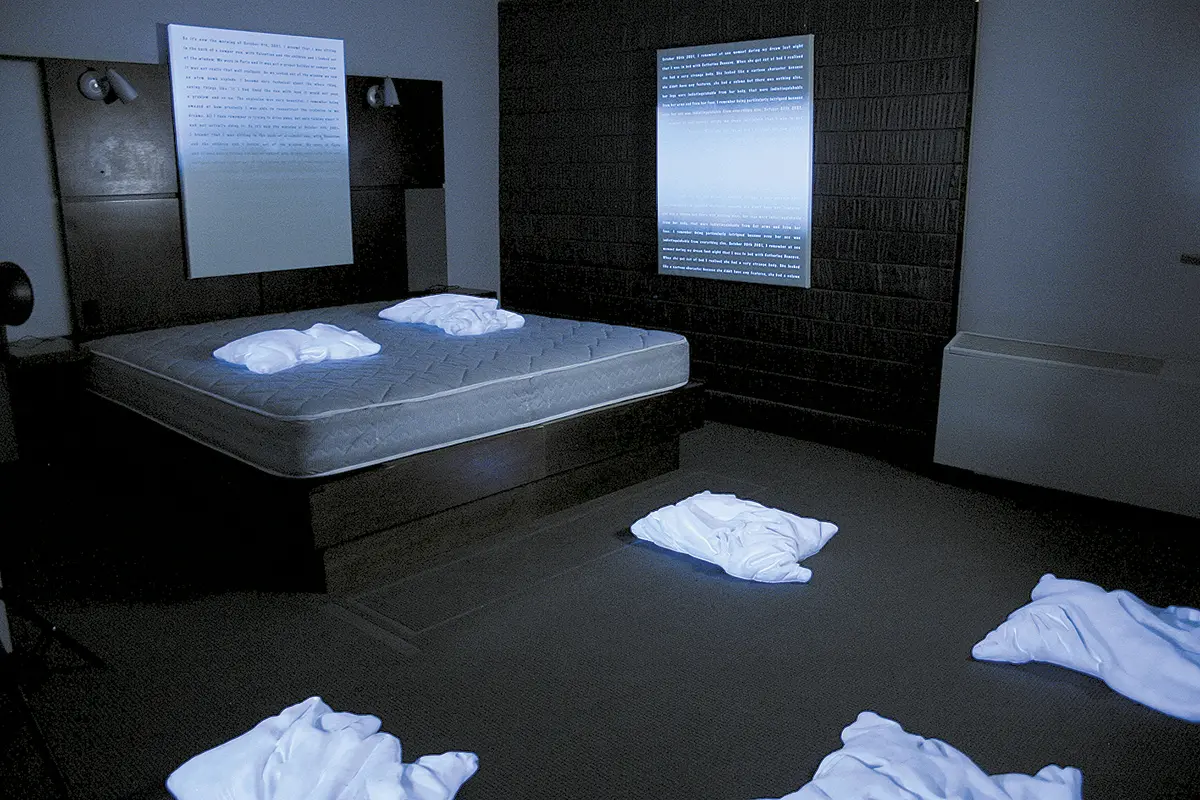
Scope New York 2005
Like The Armory Show, Scope New York attracted throngs of art lovers. This year, the fair took place at the Flatotel on West 52nd Street, near The Museum of Modern Art. Seventy-five exhibitors from Europe and the Americas—including Art & Idea and Ricardo Reyes from Mexico City; Punto Gris from Puerto Rico; and Leonard Tachmes from Miami—occupied six floors of the hotel. Scope was more experimental overall than The Armory Show, and featured many new artists and works of varying degrees of quality. However, several galleries stood out either for their excellent selection and arrangement or for the visual impact of their works of art.
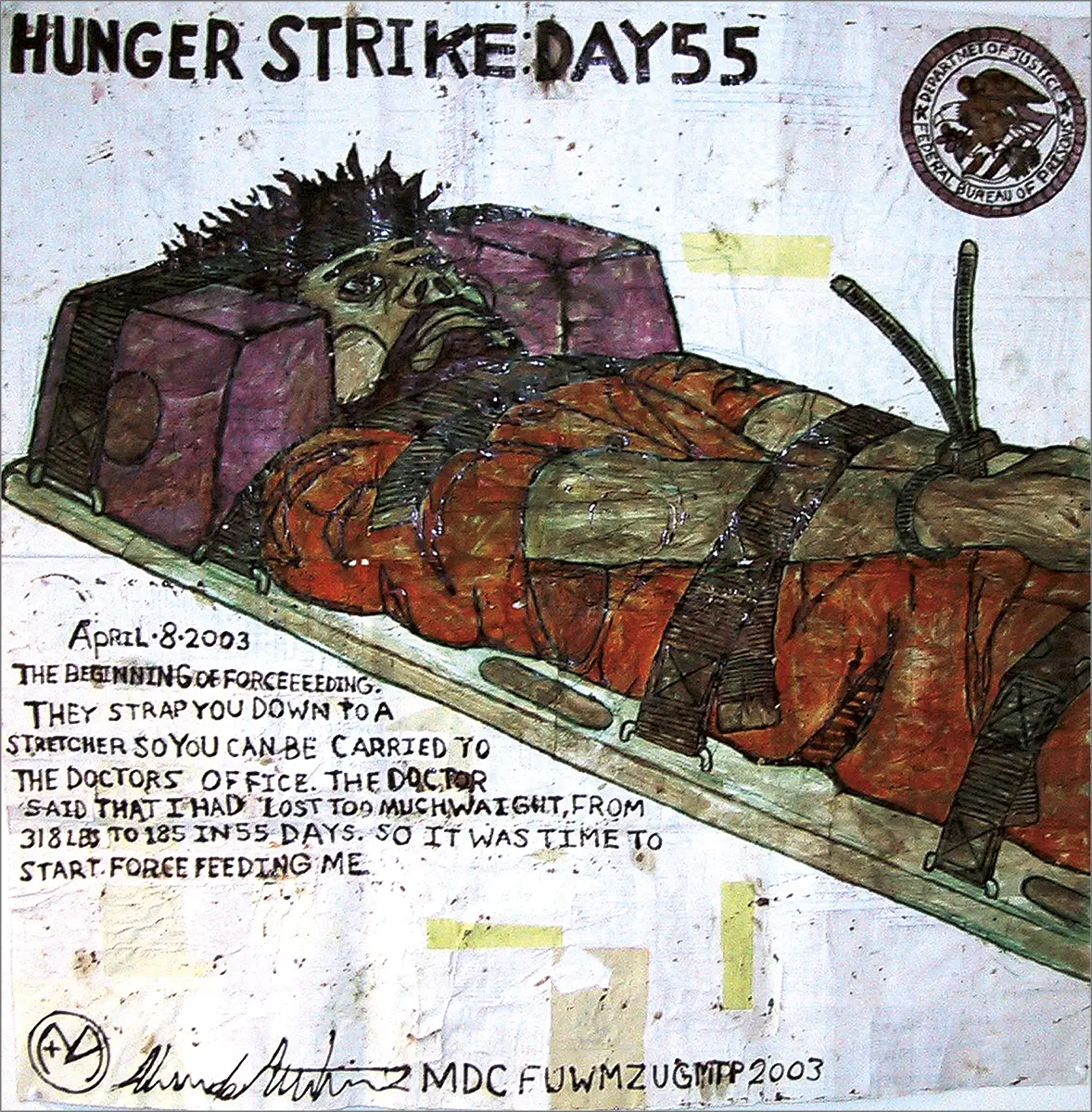
Art & Idea made a splash with their presentation of works by Máximo González and Diego Teo. González’s paper sculptures made from different currencies were extremely engaging, particularly his Brassiere and Tanga hanging in the bathroom. Teo’s collages and sculptures of found objects created an unexpected awareness of familiar things. Fabián Ugalde’s humorous cartoonish paintings, which poked fun at the seriousness of high art, were featured at Ricardo Reyes. Other noteworthy figurative works included the modest watercolors of Tony Hernández at Atlanta’s Fay Gold Gallery; the dramatic ink drawings of Víctor Muniz with their densely covered surfaces at Leonard Tachmes; and photograms and drawings by Alfredo Martínez at The Proposition, New York. These last works reflect, in gritty detail, the experience of the artist in prison and highlight themes of violence and ghetto culture in visually striking ways. Abstract paintings and drawings at Scope were less memorable, with the notable exception of a vibrant selection of work by Vargas-Suárez Universal at Punto Gris.

A strong selection of photography and new media was another highlight of Scope. The kaleidoscopic self-portraits of Sandra Bermúdez on view at curcioprojects challenged the penetrating male gaze by endlessly multiplying the female body. Bermúdez was also present at the fair promoting a new monograph of her work. SlingShot Project, a New York gallery, featured lovely monochromatic works depicting curtains and clouds by Markus Hansen that employed an interesting technique: the photographic image is printed with ink onto glass; then, the artist blows dust onto the surface and fixes it in an oven. The resulting medium is dust, breath, and varnish. Thematically, the images are related to the artist’s experiences growing up in postwar Germany. The Armory Show and Scope New York provided a week’s worth of exhilarating activities that would exhaust even the hardiest of art aficionados. Hopefully, more Latin American galleries will return next year to take part in the extravaganza.
TATIANA FLORES
Tatiana Flores holds a Ph.D. in Art History from Columbia University. She is an Assistant Professor of Art History at Florida State University.